Picture a world where six-ton, woolly giants trudge across a frozen steppe stretching from Spain to Canada. A world where saber-toothed cats stalk the forest margins, and elephant-sized sloths tear branches from towering trees. Sounds almost fictional, doesn’t it? Yet this was Earth’s reality not so long ago in geological terms, and these extraordinary creatures were doing something far more profound than simply surviving.
They were, quite literally, building the world around them. The grasslands, forests, savannas, and nutrient-rich soils that define modern landscapes all carry the fingerprints of these ancient giants. Their influence was staggering, their absence even more revealing. Let’s dive in.
Giants of the Ice Age: Who Were the Prehistoric Megafauna?
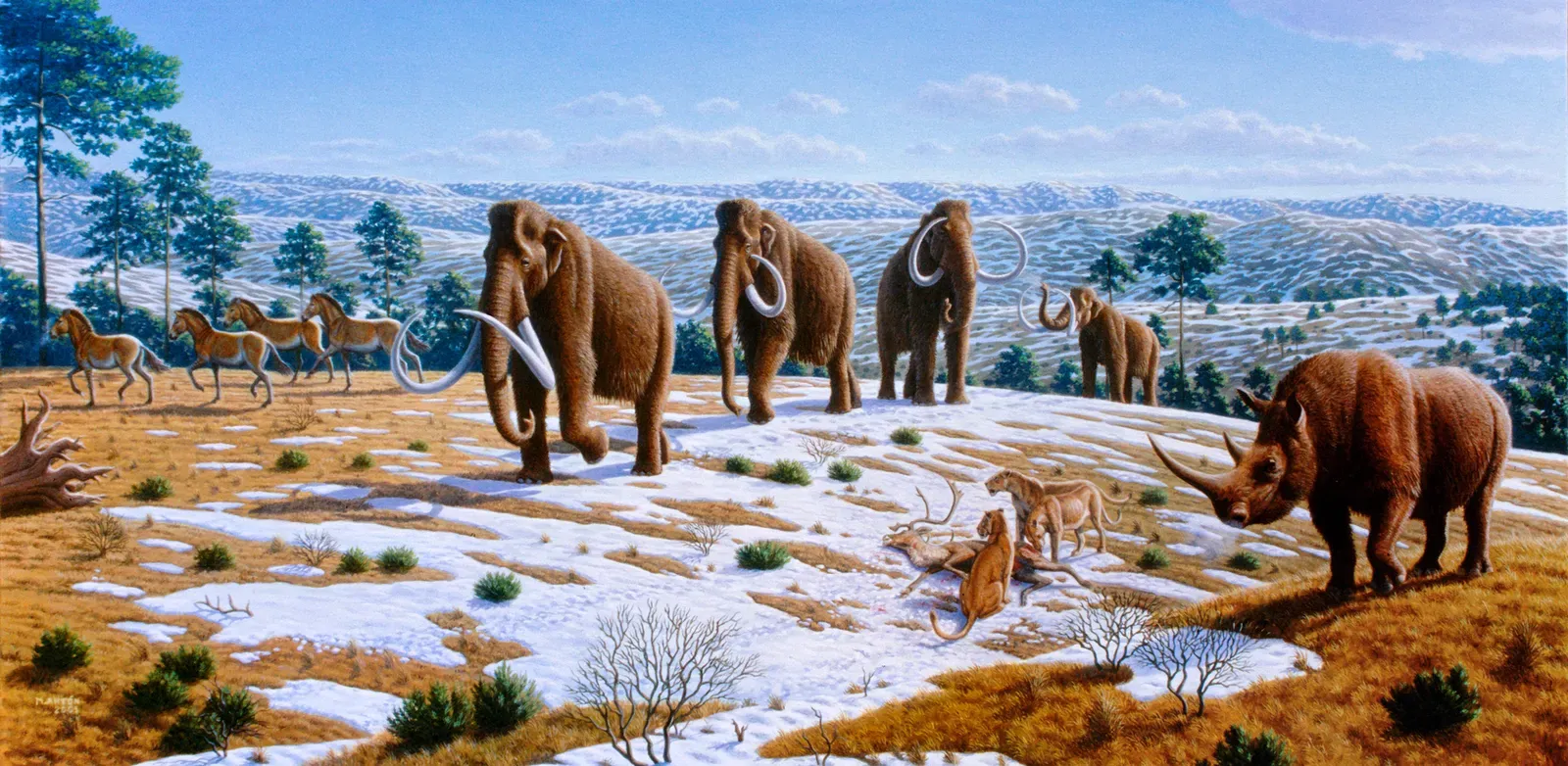
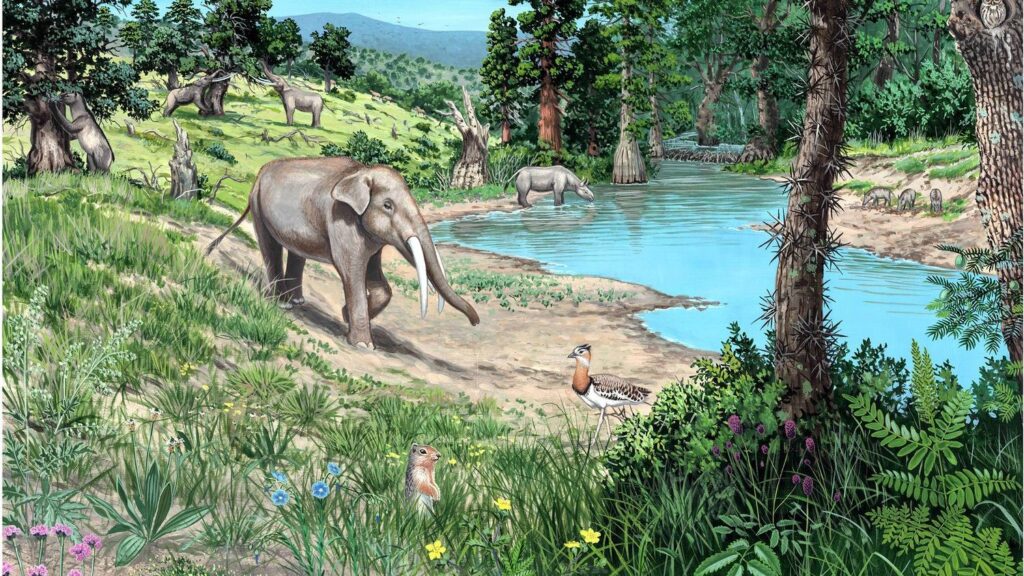
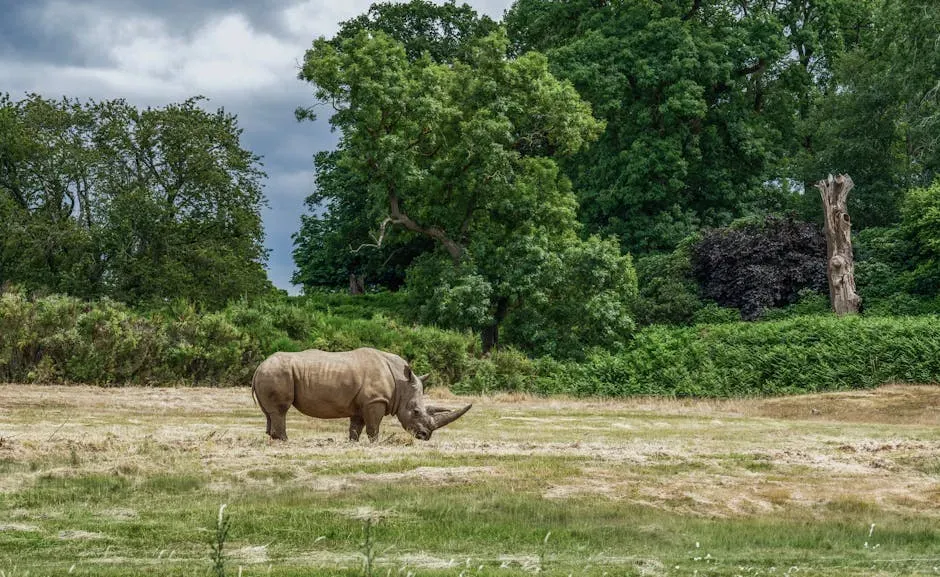
The most diverse and widespread megafauna existed during the Pleistocene epoch, often called the Ice Age, which ended about 11,700 years ago. This era saw colossal animals roaming nearly every continent, including woolly mammoths and woolly rhinoceroses across Eurasia and North America. Think of them as the heavyweights of the ancient world, each one uniquely engineered for its environment.
Other prehistoric giants included the saber-toothed cats, predators with elongated canines that hunted in North and South America, and giant ground sloths such as Megatherium, elephant-sized herbivores in South America capable of standing on their hind legs to browse on tree branches. Australia was home to unique megafauna like Diprotodon, a wombat-shaped marsupial, and Megalania, a giant carnivorous goanna. Honestly, the sheer variety of these animals is staggering. Every continent had its own cast of giants, each one reshaping the land in its own distinct way.
Ecological Engineers: How Megafauna Physically Transformed the Land
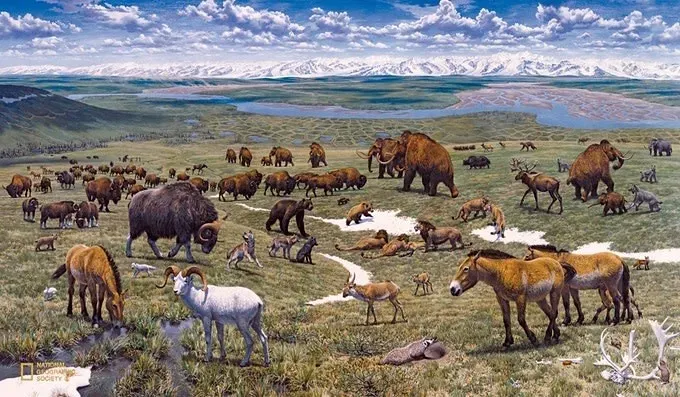
Here’s the thing about being enormous. You don’t just walk through a landscape, you change it. Megaherbivores, those weighing at least 1,000 kilograms, achieved high population biomass and are considered ecological engineers capable of altering vegetation on a landscape scale. Their large body size meant that they disrupted ecosystem structure by directly destroying woody vegetation and consuming large amounts of foliage.
Mammoths and other large herbivores of the Pleistocene continually trampled mosses and shrubs, uprooting trees and disturbing the landscape. In this way, they inadvertently acted as natural geoengineers, maintaining highly productive steppe landscapes full of grasses and herbs. It’s a bit like having millions of bulldozers roaming the countryside, except these ones also fertilized the soil and dispersed seeds while they were at it.
The Great Nutrient Highway: Megafauna and Soil Fertility
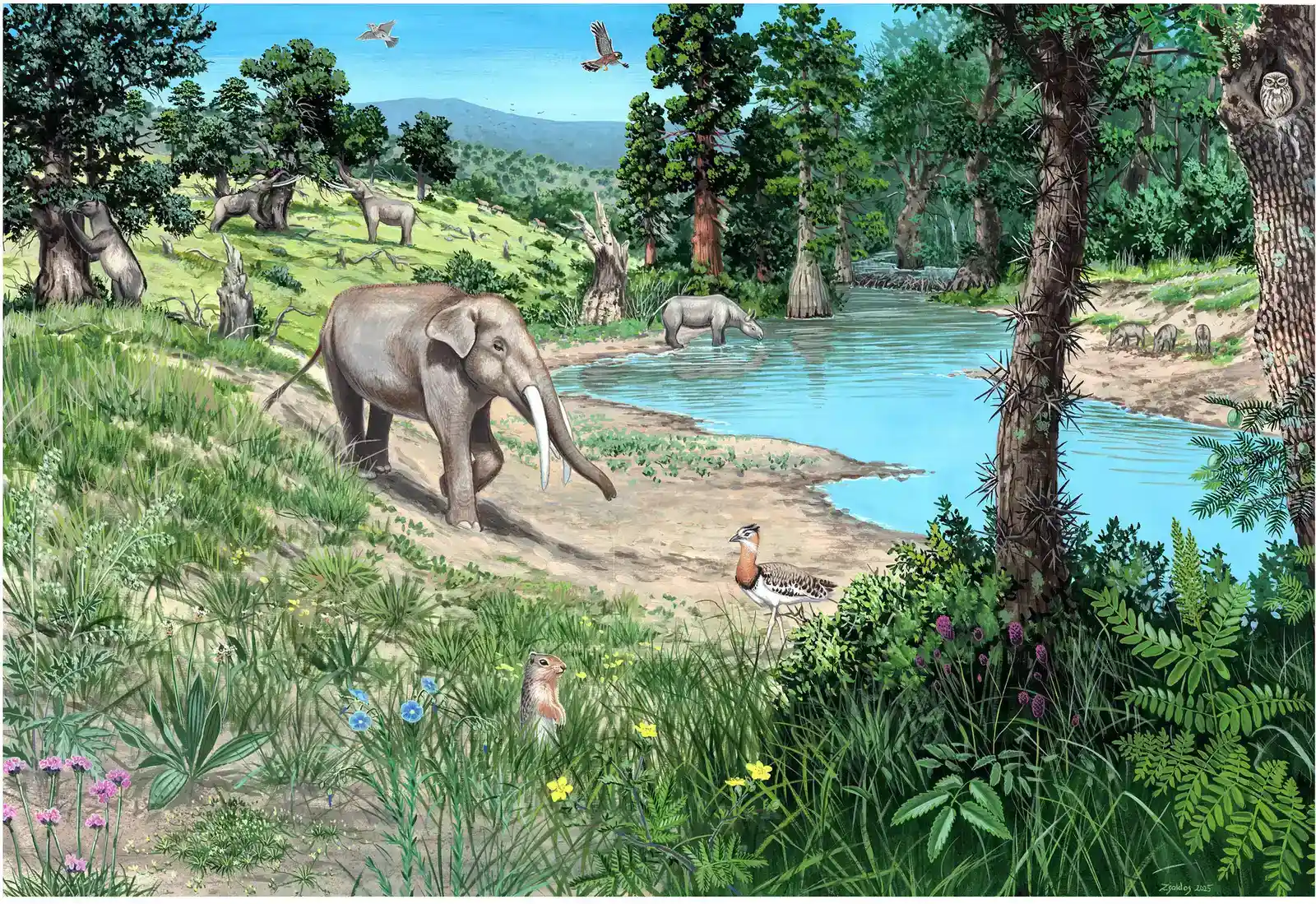
You might be surprised to learn that some of the most fertile ancient soils owed their richness not to rain or volcanic activity, but to the movement of giant animals. Between about 50 and 10 thousand years ago, almost 100 genera of large animals went extinct, and mathematical analyses suggest that these extinctions in Amazonia led to a reduction in the lateral flux of the limiting nutrient phosphorus, transported by dung and bodies, by a staggering 98 percent. Let that sink in. Nearly the entire phosphorus pipeline across Amazonia simply collapsed.
Megaherbivores dispersed more and larger seeds over longer distances and enhanced germination through digestion, redistributed nutrients via feces, carcasses, and soil disturbance, and reduced fuel loads and fire intensity through browsing and trampling. They were, in essence, a living nutrient delivery system, carrying vital minerals across hundreds of miles of terrain that no river or wind could match.
Seed Dispersal and Forest Regeneration: The Megafauna’s Invisible Legacy
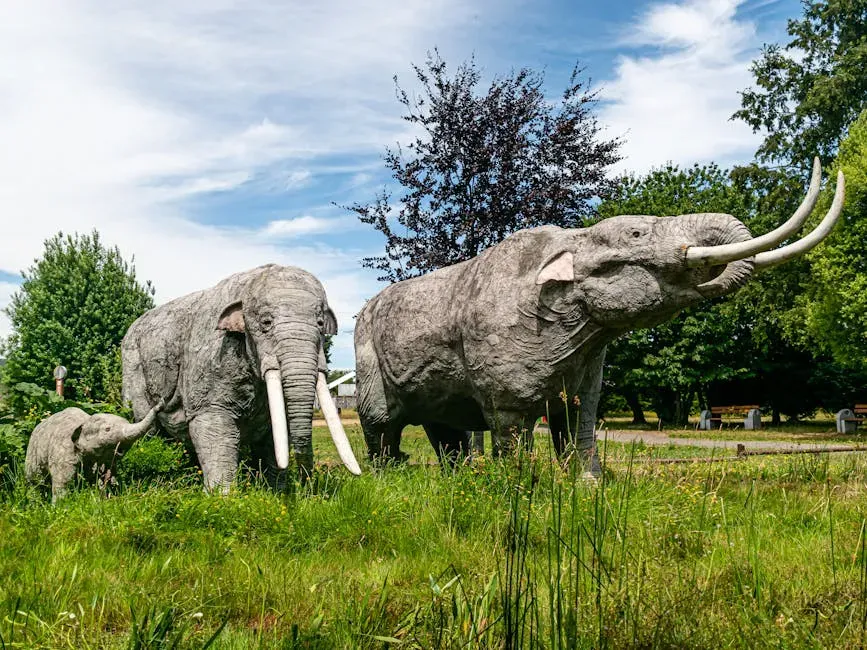
Beyond shaping landscapes, megafauna contributed to nutrient cycling through their waste, distributing essential elements across vast areas. They also played a role in seed dispersal, as many plant seeds passed through their digestive tracts and were deposited far from the parent plant, aiding forest regeneration and plant biodiversity. Think of them as wandering botanical gardeners with no plan but an enormous ecological impact.
What is even more fascinating is that you can still see this legacy in living plants today. The extinction of megafauna left many plant species stranded as anachronisms in a post-megafauna world, investing in defenses against non-existent browsers and producing fruit that few or no animals eat, with seeds that go undispersed. These anachronistic plants can be found in all parts of the world that lost megafauna in recent prehistory. The avocado is one famous example: a fruit seemingly overbuilt for dispersal by a consumer that no longer exists.
The Predator Effect: Trophic Cascades and the Rule of the Carnivores
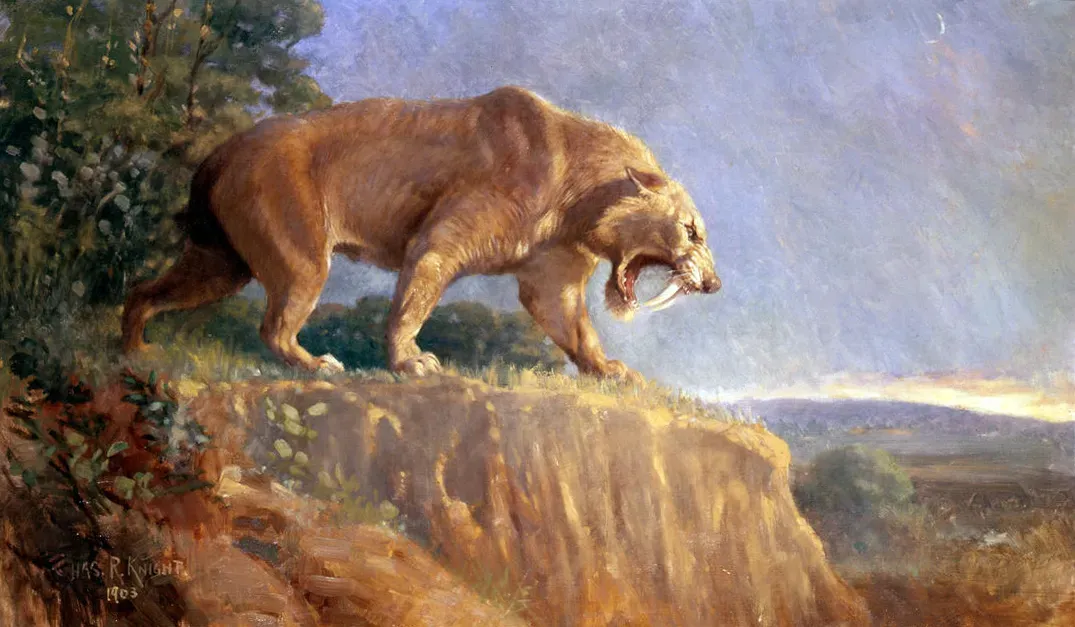
It wasn’t just herbivores that shaped ancient landscapes. The predators did too, and in ways that ripple far beyond a single hunt. A new analysis of the extinction of woolly mammoths and other large mammals more than 10,000 years ago suggests that they may have fallen victim to the same type of “trophic cascade” of ecosystem disruption that scientists say is being caused today by the global decline of predators such as wolves, cougars, and sharks.
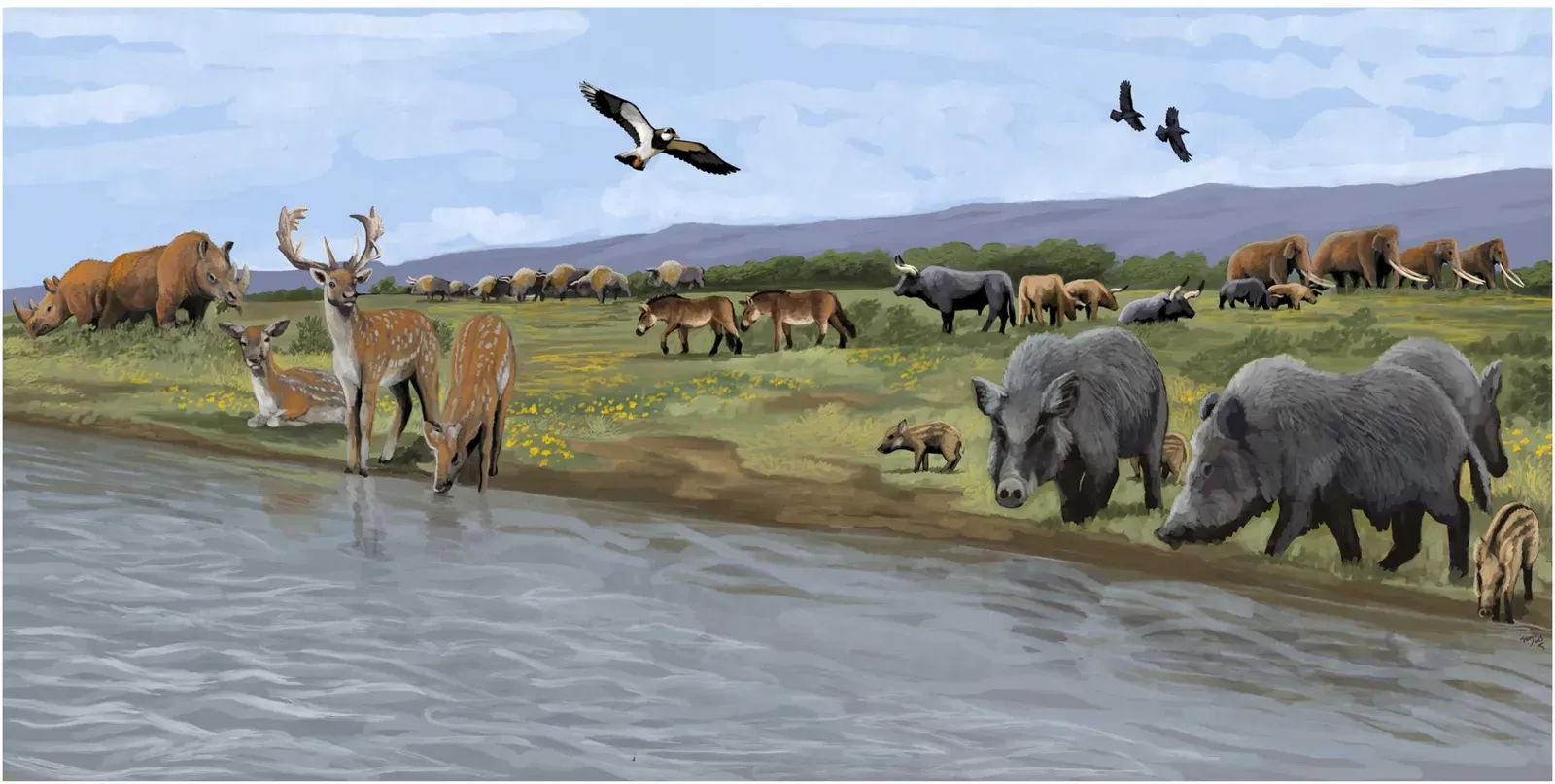
In the late Pleistocene, major predators dominated North America in an uneasy stability with a wide range of mammals: mammoths, mastodons, ground sloths, camels, horses, and several species of bison. Studies suggest there were no serious shortages of food caused by environmental change between 10,000 to 15,000 years ago. Quite to the contrary, the large herbivores seemed to be growing quickly and just as quickly had their numbers reduced by a range of significant carnivorous predators, including lions, dire wolves, and two species of saber-toothed cats. The whole system was a tightly wound mechanism of checks and balances.
When the Giants Vanished: The Cascading Consequences of Extinction
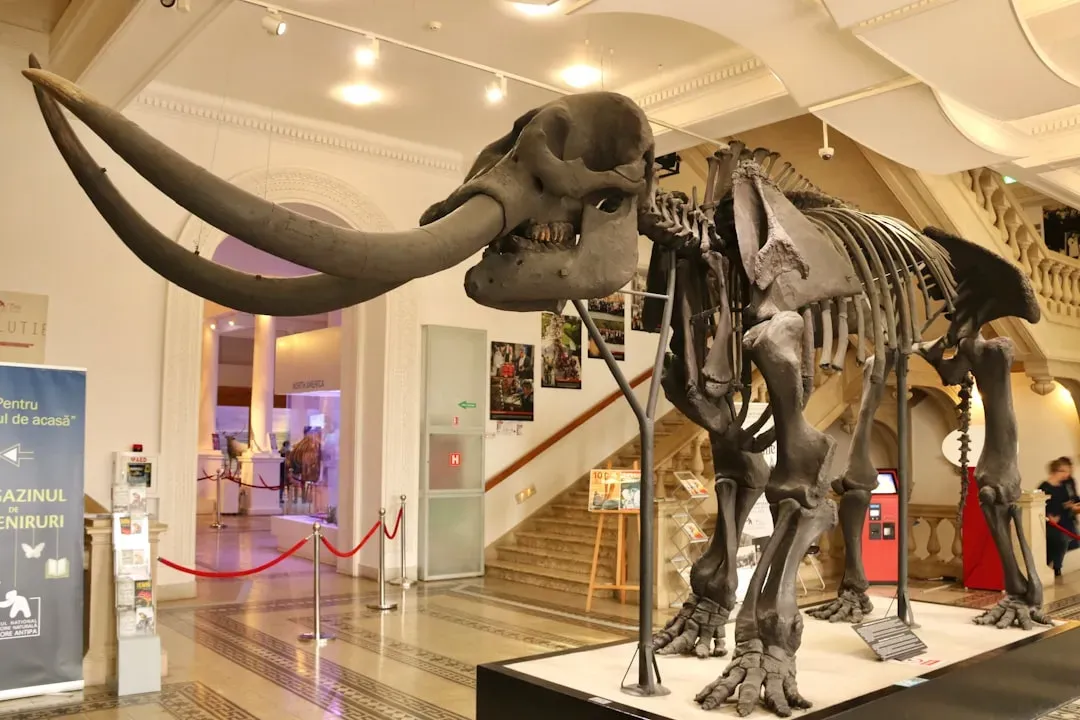
I think this is where the story gets genuinely sobering. The loss of these animals didn’t just create a quieter world. It fundamentally destabilized entire ecosystems. The loss of megafauna cascades through all levels of functioning of ecosystems. Even the apparently wildest contemporary landscapes likely carry the legacies of lost megafauna, and the consequences of contemporary decline of elephants and other megafauna may be felt for centuries or millennia to come.
The trampling and aggressive feeding of these massive mammals are thought to have created disturbances that allowed less-competitive grasses to grow where moss or woodland would otherwise be dominant. The loss of such megafaunal ecosystem engineers likely contributed to ecological state shifts in North America, with a noted increase in dense woody understory and deciduous forests, and in higher latitudes, a shift from steppe grassland mosaic to moss-dominated tundra. The world you live in today, with its boreal forests and Arctic mosses, is partly a world created by absence.
Lessons for Today: Rewilding and the Return of Ecological Giants
So what can we do with all of this knowledge? It turns out, quite a lot. Trophic cascades offer a valuable theoretical framework for rewilding, and trophic, or megafaunal, rewilding is an ecological restoration strategy that uses species introductions to restore top-down trophic interactions to promote self-regulating, biodiverse ecosystems. The idea is both simple and ambitious: bring back the function, even if you can’t bring back the species itself.
The mammoths’ role as “ecosystem engineers” was so significant that scientists believe their extinction led to the transformation of large parts of the Arctic from grasslands into tundra and forests. In Siberia, the Pleistocene Park project is already experimenting with reintroducing large herbivores like bison, horses, and musk oxen to test whether restoring grazing pressure can cool permafrost and rebuild ancient grassland ecosystems. Not only do arctic grasslands support higher biodiversity and abundance, but there is also building evidence that the grazing, compaction, and disturbance effects of larger herbivores enable deeper freezing of the permafrost during winter months. The grasses then insulate the permafrost from melting during the summer months, further preventing the release of greenhouse gases. The ancient giants, it seems, may still have something to offer our troubled climate future.
Conclusion: The World the Giants Made
The story of prehistoric megafauna is not just a paleontology curiosity. It is a master class in how deeply interconnected life truly is. Every grassland, every ancient forest, every phosphorus-rich river basin carries the memory of creatures that vanished thousands of years ago. Their footprints, both literal and ecological, are everywhere if you know where to look.
What is perhaps most striking is how much the modern world still operates in the shadow of their absence. In regions of recent or ongoing megafaunal decline, there are often concurrent changes in ecosystem structure, energy and nutrient flow, composition, and genetic structure that cascade from changes in megafaunal abundance. Imagining landscapes as recently teeming with elephants, sabertooths, and other giant herbivores and carnivores can yield fresh perspectives on contemporary ecosystem questions, ranging from the distribution of tropical savannas and grasslands through to the response of high latitude systems to climate change. Understanding what was lost may be the key to understanding what must be restored. So here’s a question worth carrying with you: if these giants shaped so much of the world we inherited, what kind of world are we shaping by allowing today’s large animals to disappear? Tell us your thoughts in the comments.