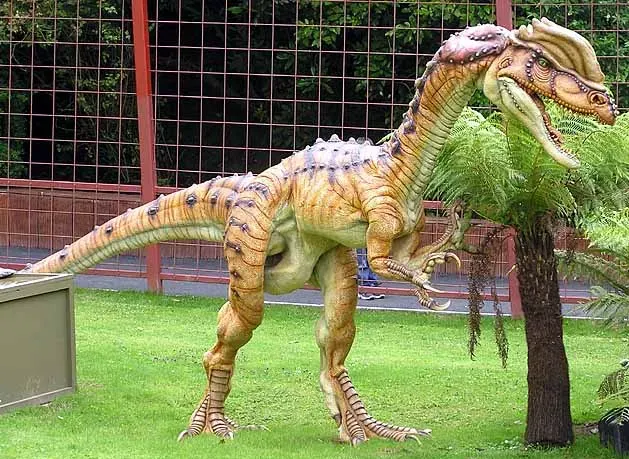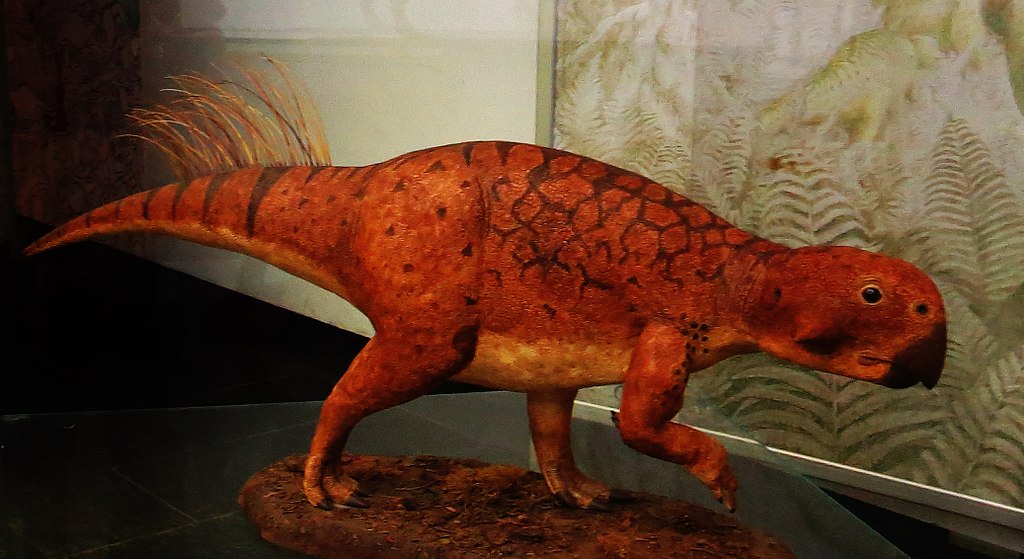
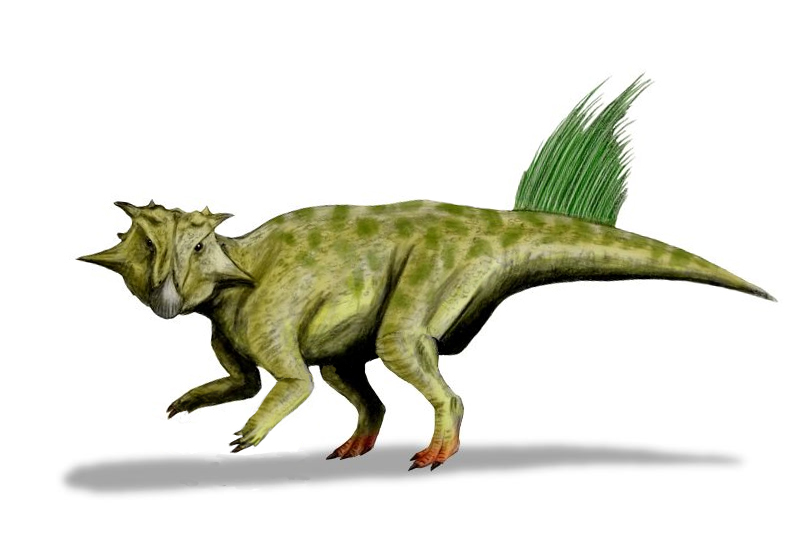
Imagine a dinosaur that looked like someone crossed a parrot with a porcupine, then decided to throw in some rhino DNA for good measure. That’s essentially what Psittacosaurus was – a creature so bizarre and captivating that it challenges everything we thought we knew about prehistoric life. This wasn’t your typical lumbering giant or razor-toothed predator. Instead, picture a dog-sized dinosaur sporting prominent cheek horns and a tail decorated with what can only be described as prehistoric bristles. The discovery of this remarkable creature has paleontologists scratching their heads and rewriting textbooks, proving once again that the ancient world was far stranger and more wonderful than we ever imagined.
The Parrot-Beaked Pioneer
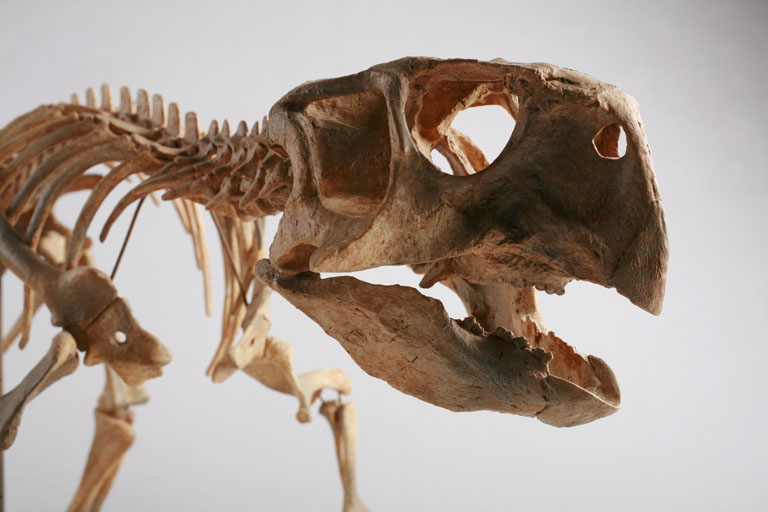
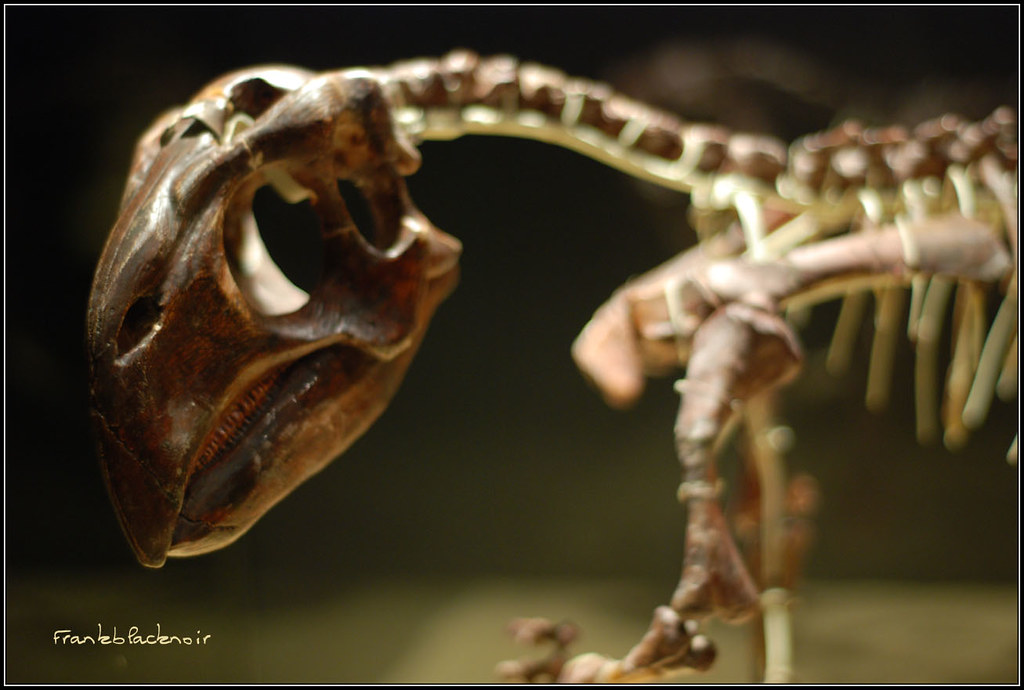
The name Psittacosaurus means “parrot lizard,” and one glance at this dinosaur’s skull explains why. Its beak was remarkably similar to that of a modern parrot, complete with a sharp, curved tip perfect for cracking tough plant material. This wasn’t just a superficial resemblance either – the entire structure of the skull showed adaptations for a specialized diet.
What makes this even more fascinating is that Psittacosaurus lived over 100 million years ago, long before parrots evolved. Yet nature somehow arrived at the same solution twice, creating a beak design so effective that it would later be perfected by birds. The upper jaw was toothless, but the back of the mouth contained rows of small, sharp teeth ideal for processing vegetation.
Those Distinctive Cheek Horns
If the parrot beak wasn’t enough to make Psittacosaurus stand out, the prominent horns jutting from its cheeks certainly did the trick. These weren’t just small bumps or ridges – they were genuine, pointed projections that gave the dinosaur an almost mythical appearance. Scientists initially puzzled over their purpose, wondering if they were weapons, display features, or something else entirely.
Recent research suggests these horns likely served multiple functions. They may have been used for species recognition, helping Psittacosaurus identify members of their kind from a distance. The horns could also have played a role in social interactions, perhaps indicating age, health, or dominance within the group.
Some paleontologists theorize that the horns might have even had defensive applications, though their relatively small size makes this less likely than other explanations.
The Bristly Tail Mystery
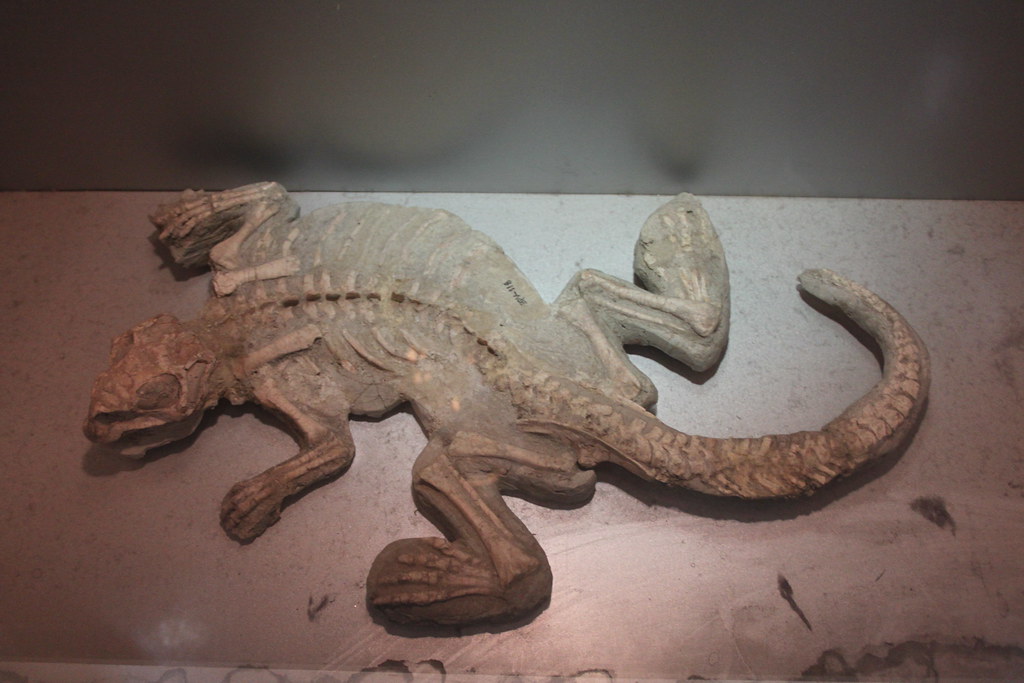
Perhaps the most shocking discovery about Psittacosaurus came in 2016 when scientists announced they had found evidence of bristles along the creature’s tail. These weren’t feathers or simple scales – they were hollow, tube-like structures that extended several inches from the tail’s surface. The finding turned the paleontology world upside down because nothing like this had ever been seen before.
The bristles were preserved in remarkable detail in fossils from China, showing that they were arranged in distinct patterns along the tail. Unlike the complex feathers found on some dinosaurs, these structures were relatively simple but incredibly long, some extending up to six inches from the tail’s base.
This discovery raised immediate questions about what these bristles were for and how common such structures might have been among dinosaurs. Were they for display, temperature regulation, or something else entirely?
A Global Dinosaur Success Story
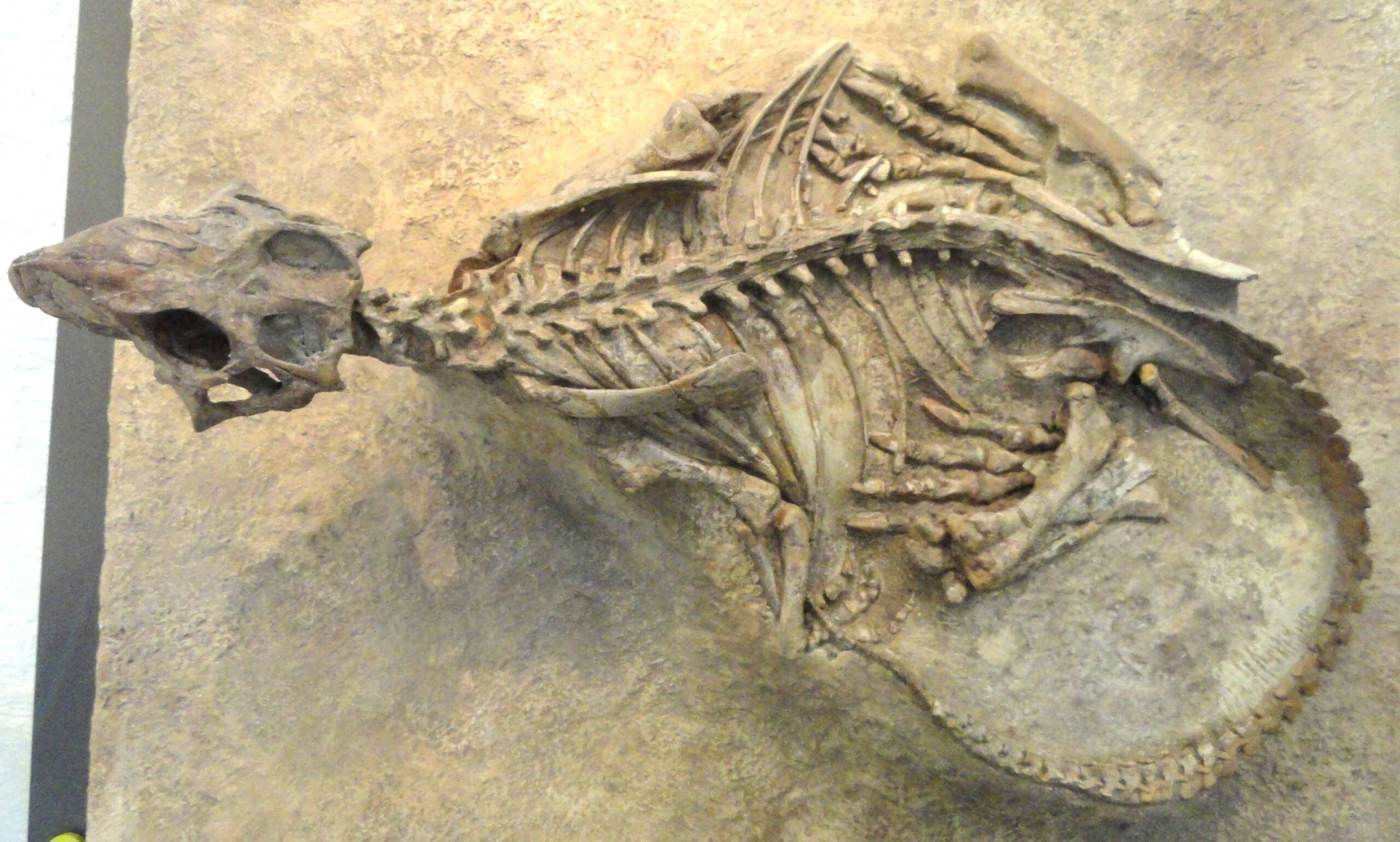
Psittacosaurus wasn’t confined to just one corner of the ancient world – it was a genuinely global success story. Fossils have been found across Asia, from Mongolia to China to Thailand, making it one of the most geographically widespread dinosaur genera ever discovered. This extensive range suggests that Psittacosaurus was incredibly adaptable and successful in various environments.
The sheer number of Psittacosaurus fossils found is staggering. More specimens of this dinosaur have been discovered than almost any other dinosaur species, providing scientists with an unprecedented window into prehistoric life. Some fossil sites have yielded dozens of individuals, including complete family groups.
This abundance of fossils has allowed researchers to study everything from growth patterns to behavior, making Psittacosaurus one of the best-understood dinosaurs in the fossil record.
Size Matters: The Perfect Prehistoric Pet
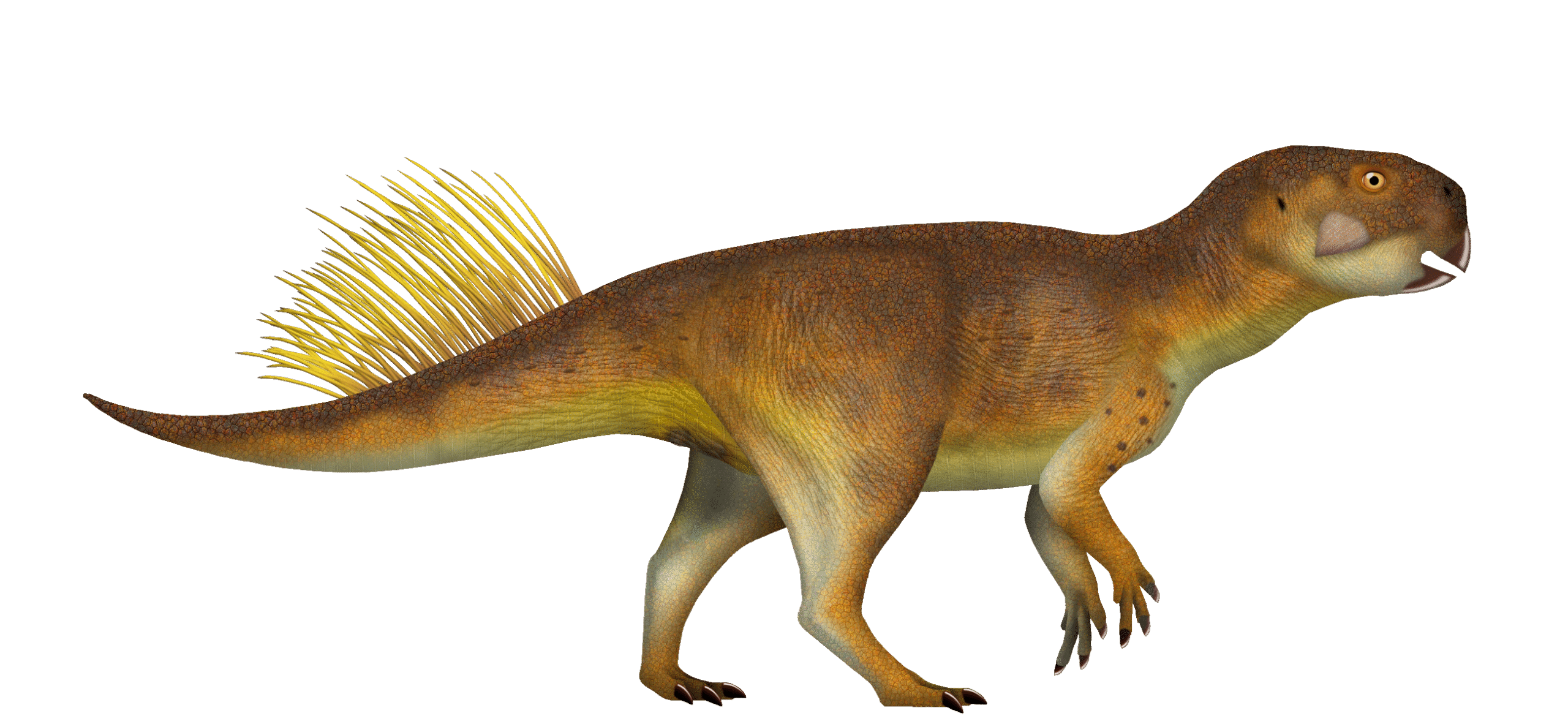
At roughly the size of a large dog, Psittacosaurus occupied a unique niche in the dinosaur world. Most people imagine dinosaurs as massive, lumbering beasts, but Psittacosaurus proves that successful dinosaurs came in all sizes. Adults typically reached about 3-4 feet in length and weighed around 40-50 pounds.
This relatively small size had significant advantages. Psittacosaurus could access food sources that larger dinosaurs couldn’t reach, hide in places that would be impossible for giants like Brontosaurus, and required far less food to survive. It’s a perfect example of how evolution doesn’t always favor the biggest and strongest.
The compact size also meant that Psittacosaurus could be quite agile, probably capable of quick bursts of speed when threatened by predators.
Baby Dinosaurs and Family Life
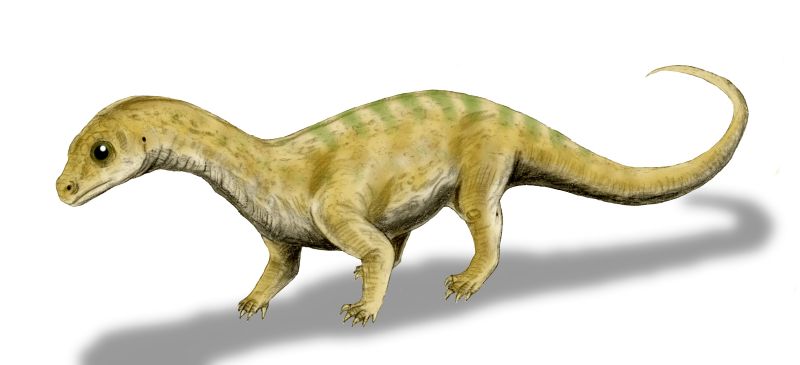
One of the most heartwarming aspects of Psittacosaurus research involves the discovery of numerous juvenile specimens. These baby dinosaurs, some no bigger than a chicken, provide incredible insights into how these creatures grew and developed. The young had proportionally larger eyes and heads compared to adults, giving them an almost cute appearance that would make any modern parent go “aww.”
Fossil evidence suggests that Psittacosaurus adults cared for their young, with some specimens showing adults and juveniles together. This challenges the old stereotype of dinosaurs as cold, uncaring reptiles and instead paints a picture of devoted parents.
The growth patterns visible in the fossils show that young Psittacosaurus developed their distinctive features gradually, with the cheek horns and other characteristics becoming more pronounced as they matured.
The Ultimate Plant-Eating Machine
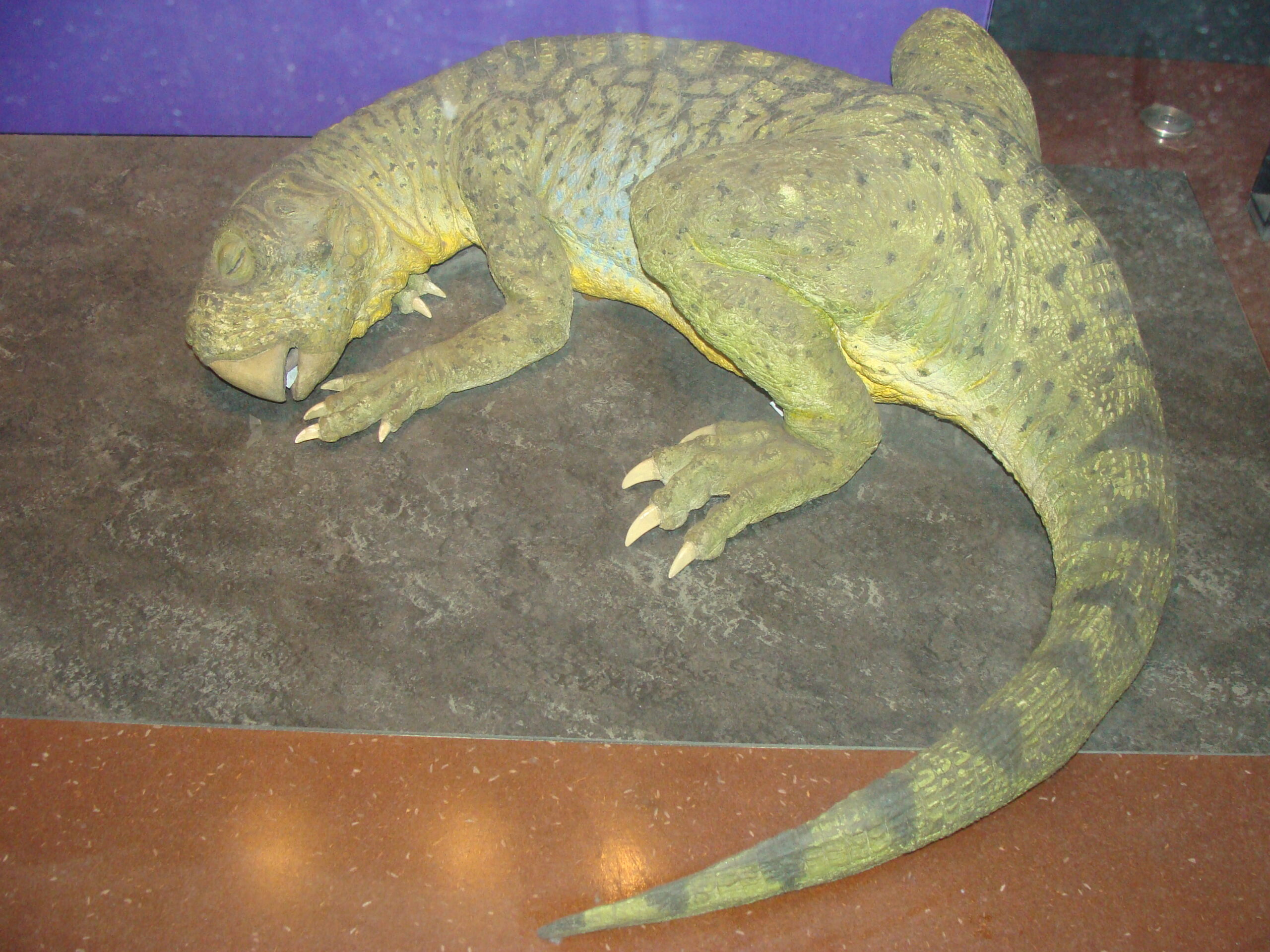
Despite its small size, Psittacosaurus was a highly efficient herbivore. Its specialized beak and teeth were perfectly adapted for processing tough plant material that would have been impossible for many other dinosaurs to digest. The creature likely spent most of its waking hours foraging for food, much like modern herbivorous mammals.
Evidence suggests that Psittacosaurus had a sophisticated digestive system, possibly including stones in its stomach to help grind up plant material. This adaptation allowed it to extract maximum nutrition from relatively poor-quality vegetation.
The dinosaur’s diet probably consisted of ferns, cycads, and other primitive plants that dominated the Cretaceous landscape. Its ability to process these tough, fibrous plants gave it a significant survival advantage.
Living in the Shadow of Giants
The Early Cretaceous period was a dangerous time to be a small dinosaur. Psittacosaurus shared its world with massive predators like Giganotosaurus and various species of tyrannosaurs. Survival required more than just luck – it demanded intelligence, speed, and social cooperation.
Evidence suggests that Psittacosaurus lived in groups, which would have protected them against predators. Multiple sets of eyes watching for danger, combined with their relatively small size and agility, helped these dinosaurs avoid becoming someone else’s lunch.
The social behavior of Psittacosaurus may have been quite complex, with individuals communicating through various means, including possibly visual displays using their distinctive cheek horns.
Feathers, Bristles, and Prehistoric Fashion
The discovery of bristles on Psittacosaurus has revolutionized our understanding of dinosaur appearance and behavior. These structures weren’t just random evolutionary accidents – they likely served important functions that helped the dinosaur survive and reproduce. The bristles may have been used for display during mating season, creating impressive visual signals that could attract mates or intimidate rivals.
Temperature regulation is another possibility. The bristles could have helped Psittacosaurus maintain its body temperature by providing insulation or by creating airflow across the skin. This would have been particularly important for a small dinosaur that would have been more susceptible to temperature changes than larger species.
The exact color and pattern of these bristles remains a mystery, but they probably created quite a striking appearance that would have made Psittacosaurus stand out in any prehistoric landscape.
Fossil Preservation Miracles
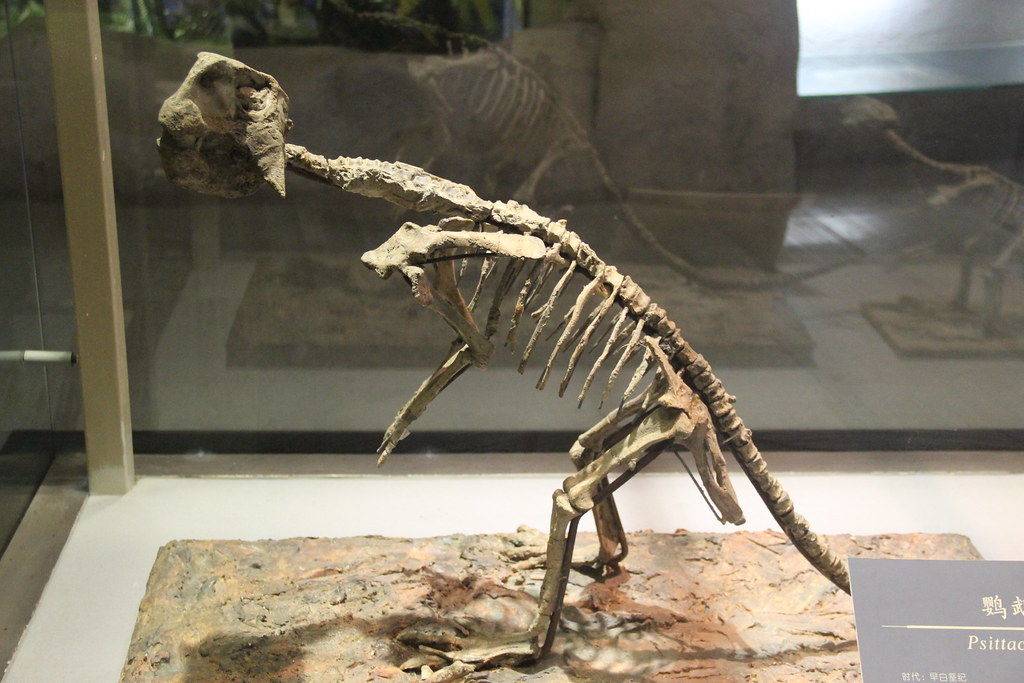
The exceptional preservation of Psittacosaurus fossils has provided scientists with details that are rarely seen in the fossil record. Some specimens preserve not just bones but also soft tissues, skin impressions, and even the famous tail bristles. This level of preservation is extraordinary and has only been possible due to very specific environmental conditions.
The fossil sites in China, where many Psittacosaurus specimens have been found, were once lake beds with fine sediment that could capture and preserve minute details. These conditions created a snapshot of prehistoric life that’s almost like looking at a photograph from 100 million years ago.
These remarkably preserved fossils have allowed scientists to study everything from the dinosaur’s skin texture to its muscle attachments, providing a three-dimensional understanding of how these creatures lived and moved.
The Social Dinosaur
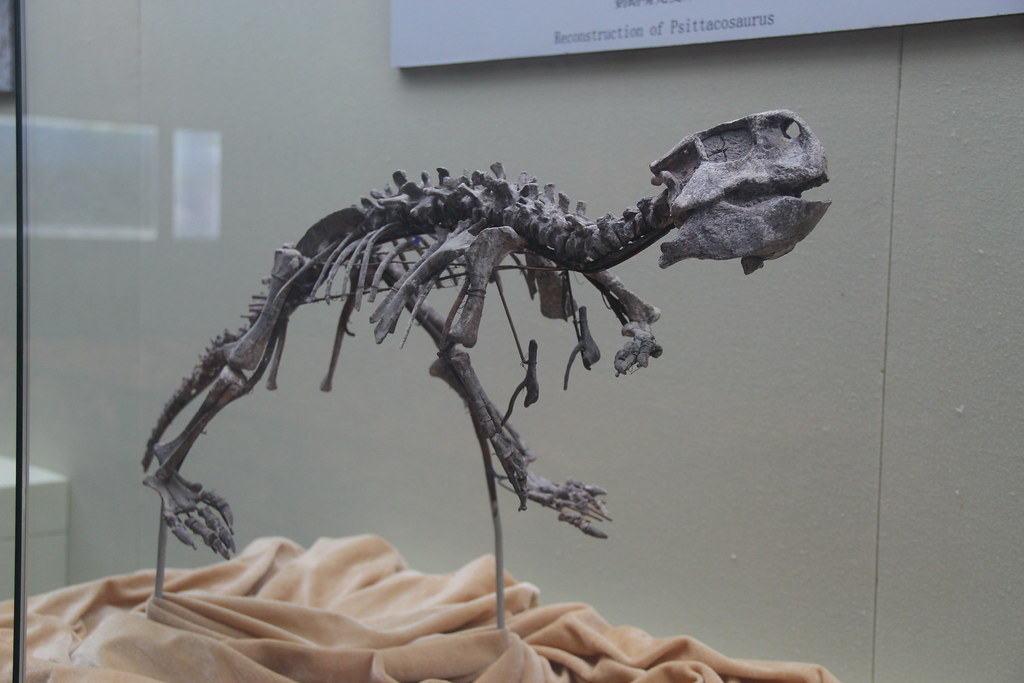
Unlike the solitary hunters often portrayed in movies, Psittacosaurus appears to have been a highly social creature. Multiple fossil sites have revealed groups of individuals together, suggesting that these dinosaurs lived in herds or family groups. This social behavior would have provided numerous advantages, from protection against predators to more efficient foraging.
The social structure of Psittacosaurus groups may have been quite complex, with different individuals playing different roles within the community. Adults likely protected the young, while lookouts watched for danger, and others focused on finding food.
Communication within these groups probably involved a combination of visual signals, sounds, and possibly even chemical cues. The prominent cheek horns and tail bristles may have played important roles in this communication system.
Evolutionary Significance
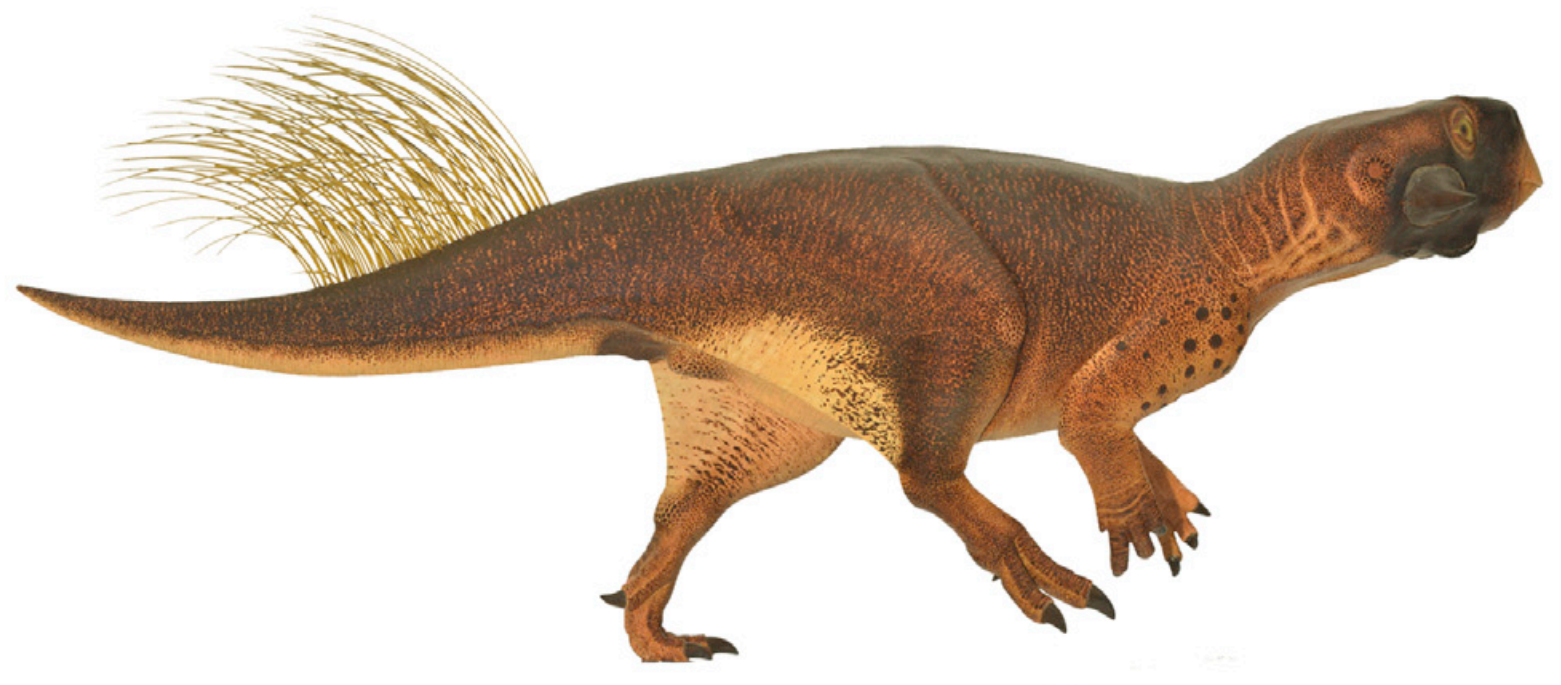
Psittacosaurus represents a crucial evolutionary stepping stone in the development of larger ceratopsian dinosaurs like Triceratops. While it lacked the massive frills and horns of its later relatives, it possessed the basic body plan and many of the key features that would be elaborated upon in later species.
The discovery of Psittacosaurus has helped scientists understand how the ceratopsian family tree developed and spread across the globe. It shows that the group’s success wasn’t just due to large size and impressive weaponry, but also to adaptability and efficient resource utilization.
This dinosaur’s evolutionary importance extends beyond just its own family. The bristles and other unique features of Psittacosaurus have implications for understanding how various integumentary structures evolved in dinosaurs and their bird descendants.
Scientific Controversies and Debates
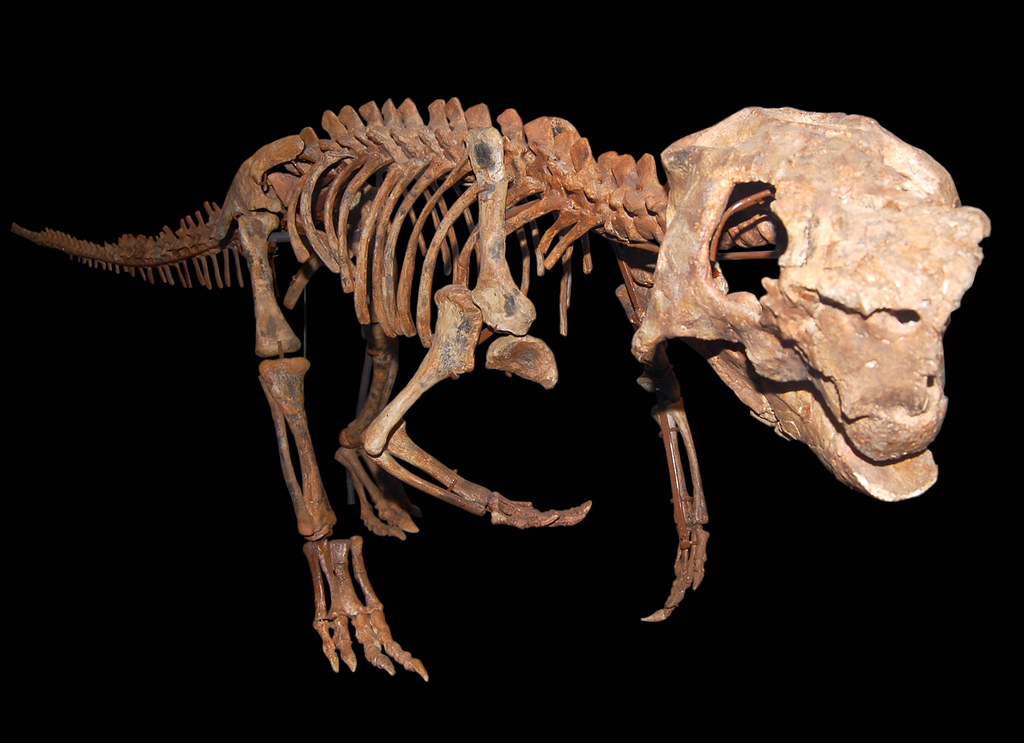
Not everything about Psittacosaurus is settled science. The function of the tail bristles continues to be debated, with different researchers proposing various theories about their purpose. Some argue for display functions, others for temperature regulation, and still others suggest they might have had defensive applications.
The classification of different Psittacosaurus species is another ongoing area of research. With so many specimens found across such a wide geographic range, determining which variations represent different species versus individual or geographic variation is challenging.
Recent studies using advanced imaging techniques and computer modeling are helping to resolve some of these debates, but discoveries continue to add complexity to our understanding of this remarkable dinosaur.
Modern Technology Meets Ancient Life
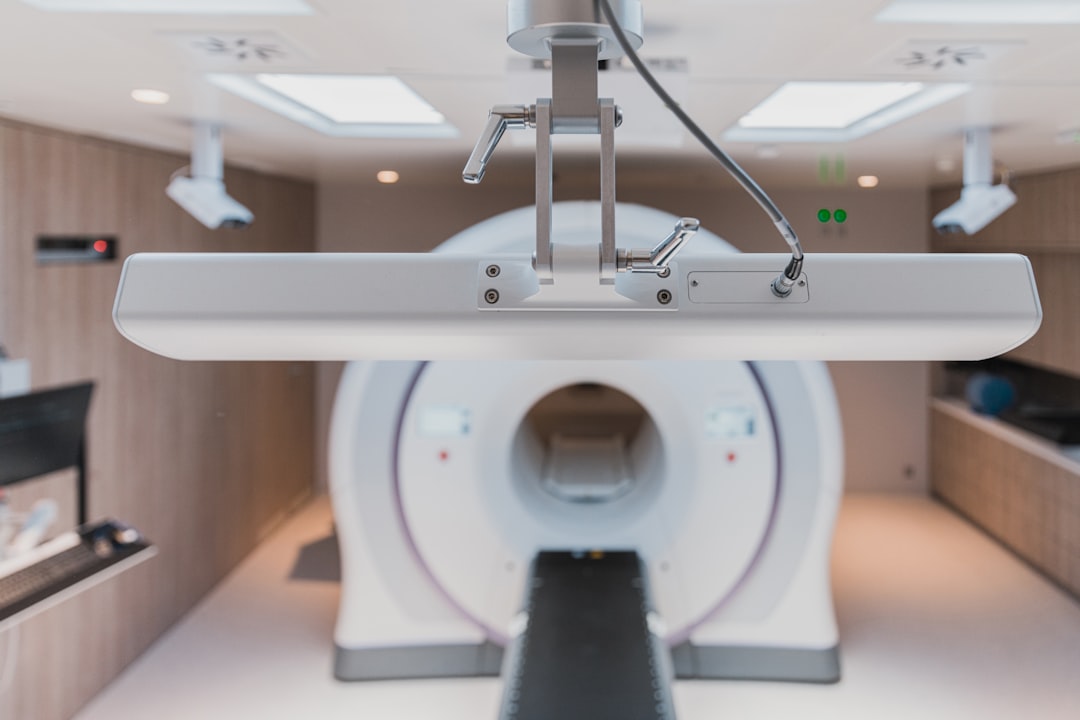
The study of Psittacosaurus has benefited enormously from cutting-edge technology. CT scans can reveal internal bone structure without damaging precious fossils, while chemical analysis can determine diet and habitat preferences. Computer modeling helps scientists understand how the dinosaur moved and what its biomechanics were like.
Perhaps most exciting is the use of melanosomes – microscopic structures that contain pigments – to determine the actual colors of dinosaur skin and bristles. While this technology is still developing, it may eventually allow us to know exactly what Psittacosaurus looked like in life.
These technological advances are transforming paleontology from a purely observational science into one that can make precise, testable predictions about prehistoric life.
Conclusion
The story of Psittacosaurus is far from over. Each discovery adds another piece to the puzzle of this remarkable dinosaur’s life and times. From its parrot-like beak to its mysterious tail bristles, this creature continues to challenge our assumptions about what dinosaurs were like and how they lived. Perhaps most importantly, Psittacosaurus reminds us that the prehistoric world was filled with creatures just as strange and wonderful as anything we can imagine today. The next time you see a parrot or pet a bristly dog, remember that nature was experimenting with these features millions of years before mammals and birds perfected them. What other secrets might be waiting in the rocks, ready to surprise us with their bizarre beauty?