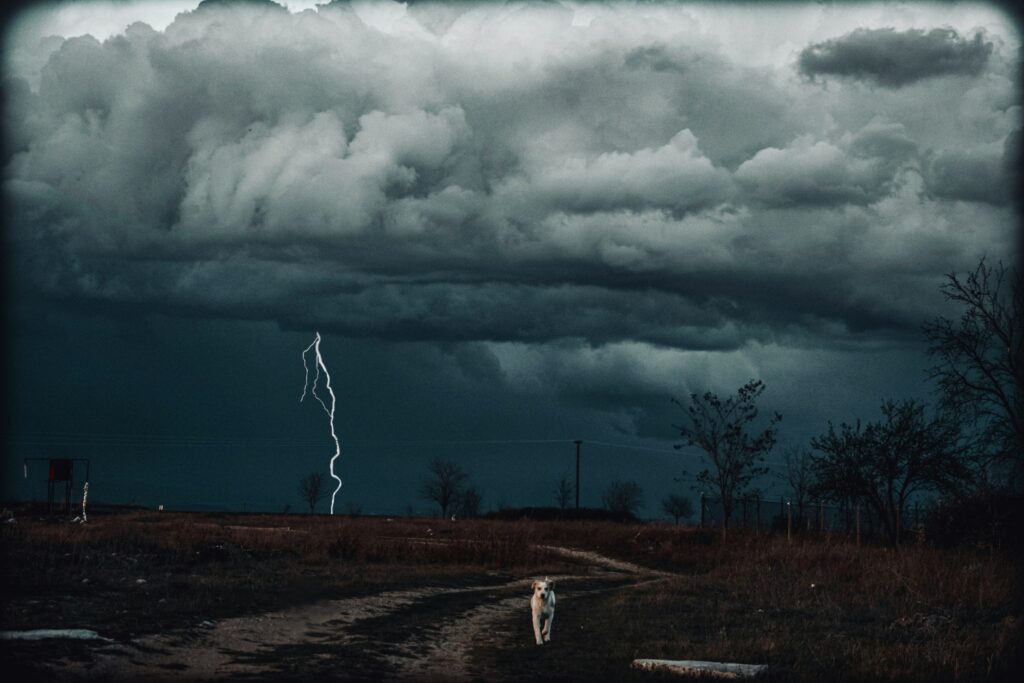
You know that feeling when the sky cracks open, the whole house vibrates, and your dog suddenly turns into a trembling shadow glued to your ankles? Meanwhile, wild animals outside mostly carry on like it is just another noisy day on planet Earth. That contrast is not just sad or puzzling; it is one of the strangest side effects of domestication that we are only starting to understand.
Psychology, neuroscience, and animal behavior studies are converging on a surprising idea: we did not just tame dogs, we quietly rewired how their brains judge danger. Thunder is the perfect test case. Why does this natural, ancient sound barely rattle a wolf but reduce a golden retriever to a shaking mess? The answer seems to be that, over thousands of years, we nudged canine threat systems away from raw survival mode and toward something much more dependent on humans, routine, and predictability than nature ever designed.
From Survival Mode to Living Room Mode: How Domestication Rewrote the Dog Brain
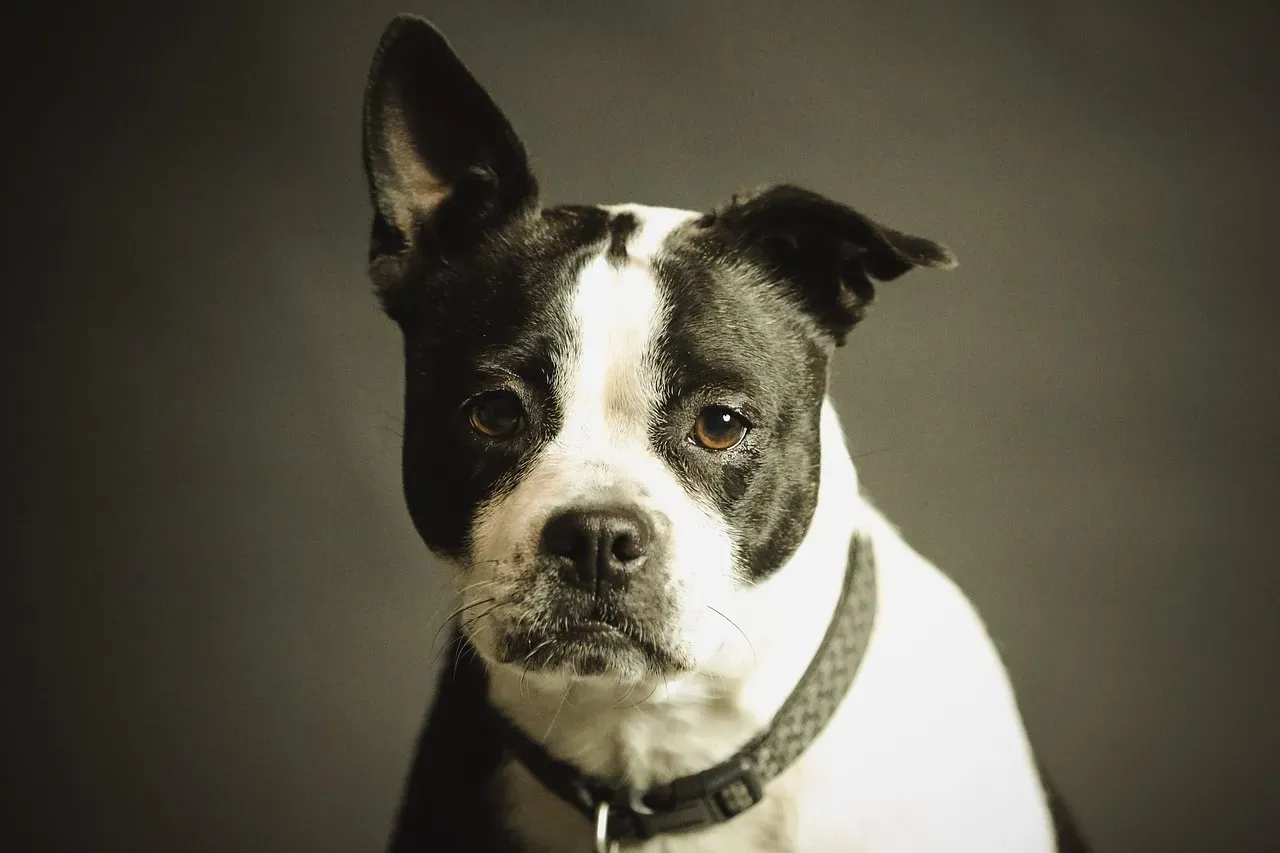
Imagine taking an animal built to survive blizzards, predators, starvation, and fights, and then giving it central heating, regular meals, and a soft bed for a few thousand years. That is essentially what we did to wolves when they became dogs. In the wild, a nervous system that overreacts to every noise is a waste of energy; animals that survived learned which threats matter and which are just background chaos like thunder on the horizon.
Domestication changed the rules of that game. By protecting dogs from most real-world dangers, we accidentally removed a lot of the natural feedback that would teach a wild canid what is worth panicking over. In psychological terms, we weakened the old calibration system. The parts of the brain that flag danger still fire up, but they are no longer trained primarily by nature. They are tuned by the home, by us, and by a hugely different set of daily experiences than their ancestors ever had.
The Thunder Puzzle: Loud, Sudden, but Not Actually Dangerous
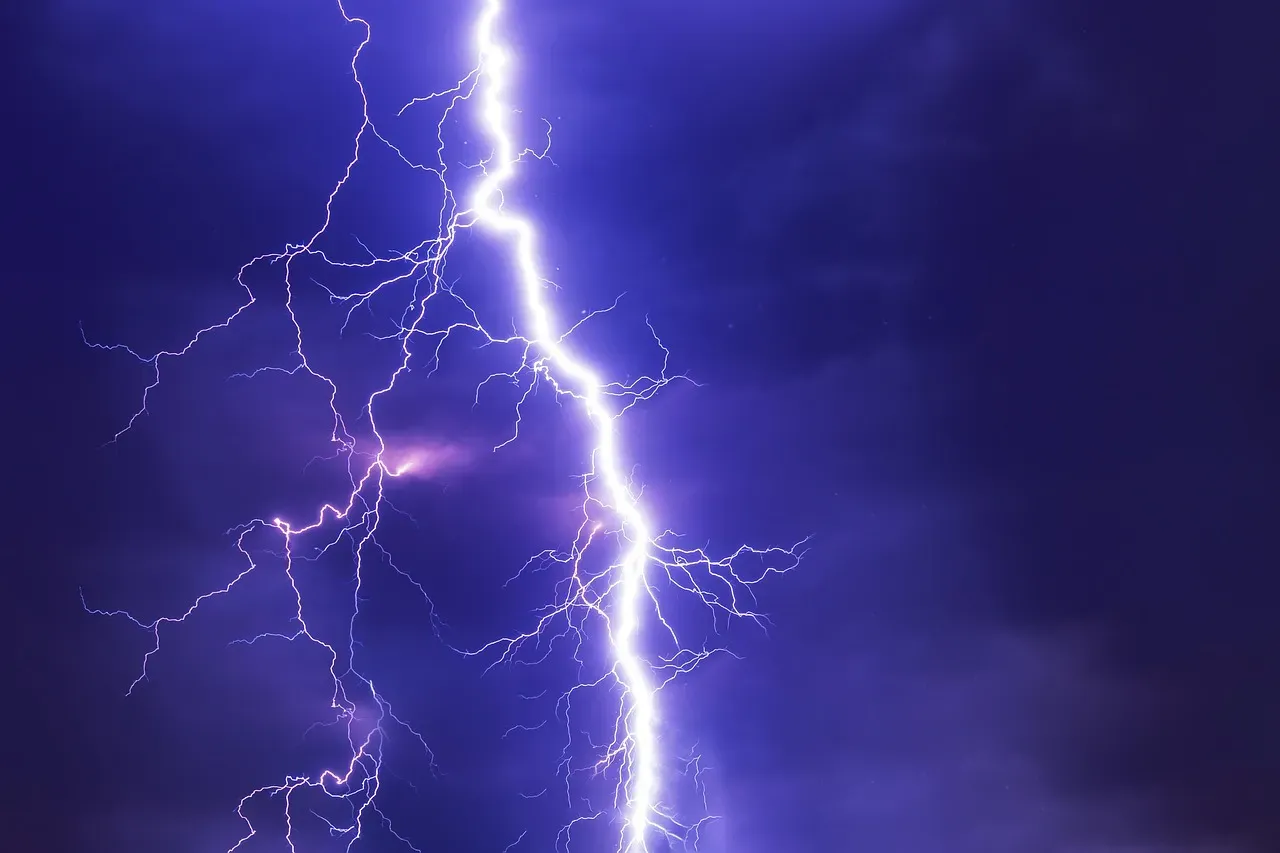
Thunder is loud, unpredictable, and sometimes literally shakes the ground. For a brain wired to notice sudden changes, it pushes a lot of alarm buttons at once. Yet, for wild animals, thunder rarely comes with a direct, immediate consequence like being chased, bitten, or suddenly starving. Over time, the nervous system of wild species treats it a bit like noisy traffic: intense, but not automatically life-threatening.
Domestic dogs, however, often lack that hard-earned, survival-based context. Many live indoors, with muted outdoor sound and very limited exposure to natural weather extremes. When thunder suddenly breaks through that sensory bubble, their sensory systems may register it as a full-blown emergency without having the learned history to say, this has never actually hurt me. So to a dog whose life is mostly quiet and controlled, a thunderstorm can feel less like distant weather and more like the universe just kicked in the door.
The Human Shield Effect: Safety That Quietly Raises Sensitivity
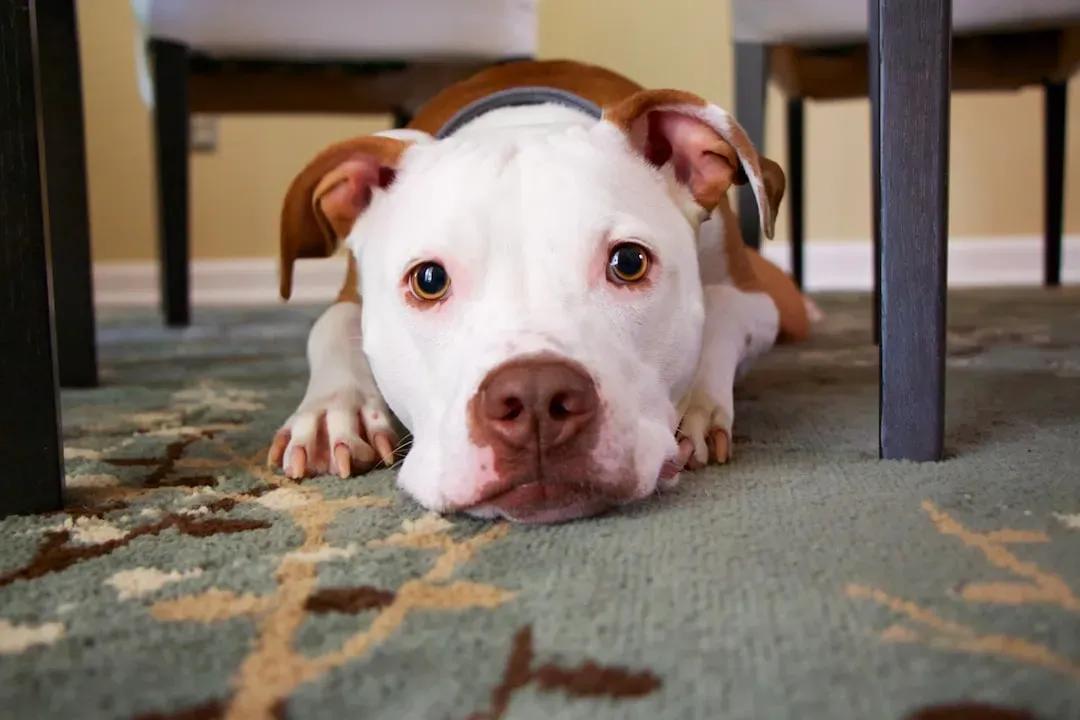
One of the most paradoxical ideas in modern psychology is that high safety can sometimes make us more anxious, not less. The same thing appears to be happening with dogs. By acting as their constant protectors, we have become their psychological shield. Most domestic dogs do not need to solve threats alone; they look to us for cues about what is safe, what is dangerous, and how to react.
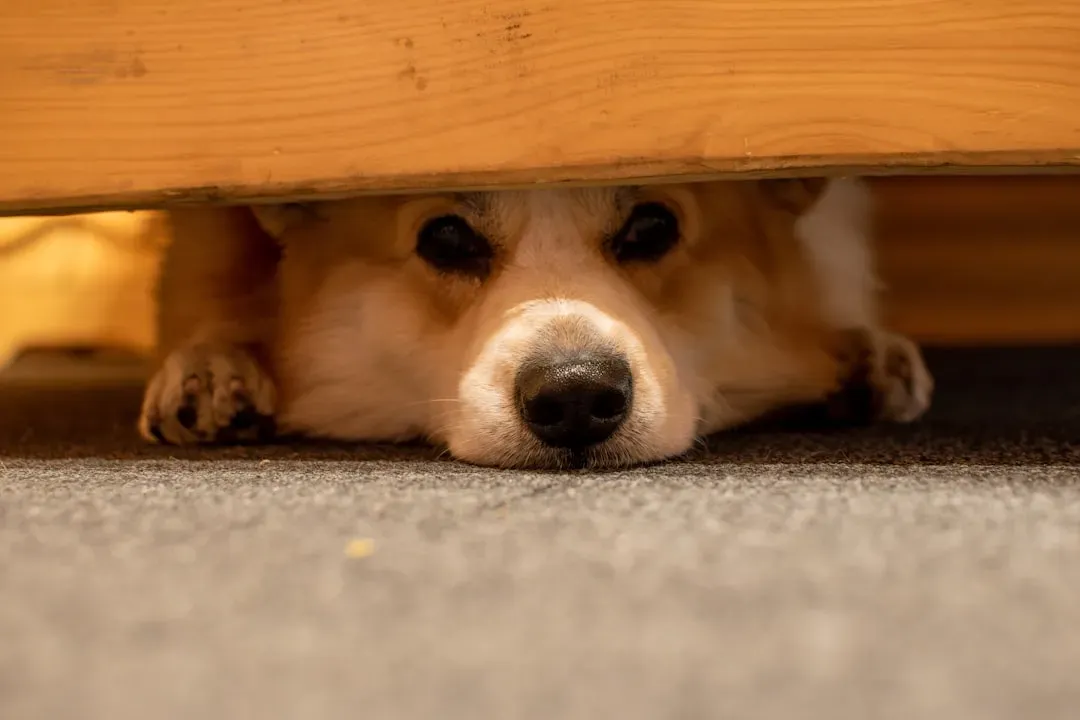
This heavy reliance has a hidden cost. When something happens that we cannot quickly explain or control, like thunder or fireworks, the dog’s main safety reference point suddenly becomes unreliable. The thunder is booming, the house is vibrating, and their human is just…sitting there. That mismatch between internal alarm and external guidance can intensify distress instead of calming it, leaving the dog trapped in a fear state with no clear script to follow.
Hyper-Attuned to Us, but Not to Nature Anymore
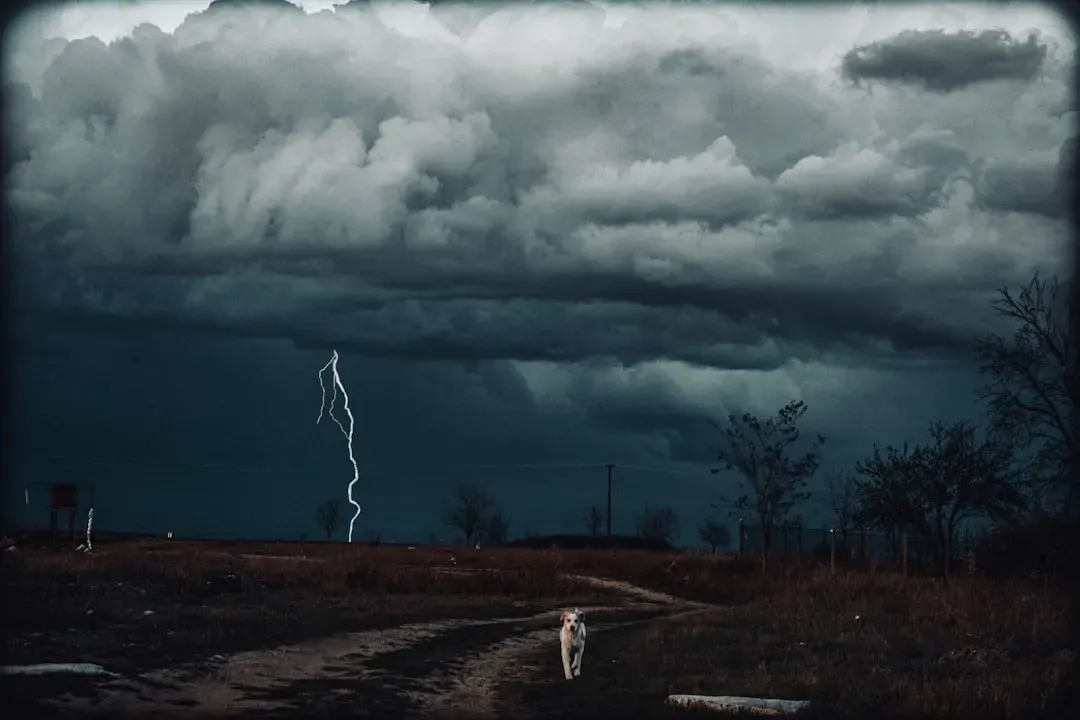
Wolves watch the landscape; dogs watch people. Over millennia, we selected for those animals that paid the most attention to humans: the ones who responded to our gestures, our faces, our moods, and our routines. That made dogs incredible companions, but it also shifted what their brains treat as most important. In a sense, we became their weather, their climate, their main environment.
Because of that, many dogs are less tuned to natural rhythms and more tuned to household patterns. A storm rolling in is not part of a natural seasonal cycle in their minds; it is an abrupt break in the normal script of the day. When the sound of thunder does not fit any of the usual patterns of feeding, walking, or play, it becomes an unexplained sensory spike that the brain may tag as suspicious at best, terrifying at worst.
The Threat Response Dial: Why Domestication May Have Turned It Up, Not Down
We often think domesticated animals must be less fearful than wild ones, but that is not always true. It is more accurate to say that fear got redistributed. In wild animals, the threat response is shaped by constant selection: animals that freeze, flee, or fight at the wrong moment do not survive long. Over generations, only those with a reasonably well-calibrated threat dial remain to reproduce.
Domestication disrupted that process. We sheltered and bred animals that might not have survived in the wild, including those with more reactive or anxious temperaments. In some lines, especially where appearance or friendliness took priority over resilience, the internal threat dial may have been left a bit high, or at least more easily knocked off balance. Thunder, being intense but not truly dangerous, is exactly the kind of stimulus that exposes that hidden hypersensitivity.
When Our Reactions Accidentally Teach Dogs to Fear Thunder More
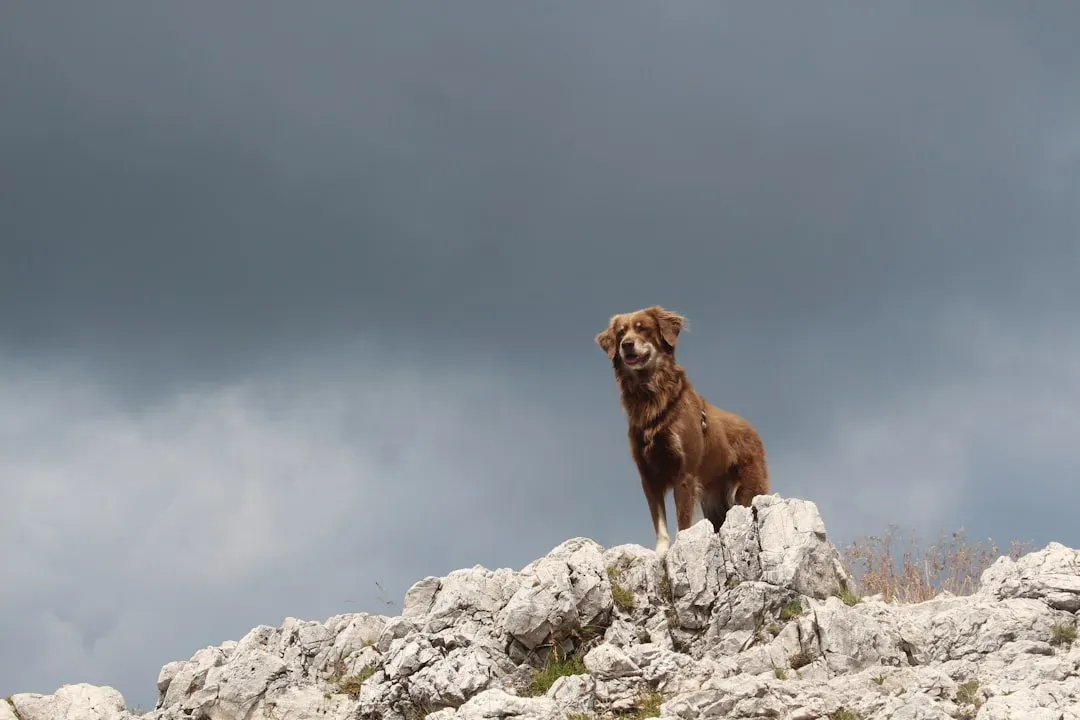
There is also a more personal layer: how we respond in the moment. Many dog owners, me included, have instinctively rushed to comfort a terrified dog during a storm. It feels compassionate, and emotionally it is hard not to do. But dogs are brilliant at drawing connections between events. If loud booms are always followed by unusual levels of fuss, stroking, or worry in our voices, the dog learns that this noise is a very big deal.
On the other side, some owners try to ignore or even scold fearful behavior, thinking it will toughen the dog up. That can backfire just as badly. From the dog’s point of view, the sky explodes, their nervous system panics, and their main attachment figure suddenly goes cold or annoyed. Instead of learning that thunder is neutral, they may learn that thunder predicts emotional distance or tension. Both extremes can strengthen, rather than weaken, the fear pattern over time.
Genes, Breeds, and the Inherited Echo of Old Survival Systems
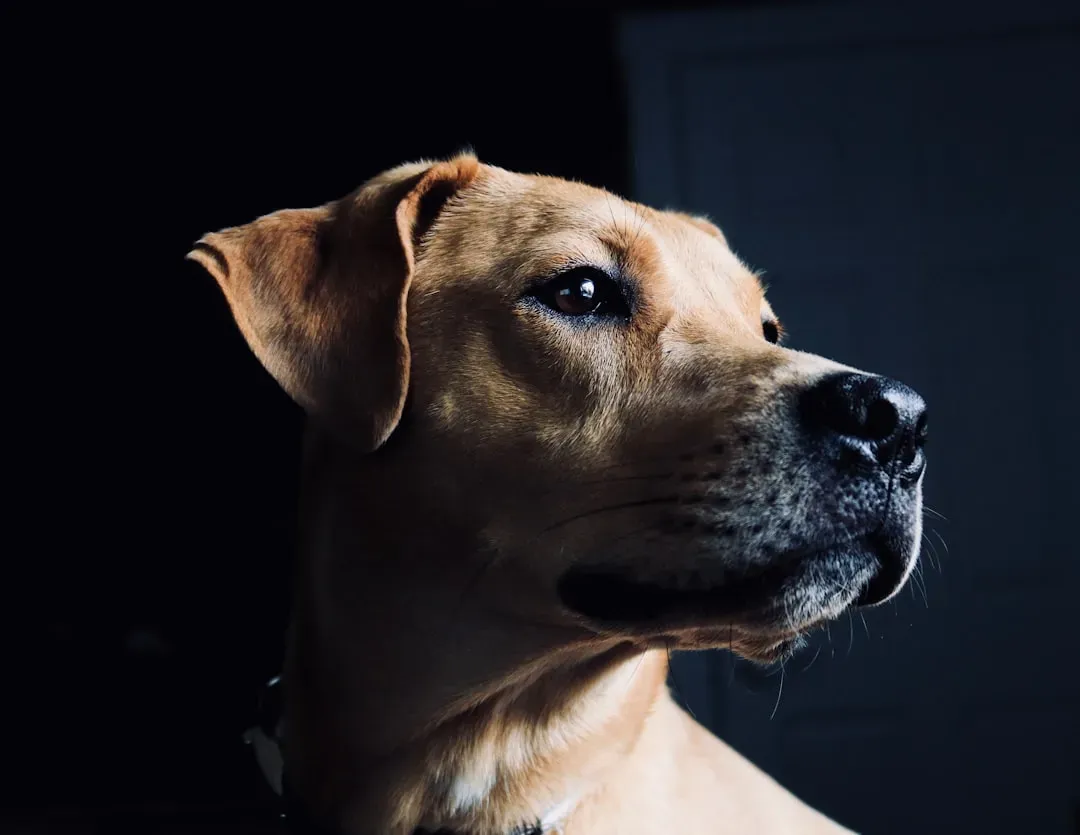
Not all dogs react to thunder the same way, and that is a clue that genes and breeding matter. Some herding and working breeds, for example, seem more prone to sound sensitivity in general. That makes sense when you think about dogs bred to respond instantly to whistles, shouts, and sudden changes, and to stay hyper-alert to environmental shifts. The same neural wiring that makes them brilliant workers can become a liability in a living room during a storm.
At the same time, even within the same breed you will find huge variation. That suggests that the old survival systems from their wolf ancestors are still there, just expressed differently depending on the dog’s genetic mix and upbringing. In a way, thunder exposes the ghost of the wild canid brain hiding inside the domesticated pet: the ancient circuitry designed for forests and mountains, now trying to make sense of sound inside a human-made world it never evolved to understand.
Modern Life: Enriched, Indoor, and Weirdly Artificial for a Canine Brain

Domestic dogs live in an environment that would be unrecognizable to their ancestors. Constant low-level noise from appliances, filtered outdoor sound through double-glazed windows, artificial light at night, and stable indoor temperatures all flatten the natural sensory landscape. Under those conditions, any sudden, powerful natural sound like thunder stands out sharply, almost like a glitch in the system.
Wild animals, by contrast, grow up in a world where weather, wind, animal calls, and distant rumbles form an ever-changing tapestry. Thunder is only one thread in that pattern, not a rare intrusion. So while a fox or deer might startle, they are used to living with uncontrollable natural noise. Many pet dogs are not. Their lives are intensely shaped by human schedules and human buildings, which makes the occasional brutal reminder that nature is loud and indifferent feel like a personal attack.
Helping Thunder-Scared Dogs Without Pretending They Are Broken
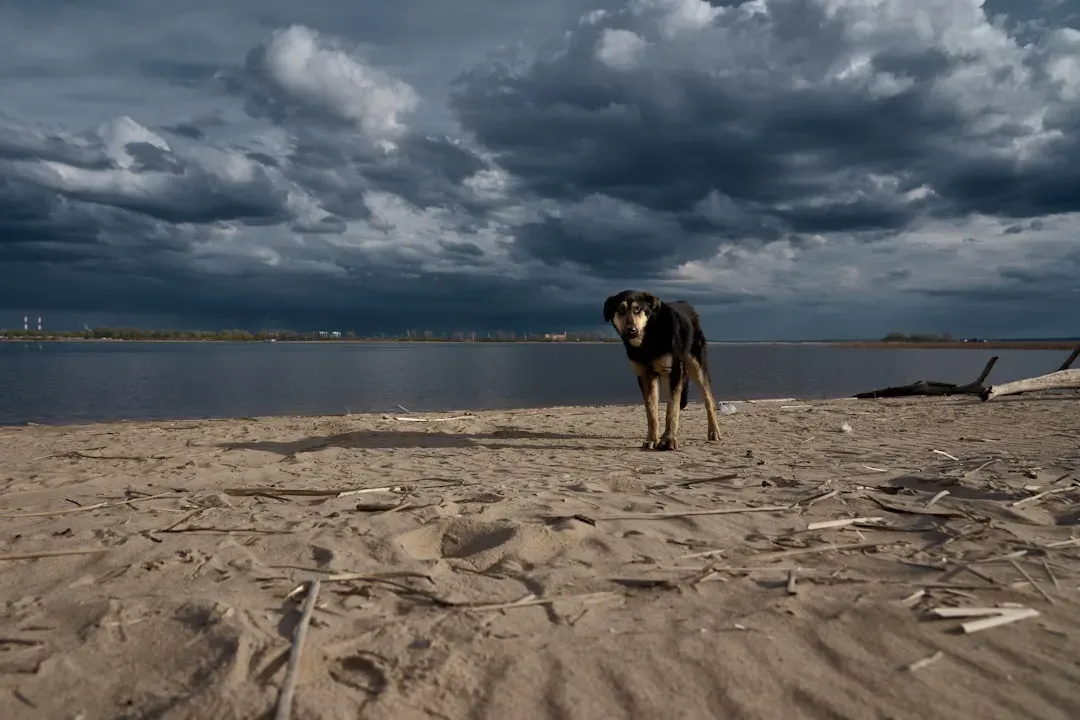
One of the biggest mistakes we make, in my opinion, is treating noise-phobic dogs as if they are simply faulty or dramatic. Their reactions are not irrational in the way we often think. They are logical responses from a brain that has been reshaped by domestication, breeding, human dependence, and an environment it did not get to design. Understanding that does not magically fix the problem, but it should change how we feel about it – and how patient we are.
Behavior strategies like gradual desensitization to recorded storm sounds, creating safe snug spaces, and staying calm and predictable during real storms can all help recalibrate the dog’s threat system. Some dogs may also need professional behavior support or medical help, especially when fear is severe. But the goal should never be to erase their sensitivity entirely. It should be to give their very old, very confused survival machinery new, consistent data: the sky can boom, the walls can shake, and you are still safe.
Conclusion: We Softened Their World, Then Blamed Them for Feeling Scared in It
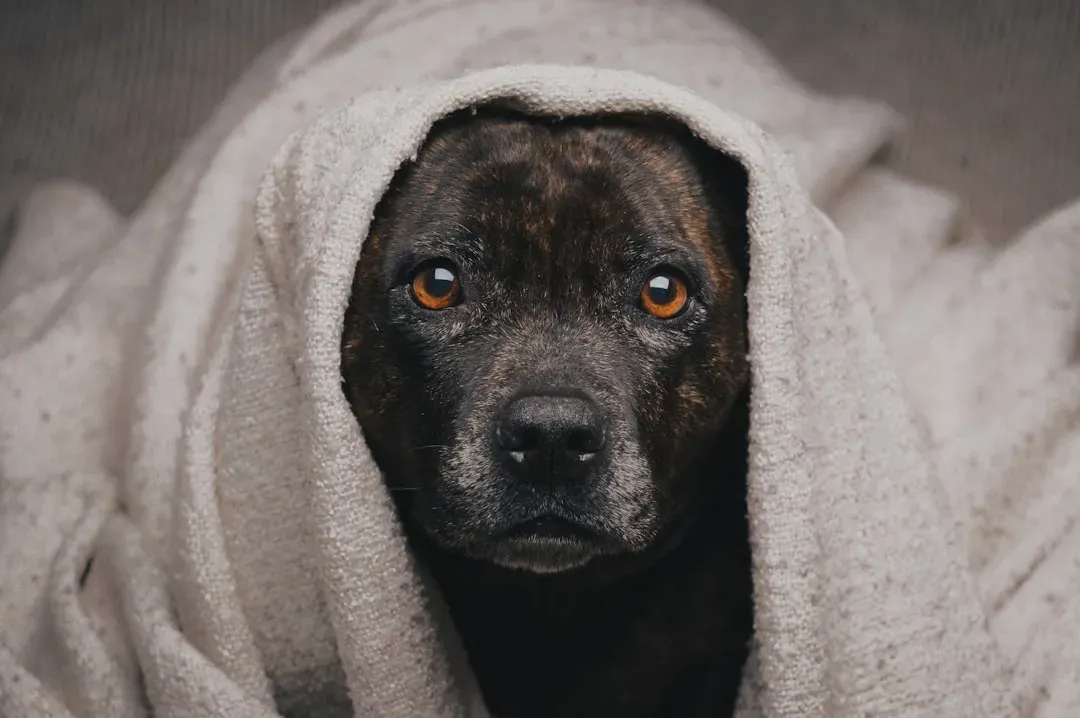
I think the hardest truth in all of this is that thunder does not say something is wrong with dogs; it says something meaningful about what we did to their minds. We took a wild predator, wrapped it in comfort, redirected its loyalty and attention toward us, and then acted surprised when its ancient warning systems struggled to make sense of modern noise and human-built environments. In that light, thunder fear in domestic dogs looks less like a flaw and more like the inevitable side effect of a bond that changed the rules of survival.
My own view is that we owe dogs a little humility here. Domestication did not just give us a friendly animal; it created a brain that leans on us for context, safety, and interpretation of the world. When the sky explodes and they panic, they are not being dramatic – they are showing us where nature and our design of their lives collide. The real question is not why domestic dogs fear thunder more than wild animals, but whether we are willing to take responsibility for the emotional consequences of the species we reshaped.