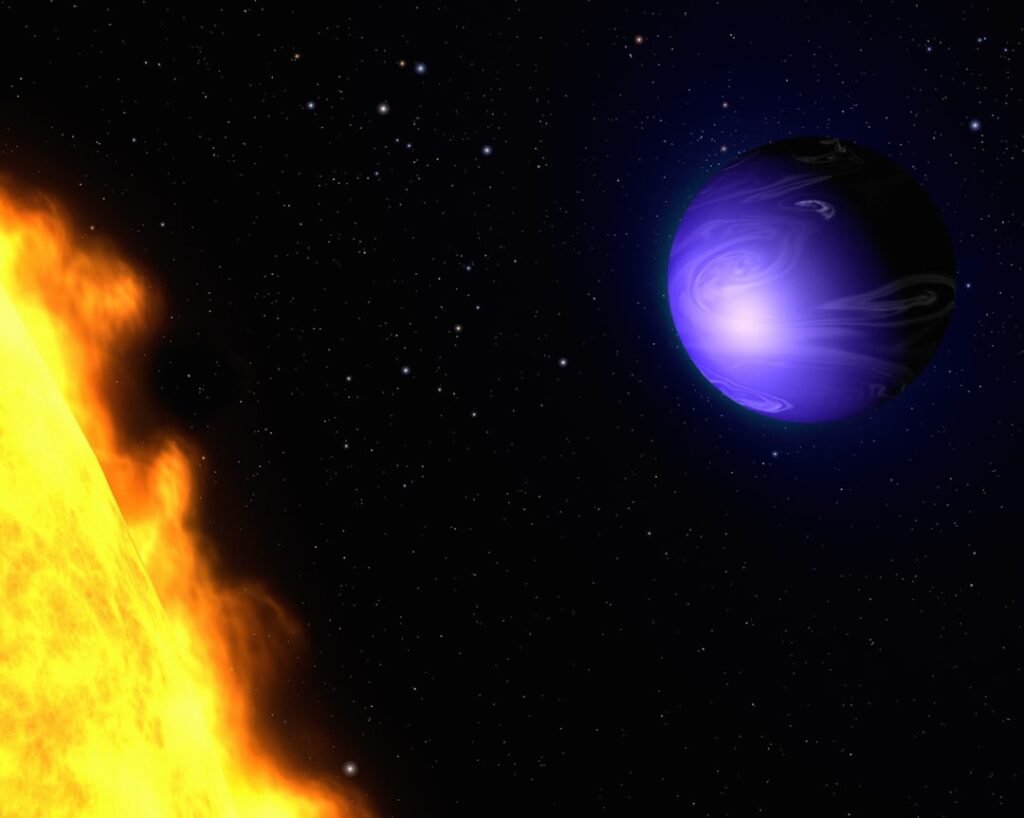
Astronomers struggle to capture detailed images of planets beyond our solar system, but researchers at Harvard University have proposed a quantum computing method to overcome longstanding barriers.
Exoplanet Imaging Hits Persistent Roadblocks
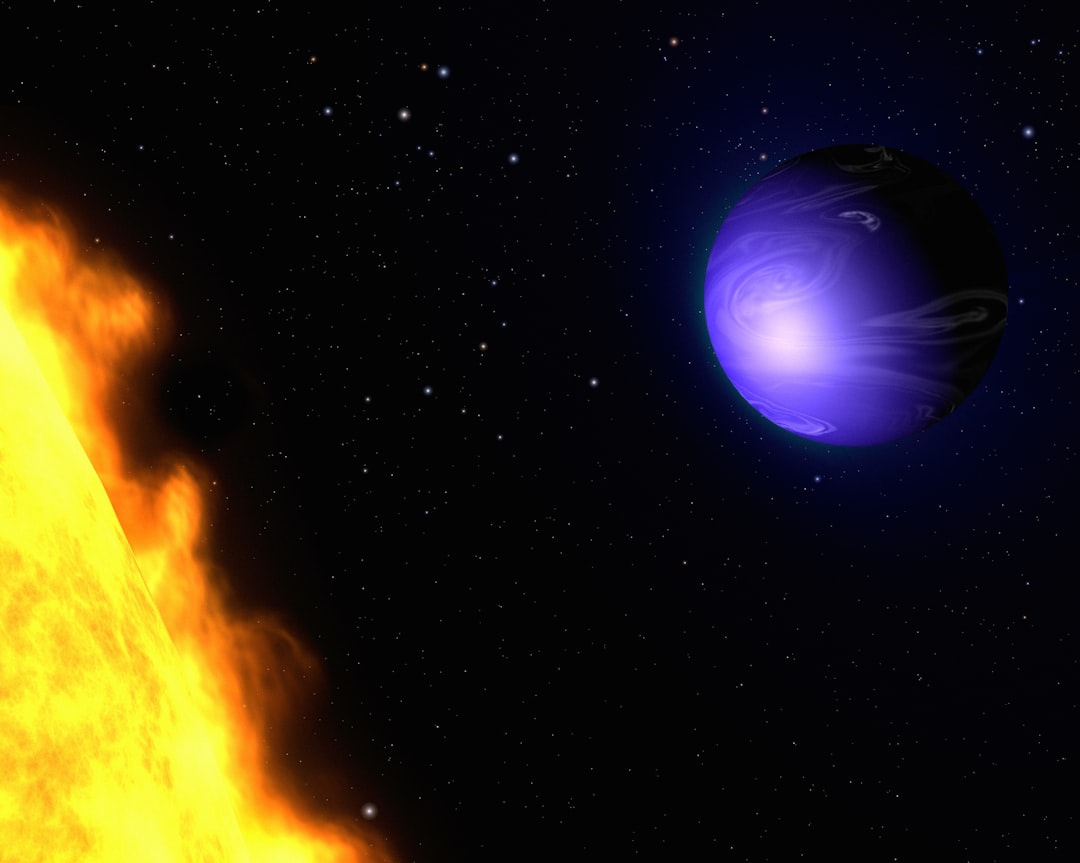
Exoplanet Imaging Hits Persistent Roadblocks (Image Credits: Unsplash)
More than 6,000 exoplanets have now been confirmed, yet direct photographs of these worlds remain exceptionally rare.
Most detections rely on indirect techniques, such as observing dips in a star’s light when a planet passes in front. True images show only faint dots overwhelmed by stellar glare. For instance, the James Webb Space Telescope recently imaged four young, giant exoplanets in the HR 8799 system, located 130 light-years away. Those colorful orbs still lack intricate details due to the planets’ dim signals.
Conventional optics demand vast numbers of photons to reconstruct usable pictures. Fainter sources like exoplanets deliver too few, limiting resolution and clarity. This scarcity hampers efforts to study atmospheres or surfaces directly.
Quantum Mechanics Enters the Astronomical Arena
Quantum computers exploit the peculiar rules governing light particles, or photons, to process weak signals far more effectively than classical systems. Photons from exoplanets inherently follow quantum mechanics, making this match intuitive.
Cosmo Lupo, a researcher at the Polytechnic University of Bari in Italy, explained the logic: “Photons obey the rules of quantum mechanics. Therefore, it is natural and it makes sense to investigate quantum methods to detect and process light coming, for example, from exoplanets.”
Traditional methods require thousands of photons for a viable image. Quantum approaches could succeed with just hundredths or thousandths of that volume, slashing the photon count dramatically.
Harvard’s Dual-Quantum System Design
Johannes Borregaard and his Harvard colleagues outlined their strategy in a paper titled “Enhancing optical imaging via quantum computation,” accepted for publication in PRX Quantum on December 12, 2025.
The setup features two specialized quantum computers working in tandem. The first, built from engineered diamonds, captures and stores the fragile quantum states of incoming photons. Diamond-based devices have already proven effective in other quantum tasks.
The second machine, using ultra-cold atoms, then deciphers those states to produce enhanced images. Initial tests applied the concept to a star in the Canis Minor constellation, demonstrating feasibility.
- Diamond quantum memory preserves photon information precisely.
- Cold-atom processor reconstructs high-fidelity visuals.
- Combined power yields resolution boosts unattainable classically.
- Enables detection of molecular signatures in planetary atmospheres.
Pathways to Transformative Discoveries
This innovation could elevate exoplanet images from blurry specks to detailed portraits, revealing surface features and chemical compositions. Astronomers might soon identify atmospheric molecules through unique spectral patterns, advancing the hunt for habitable worlds.
Lupo expressed optimism about broader impacts: “I am thrilled to see how quantum computing will impact the field of imaging and astronomy in the future. The new work is an important first step in this direction.”
Though real-world deployment awaits further hardware advances, the theoretical framework marks progress. Quantum systems like IBM’s early prototypes hint at scalable futures.
Key Takeaways
- Quantum methods need far fewer photons for exoplanet imaging.
- Harvard’s diamond-and-atom setup targets direct, high-resolution photos.
- Potential to reveal molecular “fingerprints” on distant planets.
Quantum computing stands ready to redefine our gaze upon the cosmos, turning elusive exoplanets into vivid subjects of study. What potential do you see for this technology in unraveling cosmic mysteries? Tell us in the comments.