A groundbreaking analysis of early Eocene fossils has illuminated the swift expansion of perissodactyls, the mammalian order encompassing horses, rhinoceroses, and tapirs, across the Northern Hemisphere 56 million years ago. These odd-toed ungulates first materialized during the Paleocene-Eocene Thermal Maximum (PETM), a brief but intense episode of global warming that reshaped ecosystems worldwide. Researchers Jérémy Tissier and Thierry Smith presented their findings in a study published in the Proceedings of the National Academy of Sciences, revealing origins potentially rooted in Indo-Pakistan and patterns of dispersal that mirrored those of other modern mammal groups.
Decoding the Dawn of Perissodactyl Diversity
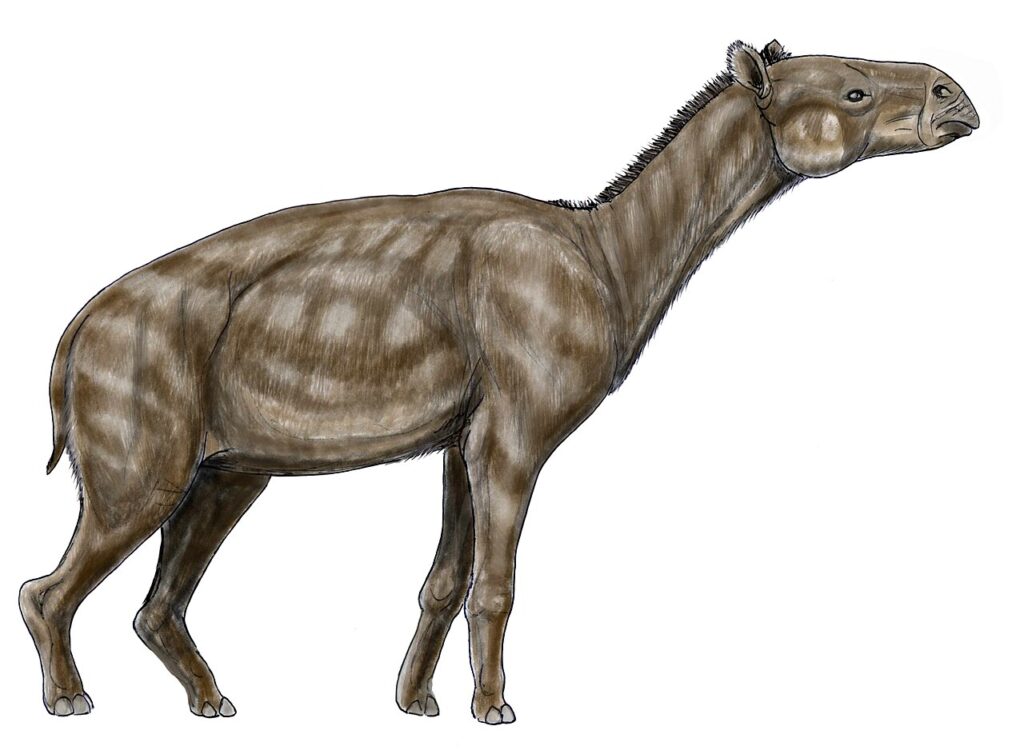
Decoding the Dawn of Perissodactyl Diversity (Image Credits: Wikimedia)
Perissodactyls flourished across Paleogene landscapes in the Northern Hemisphere, yet only a handful of lineages persist today. Their sudden debut during the PETM confounded paleontologists, as multiple genera and major groups surfaced simultaneously on three continents – unlike the more gradual radiations seen in other orders. Tissier and Smith tackled this puzzle with a comprehensive dataset of early species, yielding an expansive phylogenetic tree.
The resulting topology exposed significant taxonomic overhauls. Several long-recognized genera proved synonymous, drastically reducing the perceived number of distinct lineages in the earliest phases. This simplification clarified evolutionary relationships and highlighted that forms like Hyracotherium and Pliolophus – once dubbed “dawn horses” – belong to basal perissodactyls, not the hippomorph branch leading to modern equids.
Tracing Roots to Indo-Pakistan
The phylogeny pinpointed a likely cradle for perissodactyls in the Indo-Pakistani region of Asia. Fossils from sites like Pakistan’s Ghazij Formation captured some of the most primitive members, predating or coinciding with PETM arrivals elsewhere. This Asian anchor challenged prior North American-centric narratives of their evolution.
True hippomorphs, the precursors to horses, emerged shortly after in North America’s Wasatchian stage, represented by taxa such as Systemodon or Xenicohippus. European and North American records, meanwhile, featured Pliolophus and Cardiolophus as dominant early dispersers. These insights reshaped over 150 years of debate on perissodactyl systematics.
Mapping the Great Dispersals
Two genera stood out for their extraordinary range: Pliolophus and Cardiolophus traversed North America, Europe, and Asia in short order around the PETM boundary. This pattern echoed dispersals in primates, artiodactyls, and carnivoramorphs during the same interval.
| Continent | Key Early Taxa | Notable Fossil Sites |
|---|---|---|
| North America | Pliolophus, Cardiolophus, Systemodon | Clarks Fork Basin and Polecat Bench Formation, Wyoming; Sand Creek Divide, Bighorn Basin |
| Europe | Pliolophus, Cardiolophus, Chowliia europea | Le Quesnoy and Paris Basin, France; Dormaal, Belgium |
| Asia | Cardiolophus laoshanensis, Radinskya yupingae | Ghazij Formation, Pakistan; Wutu Formation, China |
Such widespread presence underscored enhanced land connections across Laurasia amid climatic shifts.
PETM as Catalyst for Change
The PETM unleashed rapid temperature spikes and faunal turnovers, creating corridors for migration that propelled perissodactyls outward from Asia. Unlike slower evolutions elsewhere, this order’s main clades diversified in tandem with the event’s chaos. Warming likely boosted vegetation and mobility, fostering intercontinental exchanges unseen before or since in mammals.
European sites like France’s Le Quesnoy (MP7 zone) preserved transitional faunas, while Wyoming’s basins documented North American phases. These records aligned precisely with the 56-million-year mark, linking dispersal velocity to environmental upheaval.
Key Takeaways
- Perissodactyls likely originated in Indo-Pakistan before fanning out during the PETM.
- Hyracotherium and kin represent basal forms, not direct horse ancestors.
- Rapid spreads of Pliolophus and Cardiolophus mirrored other mammal orders’ patterns.
This study not only streamlines early perissodactyl taxonomy but also underscores how abrupt climate shifts can accelerate evolutionary leaps. As modern warming echoes ancient events, these ancient migrations offer lessons in biotic resilience. What insights do these findings hold for today’s ecological shifts? Share your thoughts in the comments.