Have you ever wondered what kind of parents dinosaurs really were? For decades, the image of these ancient giants has leaned heavily on their reputation as fearsome predators or lumbering herbivores. Yet recent discoveries are revealing something altogether different. It turns out, beneath those scales and feathers lay complex behaviors that mirror what we see in devoted parents today. From brooding on carefully arranged clutches to guiding youngsters through harsh environments, dinosaurs may have been far more nurturing than we ever imagined.
These revelations are reshaping our understanding of prehistoric family dynamics. Let’s dive into what scientists have uncovered about these surprisingly tender giants.
The Free-Range Parenting Revolution That Shaped Ancient Ecosystems
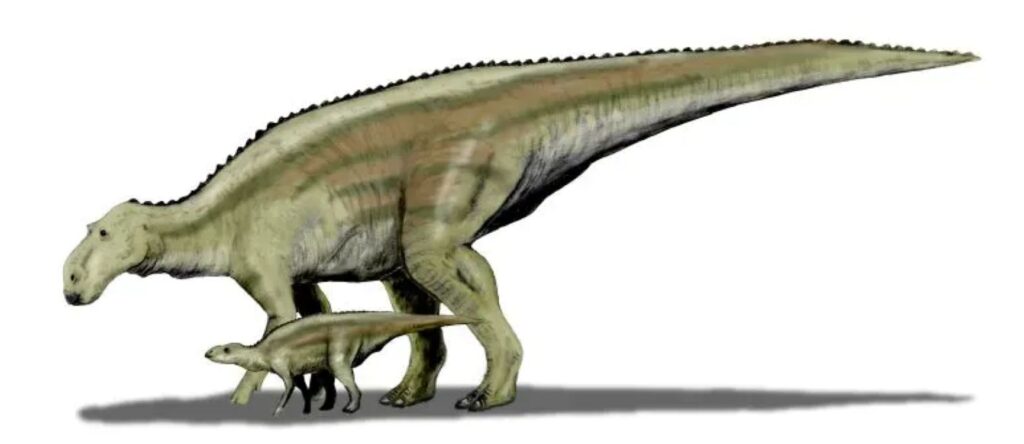
Here’s the thing: not all parental care looks the same, even among today’s animals. Dinosaurs exhibited limited parental care, with juveniles quickly becoming independent and occupying different ecological niches from adults. A study published in November 2025 in the Italian Journal of Geosciences explored the effect of ontogenetic niche partitioning in dinosaurs versus long-term maternal care in mammals. This research suggests that baby dinosaurs essentially fended for themselves quite early on, diverging into completely different roles and habitats than their towering parents.
Imagine a baby Brachiosaurus, roughly the size of a golden retriever, out foraging with its siblings while dodging predators. Meanwhile, the parents could be dozens of miles away, unconcerned with their offspring’s daily struggles. This “free-range” approach might sound neglectful by mammalian standards, yet it likely contributed to the astonishing diversity of Mesozoic ecosystems. Juveniles filled ecological niches that adults simply couldn’t occupy, creating layered communities of species at various life stages all coexisting in one landscape.
Nest Architecture Reveals Thoughtful Design Strategies
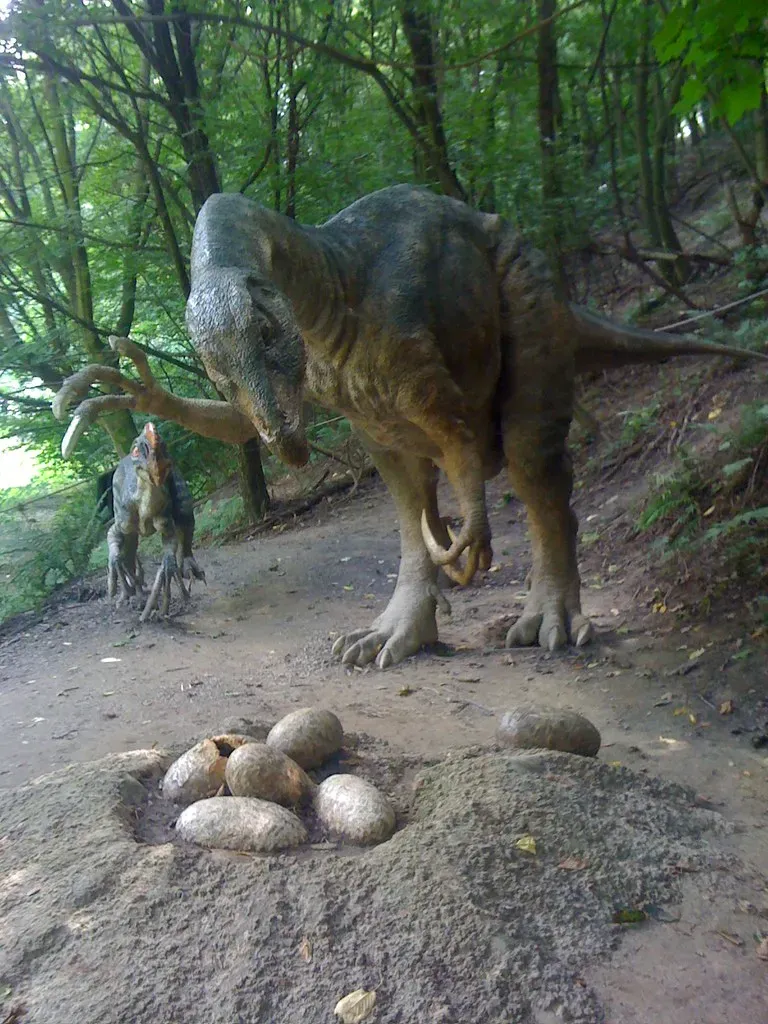
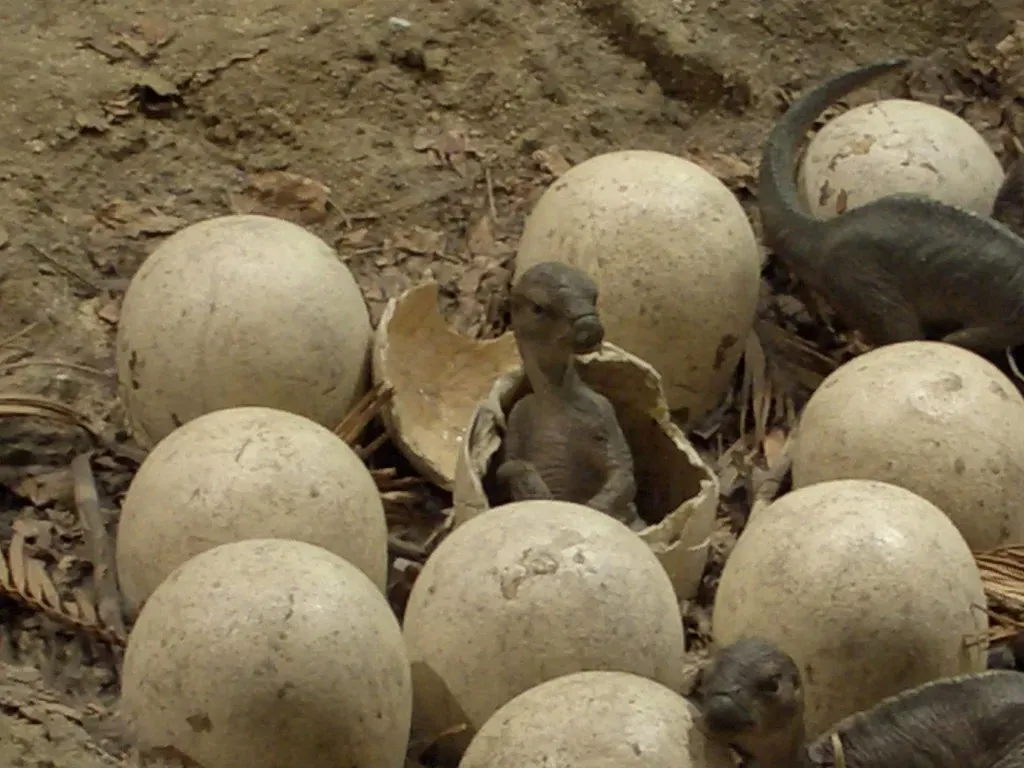
A study of dinosaur nests shows that heftier dinosaurs had a strategy to avoid squashing their young: carefully stacking their eggs in a ring around themselves in the nest. Researchers studied 40 nests built by oviraptorosaurs, birdlike dinosaurs that lived more than 65 million years ago, ranging in weight from a few pounds to about 4,000 pounds. These animals weren’t just laying eggs haphazardly. They were architects of their own nurseries.
The ring-shaped arrangement allowed parents to sit in the center of the nest, warming the eggs with their body heat without crushing them under their considerable weight. This clever design hints at a level of cognitive planning that goes beyond instinct. It’s hard to say for sure, yet the fossil evidence points to deliberate construction, careful positioning, and genuine concern for offspring survival.
Embryonic Postures Suggest Avian-Like Pre-Hatching Behaviors
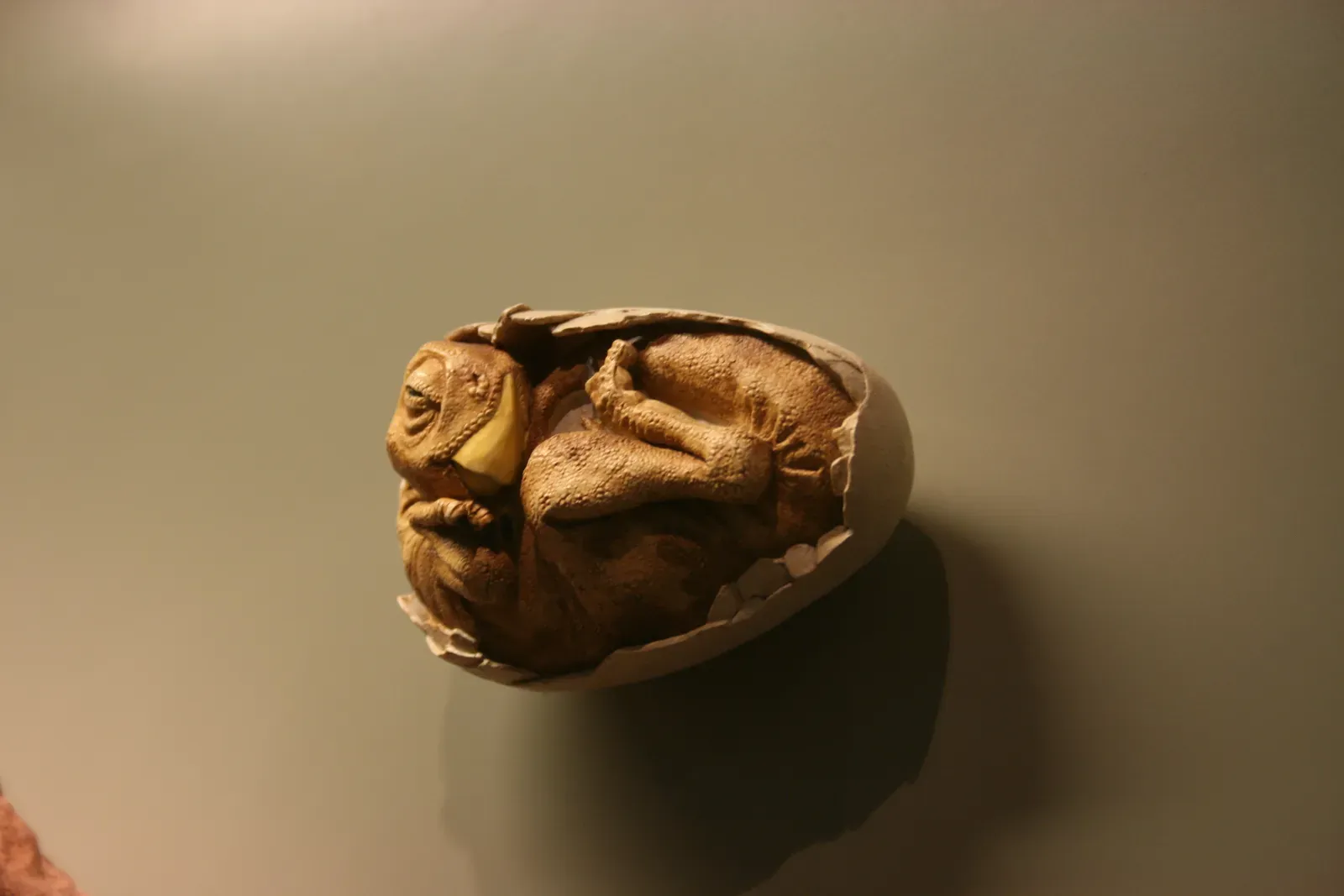
An exceptionally preserved, articulated oviraptorid embryo inside an elongatoolithid egg from the Late Cretaceous Hekou Formation of southern China shows the head ventral to the body, with feet on either side, and the back curled along the blunt pole of the egg, in a posture reminiscent of a late-stage modern bird embryo. Scientists nicknamed this fossil “Baby Yingliang,” and honestly, it’s one of the most stunning finds in recent paleontology.
Prehatch oviraptorids developed avian-like postures late in incubation, which in modern birds are related to coordinated embryonic movements associated with tucking – a behavior controlled by the central nervous system, critical for hatching success. The implication is profound: behaviors we thought were unique to modern birds actually evolved tens of millions of years earlier. This embryo offers a rare window into the final moments before hatching, frozen in time and revealing evolutionary secrets.
Brooding Adults Died Protecting Their Clutches
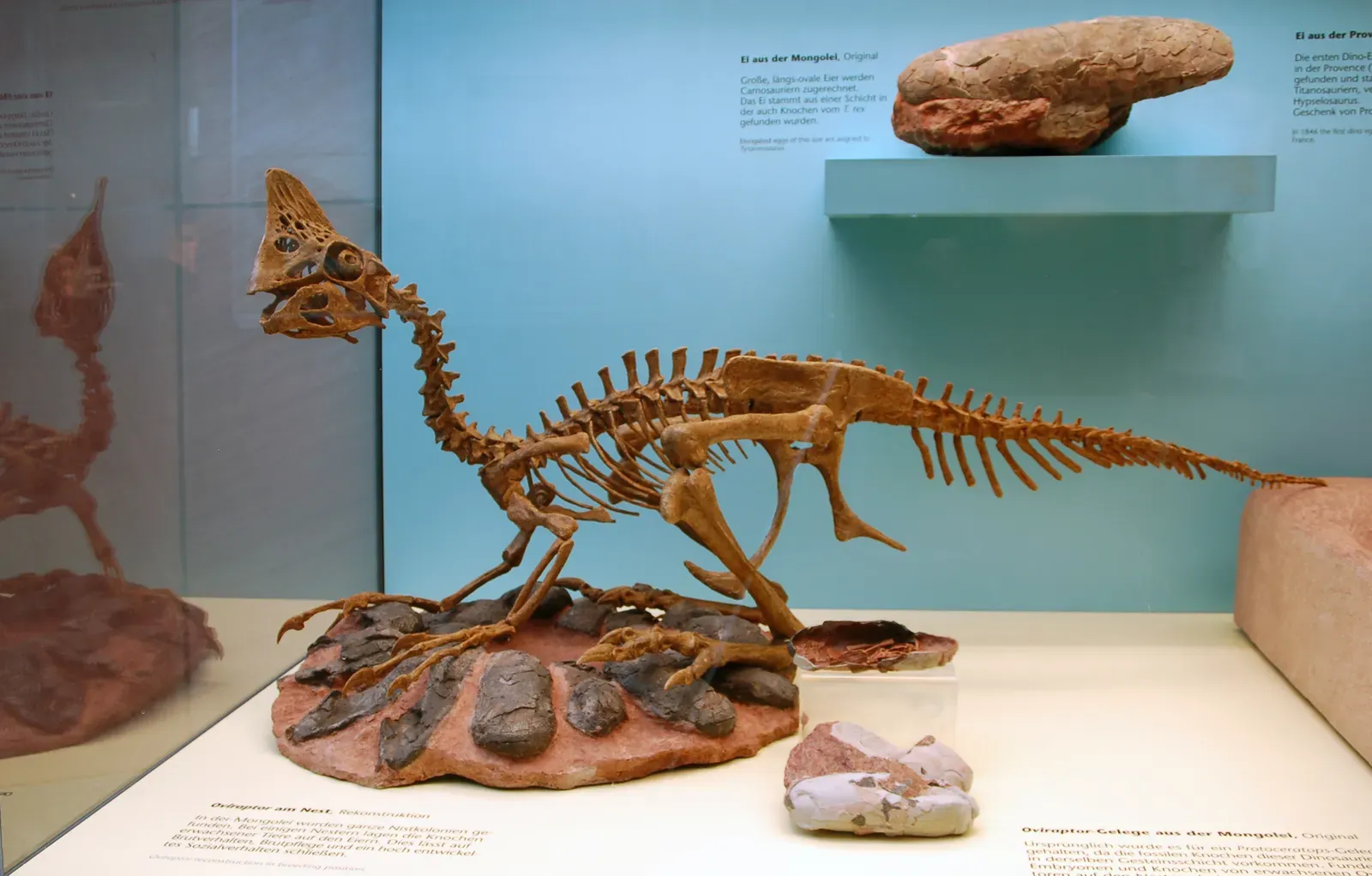
A large adult skeleton is preserved at the center of a ring of eggs, with its arms wrapped around the precious clutch, as a Citipati parent was shielding the eggs when it perished in a sandstorm. Let’s be real, finding a parent dinosaur literally on top of its nest, arms outstretched protectively, is deeply moving even across millions of years. The eggs are widely spaced, and it appears the adult avoided sitting directly on top of them, possibly to prevent crushing them, as oviraptorids like Citipati seem to have covered their nests with their feathered arms to insulate them but avoided direct body contact.
The dedication is undeniable. These dinosaurs didn’t just lay eggs and wander off. They stayed. They guarded. They likely rotated eggs and adjusted nests as conditions changed. The fact that several adult oviraptorosaurs have been found fossilized on their nests suggests this wasn’t a rare fluke – it was standard behavior.
Colonial Nesting Sites Provided Community Protection
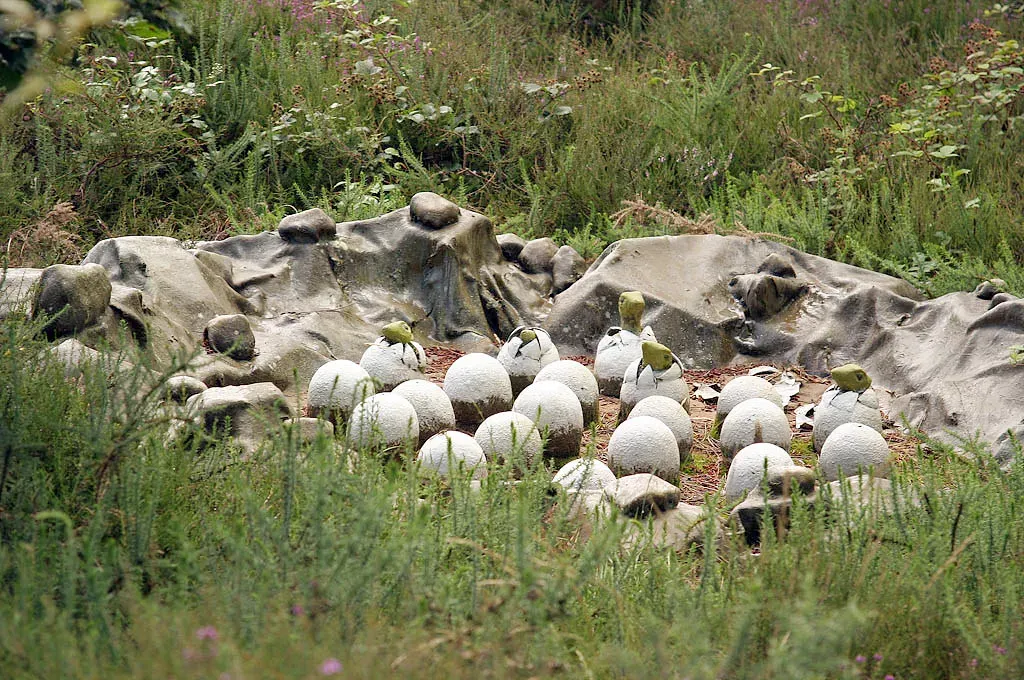
Fossilized finds include 15 nests and more than 50 eggs that are roughly 80 million years old, and a bright red streak in the rock connects all of the eggs, suggesting the dinosaurs laid them in a single breeding season. This kind of colonial nesting mirrors what you’d see in modern seabird colonies or crocodilian groups. Safety in numbers, essentially.
Researchers estimated that just over half of the nests had at least one successful hatch, on account of the number of fragmented eggs, and this relatively high rate mirrors the hatching success of modern birds and crocodiles that guard their nests. These success rates are compelling evidence that adults were present and active, fending off predators and perhaps even assisting hatchlings as they emerged from their shells.
Feeding Behaviors Hint at Altricial Young in Some Species
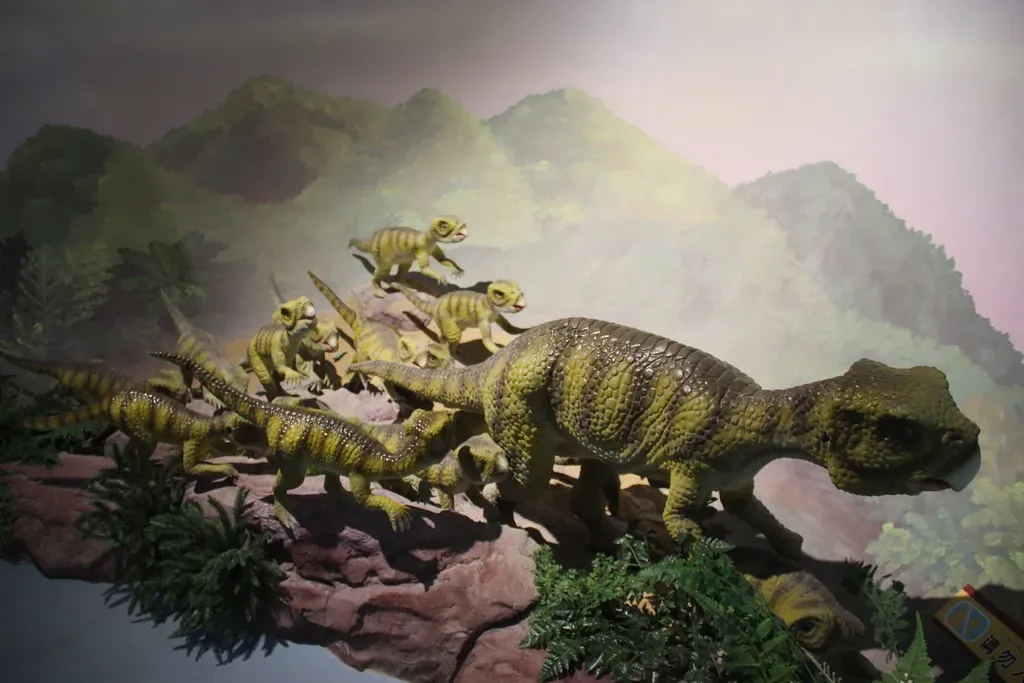
Scientists used a combined morphological, chemical, and biomechanical approach to compare early embryonic and hatchling bones of the Early Jurassic sauropodomorph Lufengosaurus with those of extant avian taxa with known levels of parental care. The findings are intriguing: some dinosaur hatchlings might have been altricial, meaning they were helpless at birth and required parental feeding.
Some baby hadrosaurines have poorly developed joint surfaces in the legs, unable to move well, but have worn teeth, suggesting altricial behavior. Think about that for a moment. Worn teeth in a baby that couldn’t walk well implies someone was bringing food to the nest. This is direct, physical evidence of parental provisioning – a behavior previously thought to be mostly absent in dinosaurs.
Diverse Egg Types Reveal Varied Incubation Techniques
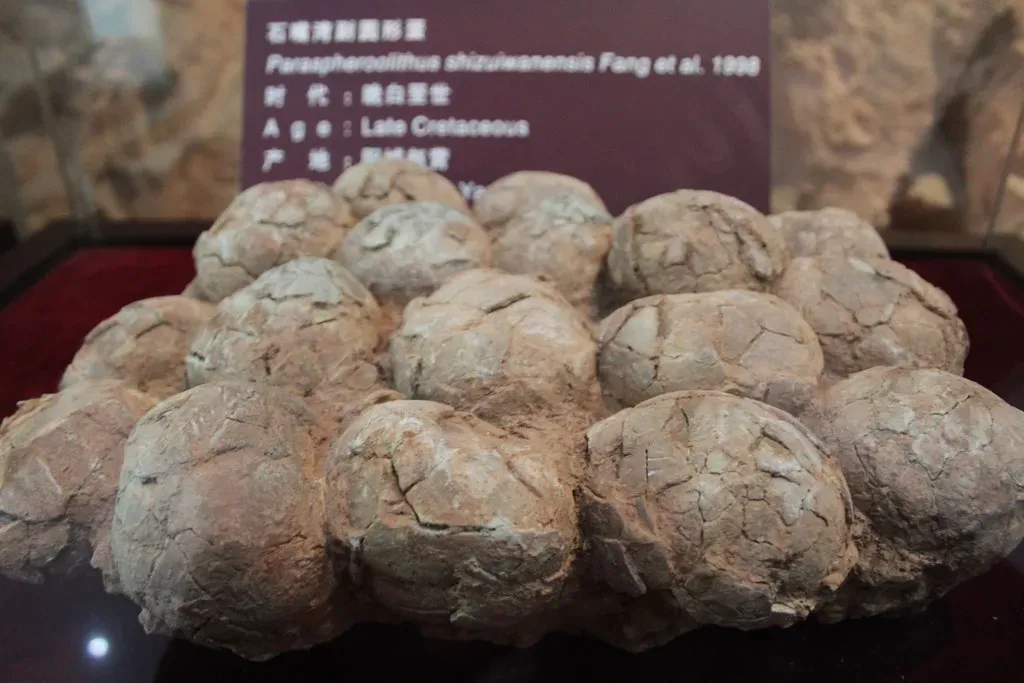
Soft eggs that Protoceratops and Mussaurus would have laid had to be covered so they wouldn’t dry out but were too thin to support the weight of a parent, so the dinosaurs that laid soft-shelled eggs would’ve made nests to cover their hatchlings-to-be but probably didn’t do anything more than watch over the nest area. Contrast that with hard-shelled eggs, which could withstand the weight of a brooding parent.
Even among only the hard eggs of dinosaurs, there are considerable differences in the architecture of the eggshell, indicating vastly different nest styles, incubation methods, and times between egg-laying and hatching. Some species buried eggs in geothermally active areas, essentially outsourcing incubation to the Earth itself. Others sat directly on nests, using body heat. Still others likely relied on decomposing vegetation to generate warmth. The variety is staggering.
Juvenile Herds and Age Segregation Point to Complex Social Structures
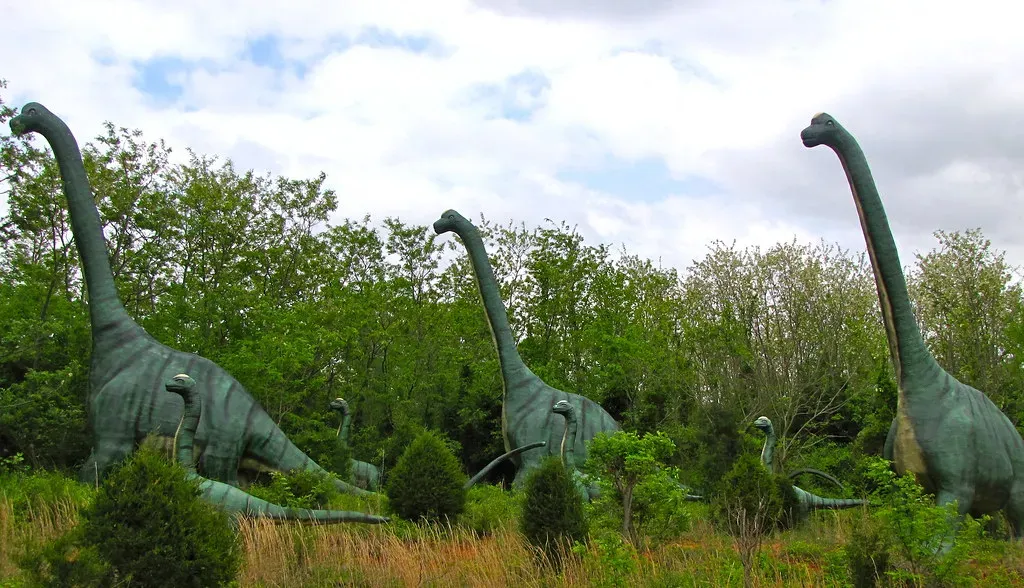
Age segregation is a strong sign of a complex, herd-like social structure, as the dinosaurs likely worked as a community, laying their eggs in a common nesting ground, with juveniles congregating in schools while adults roamed and foraged for the herd. Mussaurus patagonicus may have lived in herds some as early as 193 million years ago – 40 million years earlier than other records of dinosaur herding.
This is where it gets really interesting. Rather than small family units, evidence suggests larger communal groups where adults collectively cared for young that weren’t necessarily their own offspring. It resembles the social systems of elephants or certain bird colonies today. These weren’t isolated parents raising a single clutch – these were organized communities with shared responsibilities.
Conclusion: Redefining What It Meant to Be a Dinosaur Parent
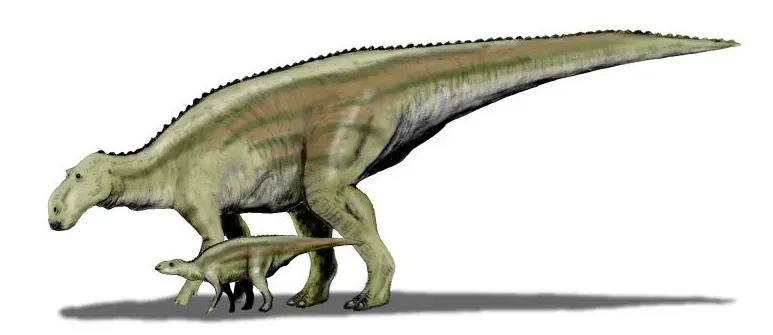
The picture emerging from recent fossil discoveries is one of surprising complexity and variation. Some dinosaurs were hands-off parents, letting juveniles strike out on their own almost immediately. Others were devoted guardians, sitting on nests for months, arranging eggs with precision, and possibly even feeding helpless hatchlings. Colonial nesting, communal rearing, and sophisticated incubation strategies all paint a portrait of animals far more behaviorally nuanced than earlier generations of paleontologists imagined.
These insights matter beyond mere curiosity. Understanding how ancient species cared for their young helps us recognize behavioral patterns that echo through evolutionary history into modern birds and reptiles. It also reminds us that parenting strategies are deeply tied to survival, environmental pressures, and social structures. Next time you see a bird tending its nest or a crocodile guarding hatchlings, remember: those instincts are ancient, refined over hundreds of millions of years by creatures that walked this Earth long before us. What does it make you think about the nature of care itself?