When most people picture a dinosaur, they imagine a cold-blooded, indifferent giant more interested in its next meal than in raising its young. But what if that image is fundamentally wrong? What if some of these ancient creatures were, in fact, devoted, attentive parents who fed, protected, and nurtured their offspring in ways that look surprisingly familiar to us today?
The deeper scientists dig, both literally and scientifically, the more the story of dinosaur parenting becomes one of the most unexpectedly touching chapters in natural history. From rocky nesting colonies in Montana to experimental nest reconstructions in Taiwan, new discoveries are reshaping everything you thought you knew about life in the Mesozoic. Get ready to be surprised by what the bones are telling us.
The “Good Mother Lizard” That Changed Everything
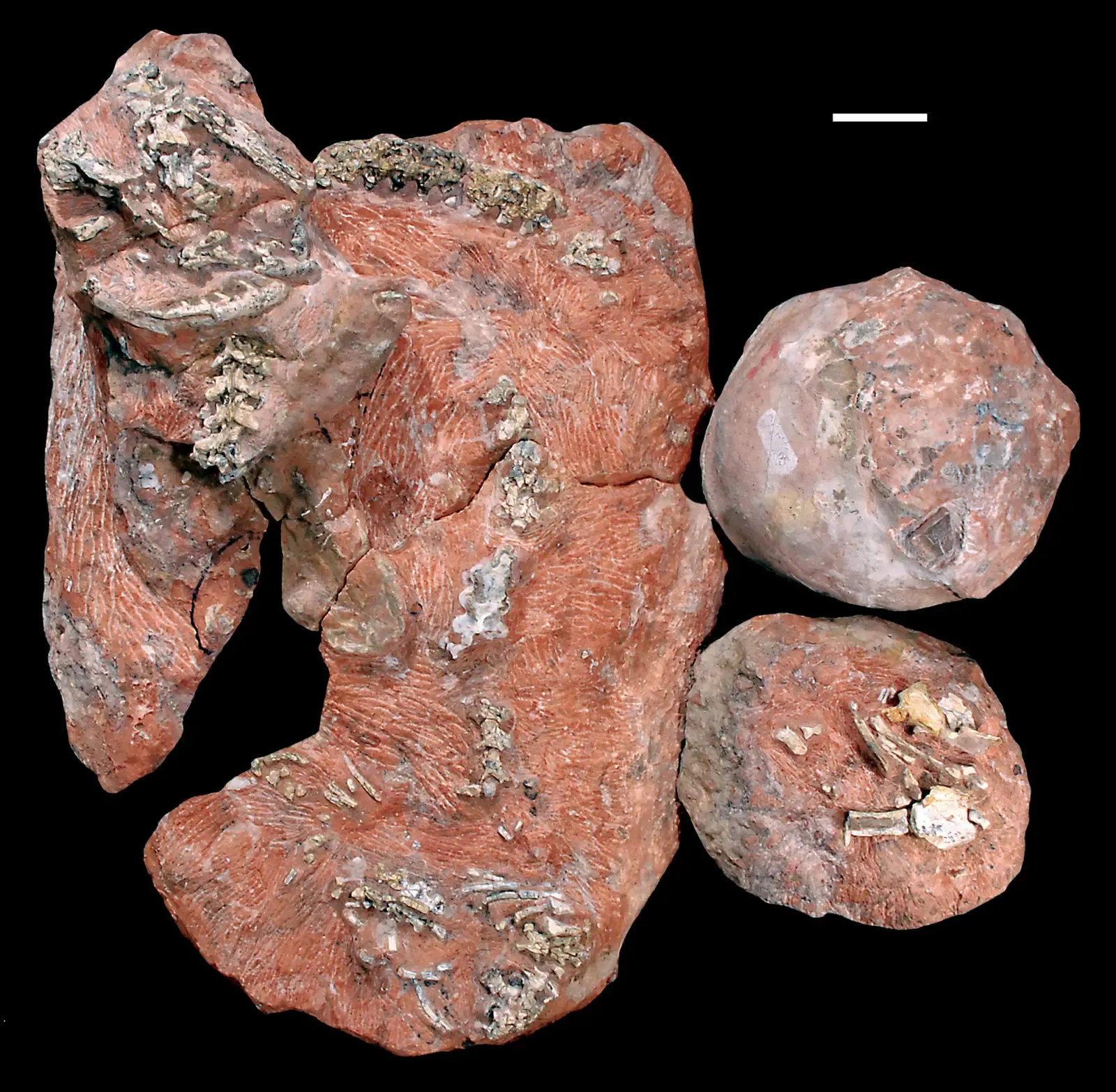
Sometimes a single discovery blows the doors off an entire field of science. That is exactly what happened in 1978 when a nest was uncovered in the Two Medicine Formation of western Montana. The find centered on remains of eggshells and babies too large to be hatchlings, and the area eventually became known as “Egg Mountain,” in rocks near Choteau in western Montana. It was a moment that permanently altered how paleontologists viewed dinosaur behavior.
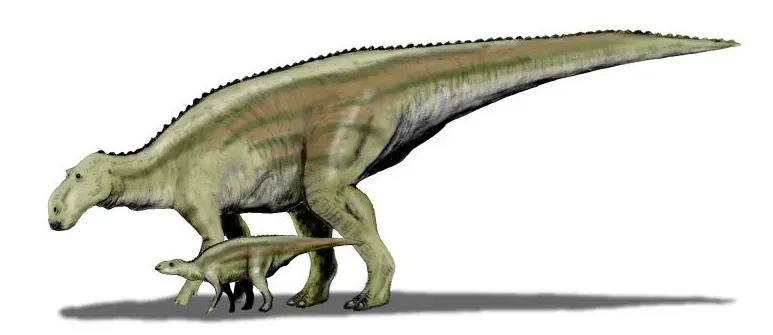
The dinosaur responsible for this revelation was named Maiasaura, which translates roughly to “good mother lizard.” Maiasaura peeblesorum is a large hadrosaurid dinosaur from the Late Cretaceous period, renowned for providing the first definitive evidence of parental care among dinosaurs through fossilized nesting colonies. Before this, it was broadly assumed that dinosaurs were solitary and indifferent to their young, much like many modern reptiles. This was the first proof of giant dinosaurs raising and feeding their young.
Egg Mountain: A Prehistoric Nursery in Montana
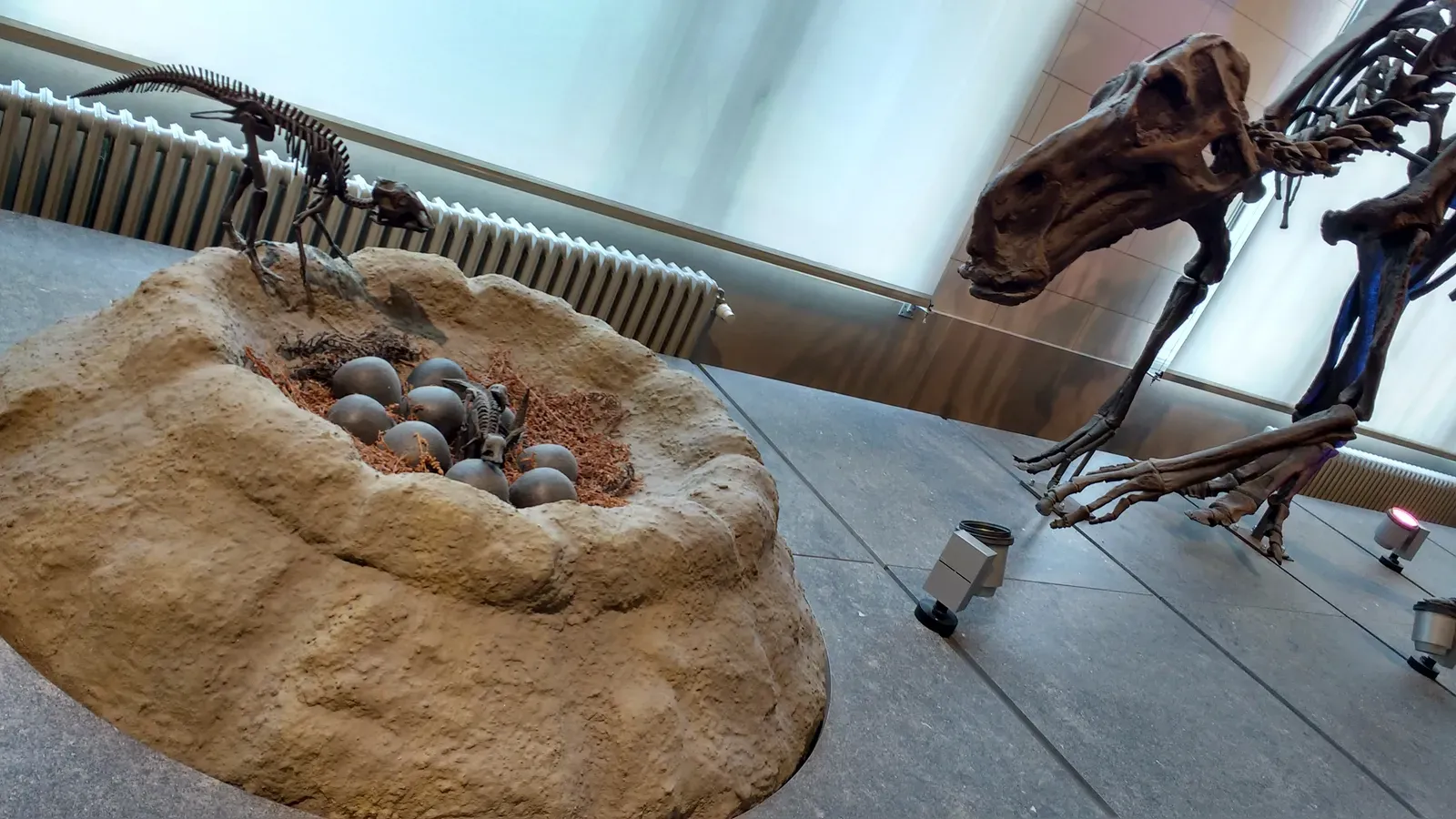
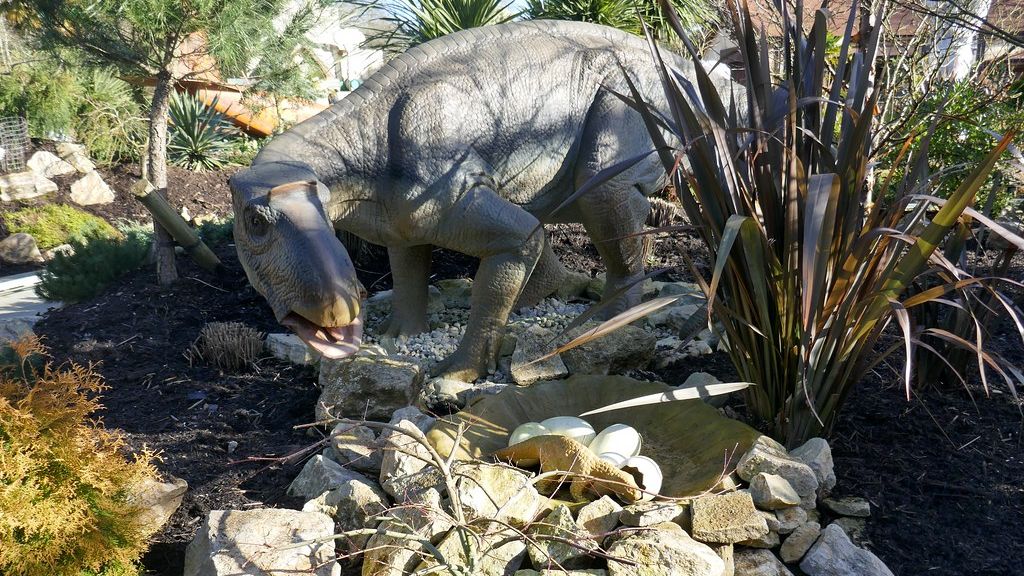
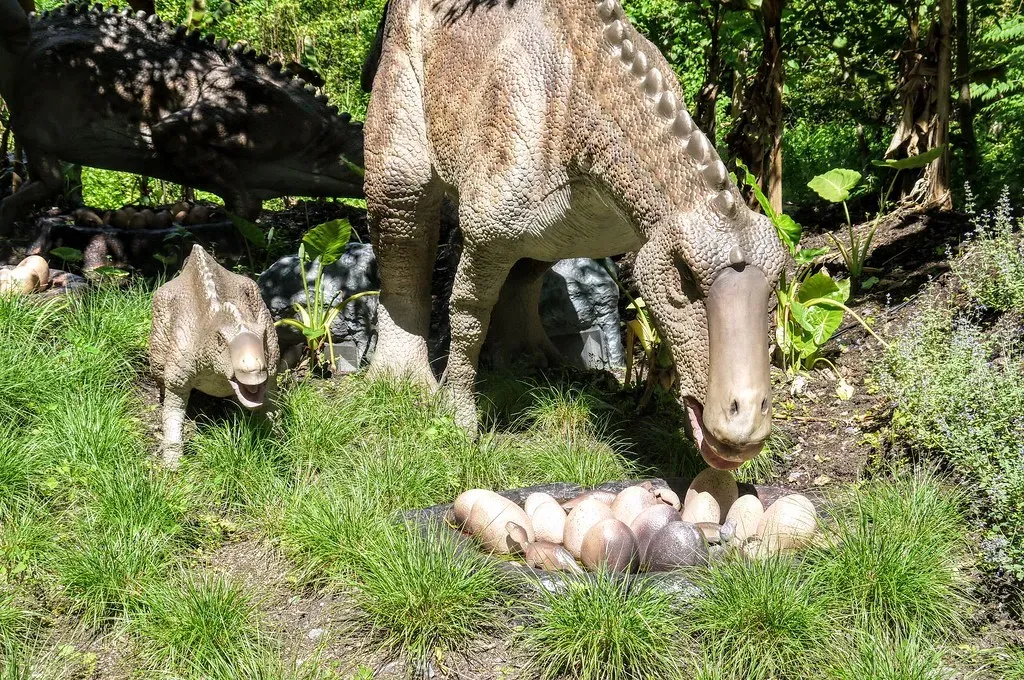
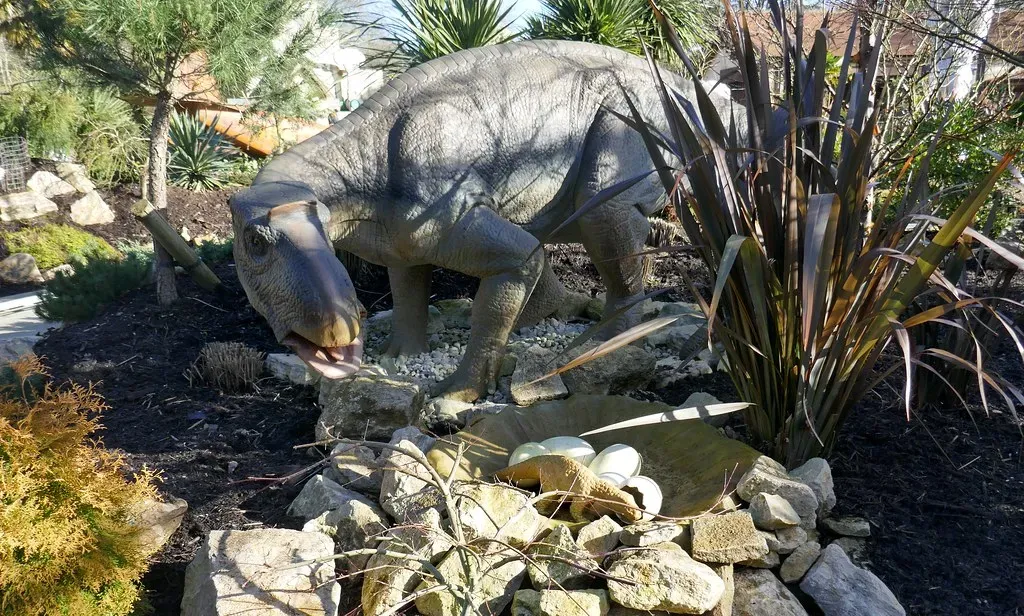
Imagine an ancient landscape where hundreds of parents gather each season at the same location to raise their young together. That is essentially what the fossil record at Egg Mountain reveals. Maiasaura engaged in colonial nesting at sites like Egg Mountain, where dense clusters of nests indicate organized social breeding colonies, with nests measuring approximately two meters in diameter, constructed as shallow depressions filled with decaying vegetation to provide heat for incubation, and clutches containing between fifteen and forty eggs arranged in a spiral or circular pattern.
The spacing of the nests also tells a revealing story. The nests in the colonies were packed closely together, like those of modern seabirds, with the gap between nests being around 7 metres, less than the length of the adult animal. Even more striking, the hatchlings themselves showed physical signs of dependence. Fossils of baby Maiasaura show that, when they hatched, their legs were not fully developed and thus they could not leave the nest, and fossils also show that their teeth were partly worn, which means that the adults brought food to the nest. Think about that for a moment. These were not babies that could fend for themselves. They needed to be fed.
Bone Deep: What Skeletal Evidence Reveals About Infant Dependence
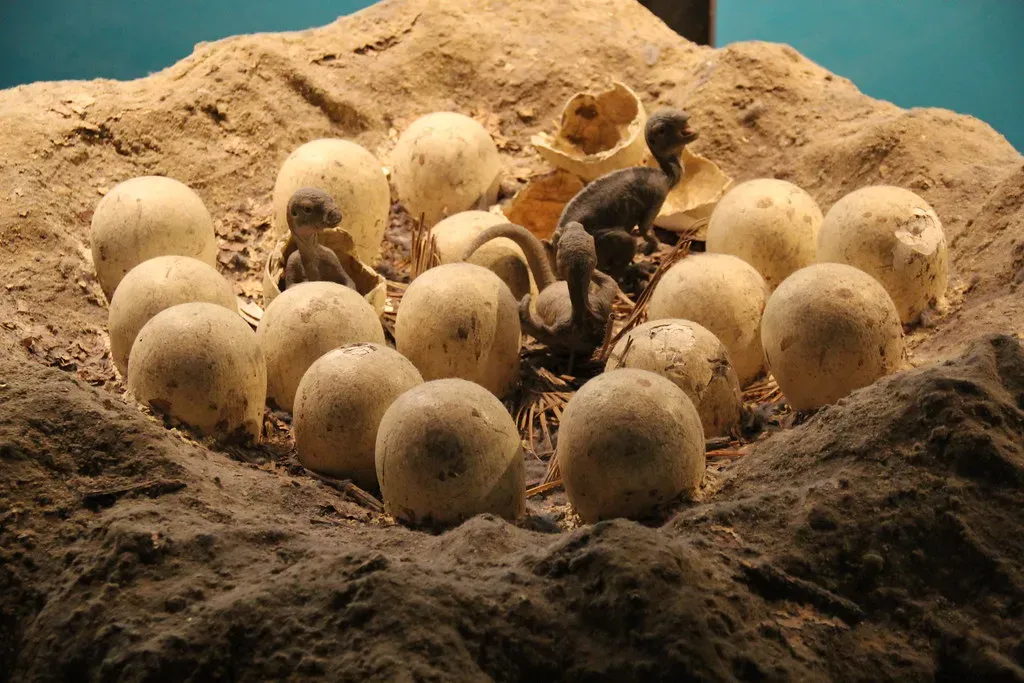
Honestly, one of the most compelling arguments for advanced parental care in dinosaurs does not come from dramatic nesting scenes. It comes from the microscopic analysis of tiny bones. Differences in bone development between dinosaur species led researchers to draw a connection between growth rate and assumed parental behavior, and comparisons of leg bones revealed that those from Maiasaura were not fully ossified, whereas those from Troodon were, leading to the hypothesis that Maiasaura received prolonged parental care in the nest, and that Troodon hatchlings were able to leave the nest immediately.
This kind of evidence is profound because it mirrors what you see in birds today. Altricial birds, like songbirds, hatch helpless and require weeks of feeding. Precocial birds, like ducks, are ready to go almost immediately. Hatchlings emerged altricial, with limited mobility and an inability to forage independently, relying on adults for sustenance and protection, with fossil evidence from nests including associated juvenile bones suggesting dependence lasting one to two years, during which parents likely provided regurgitated plant matter as food. A dependence period of up to two years is remarkable for any ancient reptile. It’s hard not to be moved by that.
Lufengosaurus: Parental Care Pushed Back 190 Million Years
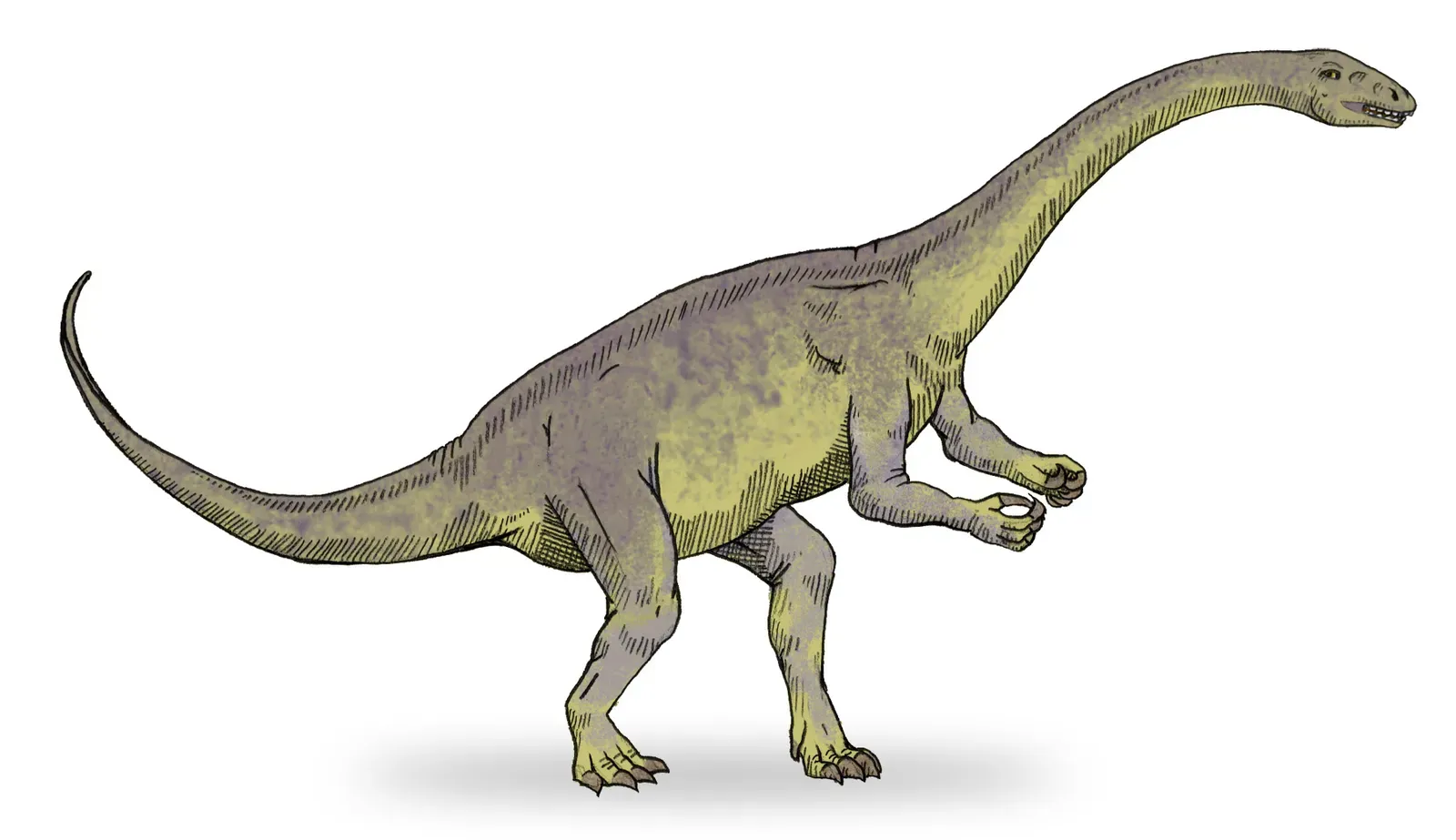
Here is where things get really interesting. For a long time, the best evidence for dinosaur parental care was concentrated in the Late Cretaceous, relatively close to the end of the dinosaur era. Then research on an Early Jurassic dinosaur changed that timeline dramatically. Lufengosaurus lived in China between 195 and 190 million years ago during the Early Jurassic, was one of the largest known massospondylids, and according to a study published in September 2024, it was a devoted parent that fed its young until they were old enough and strong enough to forage for themselves.
The research behind this conclusion is genuinely cutting-edge. Scientists approached the question of parental care in Lufengosaurus by using a combined morphological, chemical, and biomechanical approach to compare early embryonic and hatchling bones with those of extant avian taxa with known levels of parental care. The results were telling. Lufengosaurus likely engaged in parental feeding as a fully altricial animal, given that the bone development in its femora is closer to that of altricial pigeons than precocious chickens. Pushing parental care back nearly 200 million years is nothing short of jaw-dropping.
Oviraptor’s Brooding Secrets: A Life-Sized Nest Experiment
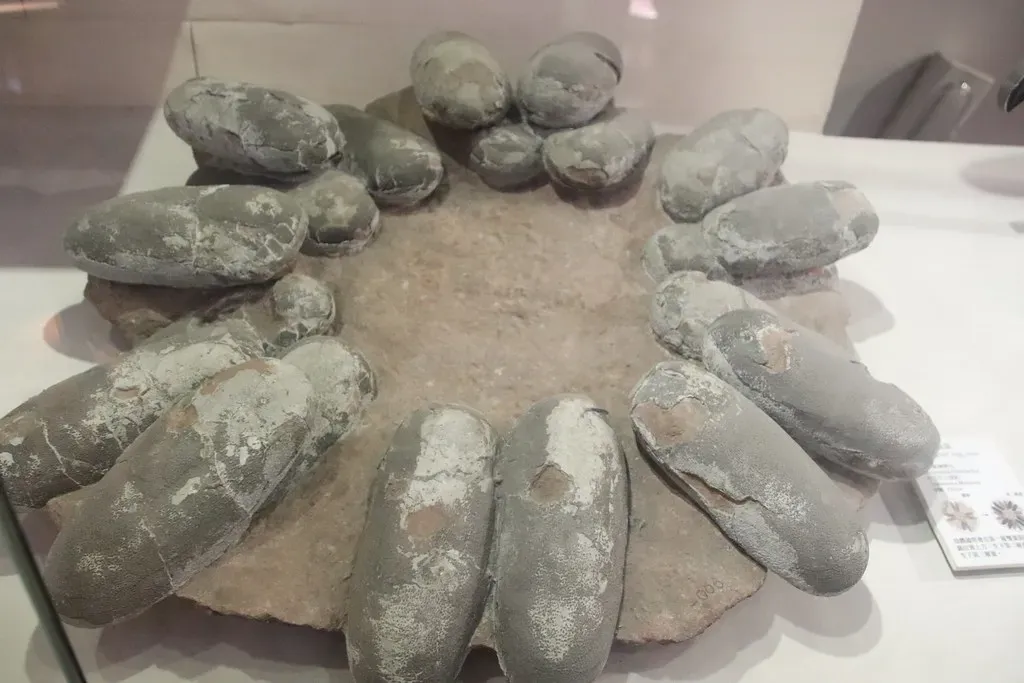
Few dinosaur discoveries are as visually striking as finding a parent fossil literally sitting on its nest. The oviraptorid fossils discovered in Mongolia provided exactly that image. A 75-million-year-old oviraptorid was uncovered brooding on, meaning sitting on top of, a nest of eggs. This was not circumstantial evidence. This was a creature frozen in the act of protecting its clutch, likely buried alive by a sandstorm or mudslide.
But how exactly did oviraptors incubate their eggs? Scientists in Taiwan recently tackled this question in a refreshingly creative way. Scientists recreated a life-sized oviraptor and nest to investigate how these bird-like dinosaurs hatched their eggs, and researchers debated whether these dinosaurs relied mainly on heat from the environment, similar to crocodiles and turtles, or used body warmth from a brooding adult like modern birds. The findings revealed something nuanced. Their experiments showed the parent likely could not heat all the eggs directly, meaning sunlight played a key role, and this uneven heating could cause eggs in the same nest to hatch at different times, suggesting oviraptors used a hybrid incubation method unlike modern birds.
Colonial Nesting and Herd Behavior: Safety in Social Numbers
Parental care among dinosaurs was not just a one-on-one affair. Evidence increasingly suggests that some species raised their young within organized social structures, much like modern elephant herds or penguin colonies. Researchers detail the discovery of an exceptionally preserved group of early dinosaurs that shows signs of complex herd behavior as early as 193 million years ago, which is 40 million years earlier than other records of dinosaur herding. That is a staggeringly early origin for such sophisticated social behavior.
The Patagonian site that yielded this evidence was remarkable in its richness. Since 2013, members of the team have excavated more than 100 dinosaur eggs and the partial skeletons of 80 juvenile and adult dinosaurs from a rich fossil bed in southern Patagonia. The structure of the site strongly implied coordinated nesting. The presence of numerous clutches of eggs, some of which contain embryonic remains, in at least four distinct horizons within a small area, provides the earliest known evidence of complex reproductive behavior including site fidelity and colonial nesting in a terrestrial vertebrate. Site fidelity, returning to the same nesting ground season after season, is a very sophisticated behavior indeed.
What Dinosaur Parenting Tells Us About Their Link to Modern Birds
Here is the thing: none of this research exists in a vacuum. Every piece of evidence for dinosaur parental care has a direct bearing on understanding how the behavior of modern birds evolved. There is growing evidence for parental care in some dinosaurs as well, which carried over into birds. The line connecting a brooding Oviraptor and a nesting robin in your backyard is straighter than you might imagine. It is not metaphorical. It is evolutionary.
The diversity of incubation strategies found in dinosaurs also mirrors the diversity seen in birds today, suggesting these behaviors were already well developed and varied long before birds took flight. As is the case with modern birds, different egg types relate to the ways adult dinosaurs behaved, and even among only the hard eggs of dinosaurs there are considerable differences in the architecture of the eggshell, with such varied eggshell structure indicating vastly different nest styles, incubation methods, and times between egg-laying and hatching. It turns out the bird in your garden did not invent the art of parenting. It simply inherited it from ancestors that were doing it far earlier than anyone expected.
Conclusion: Rethinking the Ancient Parent
The old picture of dinosaurs as emotionally blank, instinct-driven machines is dissolving fast. What is replacing it is something far more compelling: creatures that, at least in several documented species, invested real time and energy into the survival of their young. From Maiasaura feeding partially worn-toothed hatchlings in Montana to Lufengosaurus tending altricial babies in Early Jurassic China, the fossil record is quietly but insistently telling us the same thing. Some dinosaurs were, by any meaningful definition, devoted parents.
You might have thought parenthood was a uniquely mammalian virtue. The bones suggest otherwise. Paleontology findings continuously shape our understanding of reproduction in ancient species, and new discoveries refine our knowledge and challenge existing theories, offering a dynamic view of how dinosaurs adapted over time. Every new excavation season carries the potential to push that story even further back, or to reveal yet another species that quietly chose to stay and raise its young against all odds. What do you think that says about the nature of parental instinct itself? Tell us in the comments.