South Africa – An emerald-green moth absent from scientific records for more than a century reemerged through photographs uploaded by citizen scientists to an online platform.
A Century of Absence Ends Abruptly
A Century of Absence Ends Abruptly (Image Credits: Imgs.mongabay.com)
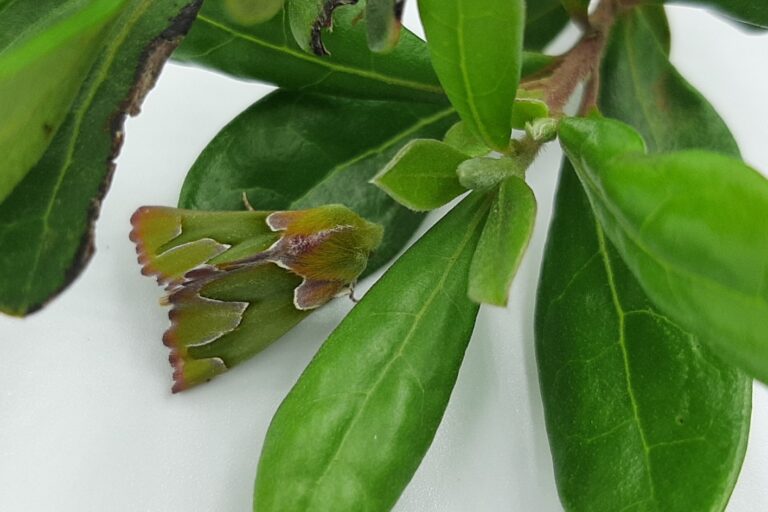
Lepidopterists considered Drepanogynis insciata extinct after its last confirmed sightings in the 1870s. Two male specimens collected near Swellendam in the Western Cape before 1879 resided in London’s Natural History Museum, their once-vibrant colors faded to salmon pink.
The species, first described in 1875, vanished amid habitat changes that transformed the region. No further records surfaced for over 140 years, leading experts to presume it gone forever. Citizen contributions shattered that assumption starting in 2020.
Citizen Eyes Spot the Elusive Males
Twelve sightings of male moths appeared on iNaturalist between 2020 and 2023 across four sites near Swellendam. Gondwana Private Nature Reserve hosted four observations, while others came from Mossel Bay, Haarwegskloof, and areas close to Swellendam.
Cameron Scott captured images at Gondwana and Mossel Bay. Odette Curtis-Scott and Grant Forbes documented one during the 2021 Great Southern BioBlitz at Haarwegskloof. Kevin Koen added a Mossel Bay photo. Lepidopterist Hermann Staude identified Scott’s initial September 2020 upload, prompting the capture of a live specimen for study.
- Gondwana Private Nature Reserve: Four male sightings, 160 km west of Swellendam.
- Mossel Bay: Multiple photos by Scott and Koen.
- Haarwegskloof: BioBlitz observation, 40 km south of Swellendam.
- Near Swellendam: Additional records clustering in the area.
Striking Features Meet Precarious Homes
The moth boasts an emerald-green body and wings edged in red-wine hues. Live specimens revealed far brighter shades than the dulled museum examples. Only males appeared in records, likely due to their mobility, light attraction, and dual annual broods during brief seasons.
Fynbos and renosterveld habitats sustain it, but these ecosystems faced severe decline from agriculture, urban spread, invasive plants, and erratic fires over two centuries. Clustered sightings signal scant remaining suitable patches. Researchers now seek caterpillar host plants through bush-beating and captive rearing.
Experts Hail a Conservation Wake-Up
Hermann Staude called the moment “quite an incredible feeling, to all of a sudden see something that you thought might have been extinct.” Pasi Sihvonen of the Finnish Museum of Natural History marveled at a fresh specimen: “When the actual specimen was handed over to us, I was like, ‘Wow, it’s so green’.” He praised iNaturalist as a “treasure trove” for such finds.
Odette Curtis-Scott stressed ecosystem links: “These tiny critters are some of the most important parts of these ecosystems, and we really need to get to grips with how they’re being impacted.” A ZooKeys paper formalized the rediscovery, urging targeted surveys.
Key Takeaways
- Citizen science platforms like iNaturalist enable rapid rediscoveries unattainable by professionals alone.
- The moth’s survival hinges on fragile fynbos remnants amid ongoing threats.
- Future work targets life-cycle details to bolster conservation.
This rediscovery underscores how everyday observers fuel scientific breakthroughs and spotlights the urgency of protecting overlooked species. What hidden gems have you encountered in nature? Tell us in the comments.