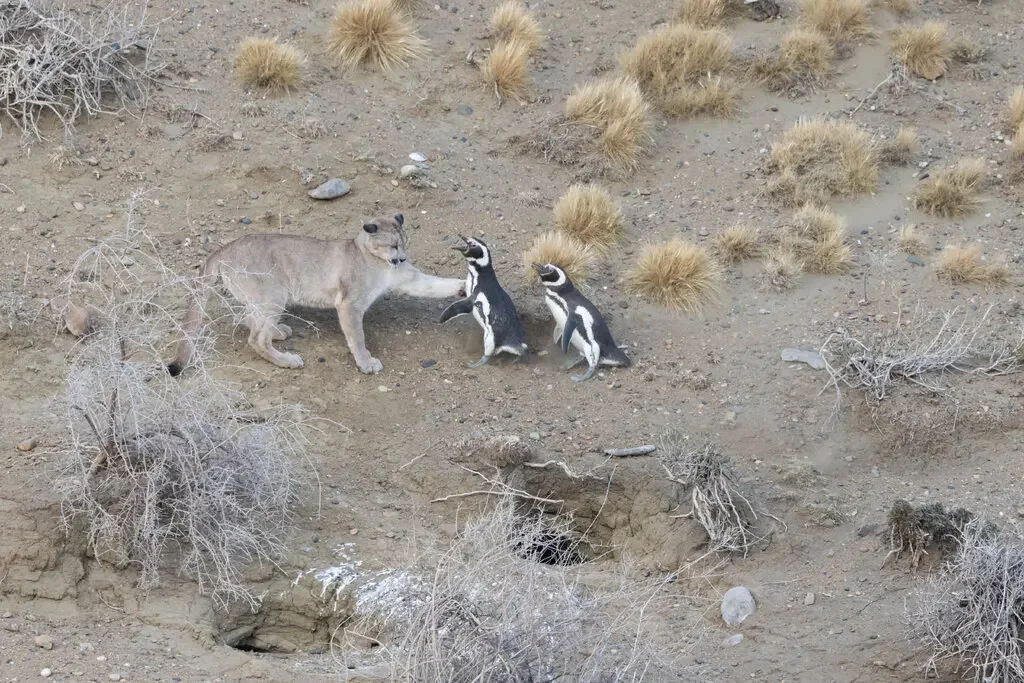
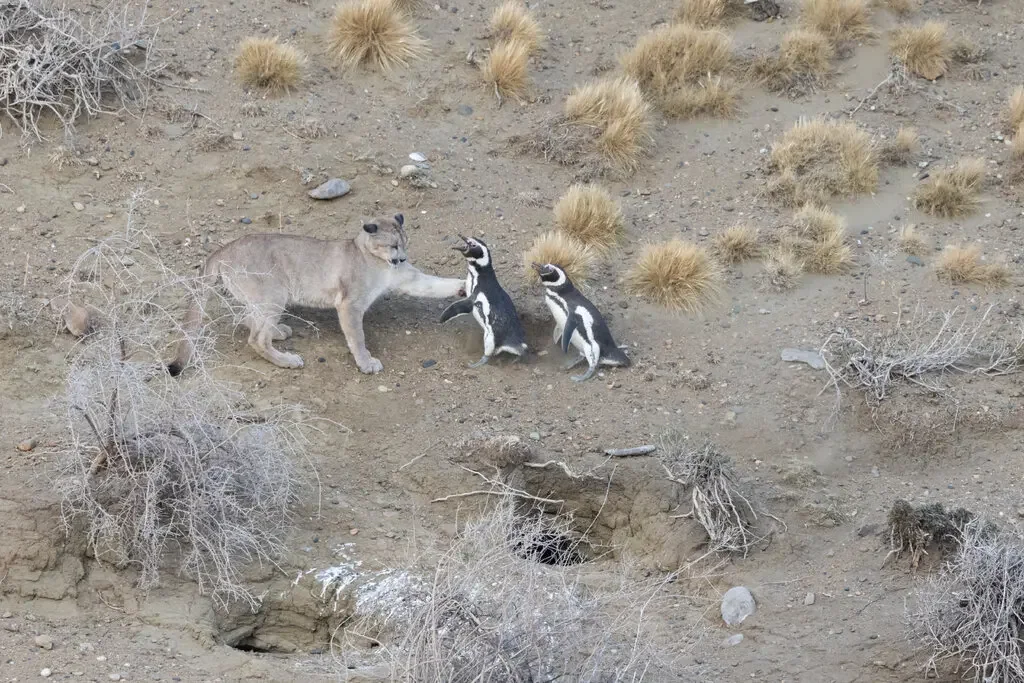
Monte León National Park, Argentine Patagonia – Pumas reclaimed their territory and preyed heavily on Magellanic penguin colonies, leaving researchers to assess the ecological fallout.
Pumas Stage a Comeback After Decades of Absence
Cattle farming dominated southern Argentina throughout the 20th century and displaced pumas from vast areas of their historic range.
Farmers viewed the big cats as threats to livestock, leading to widespread eviction. Once cattle operations largely ceased, pumas ventured back into the region. This return marked a significant shift in local predator dynamics. Wildlife experts documented the resurgence along the Argentine coast. The event highlighted how human activities reshape animal distributions over time.
Penguins Colonize New Ground, Unprepared for Predators
Magellanic penguins shifted from island breeding sites to the mainland shores of Monte León National Park. The area had long remained free of mammalian predators. These flightless birds found ample space but lacked defenses against land-based hunters. Their expansion exposed them to novel risks. Conservationists noted the penguins’ vulnerability in this unfamiliar setting.
Scale of the Predation Shocks Observers

Between 2007 and 2010, pumas killed more than 7,000 penguins along the coast, accounting for roughly 7.6% of one major colony’s population.
Researchers discovered the vast majority of carcasses intact and uneaten. This pattern pointed to surplus killing, where predators exceed immediate food needs. Melisa Lera, a postgraduate student at Oxford University and lead author of the study, remarked, “The number of carcasses showing signs of predation we found in the colony is overwhelming, and the fact that they were left uneaten means pumas were killing more penguins than they required for food.”
- Over 7,000 penguins killed in four years.
- 7.6% impact on the colony’s total population.
- Most kills involved no consumption by pumas.
- Predation concentrated in Monte León National Park.
The findings appeared in the Journal for Nature Conservation.View the study
Surplus Killing Explained in Natural Terms
Pumas exhibited classic surplus killing behavior during the encounters. Such actions occur when prey proves abundant and easily accessible. The penguins clustered densely, offering ideal conditions for multiple kills. Pumas consumed only portions needed for sustenance. This left fields of uneaten carcasses across the colony.
Experts linked the phenomenon to the pumas’ opportunistic nature. The behavior aligned with patterns observed in other predator-prey interactions worldwide. It underscored the adaptability of pumas in reclaiming niches.
No Lasting Threat to Penguin Populations
Population models indicated the predation episodes posed no enduring danger to the penguins. Breeding success and juvenile survival emerged as greater concerns for the colony’s stability.
Scientists anticipated natural adjustments over time. Pumas and penguins might reach a new equilibrium without intervention. The episode illustrated wildlife resilience amid changing landscapes.
- Pumas killed over 7,000 penguins but left most uneaten due to surplus behavior.
- The events occurred from 2007 to 2010 in Argentine Patagonia.
- Long-term penguin viability hinges more on breeding and survival rates than puma predation.
Nature’s balancing act in Patagonia reminds us that predator returns can disrupt but rarely doom established populations. What lessons does this hold for conservation elsewhere? Share your thoughts in the comments.