Picture this: you’re walking through an ancient forest 75 million years ago when suddenly, a massive duck-billed dinosaur emerges from the undergrowth. But this isn’t your typical hadrosaur – this one sports a nose so dramatically oversized it looks like nature was experimenting with comedy. Meet Rhinorex condrupus, a dinosaur whose discovery in 2014 turned paleontology on its head and left scientists scratching theirs. This remarkable creature didn’t just have a big nose; it had a nose so prominent that researchers nicknamed it “King Nose,” and honestly, that title seems almost understated when you see the fossil evidence.
The Discovery That Made Headlines
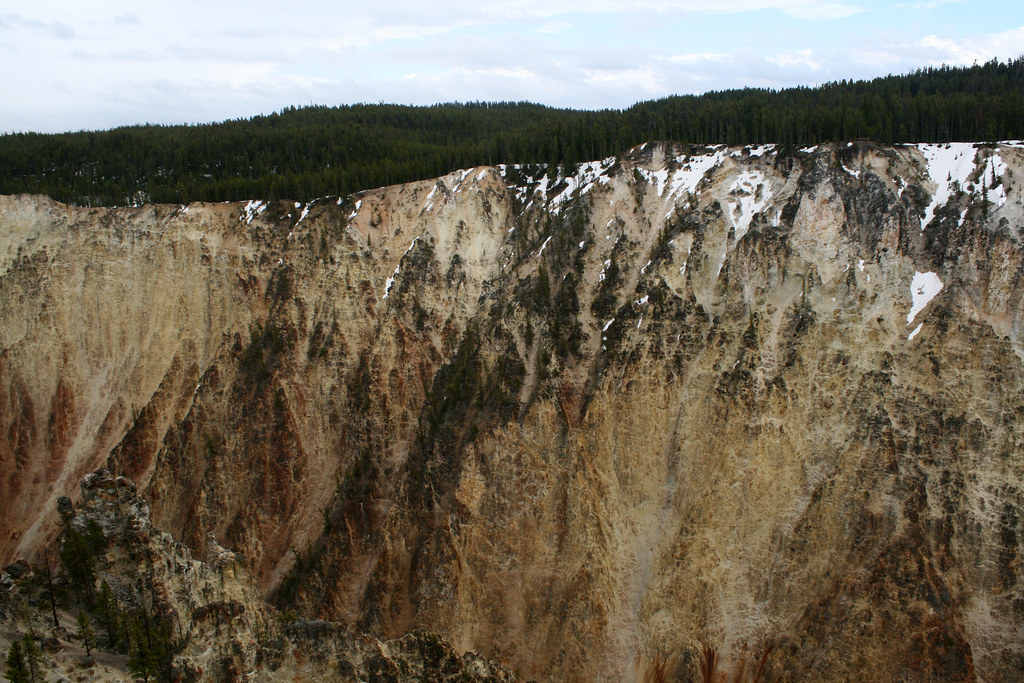
In the dusty badlands of Utah, paleontologists uncovered something extraordinary that had been hiding in museum collections for decades. The Rhinorex fossil was actually discovered in the 1990s but sat unrecognized until 2014 when researchers finally realized what they had on their hands. This wasn’t just another hadrosaur specimen – this was something completely new to science.
The fossil remained in storage at Brigham Young University’s Museum of Paleontology, essentially forgotten among countless other specimens. It took the keen eye of researchers Terry Gates and Rodney Scheetz to recognize that this particular skull belonged to an entirely new species. Their discovery would soon challenge everything scientists thought they knew about hadrosaur diversity in North America.
A Nose Like No Other

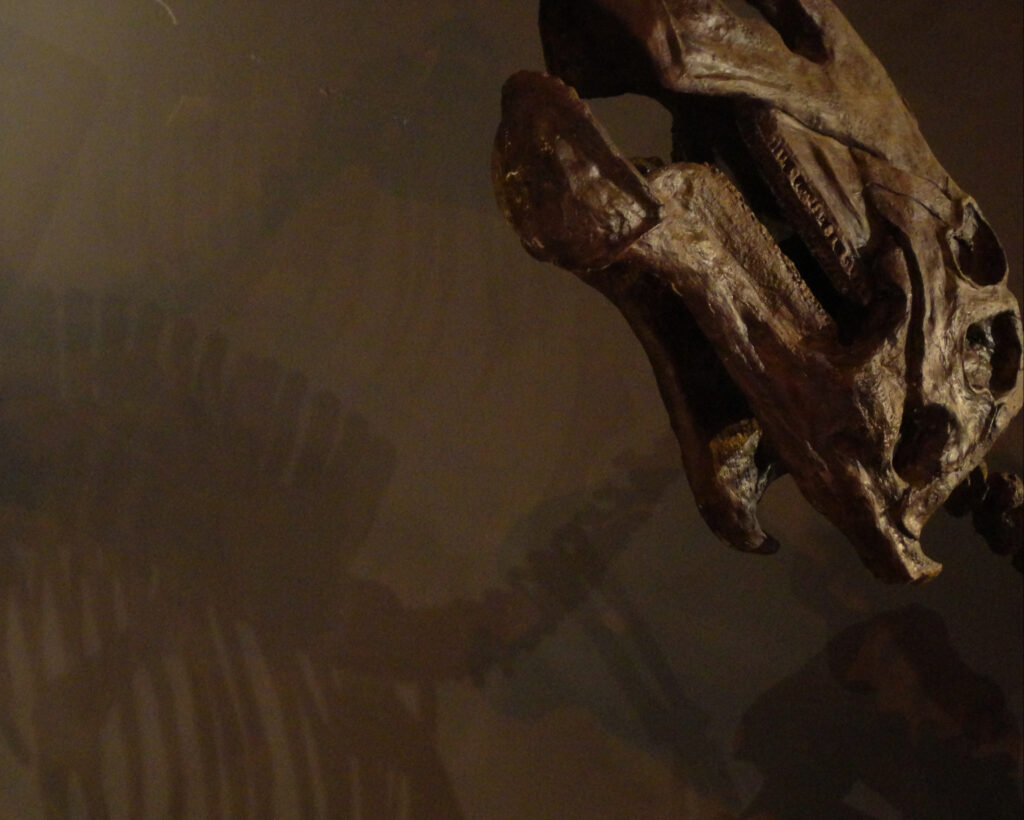
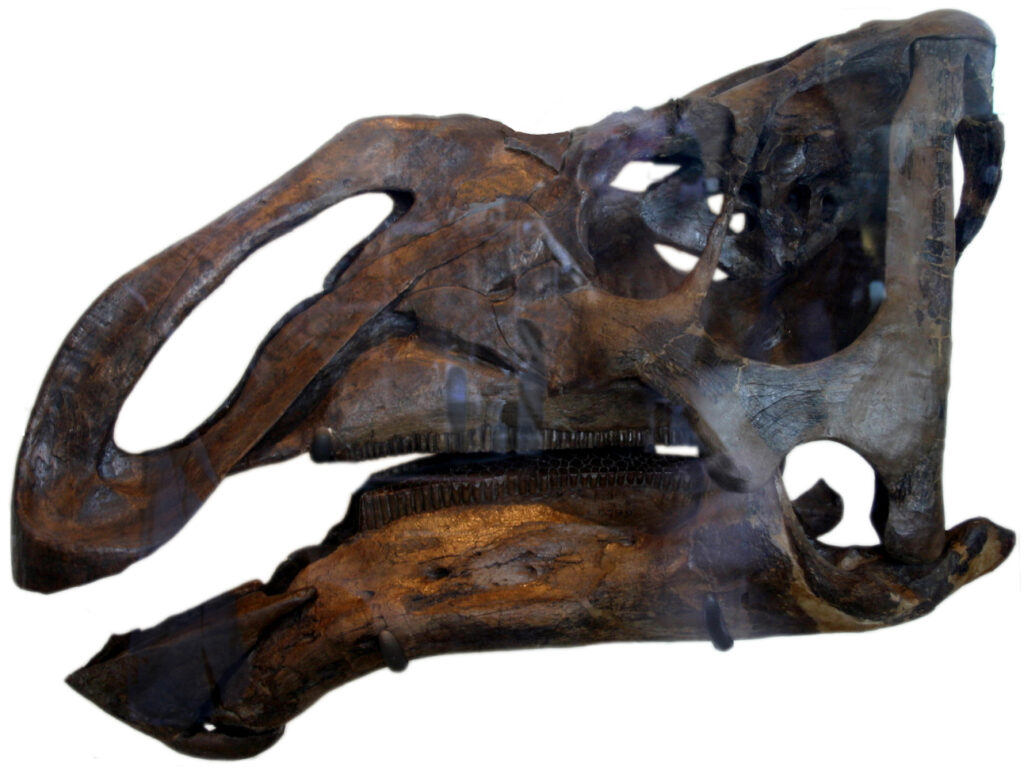
When you first see Rhinorex’s skull, your eyes immediately lock onto that incredible nasal structure. The nose isn’t just big – it’s architecturally impressive, rising from the skull like a natural monument. Scientists describe it as having a “greatly enlarged” nasal opening, but that clinical description hardly captures the visual impact of this feature.
The nasal cavity extends far beyond what you’d expect from any duck-billed dinosaur. While other hadrosaurs had notable crests or modest nasal features, Rhinorex took nose development to an entirely different level. This wasn’t just evolutionary tinkering; this was nature making a bold statement about form and function.
What’s in a Name
The scientific name Rhinorex condrupus tells a story all by itself. “Rhinorex” literally translates to “King Nose,” which seems almost charmingly straightforward for a scientific designation. The species name “condrupus” adds another layer, referencing the cliff where the fossil was discovered.
This naming convention reflects how paleontologists often capture the most striking feature of their discoveries. In Rhinorex’s case, there was really no other choice – that nose demanded recognition. The name has become something of a conversation starter in paleontology circles, immediately conveying the dinosaur’s most distinctive characteristic.
Size and Physical Characteristics

Rhinorex measured approximately 30 feet in length, making it a substantial member of the hadrosaur family. But size alone doesn’t tell the whole story – it’s the proportions that make this dinosaur truly remarkable. The skull, while large, is dominated by that extraordinary nasal structure that seems almost cartoon-like in its prominence.
Beyond the famous nose, Rhinorex possessed the typical hadrosaur body plan: powerful hind legs, a long tail for balance, and a duck-like bill perfect for processing plant material. The creature would have weighed several tons, moving through its environment with the characteristic gait of large ornithopods. Its overall build suggests an animal well-adapted to both bipedal and quadrupedal locomotion, depending on the situation.
The Mystery of the Mega-Nose Function
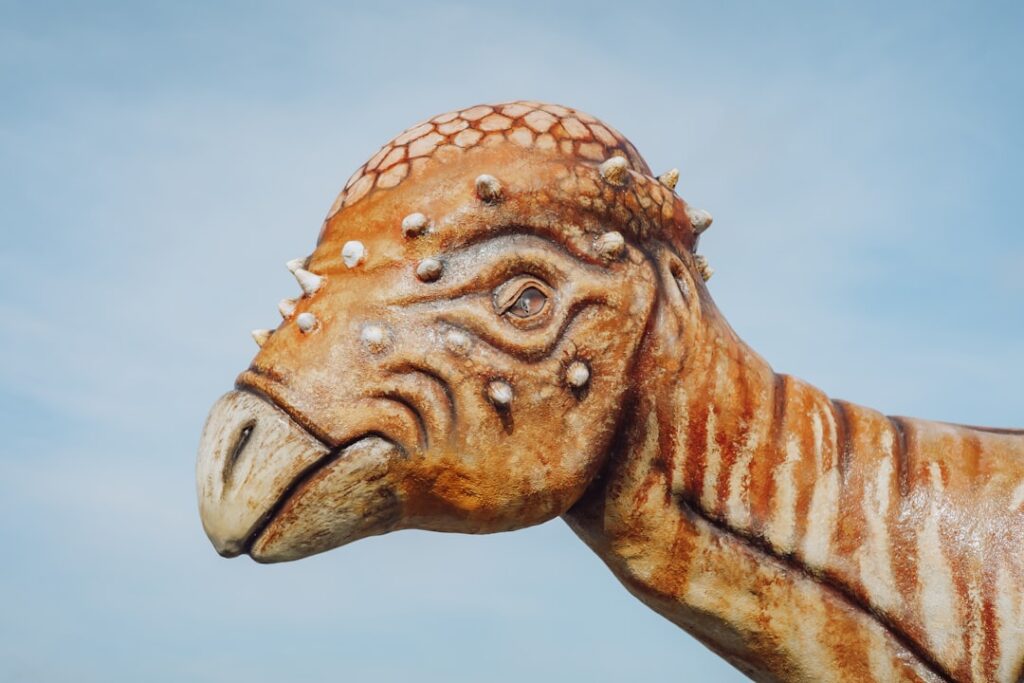
Scientists have proposed several fascinating theories about why Rhinorex evolved such an enormous nose. The most compelling suggestion involves enhanced olfactory capabilities – essentially, this dinosaur may have been the bloodhound of the Cretaceous period. A larger nasal cavity could accommodate more scent receptors, potentially giving Rhinorex an incredible ability to detect food, predators, or mates from great distances.
Another theory focuses on thermoregulation, suggesting the oversized nose helped cool incoming air before it reached the lungs. This would have been particularly valuable in the warm Cretaceous climate, functioning like a biological air conditioning system. Some researchers also propose that the nose might have played a role in vocalization, potentially amplifying calls or creating distinctive sounds for communication.
Habitat and Environment

Rhinorex lived during the Late Cretaceous period, approximately 75 million years ago, in what is now Utah. This region was dramatically different from today’s desert landscape – it was a lush, subtropical environment teeming with life. Rivers meandered through dense forests, creating a paradise for herbivorous dinosaurs like Rhinorex.
The climate was warm and humid, supporting diverse plant communities that would have provided abundant food sources. Conifers, ferns, and flowering plants created a complex ecosystem where large herbivores could thrive. This environment likely influenced the evolution of Rhinorex’s specialized features, including that remarkable nose that may have helped it navigate this rich but potentially dangerous world.
Feeding Behavior and Diet

Like other hadrosaurs, Rhinorex was a dedicated herbivore with sophisticated feeding adaptations. Its duck-like bill was perfect for cropping vegetation, while rows of grinding teeth in the back of its mouth processed tough plant material. The enhanced sense of smell provided by its enlarged nose would have been invaluable for locating the best food sources.
Rhinorex likely fed on a variety of plants, from low-growing ferns and cycads to higher tree foliage. Its size and build suggest it could rear up on its hind legs to reach vegetation that smaller herbivores couldn’t access. The combination of excellent olfactory abilities and efficient processing equipment made Rhinorex a highly successful plant-eater in its ecosystem.
Social Behavior and Communication
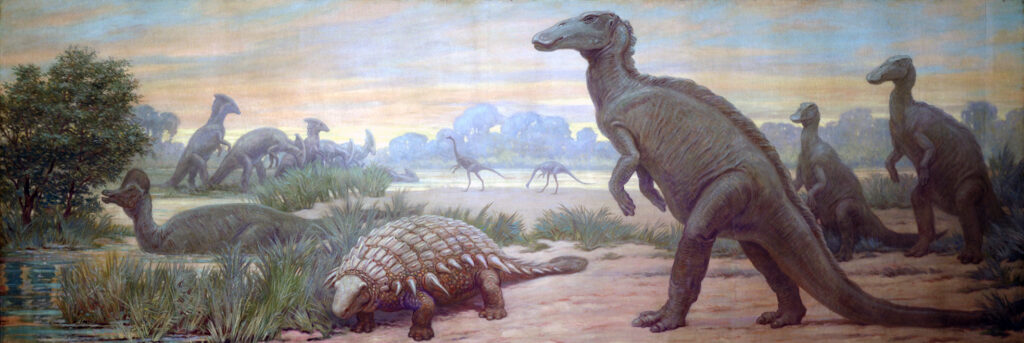
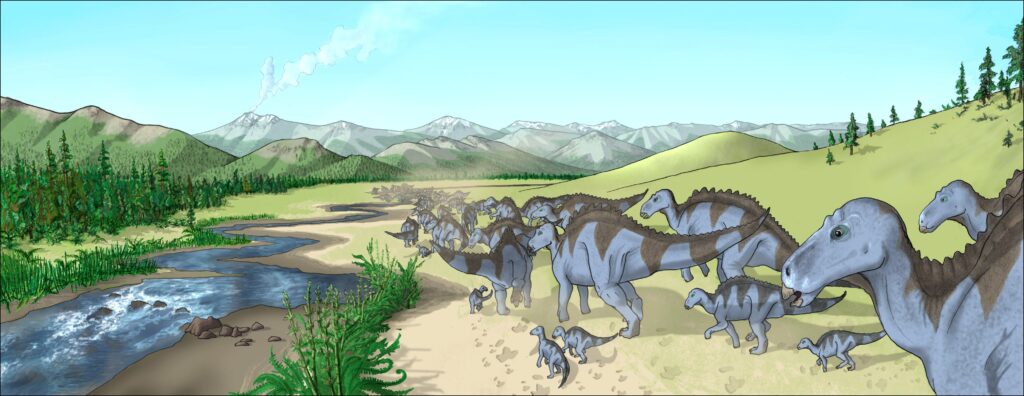
The enlarged nasal structure may have played a crucial role in Rhinorex’s social life. Many paleontologists believe hadrosaurs were highly social animals, living in herds and communicating through various vocalizations. Rhinorex’s prominent nose could have served as both a sound amplifier and a visual display feature.
During mating season, that impressive nose might have been a key attraction factor, similar to how modern animals use prominent features for courtship displays. The structure could have also helped individuals recognize their own species from a distance, preventing confusion with other hadrosaurs sharing the same habitat. This social aspect adds another dimension to understanding why such an extreme feature evolved.
Relationship to Other Hadrosaurs
Rhinorex belongs to the hadrosaurid family, but its exact relationships within this diverse group remain subjects of ongoing research. Its unique nasal structure sets it apart from both crested hadrosaurs like Parasaurolophus and flat-headed varieties like Edmontosaurus. This distinctive anatomy suggests Rhinorex represents a specialized evolutionary branch that explored different solutions to survival challenges.
The discovery of Rhinorex has prompted paleontologists to reexamine other hadrosaur specimens, wondering if similar species might be hiding in museum collections worldwide. This dinosaur demonstrates that even within well-studied groups like hadrosaurs, evolution was constantly experimenting with new forms and functions. Its existence hints at the incredible diversity that once flourished in ancient ecosystems.
Preservation and Fossil Quality

The Rhinorex fossil represents a remarkable example of preservation, with the skull maintaining enough detail to reveal the extraordinary nasal structure. The specimen was found in the Neslen Formation of Utah, an area known for producing exceptional dinosaur fossils from the Late Cretaceous period. The quality of preservation allows scientists to study fine details of bone texture and structure.
However, like many fossils, the Rhinorex specimen is incomplete, with only portions of the skull and some postcranial elements recovered. This partial preservation presents both challenges and opportunities for researchers, who must piece together the complete picture of this animal’s life and behavior from limited evidence. Despite these constraints, the available material provides compelling insights into this unique dinosaur’s biology.
Scientific Impact and Research

The discovery of Rhinorex has significantly impacted our understanding of hadrosaur evolution and diversity. Its unique features challenge previous assumptions about the limits of nasal structure development in these dinosaurs. The find has inspired new research into the functional morphology of dinosaur olfactory systems and their role in behavior and ecology.
Ongoing studies continue to explore the implications of Rhinorex’s anatomy for understanding Late Cretaceous ecosystems. Researchers are using advanced imaging techniques to study the internal structure of the nasal cavity, hoping to learn more about how this remarkable feature functioned. This work contributes to broader questions about sensory evolution in dinosaurs and how different species adapted to their environments.
Modern Technology Meets Ancient Mysteries
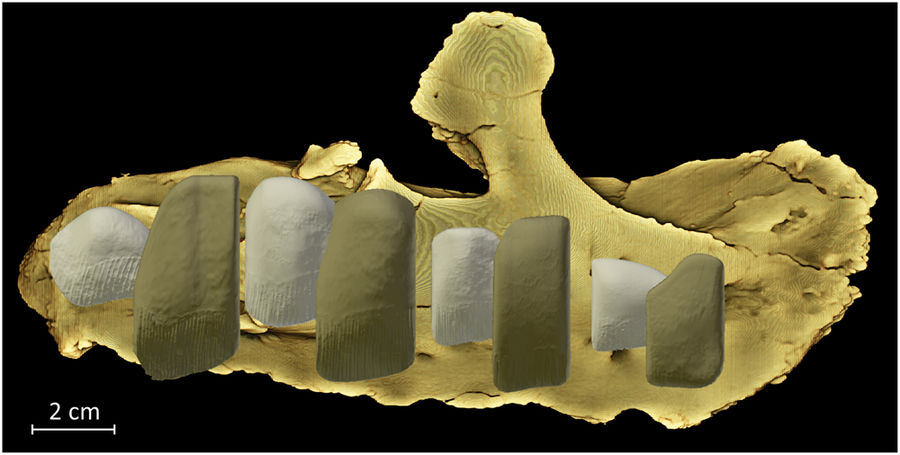
Advanced scanning technologies have revolutionized the study of Rhinorex, allowing scientists to peer inside the fossil without damaging it. CT scans reveal the internal structure of the nasal cavity, providing clues about how air flowed through this complex system. These techniques help researchers test their theories about function and behavior in ways that weren’t possible with traditional paleontological methods.
Computer modeling has also played a role in understanding how Rhinorex might have moved and behaved. By creating digital reconstructions based on the fossil evidence, scientists can simulate different scenarios and test hypotheses about this dinosaur’s life. This marriage of cutting-edge technology with traditional fossil study continues to yield new insights about Rhinorex and its world.
Cultural Impact and Public Fascination
Rhinorex has captured public imagination in ways that many dinosaur discoveries don’t manage to achieve. Its distinctive appearance makes it instantly recognizable and memorable, earning it a place in popular dinosaur culture. The “King Nose” nickname has helped make this scientific discovery accessible to general audiences, sparking interest in paleontology among people who might not otherwise engage with prehistoric topics.
Museum exhibits featuring Rhinorex often become visitor favorites, with its unusual appearance generating curiosity and questions. Educational programs use this dinosaur as an example of how evolution produces unexpected solutions to survival challenges. The combination of scientific significance and visual appeal makes Rhinorex an excellent ambassador for paleontological research and the wonders of prehistoric life.
Future Research Directions

Scientists continue searching for additional Rhinorex specimens that might provide more complete pictures of this remarkable dinosaur. Each new fossil discovery has the potential to answer lingering questions about its anatomy, behavior, and ecological role. Researchers are particularly interested in finding more complete skeletal material that could reveal additional unique adaptations.
The study of Rhinorex also opens doors to broader questions about sensory evolution in dinosaurs and how different species solved similar environmental challenges. Future research might explore whether other dinosaur groups developed comparable adaptations or if Rhinorex represents a truly unique evolutionary experiment. These investigations could reshape our understanding of prehistoric ecosystems and the incredible diversity of life that once flourished on Earth.
Rhinorex stands as a testament to evolution’s endless creativity and the surprises that still await discovery in the fossil record. This remarkable dinosaur with its impossible nose reminds us that prehistory was far stranger and more wonderful than we often imagine, filled with creatures that push the boundaries of what seems biologically possible. What other incredible adaptations might be waiting in museum collections or buried in ancient rock formations around the world?