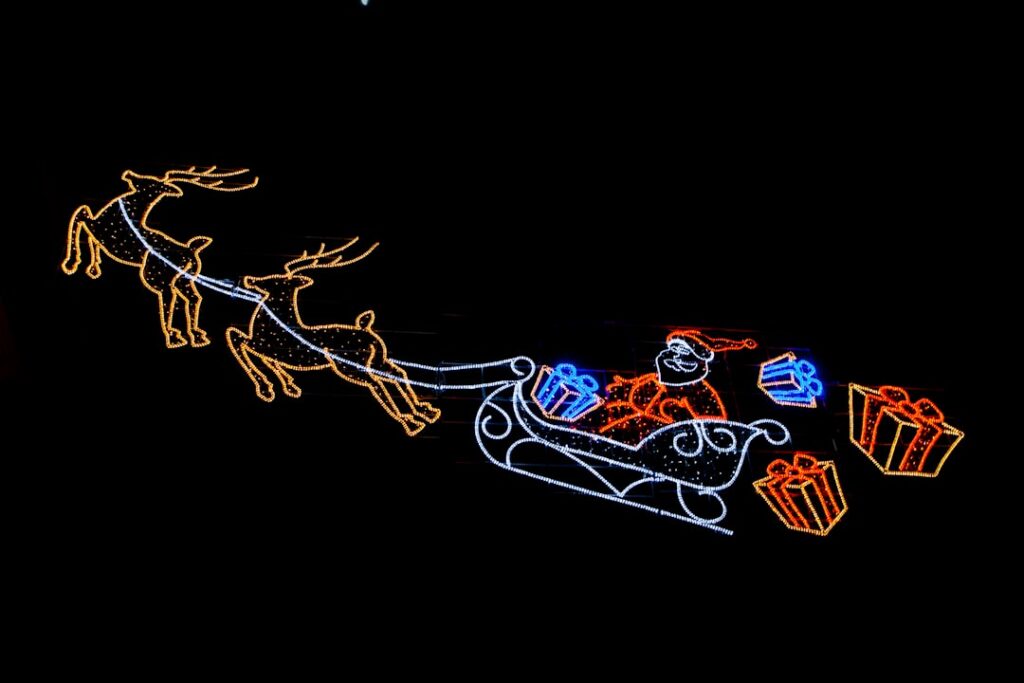

A Glimpse from the 1970s (Image Credits: Unsplash)
As the holiday season unfolds under clear winter skies, enthusiasts often turn their telescopes toward the heavens, blending festive wonder with astronomical curiosity.
A Glimpse from the 1970s
Back in the early 1970s, an amateur astronomer in New York captured what might have been an extraordinary sight while photographing the Full Moon. With a camera attached to his telescope, he focused on the lunar surface, only to notice something unusual streaking across the viewfinder. That fleeting moment sparked questions that persist today, inviting speculation about whether holiday magic could intersect with celestial observation.
Though details remain anecdotal, the incident highlights how everyday stargazing can lead to unexpected encounters. Observers during that era frequently documented bright objects in the sky, from satellites to meteors, which sometimes fueled imaginative interpretations. This particular event, shared in astronomical forums, reminds us of the era’s growing interest in backyard astronomy amid the space race excitement.
Modern Tools for Spotting Holiday Phenomena
Today’s telescopes offer advanced capabilities that make skywatching more accessible than ever, turning potential sleigh sightings into documented events. Equipped with digital cameras and tracking software, hobbyists can now capture high-resolution images of fast-moving objects like the International Space Station, which often appears as a brilliant streak low on the horizon. During Christmas Eve, such passes have been mistaken for Santa’s legendary ride, especially in pre-dawn hours over regions like the UK and North America.
Recent reports from stargazing communities describe similar illusions, where the ISS’s predictable orbits align with holiday timing. For instance, early risers in December 2025 noted bright lights zipping across the sky, prompting playful debates online. These tools not only demystify such sightings but also encourage families to participate, fostering a new generation of skywatchers who blend science with seasonal joy.
Celestial Spectacles That Echo Christmas Lore
The winter sky brims with features that evoke holiday imagery, such as the Christmas Tree Cluster, a young star formation about 2,500 light-years away. Imaged by observatories like NASA’s Chandra X-ray, this cosmic display resembles a decorated evergreen, complete with glowing “ornaments” from emerging stars. Telescopes reveal its intricate details, offering a tangible connection between astronomy and festive traditions.
Beyond clusters, planetary alignments and meteor showers add to the enchantment. In late December 2025, Jupiter and Saturn remain visible in the evening sky, their steady glow providing a backdrop for imaginative storytelling. Amateur astronomers report using mid-sized telescopes to spot these bodies, sometimes weaving in tales of Santa’s route among the stars. Such observations underscore how astronomy enriches holiday rituals without dismissing the wonder they inspire.
Tips for Your Own Telescope Adventure
To chase your own potential sleigh sighting, start with a stable setup in a dark-sky location away from city lights. Focus on the Full Moon phases around the solstice, when visibility peaks, and use apps to track satellite passes. A beginner-friendly refractor telescope, paired with a smartphone adapter, allows easy documentation of any intriguing movements.
Prepare for cold nights by dressing warmly and allowing your eyes to adapt to the darkness for at least 20 minutes. Scan the western horizon before dawn for the ISS, which can appear as bright as Venus. Join local astronomy clubs for guided sessions, where experts share techniques for identifying aircraft, drones, or natural phenomena that might mimic a flying sleigh.
- Check NORAD’s Santa Tracker for fun, real-time overlays on the sky map.
- Monitor weather forecasts to ensure clear conditions during peak viewing hours.
- Practice on familiar targets like the Moon’s craters to build confidence.
- Share your photos with online communities for feedback and camaraderie.
- Remember safety: Never aim telescopes at bright lights or lasers.
Key Takeaways
- Anecdotal sightings like the 1970s event blend astronomy with holiday folklore.
- Modern tools reveal natural explanations for “sleigh-like” sky streaks, such as satellite passes.
- Winter constellations and clusters offer magical viewing opportunities for all ages.
In the end, whether through a vintage telescope or cutting-edge gear, the pursuit of Santa’s sleigh in the stars captures the essence of holiday curiosity – a reminder that the night sky holds endless stories waiting to be told. What celestial surprise might you uncover this season? Share your stargazing experiences in the comments below.