
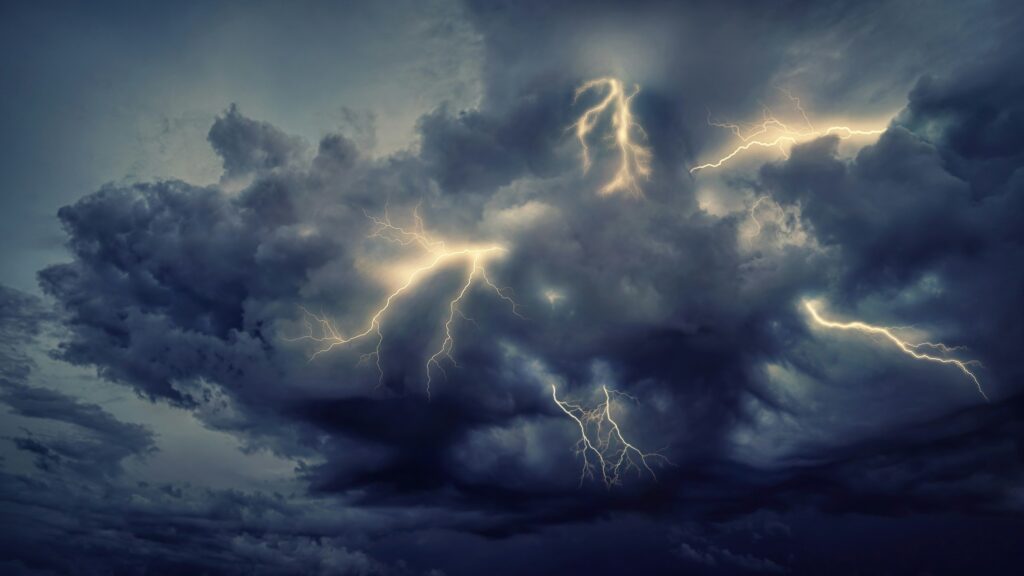
The next time thunder cracks overhead and your heart suddenly races, you are not being dramatic or childish. You are experiencing a real, measurable shift in your nervous system, shaped by millions of years of evolution in a world where a violent storm could kill you in minutes. That split-second jolt you feel is not just “being jumpy” – it is your brain deciding, in less than the blink of an eye, that something massive and potentially lethal just happened nearby.
What makes this so fascinating is how stubborn that reaction is. Even if you are sitting on a couch, phone in hand, meteorologist calmly explaining the forecast, your body still reacts as if you are trapped in a canyon with rising water and no way out. Underneath your calm thoughts lies an ancient alarm system built for flash floods, collapsing shelter, and lightning strikes. Once you see thunder that way – as an old survival program accidentally running in a modern world – it becomes a lot easier to understand why storms can feel so unsettling, even when logic says you are safe.
The nervous system hears thunder as a threat before you “decide” anything
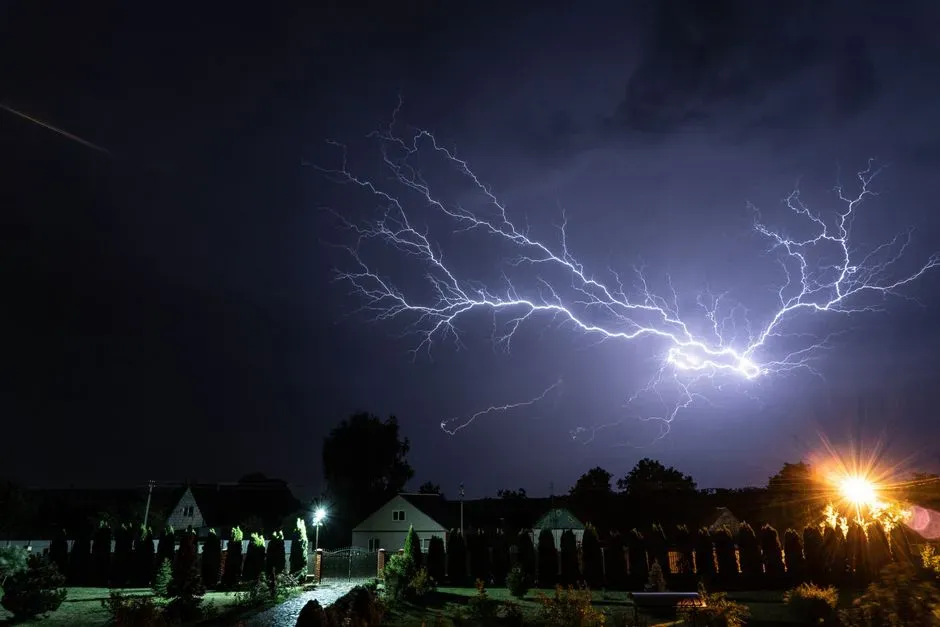
Thunder is not just noise; it is a sudden, high-intensity acoustic shock wave that hits the body fast and hard. Your ears and the tiny mechanosensory cells inside them convert that pressure change into electrical signals that race into your brainstem and midbrain long before you consciously notice anything. Those deep, older brain regions are wired to treat abrupt, loud sounds as potential danger by default, because in nature quiet things rarely kill you, but sudden violent ones often can.
In that split second after a thunderclap, your autonomic nervous system can start ramping up: your heart rate nudges upward, blood vessels constrict slightly, muscles tense, and your breathing may hitch or quicken. These reactions follow classic “startle” and “fight-or-flight” patterns that scientists can detect with tools like skin conductance, heart rate variability, and eye-blink reflex measurements. By the time you tell yourself, “Relax, it’s just a storm,” that entire cascade has already begun, because your body always bets on survival first and rational explanation second.
Why thunder evolved into an ancient danger signal for humans
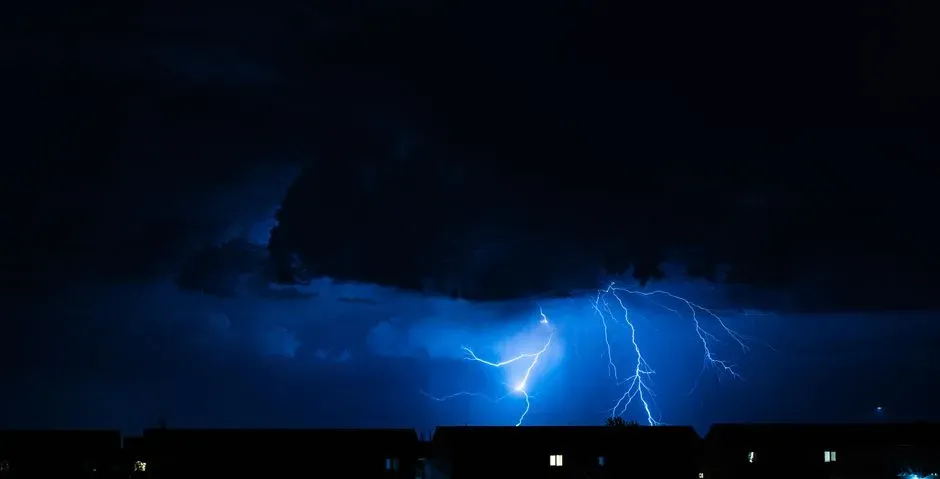
For most of human history, a violent storm was not a cozy aesthetic moment for watching raindrops on the window. It could mean flash floods in narrow valleys, landslides on unstable slopes, lightning strikes in open areas, and roofs made of mud, thatch, or branches collapsing under the onslaught. If your group ignored the early sounds of a storm building, you might not have time to climb to higher ground, find overhangs, or secure basic shelter. In that world, overreacting to thunder was safer than underreacting.
Natural selection tends to favor creatures whose nervous systems err on the side of caution when signals of possible catastrophe appear. Thunder is a perfect example: loud, low-frequency, and able to travel long distances, it announces that extreme forces are at work nearby, whether you can see them or not. Our ancestors who snapped to attention at the first rumble were more likely to get moving, avoid flooded riverbanks, and hustle their children to relative safety. That survival advantage became baked into our biology, and we still carry it, even if our “shelter” now is a concrete building instead of a fragile hut on a floodplain.
How the body’s stress response shows up when thunder cracks

When a loud clap of thunder hits, your body’s stress systems behave as if someone just yanked a hidden emergency lever. The sympathetic branch of the autonomic nervous system surges, nudging your adrenal glands to release stress hormones that prime you for sudden action. People can show measurable increases in heart rate, subtle spikes in blood pressure, and changes in skin conductivity that reflect more sweat production, even when they report only mild annoyance or surprise.
This response is not just internal; it shapes how you move and behave. You might flinch, duck your head, tense your shoulders, or instinctively pull away from windows and open doors. Some people feel a wave of unease or dread that seems to arrive out of nowhere, even if they are not consciously afraid of storms. To me, that mismatch between what the body does and what the mind “thinks” is one of the clearest reminders that our nervous system follows ancient rules that do not always match our current lifestyle.
The startle reflex: thunder as a super-charged version of a basic circuit

Underneath the drama of a storm lies a very basic, almost mechanical circuit called the startle reflex. This reflex is what makes you jump when a balloon pops or dishes crash to the floor, and it is wired through the brainstem and spinal cord in a way that bypasses slow, conscious processing. Thunder, with its sudden onset and powerful low-frequency rumble, is like that same reflex hooked up to a subwoofer turned all the way up.
Researchers can measure this reflex through tiny facial muscle twitches and rapid eyelid blinks, and they have found that it becomes stronger when a person is already anxious or on edge. That means if someone is stressed for other reasons, a thunderstorm can feel massively more intense because it is amplifying an already active fear system. This is one reason people with anxiety disorders or trauma histories often report storms as especially overwhelming; thunder is not just sound to them, it is a trigger that stamps itself onto circuits that are already too sensitive.
Not all thunder is equal: context changes how your brain reacts
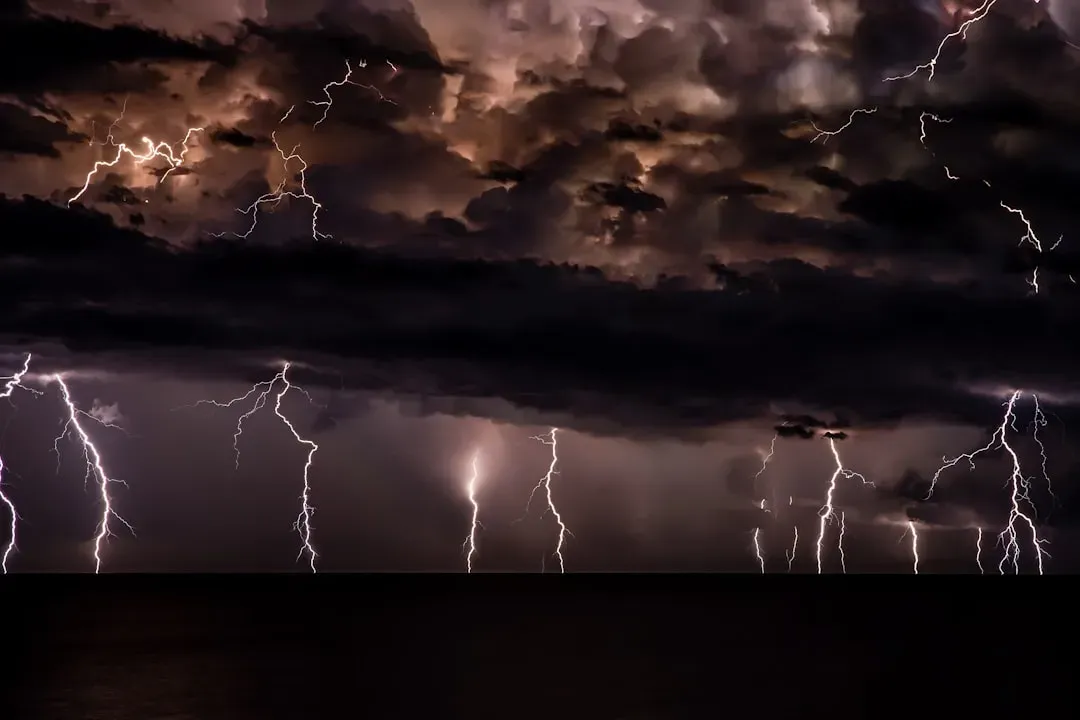
The same thunderclap feels wildly different if you are alone in a dark cabin versus sitting in a bright café surrounded by friends and laughter. Your brain constantly calculates how safe or unsafe you are based on context: who is with you, where you are, what you expect to happen next. When thunder erupts in a situation that already feels unstable or out of control, your stress response gears up faster and may stay elevated longer because the brain reads it as yet another sign of chaos.
By contrast, if storms were part of your childhood soundtrack and you associate them with storytelling, warm blankets, or lazy afternoons, that ancient alarm system can be partially dampened by comforting memories. Your body may still show a quick startle reaction, but it calms more quickly under the influence of reassuring thoughts and familiar routines. I have noticed that people who genuinely enjoy watching storms often unknowingly build rituals – like making tea or sitting under a covered porch – that teach their nervous system a new story: thunder equals awe, not just danger.
When natural stress shifts into storm phobia and anxiety

There is a big difference between a normal stress reaction and a full-blown fear of storms that disrupts daily life. For some people, thunder is not just startling; it is terrifying. They may obsessively track weather forecasts, rearrange plans at the slightest chance of storms, or feel consumed by dread as clouds build on the horizon. In those cases, the ancient reflex has essentially hijacked the modern brain, convincing it that every storm is a personal, imminent threat.
This can be especially intense for children, whose brains are still learning which signals truly predict danger and which do not. Without calm, grounded adults helping them regulate, kids may interpret their racing heart and shaking hands as proof that something awful is about to happen. Over time, that belief can turn into a conditioned pattern where even a distant rumble sets off panic. The tricky part is that the nervous system is not lying about feeling threatened, but it is overestimating the actual risk in a world where many of us have sturdy buildings, weather alerts, and emergency plans that our ancestors never did.
Re-training an ancient reflex: how to work with your storm response

The good news is that while we cannot rip out our inherited storm circuitry, we can learn to work with it rather than be owned by it. One powerful approach is simply naming what is happening in your body: instead of thinking, “I am losing it,” you can say, “My nervous system is running an old survival program from a time when storms meant flash floods and no shelter.” That small reframe turns panic into a predictable pattern you can anticipate and influence. It is like realizing that a loud car alarm on your street does not always mean someone is actually breaking in.
Practical strategies can help retrain the system over time. Slow, extended exhalations, grounding your attention on concrete details in the room, and pairing storms with calming activities can all teach your brain new associations. Some people benefit from gradually and safely exposing themselves to the sounds of thunder through recordings while practicing relaxation, so the body stops pairing that sound exclusively with danger. From my perspective, the goal is not to eliminate your reaction completely – after all, it is part of what kept our species alive – but to dial it down from blaring siren to helpful weather alert you can hear without being consumed by it.
Conclusion: an ancient alarm in a modern sky
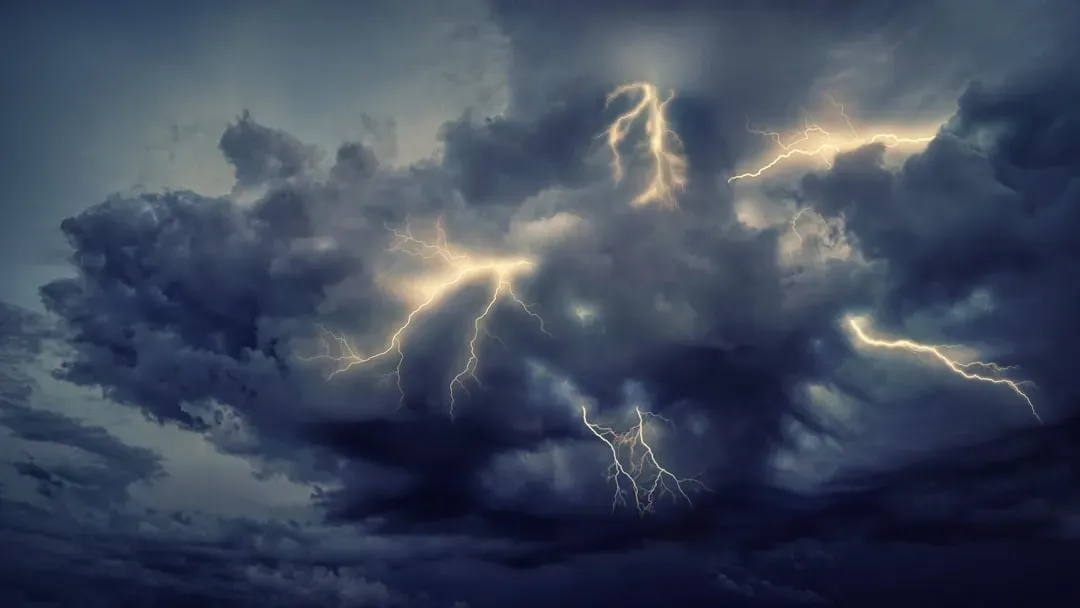
If thunder makes you flinch, tense, or feel oddly on edge, your nervous system is doing exactly what it was built to do. It is reading a violent sound in the sky the way your distant ancestors once did, as a warning that water might rise, walls might fail, and lightning might strike. In a world where many of us can watch storms from solid buildings with multiple backup systems, that reaction can feel excessive, even embarrassing. But shaming a reflex wired for survival is like yelling at a smoke detector for being loud; it misses the point of why it exists.
My own take is that we should respect that ancient alarm, not resent it – but also refuse to let it run our lives. Understanding how thunder plugs directly into deep stress circuits gives us a chance to respond with curiosity instead of fear, and to gently educate our bodies that not every storm is a crisis. In a sense, every thunderclap is a small reminder of where we came from: a time when the sky could turn deadly in minutes and paying attention meant living to see another day. The real question now is this: knowing that your fear is a perfectly reasonable echo from the past, how will you choose to listen to it the next time the sky explodes?