Peru’s Chincha Valley – Seabird droppings from nearby islands transformed arid coastal lands into fertile fields that underpinned one of pre-Inca South America’s most influential societies.
Isotopes Unlock an Ancient Agricultural Secret
Isotopes Unlock an Ancient Agricultural Secret (Image Credits: Imgs.mongabay.com)
Archaeologists recently analyzed 35 maize cobs unearthed from tombs in the Chincha Valley and found strikingly high nitrogen isotope levels, pointing to seabird guano as the key fertilizer. These values, reaching up to +27.4 per mil, matched experimental data from guano-manured plants and exceeded those of unfertilized maize. The evidence dated back to at least 1250 CE during the Late Intermediate Period.
Researchers Jacob Bongers, Emily Milton, and Jo Osborn combined stable isotope analysis of carbon, nitrogen, and sulfur with radiocarbon dating on associated materials. Seabird bones from the same sites provided baseline isotope signatures, confirming marine-derived inputs. This marked the strongest proof yet of pre-Inca guano use in the Peruvian Andes. The study appeared in PLOS One on February 11, 2026.
Thriving in a Desert Landscape
The Chincha Valley sits in southern Peru, one of Earth’s driest zones, where scant rainfall challenged farming. Yet the Chincha Kingdom flourished there from around 1000 to 1400 CE, supporting over 100,000 people through specialist communities of fishers, farmers, and merchants. Maize became the staple crop, essential for food and fermented chicha beer.
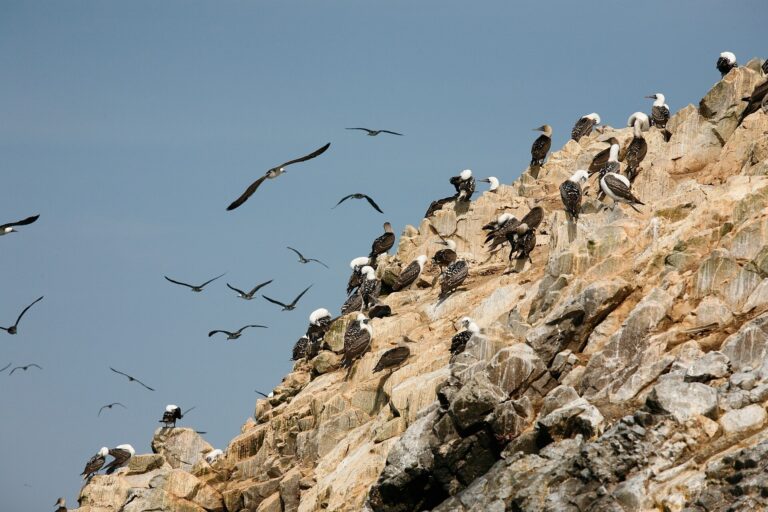
About 25 kilometers offshore, the Chincha Islands hosted massive seabird colonies. Species like the guanay cormorant, Peruvian booby, and Peruvian pelican amassed guano layers meters thick, thanks to the nutrient-rich Humboldt Current fueling their fish-heavy diets. The dry climate preserved this “white gold,” rich in nitrogen, phosphorus, and potassium.
Harvesting and Applying the Resource
Fishers navigated to the islands by raft, collecting guano and bringing it back to valley farmers. Colonial records later described applying it at planting and again midway through growth, restoring barren soils when paired with irrigation. Iconography on Chincha textiles, ceramics, and friezes depicted seabirds alongside fish and sprouting maize, reflecting deep ecological understanding.
Guano outperformed terrestrial manures, delivering far higher nutrient concentrations. This practice boosted yields, enabling surplus production.
- Nitrogen for lush growth and protein.
- Phosphorus for strong roots.
- Potassium for resilient stalks.
- Sulfur and trace minerals for overall health.
Wealth, Trade, and Inca Alliances
Enhanced agriculture fueled economic expansion. Chincha merchants traded maize widely, amassing wealth and maritime influence. Guano itself became a valuable commodity, strengthening the kingdom’s position.
“Bird poop was powering this really powerful pre-Inca polity,” said Jacob Bongers. It likely shaped the Inca Empire’s approach around 1400 CE, leading to incorporation rather than conquest. The Inca prized maize and guano so highly they restricted island access during breeding seasons and banned bird killings under penalty of death.
Key Takeaways
- Guano use began by 1250 CE, driving population growth and trade in the arid Chincha Valley.
- Isotope analysis of maize cobs provided direct biochemical evidence, supported by art and records.
- The resource elevated Chincha’s status, influencing its alliance with the Inca Empire.
Ancient Peruvians’ mastery of marine fertilizers highlights sustainable ingenuity in harsh environments, offering lessons for modern agriculture. What do you think about guano’s role in history? Tell us in the comments.