Long before whales, dolphins, or great white sharks patrolled our oceans, an entirely different category of apex predator was calling the shots. Reptiles, creatures we generally associate with sun-baked rocks and dry deserts, had conquered the seas in ways that still seem almost impossible to believe. They were enormous, ruthless, astonishingly diverse, and in many ways more terrifying than anything swimming in the ocean today.
Before large mammals, reptiles ruled the ocean. During the Mesozoic, the time period when dinosaurs roamed on land, many of these large creatures were the top predators in the ocean food chain, feeding on fish, cephalopods, bivalves, and even one another. These weren’t small animals sneaking through shallow tidepools. They were the stuff of genuine sea monster legends, and honestly, the reality is even wilder than the myths. Let’s dive in.
1. Mosasaurus: The Undisputed King of the Cretaceous Seas
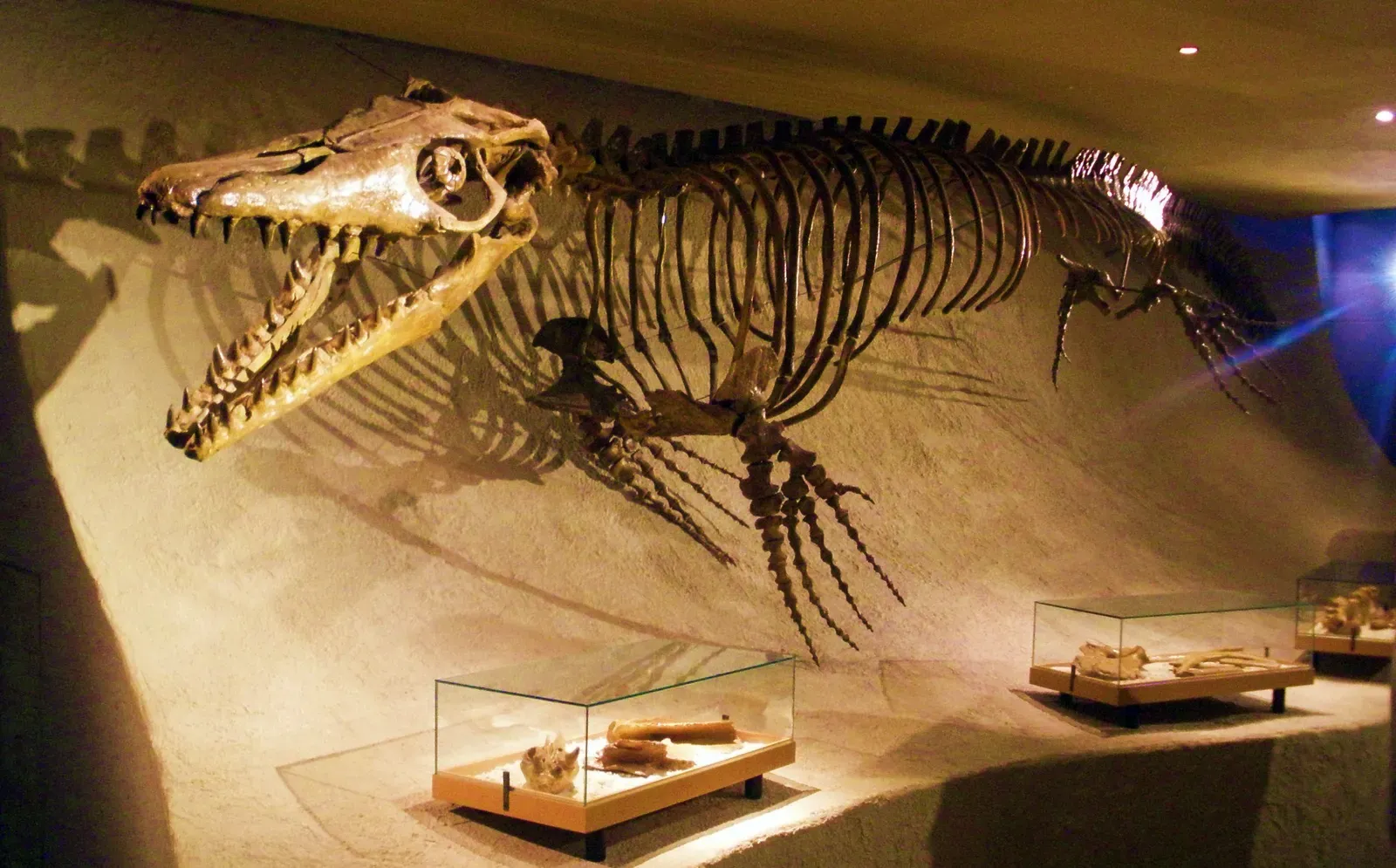
If you’ve seen the Jurassic World films, you already have a rough mental image of Mosasaurus, though the Hollywood version wasn’t quite accurate. The real animal was arguably even more unsettling. Mosasaurus was a type of derived mosasaur with advanced evolutionary traits such as a fully aquatic lifestyle, featuring a streamlined body, an elongated tail ending with a downturn supporting a two-lobed fin, and two pairs of flippers.
Fossil evidence suggests Mosasaurus inhabited much of the Atlantic Ocean and the adjacent seaways, with fossils found in North and South America, Europe, Africa, Western Asia, and Antarctica, encompassing a wide range of oceanic climates including tropical, subtropical, temperate, and subpolar. That global distribution tells you everything you need to know about how dominant this animal truly was. Paleontologists believe its diet would have included virtually any animal, likely preying on bony fish, sharks, cephalopods, birds, and other marine reptiles including sea turtles and other mosasaurs.
2. Ichthyosaurus: The Dolphin That Wasn’t a Dolphin
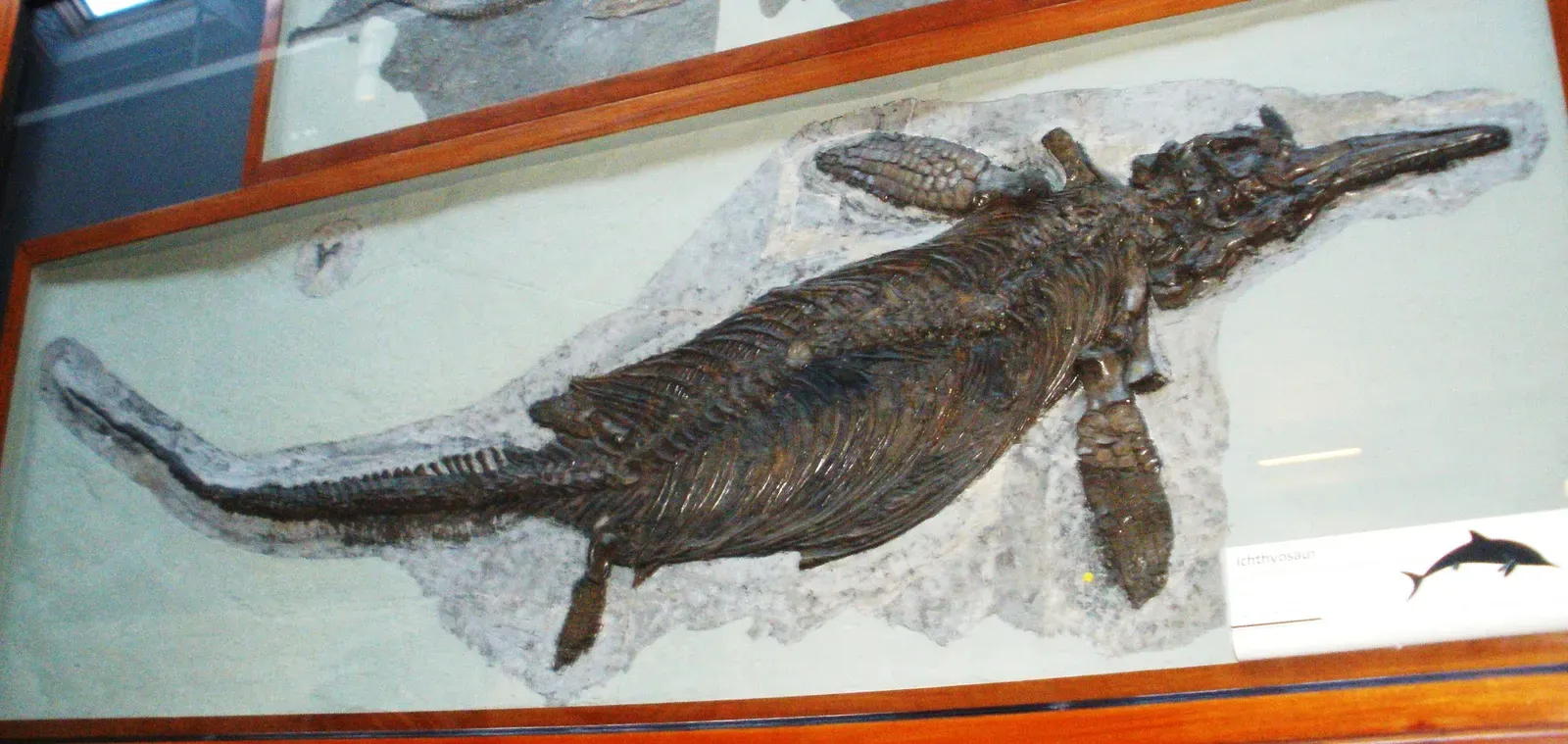
Here’s something that genuinely catches people off guard: the ichthyosaurs evolved their dolphin-like appearance entirely independently of dolphins. As they adapted to life in the ocean, ichthyosaurs evolved a more streamlined shape similar to that of fish and marine mammals through a process known as convergent evolution. Mother Nature, it seems, found one very good blueprint for fast swimming and kept returning to it across completely different animal lineages.
Ichthyosaurs are a group of ancient marine reptiles whose ancestors returned to the sea more than 250 million years ago. Though they were both reptiles and lived at the same time, dinosaurs are not closely related to ichthyosaurs. The dinosaurs lived on land, whereas ichthyosaurs never left the water. Researchers found that ichthyosaurs had elevated body temperatures compared with fish, suggesting the reptiles were likely warm-blooded, which is consistent with the idea that they actively pursued prey instead of hunting by ambush as a crocodile does.
3. Plesiosaurs: The Creatures That Launched a Thousand Myths
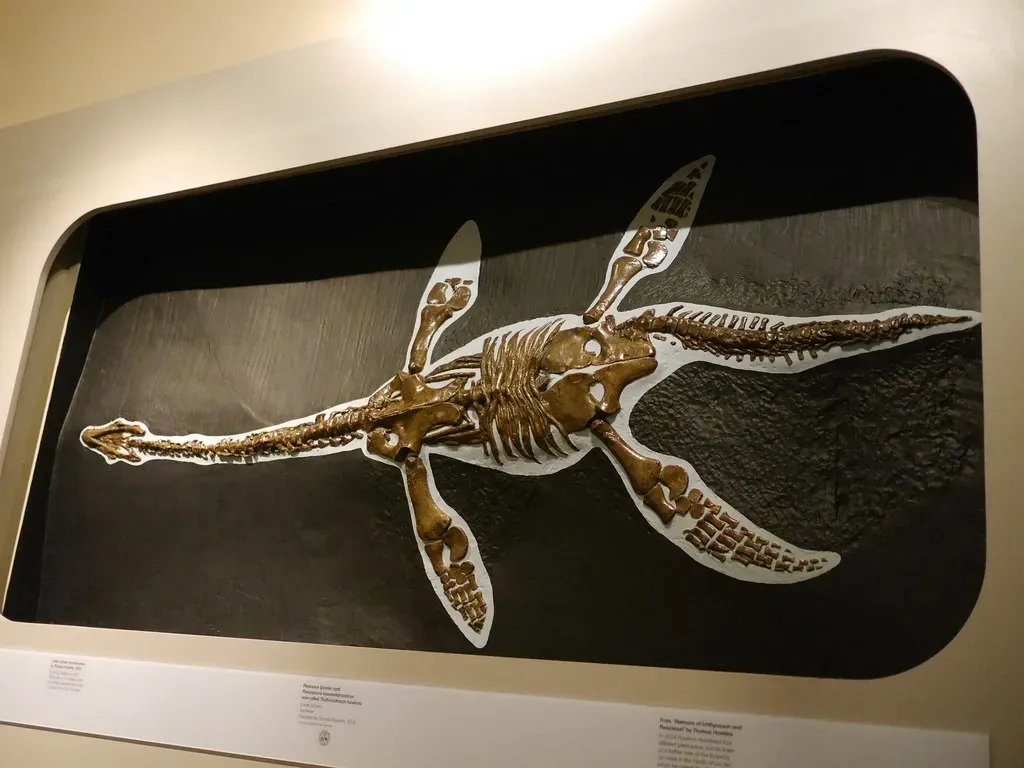
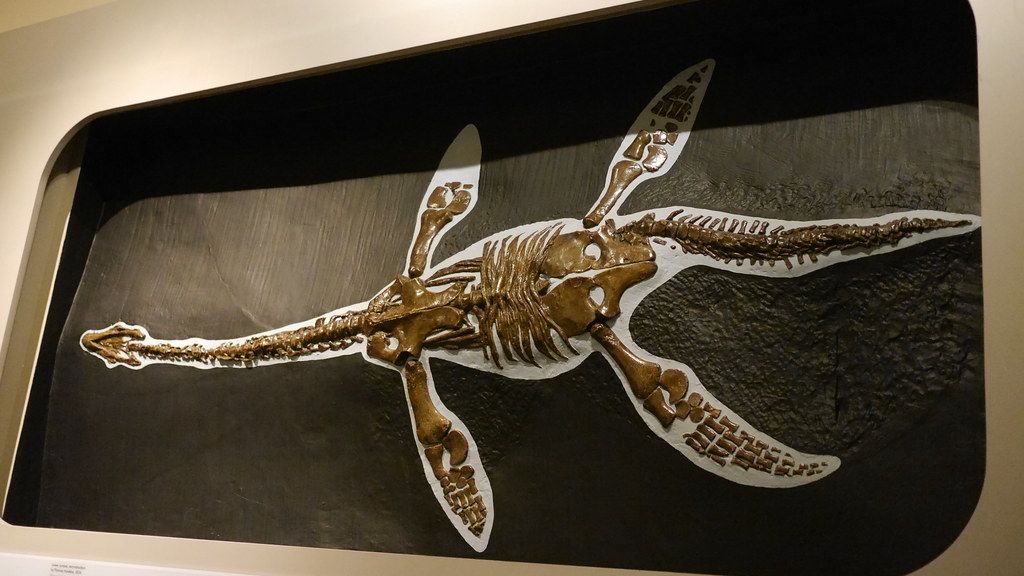
You’ve almost certainly heard the theory that Scotland’s Loch Ness Monster might be a surviving plesiosaur. I think we can safely say that’s not the case, but it speaks to just how deeply these animals have embedded themselves in human imagination. Plesiosaurs had a unique way of swimming, with four flipper-like limbs to push them through the water. While some evolved incredibly long necks with a small head perched on the front, others had much shorter necks but very large jaws and teeth instead.
Another curiosity was their four-flippered design. No modern animals have this swimming adaptation, so there is considerable speculation about what kind of stroke they used. Preserved stomach contents show they ate a variety of fish and squid, while pliosaur tooth marks have been found on the fossils of ichthyosaurs and other plesiosaurs. Some pliosaurs even ate dinosaurs, scavenging on corpses that washed out to sea. That last detail, honestly, is one of the most startling facts in all of paleontology.
4. Liopleurodon: The Jurassic Ambush Machine
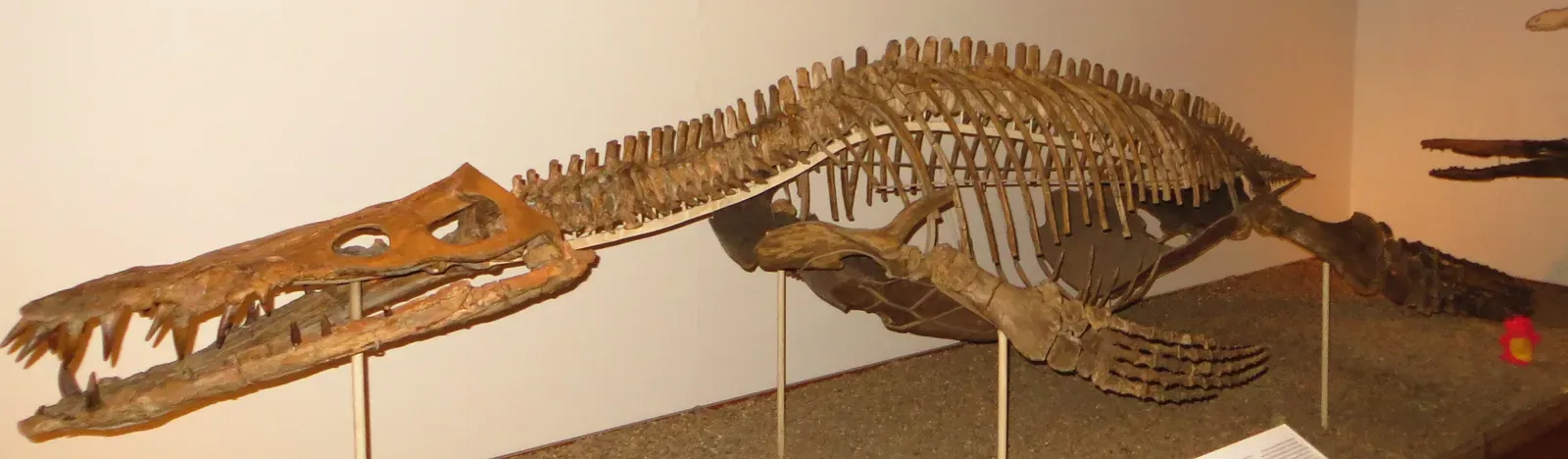
Liopleurodon became wildly famous after a BBC documentary portrayed it as a creature stretching over 25 meters. That was, to put it gently, a significant exaggeration. In 1999, its size was greatly exaggerated in the BBC documentary series Walking with Dinosaurs, where it was depicted as reaching 25 m in length. However, the different attributed specimens show that the animal could reach a size ranging from 4 to 8 meters long, with some researchers estimating a maximum length of approximately 10 meters.
Still, do not let the size correction fool you into thinking it was any less terrifying. In the middle of the Jurassic, very large Pliosauridae evolved. These were characterized by a large head and a short neck, such as Liopleurodon. These forms had skulls up to three meters in length and reached weights of ten tons. The pliosaurids had large, conical teeth and were the dominant marine carnivores of their time. Various studies show that Liopleurodon would have been an ambush predator, feeding on fish, cephalopods, and other marine reptiles.
5. Kronosaurus: Australia’s Ancient Nightmare
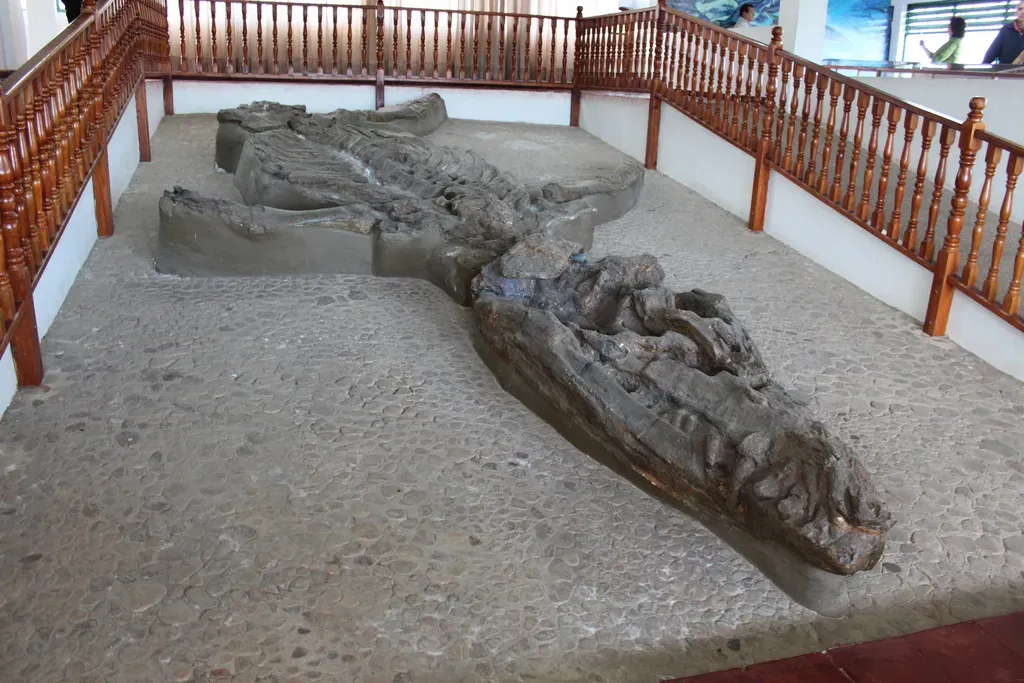
Uploaded by FunkMonk, CC BY-SA 2.0)
Named after Kronos, the titan who devoured his own children in Greek mythology, this creature’s name is arguably the most fitting label in all of prehistoric science. Kronosaurus was a large marine reptile belonging to the pliosaur family, which thrived during the age of dinosaurs from the Early Jurassic to the Cretaceous period. Often mistaken for a dinosaur, this predator was distinguished by its massive skull, short neck, and streamlined body equipped with large, paddle-like flippers.
Based on its stratigraphic distribution in the fossil record, Kronosaurus inhabited the Eromanga Sea, an ancient inland sea that covered a large part of Australia during the Early Cretaceous. This inner sea reached cold temperatures close to freezing. Kronosaurus would likely have been an apex predator in this sea, with fossil evidence showing that it preyed on sea turtles and other plesiosaurs. Estimates of its bite force suggest that the animal would have reached between 15,000 to 27,000 newtons, and the skull of a juvenile specimen shows that it would have been attacked by an adult, indicating intraspecific aggression or even potential evidence of cannibalism within the genus.
6. Elasmosaurus: The Creature With a Neck Longer Than Its Body
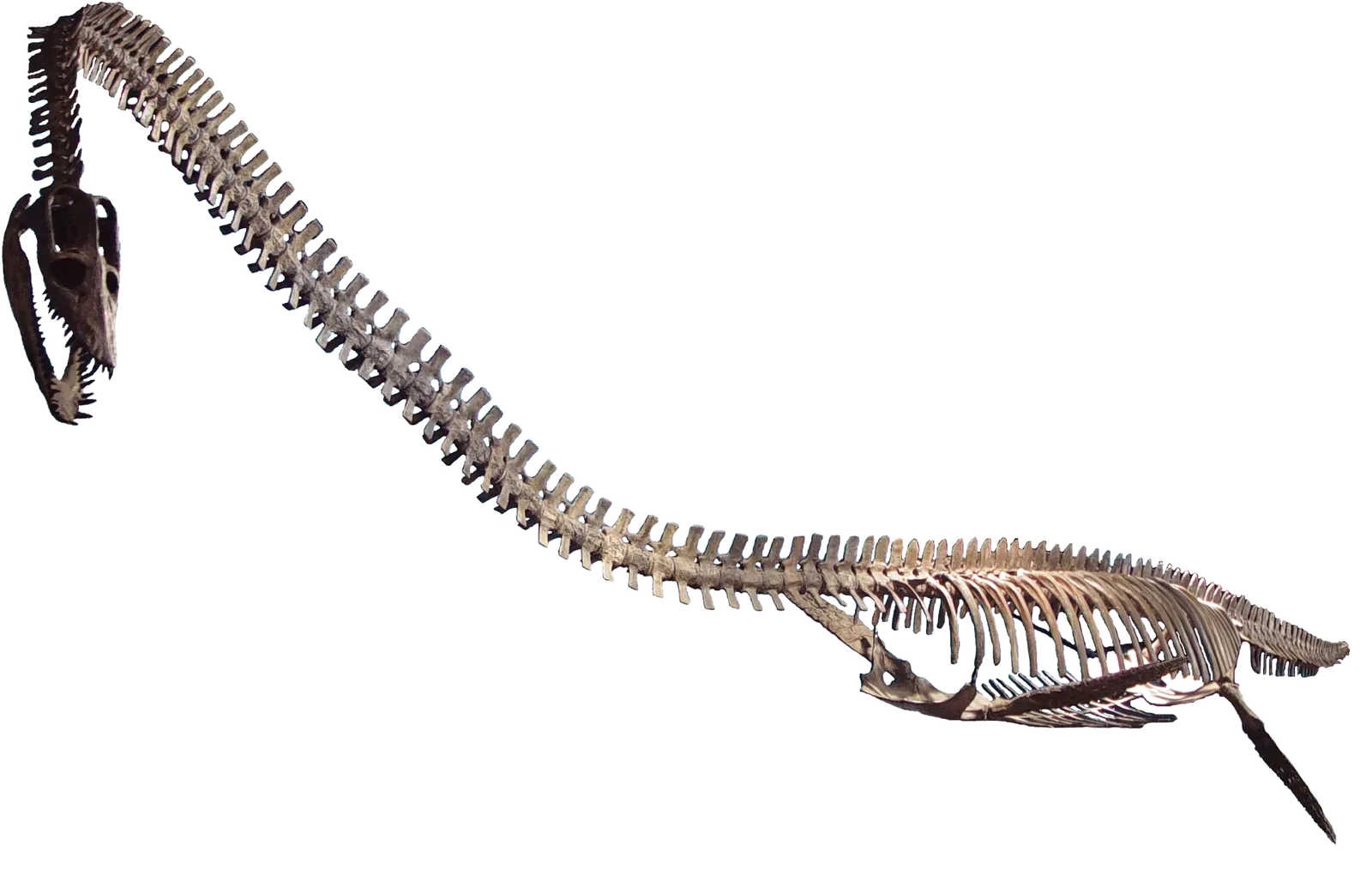
Imagine a crocodile. Now imagine its neck is longer than the rest of its entire body. That’s essentially what you’re dealing with when you consider Elasmosaurus. Later in the Early Cretaceous, the Elasmosauridae appeared; these were among the longest plesiosaurs, reaching up to fifteen meters in length due to very long necks containing as many as 76 vertebrae, more than any other known vertebrate.
In fact, Elasmosaurus’ neck is so extreme that it caused confusion for more than a century. When the famous palaeontologist Edward Drinker Cope named Elasmosaurus, he believed that the neck was so long that it was actually the tail. This meant he ended up putting the skull on the wrong end of the animal. The rigid and straight neck served as a stealthy ambush tool rather than a flexible weapon. Elasmosaurus hunted by lurking in dark depths, striking upward at fish silhouetted against sunlight.
7. Nothosaurus: The Bridge Between Land and Sea
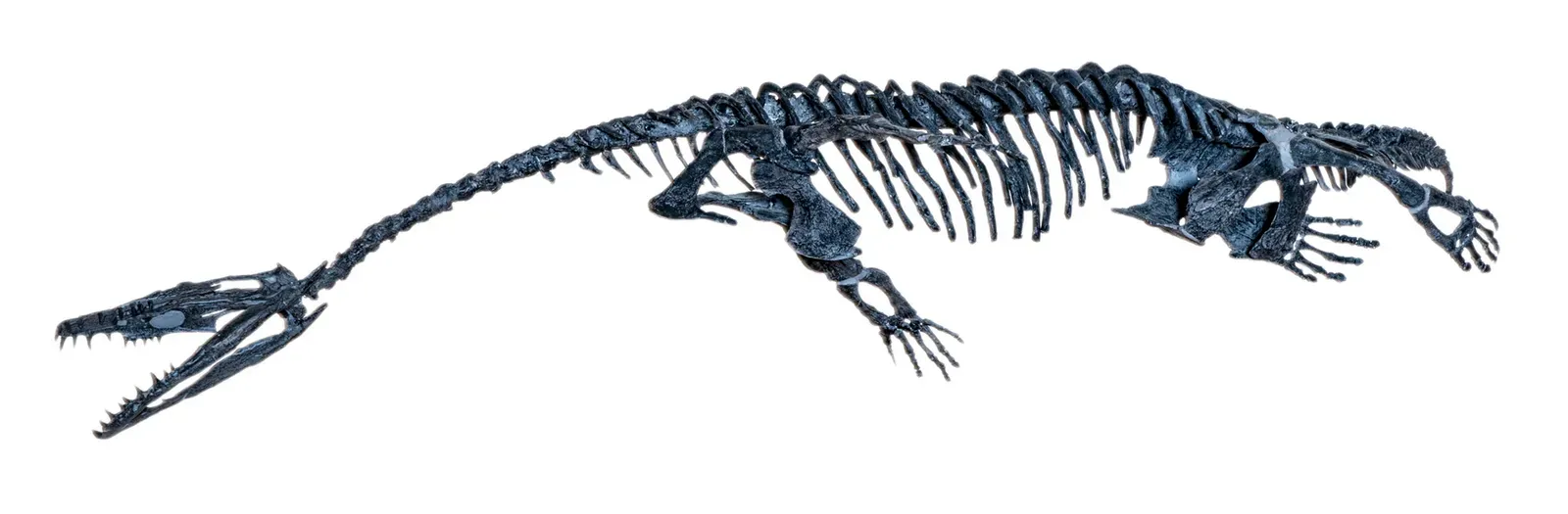
This file was uploaded by MUSE – Science Museum of Trento in cooperation with Wikimedia Italia., CC BY-SA 3.0)
Not every marine reptile was a massive open-ocean hunter. Some were far more interesting in subtler ways, and Nothosaurus is a perfect example. Nothosaurs were an extinct group of marine reptiles that flourished during the Triassic Period, approximately 245 to 210 million years ago. They represent a significant evolutionary step, acting as transitional forms between terrestrial reptiles and the fully aquatic marine giants that dominated later Mesozoic seas. As members of the Sauropterygia group, Nothosaurs occupied the warm, shallow coastal waters of the Triassic world, establishing a unique lifestyle that bridged the gap between land and sea.
Nothosaurus was a semi-oceanic animal which most likely had a lifestyle similar to that of today’s seals. It was about 4 metres long, with long, webbed toes and possibly a fin on its tail. Some species such as N. zhangi and N. giganteus were larger, up to 5 to 7 metres long. Nothosaurs and their close relatives are considered the ancestors of the Pistosauroidea, which eventually gave rise to the Plesiosaurs and Pliosaurs. This lineage involved a trend toward greater aquatic specialization, including the transformation of their webbed limbs into true flippers.
8. Shonisaurus: The Giant That Lost Its Teeth
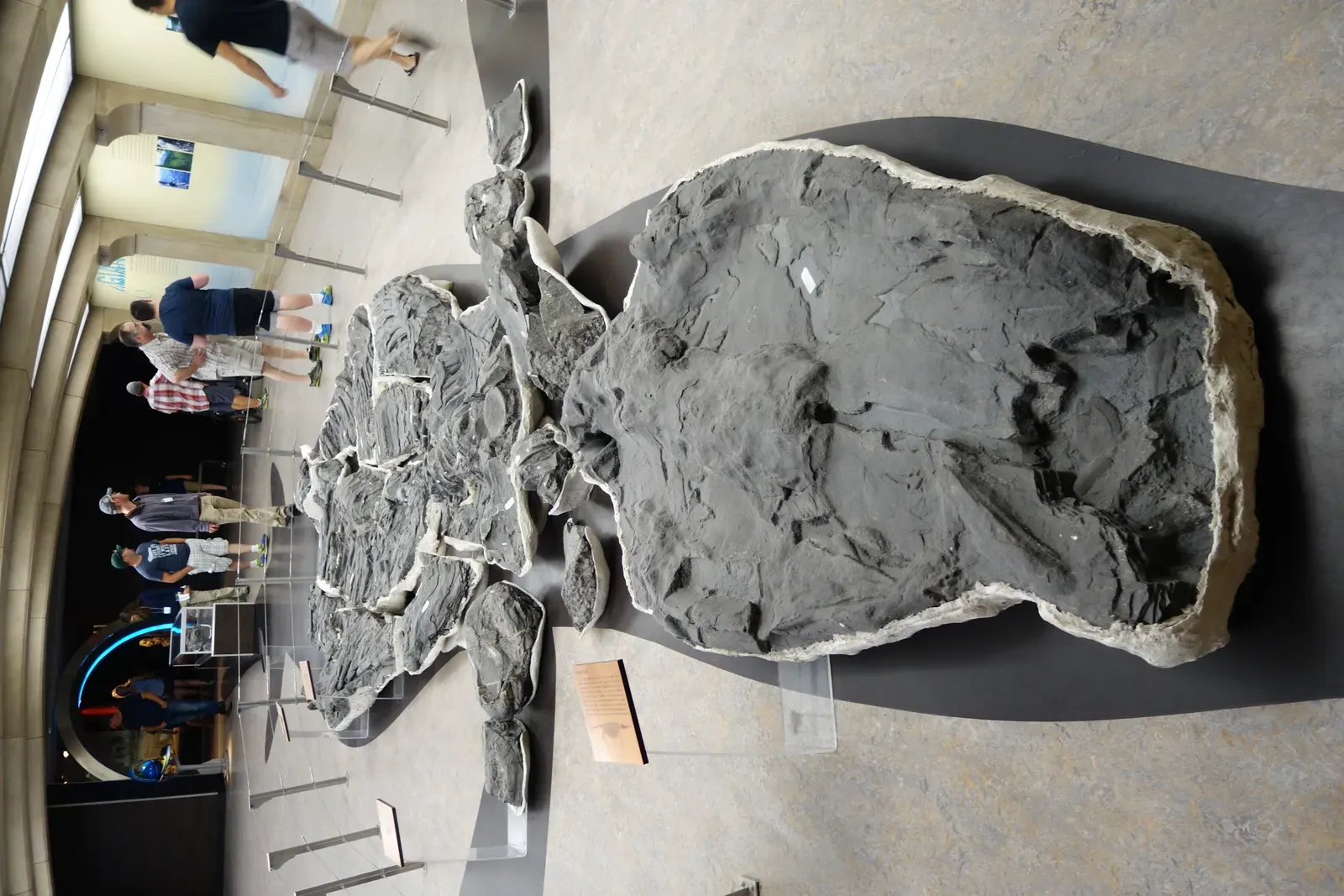
If you ever find yourself in the Nevada desert, you’re standing on what was once the floor of an ancient ocean. In the middle of the Nevada desert there is a massive ichthyosaur gravesite. Berlin Ichthyosaur State Park is the resting place of many ancient reptiles called ichthyosaurs, and about 37 Shonisaurus popularis have been uncovered so far. That cluster of remains suggests these giants may have been living in social groups, an idea that still sparks debate among paleontologists today.
Shonisaurus was the largest of the ichthyosaur genera and had a longer snout and narrower flippers than the other ichthyosaurs. Growing to approximately 50 feet long, they would generally stay immersed in deep oceanic water, although they came closer to shore at night when feeding. The adults did not have teeth, losing them as juveniles. The lack of teeth meant that they fed on cephalopods, such as squid. With four equal-sized limbs, they were skilled at swimming at different depths, allowing them a feeding advantage. It’s hard to say for sure why adults lost their teeth entirely, but the shift likely signaled a dramatic dietary specialization unlike almost anything else in the Mesozoic seas.
9. Mosasaurs as a Group: A Dynasty That Rose and Vanished in the Blink of an Eye
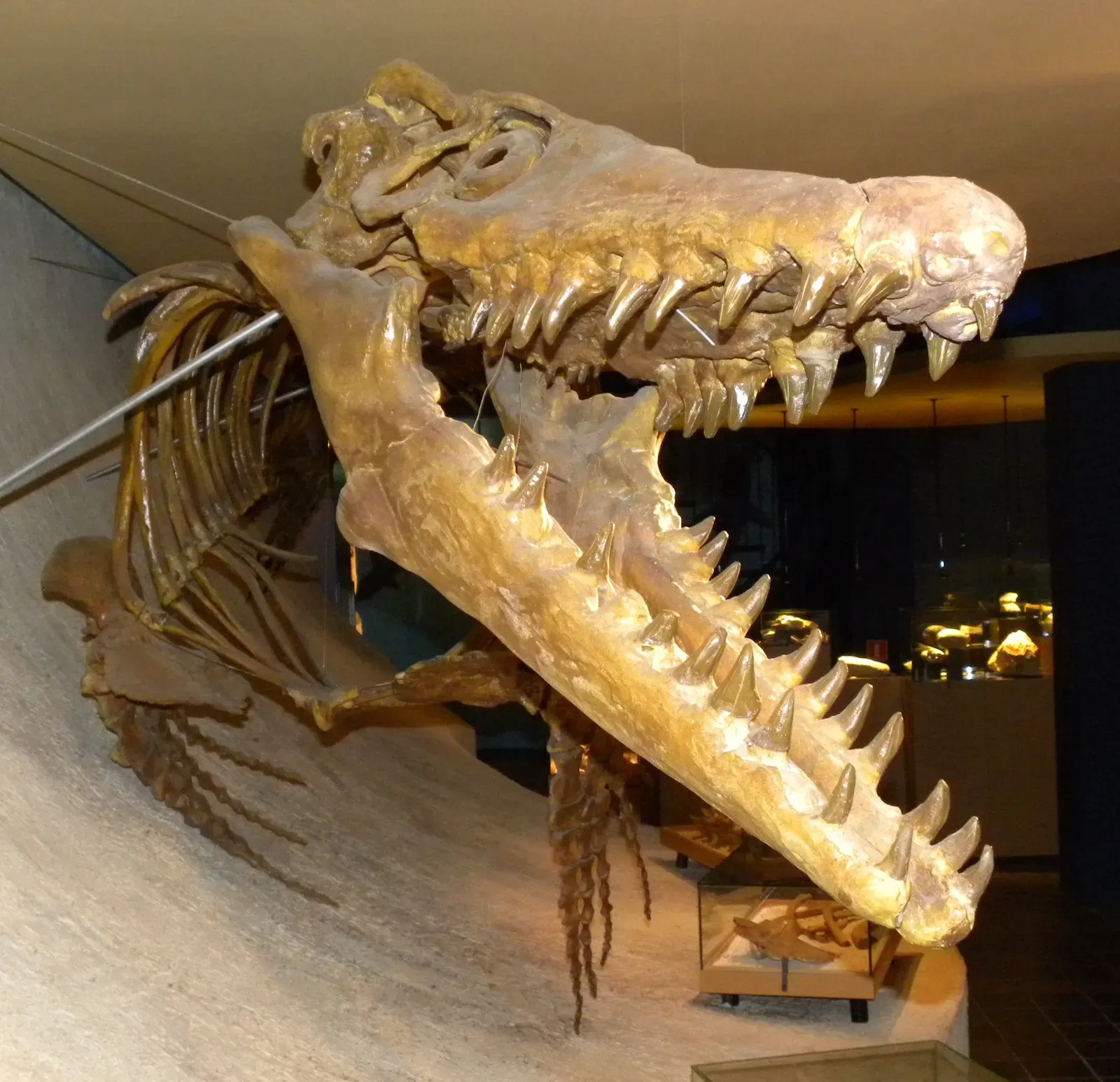
Let’s be real: the full story of mosasaurs as a broader group is one of the most jaw-dropping evolutionary tales in Earth’s entire history. During the last 20 million years of the Cretaceous period, with the extinction of the ichthyosaurs and pliosaurs, mosasaurids became the dominant marine predators. They themselves became extinct as a result of the K-Pg event at the end of the Cretaceous period, about 66 million years ago. Mosasaurs breathed air, were powerful swimmers, and were well-adapted to living in the warm, shallow inland seas prevalent during the Late Cretaceous period.
Mosasaurs were highly diverse. The family Mosasauridae includes several subfamilies and many species with different body shapes, snout lengths, and tooth structures. Some had long, narrow jaws designed for catching fish, while others possessed crushing teeth capable of breaking through the hard shells of ammonites. Their diet was broad and included fish, sharks, squid-like cephalopods, ammonites, seabirds, and even other mosasaurs. In today’s oceans, food chains typically reach six levels, with animals such as great white sharks and orcas at the top. However, researchers discovered that there was a previously unseen seventh level that was filled with enormous marine reptiles. Some, such as Sachicasaurus and Monquirasaurus, could grow up to and beyond 10 metres long and are known as hyper-apex predators.
Conclusion: A World Beneath the Waves That We’re Still Unraveling
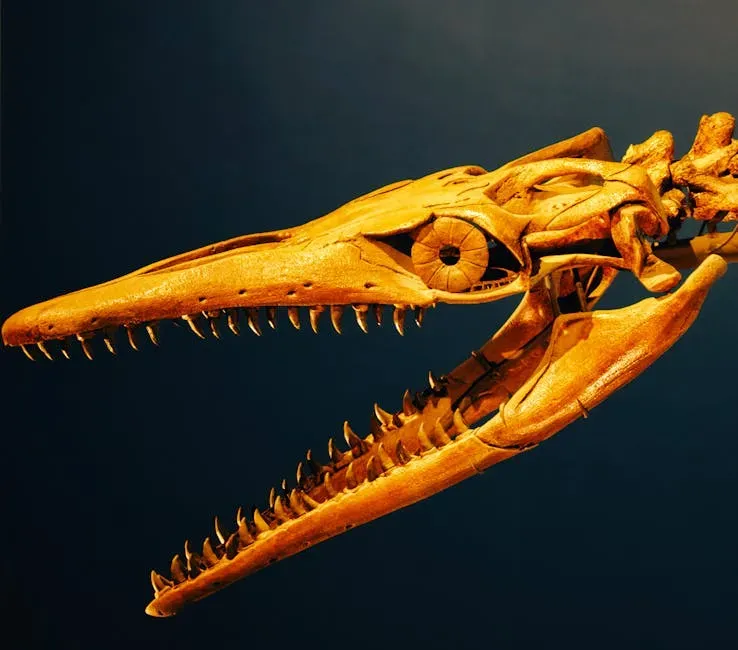
What strikes you most, when you step back and look at all nine of these creatures together, is the sheer variety. Varied lineages of marine reptiles all underwent different modifications as they evolved in the aquatic realm. The physical disparities among ichthyosaurs, plesiosaurs, mosasaurs and other marine reptiles underscore the fact that there was no single, optimal way to be a saurian in the water. Evolution, it seems, was running hundreds of fascinating experiments at the same time.
The fossils reveal the evolutionary adaptations that enabled these reptiles to conquer the marine realm, from limb modifications to streamlined bodies, and provide a window into paleoecology, shedding light on the ecological roles, diets, and interactions of these ancient oceanic predators. The fact that so many of these animals vanished in a single catastrophic event at the end of the Cretaceous makes their story feel both extraordinary and genuinely sobering.
These ancient sea rulers dominated our oceans for tens of millions of years, shaped entire ecosystems, and left behind fossils that continue to rewrite what we understand about life on Earth. Every new discovery chips away at the mystery just a little more. The oceans have always kept their deepest secrets well. What fascinates you most about these ancient rulers of the deep? Drop your thoughts in the comments below.