KwaZulu-Natal – Tensions rise along South Africa’s eastern coast as plans for new shark nets near a luxury resort pit bather protection against the survival of vulnerable marine species.
A Juvenile Dolphin’s Death Sounds Alarm
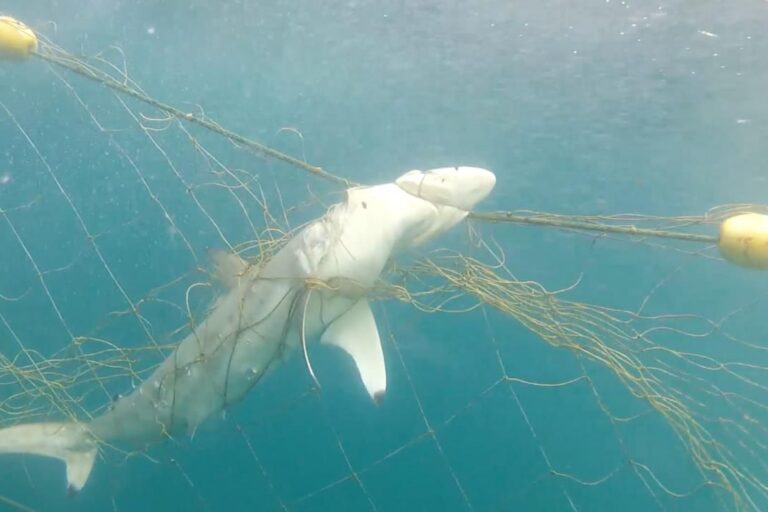
A Juvenile Dolphin’s Death Sounds Alarm (Image Credits: Imgs.mongabay.com)
On February 13, 2026, a young Indian Ocean humpback dolphin met a grim fate, entangled and drowned in shark nets off Richards Bay. This incident underscored the deadly toll of existing barriers designed to shield swimmers from sharks. The species, classified as endangered, numbers fewer than 500 individuals, with populations plummeting by half over the last 20 years.
Marine biologist Sara Andreotti of Stellenbosch University captured the heartbreak: “I am supposed to be a detached scientist but I am so sad that another inexperienced young humpback dolphin lost its life in a shark net.” Such bycatch events erode fragile ecosystems. Conservation groups like the SouSA Consortium view this loss as a stark warning for similar proposals elsewhere.
Tinley Manor Proposal Targets Tourist Boom
Authorities in KwaDukuza municipality seek approval for a 214-meter-long by 6-meter-deep net, supplemented by six drum lines baited with hooks, at Tinley Manor Beach. The measures anticipate surging visitor numbers to the R2 billion Club Med Tinley Manor resort, set to open later this year. Developers Collins Residential and Paris-based Club Med, pursuing Green Globe certification, have deferred to expert processes on safety.
The site sits just 500 meters from the uThukela Marine Protected Area, a vital nursery for sharks and other sea life. Proponents target threats like bull, tiger, and great white sharks in this high-energy surf zone. The KwaZulu-Natal Sharks Board (KZNSB) oversees deployment across 37 beaches.
Conservation Backlash Targets Bycatch Toll
Opponents highlight the gear’s indiscriminate nature, ensnaring turtles, rays, and protected sharks alongside targets. From 2018 to 2022, KZNSB operations averaged 411 animal deaths annually, with 356 nontarget catches including critically endangered species.
- Great hammerhead shark (critically endangered)
- Sandbar shark (endangered)
- Scalloped hammerhead (critically endangered)
- Leatherback turtle
- Diamond ray
- Sand tiger shark
Groups like Shark Life argue the proximity to protected waters violates environmental laws. Legal challenges already question the lack of historical environmental impact assessments for KZN nets. Marine experts decry the absence of trials for modern alternatives.
Sharks Board Defends Time-Tested Gear
KZNSB research head Matt Dicken emphasized efficacy: “The deployment of nets and drum lines has reduced the incidence of fatal shark attacks by 100% over the last 73 years.” Officials dismiss nonlethal options like drones or barriers as unsuitable for Tinley Manor’s conditions, where bull sharks evade visual detection.
Compared to industrial fishing pressures, which claim thousands of tons of sharks yearly, nets exert minimal impact, according to Dicken. The Department of Forestry, Fisheries and the Environment (DFFE) now evaluates if a full assessment is required under national laws prohibiting great white shark kills.
Viable Paths Beyond Nets?
| Alternative | Description | Examples |
|---|---|---|
| Shark spotters | Human observers on shore | Western Cape beaches |
| Drones | Aerial surveillance | Australia, Réunion |
| Exclusion barriers | Physical blockades | Net-free zones |
| Smart drum lines | Live-catch release tech | Trialed elsewhere |
Grant Smith of Shark Life urged: “It’s imperative that eco-facing tourism resorts exhaust all nonlethal options before resorting to measures that harm protected species.” Successful models abroad prove tourism and conservation can coexist without lethal tools.
Key Takeaways
- Shark nets eliminate fatal attacks but kill hundreds of nontarget animals yearly.
- Endangered humpback dolphins face extinction risks from bycatch.
- DFFE review could mandate assessments and favor alternatives.
South Africa stands at a crossroads: safeguard vacationers or nurture ocean biodiversity for future generations. Will innovation trump tradition? Share your views in the comments.