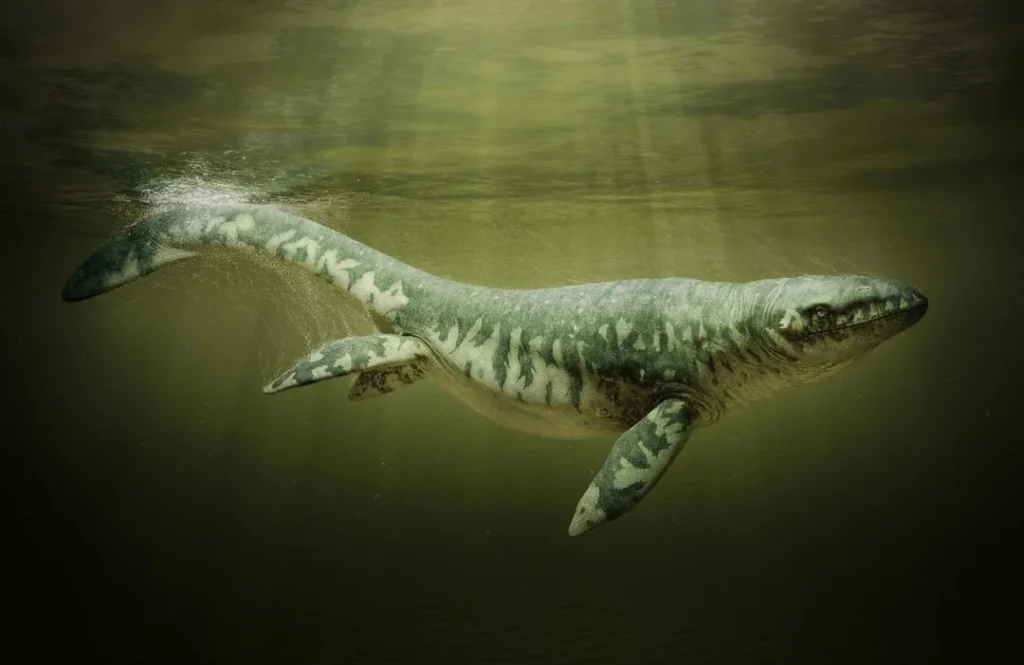
The Western Interior Seaway – a vast, warm inland ocean that split North America 80 million years ago – served as a battleground for massive marine reptiles during the Late Cretaceous. Mosasaurs and plesiosaurs dominated these waters, preying on fish, squid, and even each other. Researchers have now applied advanced 3D modeling and engineering simulations to 16 fossil specimens, revealing how distinct jaw mechanics allowed these predators to partition resources and thrive together.
Ancient Bites Amplified by Mechanical Marvels
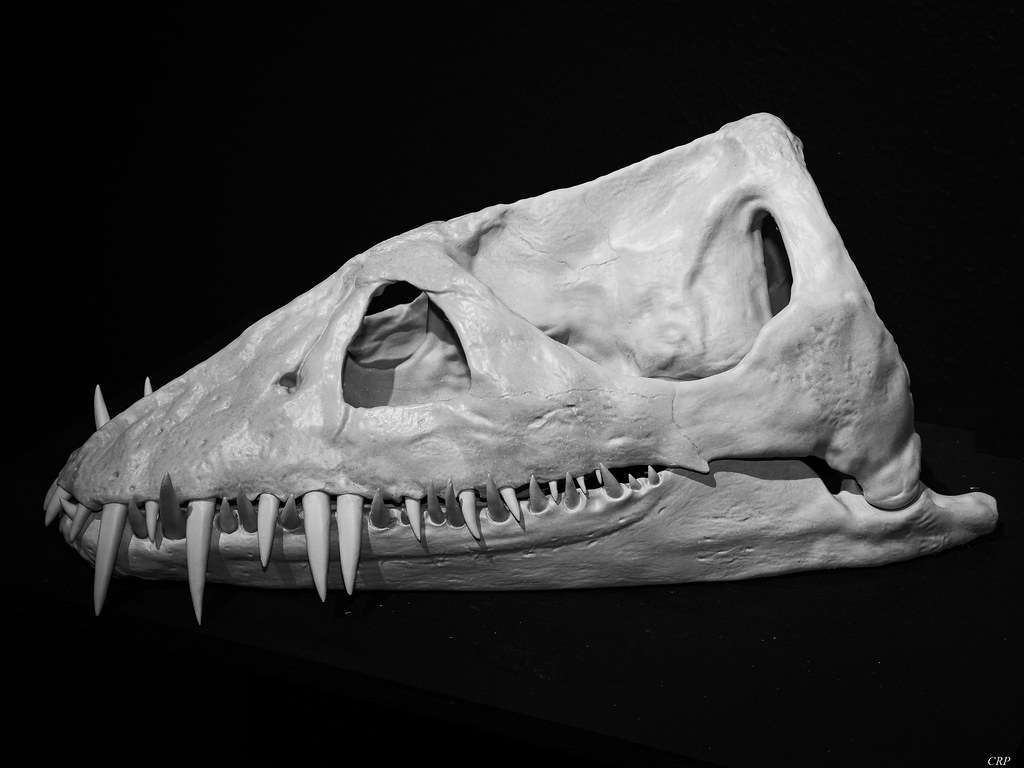
Ancient Bites Amplified by Mechanical Marvels (Image Credits: Flickr)
One striking discovery emerged from the simulations: the jaws of these reptiles generated bite forces significantly greater than their muscle inputs alone could produce. Finite element analysis, applied to digital models with up to 10 million elements, mapped stress points, deformation, and energy absorption during bites. This approach simulated realistic conditions, including varied gape angles and tooth row positions.
Scientists surface-scanned skulls and lower jaws from 13 mosasaurs and three polycotylid plesiosaurs, primarily from North American formations. They reconstructed jaw-closing muscles based on attachment scars and comparisons to living lizards and snakes. Biomechanical equations then estimated forces, painting a vivid picture of prehistoric chomps that no fossil alone could provide.
Plesiosaurs’ Nimble Pierce Versus Mosasaurs’ Crushing Power
Polycotylid plesiosaurs, with their long necks and needle-like teeth, possessed flexible jaws suited for agile, soft-bodied prey like fish and squid. Their mandibles absorbed substantial energy during bites and showed vulnerability at the symphysis, the joint at the jaw’s front. This design prioritized piercing over power, limiting their menu to evasive targets.
Mosasaurs, in contrast, featured robust skulls with extended coronoid processes that boosted leverage. These adaptations yielded higher bite forces, greater stress resistance, and lower energy loss, enabling them to tackle a broader diet. From sharks and turtles to fellow reptiles, mosasaurs proved versatile hunters in the seaway’s food web.
Specialists Emerge Among Mosasaur Ranks
Within mosasaurs, diversity abounded. Apex giants such as Mosasaurus hoffmanni and Tylosaurus proriger wielded unmatched power for top-tier predation. Slender-snouted species like Clidastes mirrored plesiosaurs in targeting smaller, softer fare.
- Globidens: Specialized for durophagy, crushing shelled prey with reinforced jaws.
- Platecarpus tympaniticus and Plotosaurus: Balanced forms for varied marine bounty.
- Prognathodon: Robust jaws for heavy-duty feeding.
These variations ensured even mosasaurs avoided overlap, filling niches from mid-level to elite.
Jaws Evolved for a Changing Seaway
Over time, from the mid-Campanian Niobrara Chalk to the later Navesink Formation, mosasaur jaws grew progressively sturdier. Early forms showed weaker mechanics, while later ones resisted stress better, reflecting adaptations to shifting prey or competition. Polycotylids maintained their specialized flexibility throughout.
Lead researcher Francesco Della Giustina, a paleontologist at the University of Liège’s EDDy Lab, noted, “The mechanical performance of the skull is an excellent way to better understand the ecological roles of these animals.” He added, “All ecosystems, including underwater systems, have limited food resources for their apex predators.”
This international effort, detailed in Palaeontology, integrates FEA with dental microwear and isotopes for a fuller ecological timeline.
Key Takeaways
- Distinct jaw mechanics partitioned prey, enabling mosasaurs and plesiosaurs to share the Western Interior Seaway.
- Simulations revealed force amplification and energy dynamics invisible in fossils.
- Evolutionary trends strengthened mosasaur bites, highlighting adaptation in ancient oceans.
These findings illuminate how limited resources shaped prehistoric marine life, offering a blueprint for studying modern ecosystems. By bridging fossils with technology, scientists edge closer to resurrecting the daily dramas of the dinosaur seas. What role do you think bite mechanics played in their survival? Share your thoughts in the comments.