Researchers recently demonstrated that select sauropods from the Late Cretaceous period could rear up on their hind legs far more effectively than previously thought. Advanced computer simulations of their leg bones revealed lower stress levels in smaller species, enabling prolonged upright stances. This discovery sheds light on how these long-necked giants adapted their behaviors as they grew larger, balancing the demands of feeding, defense, and reproduction.
A Hidden Talent in Long-Necked Dinosaurs
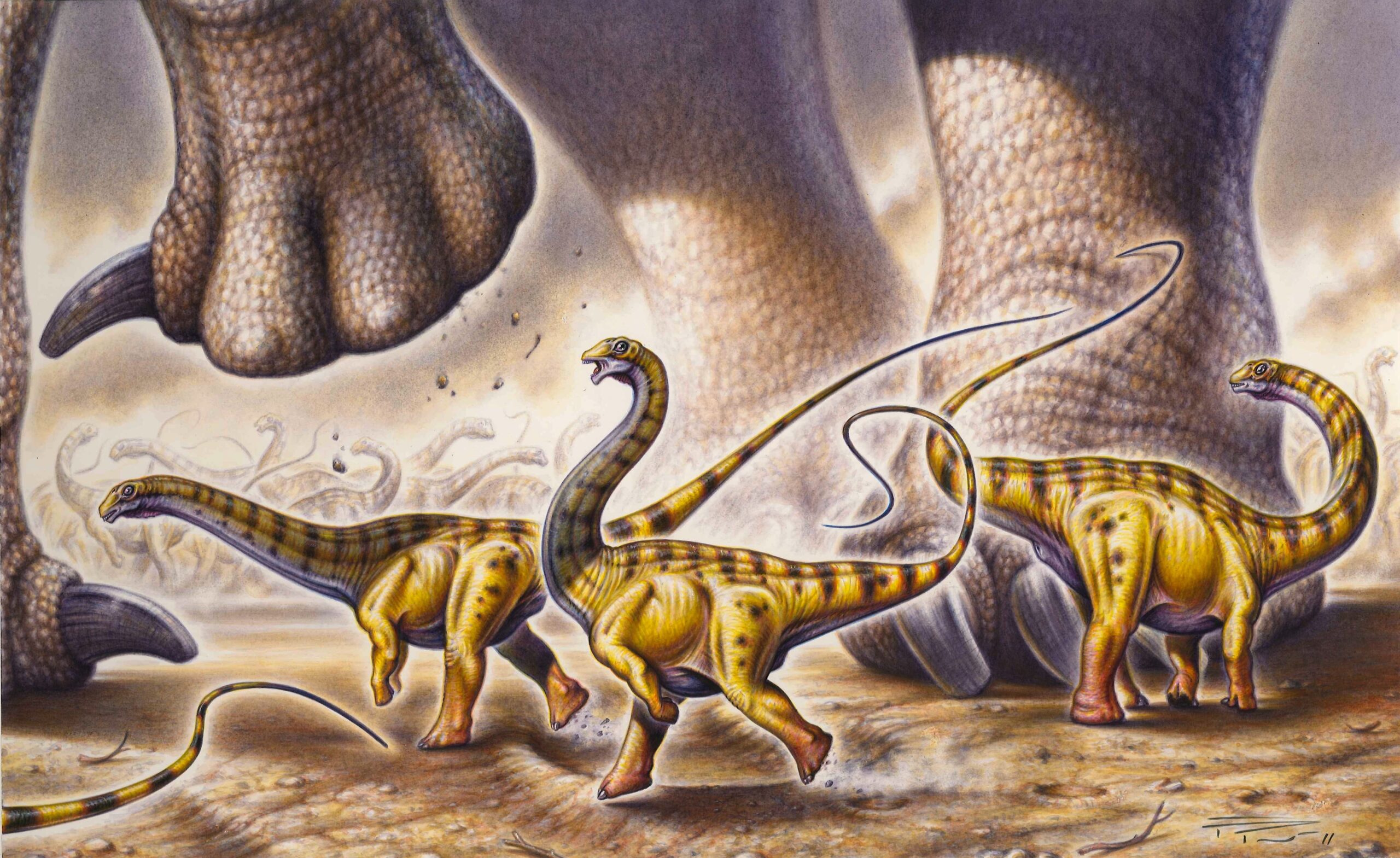
A Hidden Talent in Long-Necked Dinosaurs (Image Credits: Upload.wikimedia.org)
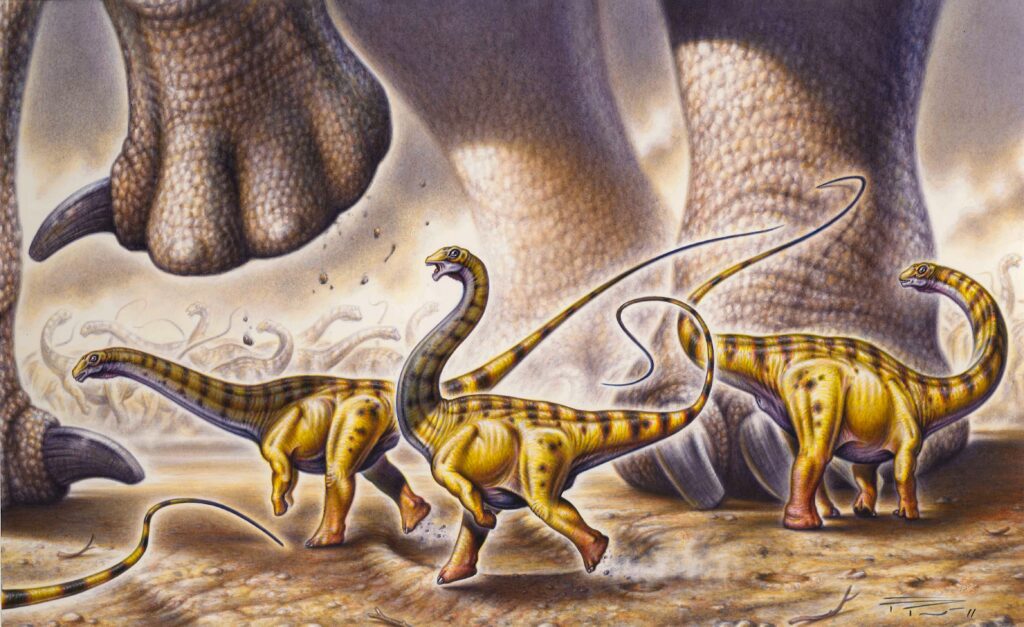
Imagine a sauropod suddenly lifting its massive forebody skyward, neck extended to pluck leaves from lofty branches. Fossil evidence and trackways long hinted at such rearing behaviors, but quantitative proof remained elusive. A new study applied engineering-grade simulations to test this idea across seven species, confirming that smaller sauropods executed bipedal postures with remarkable stability.
The analysis focused on femoral stress, the critical factor in sustaining an upright pose. South American titanosaurs emerged as standouts, their robust thigh bones dissipating forces effectively. Larger counterparts faced mounting challenges, underscoring how body size reshaped locomotor possibilities over an individual’s lifetime and across evolution.
Decoding Bones with Finite Element Analysis
Scientists digitized femurs from museum specimens, creating 3D models standardized for comparison. They ran finite element analysis, or FEA, under two conditions: extrinsic loads from gravity and body weight, and intrinsic forces from muscle contractions. This dual approach yielded precise stress maps, mimicking real-world biomechanics.
Results highlighted stark differences. For instance, extrinsic simulations showed mean von Mises stress as low as 1.09 MPa in one species, versus over 2.5 MPa in giants. Muscle-driven tests amplified disparities, with peaks reaching 15.67 MPa in the largest forms. These numbers proved smaller femurs, with advantageous shapes and muscle attachments, handled upright demands best.
Standouts from South America
Neuquensaurus australis, a saltasaurid titanosaur from Argentina, topped the charts for bipedal prowess. Weighing 1,400 to 6,000 kilograms – elephant-sized – this Late Cretaceous resident exhibited the lowest stress in both scenarios. Its discovery near the Neuquén River provided pristine fossils ideal for modeling.
Similarly, a juvenile Uberabatitan ribeiroi from Brazil mirrored these traits. Named after the Uberaba region, this titanosaur’s adults stretched to 26 meters, Brazil’s biggest known dinosaurs. Yet young individuals stood tall effortlessly, a phase lost as mass accumulated. Other taxa, like Diplodocus and Dreadnoughtus, lagged behind due to slenderer bones.
| Species | Group/Size | Key Stress Level (MPa, Example) |
|---|---|---|
| Neuquensaurus australis | Saltasaurid, ~6 tons max | 1.09 (extrinsic) |
| Uberabatitan ribeiroi (juvenile) | Titanosaur, up to 26m adults | 1.20 (extrinsic) |
| Dreadnoughtus schrani | Colossosaurian, ~60 tons | 15.67 (intrinsic) |
Growth’s Inevitable Trade-Off
Juveniles across species enjoyed bipedal freedom, accessing high foliage denied to quadrupedal peers. Adults, burdened by exponential weight gain, endured discomfort from elevated femoral loads. “Smaller sauropods like these had a bone and muscle structure that allowed them to stand more easily and for longer on their two hind legs,” noted lead researcher Julian Silva Júnior. Larger forms likely reserved rearing for brief, essential moments.
This shift reflected broader evolutionary patterns. Robust femurs in compact titanosaurs optimized stress distribution, while giants prioritized ground-level efficiency. Tail support in tripodal stances offered partial relief, though unmodeled here.
Everyday Advantages of Rising Up
Bipedalism expanded dietary niches for plant-munching sauropods. High branches became reachable, diversifying intake beyond low shrubs. Predators faced a towering threat, as rearing amplified perceived size and reach.
- Feeding: Neck elevation tapped treetop greens 66 million years ago.
- Defense: Upright displays intimidated foes effectively.
- Mating: Males possibly mounted or signaled from height.
- Exploration: Juveniles scanned terrain or escaped narrowly.
Such versatility likely boosted survival in competitive ecosystems. Yet simulations omitted cartilage, which might further ease strains universally.
These findings reframe sauropod agility, proving size dictated postural limits. From nimble youth to steadfast adulthood, their story reveals nature’s engineering finesse. Key takeaways include:
- Smaller titanosaurs like Neuquensaurus endured minimal bone stress, enabling sustained rearing.
- Giant species such as Dreadnoughtus faced prohibitive loads, restricting upright time.
- Bipedal postures aided feeding, defense, and reproduction across growth stages.
What do you think about these rearing dinosaurs? Share your thoughts in the comments.