Somerset – Archaeologists uncovered a 6,000-year-old wooden trackway from the early Neolithic period beneath layers of peat at Honeygar Farm in Westhay. The find emerged during an excavation aimed at assessing a known prehistoric monument, revealing a structure roughly 1,000 years older than expected. This discovery illuminates how early communities traversed the vast marshes that characterized the Somerset Levels thousands of years ago.
A Routine Dig Turns Historic
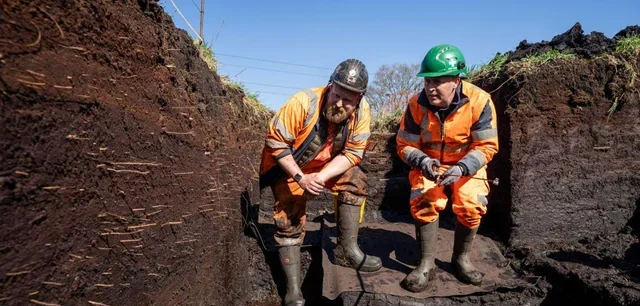
A Routine Dig Turns Historic (Image Credits: Reddiy)
Teams from Wessex Archaeology arrived at Honeygar Farm to evaluate the condition of a prehistoric trackway designated as a Historic England scheduled monument, estimated at about 4,600 years old. Instead, they exposed an older path preserved directly underneath. Radiocarbon analysis dated the new find to between 3770 and 3640 BC, placing it firmly in the early Neolithic era.
The Somerset Wildlife Trust organized the work as part of efforts at their first ‘wilded’ site, supported by the Species Survival Fund. Honeygar’s deep lowland peat provided ideal conditions for the preservation, shielding the timbers from decay for millennia. Bruce Eaton, senior project manager at Wessex Archaeology, described the moment as a privilege, noting it enhanced understanding of the region’s ancient landscape.
Engineering of the Ancient Walkway
Neolithic builders constructed the trackway using birchwood poles and brushwood, forming a raised structure suited to the watery terrain. Such paths allowed people to cross expansive marshes that blanketed much of the British Isles during that time. The design reflected ingenuity in navigating challenging environments dominated by wetlands.
Excavators noted the trackway’s position just below a meter deep in an undisturbed field, deeper than prior surveys indicated. This layering suggests multiple generations maintained or rebuilt routes over centuries. The materials chosen, like birch, thrived locally and offered durability in wet conditions.
Peat’s Role in Preserving History
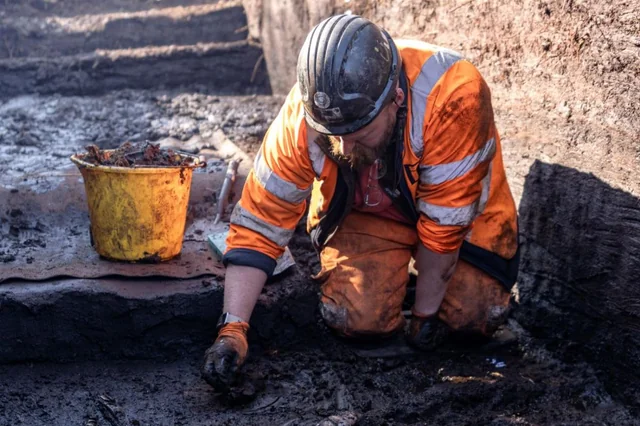
Peat’s Role in Preserving History (Image Credits: Reddit)
Honeygar Farm stands as a rare survivor of lowland peat ecosystems, where waterlogged, anaerobic conditions halt decomposition. Beyond the wood, the peat holds pollen, plant remains, insects, and microscopic organisms that chronicle millennia of climate shifts and human influence.
- Pollen records track vegetation changes over 6,000 years.
- Plant and insect remains reveal past ecosystems.
- Microscopic evidence documents environmental fluctuations.
- Wooden artifacts offer direct glimpses into construction techniques.
Environmental archaeologists now examine soil samples to decode these layers further. The site’s hydrological monitoring highlights risks from drying peat due to climate-driven droughts, underscoring the urgency of protection efforts.
Conservation Meets Archaeology
Somerset Wildlife Trust launched a 50-year initiative at Honeygar to restore peatlands, boost biodiversity, and safeguard heritage after decades of intensive agriculture. Measures include stabilizing water levels to keep peat saturated, preventing erosion of both ecology and history. This excavation supports those goals by informing habitat recreation.
Bruce Eaton emphasized the dual benefits: “To be involved in a project which not only aims to restore valuable habitat but will also protect vulnerable archaeology has been a privilege.” The work aligns cultural preservation with modern environmental needs, ensuring sites like Honeygar endure.
Key Takeaways
This Neolithic trackway bridges prehistoric ingenuity with today’s conservation imperatives, reminding us that Somerset’s moors hold stories etched in peat. As analysis continues, the site promises deeper revelations about early farmers and shifting wetlands. What do you think this find tells us about our ancestors’ world? Tell us in the comments.