South Papua province – Local Indigenous communities confronted Indonesian authorities over decrees that shifted nearly half a million hectares of forest land to enable palm oil plantations within the national food estate initiative.
Decrees Ignite Formal Protest
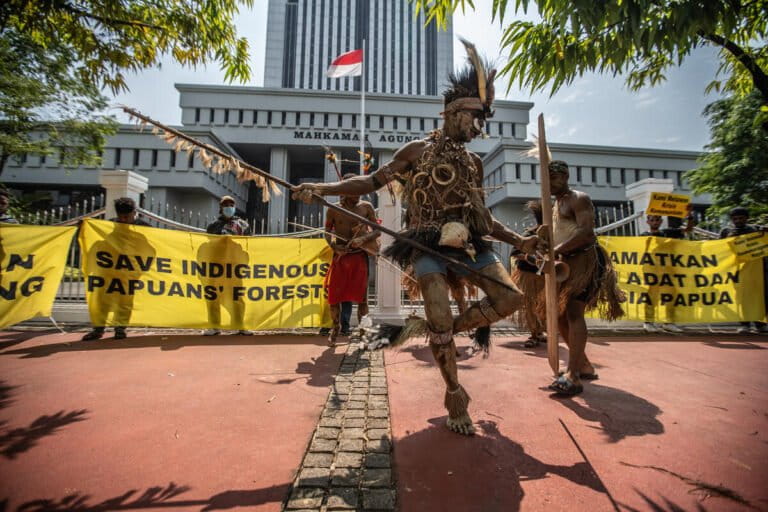
Decrees Ignite Formal Protest (Image Credits: Imgs.mongabay.com)
Representatives from affected clans lodged an administrative objection against two Ministry of Forestry orders issued last September.
The documents reclassified 486,939 hectares across Merauke, Boven Digoel, and Mappi districts as non-forest areas, opening them to agricultural development including large-scale oil palm cultivation. Communities discovered the changes months later through NGO efforts, as no public notice or consultation occurred. Lawyer Tigor Hutapea of Pusaka Bentala Rakyat highlighted the harm: “This [rezoning] harms communities because they are the owners of those forests, yet they are not recognized as customary owners.” At least four clans in Boven Digoel faced direct impacts on territories they had proposed as customary forests.
Food Estate’s Ambitious Scope
Agriculture Minister Amran Sulaiman proposed expanding the program on September 17, 2025, targeting 1 million hectares for rice, 400,000 hectares for oil palm, and 600,000 hectares for livestock across South Papua.
The Forestry Ministry approved rezoning portions the next day under Minister Raja Juli Antoni, overriding prior designations. Officials described the move as support for national strategic projects aimed at food security. Spokesman Ristianto Pribadi noted reliance on proposals from the South Papua governor and joint team research. Overall, plans eyed 469,000 hectares for palm oil, rivaling eight times Jakarta’s size.
Customary Claims Overlooked
The Wambon Kenemopte community had sought recognition of their customary forest since September 2023, but bureaucratic hurdles delayed approval.
Albertus Tenggare, a community representative, expressed frustration: “The government does not care about us.” Meanwhile, overlapping proposals should have appeared on the ministry’s indicative map for protection, yet the decrees proceeded. Teddy Wakum of the Merauke Legal Aid Institute criticized the lack of hearings or explanations. Activists like Greenpeace’s Sekar Banjaran Aji pointed to stalled Indigenous recognition at local levels.
- Merauke district: Muting subdistrict targeted for palm development.
- Boven Digoel: Subur and Jair subdistricts affected.
- Mappi: Additional rezoned zones.
- Total rezoned: 486,939 hectares, including 143,000 for immediate palm use.
Biofuel Drive Fuels Tensions
President Prabowo Subianto advocated palm planting in Papua for biofuel during a December 2025 meeting.
Indonesia mandated a 40% palm biodiesel blend in diesel since early 2025, with a 50% target set for mid-2026. Energy Minister Bahlil Lahadalia linked South Papua’s expansion to energy independence goals. Critics warned of biodiversity loss and cultural erosion in one of Indonesia’s last intact forest frontiers. The task force Satgas PKH seized another 326,000 hectares for potential allocation.
Key Takeaways
- Rezoning bypassed Indigenous consent, threatening livelihoods and sacred lands.
- Food estate blends food crops with biofuel ambitions, prioritizing national needs.
- Legal challenge looms if ministry ignores the objection within 10 days.
This clash underscores the persistent struggle between development imperatives and Indigenous stewardship in Papua’s resource-rich landscapes. Communities now await the ministry’s response, poised for court action to safeguard their heritage. What steps should balance food security with cultural rights? Share your views in the comments.