Prince Edward Islands, South Africa — Southern elephant seals breeding on Marion and Prince Edward Islands have transitioned from near threatened to least concern status, highlighting effective local protections in a remote sub-Antarctic setting.
A Striking Population Rebound
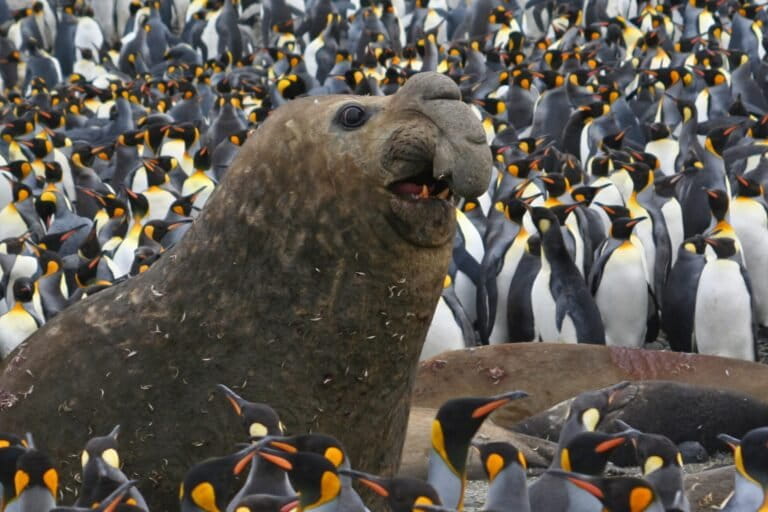
A Striking Population Rebound (Image Credits: Imgs.mongabay.com)
Researchers counted nearly 1,400 pups on the islands in 2023, signaling robust breeding activity. Total estimates reached about 5,500 individuals that year, a notable increase from roughly 3,000 in 2016. This uptick follows a sharp historical drop, including a 37% decline on Marion Island between 1986 and 1994. Pup production there bottomed at 421 in 1997 before climbing to 552 by 2015.
Conservationists view these figures as evidence of stabilization and growth. The islands’ isolation has shielded colonies from many human pressures. Seals move occasionally between Marion and Prince Edward, fostering genetic exchange. Such dynamics bolster resilience in these small but recovering groups.
Protections Fuel the Turnaround
Strong legal frameworks underpin the recovery. The islands fall within a marine protected area and receive safeguards under South Africa’s 1973 Seabirds and Seals Protection Act. No major threats have targeted breeding sites over the past four decades. This absence of disturbance allowed numbers to rebound steadily.
Tamanna Patel, mammal Red List coordinator at the Endangered Wildlife Trust, emphasized the impact of these measures. “This tells us that conservation and increased protection of species habitats can result in species recovery,” she stated. The 2025 Mammal Red List for Southern Africa, produced by the Endangered Wildlife Trust and South African National Biodiversity Institute, formalized the status shift after rigorous review.
Contrasting Global Trends
While South African populations flourish, the worldwide story shows variability. The IUCN lists southern elephant seals as least concern overall, with an estimated 650,000 to 740,000 individuals as of recent assessments. Yet declines persist in key sites. Bird flu ravaged South Georgia’s colonies in 2025, erasing nearly half of breeding females in the world’s largest aggregation.
Other areas like Macquarie Island report ongoing reductions. Nic Rawlence, a paleo-genetics expert at the University of Otago, expressed caution. “I’m quite surprised that southern elephant seals in South Africa have been downgraded to Least Concern given the causes of the stark population declines in the second half of the 20th century are not fully understood,” he noted. Climate shifts and prey scarcity continue to challenge distant colonies.
Persistent Threats and Research Gaps
Potential risks include fishing entanglements and prey depletion from overfishing. Climate-driven ocean changes may alter food distribution, affecting foraging success. Killer whales pose occasional predation pressure, though evidence remains limited.
- Food limitation linked to past Marion Island drops.
- Oceanographic shifts influencing prey availability.
- Emerging diseases like avian influenza in other regions.
- Genetic concerns in small populations.
Experts call for deeper studies on foraging patterns and environmental influences. Continued monitoring will clarify long-term viability.
Key Takeaways
Local successes like those on Marion and Prince Edward Islands demonstrate that targeted conservation yields results, even for wide-ranging marine giants. Yet the patchy global landscape demands sustained international efforts. What steps should follow to safeguard these ocean wanderers? Share your thoughts in the comments.