Tasmania – A rare contagious cancer known as devil facial tumor disease (DFTD) has decimated populations of the island’s iconic top predator, the Tasmanian devil, since its emergence in the mid-1990s. This transmissible tumor spreads through bites during fights over food and mates, causing grotesque facial growths that lead to starvation. Despite dire predictions of extinction, recent studies highlight evolutionary adaptations and innovative interventions that offer a path forward for the endangered species.
DFTD’s Rapid Devastation Reshapes Tasmania’s Wilds
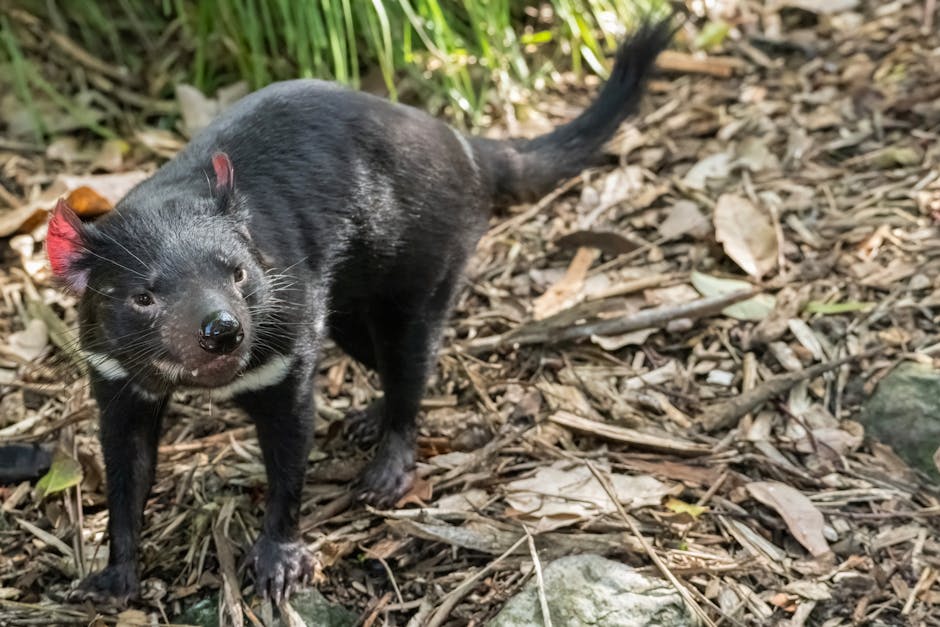
DFTD’s Rapid Devastation Reshapes Tasmania’s Wilds (Image Credits: Pexels)
Devil facial tumor disease first appeared in northeastern Tasmania around 1996, originating from Schwann cells in a single female devil in the 1980s. Within two decades, it triggered an 80 percent overall population decline, with some areas suffering up to 90 percent losses. Tumors develop aggressively around the mouth and face, metastasizing and preventing feeding, which results in death within months from starvation or secondary infections.
The disease exists in two independent strains. DFT1 spread widely across the island, while DFT2, identified in 2014 on a southern peninsula, remains more localized but mutates three times faster. As apex predators, Tasmanian devils control populations of smaller mammals and carrion feeders; their sharp decline disrupts this balance, potentially allowing invasive species like foxes to thrive. Adult devils contract the cancer during peak biting seasons, often surviving just long enough to raise one litter of juveniles.
Devils Evolve Resistance Against Their Deadly Foe
Against expectations, Tasmanian devil populations have stabilized in some regions, with disease prevalence dropping and spontaneous tumor regressions observed in the wild. Genetic analysis reveals selection on immune-related genes and cancer susceptibility loci, enabling some devils to recognize and reject tumor cells as foreign. Low major histocompatibility complex (MHC) diversity, a longstanding trait, initially aided transmission, but natural selection now favors resistant individuals.
Researchers noted higher persistence probabilities when accounting for this coevolution between host and cancer. Serum antibodies correlate with tumor regression, and specific mutations, like those activating growth-slowing genes, appear in recovering cases. These adaptations shift DFTD from epidemic to endemic status, buying time for conservation.
Breakthrough Vaccines and Treatments Gain Momentum
Scientists developed early vaccines using killed tumor cells and adjuvants, which induced regressions in trials but proved hard to scale. Next-generation candidates employ adenoviral vectors encoding immune-boosting interferon-gamma to restore MHC expression on cancer cells, showing promise against both strains in lab tests. Bait-delivered versions, tested with AI dispensers achieving 55 percent uptake, aim for oral deployment before mating seasons.
Other advances include statins that block cholesterol needed for tumor growth and immunotherapies targeting pathways like PD-L1 and ERBB-STAT3, mirroring human cancer strategies. As of late 2025, trials planned for early 2026 will test safety and efficacy in about 22 captive devils, with potential boosters and drug combinations to accelerate protection. A 2017 trial achieved resistance in one of five devils, fueling optimism for broader success.
Conservation Efforts Secure the Species’ Future
The Save the Tasmanian Devil Program, launched in the early 2000s, established insurance populations in zoos and sanctuaries, preserving 98 percent genetic diversity among hundreds of captives. Releases into disease-free zones, such as Maria Island in 2012, grew from 28 to over 90 healthy devils.
Strategies blend monitoring, selective breeding for MHC diversity, and translocation while minimizing risks to naive populations. Key approaches include:
- Maintaining captive insurance populations exceeding 500 animals.
- Releasing devils into fenced mainland sanctuaries like Devil Ark.
- Developing diagnostic tests and oocyte banking for genetic rescue.
- Modeling evolutionary outcomes to guide interventions.
- Trial vaccines and therapies in controlled settings.
These measures counter DFTD’s threat while allowing natural resistance to build.
Key Takeaways
Tasmanian devils embody resilience amid crisis, as science unlocks tools to tip the balance. Their story underscores the urgency of acting against wildlife threats. What do you think the next big breakthrough will be? Tell us in the comments.