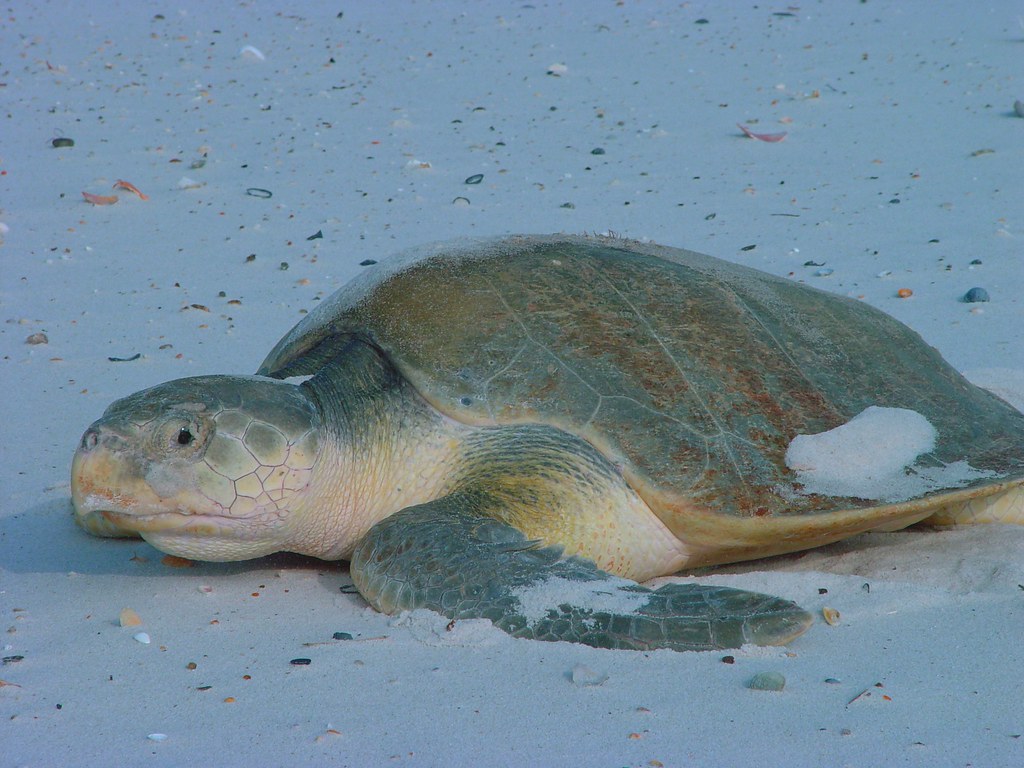
Galveston, Texas – Visitors at Beach Pocket Park #3 discovered a peculiar sight on the shoreline: an object resembling a sludge-encrusted rock that turned out to be an adult female Kemp’s ridley sea turtle, the world’s rarest sea turtle species.
The turtle lay barely moving, overwhelmed by thick layers of algae, barnacles, and sediment that had accumulated during her prolonged struggle in the water. Quick-thinking beachgoers dialed the Texas sea turtle hotline, initiating a chain of events that gave the endangered creature a fighting chance.
A Shocking Find Amid the Waves
A Shocking Find Amid the Waves (Image Credits: Flickr)
The Kemp’s ridley washed ashore after evidently battling illness for an extended period. Her body, the smallest among sea turtle species, bore a heavy burden of epibionts – organisms like barnacles and algae that thrive on weakened hosts. Rescuers noted she could hardly move, a sign of severe debilitation.
Christopher Marshall from the Gulf Center for Sea Turtle Research explained the phenomenon: when sea turtles fall ill and slow their movements, water organisms rapidly colonize their shells and skin, adding weight that hampers swimming even further.
This vicious cycle often leads to stranding, as it did here on March 18. The discovery underscored the fragility of these marine reptiles in the Gulf of Mexico.
Rapid Response from Dedicated Experts
Once alerted, teams from the Gulf Center for Sea Turtle Research arrived promptly at the scene. They carefully transported the turtle to veterinary specialists at the Houston Zoo for initial assessment. From there, she moved to the center’s rehabilitation hospital for specialized care.
The process demanded precision. Handlers worked to gently remove the encrustations without causing additional harm. Every step aimed to stabilize her condition swiftly.
Treatment Targets Life-Threatening Ailments
Examinations revealed severe pneumonia, a common affliction in cold-stunned or debilitated turtles, along with ocular ulcers that threatened her vision. Treatment protocols focused on antibiotics, hydration, and wound care to combat these issues. Staff monitored her progress around the clock.
Rehabilitation centers like the Gulf Center play a crucial role in such cases. Their facilities equip teams to handle complex marine illnesses. The ultimate goal remains her release back into the Gulf, provided she regains full strength.
The Precarious World of Kemp’s Ridleys
Kemp’s ridleys represent the most endangered sea turtle globally. Nesting populations in Mexico plummeted from tens of thousands of females to just a few hundred by the 1980s due to habitat loss and incidental capture. Conservation initiatives have spurred a modest rebound, yet vulnerabilities persist.
Texas holds unique significance as the sole U.S. state with native Kemp’s ridley nesting sites. Each adult female, capable of producing dozens of offspring per season, carries immense value for the species’ survival. Threats like fishing gear entanglement continue to imperil individuals.
- Smallest sea turtle species, typically under 30 inches long.
- Primarily nests on Gulf Coast beaches in Mexico and Texas.
- Recovery efforts include head-start programs and bycatch reduction.
- Population still classified as endangered by wildlife authorities.
- Strandings often signal broader ecosystem health concerns.
Key Takeaways
- Public vigilance enabled this timely rescue, highlighting the power of hotline reports.
- Kemp’s ridleys’ slow recovery demands ongoing protection from human impacts.
- Rehabilitation success stories like this one fuel hope for the species’ future.
Rescues such as this one not only save individual lives but also bolster the fragile population of Kemp’s ridleys, reminding us of the delicate balance in ocean ecosystems. As rehabilitation continues, her journey inspires broader conservation action. What steps can communities take to protect these rare turtles? Share your thoughts in the comments.