Dinosaurs have never really left us. They vanished from the Earth roughly 66 million years ago, yet here we are in 2026, still gasping at what the ground keeps giving back. Every few months, a new fossil, a new species, or a jaw-dropping piece of ancient biology surfaces and completely rewrites what we thought we knew about these creatures. Honestly, it feels like the more we dig, the less we realize we actually knew.
A golden era in dinosaur science is driving a global fascination, with around 1,400 dinosaur species now known from more than 90 countries, and the rate of discovery accelerating dramatically over the last two decades. You might think we’ve found them all by now. You’d be wrong. So buckle up, because what follows is genuinely astonishing.
Patagotitan Mayorum: The Largest Creature to Ever Walk the Earth
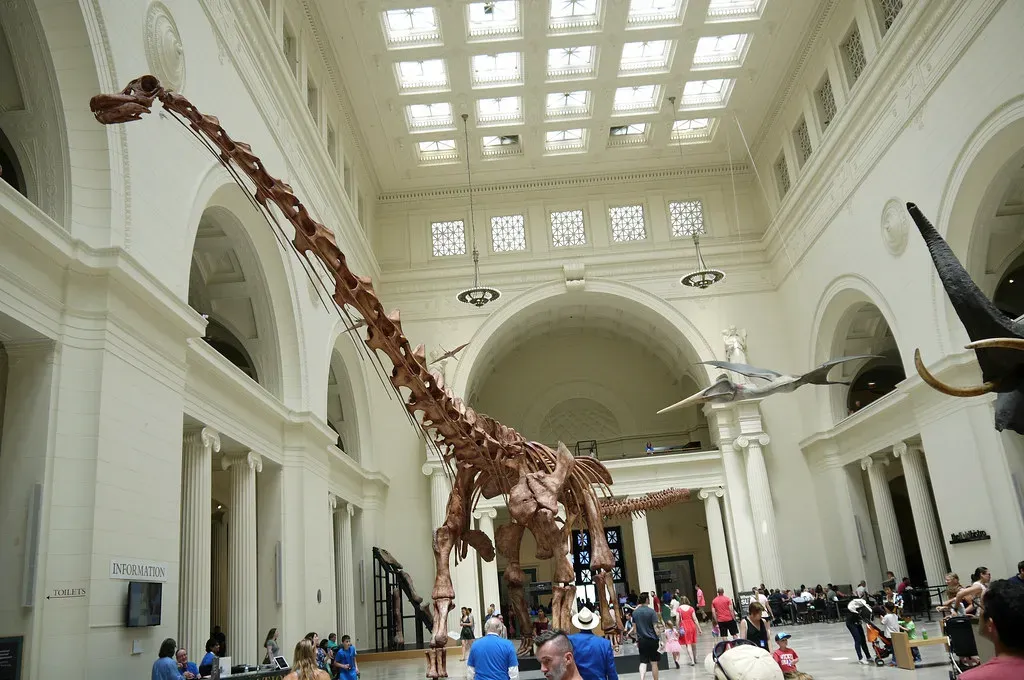
Here’s the thing about Patagotitan mayorum – it doesn’t just make you appreciate dinosaurs more. It makes you feel genuinely small as a human being. Patagotitan mayorum captured global headlines when its fossilized remains were found in Argentina’s Chubut Province, with this titanosaur estimated at up to 37 to 40 meters in length and weighing as much as 70 tons, redefining the scale of terrestrial life and surpassing all previously known land animals.
The story begins with a ranch worker’s chance encounter with an enormous bone protruding from the soil of La Flecha Ranch. Paleontologists were summoned, heralding years of intensive excavation between 2012 and 2015, with more than 200 bones representing at least six individuals eventually recovered. Think about that for a second. A random farm worker kicks up what turns out to be the thigh bone of the biggest animal that ever set foot on this planet. Its thigh bone alone measured an astounding 2.38 meters, and its neck was capable of reaching high into Cretaceous forest canopies, feeding on tough plant material that smaller herbivores could not access.
The Dueling Dinosaurs Fossil: Nanotyrannus Was Real – and It Changes Everything
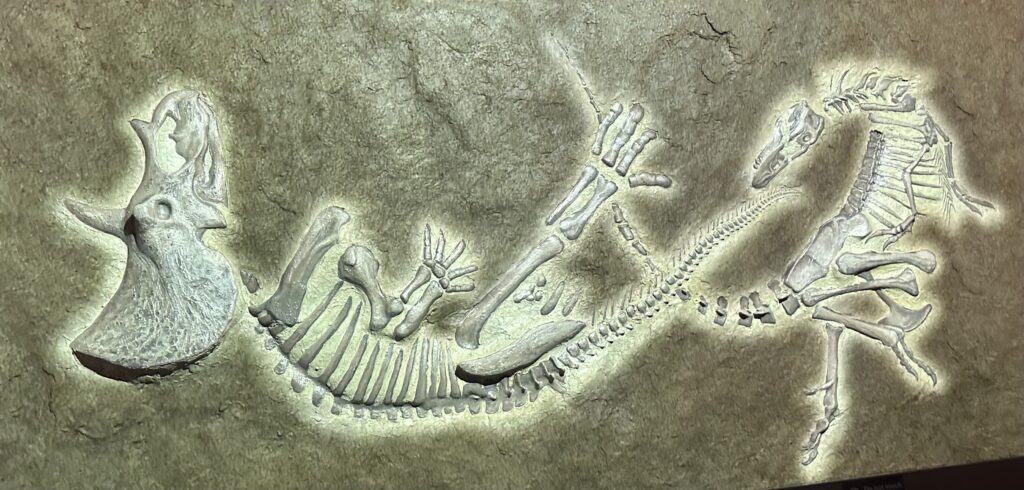
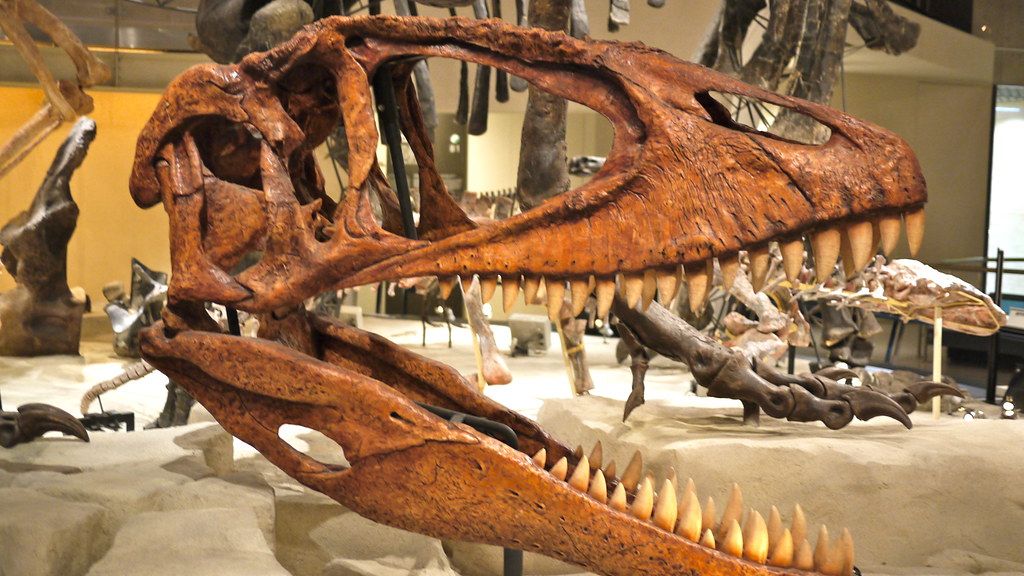
For decades, one of the noisiest arguments in paleontology was whether a mysterious medium-sized tyrannosaur was its own species or just a teenage T. rex. Imagine how awkward it would be to spend your entire career studying what you thought was a juvenile of one species, only to discover it was an entirely different animal altogether. The Dueling Dinosaurs fossil, found in Montana, contains two dinosaurs locked in prehistoric combat: a Triceratops and a small-bodied tyrannosaur. That tyrannosaur turns out to be the most complete skeleton ever found of Nanotyrannus lancensis, a dinosaur long debated as either a distinct species or a teenage T. rex – and this fossil categorically ends that debate. Nanotyrannus is not a juvenile T. rex. It belongs to a separate genus entirely.
The skeleton’s fusing spinal sutures and growth rings show it was fully grown when it died at approximately 20 years of age, with its anatomy revealing traits that form early in development and don’t change with age, including fewer tail vertebrae, more teeth, larger hands, and different skull nerve and sinus patterns. This discovery completely reframes the idea that T. rex was the lone predator of its time, and we now know multiple tyrannosaur species coexisted in the last million years before the asteroid impact, suggesting a richer, more competitive ecosystem than previously imagined.
The Chicago Archaeopteryx: Solving the Mystery of How Flight Was Born
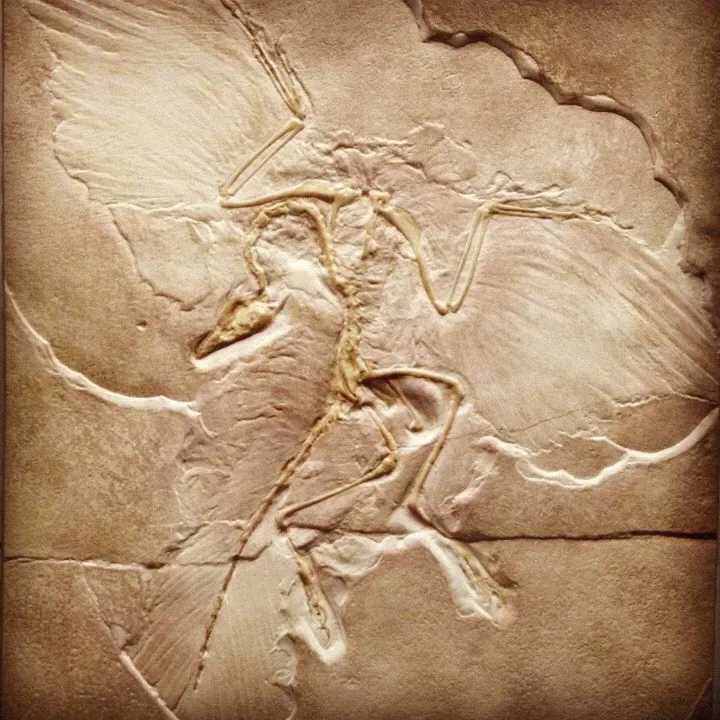
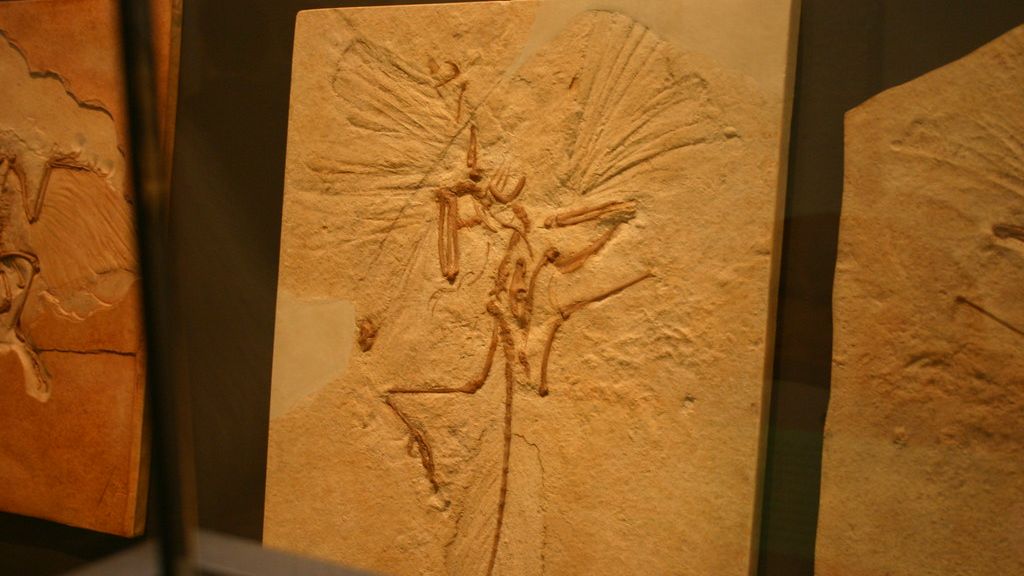
A new discovery of a nearly intact Archaeopteryx fossil is providing fresh evidence that may finally settle the long-standing debate over how flight evolved in dinosaurs, with the study published in Nature revealing the finest details ever seen in one of the world’s most iconic fossils. I think this one is personally my favorite. The idea that a creature sitting in a private collection for decades held some of the biggest secrets in evolutionary biology is both wonderful and maddening at the same time.
Discovered in the famous Solnhofen limestone of Germany, the Chicago Archaeopteryx is the smallest specimen of its kind ever found, roughly the size of a pigeon. Researchers detected the first-ever evidence in Archaeopteryx of a group of flight feathers called tertials, which grow along the humerus between the elbow and the body and are an important component of all powered flight in modern birds. Since the 1980s, scientists had hypothesized that Archaeopteryx had tertials, but this was the first time such feathers had actually been found in an Archaeopteryx fossil. A 160-year-old mystery, solved by feathers the size of your hand.
Spicomellus: The “Punk Rock Dinosaur” That Rewrote Armor Evolution
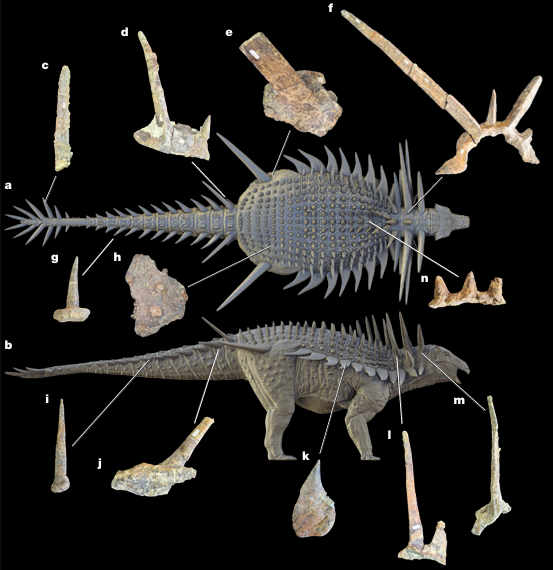
In 2021, paleontologists named a new armored dinosaur on the basis of a spiky rib. Dubbed Spicomellus, the fossil represented the earliest ankylosaur yet found and showed an unusual attachment of spike to bone not previously seen in any dinosaur. What the rest of the animal looked like was a complete mystery. Scientists had essentially built a case from a single rib. It’s a bit like trying to describe an entire person from just one fingernail.
The new fossils confirmed that Spicomellus is the oldest known member of the ankylosaurs, heavily armored, low and squat plant-eaters, and it is characterized by its bizarre armor bristling with long spines all over the body, including a bony collar around the neck with spines the length of golf clubs sticking out of it. Dubbed the “punk rock dinosaur” by the BBC, Spicomellus is changing our understanding of ankylosaur evolution while also highlighting the importance of the Moroccan fossil record. The armored dinosaur was more than 165 million years old and yet had large spikes and a tail club normally associated with ankylosaurs that lived tens of millions of years later, demonstrating that ankylosaurs evolved extremely spiky armor very early in their history.
Diplodocus Skin With Color Pigment: Sauropods Were Not Gray Blobs
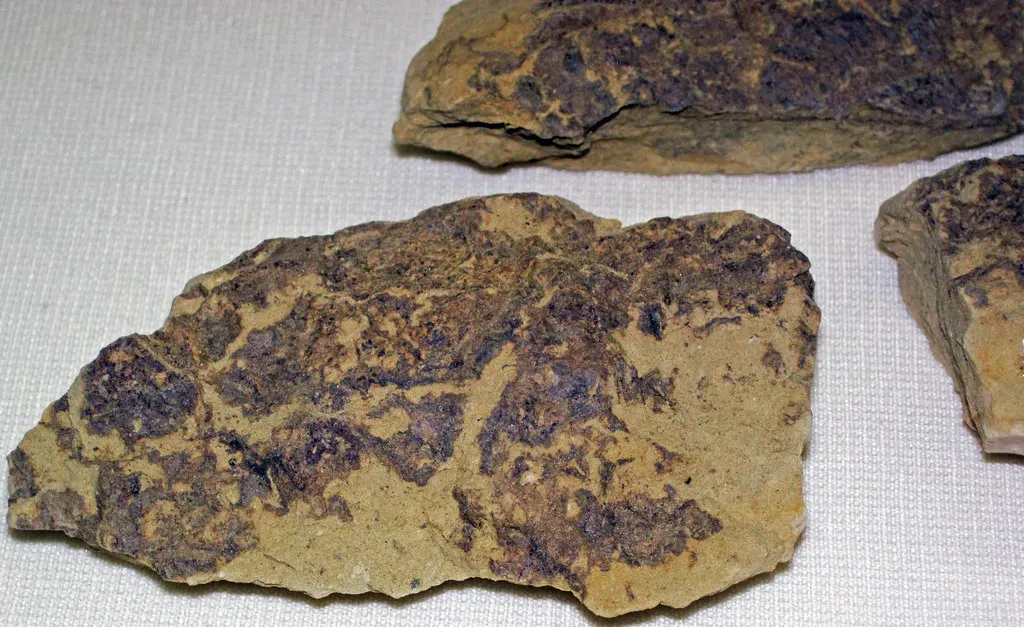
You’ve seen those museum paintings where the giant long-necked dinosaurs are depicted as uniform brownish-gray beasts lumbering across a landscape. Well, it turns out that picture may have been completely wrong. Beyond their familiar skeletons, the external appearance of sauropod dinosaurs is not well known, as sauropod skin impressions and soft tissue fossils are extremely rare. From the Jurassic rocks of Montana’s Mother’s Day Quarry, however, paleontologists uncovered fossils of sauropod skin so delicately preserved that they include impressions of pigment-carrying structures called melanosomes.
The researchers detected that the dinosaur would have had conspicuous patterns across its scales, with the finding suggesting sauropod dinosaurs were not uniformly gray or brown but had complex color patterns like other dinosaurs, birds, and reptiles. It’s hard to say for sure exactly what they looked like, but the very existence of melanosomes in such ancient skin is extraordinary. Other dinosaur fossils with melanosomes preserved in their scales or feathers have already been successfully reconstructed in color, meaning the science behind this is solid and expanding fast.
Zavacephale Rinpoche: The Oldest Dome-Headed Dinosaur Changes What We Know About Head-Butting
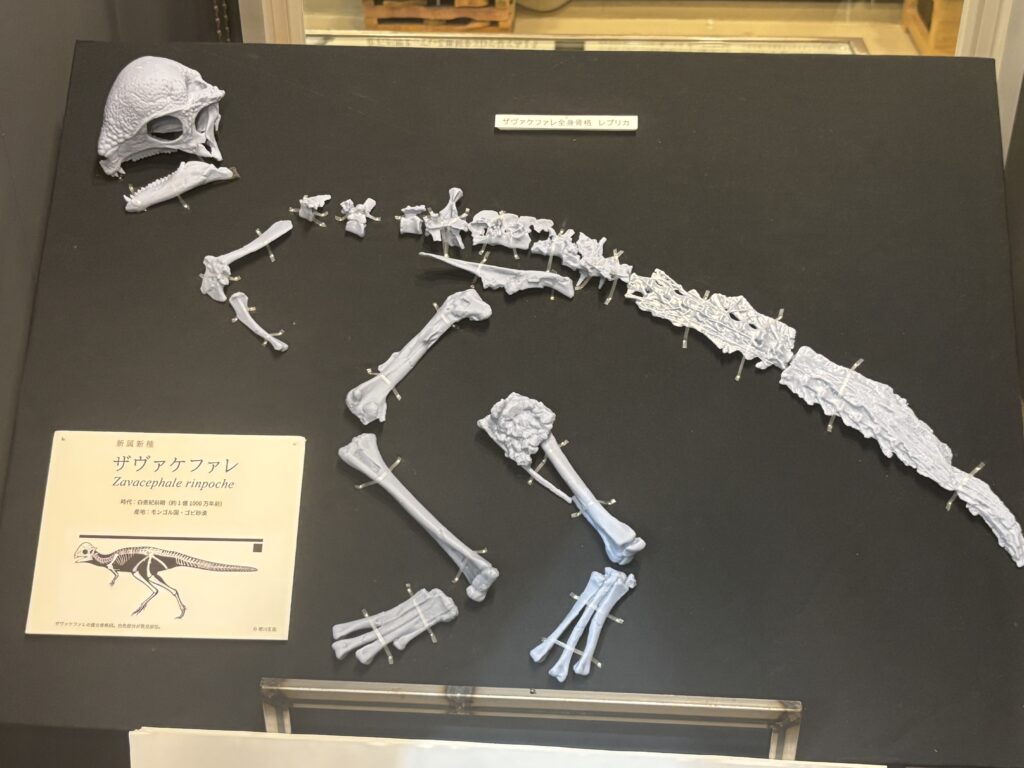
The stunning skeleton of this one-meter-long plant-eating dinosaur was discovered in 110-million-year-old rocks in the Gobi Desert of Mongolia, and it is the oldest known member of the pachycephalosaurs, a group of dinosaurs famed for their domed skulls, probably used to butt heads like today’s bighorn sheep. Pachycephalosaurs have long been one of the most enigmatic dinosaur groups, and the discovery of Zavacephale is critical to understanding their early evolution. Let’s be real – there is something endlessly amusing and fascinating about a dinosaur whose defining biological trait is essentially crashing its skull into other dinosaurs.
Mongolian paleontologists discovered a well-preserved fossil of this dome-headed pachycephalosaur in the Gobi Desert, described in Nature in September 2025. The specimen is only about three feet long and may have been a teenager, yet it remains the oldest pachycephalosaur ever discovered. The development of the dome on the specimen suggests that these dinosaurs were perhaps learning to head-butt one another while young, a behavior they likely used to compete for mates. Even juvenile dinosaurs, it seems, were learning the art of battle at an early age.
The Hollow-Spiked Dinosaur From China: A Never-Before-Seen Body Feature
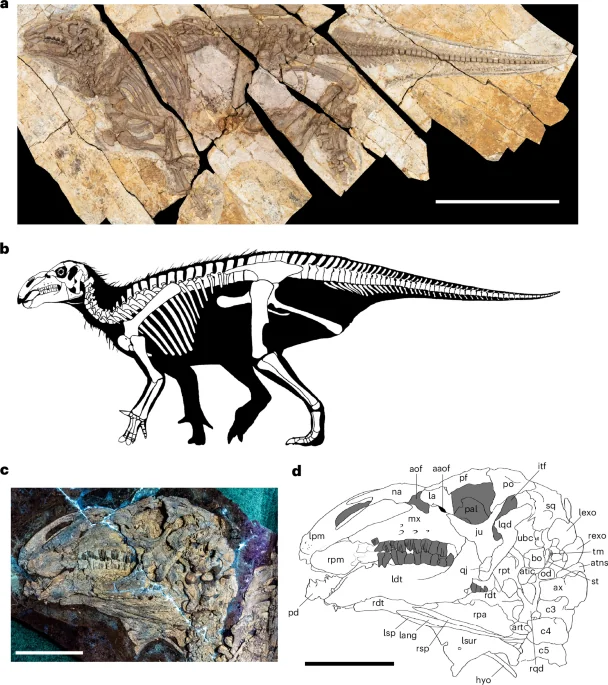
A 125-million-year-old dinosaur just rewrote what we thought we knew about prehistoric life. Scientists in China uncovered an exceptionally preserved juvenile iguanodontian with fossilized skin so detailed that individual cells are still visible. Even more astonishing, the plant-eating dinosaur was covered in hollow, porcupine-like spikes, structures never before documented in any dinosaur. This is the kind of discovery that makes you genuinely stop and think: if this existed and we missed it for so long, what else is buried out there?
Using advanced imaging techniques such as X-ray scanning and high-resolution histological analysis, the team was able to study the fossil at the cellular level. They found that individual skin cells had been preserved for approximately 125 million years, and this level of detail allowed scientists to reconstruct the structure of unusual hollow spikes embedded in the skin, described as cutaneous because they originate in the skin and covered much of the dinosaur’s body. The findings, published in Nature Ecology and Evolution in February 2026, introduce an entirely new feature to the known diversity of dinosaur anatomy, revealing that dinosaur skin and body coverings were more varied and innovative than previously understood.
Conclusion: The Age of Discovery Is Far From Over
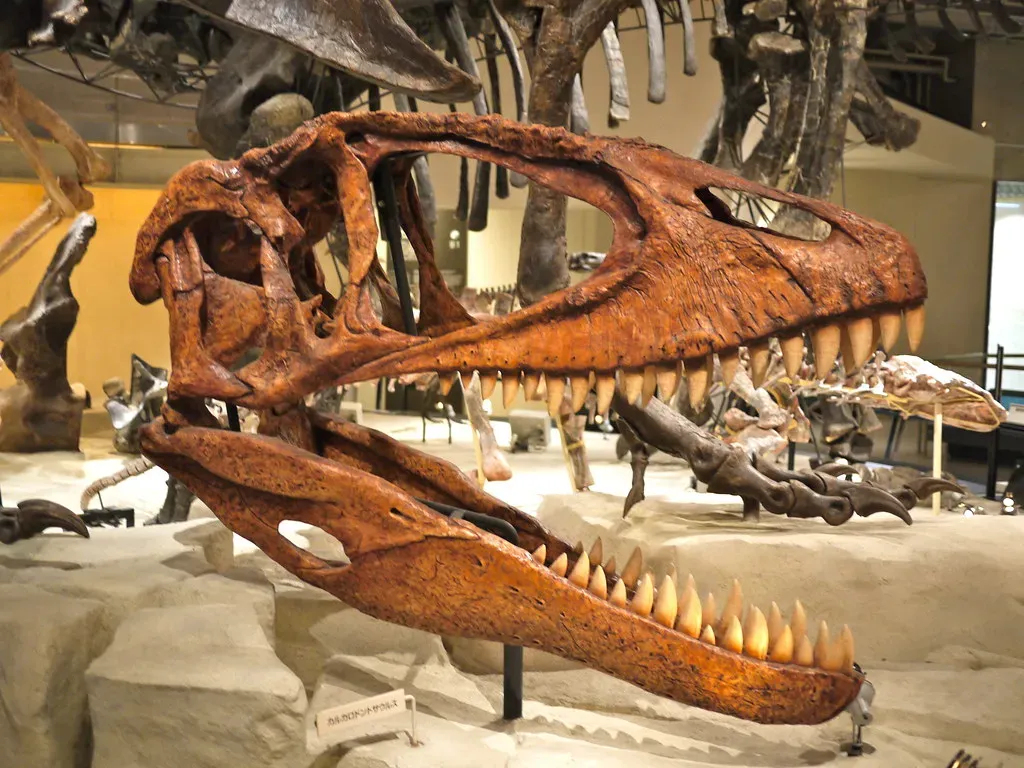
If you thought dinosaur science was mostly finished – that we’d named the big ones, filled the museums, and moved on – these seven discoveries prove otherwise. From a punk rock dinosaur with golf-club-length spikes to a tiny tyrannosaur that completely dismantled decades of T. rex research, the last decade has been breathtaking. Every single one of these finds forced scientists to rethink something they were previously certain about.
For 140 million years of the Mesozoic period, pretty much every animal larger than a meter in size that lived on land was a dinosaur, occupying pretty much every ecological niche. Paleontologists estimate we’ve probably found less than one percent of all the dinosaurs that ever lived, with many, many more still out there to find. That number alone should make your jaw drop. Less than one percent. The Mesozoic era is still whispering its secrets through the rock, waiting for the right person, with the right tools, to chip it all open.
Which of these discoveries surprised you the most? Drop your thoughts in the comments – we’d love to know.