Have you ever wondered what secrets lie buried beneath thick jungle vines, volcanic ash, or desert sands? Cities that once thrived with thousands of inhabitants, bustling markets, and grand temples simply vanished from human memory. For centuries, maybe even millennia, these urban centers remained hidden, their stories silenced.
Yet through determination, luck, and modern technology, archaeologists have pulled these lost worlds back from obscurity. Each rediscovery rewrites what we thought we knew about human civilization. So let’s dive into eight of the most astonishing ancient cities that time nearly erased forever.
Machu Picchu: The Incan Citadel Hidden in the Clouds
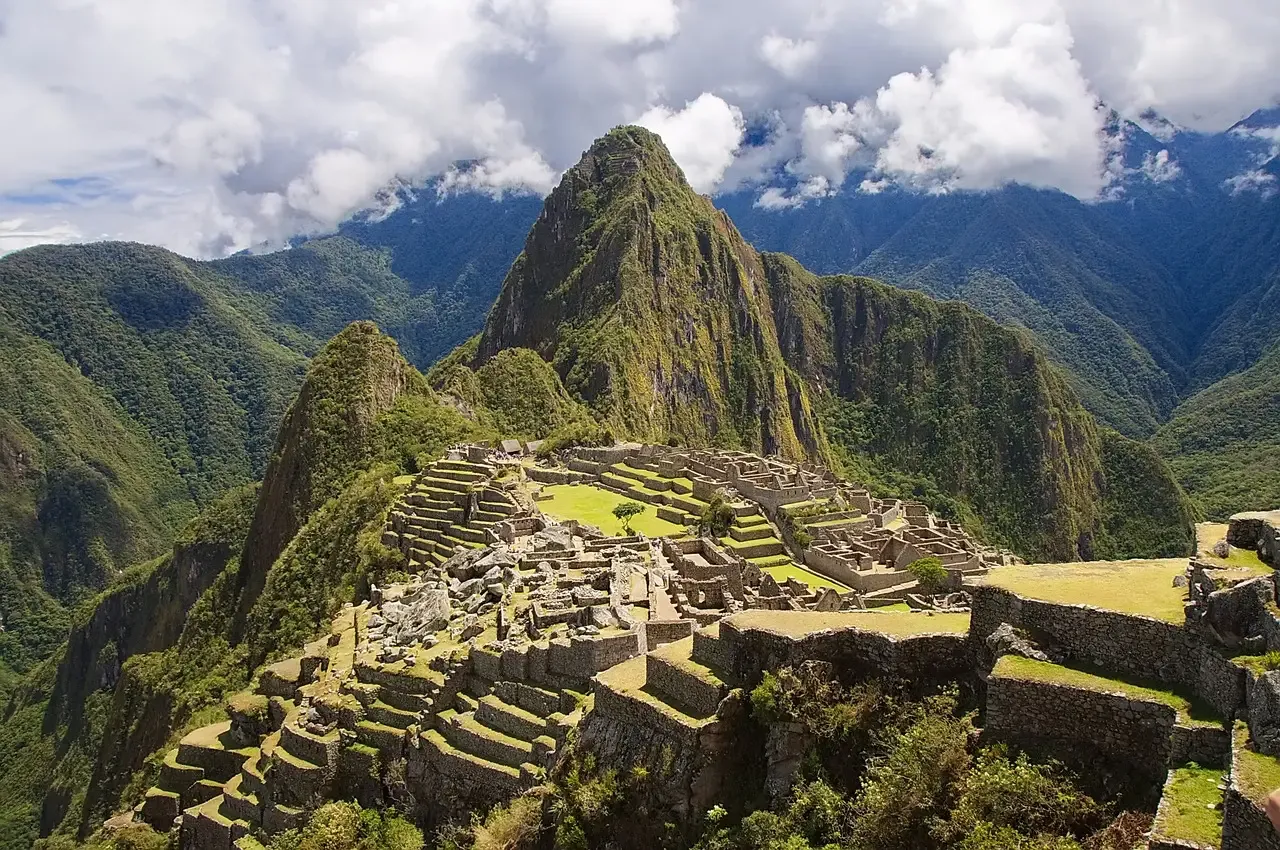
Perched high in the Andes Mountains of Peru, Machu Picchu was constructed around 1450, during the peak of the Inca Empire, only to be abandoned just over a century later following the Spanish Conquest. What makes this site absolutely remarkable is how completely it vanished from global awareness. The Spanish conquistadors never found it, which meant this stone city remained untouched by European destruction.
In 1911, American historian Hiram Bingham traveled the region searching for Vilcabamba, the lost Inca capital, when a villager named Melchor Arteaga led him to Machu Picchu. Though local farmers always knew about the ruins, Bingham brought them to international attention. The site’s strategic positioning between mountain peaks suggests it served multiple purposes, from ceremonial center to royal retreat. The meticulous construction demonstrates exceptional Inca engineering skills, with stones carved and fitted so precisely that not even a blade of grass can fit between them.
Pompeii: A Roman City Frozen by Volcanic Fury
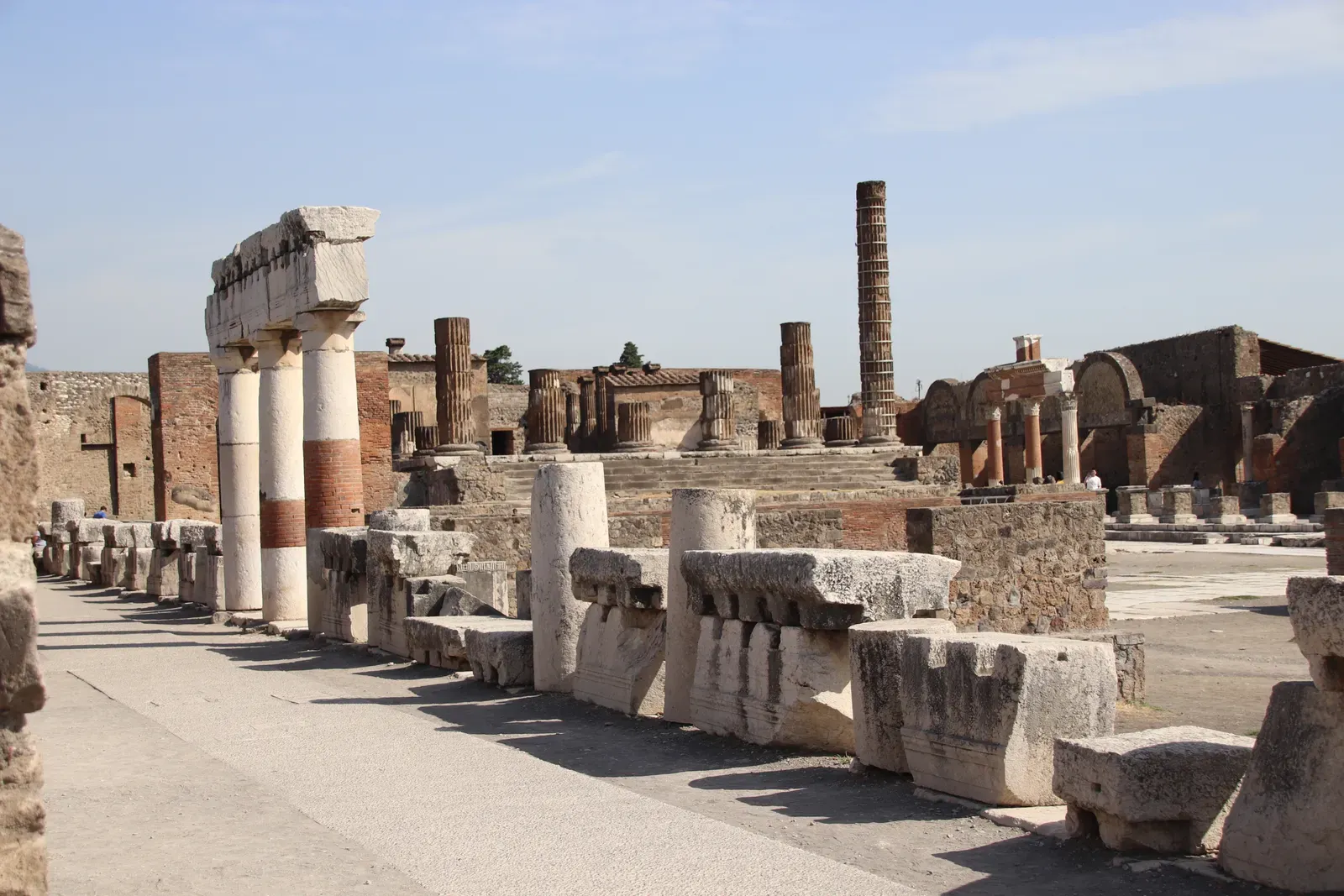
In 79 AD, a massive eruption of Mount Vesuvius buried the nearby city of Pompeii and some residents under 20 feet of ash and rock, with the city’s location gradually lost to history until an architect rediscovered it in the 15th century while planning construction on the site. Here’s something that still amazes me: the very disaster that destroyed Pompeii also preserved it. Buildings, artwork, even the shapes of victims caught in their final moments were encased in volcanic material.
Excavations didn’t begin until 1748, but have continued ever since. Walking through Pompeii today feels like stepping through a portal into daily Roman life. You see frescoed walls, intricate mosaics, and streets where people once shopped and gossiped. The tragedy of Pompeii has given us an unparalleled snapshot of ancient Roman civilization at its height, complete with bakeries, taverns, and even graffiti on the walls.
Petra: The Rose-Red City Carved from Stone
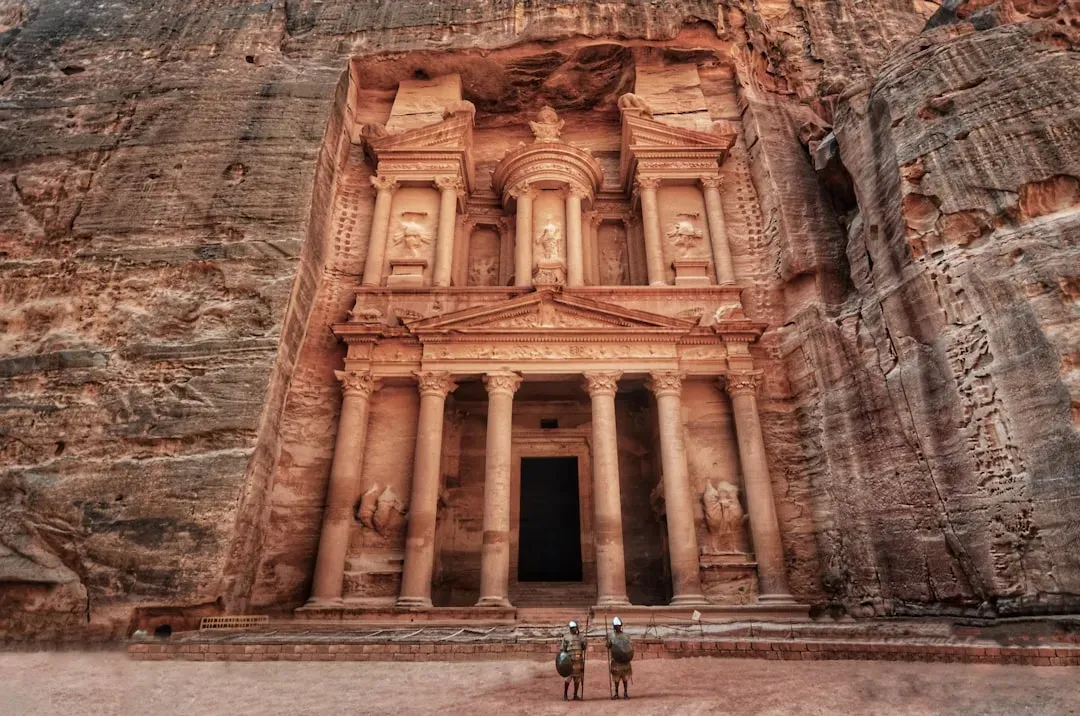
Petra, once a thriving trading hub of the Nabatean civilization renowned for its rock-cut architecture and water conduit system, was rediscovered in 1812 by Swiss explorer Johann Ludwig Burckhardt. The city’s remoteness helped protect it after the Nabateans abandoned it, leaving its magnificent structures carved directly into pink sandstone cliffs to wait in silence for centuries.
The Treasury, also known as Al-Khazneh, is the most famous and iconic structure in Petra. Picture this: you walk through a narrow sandstone gorge for almost a kilometer, towering cliffs on either side, then suddenly the passage opens to reveal this massive, ornate facade glowing rose-red in the sunlight. The extensive ruins, including tombs, temples, and an amphitheater, offer insights into the ingenious methods used by the Nabateans to harness water in the desert. Their engineering prowess transformed an arid landscape into a prosperous urban center.
Angkor Wat: Cambodia’s Jungle-Swallowed Empire
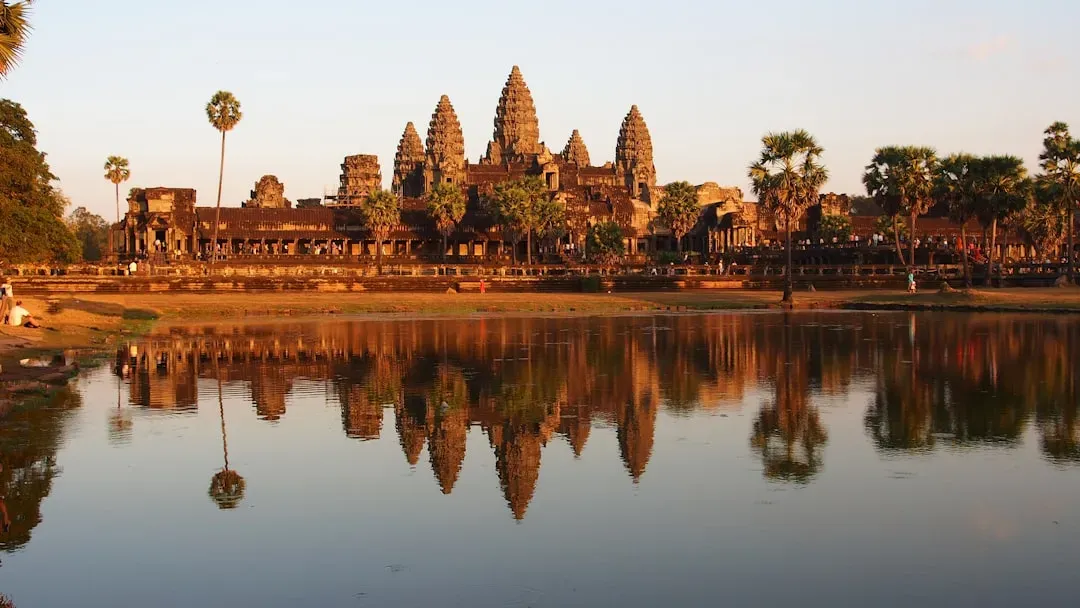
Angkor Wat, the jewel of the Khmer Empire, was never truly lost to the Cambodian people but was brought to international attention in the 19th century by French explorers. Between the 9th and 15th centuries, this sprawling complex housed potentially up to one million people, making it comparable in size to London in 1800. The sophistication of this medieval mega-city is staggering when you consider the engineering required.
In 2007, an international team using satellite photographs concluded that Angkor had been the largest pre-industrial city in the world by surface area, with an elaborate infrastructure connecting an urban sprawl of at least 1,000 square kilometers. To support Angkor’s expanding population, engineers developed a water-distribution system with enormous reservoirs and an intricate series of irrigation channels, dams and dikes that allowed farmers to produce several rice crops annually, among the highest yields in Asia. The temples themselves, especially the magnificent Angkor Wat, showcase artistic and architectural achievements that still inspire awe today.
Troy: Where Homer’s Legend Met Reality
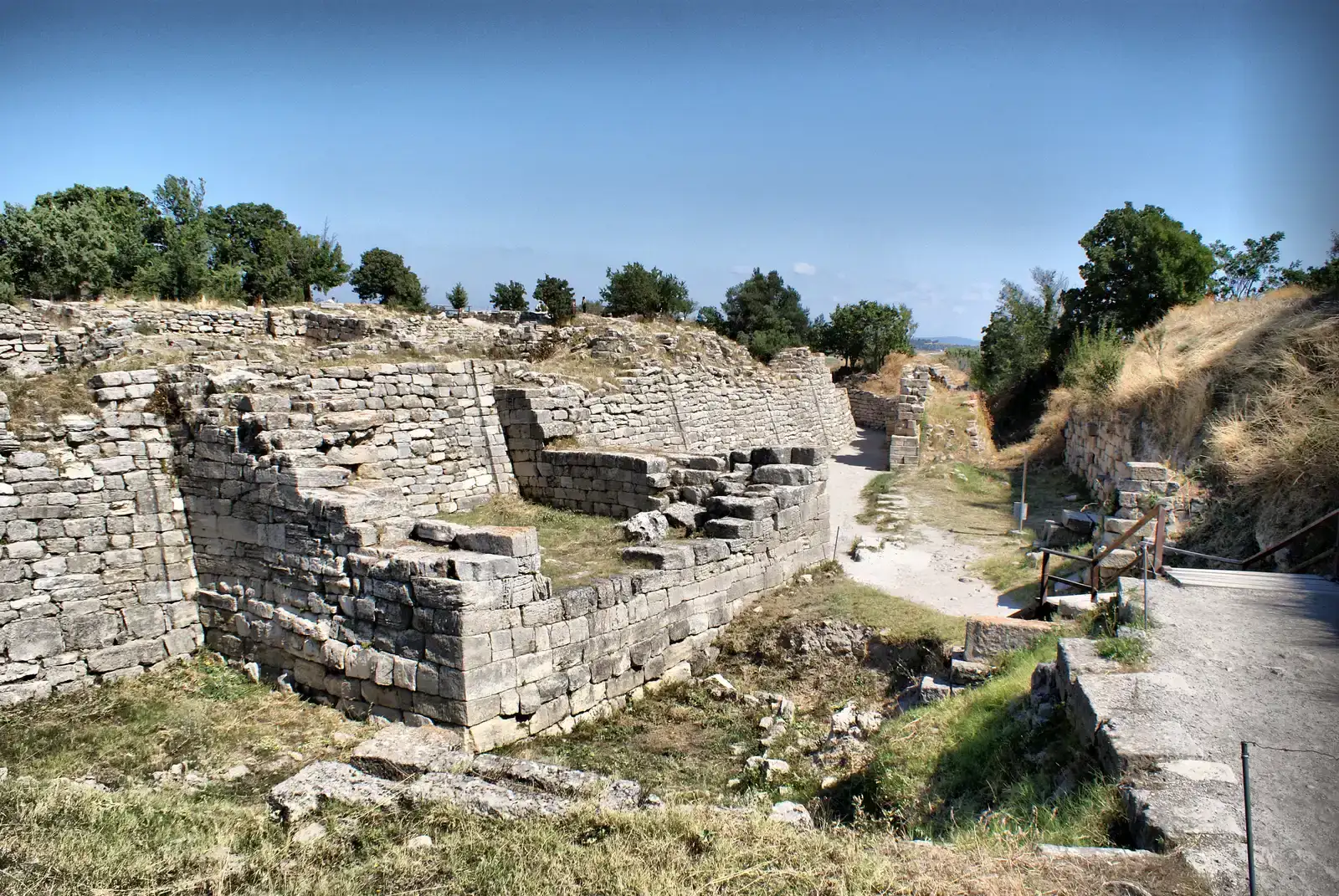
150 years ago, a maverick millionaire German businessman and gentleman archaeologist called Heinrich Schliemann announced to the world the rediscovery of the lost city of Troy. For centuries, scholars debated whether Troy was real or merely a mythical backdrop for Homer’s epic tales. Schliemann, driven by childhood dreams and an unshakable belief in the Iliad, proved the skeptics wrong.
Since the lost city of Troy was rediscovered, we have to accept that Homer’s legendary tale was after all based on real history. The site in modern Turkey revealed multiple layers of cities built atop one another, showing that Troy was continuously inhabited and rebuilt over thousands of years. Though the legendary Trojan War’s exact details remain disputed, there’s no longer any question that a powerful city stood at this strategic location controlling access to the Black Sea. The discovery fundamentally changed how historians view ancient Greek literature.
Tikal: The Mayan Metropolis Reclaimed by Rainforest
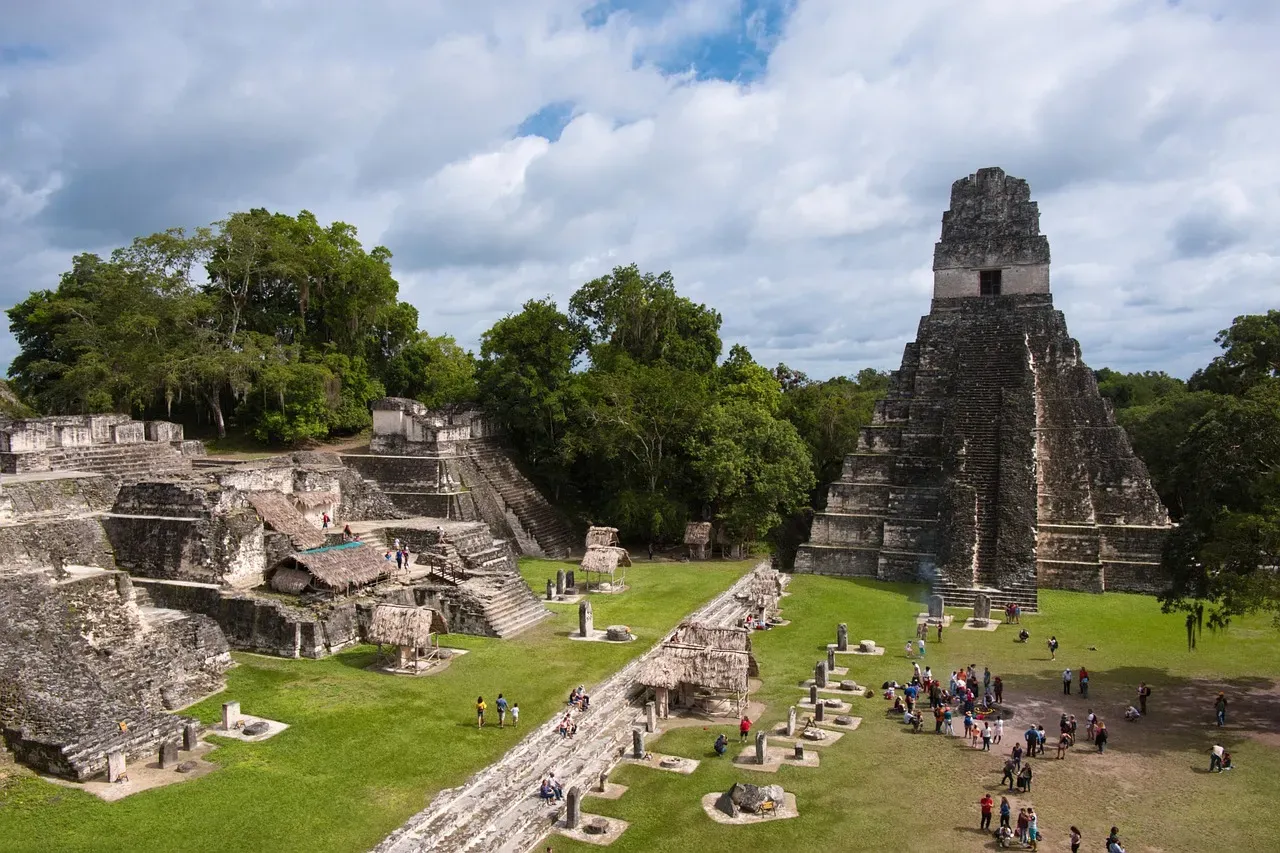
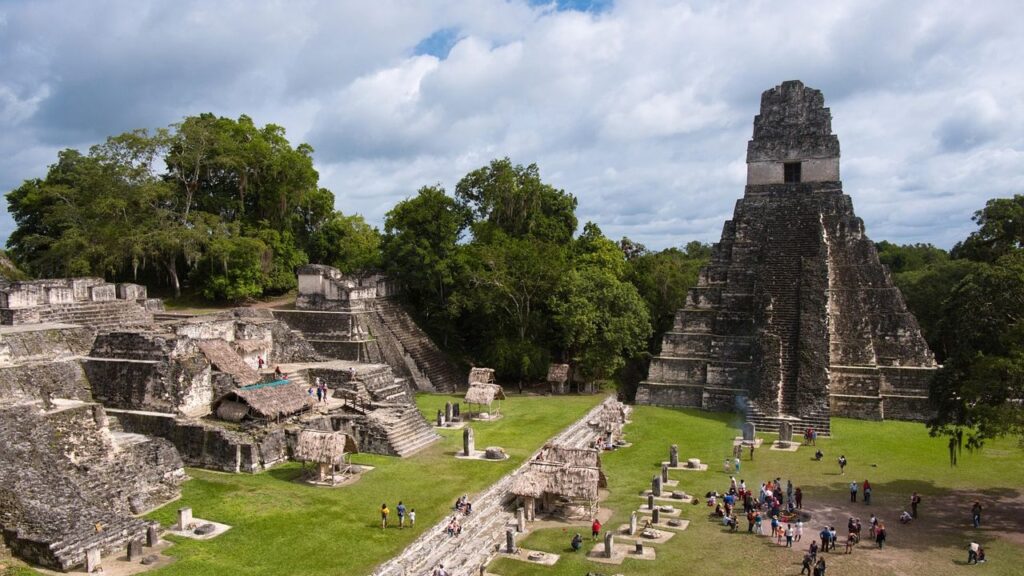
In Guatemala, the classic stepped pyramids of the Mayan civilization dominate what remains of Tikal, with population estimates ranging from 10,000 to over 100,000 during its 500 years of existence, before Tikal’s disappearance coincided with the Classic Mayan Collapse between the 7th and 9th century. By the time conquistadors passed through the area in 1525, the city was lost to everyone except local farmers, and with its remote location it wasn’t until 1848 that Europeans began mapping the site.
More than 3,000 excavated structures covering over 16 square kilometers make Tikal the largest remaining Mesoamerican site, comparable in scale to Angkor Wat. What happened here remains one of archaeology’s great mysteries. Climate change, deforestation, drought, disease, and warfare likely all contributed to driving people away from this once-magnificent city. Today, the towering pyramids emerging from the jungle canopy provide a haunting reminder of how quickly nature can reclaim human achievements.
Heracleion: Egypt’s Sunken Port City
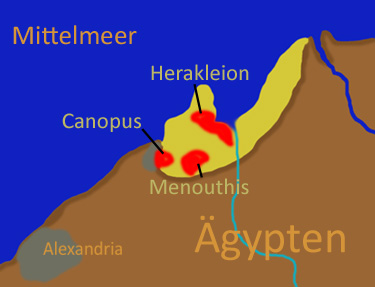
Once a center of wealth and culture, the ancient Egyptian city of Heracleion lay submerged at the mouth of the Nile Delta for around 1,500 years. Imagine an entire city sliding beneath the waves, taking with it temples, statues, and treasures. For centuries, Heracleion existed only in ancient texts, with scholars unsure if it was real or legendary.
When French archaeologist Franck Goddio finally located the underwater ruins, what emerged was breathtaking. Massive statues of pharaohs, temple remains, ships, and artifacts emerged from the Mediterranean seabed. Thonis-Heracleion, located just 4 miles off the coast of Alexandria, was founded in the 8th century B.C. and rose to serve as a significant port city between the Nile Delta and The Mediterranean Sea, the bridge between Egyptian and Greek civilizations. The discovery revealed the sophisticated maritime culture that once thrived where now only fish swim among ancient columns.
Akrotiri: The Minoan Pompeii Preserved in Ash
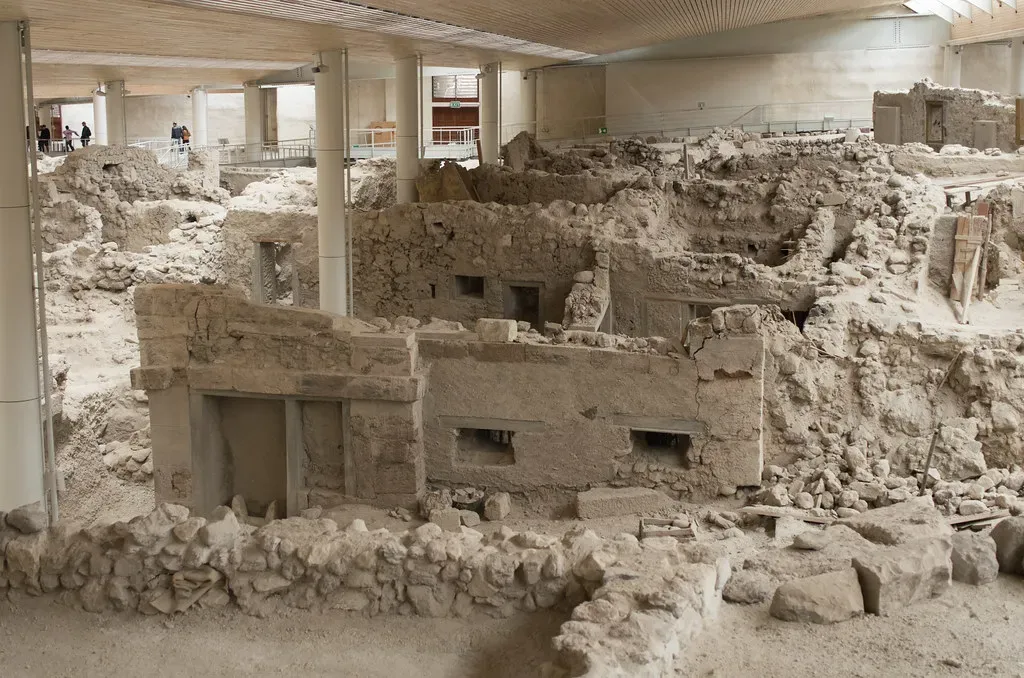
The ancient lost city of Akrotiri was rediscovered in the 1860s by quarry workers, but only re-entered history in 1967 when renowned Greek archaeologist Spiridon Marinatos researched his theory that the destruction of the Minoan civilization on Crete started with the eruption of Thera. This Bronze Age settlement on the island of Santorini met a fate similar to Pompeii, buried under meters of volcanic ash.
The exact date of the eruption varies between 1650–1550 BCE, but what we know is that a once-thriving trade connection between Cyprus, Crete, mainland Greece, the Levant, and many other places was destroyed, with ashes found as far away as Egypt. Unlike Pompeii, no human remains have been found at Akrotiri, suggesting residents had warning and evacuated before the catastrophic eruption. The preserved buildings showcase remarkably advanced urban planning, sophisticated drainage systems, and stunning frescoes that reveal the artistic sophistication of Minoan culture.
Conclusion
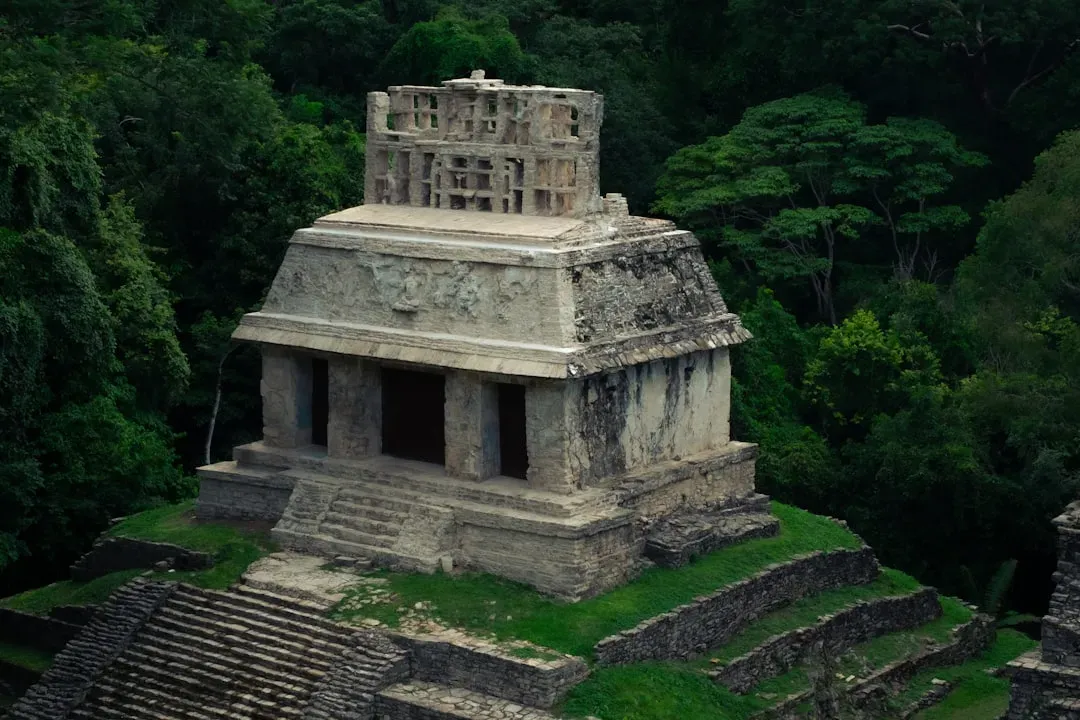
These eight cities represent just a fraction of the lost urban centers archaeologists continue to uncover. Each rediscovery challenges what we thought we knew about ancient civilizations, revealing unexpected sophistication, vast trade networks, and human ingenuity stretching back thousands of years. From mountaintops to seabeds, from jungle depths to volcanic ash, these cities waited patiently for technology and determination to bring their stories back to light.
What strikes me most about these rediscoveries is how fragile human memory can be. Entire cities housing thousands of people simply vanished from collective consciousness, sometimes within a few generations. It makes you wonder what other lost cities still wait beneath our feet, their secrets intact. The next great archaeological discovery might be happening right now, just waiting for someone to look in the right place with the right tools.
What do you think about these incredible rediscoveries? Which ancient city would you most want to explore?