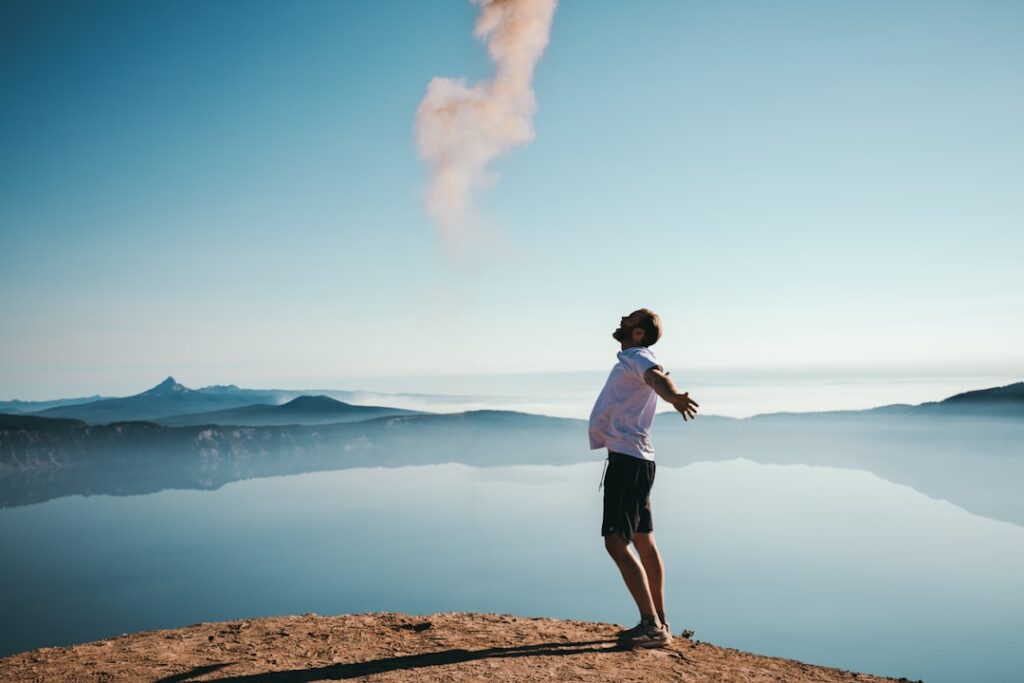
There’s a certain kind of person you’ve probably met in your life. Maybe it was during a crisis, or a quiet Tuesday when everything seemed to fall apart. They didn’t yell. They didn’t spiral. They just… handled it. Calmly, clearly, and with a kind of groundedness that made you wonder what they were made of.
Inner strength is one of those things that’s hard to fake. You can put on a brave face for a while, but real, lasting strength seeps through in how you behave when things go sideways, when no one’s watching, when there’s nothing left to prove. Honestly, it’s far less dramatic than the movies make it look.
So what actually separates people with true inner strength from everyone else? It’s not bravado or invincibility. It turns out, it comes down to a handful of instinctive traits that are quietly, consistently at work. Let’s dive in.
1. You Face Reality Head-On, Even When It Hurts

Let’s be real – most people have a talent for avoiding uncomfortable truths. We reframe, we rationalize, we wait and hope things sort themselves out. People with true inner strength don’t do that. You deal with challenges directly, taking stock of facts, research, and feedback from professionals and loved ones, without mentally altering history or distorting reality. It’s a rare and quietly powerful habit.
This includes planning and seeing a situation clearly, often conferring with others, and being prepared for the consequences of your choices. You take responsibility for your actions and the effects of your decisions, and over time, you don’t play the victim or blame others for problems you’ve caused yourself. Think of it like navigating in fog: most people stop walking. You just slow down and keep moving forward.
2. You Regulate Your Emotions Without Suppressing Them
You don’t deny anger, fear, or sadness; instead, you decode these feelings and decide what to do next. In psychological literature, this capacity is called emotion regulation – the skill of monitoring, labeling, and adjusting emotional responses in ways that serve long-term goals. Robust emotion-regulation ability predicts lower stress, greater well-being, stronger relationships, and even higher performance. That’s a pretty extraordinary return on a single skill.
You’re overcome by emotions at times, but you engage in reality testing – the ability to recognize the difference between your internal feelings and the external world. You can access your rational mind consistently, and applying facts and logic to a situation after a short period is paramount to both emotional maturity and mental resilience. It’s not about being robotic. It’s about being the calm eye in your own storm.
3. You Know the Difference Between What You Can and Can’t Control

This might be one of the most underrated traits of all. You understand that there are many things outside your control, and wanting to control everything is actually a classic sign of chronic anxiety and existential insecurity. You’re able to differentiate between what you can and cannot control, and shifting focus from things outside your control results in feeling better, discovering new options, and overall happiness. It sounds simple, but most people spend the majority of their mental energy pulling on threads that were never theirs to pull.
You won’t spend time complaining about lost luggage or traffic jams. Instead, you focus on what you can control in your life, recognizing that sometimes the only thing you can control is your attitude. That’s a kind of freedom most people never taste. And once you develop that instinct, you don’t go back.
4. You Set Boundaries Without Guilt or Apology

You know when to say no. You know where your emotional responsibility ends and another person’s begins. You feel comfortable standing up for yourself and have learned that saying no to boundary violations, aggression, and unjust behavior benefits you in the end. You don’t feel shame or guilt about it. Instead, you feel liberation and freedom. Honestly, that shift from guilt to freedom is enormous.
The foundation of healthy relationships is boundaries. You treat others fairly, loving and respecting those who are worthy of it without wasting your resources on toxic people. When you come across something that seems unhealthy, you make a decision about it instead of reacting emotionally or passively accepting it. You reevaluate your relationships regularly and come to conclusions that help maintain your boundaries. This isn’t coldness. It’s wisdom wearing a quiet face.
5. You’re Resilient – and You Actually Grow Through Adversity

You don’t give up easily, even when life’s path grows rocky and uneven. Instead of looking at challenges ahead as impossibilities, you see issues as opportunities that will force you to grow. There’s a profound difference between someone who survives hard times and someone who grows because of them. People with true inner strength almost always belong to the second group.
Resilience can be defined as the ability to withstand adversity or recover from stress and negative experiences, but it also determines your ability to move forward and grow in response to difficulties. Cultivating strength in the face of life’s challenges requires changing when you need to and believing in your own ability to get through hard times. Resilience is also associated with having strong coping skills and high levels of self-regulation. I think of it like a tree in a storm: the roots don’t break, they just dig deeper.
6. You Take Responsibility and Own Your Mistakes
You take responsibility without making excuses. You know that poor decisions are a part of life and growth, and instead of wallowing in guilt, you focus on solutions and self-improvement. This ability to accept responsibility not only builds trust but also shows emotional maturity and leadership potential. Here’s the thing: accountability isn’t punishment. It’s actually one of the most powerful tools you have for building the life you want.
You don’t view failure as a reason to give up. Instead, you use failure as an opportunity to grow and improve. You’re willing to keep trying until you get it right. People who run from their mistakes often make the same ones, over and over. People who face them? They tend to stop making them. It’s really that straightforward.
7. You’re Comfortable in Your Own Company

This one surprises people. We live in a world that treats busyness as a virtue and silence as something suspicious. You can tolerate being alone and you don’t fear silence. You aren’t afraid to be alone with your thoughts and can use downtime productively. You enjoy your own company and aren’t dependent on others for companionship and entertainment all the time. That kind of self-sufficiency is rare, and it’s magnetic.
You can sit in silence without reaching for distraction, not because you’re a loner, but because you’ve built an inner world that doesn’t feel threatening. You’re self-sufficient. That’s not to say you don’t occasionally rely on others for support; you just don’t rely on anyone else to maintain your balanced mind and healthy lifestyle. There’s a big difference between chosen solitude and loneliness. People with true inner strength know that difference well.
8. You Find Meaning Even in the Darkest Chapters

I know it sounds almost too philosophical, but this instinct is one of the most consistent markers of genuine strength. You can make meaning of your past hurts and experiences, and you have a framework to make sense of the bad things. Transcendence is key to resilience. It doesn’t mean you’re naive about pain. It means you’re wise enough to extract something useful from it.
Mentally strong people often try to use their experiences of struggle and hurt to help others. Rather than simply bouncing back, you bounce forward, integrating lessons into a stronger sense of self. After a setback, you conduct a candid post-mortem and reinvest that knowledge. You speak openly about past struggles, offering practical hope to others in similar situations. It’s hard to say for sure, but I think this might be the most quietly heroic trait of all nine.
9. You Stay Positive Without Slipping Into Denial

Research consistently finds that optimistic people outlive pessimists, enjoy better cardiovascular health, and bounce back faster from stress – but only when that optimism is grounded in reality. Mentally strong individuals balance hopeful expectations with an unflinching assessment of obstacles. They neither sugar-coat adversity nor wallow in doom. That balance is harder than it sounds. Most people tip too far in one direction.
You stay positive even when the world around you is negative. You know how to balance your reality with a smile, and despite what you’ve gone through, you still see the bright side of life. You don’t let your problems get the best of you. You seek out alternative solutions when you need to, and you don’t believe in dead ends or false starts. There’s a kind of stubborn, quiet hopefulness that defines truly strong people. Not blind optimism. Just an unshakeable belief that things can, and will, get better.
Conclusion: Strength Is Built, Not Born

Here’s the beautiful thing about all nine of these traits: you’re not locked out of any of them. On average, roughly about one third of a person’s strengths are innate, built into genetically based temperament and personality. The other two-thirds are developed over time – you get them by growing them. That means we can develop the happiness and other inner strengths that foster fulfillment, love, effectiveness, wisdom, and inner peace.
Inner strengths are the supplies you’ve got in your pack as you make your way down the twisting and often hard road of life. They include a positive mood, common sense, integrity, inner peace, determination, and a warm heart. True inner strength isn’t loud or flashy. It doesn’t announce itself at parties. It shows up quietly, reliably, in the moments that matter most.
Look back at this list honestly. Which traits do you already carry? Which ones are still being forged? The most meaningful question isn’t whether you’re strong enough right now. It’s whether you’re willing to become stronger. What do you think – which of these nine traits surprised you the most? Tell us in the comments below.