
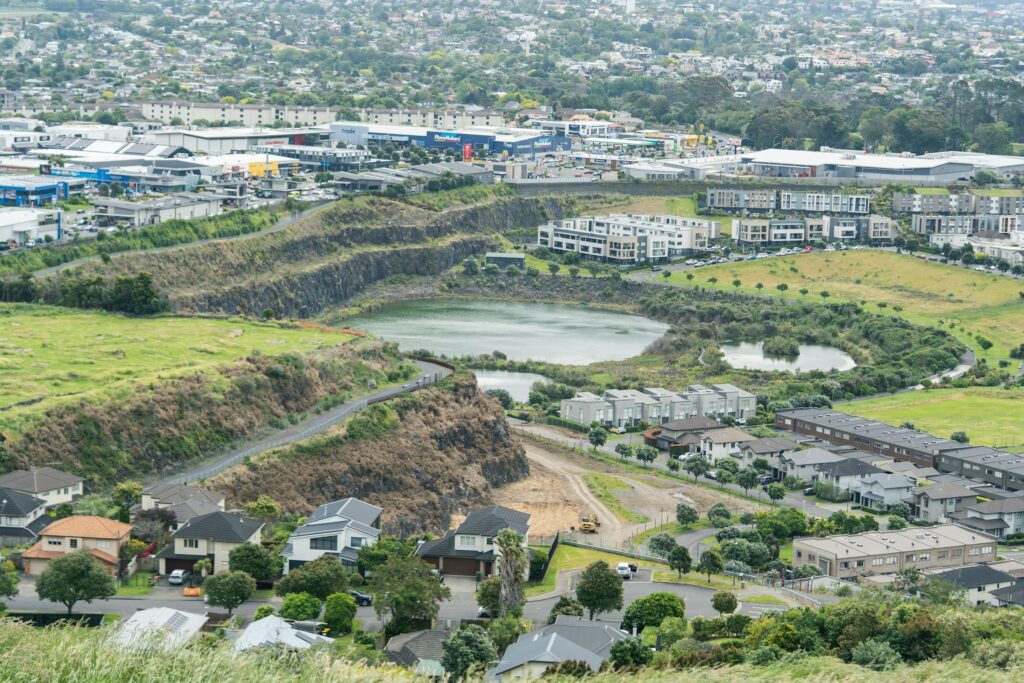
Imagine grabbing a coffee, walking your dog, or mowing your lawn without realizing you are literally standing on the scar of an ancient cosmic collision. In one unassuming American town, that is not science fiction or movie magic, but everyday reality. For roughly a century and a half, people have built homes, raised families, and laid streets across the buried remains of a prehistoric asteroid impact crater that once reshaped a chunk of North America in an instant.
From the surface, it mostly looks like any other small town: a grid of streets, a quiet courthouse square, maybe a diner where everyone knows your name. But far below the sidewalks and foundations lies a shattered bowl of fractured rock, melted minerals, and warped geology that tells a violent story written hundreds of millions of years before humans ever showed up. That contrast – ordinary life on top, extraordinary history underneath – is what makes this town so strangely captivating.
A quiet town with a literally cosmic backstory
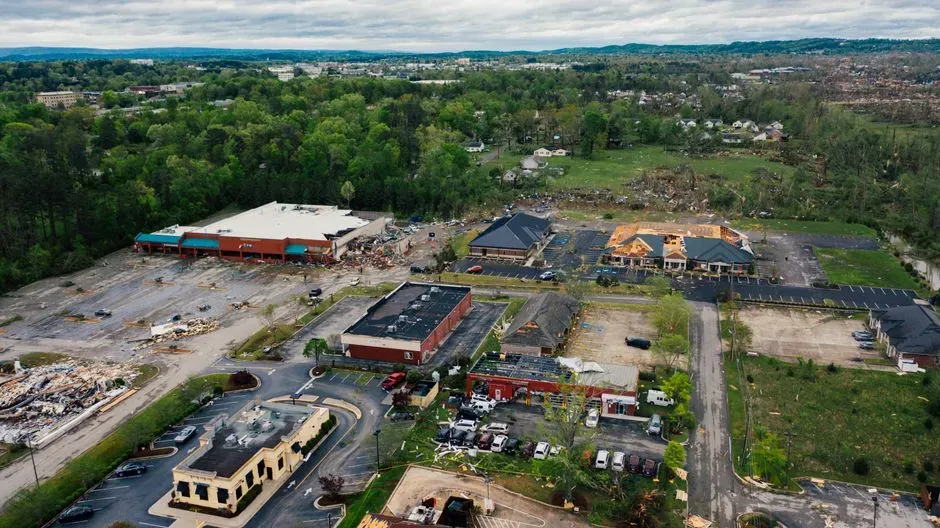
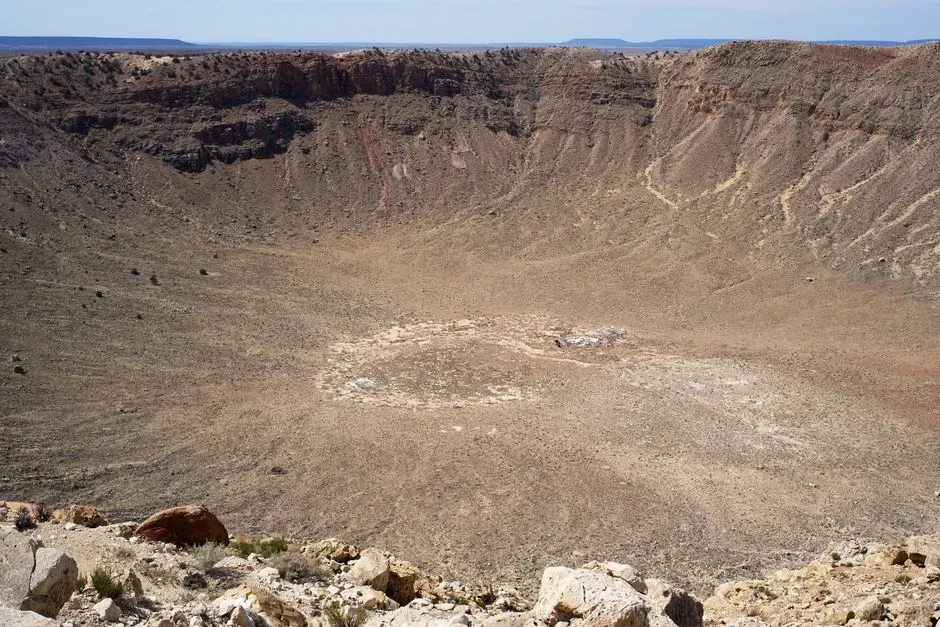
What makes this place so fascinating is how ordinary it appears at first glance. You do not see a gaping crater, towering cliffs, or dramatic rims like the famous desert impact sites. Instead, you see a modest community that has grown gently over about 150 years, complete with schools, churches, and hardware stores, all sitting on ground that looks deceptively normal.
Beneath that calm surface, however, the bedrock tells a different story. Deep drilling, geologic mapping, and rock cores have revealed a circular structure and fractured subsurface that match the fingerprints of a massive asteroid impact. The town’s streets and houses are effectively perched on the healed wound of an ancient catastrophe, like a neighborhood built on the scar tissue of the planet itself.
How geologists figured out a crater was hiding in plain sight
The wildest part is that for a long time, no one living there had any idea they were sitting atop an impact structure. The crater is so deeply eroded and buried that you cannot just walk to the edge and look down into it. Only when scientists began digging deeper – sometimes literally, sometimes with seismic surveys and gravity measurements – did the pattern start to emerge.
Geologists noticed that the rocks under and around the town were not behaving the way typical flat-lying layers should. They were tilted, shattered, uplifted, and jumbled into a circular shape, almost like someone had punched the crust from above. Over time, as more cores were drilled and more data came together, the consensus formed: this was not just local weirdness in the rock. It was the buried remains of a prehistoric impact crater, masked by millions of years of erosion and sediment.
What a buried impact crater does to the local landscape
You might expect an impact crater to look like a giant bowl, but once erosion, sediments, and human development get involved, the signature becomes more subtle. In this town, the crater is more of a hidden framework than a visible landmark, influencing things like rock depth, groundwater movement, and even where certain hills and low spots tend to form. It is like a skeleton under the skin that quietly shapes the entire landscape without announcing itself.
The impact fractured and weakened the rock at depth, creating zones where fluids can move differently and where certain types of minerals or resources might be concentrated. Farmers may notice that some fields drain a bit better or worse, or that wells hit water at different depths than just a few miles away. To the casual observer it just feels like the quirks of local terrain, but geologically, those quirks are the echo of a long-ago collision.
A town unknowingly living on one of North America’s great geologic scars
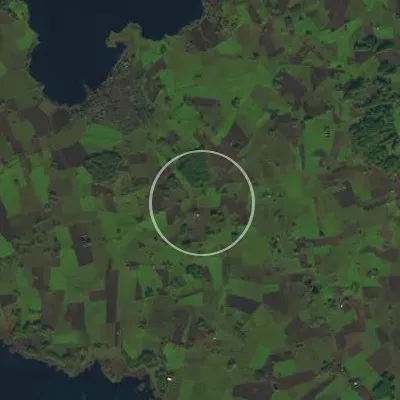
What really flips your sense of scale is realizing that this is not just any random bump or dent. This impact structure ranks among the more significant geological features of its kind in North America, in terms of size, scientific interest, and what it reveals about our planet’s violent past. Yet the people who have lived there over the last 150 years mostly went about their lives with no idea they were participants in this slow, quiet chapter of the story.
Think about that for a moment: while kids were riding bikes, businesses were opening and closing, and generations were passing the same houses down, researchers were slowly piecing together that the entire town rests in the footprint of a prehistoric asteroid strike. The contrast between the day-to-day concerns of human life and the deep-time violence written into the bedrock is stark. It is a reminder of how small our usual timelines are compared to what the planet has lived through.
From cosmic violence to scientific treasure trove
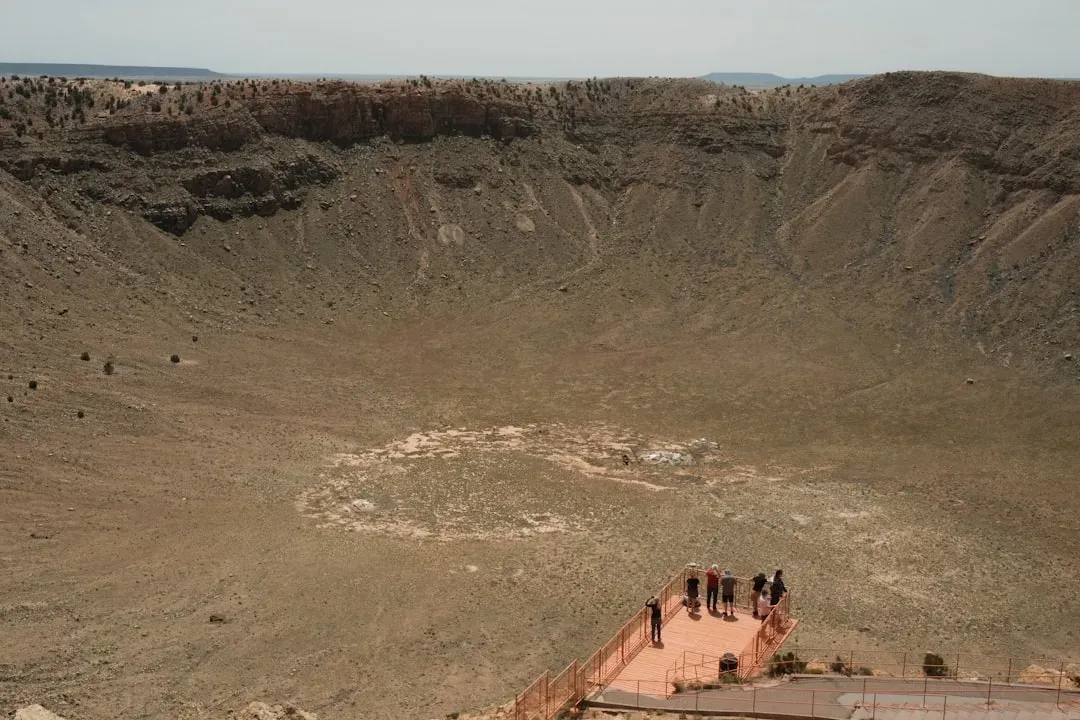
What began as a devastating impact became, over hundreds of millions of years, a scientific gold mine. Craters like the one under this town help scientists understand how often large objects have hit Earth, how those impacts affect the crust, and how life and environments recover afterwards. The structure beneath this community is part of a larger pattern that includes other famous impact sites across the continent, all of them chapters in a planetary survival story.
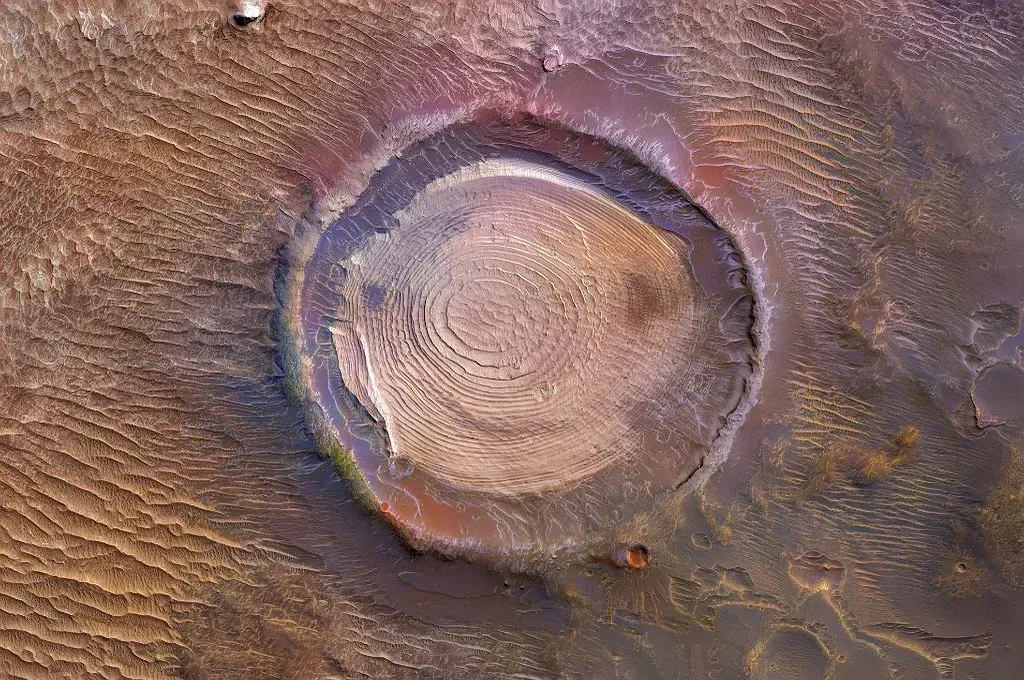
By studying the rocks and structures hidden below the town, geologists can test models of impact physics, compare features with craters on the Moon and Mars, and improve our understanding of what happens when an asteroid slams into a planet with an atmosphere and oceans. In a sense, the town is sitting on an open-air, real-life lab for planetary science, even if most residents are more focused on things like property taxes and Friday night ball games.
Living on deep time: how residents relate (or do not) to the crater beneath them
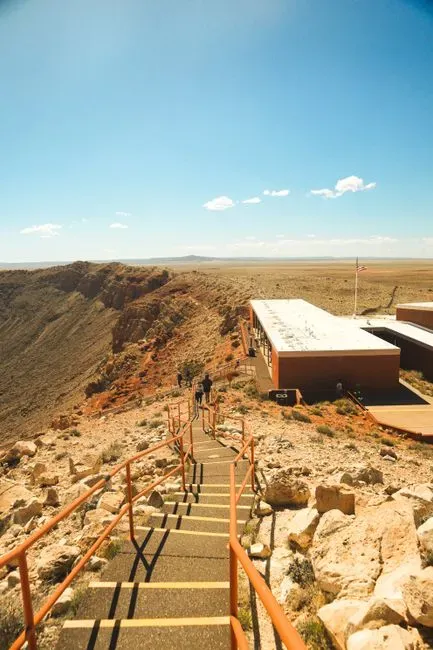
Most people who grow up in a place like this tend to see it through a very human lens: where the good fishing spots are, which streets flood after heavy rain, which neighborhoods are up-and-coming. The idea that their town is perched on a fossilized cosmic bruise usually only surfaces when local schools, museums, or visiting scientists talk about it. For some, it is a fun bit of trivia; for others, it becomes a source of quirky local pride.
There is a certain emotional whiplash in realizing your everyday world is built on something so ancient and violent. Some folks shrug and say it does not really change anything. Others feel a kind of awe, a sense that their hometown has a secret depth, as if a sleepy main street were hiding a backstage pass to the universe. Personally, I think that subtle shift – from seeing the ground as just “dirt” to seeing it as a silent witness to unimaginable events – can change the way you look at everything, even something as simple as a crack in the sidewalk.
Why this hidden crater should change how we see our own backyard
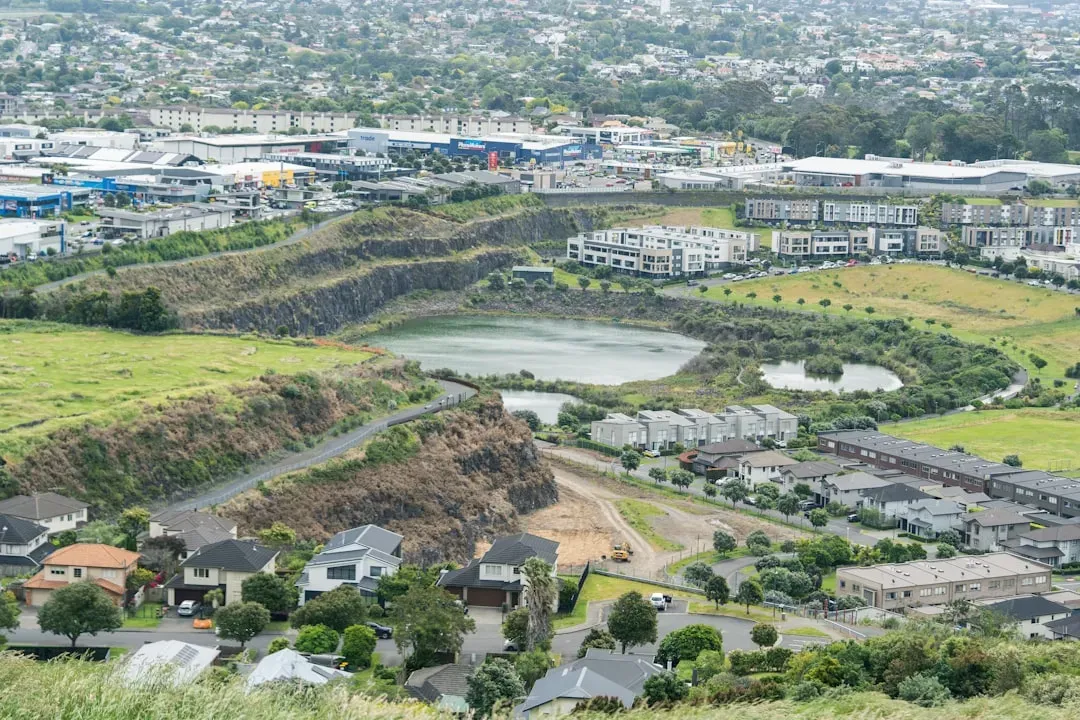
The fact that an entire American town can exist for about 150 years directly on top of a major impact crater without most residents ever thinking about it says something pretty profound. It suggests that our everyday landscapes are far stranger and more layered than they appear. Under the strip malls, cul-de-sacs, and old brick storefronts lie stories of volcanism, oceans that came and went, mountain ranges that rose and eroded away, and yes, occasionally, asteroids that smashed into the crust with world-changing force.
In my view, that makes this town more than just a geological curiosity; it makes it a kind of mirror. It reflects how easily we forget that we are living on a restless, battered planet with a very long memory. You do not have to be a scientist to feel something when you realize your street might sit over shattered rock left by a cosmic impact. It is a quiet, humbling reminder that the ground we take for granted has survived events we can barely imagine – and we are just passing through for a tiny, fragile moment. Did you expect that?