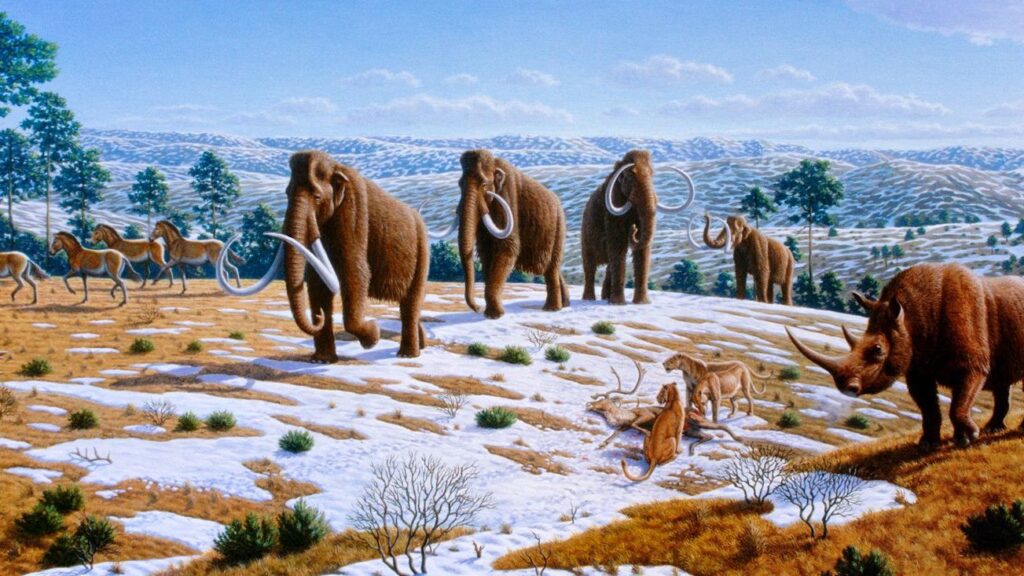
Imagine stepping outside your front door not into your suburban neighborhood, your city park, or your rural backyard, but into a world where the earth shook beneath the feet of creatures so enormous they would make a modern elephant seem almost modest. A world where the roar of predators echoed across open grasslands that stretched as far as the eye could see. That was North America, not millions of years ago in the age of dinosaurs, but just a geological heartbeat ago.
These megafauna, which is ancient Greek for “large animals,” thrived in a geological period called the Pleistocene epoch, which spans from 1.8 million to 12,000 years ago. Prior to the great extinctions, continental North America south of the ice sheets was one of the most diverse assemblages of large-bodied mammals the world has ever seen, rivaling or even surpassing the modern African savannas. The sheer scale of what once existed here is breathtaking. Let’s dive in.
What Is Megafauna, and Why Does It Matter?
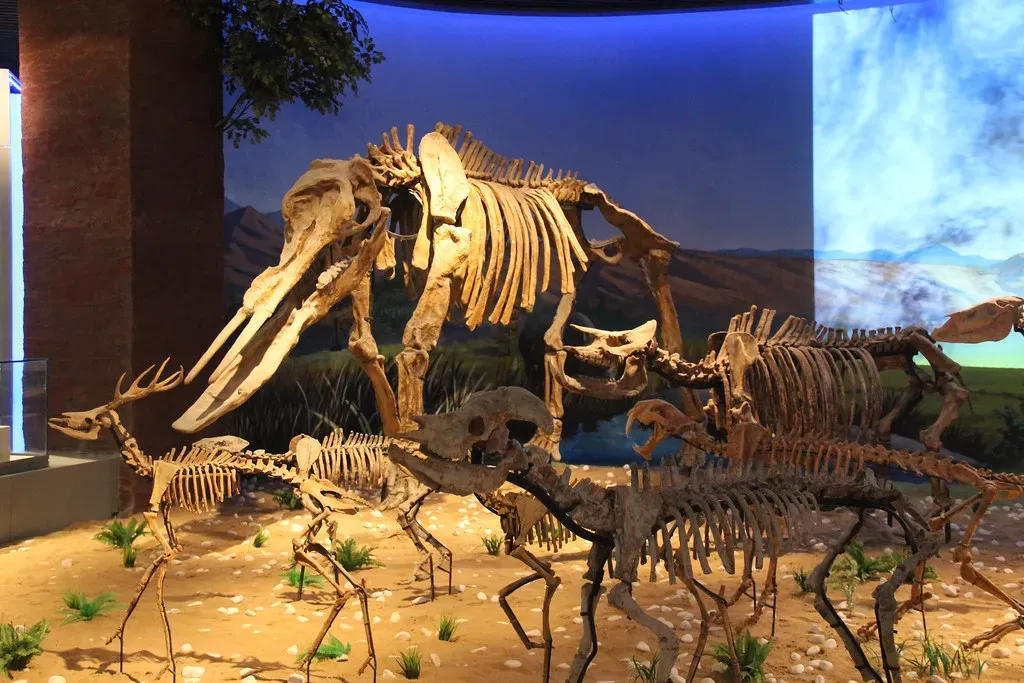
The term “megafauna” refers to large animals weighing over 100 pounds, or 45 kilograms. In North America, this designation applies to species of the Pleistocene Epoch, the Ice Age, which spanned from 2.6 million to 11,700 years ago. Think of it less like a scientific category and more like a roll call of the most spectacular creatures to ever walk this land.
These giant mammals had important roles for the healthy functioning of ecosystems, like redistributing nutrients through their waste and dispersing seeds. These mammals lived on Earth for millions of years and were very important to almost all land-based ecosystems. However, natural climate change and humans decreased their ability to survive. You could almost think of them as the original keystone species, the linchpins that held entire ecological webs together.
The Woolly Mammoth: The Continent’s Most Iconic Giant
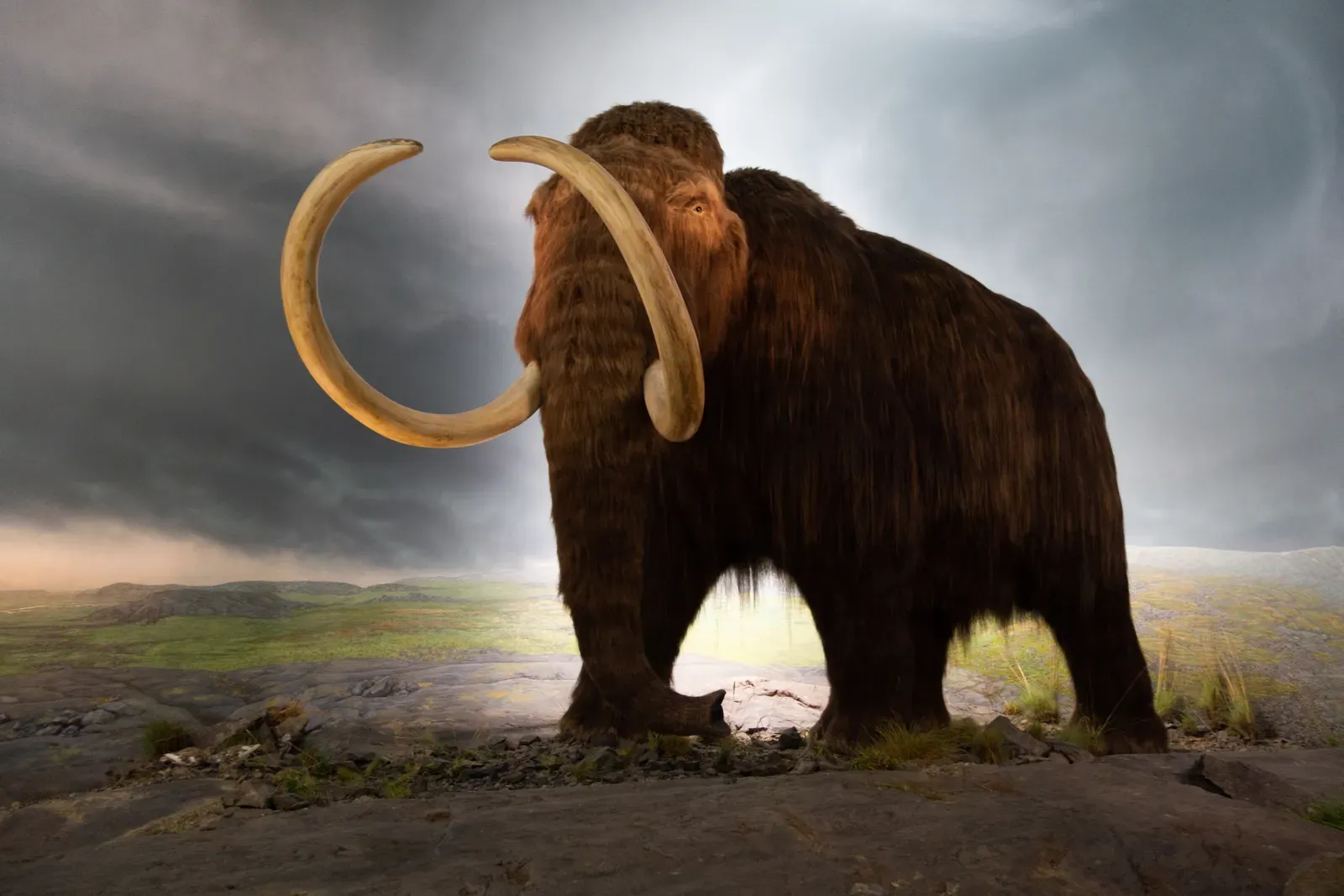
Honestly, when most people picture prehistoric North America, the woolly mammoth is the first thing that comes to mind. And it deserves every bit of that fame. The woolly mammoth is one of the most famous extinct Ice Age megafauna. Standing 12 feet tall at the shoulders and weighing six to eight tons, the woolly mammoth grazed the northern steppes of Ice Age North America using its colossal 15-foot curved tusks.
Woolly mammoths stood about 10 to 12 feet tall at the shoulder and weighed between 6 and 8 tons. These elephant relatives were well-suited to cold environments, with a thick coat of dark brown hair, an insulating fat layer up to 3 inches thick, and small ears to minimize heat loss. The earliest woolly mammoths evolved about 800,000 years ago, spreading as far as prehistoric Spain to the west and the Great Lakes region of North America to the east during their heyday. It’s a staggering thought, realizing that woolly mammoths were still alive in isolated Arctic pockets when the ancient Egyptians were already building their civilization.
The American Mastodon: A Forest Browser Hidden in Plain Sight
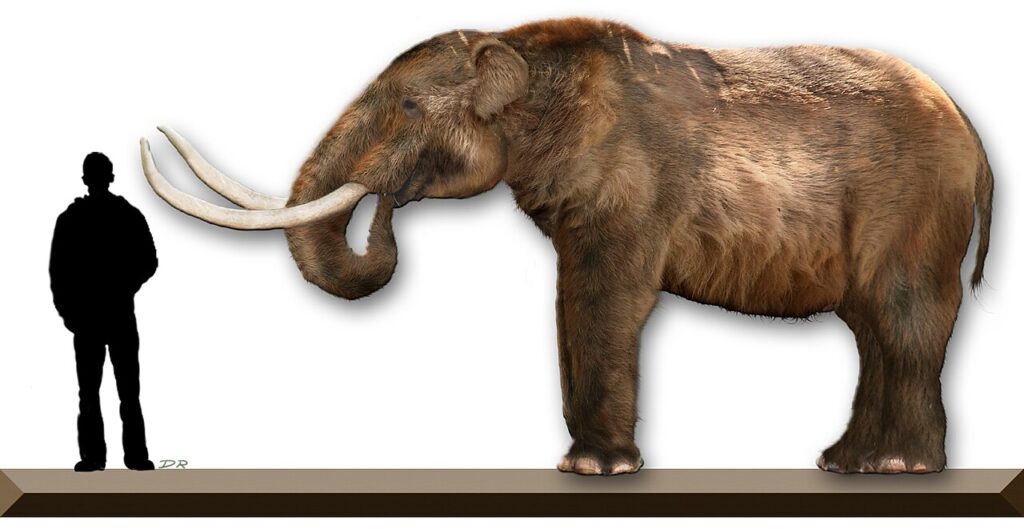
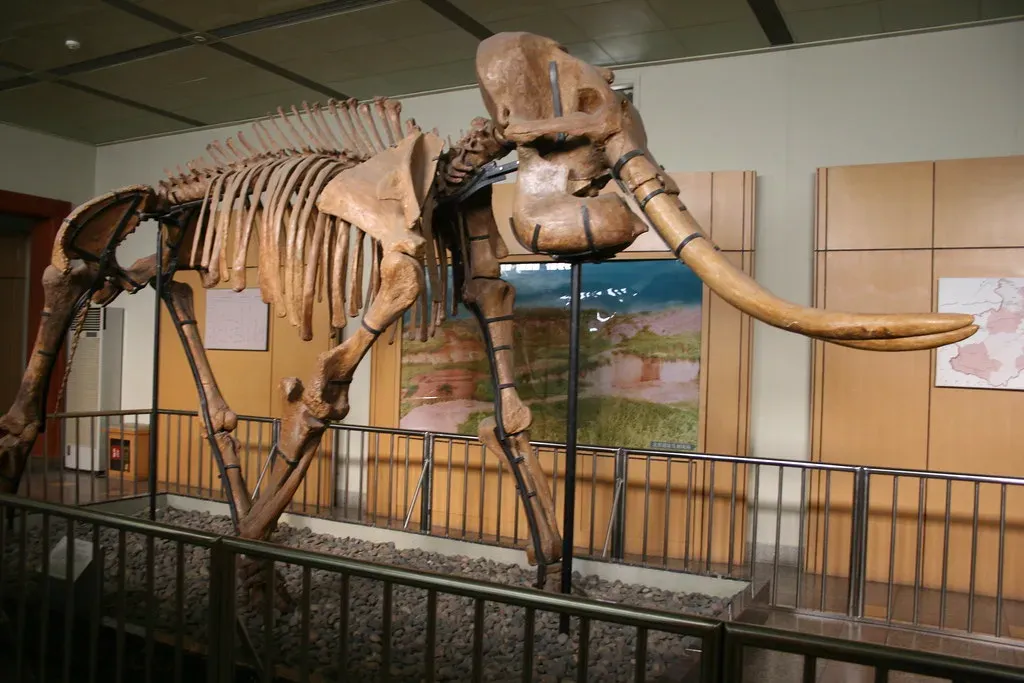
You might be tempted to mix up the mastodon with the woolly mammoth. They looked similar, sure, but they were quite different animals with very different lifestyles. Mastodons were smaller than mammoths, bearing a sloped forehead, straighter and shorter tusks, and they are easily distinguished from mammoths by their teeth. Mastodon molars have two rows of raised and rounded cusps that were effective at crushing branches and leaves. This morphology is consistent with their dietary preference as browsers.
The American mastodon was one of the most widespread proboscideans in North America during the Pleistocene epoch. Its remains have been found in both Alaska and Florida, New England, and even Mexico and Honduras. The bones of at least 140 mastodons and 18 mammoths have been found in New York state alone. That statistic, I think, really hammers home just how abundant these creatures once were, roaming backyards that are now parking lots and subdivisions.
Smilodon: The Saber-Toothed Cat That Ruled the Pleistocene
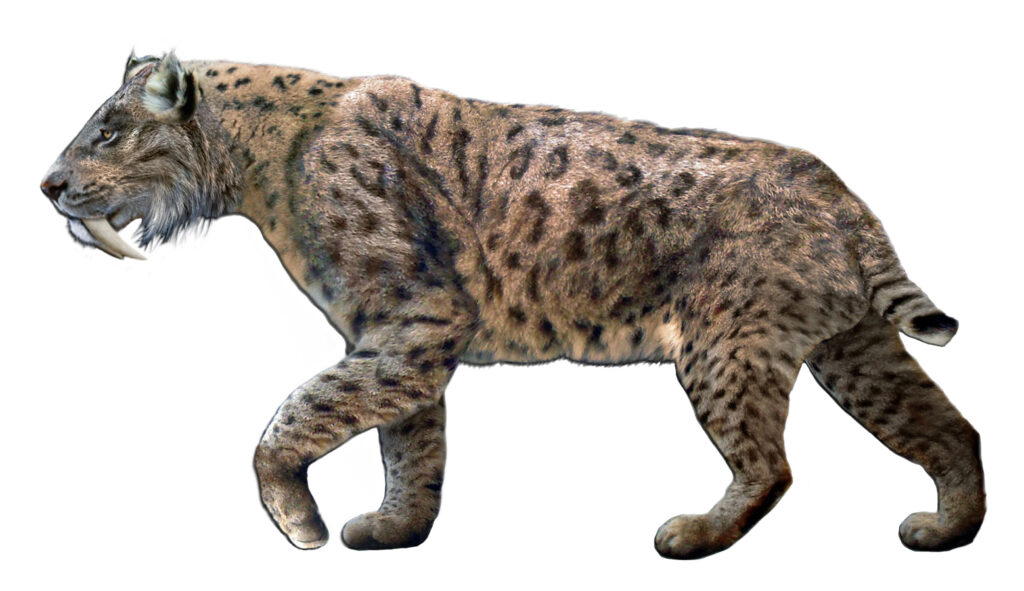
Here’s the thing about Smilodon that people often get wrong. It was not a tiger. It was not even closely related to tigers. It was something altogether stranger and more magnificent. Smilodon lived during the Pleistocene epoch from 2.5 million years ago to 10,000 years ago, and was perhaps the most recent of the saber-toothed cats. Its species S. fatalis lived in a variety of habitats, being able to inhabit open grassland and parkland, marginal woodland-grassland settings, and closed forests.
The most distinctive features of Smilodons are their pair of large upper canine teeth that were around 28 centimeters long in the largest species, giving them the colloquial name “saber-toothed cats.” An apex predator, Smilodon primarily hunted large mammals. Isotopes preserved in the bones of S. fatalis at the La Brea Tar Pits reveal that ruminants like ancient bison and camels were most commonly taken by the cats there. Highly specialized prey preferences is what likely doomed Smilodon, while coyotes managed to survive the ecological shift by being highly flexible and taking prey as small as rats or rabbits, in addition to scavenging.
The Dire Wolf: More Than a Myth
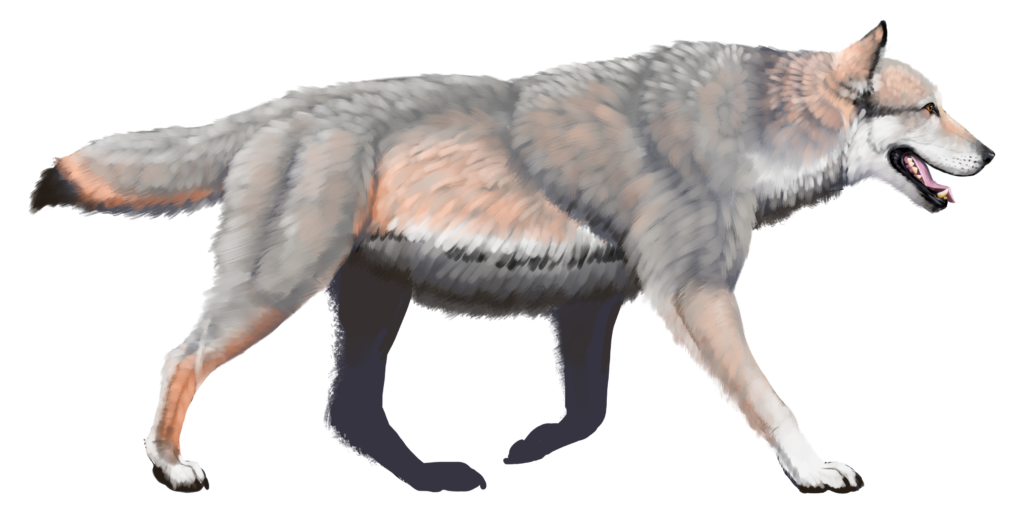
Thanks to a certain popular television series, the dire wolf became something of a pop culture icon. The real animal, though, was far more scientifically fascinating than any fictional version. The dire wolf has captured popular imagination through fiction, but the reality of this prehistoric predator is even more fascinating. Recently reclassified into its own genus based on genetic evidence, the dire wolf was not a true wolf but rather the last member of an ancient lineage that evolved in the Americas.
For over 200,000 years, dire wolves roamed across North America, from southern Alberta, Canada, to Florida, and even down into Chile. The ancient animals were megafauna hunters, ultimately disappearing with the last giant ground sloths and mastodons about 13,000 years ago. Dire wolves competed with a broad variety of other large carnivores, including saber-toothed cats like Smilodon, the American lion, and larger individuals of familiar species such as grizzly bears and jaguars. Dire wolves were not necessarily the apex predator in their environments, and in addition to taking down ancient horses they could have bullied cougars, coyotes, and even gray wolves off their kills.
The Giant Short-Faced Bear: The Largest Land Carnivore of Its Time
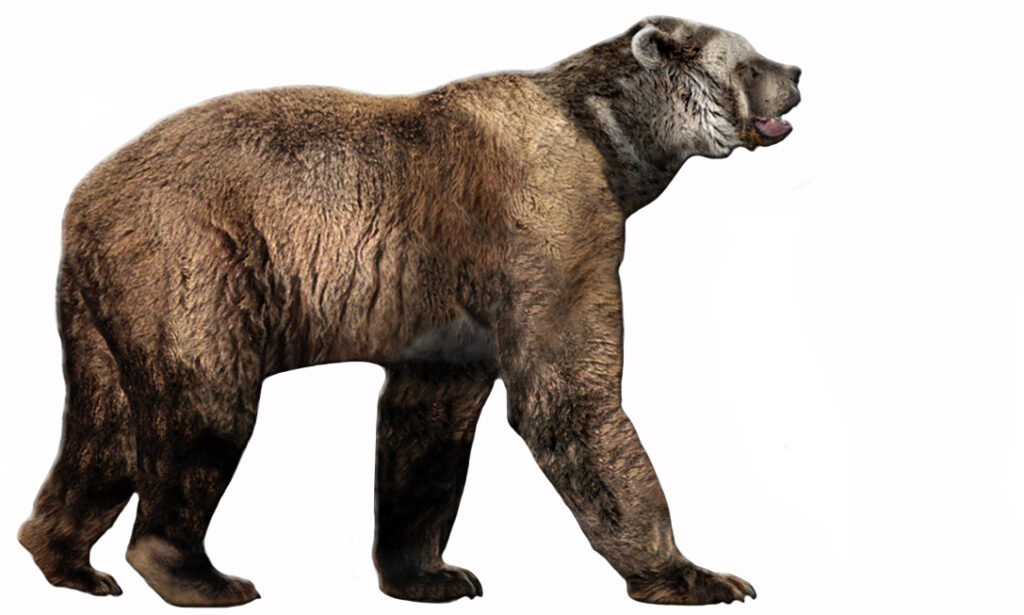
If there is one animal on this list that should stop you cold with sheer disbelief, it is the giant short-faced bear. Nothing quite prepares you for the scale of this creature. The giant short-faced bear was the largest carnivorous mammal to ever roam North America. Standing on its hind legs, an adult giant short-faced bear boasted a vertical reach of more than 14 feet.
Short-faced bears were among the largest terrestrial mammalian carnivores to ever live in North America, with males potentially weighing up to 2,110 pounds and standing 5.5 feet at the shoulder on all fours, or up to 12 feet tall on their hind legs. Their lean, long-legged build suggested they were capable runners, possibly reaching speeds over 40 miles per hour. These bears, with their powerful jaws and shearing teeth, were carnivorous, preying on large herbivores like bison, muskoxen, and ground sloths across western North America. It’s hard to say for sure, but this animal was almost certainly the most terrifying thing walking the Pleistocene landscape.
The Giant Ground Sloth and the Glyptodon: Prehistoric Oddities
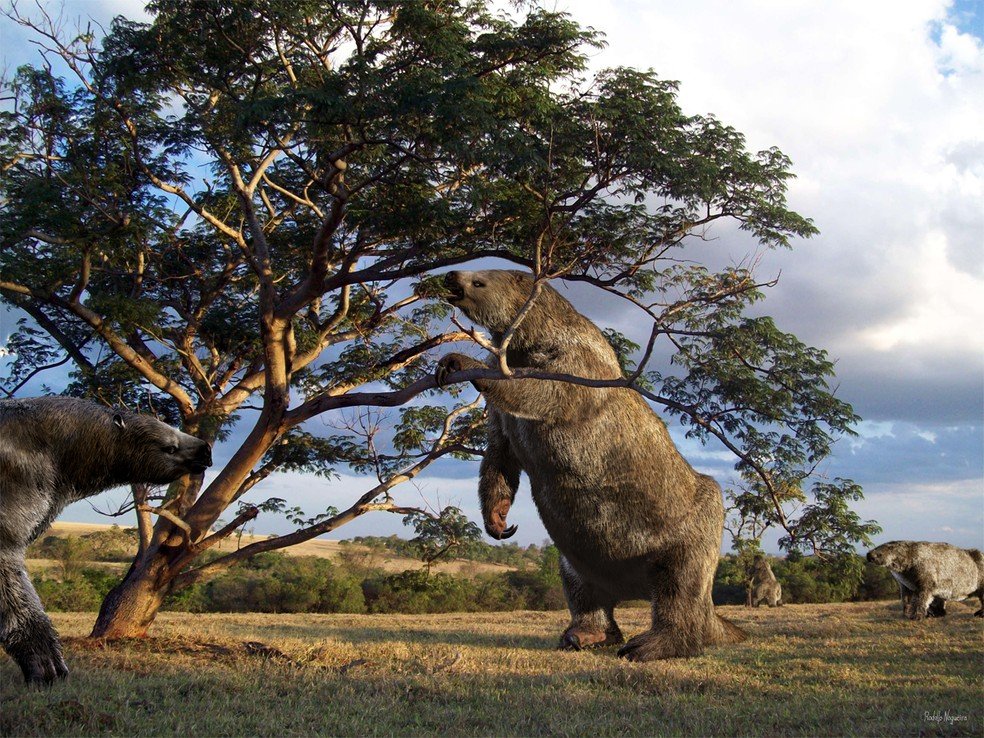
Let’s talk about two creatures that look like something out of a science fiction film. The giant ground sloth and the glyptodon were both real, both spectacular, and both utterly unlike anything alive today. Giant ground sloths, such as Megalonyx jeffersonii, were heavily built herbivores, reaching lengths of about 10 feet and weighing up to 2,200 pounds. These sloths could rear up on their hind legs, using their stout tails for support, to feed on tree leaves and branches with their large claws.
Megalonyx jeffersonii had a wide distribution across the contiguous United States, extending into parts of southern Canada and Alaska during warmer interglacial periods. Their diet consisted primarily of leaves and twigs from trees found in moist habitats, such as willows. Then there were the glyptodonts, essentially car-sized armadillos. Isotopes preserved in the bones of Smilodon at the La Brea Tar Pits suggest ruminants were most commonly targeted, though Smilodon may have also occasionally preyed upon Glyptotherium, based on a skull from a juvenile found in Arizona that bears distinctive elliptical puncture marks best matching those of Smilodon, indicating that the predator successfully bit into the skull through the glyptodont’s armored cephalic shield.
The Great Extinction: What Actually Wiped Them All Out?
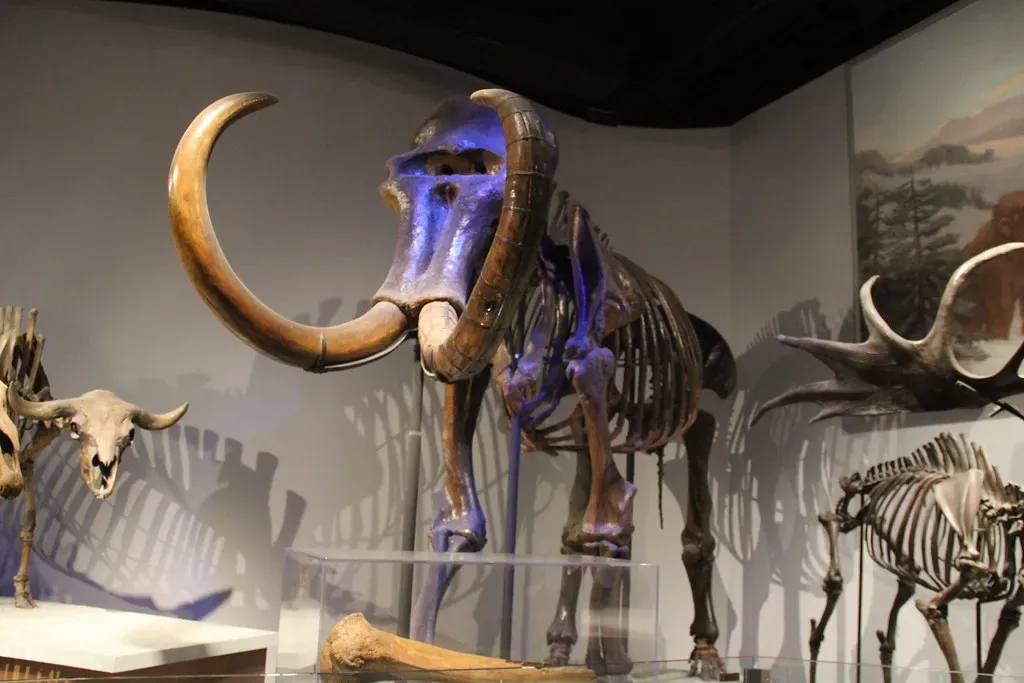
This is the question that paleontologists, archaeologists, and anyone who has ever stared at a mammoth skeleton in a museum has wanted answered. What killed all these magnificent animals? The disappearance of North America’s megafauna at the close of the Pleistocene Epoch, approximately 13,000 years ago, remains a subject of scientific debate. Multiple hypotheses attempt to explain this widespread extinction event, suggesting it was a complex interplay of factors rather than a single cause.
The idea that humans wiped out North America’s giant mammals is known as the “overkill hypothesis.” First proposed by geoscientist Paul Martin more than 40 years ago, it was inspired in part by advances in radiocarbon dating, which seemed to indicate an overlap between the arrival of the first humans in North America and the demise of the great mammals. Yet the picture is far from simple. Between roughly three-quarters and nine-tenths of the northeastern megafauna were gone before humans ever came on the scene. The mass extinctions may have also been triggered by a sudden climatic shift that rapidly cooled the planet 12,800 years ago, known as the Younger Dryas, or animals could have been stricken with diseases carried by paleo-humans and their dogs. Still, the large Late Pleistocene carnivores that were more carnivorous than their competitors faced greater vulnerability to extinction. The cave lion, saber-toothed cat, and short-faced bear all went extinct at the same time as their large megafaunal prey.
What We Lost and What It Still Means Today
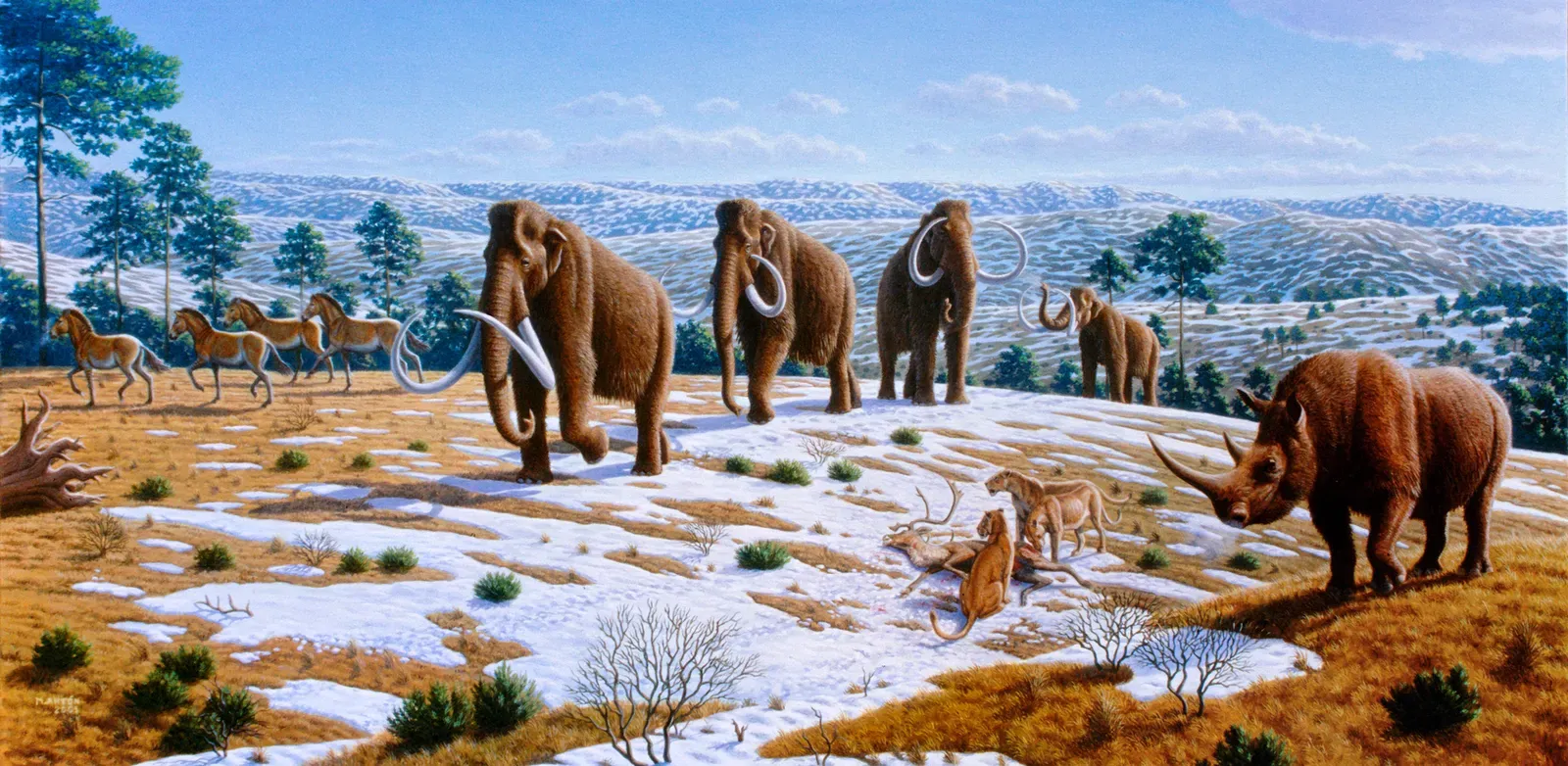
It is easy to look at extinction as something that happened to other creatures, in other times, in other places. But the loss of North America’s megafauna was not just a distant tragedy. It reshaped this entire continent in ways we are still living with. Paul S. Martin, originator of the Pleistocene overkill hypothesis, states that present ecological communities in North America do not function appropriately in the absence of megafauna, because much of the native flora and fauna evolved under the influence of large mammals.
Studying these ancient animals also gives scientists important information that helps them understand the risks that today’s living animals face in our world. Many biologists believe the exceptional speed of modern pronghorns, which can sustain speeds of over 50 mph despite no living predator being fast enough to catch them, evolved as a response to being hunted by American cheetahs. In other words, the ghosts of these giants are still with us, written into the bodies and behaviors of the animals we see today. That pronghorn sprinting across the Wyoming plains is, in a very real sense, still running from something that has been gone for over ten thousand years.
Conclusion
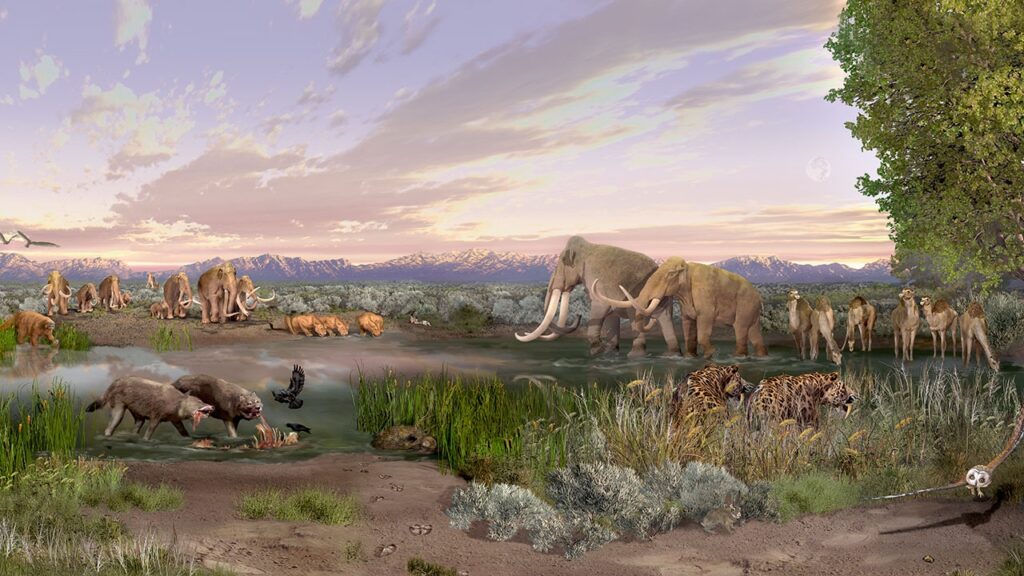
The ancient megafauna of North America were not curiosities or distant monsters from another world. They were real, they were here, and the land beneath your feet was shaped by their weight, their grazing, their predation, and ultimately their loss. The woolly mammoth, the saber-toothed cat, the dire wolf, the short-faced bear, the giant sloth. These were the living heartbeat of this continent for millions of years.
Their stories remind us that extinction is neither rare nor reversible. What took millions of years to evolve can disappear in what amounts to a geological blink. The debate over exactly what killed them continues, and honestly, the true answer is probably an uncomfortable mixture of climate change, human activity, disease, and ecological collapse working all at once. What endures, though, is the sheer wonder of knowing these animals existed. The next time you walk through an open field or a quiet forest, spare a thought for what once moved through those same spaces. The land remembers, even when we forget. What would North America look like today if they had survived?