

Walk through almost any ancient story tradition and something strange happens: sooner or later, a dragon shows up. From the thunderous sky serpents of China to the treasure-hoarding beasts of Europe and the feathered serpents of Mesoamerica, cultures that never met somehow imagined eerily similar monsters. That is weird enough on its own – but it becomes even more intriguing once you add in a quiet revolution in modern palaeontology.
Over the past few decades, some researchers have been asking a deceptively simple question: what if many of these dragons were not pure fantasy at all, but the best guesses of ancient people trying to explain real, mysterious bones in the ground? When you picture a farmer unearthing a gigantic, curved tooth or a rib longer than a person is tall, the leap from fossil to dragon suddenly does not feel so big. The result is a story where myth, deep time, and science start to overlap in some surprisingly satisfying ways.
Why dragons keep turning up almost everywhere
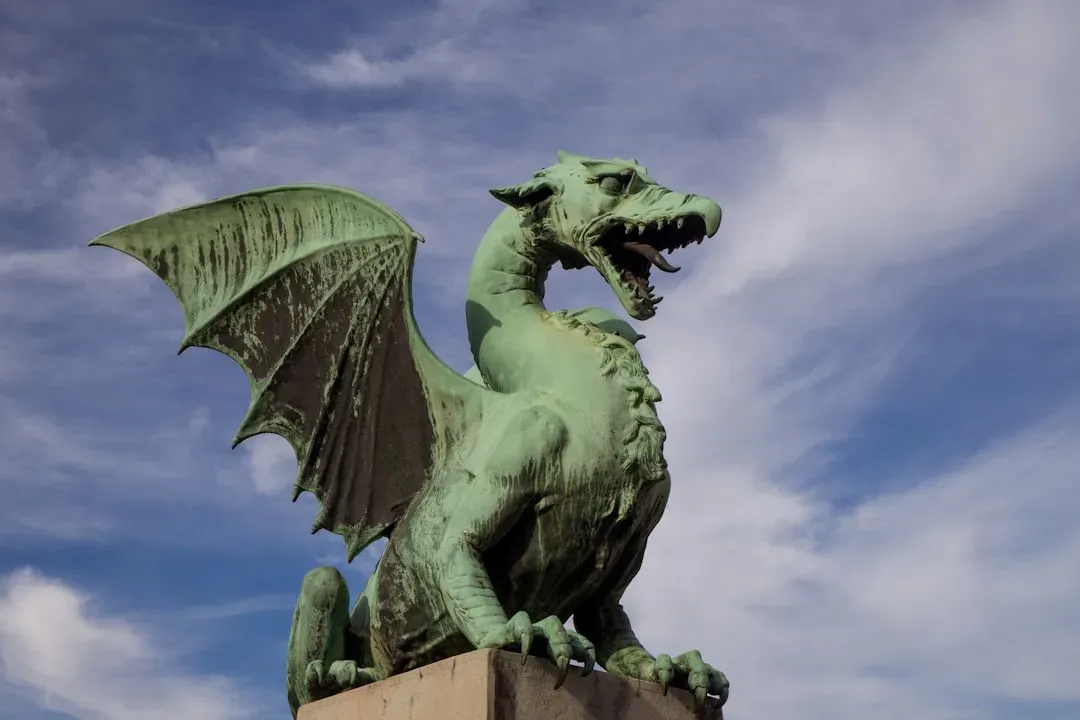
One of the most striking things about dragon myths is how global they are. Europe imagines fire-breathing winged reptiles, China tells of powerful, long-bodied sky dragons, Indigenous Australian stories speak of enormous water serpents, and West African folklore features snake-like river monsters with supernatural strength. These cultures developed on different continents, often separated by oceans and millennia, yet the basic template of a massive, reptile-like creature that inspires fear and awe repeats again and again.
There are a few reasons anthropologists think this pattern keeps turning up. Humans are especially sensitive to certain shapes and threats, particularly the coiled or slithering form of snakes and the predatory outline of large carnivores. Blend those instinctive fears with the human tendency to exaggerate, tell stories, and explain the unknown, and you get a creature that is part snake, part big cat, part storm, and entirely unforgettable. Dragons seem to be what happens when every deep-rooted fear of teeth, claws, and the dark is rolled into one dramatic symbol.
The fossil factor: giant bones with no manual
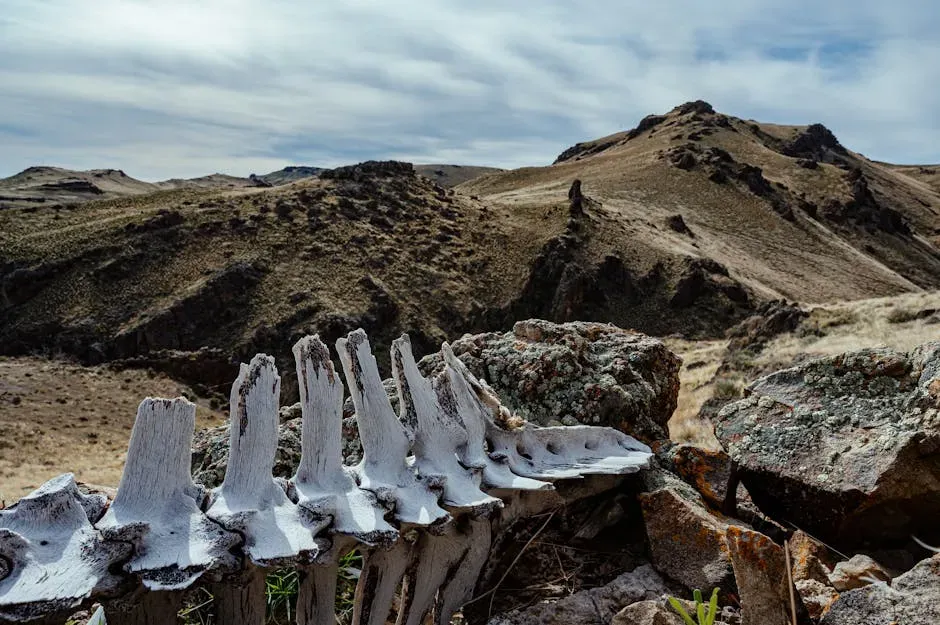
Now imagine trying to make sense of colossal bones without any concept of extinction, geological time, or dinosaurs. In parts of ancient Greece, people found enormous skulls and femurs embedded in cliffs and hillsides; some were probably mammoth or mastodon remains, others may have belonged to extinct giant mammals. In China, large fossil bones have been collected and ground into traditional medicinal powders for centuries, long before scientists labeled them dinosaur fossils. For most of history, if you dug up a skeleton far bigger than any living animal you knew, there was no easy box to put it in.
Palaeontologists and historians of science have argued that many communities did the most natural thing: they connected these discoveries to the creatures they already knew from stories. A huge curved rib might belong to an earth serpent, an oversized skull could become the head of a long-dead dragon, and scattered bones hinted at legendary battles between heroes and monsters. Without knowing about species that lived millions of years before humans, people built the best narrative they could from the evidence right in front of them – and that narrative often looked a lot like a dragon legend.
From dinosaurs to dragons: what ancient people might have seen
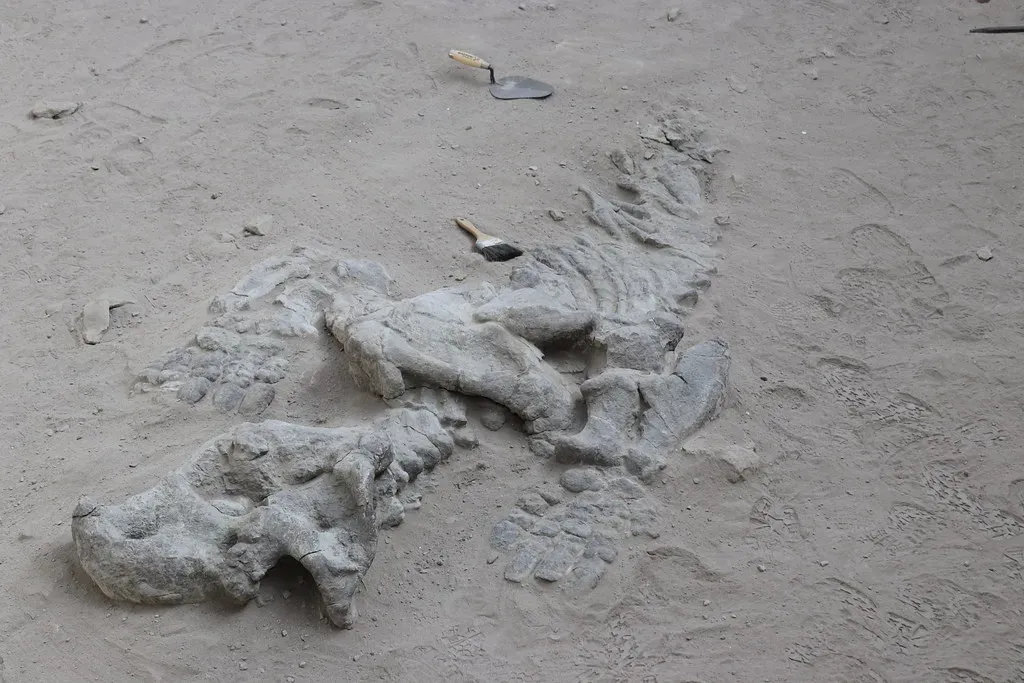
Modern science tells us that dinosaurs and other prehistoric creatures left their remains across vast areas of Asia, Europe, Africa, and the Americas. Many of these fossils sit relatively close to the surface, especially in eroded cliffs, riverbanks, deserts, and mountains. It is not hard to imagine shepherds, miners, or farmers stumbling across a partial skeleton: a row of vertebrae, a massive limb bone, or a nest of fossilized eggs. Without the context of deep time, these would feel like puzzle pieces from a monstrous, unfamiliar animal.
Some researchers think specific dragon traits map suspiciously well onto certain types of fossils. Long-necked sauropod vertebrae might suggest snake-like or serpentine bodies that stretch across valleys, while the skulls of large theropod dinosaurs, with their teeth and eye sockets, could inspire images of fearsome heads breathing destructive force. Even fossilized wing bones of giant pterosaurs, when found fragmented, might be reinterpreted as proof of winged reptiles haunting the skies. The exact matches are always speculative, but the broader pattern – giant bones giving rise to giant stories – makes intuitive sense.
Why so many dragons love caves, mountains, and rivers
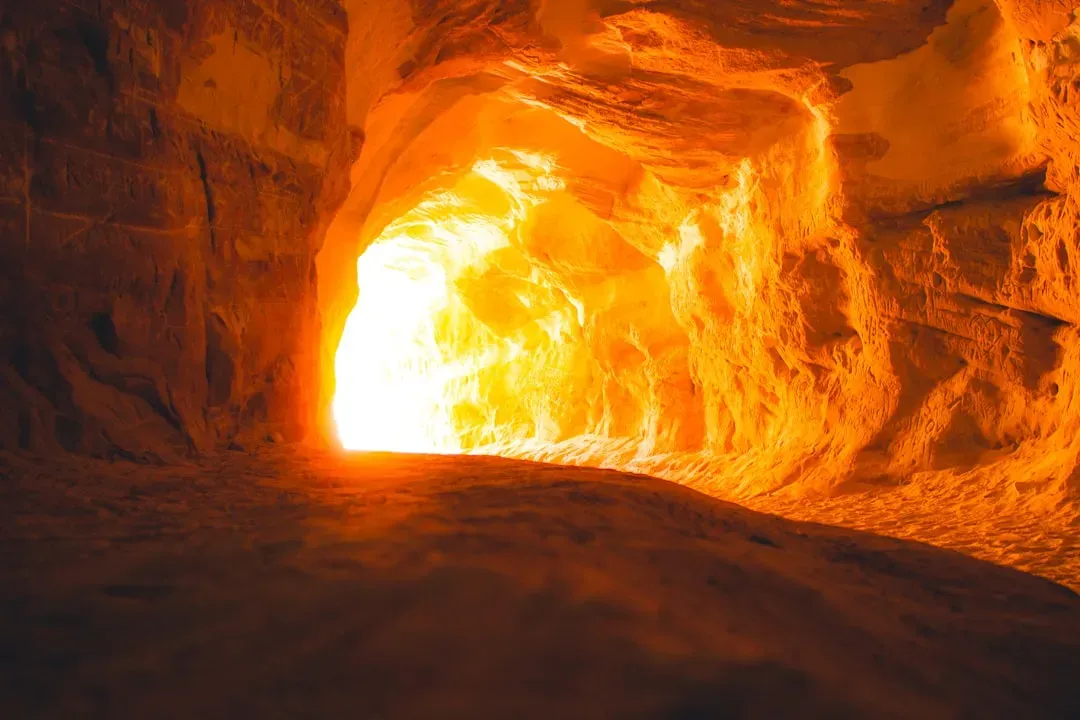
Look closely at where dragons are said to live, and you start seeing geological logic hiding under the folklore. In European tales, dragons lurk in caves or curl around mountain peaks. In Chinese and Southeast Asian stories, dragons control rivers, rain, and storms, often associated with mountains, lakes, or the sea. In many Indigenous traditions elsewhere, huge serpent beings inhabit waterholes, gorges, or deep ravines. These are exactly the kinds of places where erosion reveals or concentrates unusual rock formations and ancient bones.
Mountains and rocky outcrops frequently expose fossil layers, which means weathering can slowly reveal giant bones over generations. Riverbanks and floodplains can wash out skeletons buried in ancient sediments, leaving jawbones or vertebrae exposed after storms. If you find an enormous skull in a cliff, it is not a stretch to imagine the cliff as a dragon’s lair. If a skeleton appears after a flood, you might decide a monstrous water spirit had been disturbed. Myth wraps around landscape and fossils together, creating a story world that feels anchored to real places people could actually visit.
Human brains are wired for monsters
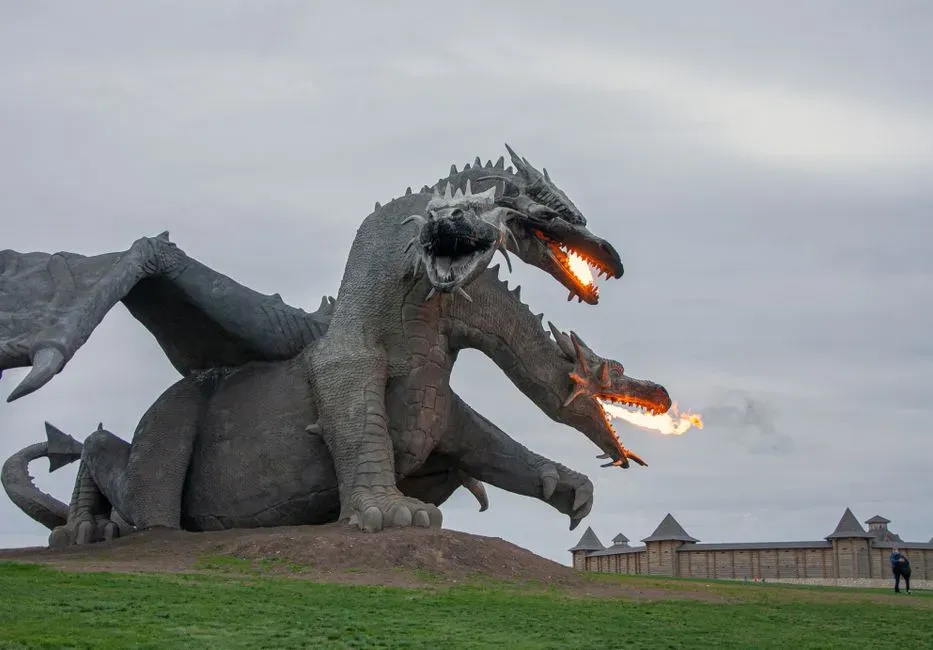
Even without fossils, there is another powerful force pushing cultures toward dragon-like creatures: the way our brains handle danger. Psychologists have pointed out that humans are especially quick to notice and remember animals that could hurt us, like snakes, spiders, and large predators. Mix together a snake’s flexibility, a big cat’s jaws, and the sudden terror of a storm, and you get a creature that our minds simply do not forget. A dragon is like a fear cocktail engineered to grab attention and stick in memory.
This bias toward dramatic threats shapes stories because it shapes what people talk about and pass down. A tale about a slightly larger-than-average goat does not spread very far, but a story about a vast, scale-covered beast that breathes fire or controls the rain definitely does. Over generations, storytellers add details, combine traits, and dial up the drama. Even if some dragon myths started from genuine fossil sightings, others may have emerged almost entirely from that mental recipe: take all your worst nightmares, exaggerate them, and give them a name.
When science meets myth: how palaeontologists study legends
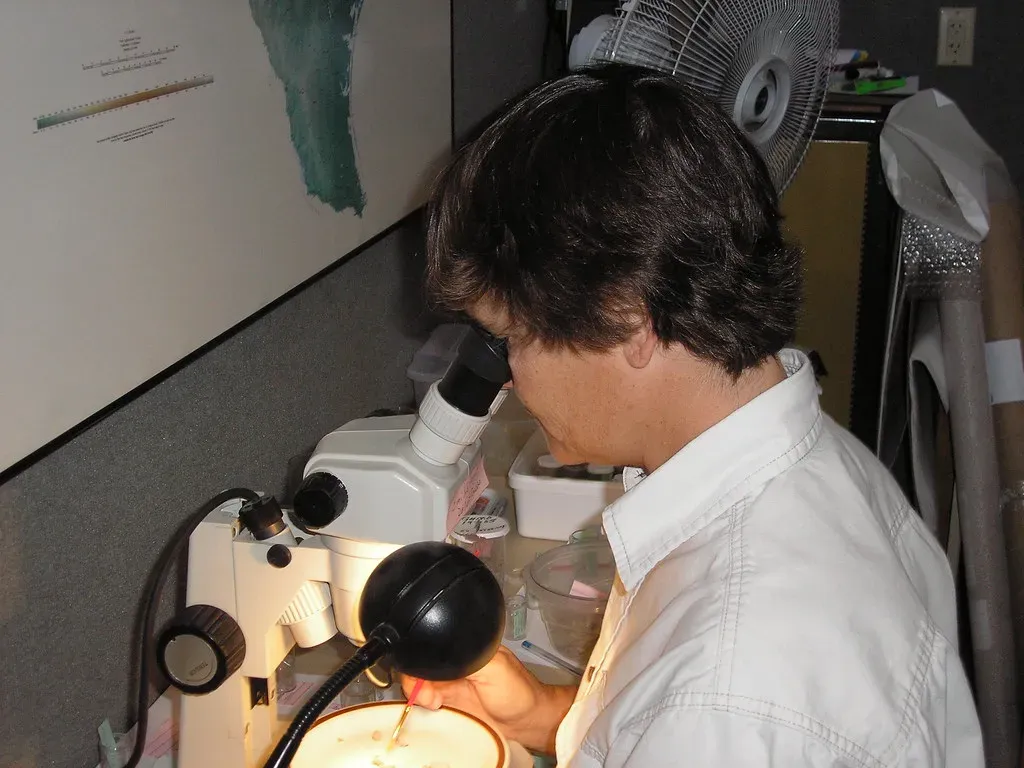
Some modern palaeontologists and historians have started treating myths as clues rather than as throwaway fantasies. They look at where certain stories are clustered on the map, what kind of creatures those stories describe, and what local geology looks like. If a particular valley is famous for tales of giant lizard-like monsters guarding treasure, and that same area happens to be rich in large vertebrate fossils, that overlap is at least worth a second look. There will never be absolute proof that one specific skeleton inspired one specific legend, but patterns can still tell us something.
In a few cases, researchers have argued that ancient communities were surprisingly good at reading bones. Some classical writers interpreted huge remains as evidence of long-extinct giants or beastly races, which is actually not far from the modern idea of vanished species. In other regions, traditional stories speak of earth-shaking creatures that lived in an earlier age and were wiped out by floods or cosmic battles. Through a scientific lens, these myths start to look like intuitive, rough attempts at palaeontology: people noticing that the world once contained animals very different from those alive today, and preserving that realization in story form.
Why the dragon myth still works in the age of fossils
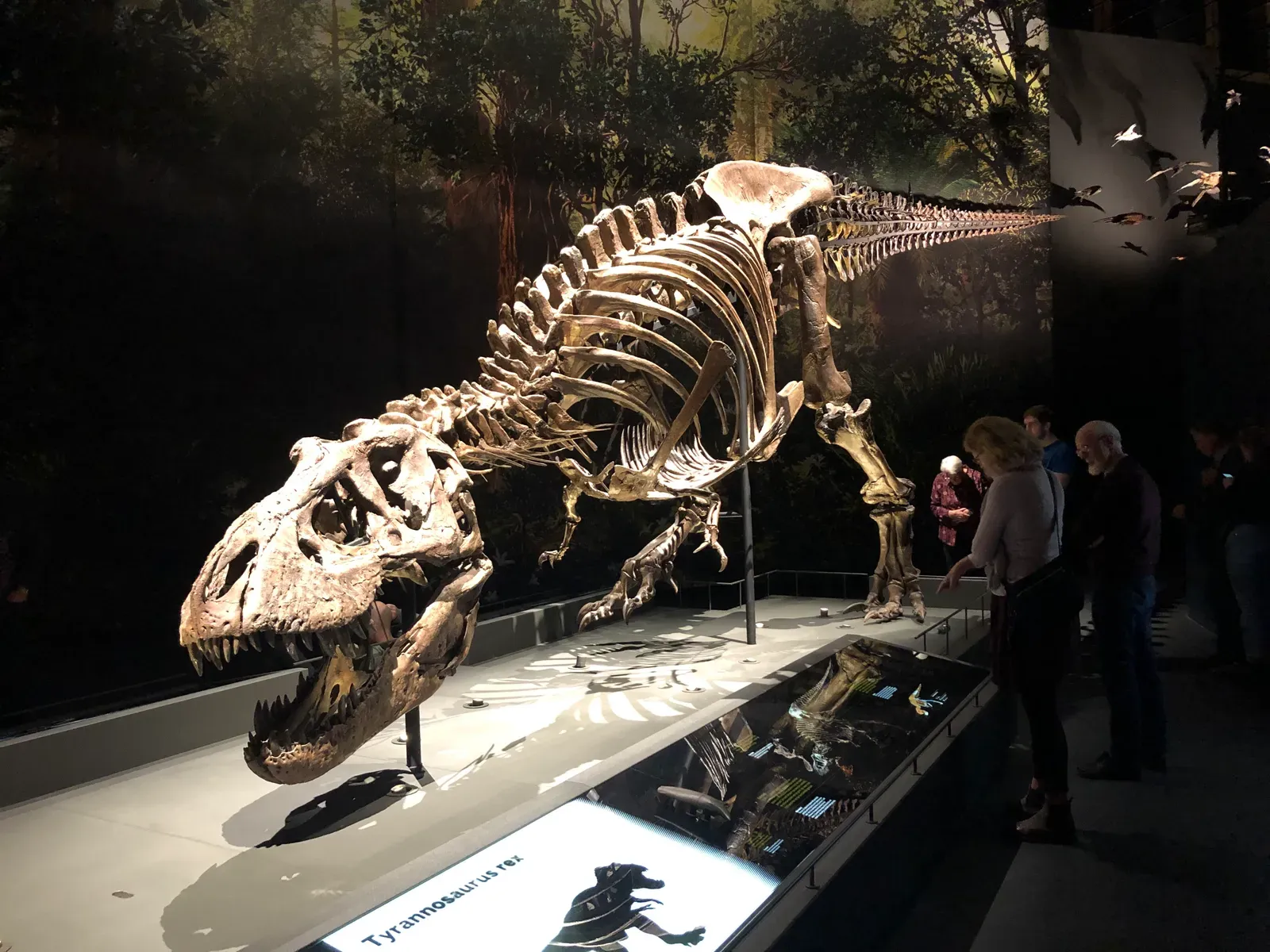
You might think that once people understood dinosaurs, dragons would feel outdated, but in practice the exact opposite happened. As soon as nineteenth- and twentieth-century science revealed skeleton after skeleton of enormous predators, the public imagination immediately linked them to dragons. Popular culture now often blurs the line, giving dragons dinosaur-like features and depicting prehistoric animals as if they were mythical beasts brought to life. It turns out that the dragon idea was waiting for the fossil record to catch up and provide real-world analogues.
The emotional core of the dragon has not gone anywhere either. Even with all our technology, many of us still feel a shiver looking at a reconstructed Tyrannosaurus skull or a towering sauropod skeleton. It taps into the same ancient mixture of fear and wonder that once animated stories told around fires or at temple festivals. Whether we meet the monster in a cave painting, a medieval manuscript, or a natural history museum, we are still reacting to the same underlying idea: that the Earth can produce creatures far more powerful and strange than we are.
So were dragons real? A grounded, opinionated answer

On a strict, biological level, there is no firm evidence that true dragons – fire-breathing, winged, magic-wielding reptiles – ever walked the Earth. Fossils show us extraordinary animals, from enormous dinosaurs to flying pterosaurs and gigantic crocodile relatives, but nothing matches the classic dragon blueprint perfectly. That part of the legend belongs to human creativity, shaped by fear, imagination, and the need to tell big, emotionally charged stories. Still, saying dragons are only imaginary feels like it misses something important about how people have experienced the world.
If you ask whether dragon myths are rooted in reality, a more honest answer is that they sit on a fault line where three things meet: real fossils, real predators, and very real human psychology. Ancient people almost certainly found giant bones and did their best to explain them; they lived alongside dangerous animals and volatile landscapes that felt alive; and they had minds wired to amplify threats into monsters. Put all of that together and, in a sense, dragons are as real as thunderstorms or earthquakes: not as literal animals, but as the stories we build to make sense of forces much bigger than ourselves. The next time you see a fossil skeleton towering above you, it is worth asking yourself – if you had found this centuries ago, with no science to guide you, what kind of dragon would you have imagined?