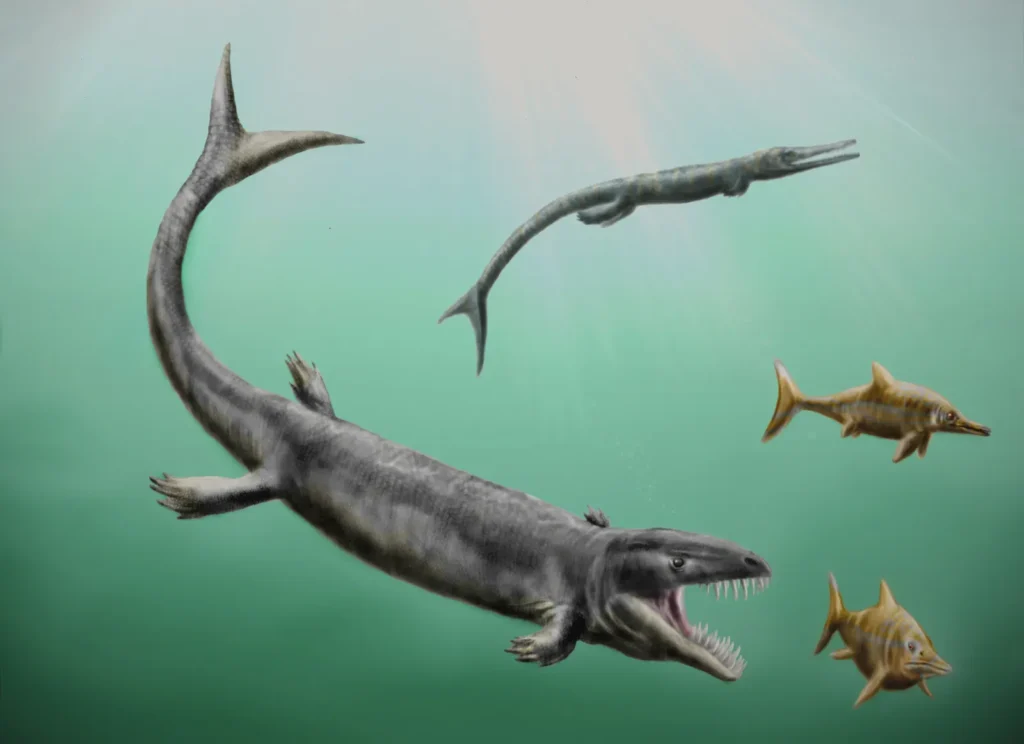
Have you ever wondered what lurked beneath the waves millions of years ago? When dinosaurs roamed the land, the oceans were ruled by their own set of magnificent beasts. These weren’t fish or early whales, but something altogether different. Marine reptiles dominated the ancient seas for millions of years, evolving into shapes and sizes that would seem impossible today.
During the Mesozoic era, many groups of reptiles became adapted to life in the seas, including such familiar clades as the ichthyosaurs, plesiosaurs, and mosasaurs. These creatures weren’t dinosaurs, though many people assume they were. They represented something far more fascinating: land animals that returned to the water and thrived there. Their story reveals not just how life adapts, but how spectacularly it can transform when given enough time.
When Reptiles Returned to the Sea
The earliest marine reptile was Mesosaurus, which arose in the Permian period of the Paleozoic era, while during the Mesozoic era, many groups of reptiles became adapted to life in the seas. Think about that for a second: these animals’ ancestors had already conquered land, breathing air and laying eggs on solid ground. Then they turned around and went back into the ocean.
This wasn’t a quick change. Evolution doesn’t work like flipping a switch. Most Mesozoic marine reptile clades exhibit a cosmopolitan distribution very early in their evolutionary history, with the acquisition of morphological adaptations to a fully aquatic life combined with special thermophysiological characteristics making these animals efficient long-distance open-marine cruisers. Over millions of years, limbs gradually transformed into flippers, tails developed flukes for propulsion, and bodies became sleek and streamlined.
What drove this incredible transformation? Opportunity, pure and simple. The oceans were full of food, and the reptiles that could exploit those resources gained an evolutionary advantage that proved nearly unstoppable.
The Ichthyosaurs: Ocean Speedsters
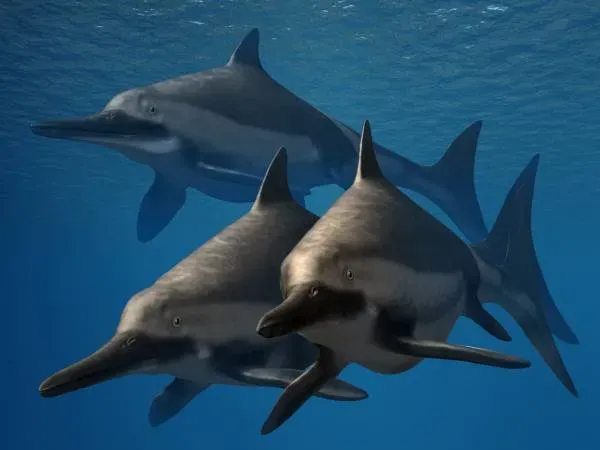
Ichthyosaurs were marine reptiles with a dolphin-like body shape that flourished during the Mesozoic era. If you saw one swimming past you today, you’d probably think it was a dolphin or maybe a small whale. That’s convergent evolution at work: when two completely different animals face the same environmental challenges, they often end up looking remarkably similar.
These creatures were built for speed. The earliest ichthyosaurs had long, flexible bodies and probably swam by undulating like living eels, while more advanced ichthyosaurs had compact, very fishlike bodies with crescent-shaped tails. Some species grew to incredible sizes, with recent discoveries suggesting lengths exceeding twenty meters. Their eyes were enormous, sometimes reaching over nine inches across, allowing them to hunt in the darker depths of ancient oceans.
The big eyes of the ichthyosaur Ophthalmosaurus offer a clue that some marine reptiles dove into darker waters in search of food, with many ichthyosaur species having large eyes supported inside by thin bones arranged in a ring. These adaptations made ichthyosaurs supremely efficient predators of fish and squid.
Plesiosaurs: The Long-Necked Mysteries
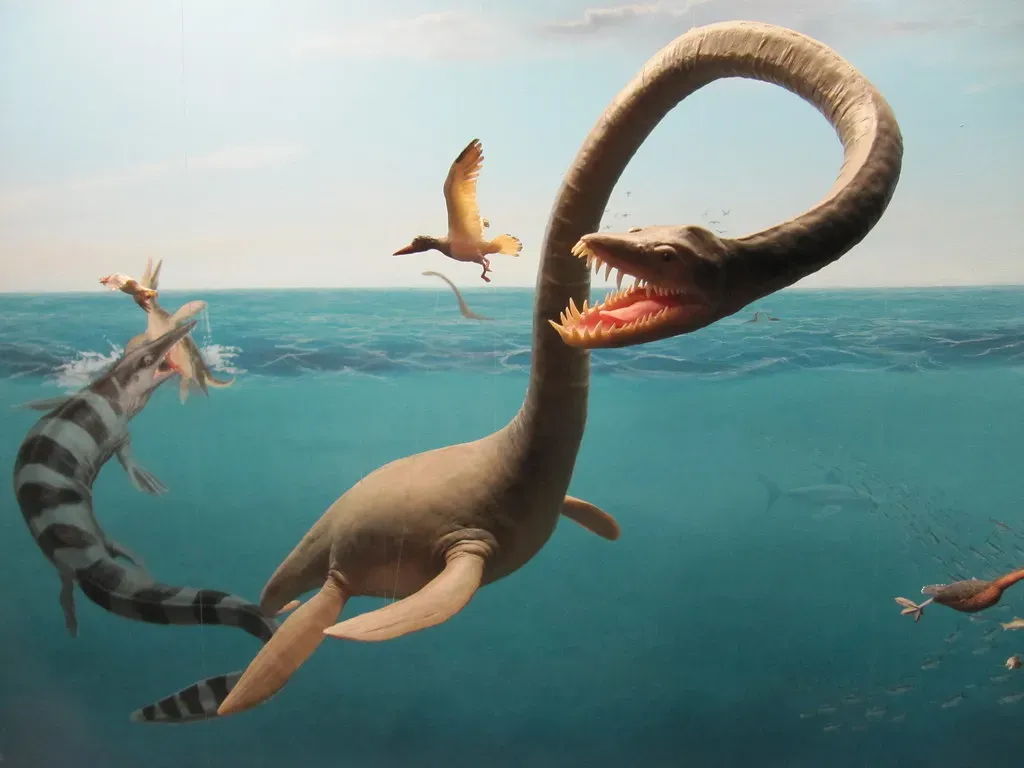
If ichthyosaurs were the dolphins of the Mesozoic, plesiosaurs were something altogether stranger. Featuring a long, snake-like neck and a stout body equipped with slender paddles, Plesiosaurs are one of the most readily identifiable of all ancient marine reptiles. Picture a creature with a body like a barrel, four massive flippers, and a neck that seems to go on forever. That’s a plesiosaur.
Here’s where it gets interesting. Biomechanical reconstructions suggest that Plesiosaurs moved through the water in the same way that turtles or penguins do, more like flying than swimming, and scientists have also discovered that Plesiosaurs used their unique bodies to hunt for bottom-dwelling crustaceans. Their long necks weren’t designed for dramatic swooping attacks from above the water. Instead, they likely used them to sneak up on prey swimming below or to probe the seafloor for hidden meals.
They ruled the oceans for over 135 million years, surviving multiple extinction events and diversifying into one of the most successful groups of marine reptiles in Earth’s history, with fossils found on every continent, even Antarctica. That’s an incredibly successful run by any measure.
Pliosaurs: The Apex Predators
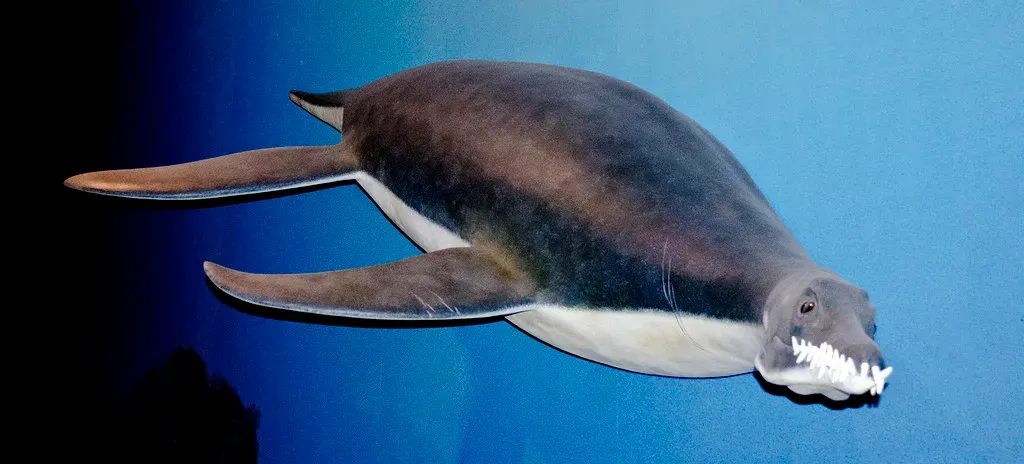
Not all plesiosaurs had long necks. Pliosaurs were a group of plesiosaurs with short necks, large heads, powerful jaws filled with sharp teeth, and robust bodies, with hind flippers longer than the fore-flippers, and these prehistoric ocean reptiles were formidable predators, capable of hunting large prey, including fish, squid, and other marine reptiles. Imagine a creature with a head the size of a small car filled with teeth like railroad spikes.
These weren’t gentle giants. Mosasaurs were typically slimmer with elongated skulls, while pliosaurs had big stocky heads, which gave them a bite force capable of chomping through giant prey like ichthyosaurs with their huge teeth. They were the orcas of their time, apex predators that nothing else in the ocean could challenge.
Scientists estimate some species could reach lengths approaching seventeen meters. Their massive size and powerful jaws made them the undisputed rulers of Mesozoic seas during their time.
Mosasaurs: Late Arrivals That Dominated
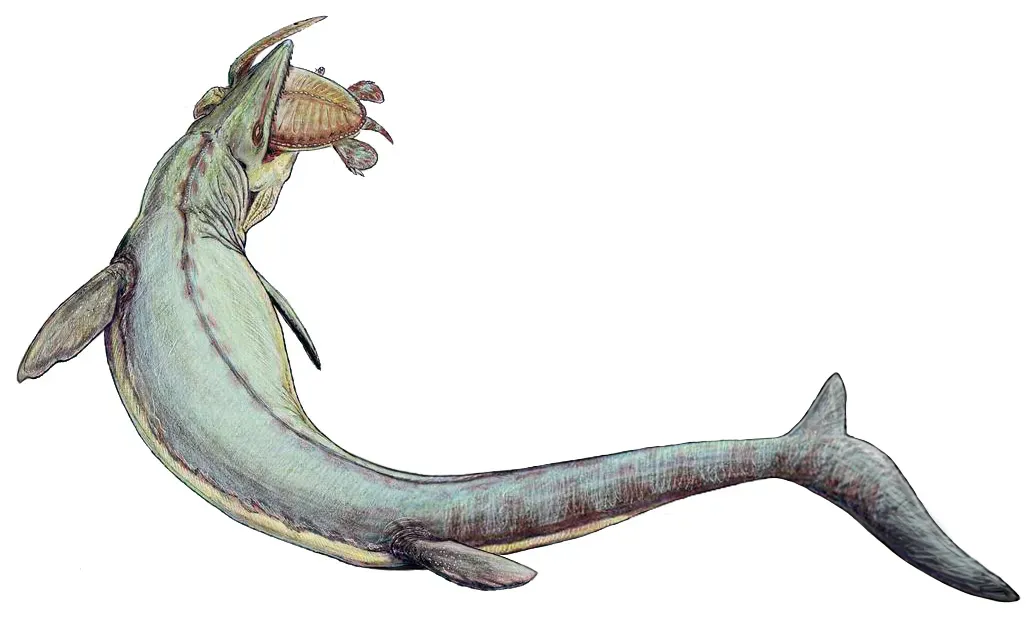
Mosasaurs were a group of large, aquatic squamates (relatives of modern-day lizards and snakes) which became the dominant marine predators towards the end of the Cretaceous. These relative latecomers to the marine reptile party didn’t show up until roughly ninety million years ago. Yet despite their late arrival, they became the most fearsome predators in the oceans.
New evidence suggests that many advanced mosasaurs had large, crescent-shaped flukes on the ends of their tails, similar to those of sharks and some ichthyosaurs, and rather than use snake-like undulations, their bodies probably remained stiff to reduce drag through the water, while their tails provided strong propulsion. They evolved rapidly from land-dwelling ancestors, filling ecological niches left vacant by declining ichthyosaur populations.
Mosasaurs had double-hinged jaws and flexible skulls (much like those of snakes), which enabled them to gulp down their prey almost whole, with one skeleton including remains of a flightless diving seabird, a marine bony fish, a possible shark, and another, smaller mosasaur. They weren’t picky eaters, taking whatever prey they could overpower.
Extraordinary Adaptations for Marine Life
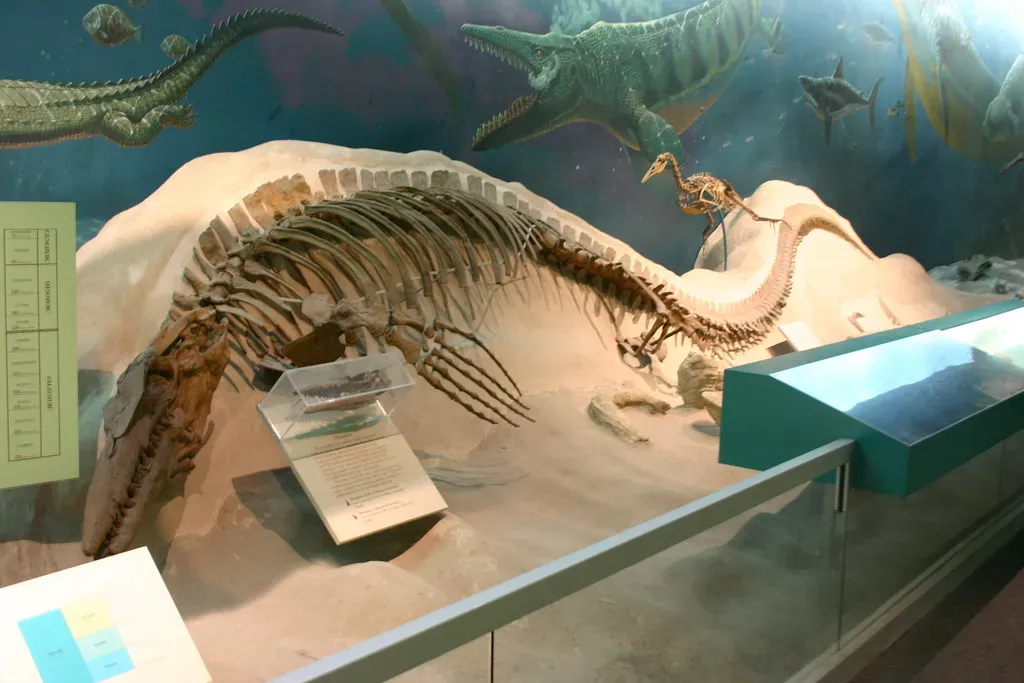
Surviving in the ocean requires more than just being able to swim. Many millions of years before whales and seals would evolve blubber, marine reptiles were already enjoying the benefits of thick subcutaneous fat, with a fossil of the Early Jurassic ichthyosaur Stenopterygius preserving parts of the marine reptile’s skin as well as remnants of fats and proteins, revealing that by 180 million years ago, ichthyosaurs had smooth skin and that ichthyosaurs evolved blubber beneath their skin. This wasn’t just for insulation; it helped maintain body temperature in cold water.
Many of these creatures were warm-blooded or at least partially so. The fossil record shows that plesiosaurs, ichthyosaurs and mosasaurs were in polar waters at times when these regions were cool and seasonally dark, with some of these animals insulated by blubber. This was revolutionary for reptiles, which today are typically cold-blooded and dependent on external heat sources.
Some marine reptiles, such as ichthyosaurs, plesiosaurs, metriorhynchid thalattosuchians, and mosasaurs became so well adapted to a marine lifestyle that they were incapable of venturing onto land and gave birth in the water, while others, such as sea turtles and saltwater crocodiles, return to shore to lay their eggs. This complete commitment to ocean life represents one of evolution’s most dramatic transformations.
Hunting Strategies of Ancient Predators
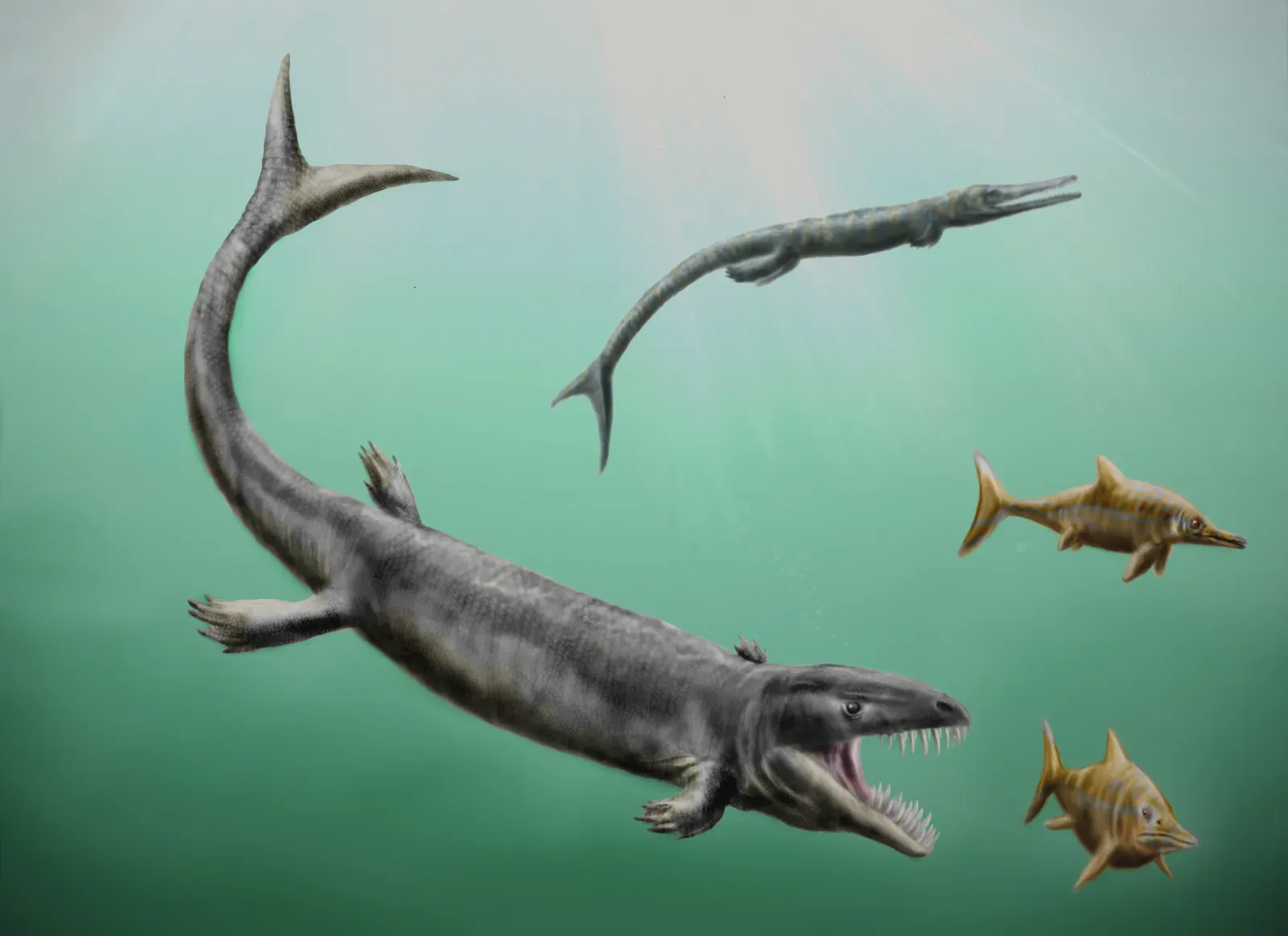
These marine reptiles employed diverse hunting strategies. There were underwater flyers, tuna-like cruisers, as well as typically lizard-like undulatory swimmers, with some feeding on hard-shelled animals whereas others ate fish, cephalopods, and vertebrates, including marine reptiles. The variety of approaches reflects the diversity of prey available in Mesozoic oceans.
Pliosaurs likely used ambush tactics, lurking in deeper water before surging upward to attack prey from below. Ichthyosaurs with their speed and maneuverability chased down fast-moving fish and squid. Long-necked plesiosaurs may have used their necks for precision strikes at schooling fish or bottom-dwelling prey.
Liopleurodon lived in Western Europe from 166 to 155 million years ago, sharing its open ocean habitat with other marine reptiles, such as ichthyosaurs and plesiosaurs, with some anatomical studies finding that Liopleurodon was likely a very fast and agile swimmer, built for ambushing its prey from below. This kind of specialization allowed multiple predator species to coexist in the same waters without direct competition.
The Rise and Fall of Marine Reptile Dynasties
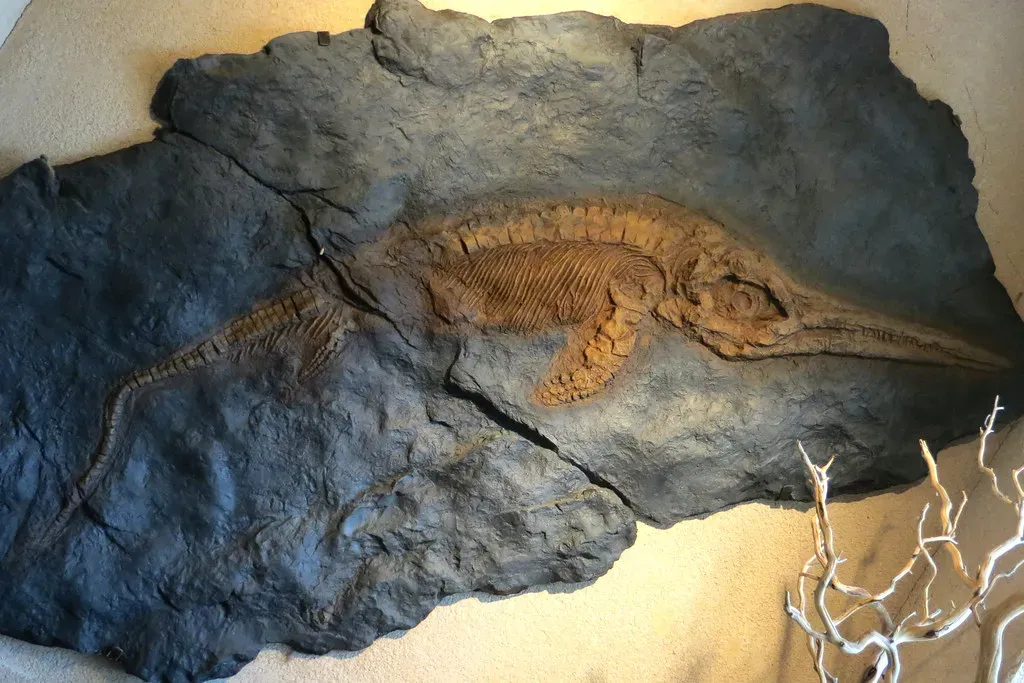
The story of marine reptile dominance wasn’t smooth or continuous. The Plesiosaurs as a whole did take a hit during the extinction event that divided the Jurassic from the Cretaceous, which shook up life on land and finished off the Ichythosaurs, a group of dolphin-like reptiles who had ruled the seas alongside Plesiosaurs until that point, with a lot of Plesiosaurs dying out too, including all the apex predators like Liopleurodon. These shifts in dominance happened over millions of years.
Ichthyosaurs resemble dolphins and were the dominant aquatic predator until they were replaced by the Plesiosaurs, while the Mosasaur became the dominant ocean predator at the end of the Cretaceous after the extinction of the Ichthyosaurs and the decline of the Plesiosaurs. Each group had its time in the sun before circumstances changed and new competitors emerged.
The reasons for these turnovers remain somewhat mysterious. Climate changes, shifting sea levels, and evolving prey populations all likely played roles. Whatever the causes, they demonstrate that even the most successful adaptations don’t guarantee permanent survival.
The Great Extinction: When the Oceans Fell Silent
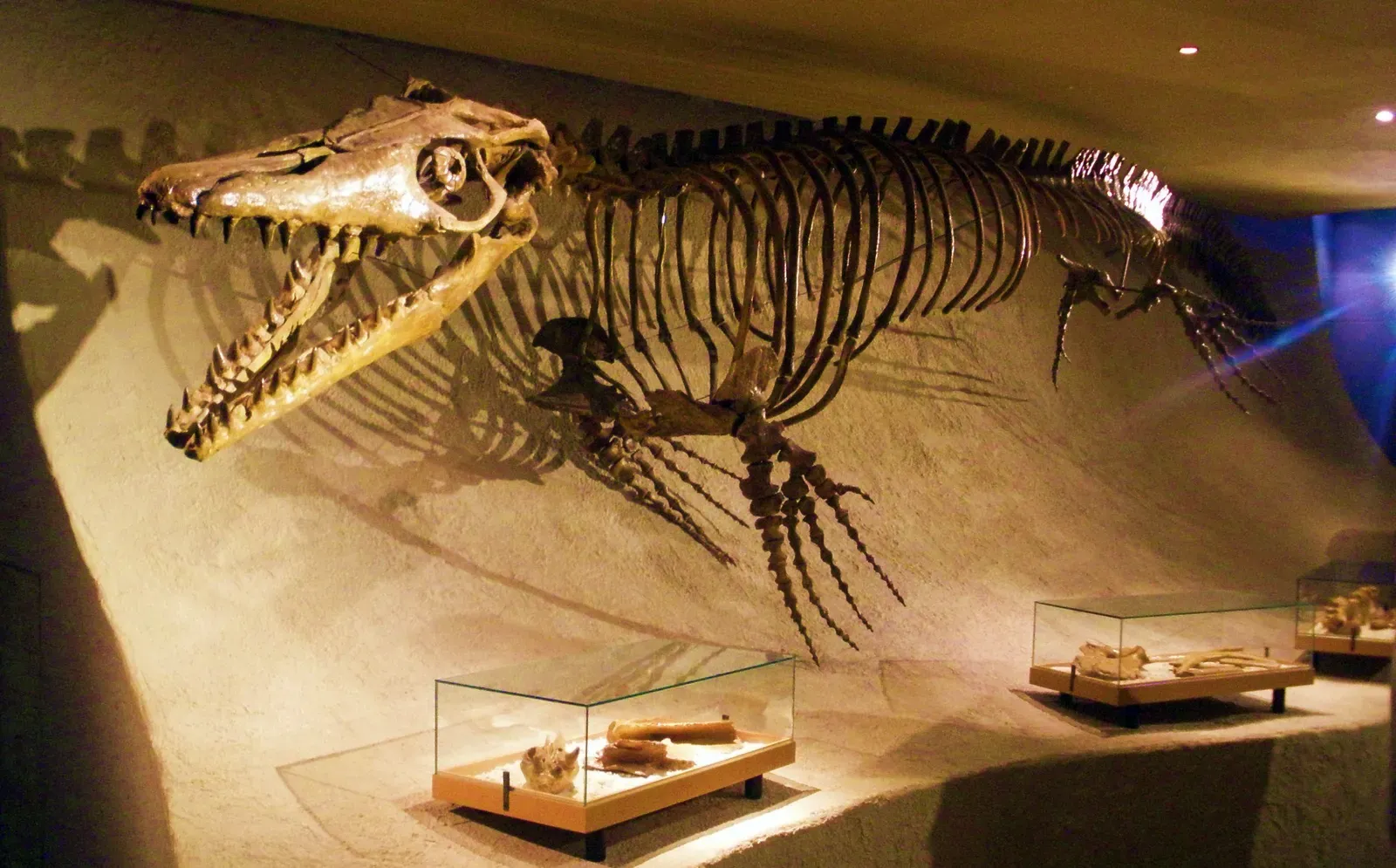
Most marine reptile groups became extinct at the end of the Cretaceous period, but some still existed during the Cenozoic, most importantly the sea turtles. The asteroid impact that killed the non-bird dinosaurs also spelled doom for nearly all marine reptiles. This wasn’t just bad luck for a few species; it represented the end of an entire era of ocean life.
Geochemists and paleontologists have cracked the secrets sealed in the calcium isotopes of fossil teeth to reveal why many large marine reptiles vanished from the Earth’s oceans during the mass extinction event 66 million years ago, with theories including the impact of a large asteroid, destructive volcanic activity, and falling sea levels. The impact triggered catastrophic environmental changes that decimated marine ecosystems from the bottom up.
Precisely what occurred at the end of the Cretaceous period when a majority of plankton species disappeared as part of the mass-extinction event, with plankton-eating fish – vital food sources for the plesiosaurs and mosasaurs – also dropping in number, triggering the reptiles’ disappearance. The collapse of the food chain meant even the largest predators couldn’t survive. Within a relatively short geological timeframe, the oceans were emptied of the magnificent reptiles that had dominated them for over a hundred million years.
Lessons from the Deep Past
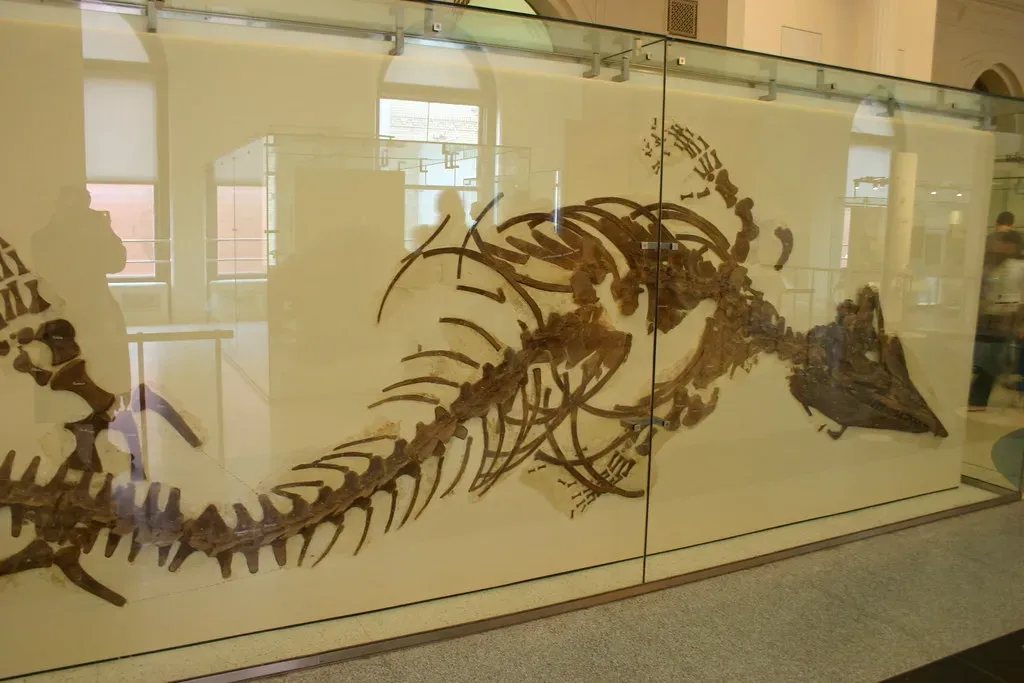
What can we learn from these ancient ocean rulers? Understanding how groups like Ichthyosaurs, Plesiosaurs, and Mosasaurs came to be so successful in the Mesozoic seas can enhance our understanding of how modern groups such as whales and dolphins achieved the same success in similar roles in the ocean ecosystem, while a better understanding of why those ancient groups went extinct can help us understand potential threats to our modern ocean ecosystems as well. Their story isn’t just ancient history; it’s a window into how marine ecosystems function and fail.
The marine reptiles show us that evolution can produce remarkable solutions to environmental challenges. They also remind us that even the most successful adaptations can’t protect against catastrophic environmental change. Today’s oceans face threats from climate change, pollution, and overfishing. The lessons from prehistoric marine reptile extinctions suggest that disrupting ocean ecosystems at their foundation can have cascading effects throughout the entire food chain.
These creatures ruled the oceans for far longer than humans have existed. Their fossils continue to teach us about life’s resilience and fragility. Every new discovery adds another piece to the puzzle of how these remarkable animals lived, hunted, and ultimately vanished.
The ancient ocean’s rulers are gone, but their legacy remains written in stone, waiting to reveal more secrets about our planet’s incredible past. What do you think would have happened if they had survived? Could you imagine sharing the oceans with creatures like these today?