When you think of the ancient world’s deadliest hunters, you probably picture something massive. Something that shakes the ground. Something whose shadow blots out the sun. And honestly, that instinct makes sense – size is the most obvious measure of danger we have. But prehistory has a funny way of defying expectations.
The truth is, some of the most ferocious, lethal, and ecologically dominant predators of the ancient world were not its biggest creatures. Size mattered, of course, but it was rarely the whole story. Speed, venom, teamwork, jaw mechanics, and sheer evolutionary ingenuity often counted for far more than brute bulk. Let’s dive into the ancient world’s most fascinating predators, and prepare to have a few assumptions challenged.
The Cambrian Ocean’s First Killer: Anomalocaris Was Small But Supreme
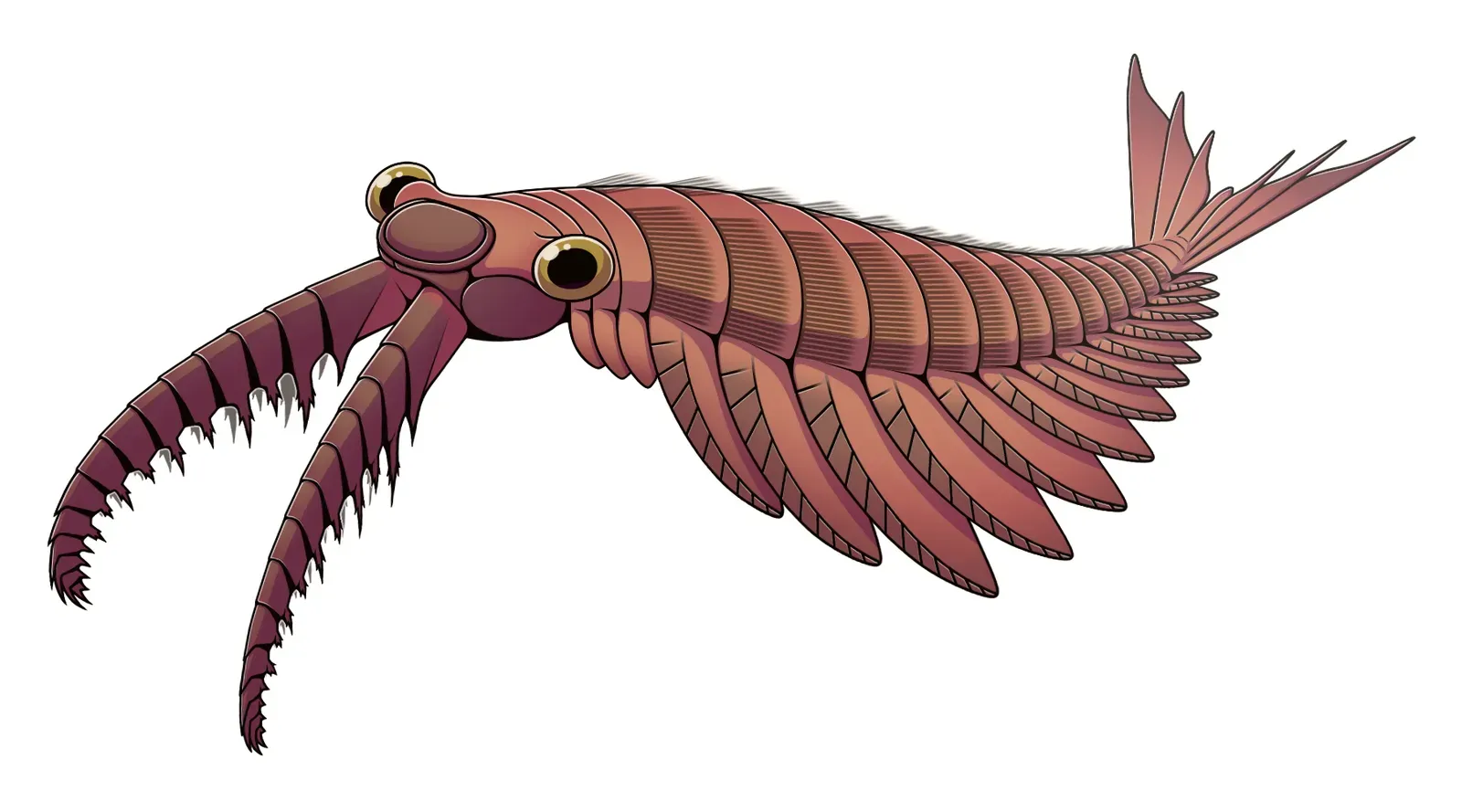
Half a billion years ago, the world’s oceans were stalked by a soft-bodied predator that looked unlike anything alive today. This bizarre-looking animal was Anomalocaris, or “unusual shrimp,” and is widely regarded as the world’s first apex predator – the killer whale of its day. That’s a remarkable claim for something you’d walk right past in a museum without a second glance.
Anomalocaris was the largest hunter of the Cambrian period, measuring up to a metre in length from its grasping, frontal appendages to the tips of its tail fans. One meter. That’s it. And yet it ruled absolutely. It’s now believed Anomalocaris was a hunter that relied on speed, agility, and superior sight rather than strength, and it probably targeted other fast, soft-bodied animals that lived in open water. Think of it like the ancient ocean’s version of a cheetah – built for precision, not power.
Dunkleosteus: The Armored Fish With the Bite of a God
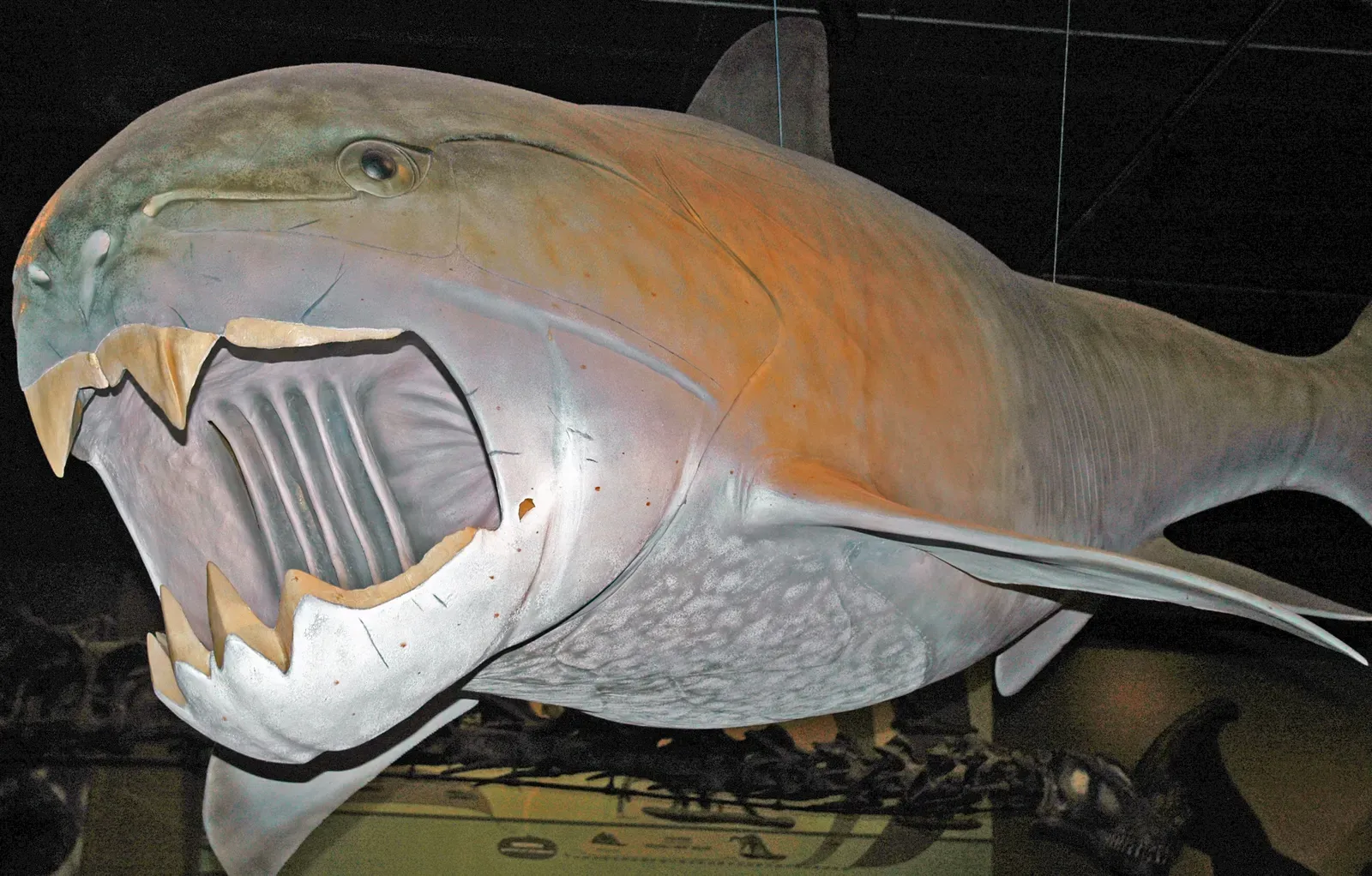
Before sharks ruled the seas, this armored nightmare dominated Late Devonian oceans 382 to 358 million years ago. Measuring up to 8 meters long, Dunkleosteus lacked traditional teeth but compensated with bone-crushing jaw plates that functioned like a massive shearing beak, with a bite force that exceeded 6,000 Newtons – powerful enough to crack through the heaviest armor of its prehistoric prey. That bite force alone puts modern apex predators to absolute shame.
Dunkleosteus lacked proper teeth; instead it had two pairs of long, bony blades that protruded from its upper jaws and its lower jaws, creating a cutting apparatus that crudely resembled a guillotine. At the tip of these blades, Dunkleosteus was capable of biting down at a force of 80,000 psi, which is a lot stronger than the bite force of an average lion and more comparable to the bite force of a large alligator. What’s even more astonishing is that from close study of Dunkleosteus’ jaws, researchers have estimated that it was capable of opening its jaws in just 20 milliseconds, fast enough to create a small vacuum just in front of its mouth. A living vacuum cleaner with guillotine blades for teeth. Sleep well.
Velociraptor: Hollywood Lied to You – It Was Even More Dangerous for Its Size
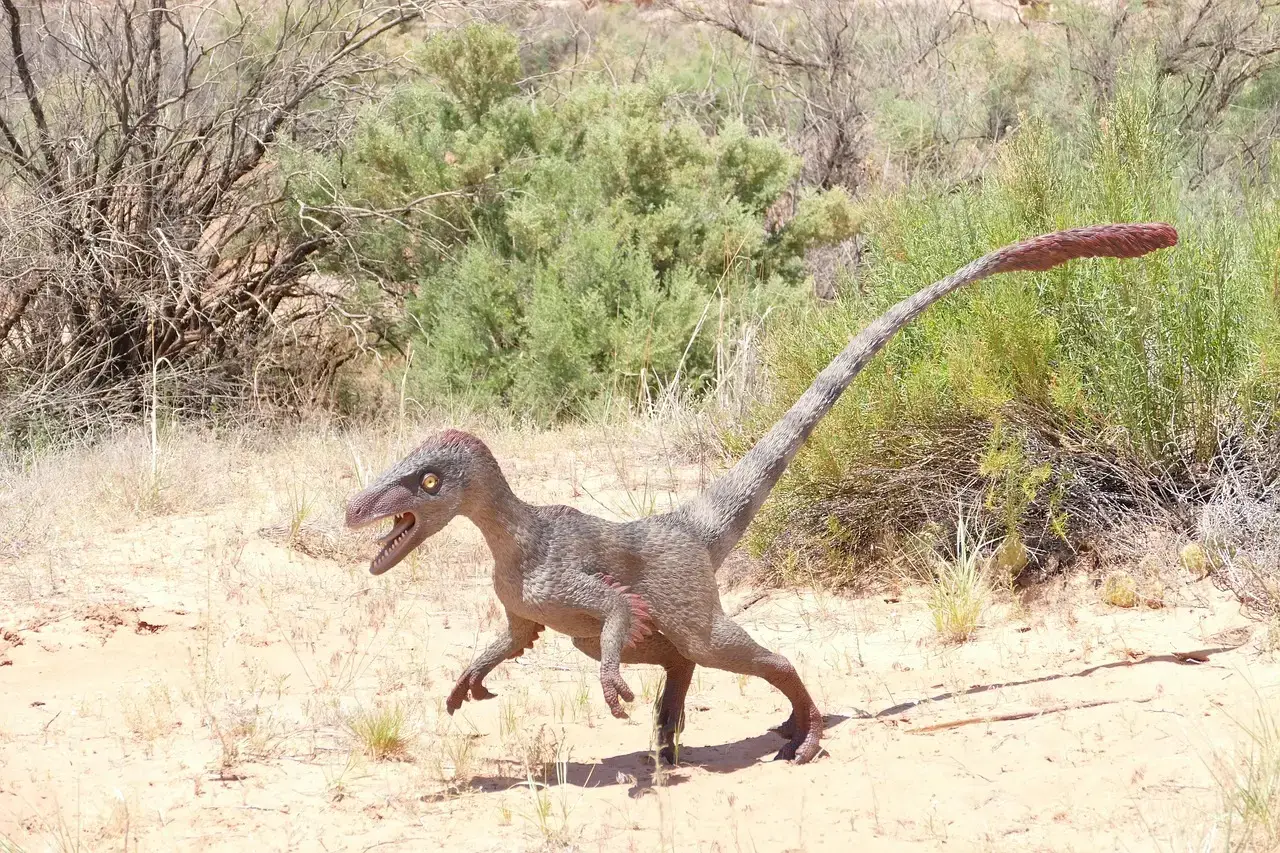
Here’s the thing about Velociraptor – the pop-culture version you know from the movies is almost entirely fictional. Smaller than other dromaeosaurids like Deinonychus and Achillobator, Velociraptor was about 1.5 to 2.07 metres long with a body mass of around 14 to 19 kilograms. That’s roughly the size of a large turkey. But don’t let that fool you for even a second.
The quickness, agility, and lightweight body of Velociraptor made it one of the top predators of its time. It was able to make complex maneuvers when chasing prey, a degree of agility that was unusual among dinosaurs and earned this dinosaur its name, Velociraptor, which means “quick plunderer.” And its secret weapon? It bore a relatively large, sickle-shaped claw, typical of dromaeosaurid dinosaurs. This enlarged claw, which could grow to over 6.5 cm long around its outer edge, was most likely a predatory device used to restrain struggling prey. Imagine something the size of a housecat with the hunting intelligence of a hawk and a switchblade on each foot. That’s your real Velociraptor.
Smilodon: Compact, Muscular, and Absurdly Lethal
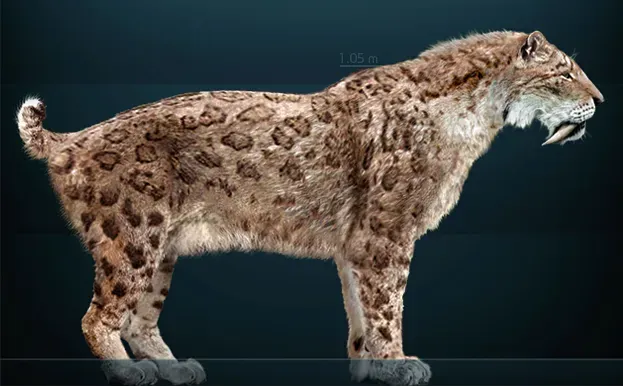
Smilodon is a genus of extinct felids. It is one of the best-known saber-toothed predators and prehistoric mammals. Although commonly known as the saber-toothed tiger, it was not closely related to the tiger or other modern cats, belonging to the extinct subfamily Machairodontinae. You might think of Smilodon as enormous, but compared to many megafauna of the Ice Age, it was actually medium-sized. What it lacked in scale, it made up for in engineering genius.
With a powerful and stocky build, S. fatalis and S. populator were capable predators that were quite literally armed to the teeth. Its iconic fangs, which grew to be up to 28 centimetres long, paired nicely with its robust and muscular physique, allowing Smilodon to easily become the apex predator of the Americas and hunt prey substantially larger than itself. An apex predator, Smilodon primarily hunted large mammals. Isotopes preserved in the bones of S. fatalis in the La Brea Tar Pits reveal that ruminants like bison and camels were most commonly taken by the cats there. Hunting animals many times your own size – that’s not brute force. That’s masterful predatory strategy.
Spinosaurus: Bigger Isn’t Always Better – Even for Giants
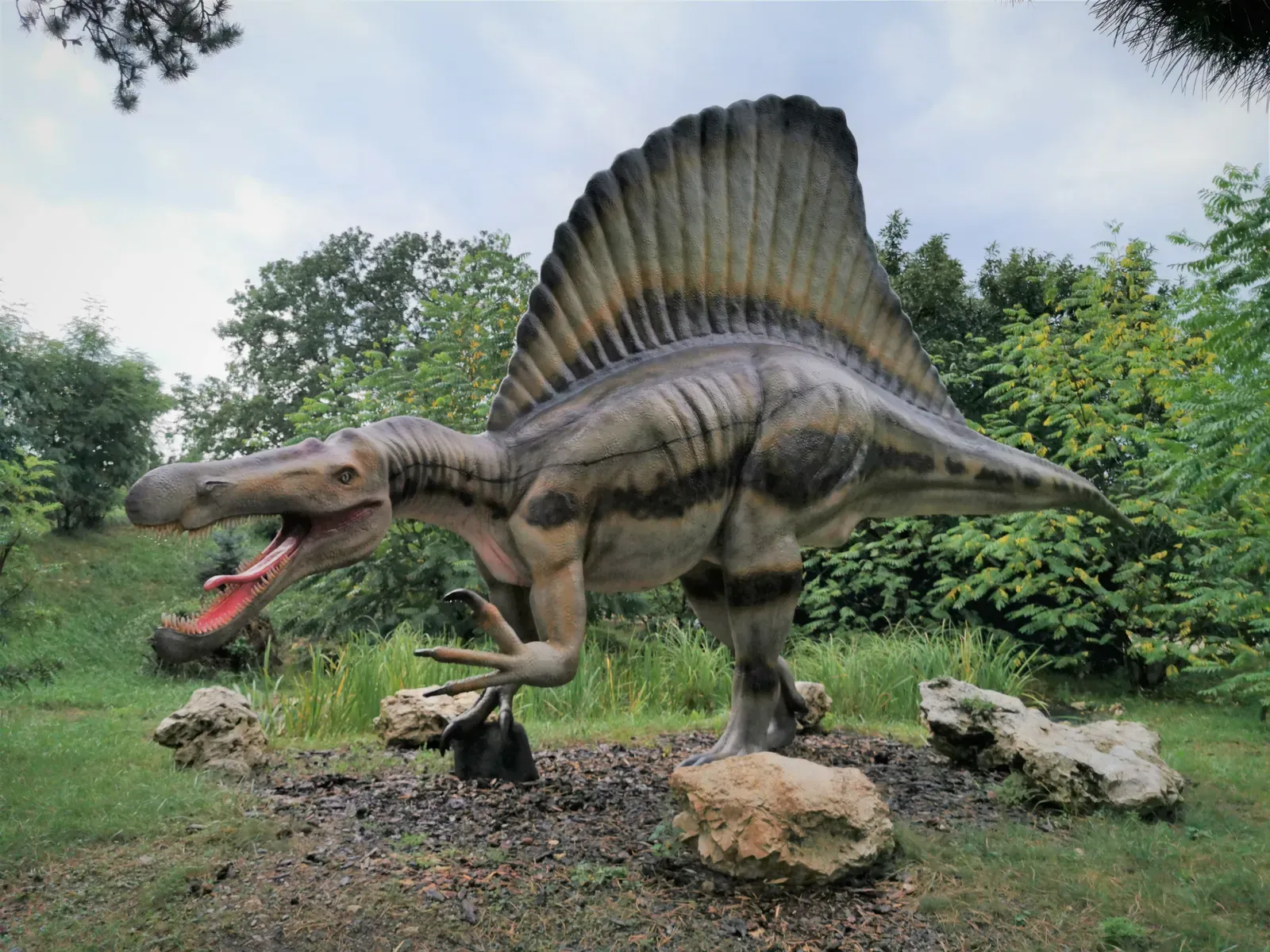
Reaching 15 meters in length, Spinosaurus sported a distinctive 1.6-meter-tall sail along its back and a narrow, crocodile-like snout packed with conical teeth perfect for snatching fish. Revolutionary discoveries now suggest this massive theropod may have been the first dinosaur capable of walking on all fours when hunting on land. Despite being potentially the longest carnivorous dinosaur ever discovered, Spinosaurus thrived not by dominating everything – but by specializing. It carved out its own ecological lane.
What makes Spinosaurus so legendary is its uniqueness. Unlike most theropods, it was semi-aquatic, adapted for life both on land and in water. Recent research indicates it may have swum through ancient rivers, hunting prey in a way no other giant dinosaur did. Spinosaurus teaches you something profound: dominance is not always about being the biggest brawler. Sometimes the mightiest predator is the most adaptable one, not the most colossal.
The Hyper-Apex Predators of the Ancient Oceans: A Seventh Level of Terror
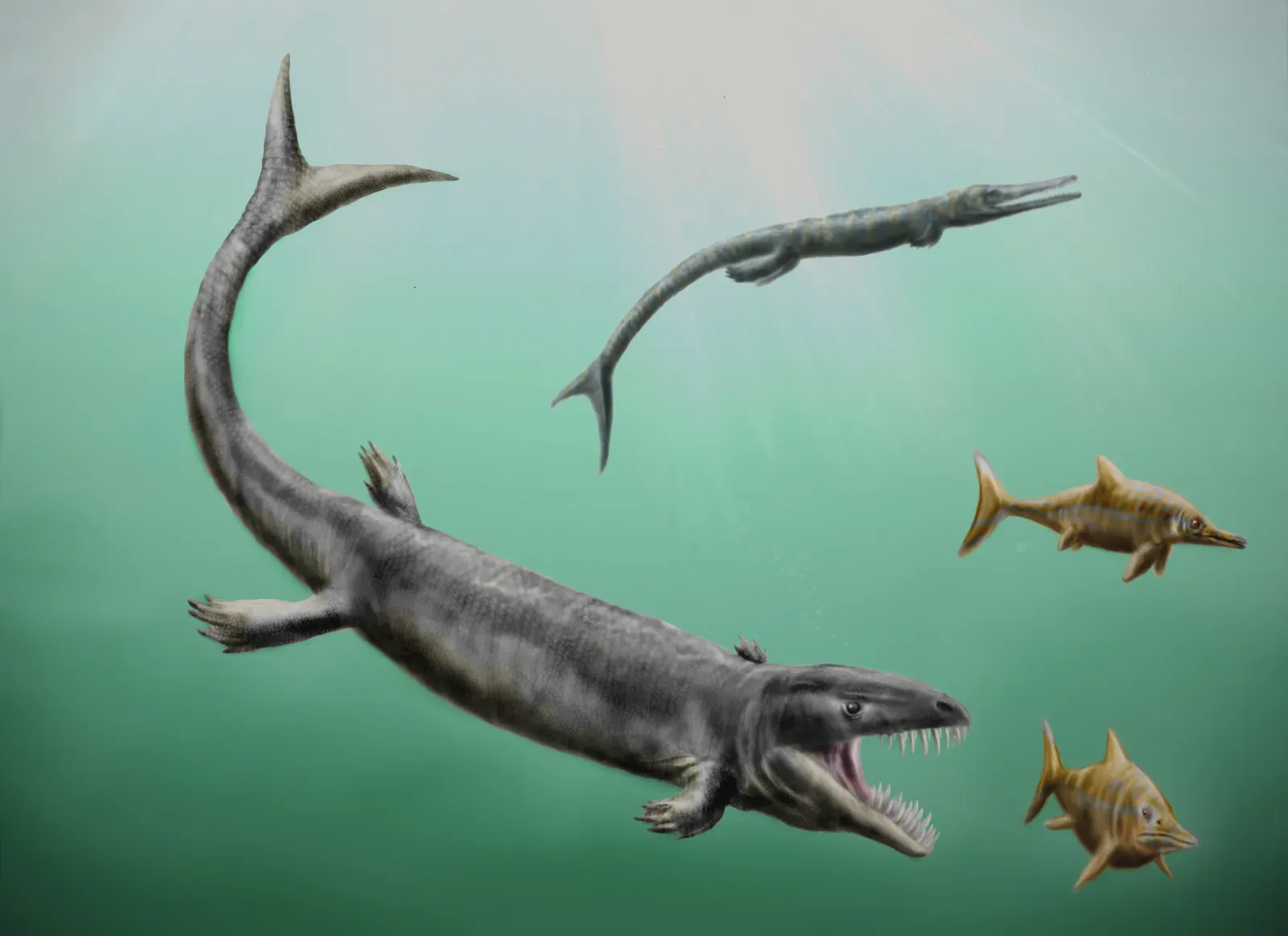
You might think today’s great white sharks and orcas represent the peak of oceanic predatory power. Think again. In today’s oceans, food chains typically reach six levels, with animals such as great white sharks and orcas at the top. However, researchers discovered that there was a previously unseen seventh level that was filled with enormous marine reptiles. Scientists reconstructed this from one of the most remarkable fossil sites on Earth.
Researchers have discovered ancient marine predators were far more powerful than any seen today, dominating waters at the very top of an extraordinary food chain. A team from McGill University in Montreal, Canada, reconstructed a marine ecological network by analysing all known animal fossils from an area in central Colombia known as the Paja Formation. Some, such as Sachicasaurus and Monquirasaurus, could grow up to and beyond 10 metres long and are known as hyper-apex predators. A whole extra level of the food chain that simply doesn’t exist anymore. That’s honestly staggering to think about.
Megalodon: Massive, Yes – But Brains Over Brawn Still Mattered
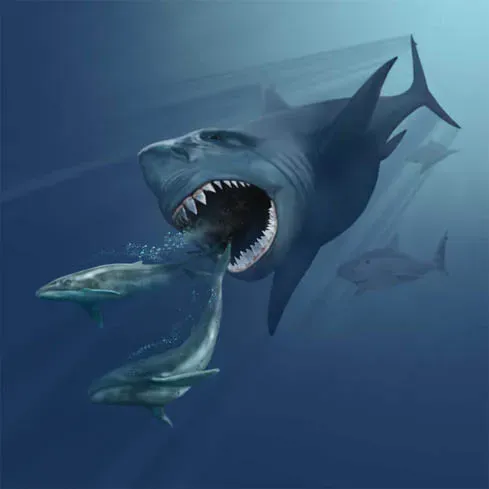
This colossal shark terrorized the world’s oceans between 23 and 3.6 million years ago, stretching up to 18 meters in length. Unlike the sleek predators we know today, Megalodon possessed a more robust build similar to modern lemon sharks, armed with hundreds of razor-sharp teeth that could slice through whale bone. And yet, for all its terrifying size, Megalodon’s hunting success was built on strategy just as much as physical dominance.
Paleontologists have found whale vertebrae and ribs with bite marks consistent with Megalodon’s dentition. In some cases, the pattern of injuries suggests a hunting strategy. Rather than attacking randomly, Megalodon may have targeted flippers or tails to immobilize its prey before delivering a fatal bite. Recent studies suggest its slower, energy-efficient hunting style may have ultimately sealed its fate when oceans cooled and faster great whites emerged as competitors. Even the mightiest predator in ocean history was eventually out-competed – not by something bigger, but by something smarter and faster.
Deinosuchus: The “Terror Crocodile” That Even Dinosaurs Feared
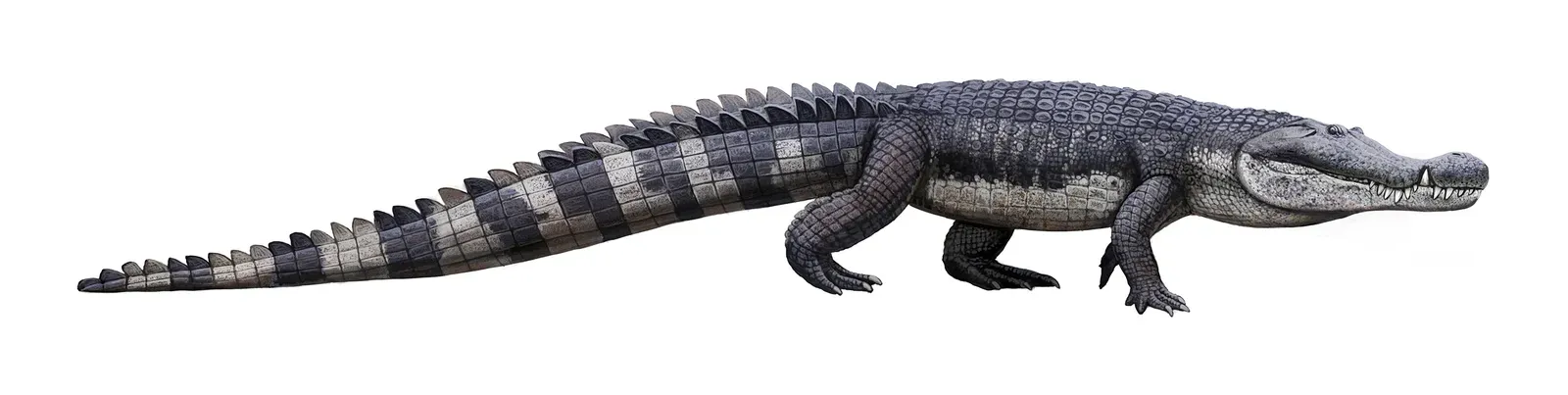
Deinosuchus lived between 83 and 72 million years ago. It was 11 metres long and weighed 6 to 7 tonnes – making today’s crocs look pretty minuscule – and was the largest predator in North America at the time. But what makes Deinosuchus extraordinary isn’t its size alone. It’s the fact that it chose to prey on creatures that would make most predators run in the opposite direction.
Late Cretaceous river systems across North America harbored the ultimate “terror crocodile” between 82 and 73 million years ago. Growing up to 12 meters in length, Deinosuchus possessed thick hemispherical armor plates and crushing teeth capable of taking down large dinosaurs. Growth ring analysis reveals these prehistoric crocodilians could live over 50 years, accumulating incredible size and experience as apex aquatic predators. Fifty years of hunting experience, locked inside an armored body the size of a city bus. I find that deeply unsettling, and I think you should too.
Dimetrodon: The World’s First Fully Terrestrial Apex Predator
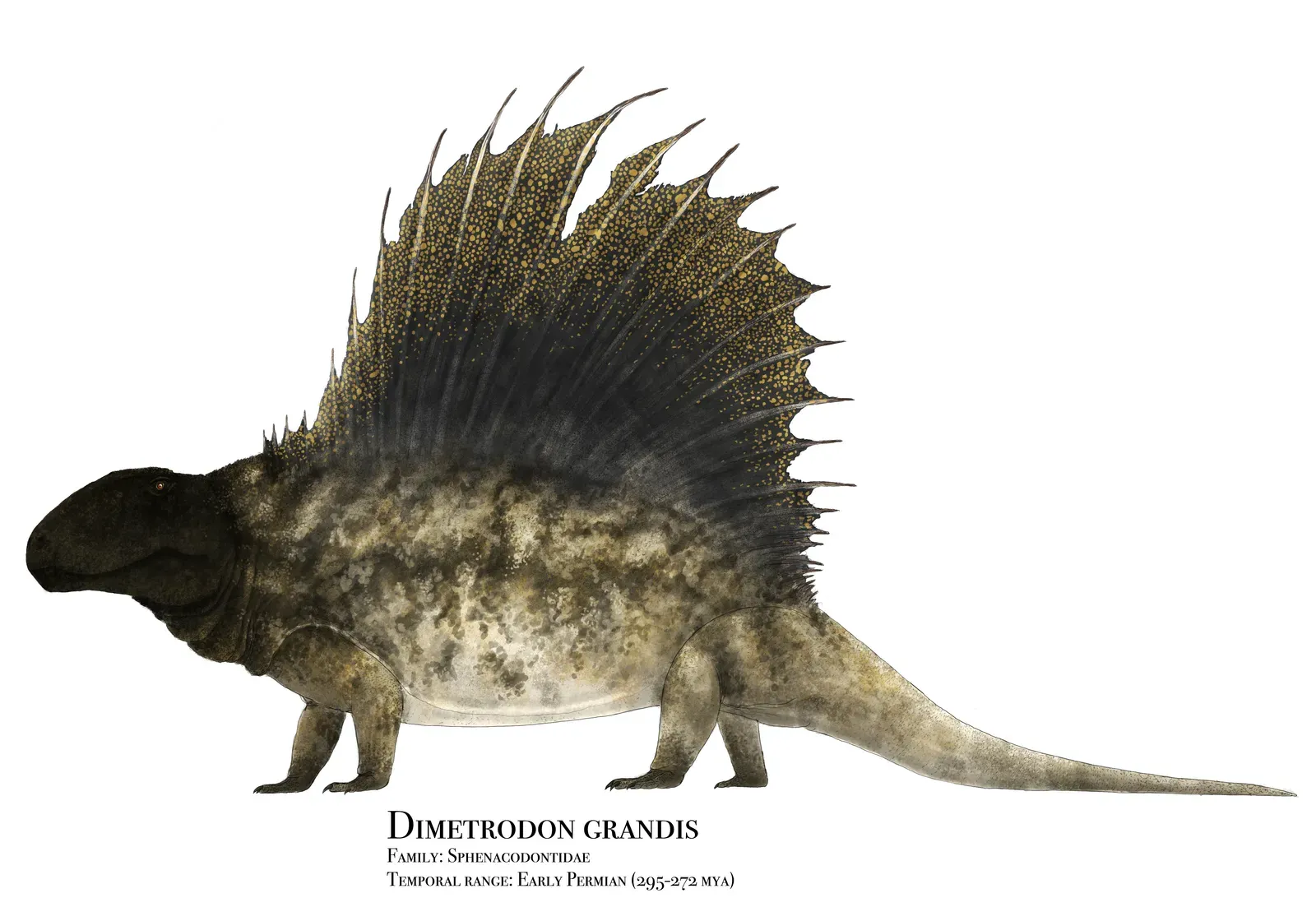
Most people mistakenly think Dimetrodon was a dinosaur. It was not. Not even close. The biggest carnivorous synapsid of the Early Permian was Dimetrodon, which could reach 4.6 metres and 250 kilograms. The largest members of the genus Dimetrodon were also the world’s first fully terrestrial apex predators. That’s one of the most underappreciated titles in all of prehistoric history. The very first land apex predator ever. And it looked like a sail-backed lizard that somehow wandered out of a fever dream.
It’s hard to say for sure exactly how Dimetrodon hunted, but its jaws were equipped with differentiated teeth – a major evolutionary innovation that set it apart from everything else alive at the time. Think about that: 300 million years ago, this animal was pioneering the kind of specialized predatory anatomy that would eventually give rise to the entire lineage of mammals. Prehistoric animals, such as dinosaurs, grew large due to higher oxygen levels, efficient food intake, and evolutionary trends like Cope’s Rule. Dimetrodon proves that being first and being effective matters far more than being the largest creature in the room.
Prehistoric Eagles and Terror Birds: When Wings and Feathers Ruled the Food Chain
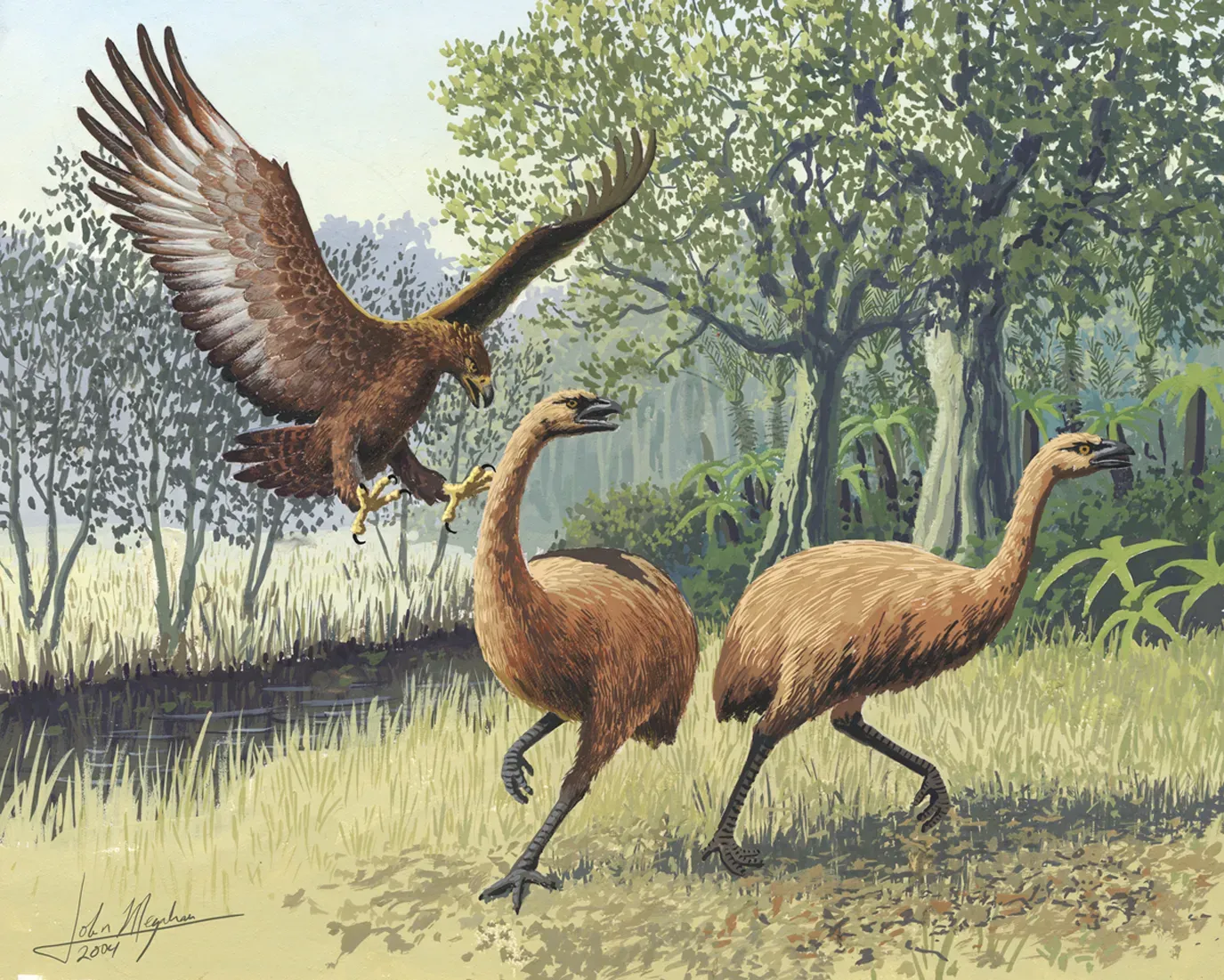
You might not picture a bird as a world-conquering apex predator. But the ancient world had flying and running hunters that would make you reconsider every assumption about feathers. The four-winged Meganeura is widely regarded as the largest flying insect ever, dwarfing its extant dragonfly relatives. Like many of today’s dragonfly species, Meganeura lived in open habitats close to ponds and slow-moving streams, and it was likely the apex predator in these clearings, using the spines on its legs as a “flying trap” to ensnare prey ranging from other flying insects to amphibians and even lizard-like vertebrates.
And then there were the Terror Birds. These enormous, flightless predators ran down prey at terrifying speeds and dominated entire continents. Today, 90 percent or more of the prey of crowned eagles in Kibale National Park in Uganda are primates, mostly cercopithecoid monkeys. Primates are also the favorite prey of harpy eagles in the tropical forests of the Americas. The aerial predator lineage, stretching from ancient giant insects to massive eagles, demonstrates with stunning clarity that you don’t need four legs or enormous size to sit at the top of the ancient food chain. Sometimes all you need is better vision, faster wings, and the element of surprise.
Conclusion: Size Was Never the Only Weapon in the Ancient Arsenal
If there is one thing the ancient world teaches us again and again, it’s that power comes in countless forms. Massive size was certainly one path to dominance – and what a spectacular path it could be. Yet the fossil record is filled with predators that ruled their ecosystems through speed, venom, social intelligence, bite mechanics, and evolutionary specialization that had nothing to do with being the largest body in the room.
From the one-meter Anomalocaris ruling Cambrian seas, to the wolf-sized Velociraptor cornering prey with surgical precision, to Smilodon bringing down giants with muscular ambush tactics – the ancient world rewarded effectiveness above all else. Size was a tool, not a guarantee. In nature, it always has been.
So the next time you find yourself underestimating something based on its size alone – whether in nature, history, or everyday life – remember that the ancient world already settled that debate, millions of years before you arrived. What creature from this list surprised you the most? Tell us in the comments.