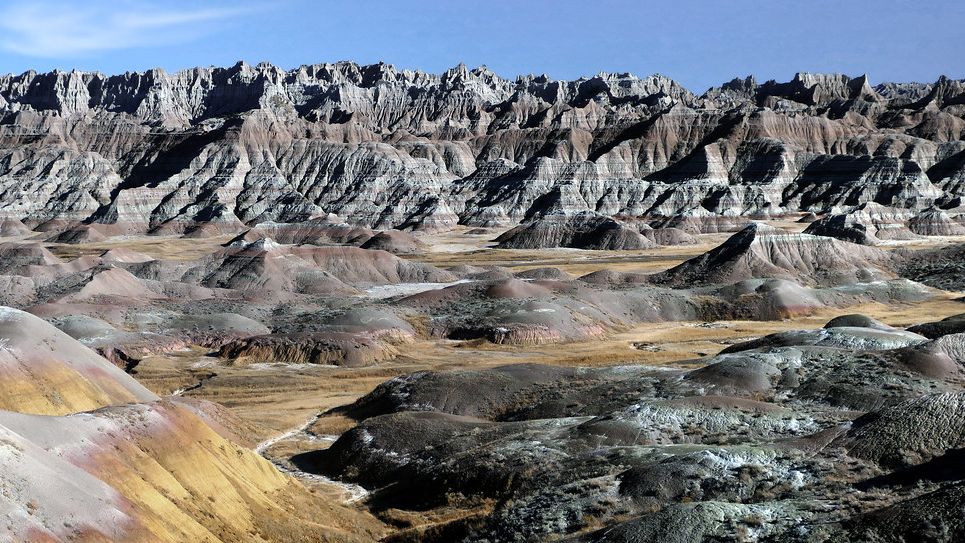
There is a place in southwestern South Dakota that looks, honestly, like it belongs on another planet. Jagged spires jut skyward. Layered rock walls glow in shades of pink, ochre, and grey. The land is silent in a way that makes you feel genuinely small. What you are staring at is not just a landscape. It is a record, a geological diary written across hundreds of millions of years, each layer hiding creatures and climates you would barely recognize as belonging to the same Earth you live on today.
You do not need to be a scientist to feel the pull of this place. Badlands National Park, located in South Dakota, is a breathtaking landscape of rugged terrain, towering spires, deep canyons, and unique rock formations, covering over 244,000 acres of stunning terrain renowned for its striking geology. The secrets buried in these rocks stretch back further than your imagination can comfortably stretch. Prepare to be surprised by what the Badlands have been quietly keeping from us all along. Let’s dive in.
When an Ancient Sea Drowned the Heart of a Continent
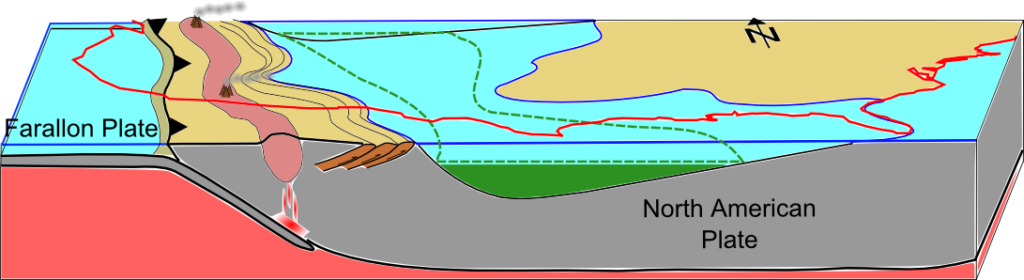
Here is something that genuinely stops most people in their tracks: the ground you would be standing on in the Badlands was once the floor of a vast, warm ocean. A shallow inland sea stretched from the Arctic Ocean to the Gulf of Mexico, called the Western Interior Seaway. Wrap your head around that. The middle of North America, completely underwater. It sounds crazy, but the evidence is right there in the rock.
Deposition began about 75 million years ago with the formation of the Pierre Shale, the base of the geologic formations in the park, and ended about 28 million years ago with the Sharps Formation, the uppermost unit of Badlands stratigraphy. That is a staggering span of time, roughly equivalent to nearly 50 million human generations of geological storytelling, all compressed into the walls of a single national park. As this ancient sea receded, it left behind thick layers of marine shale, most notably the Pierre Shale, a dark fine-grained sedimentary rock that forms the base layer of the Badlands formations.
Layers of Rock, Layers of Time
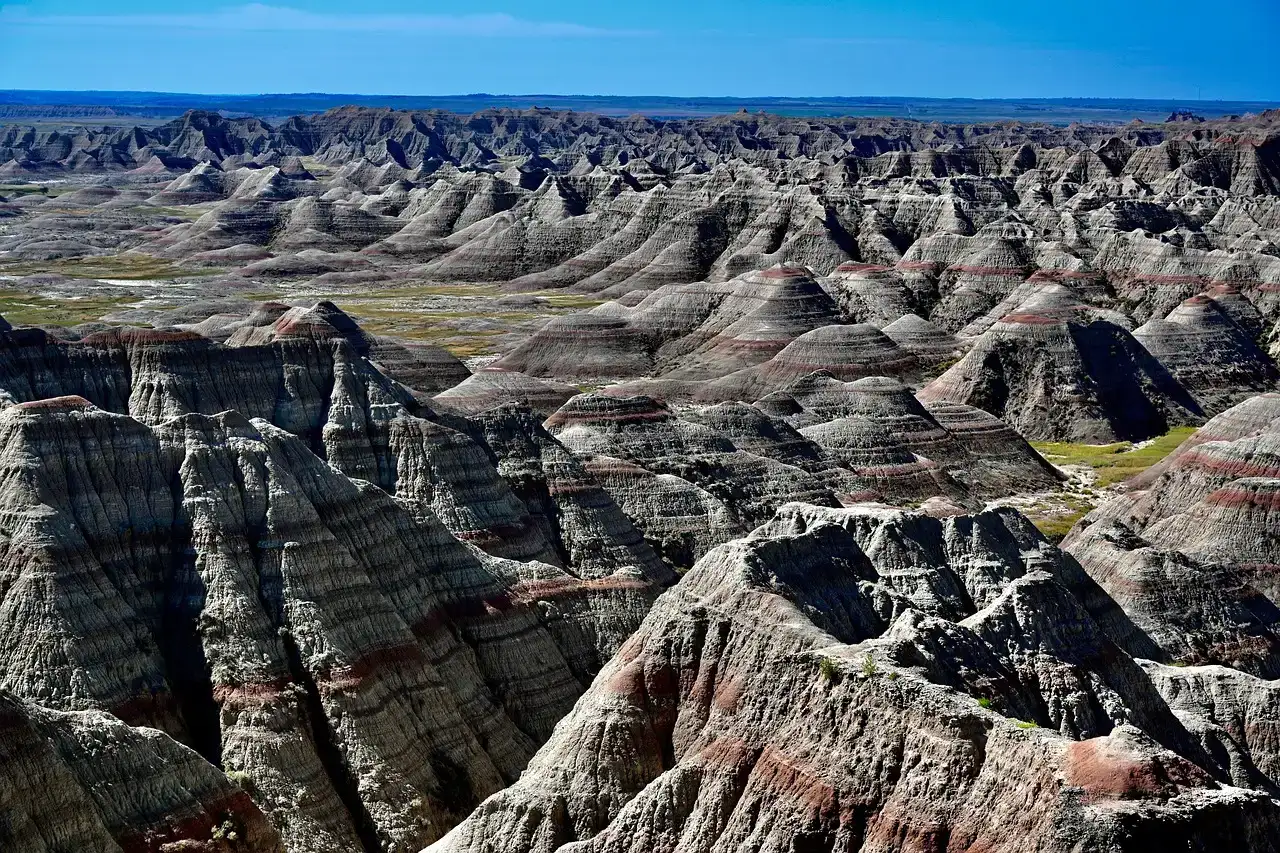
Think of the Badlands like a gigantic layer cake that someone baked over millions of years and then left out in the rain. Each layer tells a radically different story. The formations in Badlands National Park are the end-product of two simple processes: deposition and erosion. Deposition is the process of rocks gradually building up, and over the course of millions of years, the layered rocks of the Badlands were slowly stacked on top of each other. These rocks were deposited by a number of natural forces, which range from shallow inland seas to rivers to wind.
The formations in the park contain sandstones, siltstones, mudstones, claystones, limestones, volcanic ash, and shale. Each of these materials arrived from a different source and a different era. Volcanic ash found in the Badlands comes from eruptions in the Great Basin, a geologic province including states like Utah and Nevada, and most of this ash was washed into the area along with eroded sediment from the Black Hills, making many of the rock layers an ash-sediment mixture. The Badlands, in other words, are not just local history. They are a record of forces that spanned an entire continent.
From Tropical Swamps to Open Savannahs: The Shape-Shifting Climate
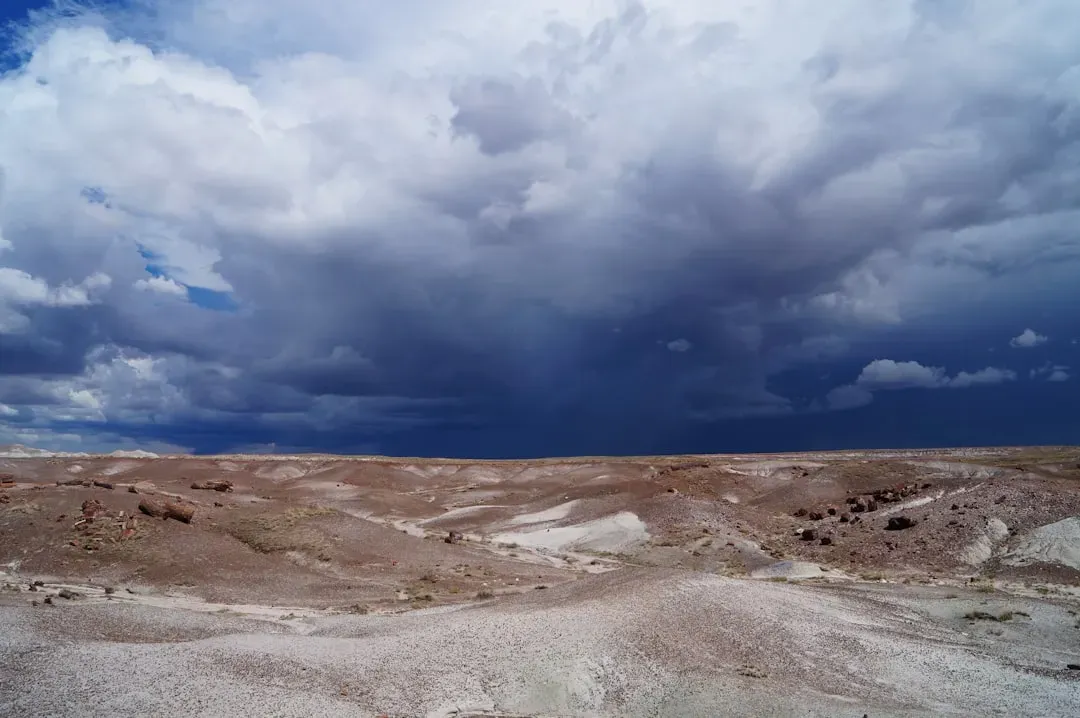
One of the most mind-bending facts about the Badlands is how dramatically the climate of this region has changed. The dry, sun-baked terrain you see today bears almost zero resemblance to what existed here tens of millions of years ago. By about 50 million years ago, smaller brackish-water remnants of the Western Interior Seaway had completely vanished from the region, and a broad, low plain replaced it. Unlike today, the climate was warm and humid with abundant rainfall, producing a forested subtropical environment.
Then the cooling began. During the Paleogene, across the Eocene and Oligocene epochs, the world was slowly cooling, and the environment in the Badlands changed from a hot forest to a cooler savannah. This cooling changed the plant communities and, by extension, the animal communities as well. To illustrate just how dramatic this shift was, consider this: the Chadron Formation is about 37 million years old and consists of light grey claystone. The environment during that era was hot and wet, similar to today’s Everglades National Park, and it even contained fossils of ancient alligators. Alligators. In South Dakota. I know it sounds crazy, but the fossils do not lie.
Sea Monsters, Not Dinosaurs: The Creatures of the Deep Shale
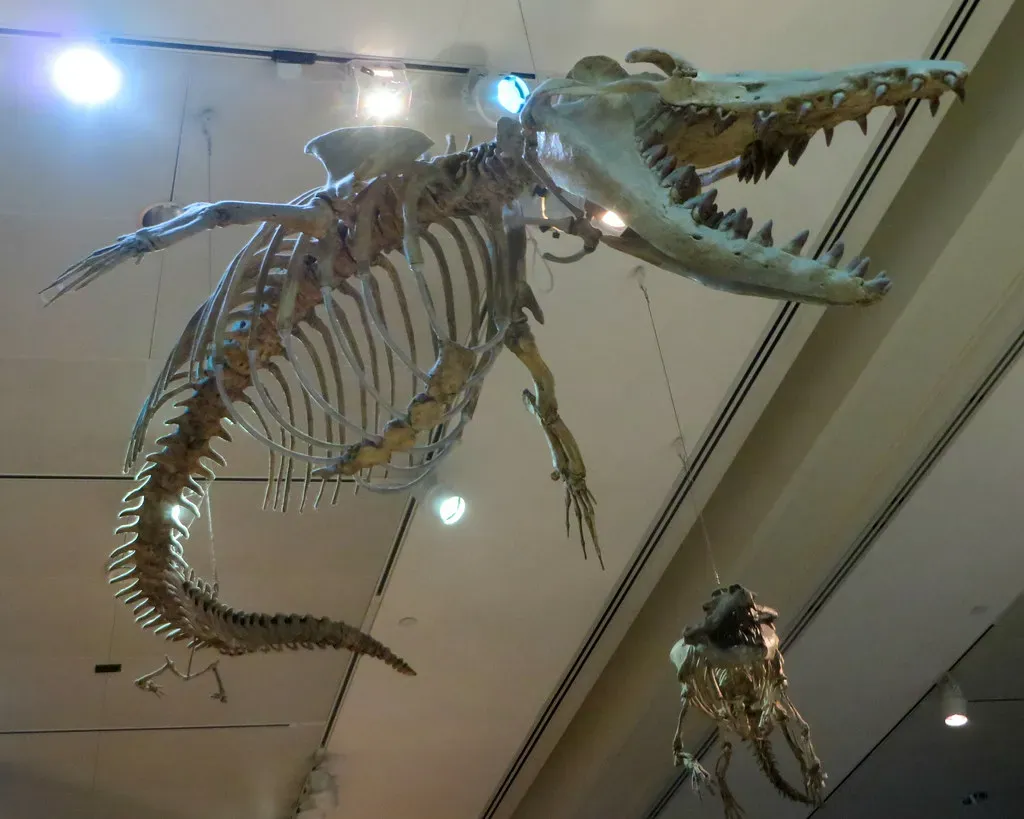
You might be tempted to picture dinosaurs stomping around the Badlands. Most visitors do. Honestly, the reality is even more fascinating. This sea contained ancient marine life which would have existed at the same time as dinosaurs, but because dinosaurs could not swim, none of them are found in the Pierre Shale or in the Badlands as a whole.
Instead, the creatures found from this time include shelled cephalopods like ammonites and baculites alongside the mosasaur, a giant marine reptile that could measure over 50 feet long. Fifty feet. That is longer than most school buses. While you will not find any dinosaur fossils in the Badlands, the park does have the highest concentration of mammal fossils in the entire national park system. So it is less Jurassic Park and more ancient ocean, followed by a golden age of mammals. That trade-off is, I think, far more interesting than most people expect.
The Golden Age of Mammals: Ancestors You Would Barely Recognize
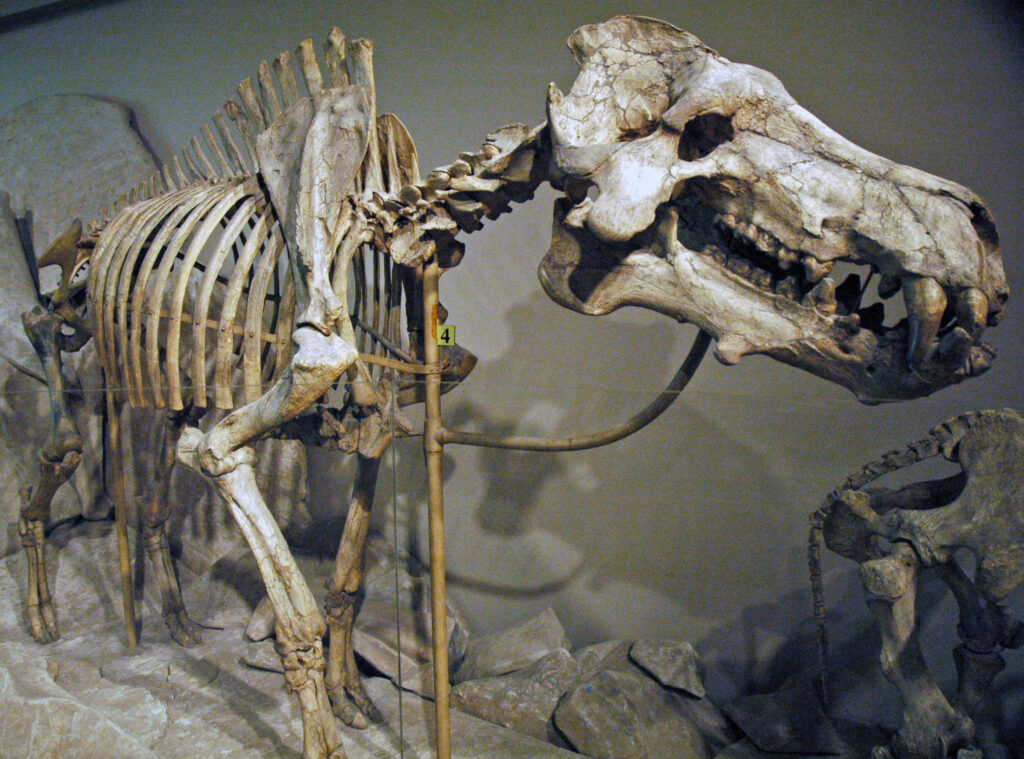
After the sea retreated and the age of dinosaurs ended, the land transformed into something extraordinary. A whole new cast of animals took the stage, and many of their descendants still walk the Earth today, though you would struggle to recognize their ancient ancestors. Fossils of ancient mammals, such as rhinoceroses, horses, camels, and rodents, have been found in the park, providing valuable information about the diversity and distribution of mammal species in the region during prehistoric times.
The rocks of the park contain a remarkably varied collection of fossils, including lizards, alligators, and turtles, along with birds such as eagles, owls, gulls, and pelicans. Large mammals are also found, including horses, camels, rhinos, tapirs, pigs, squirrels, beavers, rabbits, sheep, and even cats and dogs. One standout discovery deserves special mention. The name of the famous “Big Pig Dig” came from an exposed fossil originally thought to be the remains of an ancient pig-like mammal called Archaeotherium. It was later identified as Subhyracodon, a hornless rhinoceros, but the name stuck. Rhinoceroses are found today in Africa and Asia, but smaller versions once lived right here in the Badlands.
Erosion: The Sculptor That Never Sleeps
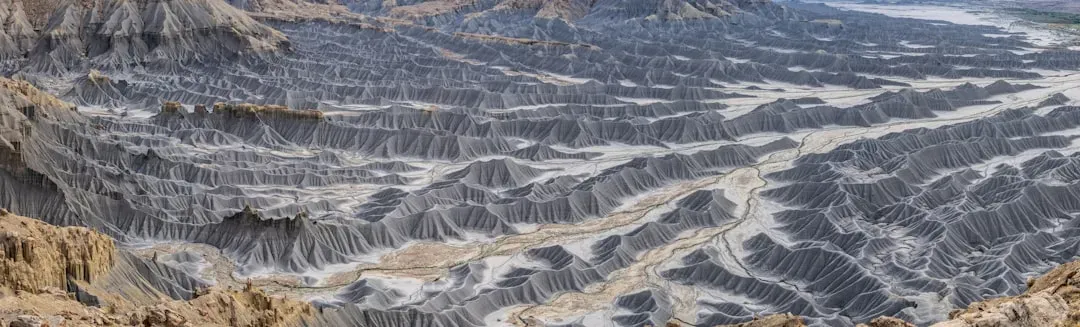
The Badlands are not a static monument frozen in time. They are alive, shifting, and actively destroying themselves. That might sound alarming, but it is actually part of what makes this landscape so extraordinary. The Badlands formations have a lifespan of approximately one million years, and they erode at about one inch per year.
Over time, the erosion and weathering processes in the Badlands have continued to shape the landscape. Water, in the form of rainfall and runoff, has carved deep canyons and gullies into the soft sedimentary rocks, revealing intricate patterns of layered strata. Wind, with its abrasive action, has sculpted towering spires and pinnacles, creating a striking and otherworldly landscape. In a strange twist of irony, the same forces that are slowly erasing the Badlands are also constantly revealing new fossils. Each year, up to 16 inches of rain rakes the landscape, often in fierce midsummer thunderstorms that wash another inch or two of sediment away. Gullies are cut deeper, pinnacles crash to the ground, and more fossils poke out of the sediment.
The Lakota and the Land That Was “Bad”
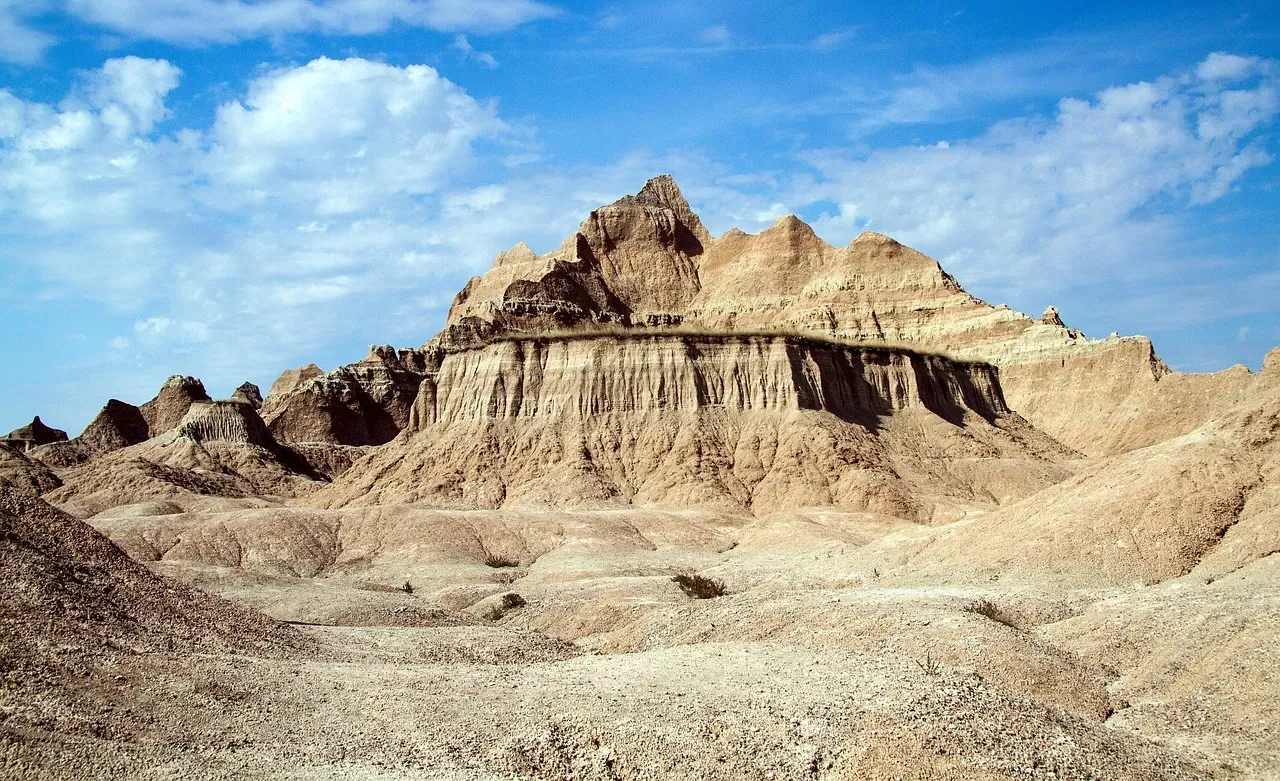
Long before any scientist arrived with a brush and a trowel, the Lakota people knew this land intimately. Their connection to it is ancient, complex, and deeply spiritual. For 11,000 years, Native Americans have used this area for their hunting grounds. Long before the Lakota were the paleo-Indians, followed by the Arikara people.
Taken from the Oglala Lakota name Mako Sica, meaning “land bad,” the region’s name references the spires that still frustrate travelers trying to traverse over and around the dangerously steep terrain that shifts underfoot. What is remarkable is that the Lakota were also early paleontologists in their own right. The Lakota found large fossilized bones, fossilized seashells, and turtle shells, and correctly assumed that the area had once been under water and that the bones belonged to creatures that no longer existed. They reached that conclusion without microscopes or carbon dating. That is nothing short of remarkable.
Fossil Discoveries: Ordinary People, Extraordinary Finds
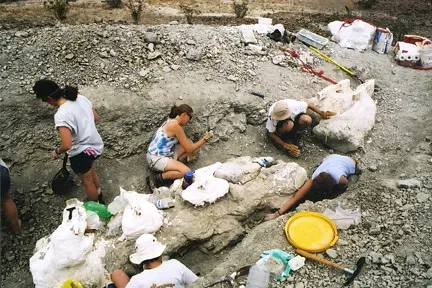
Here is something that surprises almost everyone: you do not have to be a professional paleontologist to make a landmark discovery in the Badlands. In fact, some of the most significant finds have come from regular visitors. The Big Pig Dig was one of the longest paleontology digs in Badlands National Park, recovering almost 20,000 fossils. It all started because someone noticed something strange poking out of the ground.
A photographer from Iowa found rhino bones on the side of the road near a picnic area on an afternoon walk. During excavation, they found more rhino skeletons, resulting in 19,000 specimens found. All because a visitor reported that initial rhino fossil. The park actively encourages this kind of citizen discovery. To aid with the investigation, preservation, and recovery of fossils, Badlands has a form for visitors to fill out should they find a fossil, and the Park Service will send a paleontologist out to investigate all fossil reports. Think about that the next time you are hiking a trail and notice something unusual sticking out of the clay. You could genuinely be the first human to lay eyes on a creature that lived 35 million years ago.
Conclusion: A Living, Breathing Time Machine
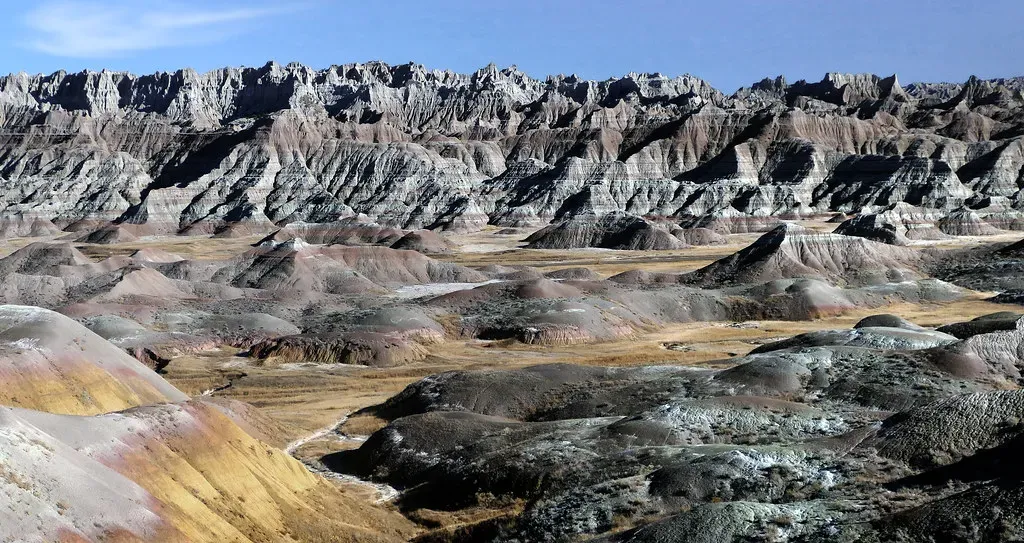
The Badlands are unlike almost anywhere else on Earth. They are raw, they are relentless, and they are quietly astonishing. You walk into this landscape and find yourself standing inside deep time, surrounded by evidence of seas that vanished, animals that evolved, climates that transformed, and cultures that built entire worlds on this very soil.
The exposed sedimentary strata preserve a record of ancient geologic events and processes, including changing depositional environments and the tectonic uplift of rock layers. These strata and the fossils they preserve reveal evidence for gradual changes in the regional and global Earth system, as well as distant catastrophic events such as the effects of massive volcanic eruptions or asteroid impacts. That is not just geology. That is the story of life on this planet.
Every crumbling spire, every fossil glimpsed in a canyon wall, every layer of color striped across a butte is a reminder that what exists today is temporary, and that the history beneath our feet is far stranger and more magnificent than most of us ever stop to consider. The Badlands have been keeping these secrets for millions of years. The real question is: how long would it take you to uncover them? What would you find if you looked a little closer?