If you were designing a nightmare creature for a sci‑fi movie, you’d probably give it enormous scythe‑like claws and a strangely bird‑like body. Nature actually got there first. Deep in the Late Cretaceous, a real animal like this walked the Earth: Therizinosaurus, the dinosaur with claws so long they look almost fake in museum photos and reconstructions. The strangest part is that, for all that terrifying hardware, it may have preferred munching plants over ripping prey apart.
Therizinosaurus has become one of those fossils that refuses to sit quietly in a textbook. Its skeleton seems to scream: what on Earth was this thing doing? Every time you think the puzzle is solved, a new study or fossil relative adds another twist. Let’s dive into what we actually know, where scientists still argue, and why this weird, shaggy, long‑clawed dinosaur feels oddly relatable in 2026: powerful, misunderstood, and still not fully figured out.
The First Discovery: A Monster Claw With No Owner
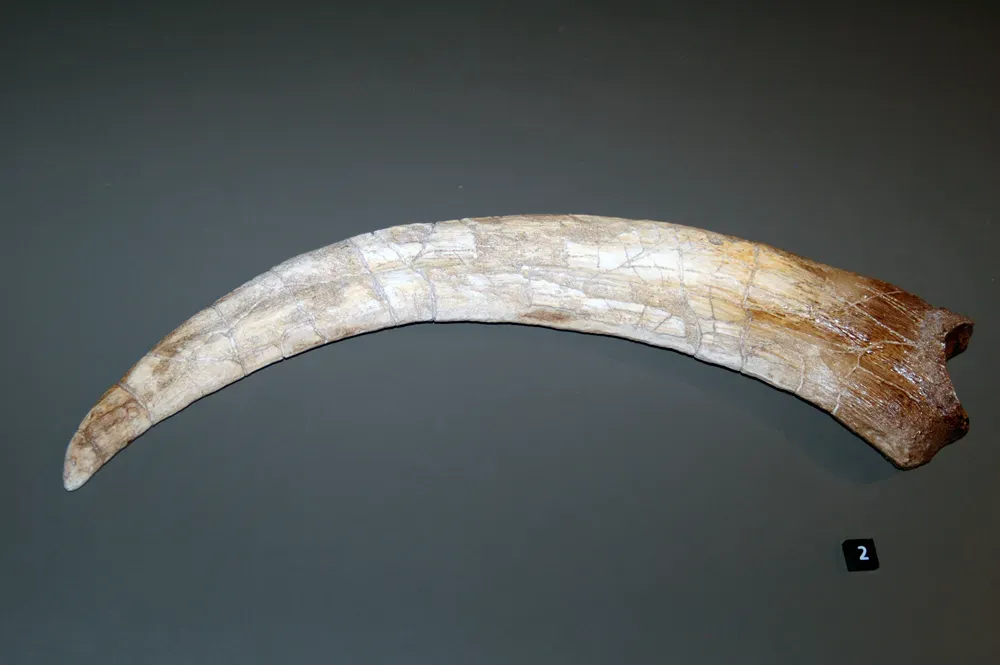
The story starts in the middle of the twentieth century, when paleontologists working in Mongolia unearthed something that looked more like a weapon than a bone. It was a single giant claw, around as long as a human forearm, curved like a scythe and clearly belonging to a massive animal. At first, nobody knew what the rest of the creature looked like; the claw was all they had, like finding only the blade of a sword and guessing the entire knight from that single piece.
Early researchers assumed the owner must have been a vicious, meat‑eating predator that used its claws like grappling hooks to shred prey. To be fair, that guess made sense when the fossil record was dominated by famous carnivores like Tyrannosaurus and Velociraptor. For years, the mental image of Therizinosaurus was basically “super‑raptor with absurd claws.” Only later did more bones – and relatives with better skeletons – reveal that this first impression was wildly off the mark.
A Body That Looks Wrong for Its Own Claws
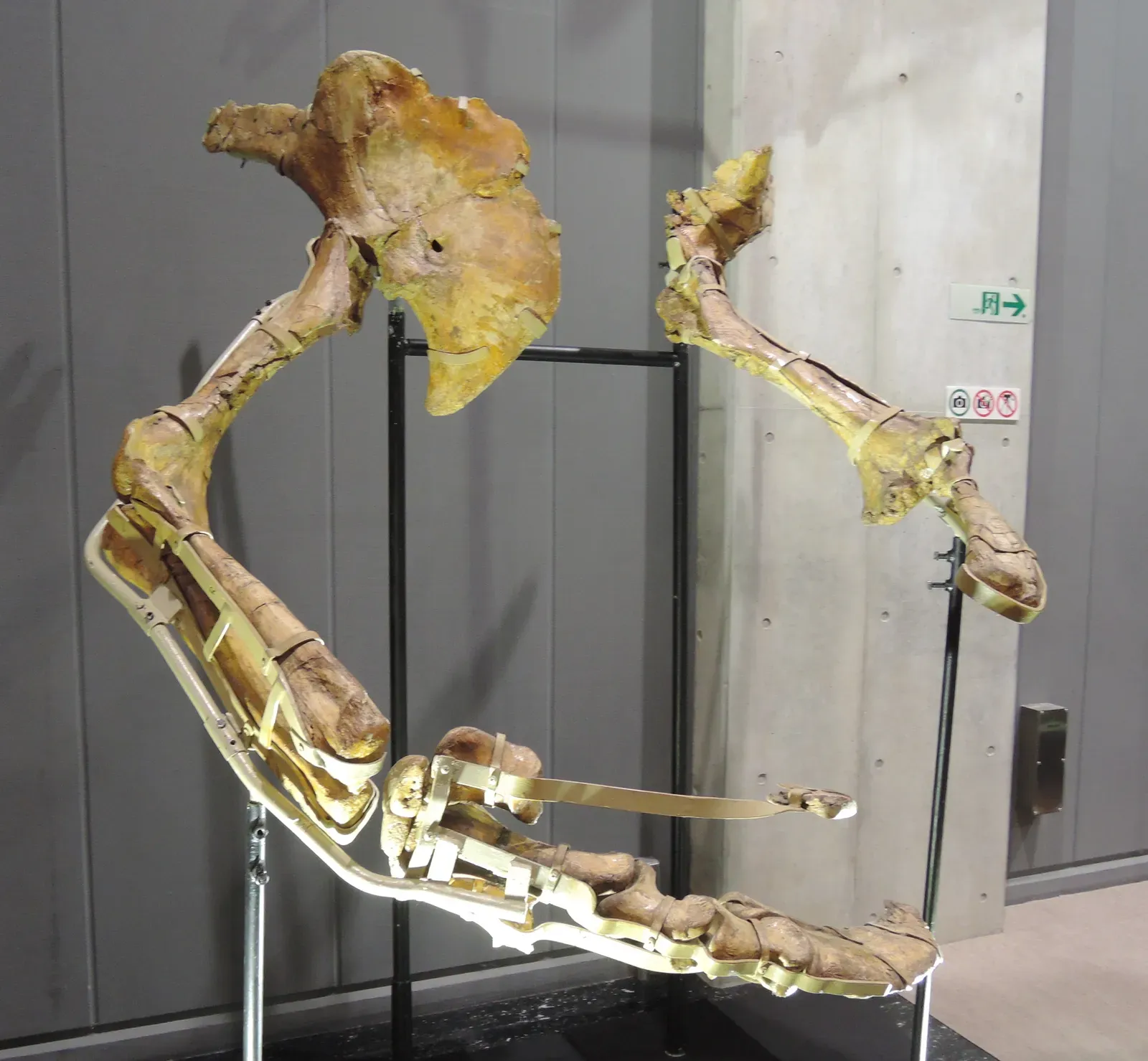
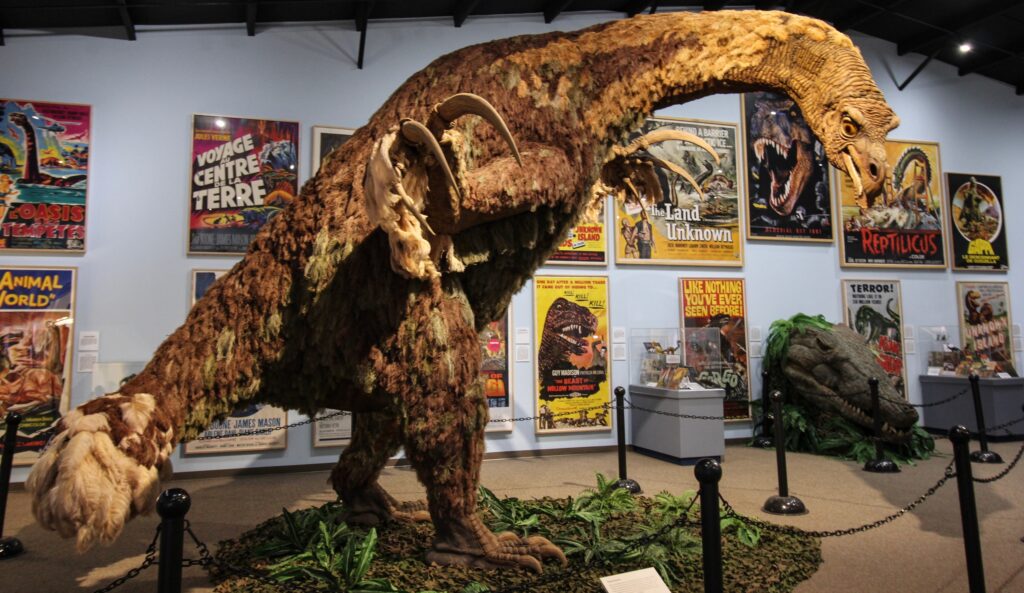
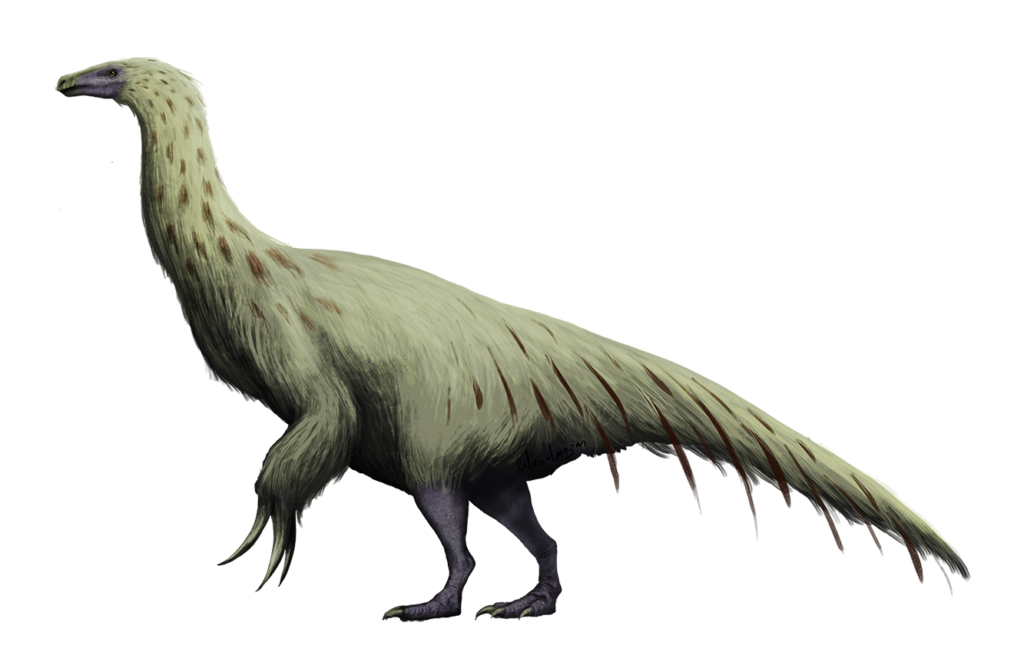
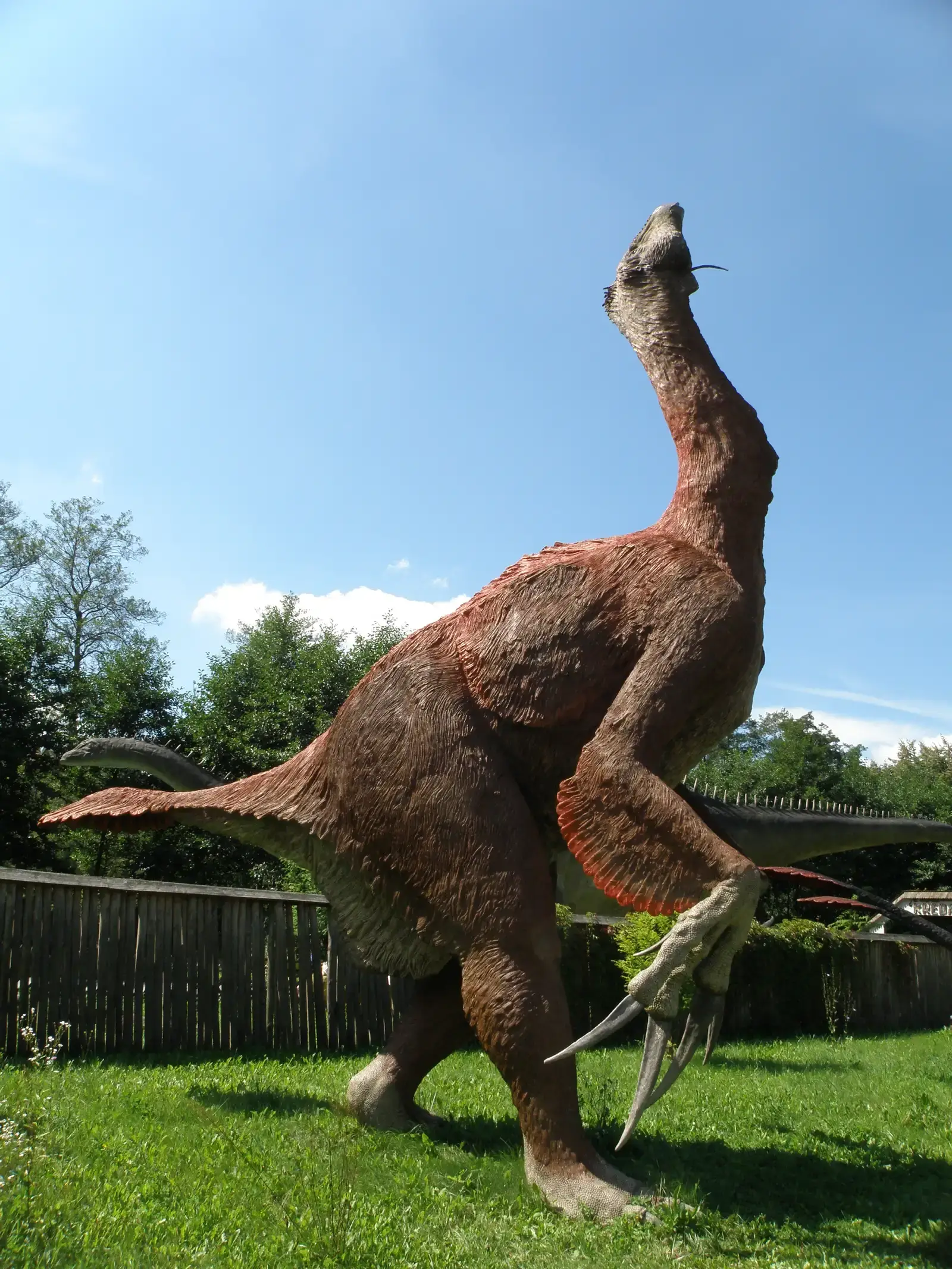
Once additional fossils from related species started turning up, the picture of Therizinosaurus got much weirder. Instead of a sleek killing machine, paleontologists reconstructed a bulky, pot‑bellied dinosaur that walked on two sturdy legs, had a relatively small head, and a long neck reaching out from a wide torso. It was more like a mix between a plucked giant bird, a ground sloth, and a bear than a Hollywood monster. The famous claws sat at the end of long, powerful arms, exaggerating the oddness even more.
This mismatch between body and weapon is one reason the animal fascinates so many people. Predators like dromaeosaurs have big claws and light, agile bodies built for pouncing, while heavy tank‑like herbivores tend to have armor or horns. Therizinosaurus seems to have borrowed a predator’s arm design and glued it onto a plant‑eating, deep‑chested frame. It challenges our sense that evolution should always look “efficient” and streamlined, reminding us that natural history sometimes takes the scenic route.
The biggest argument around Therizinosaurus is what it actually ate. The shape of its skull and teeth in related species strongly suggests a diet focused mainly on plants: leaf‑shaped teeth good for slicing vegetation, a beak at the front of the mouth, and a long neck to browse higher foliage. Its broad, barrel‑like ribcage looks like it housed a big gut for fermenting tough plant matter, closer to what you’d expect in large herbivores than in streamlined carnivores. On paper, it reads like a classic foliage specialist that just happens to carry horror‑movie claws.
Still, some scientists argue that calling it a strict herbivore might be too simplistic. In modern ecosystems, many animals we think of as plant‑eaters will opportunistically grab insects, small vertebrates, or carrion when it is easy. It would not be shocking if Therizinosaurus occasionally did the same, especially with such impressive arms to manipulate branches or debris. Without a fossilized stomach full of its last meal, though, the debate stays open, and the safest way to view it is as a dinosaur leaning heavily toward plants with room for some opportunistic snacking when the chance arose.
Those Ridiculous Claws: Tools, Weapons, or Both?
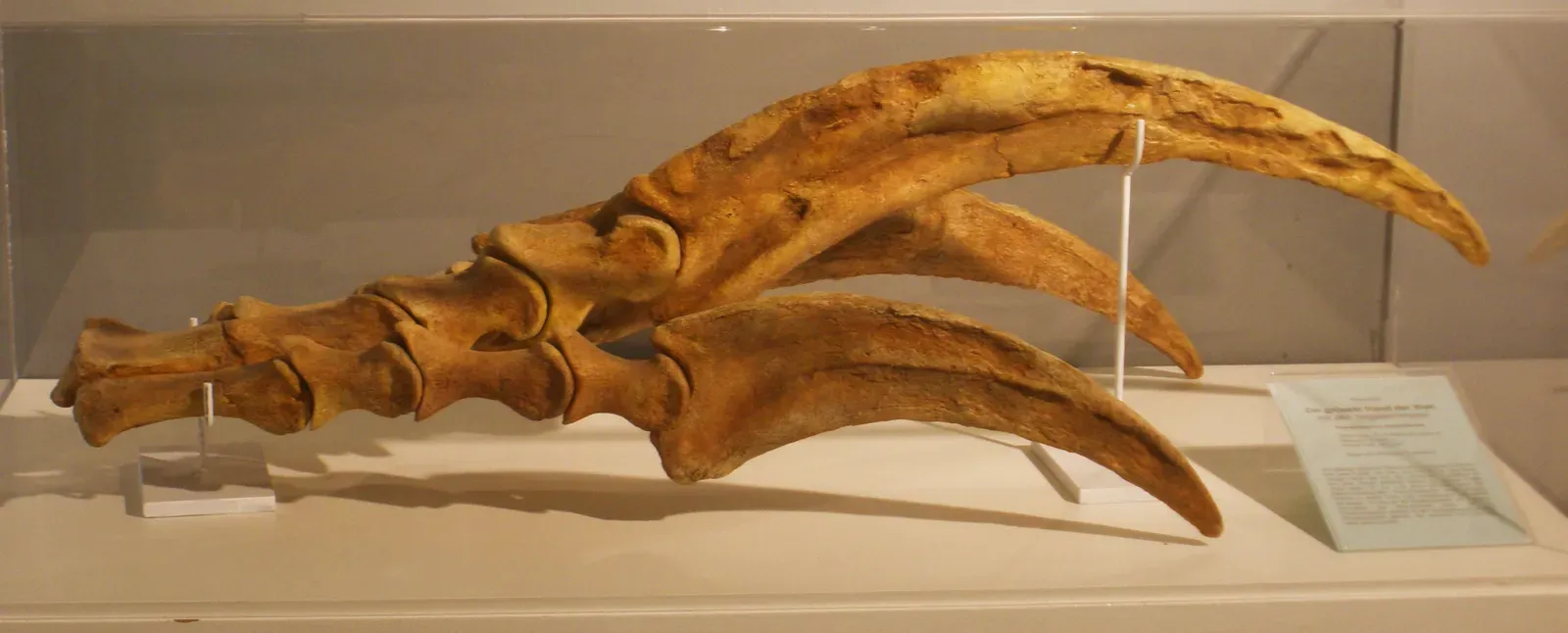
The claws themselves are so spectacular that it is almost impossible not to imagine them being used for violence, but the truth is subtler. Their shape and cross‑section look surprisingly delicate for a primary killing tool; they are long and narrow rather than thick and robust, more like specialized instruments than general‑purpose blades. One idea is that Therizinosaurus used them like oversized gardening tools, drawing branches closer, stripping leaves, or pulling down high vegetation that smaller herbivores could not reach. In that scenario, the claws become part of a very advanced “reach and rake” system.
Another line of thought pushes harder on the idea of defense and display. The claws, combined with its size, would have made Therizinosaurus a nightmare to annoy, even for big predators. A single well‑placed swipe could do massive damage, so the claws may have acted as a deterrent, similar to how some animals today rely on intimidating horns or tusks more than on actually using them. They also could have played a role in mating displays or dominance rituals – if you are a giant, clawed dinosaur trying to impress rivals or potential partners, showing off those arm‑length scythes is not exactly subtle.
Fuzzy Feathers and a Bird‑Dinosaur Identity Crisis
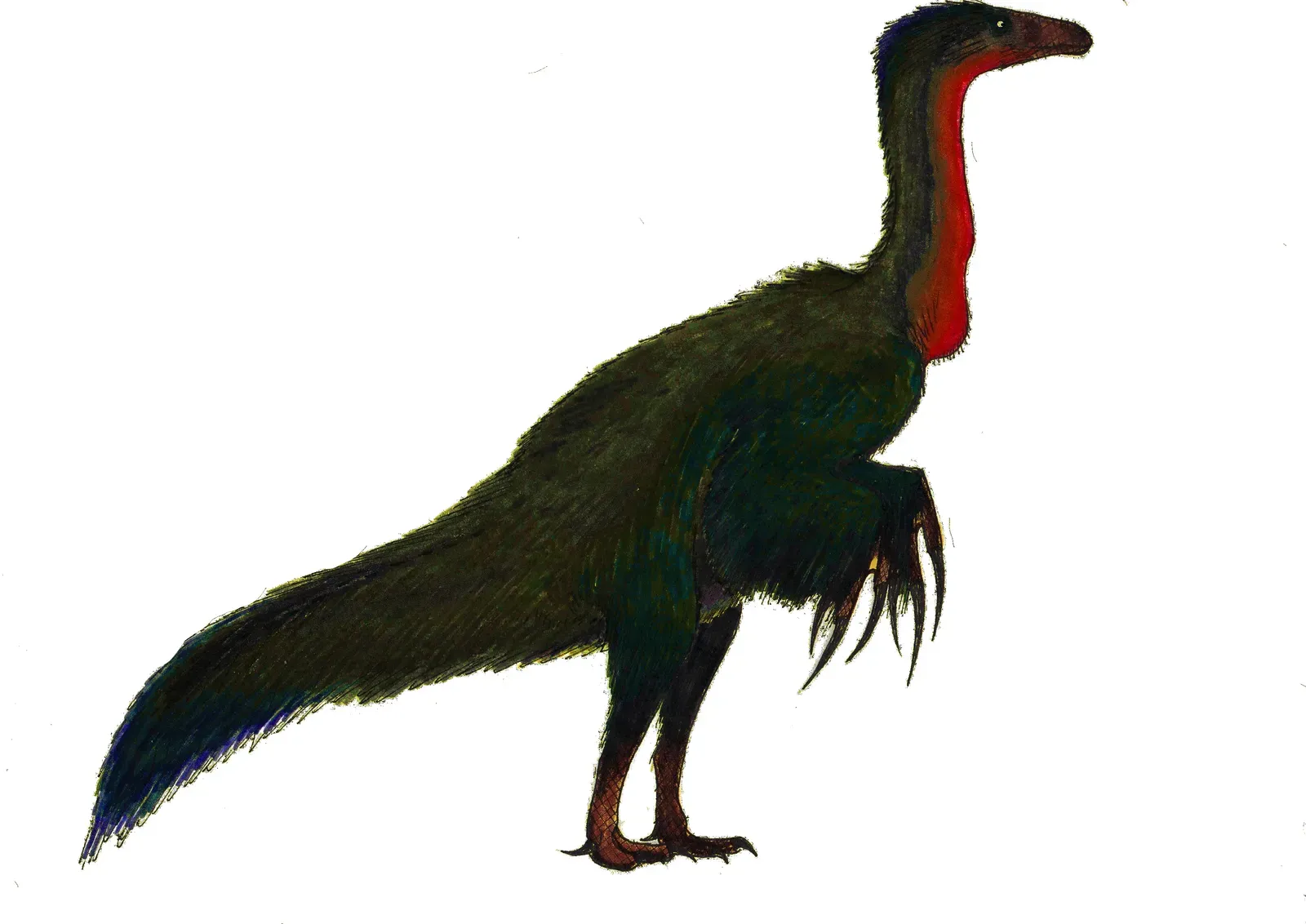
Therizinosaurus belongs to a broader group of theropod dinosaurs that, somewhat ironically, includes both famous meat‑eaters and early relatives of birds. Many of its closer cousins show evidence of feathers, or at least a feather‑like covering, and there is good reason to think Therizinosaurus itself was not scaly in the classic reptilian sense. Picture a huge, shaggy, bird‑bodied creature with feathered or filament‑covered arms ending in bare, monstrous claws. It is less Jurassic Park villain and more bizarre, oversized ground bird that never got the memo about staying small.
This link to birds makes Therizinosaurus feel oddly modern. We live in a time when the “dinosaurs were just lizards” idea has been replaced by a more nuanced view that many of them were fluffy, dynamic, and active. Seeing Therizinosaurus as part of that feathery, bird‑adjacent story changes the mood: it stops being only a nightmare with claws and becomes an evolutionary cousin of the birds at your feeder, just stretched to an absurd scale. That mental jump – from sparrows and ostriches to a multi‑ton, clawed browser – makes the animal feel somehow closer, like a very distant family member who went in a wildly different direction.
A Lifestyle Still Wrapped in Mystery
Even with all the research, the day‑to‑day life of Therizinosaurus is still a bit of a black box. Did it live in dense forests, quietly browsing in the shade, or in more open environments where its height helped it see approaching danger? Was it solitary, lumbering through its territory alone, or did it gather in loose groups the way some big herbivores do today? Clues from rock layers, plant fossils, and the behavior of related species can help, but they rarely give decisive answers. Paleontology often feels like reconstructing a movie from a handful of still frames.
Personally, I like the idea that Therizinosaurus moved slowly and deliberately, spending most of its time feeding, only revealing the real power of its arms when it had to. There is something appealing about a creature that looks terrifying but may have preferred to avoid conflict, relying more on intimidation than on actual combat. Of course, that is a bit of human emotion projected onto a long‑extinct animal, and scientists have to be careful not to let storytelling override evidence. Still, that tension between what we can prove and what we can only imagine is part of what keeps this dinosaur so captivating.
Why This Strange Dinosaur Still Matters Today
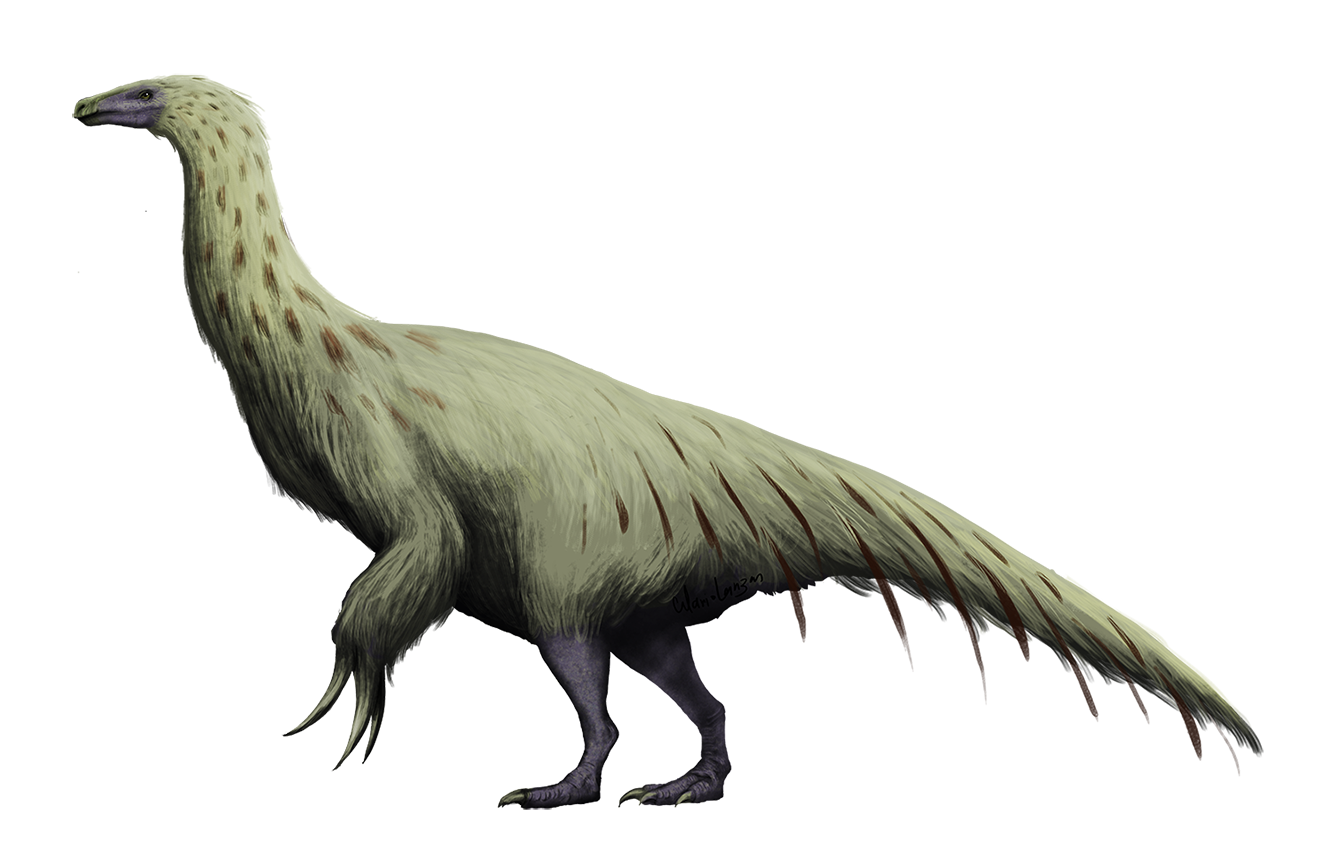
Therizinosaurus is more than just a weird footnote in dinosaur books; it is one of those fossils that forces us to rethink what is possible in evolution. Its mix of traits – theropod ancestry, herbivorous adaptations, gigantic claws, probable feathers – shows that nature does not have to follow our tidy categories of “meat‑eater” versus “plant‑eater” or “bird‑like” versus “reptile‑like.” When students first learn about it, you can almost see their mental models of dinosaurs bending and stretching to make room for this misfit. That kind of discomfort is healthy; it keeps science honest and flexible.
In a way, Therizinosaurus has become my favorite example of how strange reality can be compared to our expectations. It reminds us that having sharp, intimidating tools does not automatically make you a villain and that an animal’s lifestyle can be far more complex than a simple label. As debates continue over its exact diet, behavior, and environment, one thing feels clear: this bizarre dinosaur has earned its place as a symbol of scientific uncertainty that is not a weakness but a strength. The fact that we can say “we are not completely sure” and still be fascinated might be the most important lesson it gives us. When you picture this giant, feathered, plant‑nibbling scythe‑hand, doesn’t it make you wonder what other strange stories in Earth’s history we still have not uncovered?