Imagine diving into a warm Triassic sea, expecting small fish and strange shelled creatures, and instead seeing a reptile the length of a city bus cruising past like it owns the planet. That is the sort of mental picture Cymbospondylus forces on you: an animal so big, so oddly built, that it feels almost like nature was experimenting in real time. It is one of those fossils that makes paleontologists stop, stare, and quietly rethink what they thought they knew about how fast life can scale up in size.
What makes the story of Cymbospondylus so gripping is not just its sheer bulk, but the timing and speed of its rise. This creature shows up surprisingly early in the age of the dinosaurs, yet it is already playing in the “ocean giant” league. Its skeleton hints at a life of powerful swimming, deep diving, and high‑stakes hunting in ecosystems still recovering from the worst mass extinction Earth has ever seen. The more you learn about it, the more it feels like the opening chapter of a new planetary experiment: how big, how fast, and how weird can life get when it returns to the sea?
A Bus‑Sized Reptile in a Post‑Apocalyptic Ocean
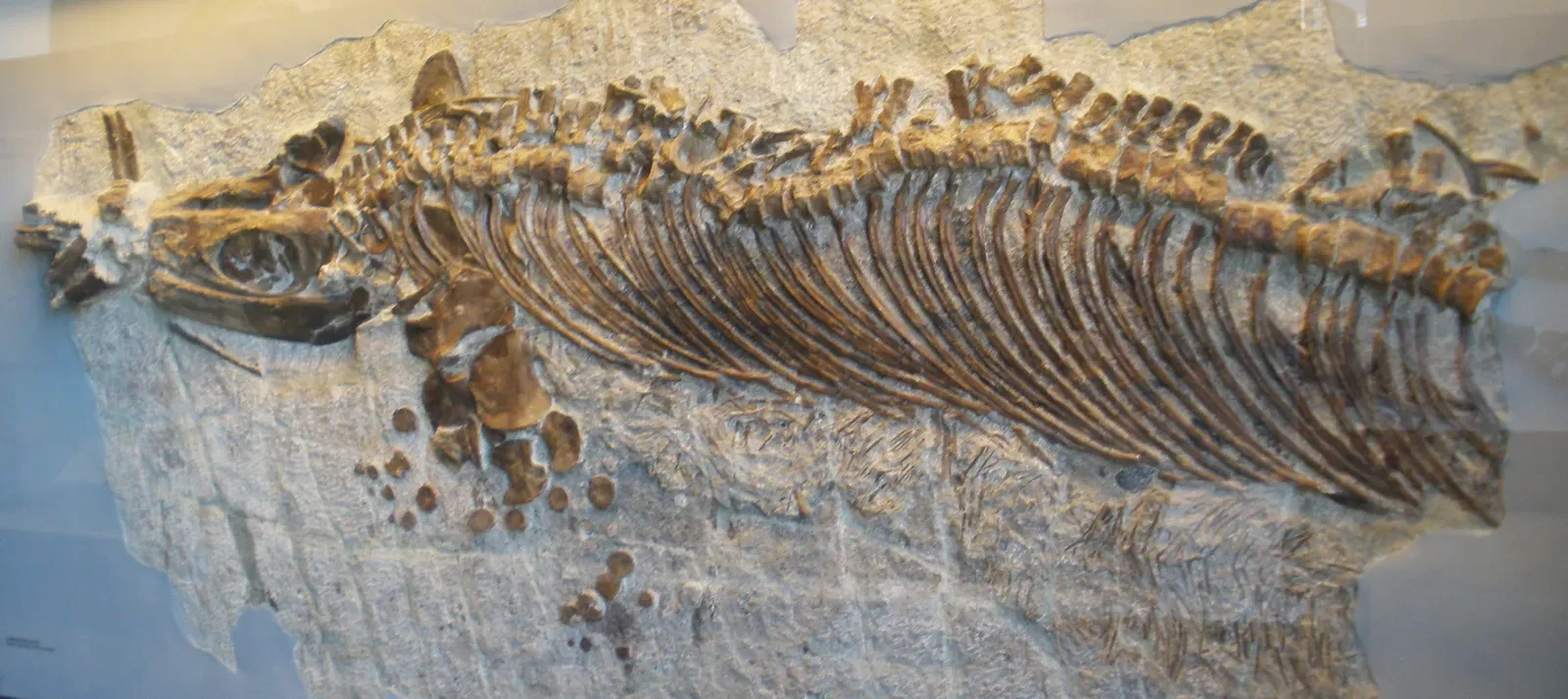
Cymbospondylus lived in the Middle Triassic period, roughly about 247 to 237 million years ago, at a time when Earth was still recovering from a catastrophic extinction that had wiped out most species. The oceans, once devastated, were starting to fill up with new players, and Cymbospondylus was one of the early heavyweights in this rebuilding world. It was an ichthyosaur, part of a group of marine reptiles that evolved from land‑dwelling ancestors and then took to the sea with almost shocking success.
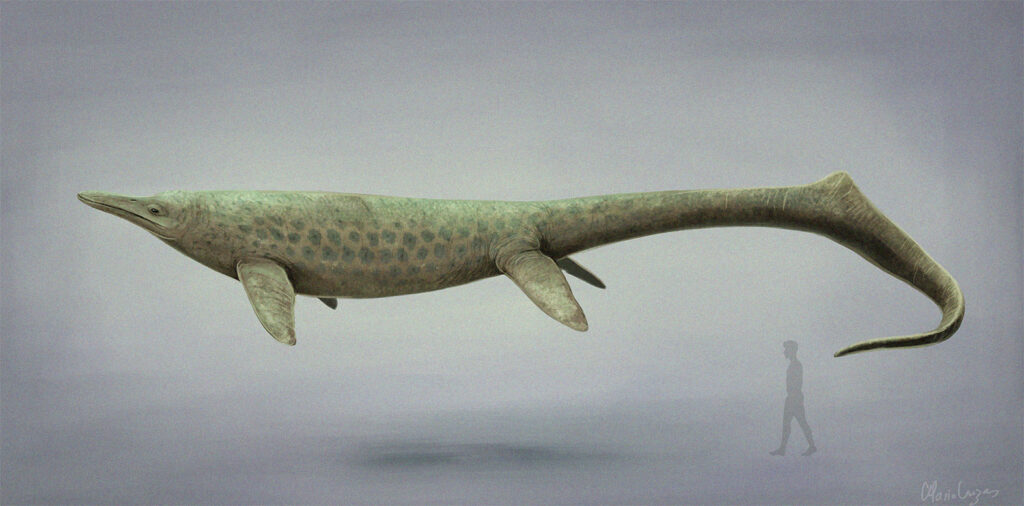
What blows my mind is how quickly these animals went from modest, lizard‑like swimmers to predators that could rival a modern whale in overall presence and impact on their ecosystem. Fossil beds in places like Nevada and the Alps have preserved Cymbospondylus skeletons that stretch well over the length of a modern city bus, with estimates for some species reaching around fifteen to seventeen meters. That is not just big; that is ecosystem‑defining big, the sort of size that forces everything around it to react, adapt, or get eaten.
Built Like a Living Torpedo: Body Shape and Swimming Style
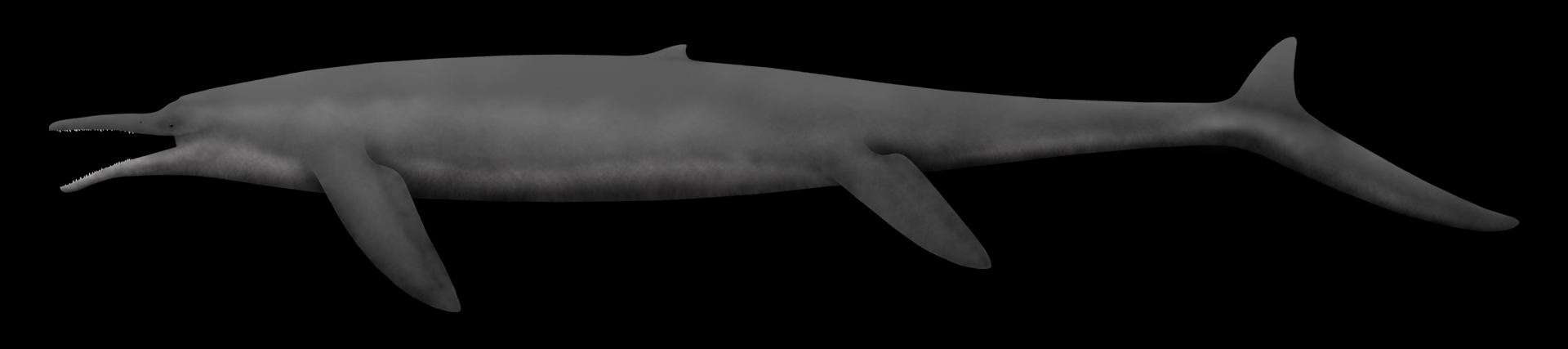
At first glance, the body of Cymbospondylus might remind you of a stretched‑out dolphin that kept growing and never quite stopped. It had an elongated, streamlined body with a long snout and a powerful tail, all built for cutting through water with efficiency and speed. Unlike later ichthyosaurs, which developed extremely fish‑like bodies and tall tail fins, Cymbospondylus still carried some of the marks of its early stage in the group’s evolution, including a slightly less refined, more experimental build.
Despite that, you can still see the logic of the ocean in every bone. Its vertebrae are packed in like beads on a string, suggesting a back that could flex in powerful side‑to‑side strokes, much like a tuna or shark. Its limbs were transformed into paddles, not for flapping like a sea turtle, but more for steering and stabilizing while the tail did the heavyweight work. When I picture it moving, I imagine something between a crocodile and a swordfish: not necessarily the fastest sprinter in the sea, but a relentless cruiser capable of covering huge distances in search of prey.
A Skull Made for Hunting: Eyes, Jaws, and Teeth
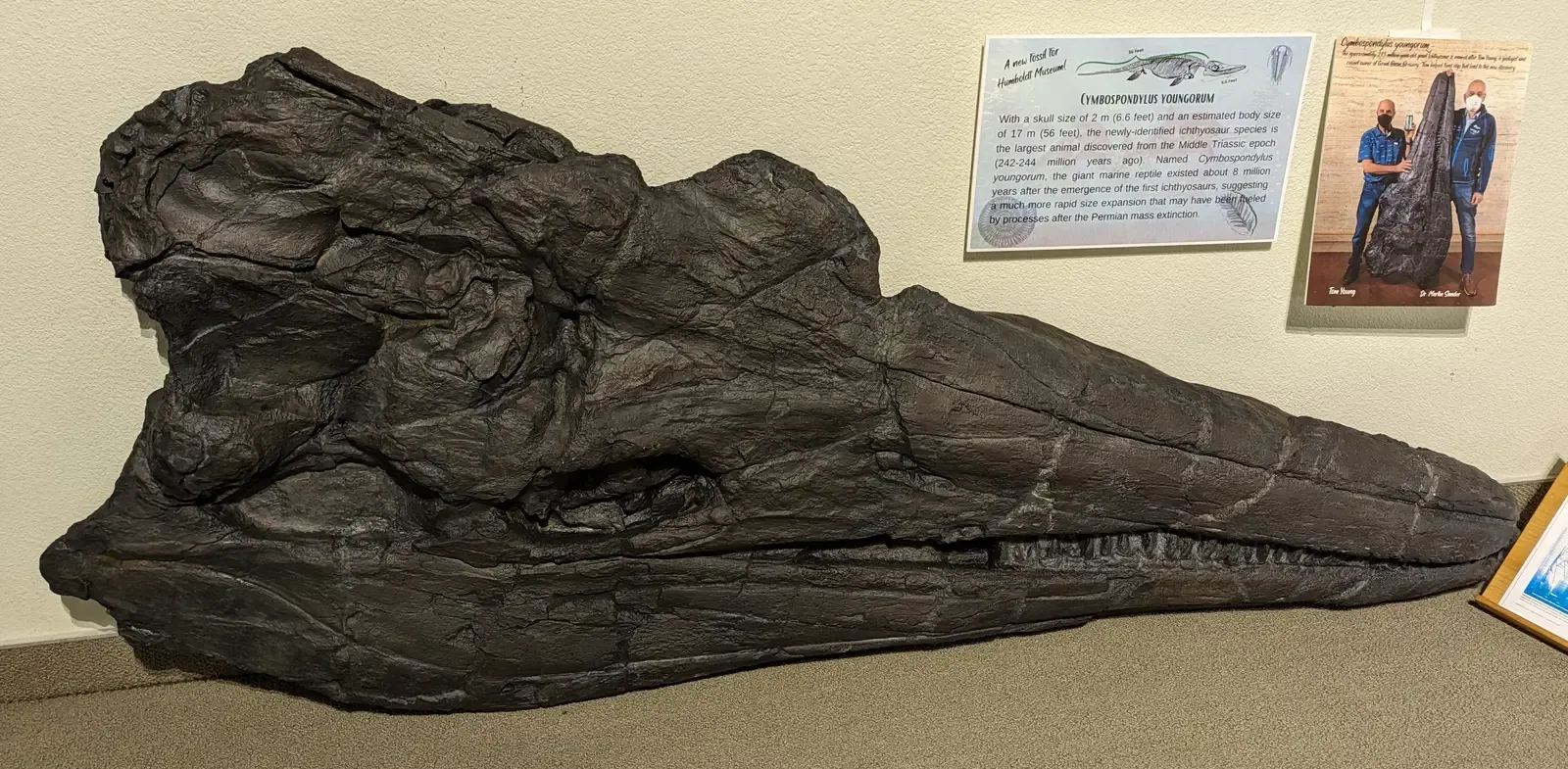
The head of Cymbospondylus is where its story really sharpens into focus. It had a long, narrow snout lined with conical teeth that were perfect for gripping slippery prey like fish, squid‑like cephalopods, and possibly smaller marine reptiles. Its jaws were not built for crushing through thick shells, but for seizing fast, agile animals in the open water, more like a barracuda or a large predatory fish than a shell‑smashing sea monster.
Its large eye sockets suggest that sight mattered a lot, whether for spotting prey in deeper, dimmer waters or for tracking fast‑moving targets near the surface. That detail makes Cymbospondylus feel less like a vague monster and more like a focused, specialized hunter perfectly tuned to its time and place. I always find the eyes of fossil animals incredibly grounding: suddenly this giant is not just a pile of bones, but a living, watching creature that saw sunlight shimmering through Triassic waves and reacted to every flick of movement in front of it.
How Does It Compare to Modern Ocean Giants?
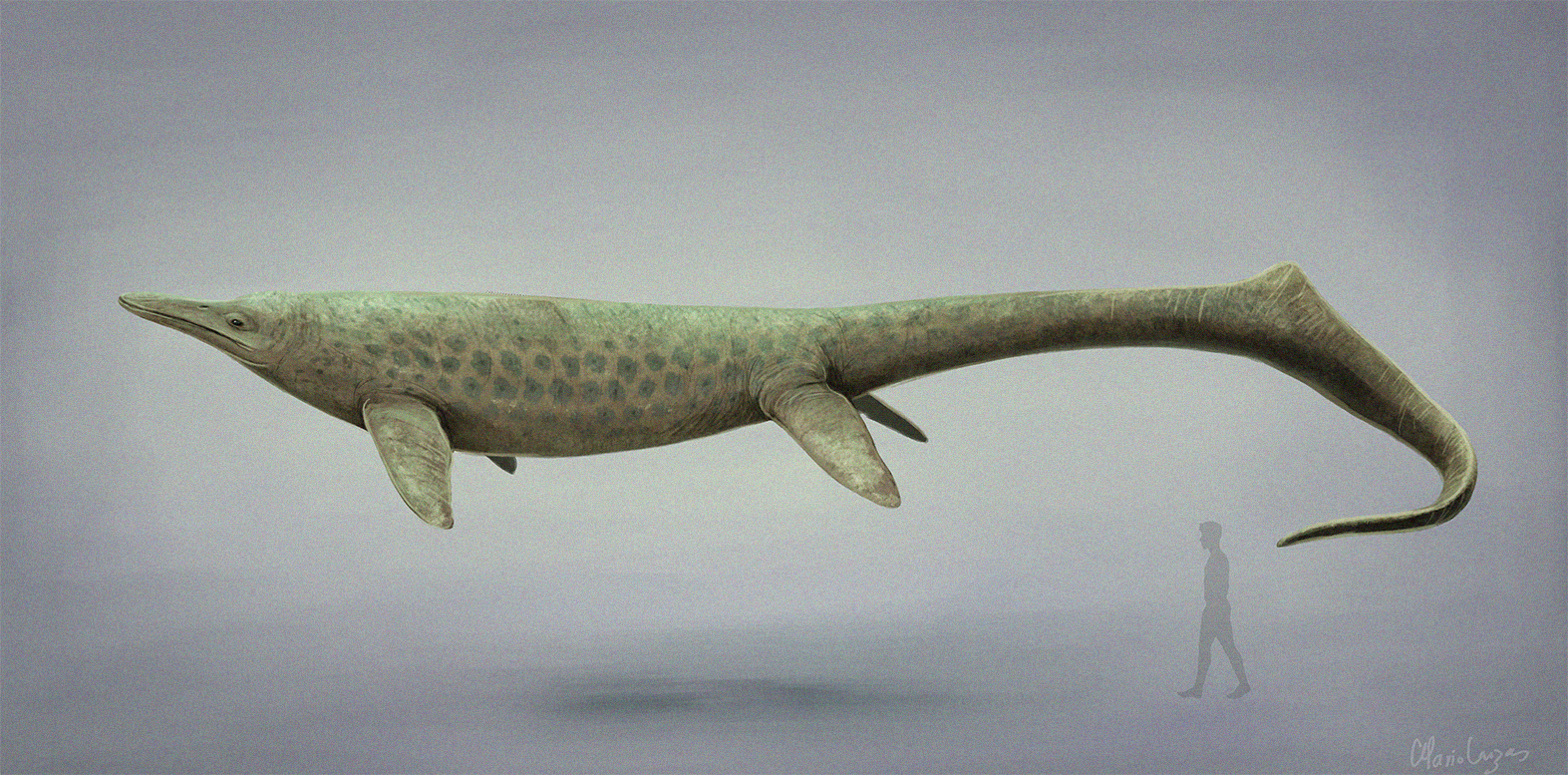
When people hear “bigger than a bus,” they often think of whales, and to be clear, the largest whales today still absolutely crush Cymbospondylus in length and mass. A blue whale can be more than twice as long and many times heavier than even the biggest size estimates for Cymbospondylus. But what makes this reptile so remarkable is that it achieved truly giant status so early in the age of large marine vertebrates, long before whales even existed.
In a way, Cymbospondylus is part of a repeating pattern in Earth’s history: land animals go back into the sea, then gradually evolve from clumsy swimmers into sleek, high‑performance predators, and some of them inevitably push into giant territory. You see echoes of this path in whales, in plesiosaurs, and in other ichthyosaurs that came later. Cymbospondylus feels like one of the earliest serious attempts at this “ocean giant” lifestyle, a kind of rough draft that was already surprisingly successful.
Growing Giants in Record Time After Disaster
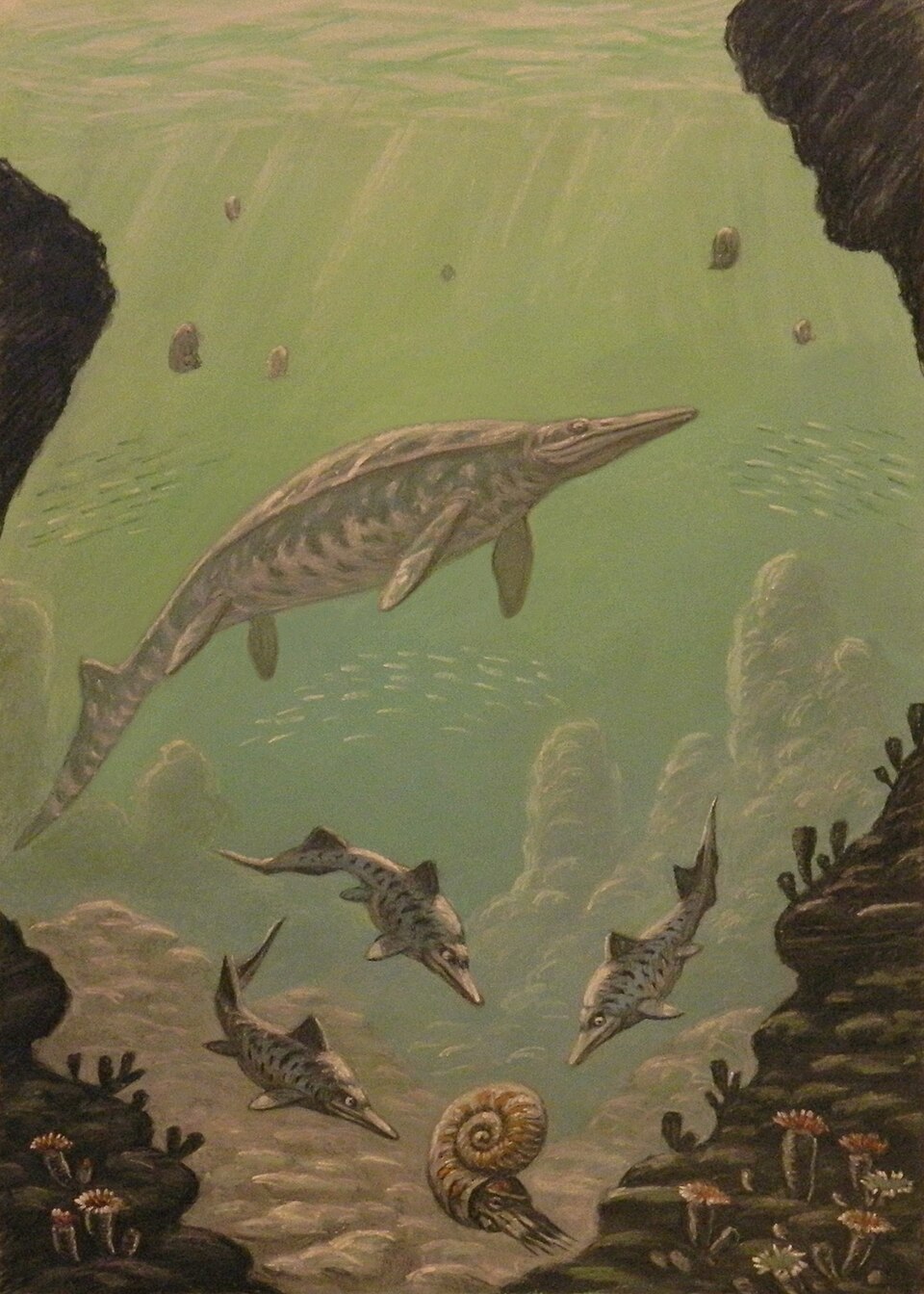
One of the most fascinating parts of the Cymbospondylus story is the timing. It shows up not that long after the end‑Permian mass extinction, the worst biological crisis our planet has experienced, when the vast majority of marine species vanished. You might expect evolution to take a very slow, careful route back to complexity and large body size after such a disaster, yet here is this massive reptile patrolling Triassic seas like it owns the place.
To me, that sends a powerful message about how quickly life can rebound and fill empty ecological space once conditions stabilize even slightly. Predators like Cymbospondylus were both symptoms and drivers of that recovery: their presence means food webs were already deep and rich enough to support giants, and their hunting pressure would have helped shape which species thrived. It is a reminder that “recovery” after catastrophe is not just small, slow, and fragile; it can also be bold, fast, and unexpectedly huge.
A Fossil Puzzle Still Being Put Together
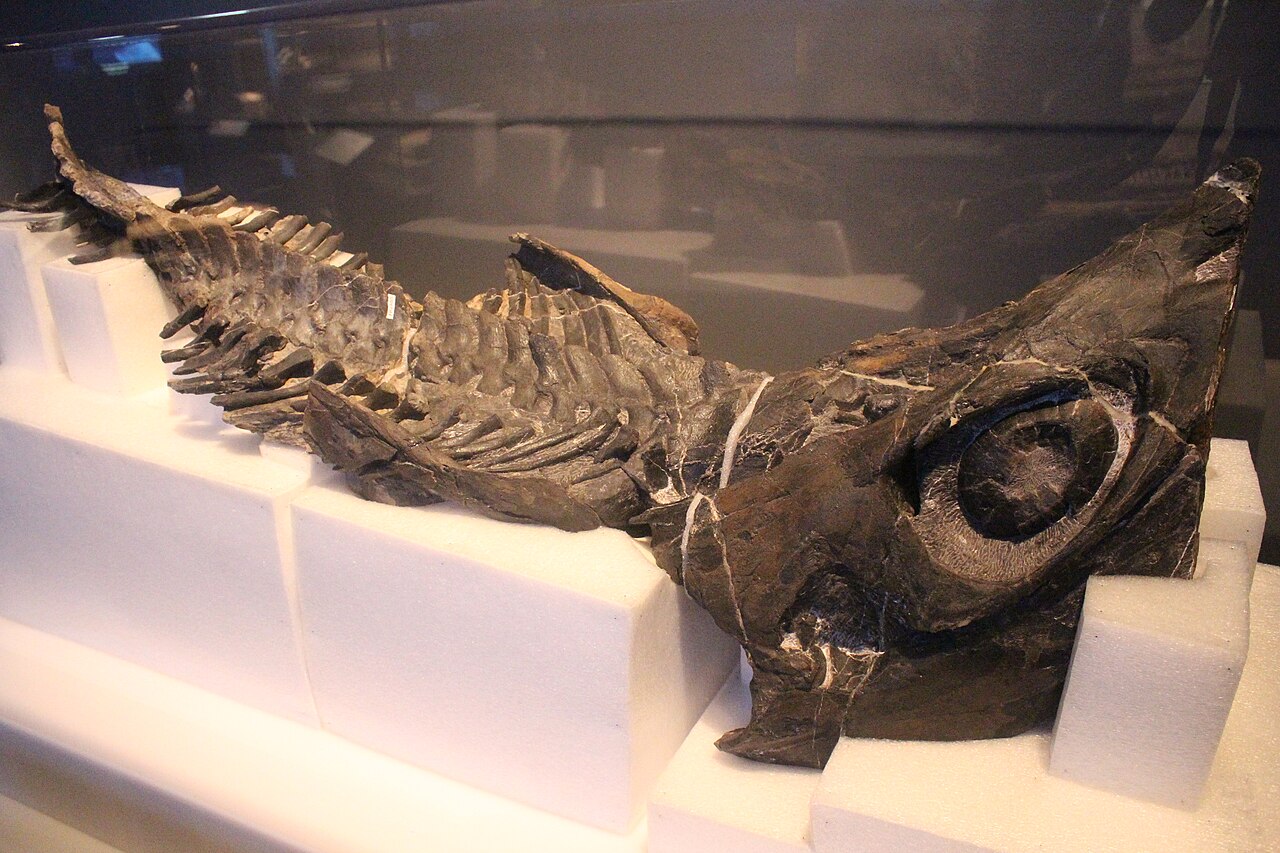
For all the dramatic reconstructions you might see in books or documentaries, Cymbospondylus is still a bit of a moving target scientifically. Different species assigned to this genus vary in details of skull shape, body proportions, and likely lifestyle, and paleontologists continue to refine which fossils truly belong together. Some finds suggest even larger individuals than early estimates, while others hint at a wider ecological range than originally expected.
I actually love that we do not have a perfectly neat, finished picture yet, because it keeps Cymbospondylus in that exciting zone between what we know and what we are still guessing. Each new, well‑preserved skeleton can change the story a little: how deep it might have dived, how fast it could swim, what exactly it ate, and how it fit into its community. It is a bit like following a long‑running mystery series where every new episode answers one question and then quietly raises two more.
Why Cymbospondylus Still Matters Today
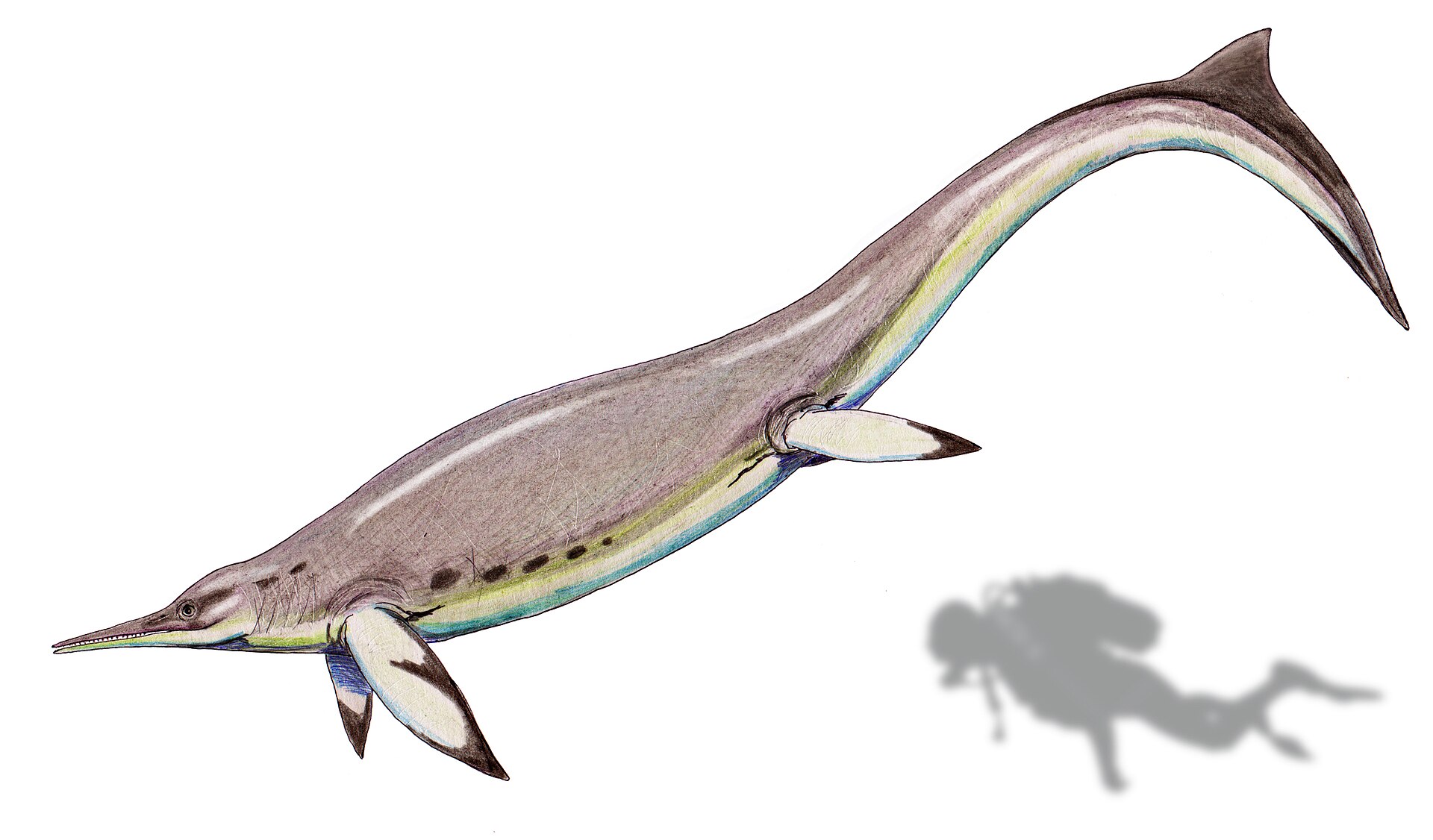
In my opinion, Cymbospondylus is one of those fossils that quietly reshapes how you think about both evolution and the resilience of life. This was a giant predator that appeared in oceans still haunted by disaster, yet it thrived enough to reach bus‑like proportions and dominate its patch of the Triassic world. It shows that “giant” is not some special, one‑off achievement reserved for modern whales, but a recurring solution life returns to when the conditions are right and the food is plentiful.
When I think about Cymbospondylus, I do not just see an extinct reptile; I see a signpost in deep time, pointing to how quickly ecosystems can rebuild, diversify, and start pushing boundaries again. It also makes our present oceans feel more fragile and more incredible at the same time, because we are just the latest chapter in a very long story of creatures testing the limits of size and power in the sea. So the next time you see a bus rumbling down the street, maybe ask yourself: would you be brave enough to swim alongside something that big, and know it was looking back at you?