
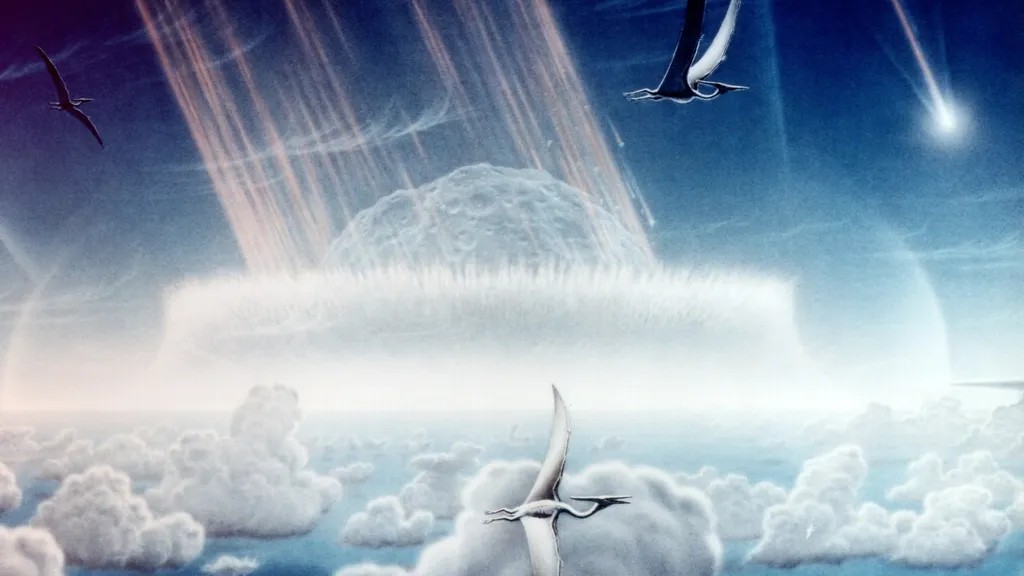
You wake up as a dinosaur on an ordinary late Cretaceous day. The air is warm and humid, forests are buzzing with insects, and distant volcanoes puff lazily along the horizon. You lower your head to drink from a muddy pond, completely unaware that a space rock the size of a small city is screaming toward your planet at many times the speed of a rifle bullet. In less than twenty‑four hours, the world that shaped you for millions of years will be gone, and something terrifyingly new will begin.
We tend to imagine dinosaur extinction as a single dramatic frame: a fireball in the sky, a deafening crash, then darkness. In reality, the first day after the impact was a sequence of overlapping disasters, each one feeding into the next. It was a chain reaction of physics, chemistry, and geology that turned the Earth itself into a weapon. Let’s walk through that day, hour by hour in broad strokes, and look at what the dinosaurs actually would have felt, seen, and suffered as their age came to an end.
The Last Normal Morning: A Calm Before a Cosmic Ambush
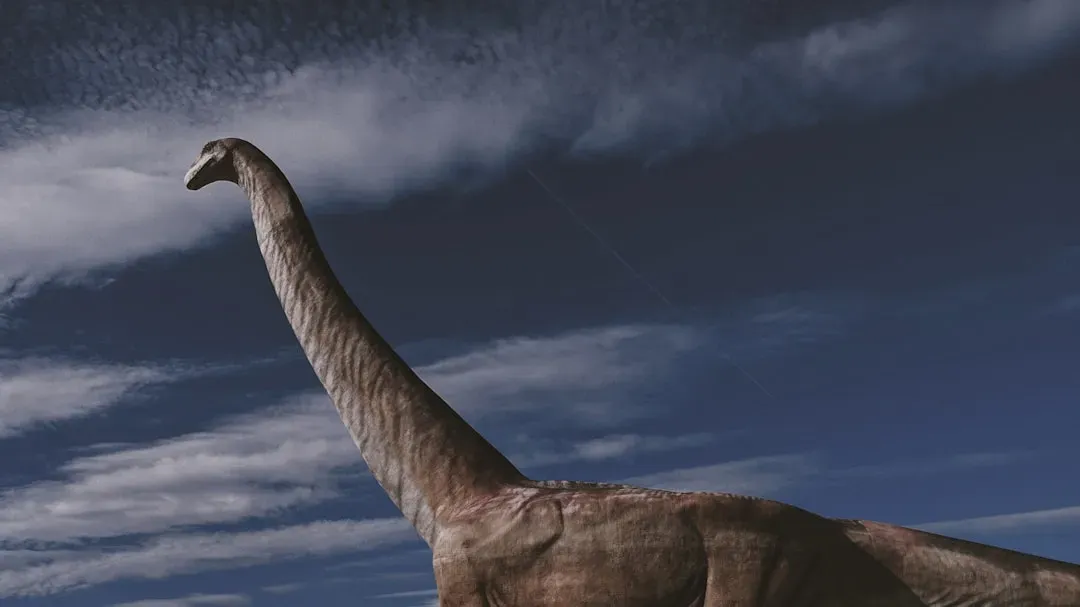
In the hours before impact, nothing on Earth gave away what was coming. The dinosaurs going about their routines in what is now Mexico, North America, and beyond would have experienced a perfectly ordinary Cretaceous day: warm temperatures, abundant vegetation, and skies that, to them, might have seemed timeless. Large herbivores like hadrosaurs and ceratopsians likely grazed in herds, while predators such as tyrannosaurs stalked the edges of river valleys and coastal plains. For countless generations, this was the pattern, and there was no way any animal could sense an asteroid plunging through space millions of kilometers away.
This false sense of stability is part of what makes the story of their extinction hit so hard. Life had adapted to volcanoes, shifting continents, and changing seas, but an incoming asteroid leaves no biological footprint until it is almost literally on top of you. There were no strange smells in the air, no subtle drop in temperature, no eerie silence in the forests that morning. If you could freeze time a few hours before impact and walk among the dinosaurs, you wouldn’t notice a single clue that the clock was seconds away from midnight on their entire world.
Impact: A Mountain from Space Slams into the Sea
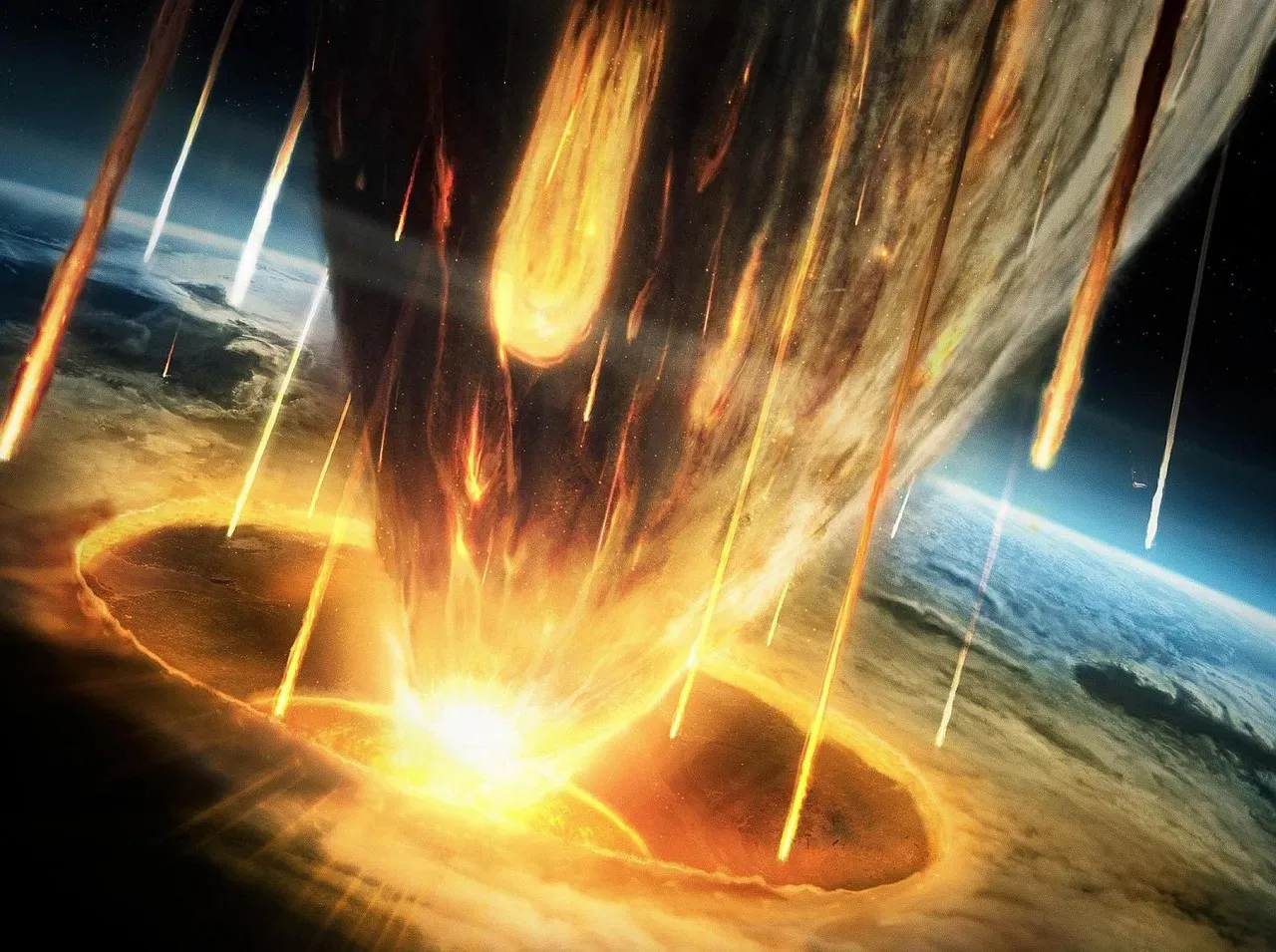
When the asteroid finally hit what is now the Yucatán Peninsula, it struck with a violence that is really hard to wrap your head around. Imagine a rock around ten kilometers across, moving so fast that it crosses the last stretch of atmosphere in a heartbeat, turning the surrounding air into a glowing sheath of plasma. In the instant of contact, the kinetic energy of that object was converted into heat, shock, and motion on a truly planetary scale – equivalent to many billions of nuclear bombs detonating at once. The rock itself and a huge volume of Earth’s crust essentially vaporized in a flash.
For any dinosaur, or any living thing, within a large radius of ground zero, survival was basically impossible. The ground would have heaved like water, waves of rock radiating outward faster than a speeding bullet. The immediate area was blasted by temperatures hot enough to melt stone, with forests simply igniting where they stood. Within seconds, a gigantic crater was gouged out – tens of kilometers deep and more than a hundred kilometers wide – while molten rock, superheated water, and vaporized minerals were shot high into the atmosphere and even beyond. If you were anywhere near that coastline, the day did not just change; it ended.
Minutes of Chaos: Earthquakes, Mega‑Tsunamis, and Firestorms
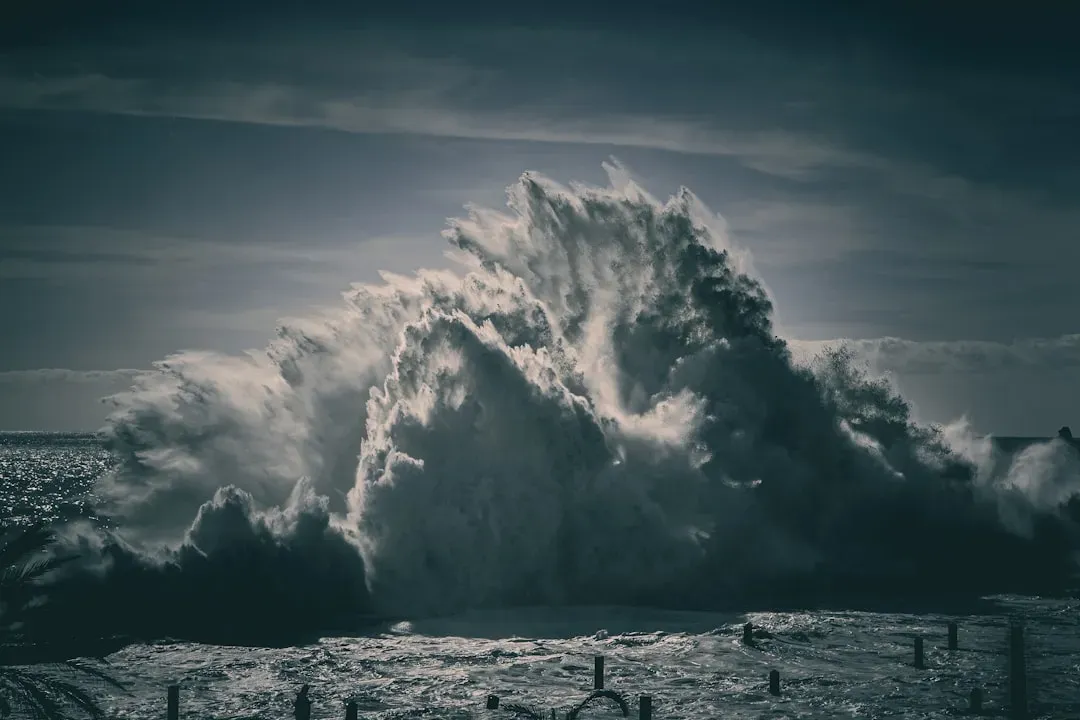
In the minutes after the impact, the shock waves rippled through the Earth’s crust, triggering colossal earthquakes far beyond the crater. Fault lines shifted, cliffs collapsed, and landslides thundered down valley walls, crushing anything in their paths. In the nearby shallow ocean, water was displaced with brutal force, generating mega‑tsunamis that could have towered dozens or even hundreds of meters high. These waves raced outward across ancient seas, smashing coastlines, ripping up forests, and sweeping dinosaurs, plants, and debris inland and back out again.
At the same time, ejecta – bits of molten rock and vapor that had been blasted into the sky – began to arc back down through the atmosphere like a lethal rain. As those particles re‑entered, they heated the air, turning the sky into a global broiler in many regions. This re‑entry heating likely sparked wildfires on an almost unimaginable scale, igniting dry vegetation as far as thousands of kilometers from the impact site. A dinosaur standing under an otherwise clear sky could suddenly be confronted by a horizon turning orange, the smell of burning forests in the air, and embers drifting down like deadly snow.
The Sky Turns Against Them: Heat Pulses and a World on Fire
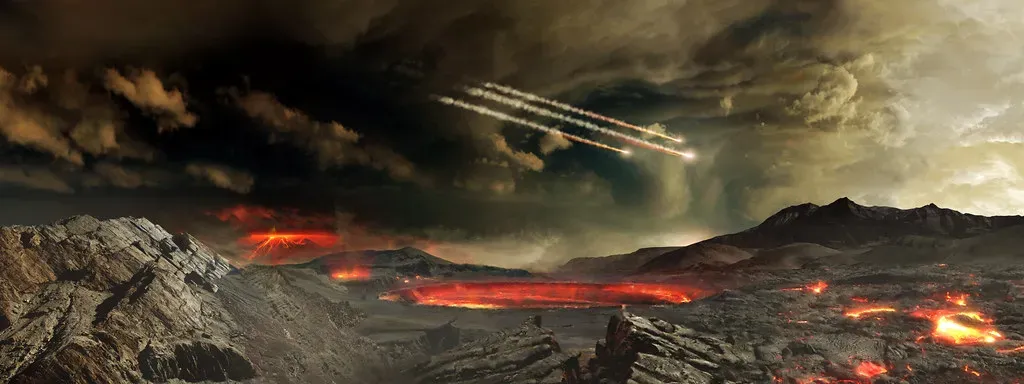
One of the most terrifying parts of that first day was not just the blast itself, but the sustained heat released as debris rained back to Earth. Think of it as the planet briefly wrapped in a glowing shell of hot particles, each one compressing and heating the air as it fell. For animals on the surface, this meant sudden, intense heat pulses that could have scorched skin, ignited plant matter, and made open ground lethal. Sheltered spots – burrows, caves, deep water – likely became precious pockets of survivability, while exposed plains turned into ovens.
As forests ignited, firestorms spread across continents, feeding on dense vegetation that had grown for millions of years in a stable climate. The smoke and soot from these fires began to rise into the atmosphere, mixing with dust and sulfur released from the shattered rocks at the impact site. The sky that had been bright and blue that morning started to darken, first with towering smoke columns, then with a more uniform haze. For dinosaurs fleeing through burning undergrowth, the sunlight dimmed, the air filled with choking particles, and the familiar cues of day and night started to break down in a matter of hours.
The First Night: Darkness, Ash, and a Dying Food Web
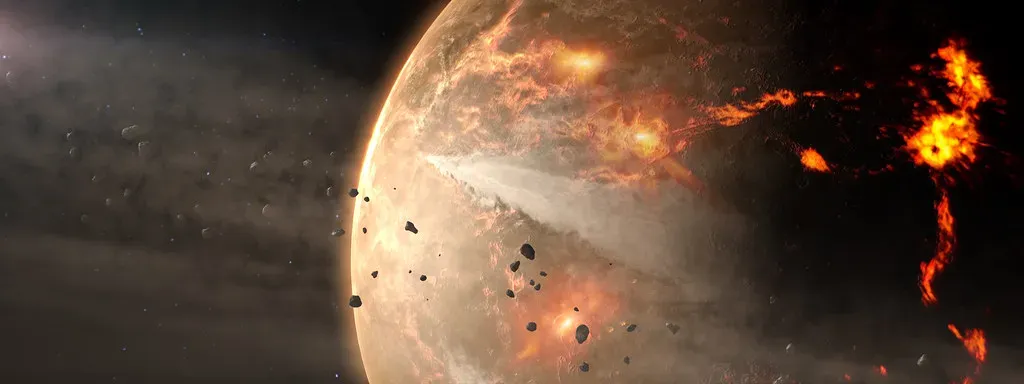
By the time the first night after the impact fell, large parts of the world were wrapped in smoke, dust, and aerosols. In many regions, that night was darker than anything the dinosaurs had ever experienced – more like being inside a cave than beneath an open sky. With the Sun blocked and the Moon and stars hidden, the usual rhythms that governed animal behavior collapsed. Nocturnal species that relied on moonlight, diurnal species that sought daylight, and everything in between faced a strange, disorienting gloom instead of the normal cycle.
As ash and fine particles drifted down, they coated leaves, clogged waterways, and contaminated the surfaces that herbivores depended on for food. Water sources filled with debris, turning ponds and rivers murky and acidic, especially as chemicals from the vaporized rocks mixed with rain. Predators like large theropod dinosaurs might initially have had carcasses to scavenge, but even on this first night, the foundations of the food web were starting to buckle. Plants choked by ash and denied sunlight could not photosynthesize properly, setting up a slow-motion starvation that would play out in the days, weeks, and months to come.
The Next Morning: Survivors in a Planet‑Wide Aftershock
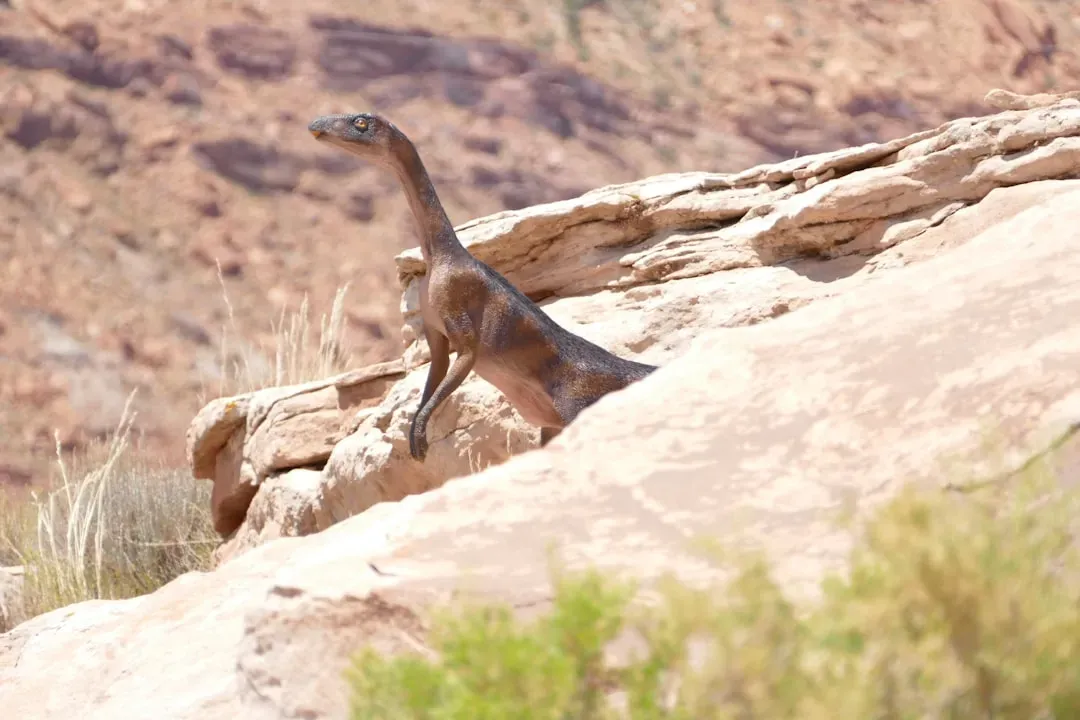
When the first full post‑impact morning arrived, it likely did not look like normal daylight in most places. Instead of a bright sunrise, many regions probably experienced a dim, reddish or yellowish glow filtering through layers of soot and dust. Temperatures near the surface may have plunged in some areas as sunlight was blocked, while others still burned with lingering fires and smoldering forests. The soundscape would have changed too: fewer insect calls, fewer bird‑like dinosaur songs, more crackling flames, crashing trees, and the distant rumble of landslides and collapsing cliffs.
The dinosaurs that survived that first twenty‑four hours were not the ones living closest to the impact, nor the largest or fiercest. They were the ones that happened to be in the right kind of shelter, eating the right kinds of food, or just plain lucky. Smaller animals that could hide underground, in water, or inside dense vegetation had a better shot, and creatures that could eat seeds, carrion, or almost anything at all had a head start. The age of the non‑avian dinosaurs effectively ended in that single day, but the story of life did not. It was already quietly shifting towards lineages that could handle chaos better than size and power ever could.
Conclusion: A Bad Day That Reset the Planet
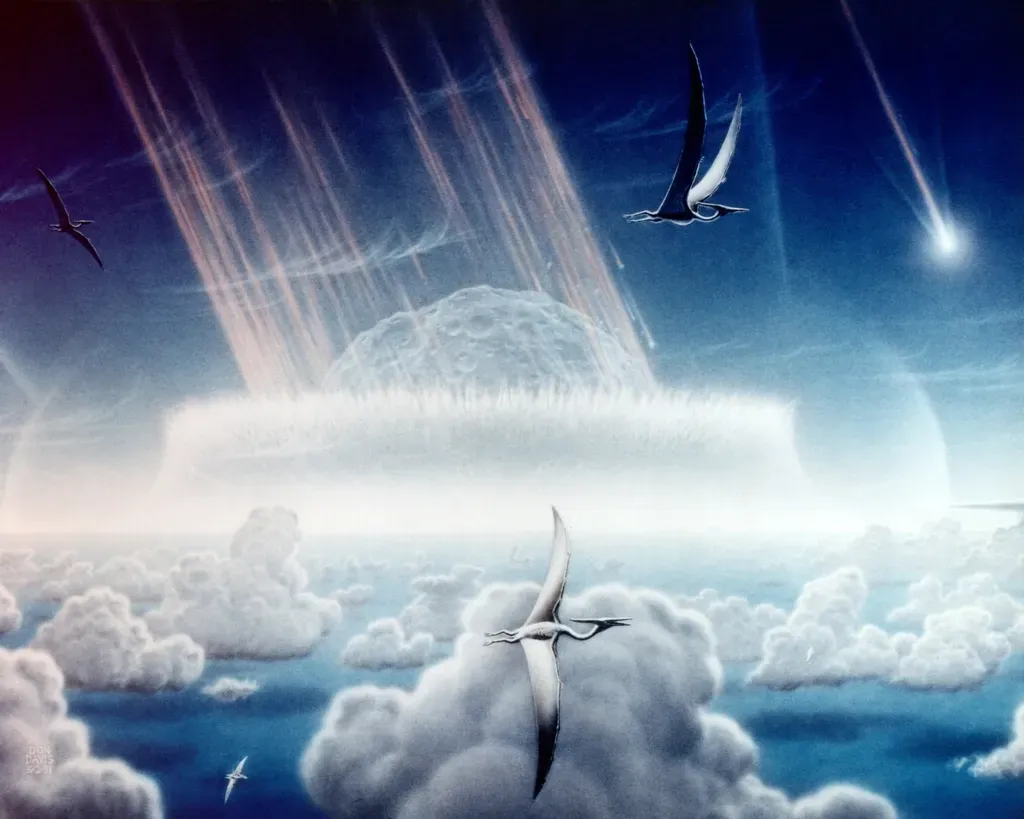
When you lay out those first twenty‑four hours, the extinction of the dinosaurs stops feeling like a distant myth and starts feeling uncomfortably real. It was not some abstract geological event; it was a brutal, physical sequence of shocks, fires, and darkness that turned ordinary lives into catastrophe almost instantly. What strikes me most is how unfairly sudden it all was. Species that dominated Earth for tens of millions of years were wiped out more by cosmic bad luck than by any failure to adapt, and that reminder of randomness sits uncomfortably close to home when you think about our own fragile systems.
At the same time, that awful day is also the reason we are here to tell the story. By wiping the slate partly clean, the impact opened ecological room for mammals, birds, and eventually humans to thrive in a reshaped world. So the day the asteroid hit was both an ending and a beginning, a planetary reset button slammed by the universe without warning. When you imagine that last normal dinosaur morning and the night that followed, it becomes harder to see our own era as guaranteed or permanent. If a single day can rewrite the story of life, what responsibilities do we have in the days we control?