Picture a dinosaur that looks part river monster, part heron, part crocodile, and you’re starting to get close. Among the strangest predators to ever walk the Earth were the spinosaurids, a group of dinosaurs whose long, narrow, crocodile-like snouts and semi-aquatic lifestyle flipped the usual Jurassic Park image on its head. Instead of a big land-stalking killer like Tyrannosaurus, think of something that treated rivers and lagoons as its hunting grounds, slipping between worlds the way an otter or crocodile does today.
For years, paleontologists argued about what these animals actually did all day. Were they fishing specialists? Opportunistic carnivores? Clumsy waders or sleek swimmers? As new fossils and technologies have come online, a clearer – and much weirder – picture has started to emerge. This is the story of the dinosaur that hunted like no other, and why its crocodile-style snout changed everything we thought we knew about how dinosaurs lived.
The Rise of Spinosaurids: Oddballs in a World of Meat-Eaters
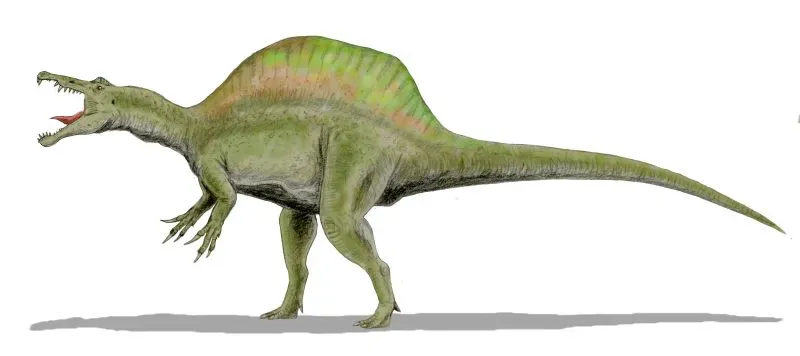
In a world dominated by big-headed, bone-crunching predators, spinosaurids were the odd ones out. While other theropods evolved massive jaws built to crush bone and tear flesh, these dinosaurs went in a completely different direction, stretching their skulls into long, narrow, crocodile-like shapes full of conical teeth. That alone suggested a totally different hunting style, one that had less to do with sawing through carcasses and more to do with gripping slippery prey.
Famous members of this group include Spinosaurus from North Africa, Baryonyx from Europe, and Suchomimus from what is now Niger in West Africa. They lived mainly during the Early and middle parts of the Cretaceous Period, long before Tyrannosaurus came along. What ties them together is not just that snout shape, but a whole package of anatomical tweaks that hint at riverside lifestyles: robust forelimbs, elongated bodies, and teeth better suited to catching fish than shredding big plant-eaters. In the cast of dinosaur carnivores, they were the niche-bending weirdos – and that made them incredibly successful for a time.
A Crocodile-Like Snout With Built-In Sensors
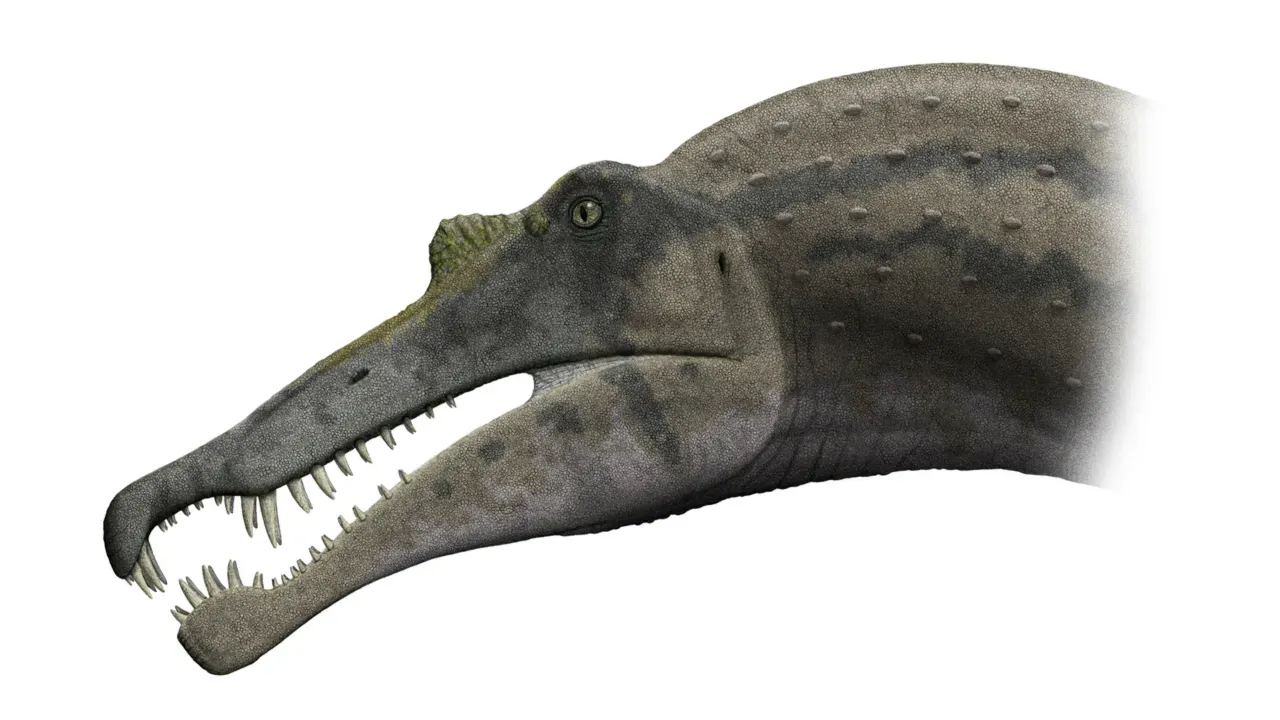
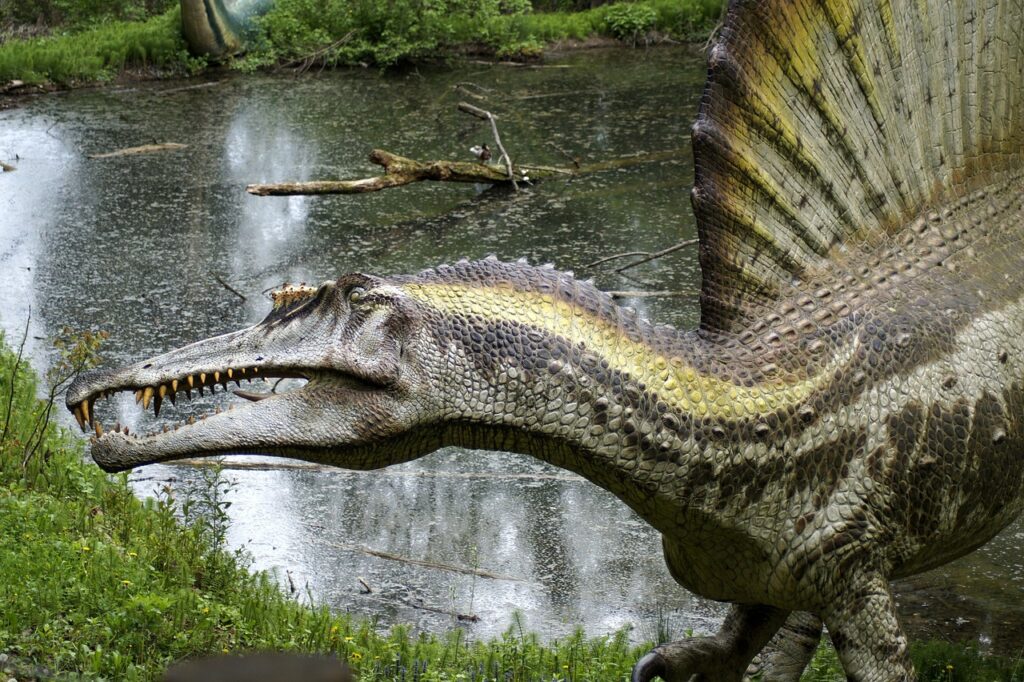
The headline feature, of course, is that crocodile-style snout. Unlike the deep, U-shaped jaws of something like a tyrannosaur, spinosaurids had long, low skulls with narrow, tapered rostra (snout regions) that look eerily similar to modern gharials and crocodilians. Their teeth were mostly conical and only weakly serrated or not serrated at all, which is exactly the sort of design you’d expect for gripping and holding wet, wriggling animals instead of slicing through thick hide. To visualize it, imagine a pair of chopsticks made to hold a fish instead of a knife made to carve a steak.
Even more intriguing, the front of the snout in species like Spinosaurus shows evidence of tiny pits and channels that are thought to have housed pressure or vibration-sensitive structures, somewhat like the sensory organs in modern crocodilians. That means this dinosaur may have been able to detect movement in the water, even when visibility was poor or prey was hidden below the surface. Combined with the placement of the nostrils farther back on the skull, it suggests a predator that spent a lot of time with its snout partly submerged, feeling for the slightest disturbance from a passing fish or other aquatic animal.
From Land Stalker to River Hunter: A Radical Hunting Strategy
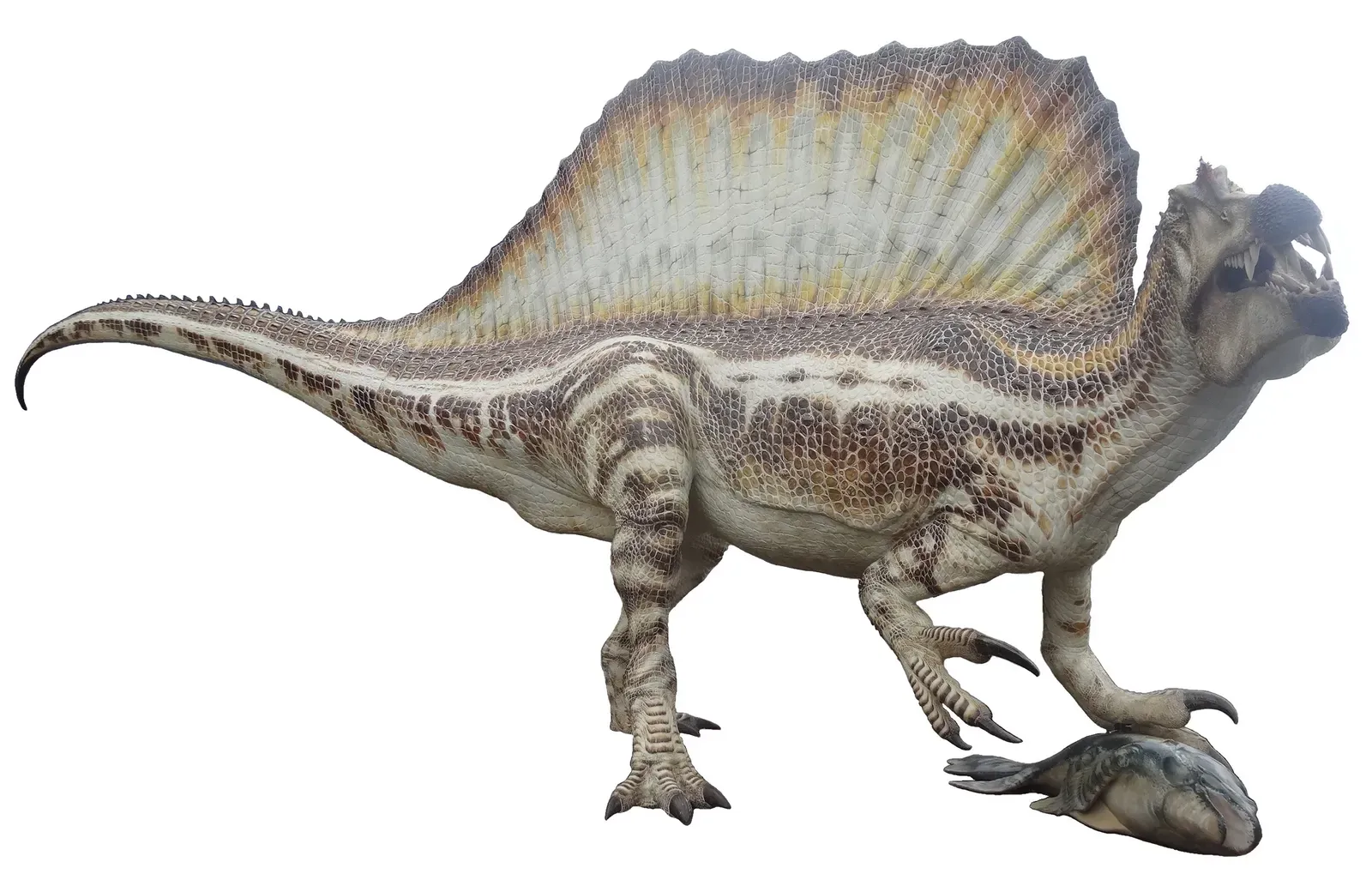
Most big carnivorous dinosaurs hunted on land, tracking, ambushing, or chasing prey much like big cats or wolves do today. Spinosaurids, by contrast, appear to have pushed into a semi-aquatic niche that other dinosaurs mostly ignored. Their long jaws and conical teeth worked like biological fish traps, snapping shut on slippery bodies that would have popped right out of the serrated, slicing teeth of more traditional theropods. Instead of wrestling massive horned dinosaurs, they may have focused on fish, aquatic reptiles, and smaller shoreline animals.
This did not necessarily mean they were helpless on land, but their hunting playbook was different. Think less sprinting down a fleeing herbivore across open ground, and more patiently waiting at the edge of a river, wading into shallow channels, or cruising through lagoons while scanning for movement. Their entire body plan hints at a predator that worked with currents, mud, and water depth the way other dinosaurs worked with forests and plains. In evolutionary terms, they were exploiting a lightly used buffet table while their relatives fought over the same land-based menu.
Evidence They Lived Between Two Worlds
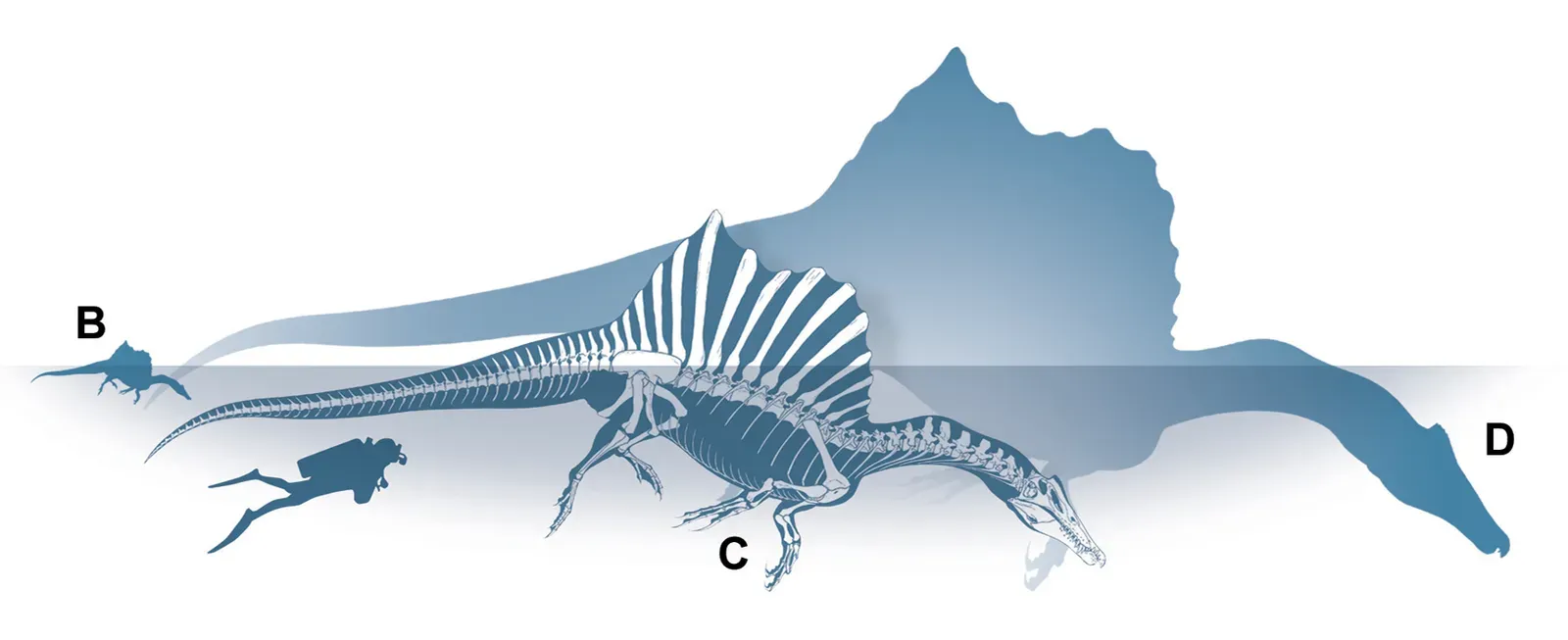
For a long time, the idea of a semi-aquatic dinosaur sounded almost too strange, and plenty of scientists were skeptical. But multiple lines of evidence have started to add up. Bone density studies, for instance, show that some spinosaurids had heavier, more solid bones than typical land-dwelling theropods, similar to those of animals that spend a lot of time in water, like hippos or penguins. This extra weight helps with buoyancy control and stability, making it easier to stay submerged or wade without bobbing around too much.
Fossils of these dinosaurs also tend to show up in sediments that represent river systems, coastal lagoons, and deltas, rather than just inland floodplains. Tooth wear patterns and chemical signatures in their bones point strongly toward a diet rich in aquatic prey. When you stack all of that together, it paints a picture of animals that really did live at the boundary between land and water, capable of moving through both but clearly leaning into that watery lifestyle in a way that makes them stand out from their dinosaur peers.
The Iconic Spinosaurus: Sail-Backed River Monster
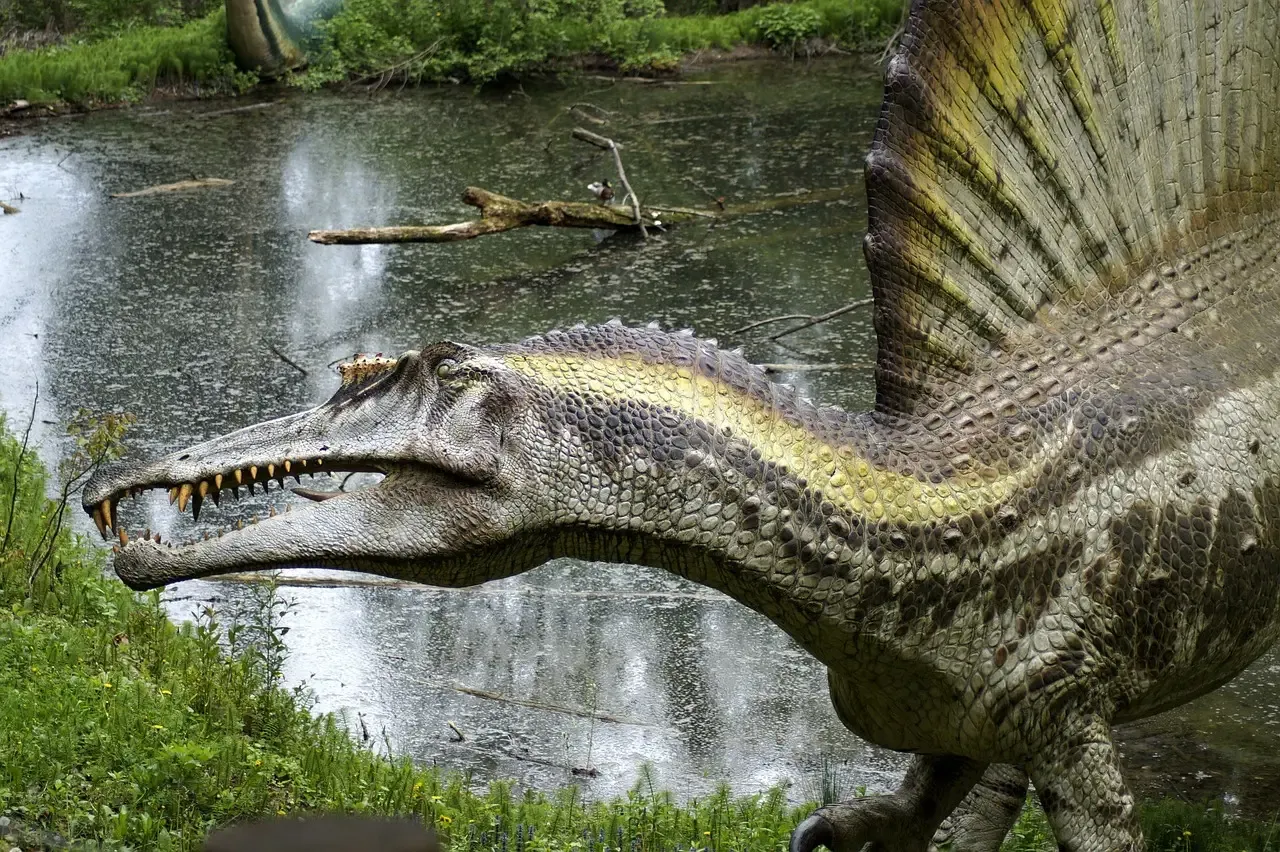
Whenever people talk about this crocodile-snouted dinosaur niche, Spinosaurus is the star that dominates the conversation. It was enormous, probably rivaling or even exceeding the length of Tyrannosaurus, and it carried a tall sail of elongated neural spines along its back. While scientists still debate the exact function of that sail – display, thermoregulation, or something in between – there is broad agreement that this creature was not just a typical land-based hunter with fancy decorations. Its anatomy leans heavily toward an animal that spent serious time in the water.
The limbs, especially the hind limbs, appear proportionally shorter and more suited to a semi-aquatic style of movement than the legs of most big theropods. The tail, based on some remarkable fossils, seems to have been tall and paddle-like, suggesting it helped generate thrust in the water instead of just providing balance on land. Coupled with that long, sensory-rich snout and fish-catching teeth, Spinosaurus starts to look less like a terrestrial tyrant and more like a Cretaceous mash-up of a crocodile, a heron, and a sail-backed aquatic reptile – a specialist carving out a strange but clearly effective way of life.
Why This Hunting Style Matters for Dinosaur Evolution
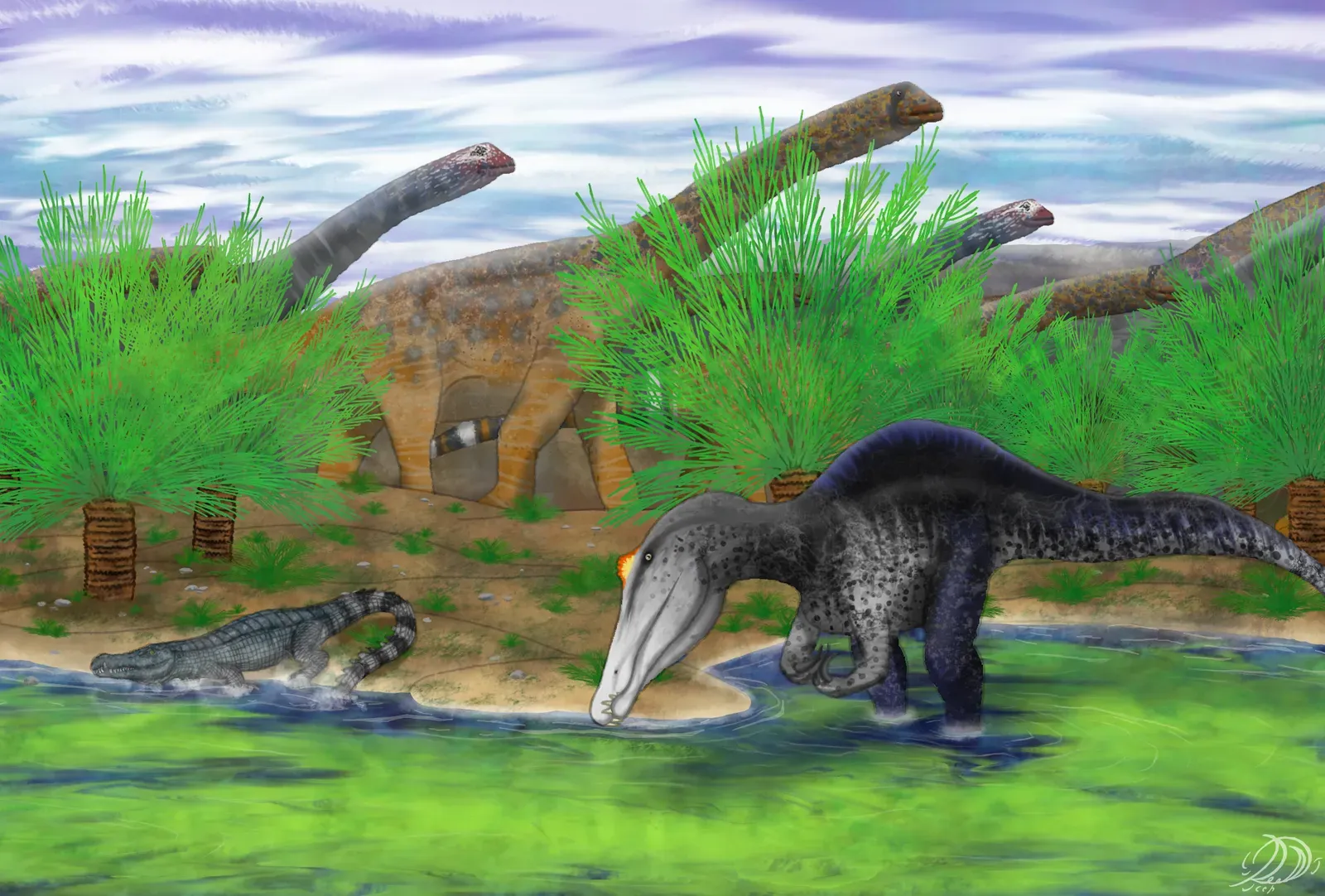
It is tempting to think of dinosaurs as all doing roughly the same thing: some ate plants, others ate them, and the rest is just detail. Spinosaurids blow that simple story apart. Their crocodile-like snouts, semi-aquatic habits, and fish-heavy diets show that dinosaur evolution produced not just top land predators but also river-edge specialists that pushed into ecological zones we once thought were dominated by crocodiles and other reptiles. They are a reminder that even in a familiar time period, nature was still experimenting wildly with form and function.
To me, this is the most exciting part: these animals prove that dinosaurs were not boxed into a narrow set of lifestyles, but were as flexible and inventive as mammals are today. If one lineage could reinvent itself as a river hunter with a crocodile-style head and a partly aquatic body, what else might have evolved that we simply have not found yet? Every new fossil adds a piece to the puzzle, but it also widens the sense of possibility. Spinosaurids feel less like an evolutionary footnote and more like a bold statement that the age of dinosaurs was stranger, richer, and more diverse than our old land-only stereotypes ever allowed.
Conclusion: The River Predator That Rewrote the Rules
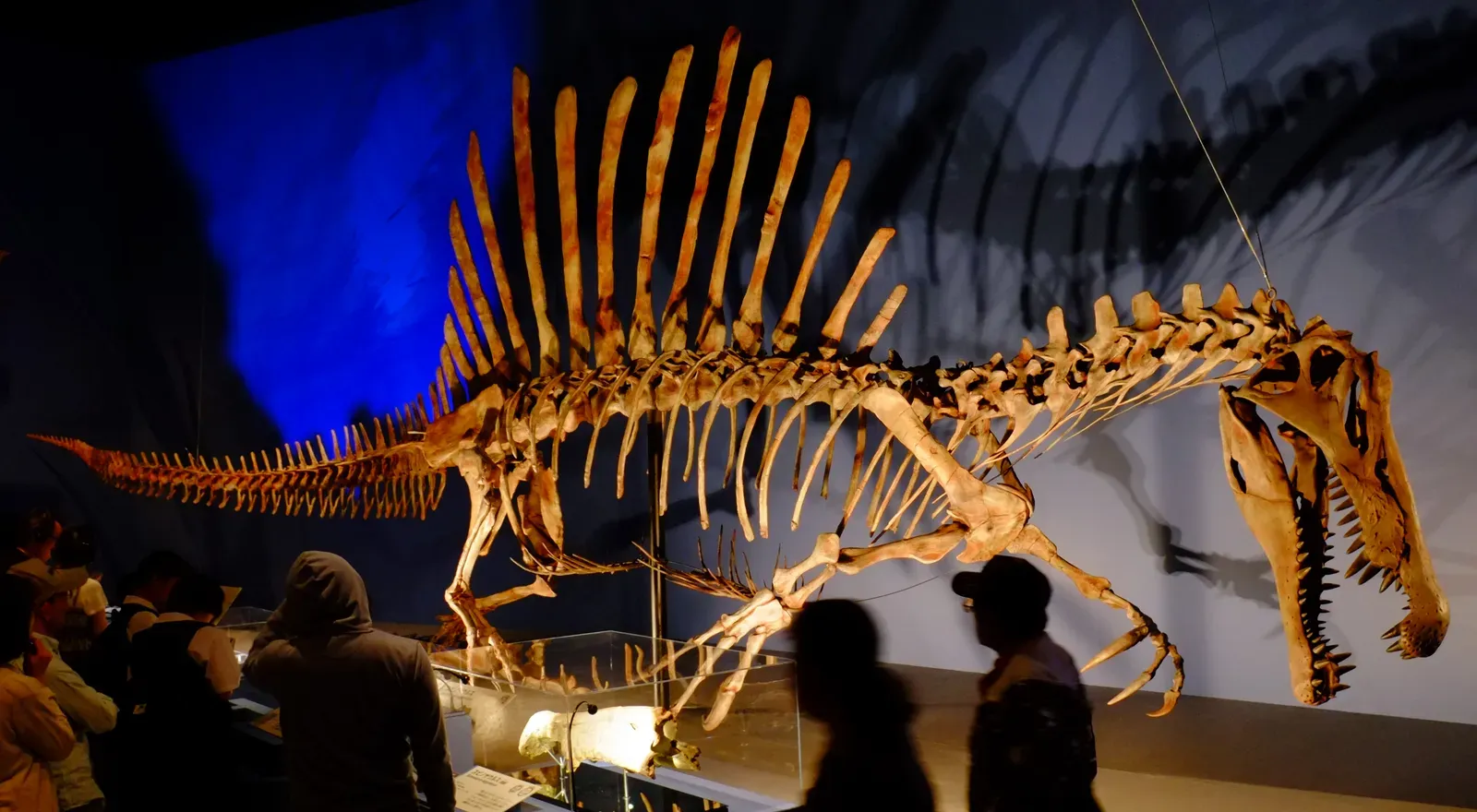
When you step back and look at the bigger picture, the dinosaur with the crocodile-like snout is not just a curiosity – it is a challenge to how we imagine prehistoric life. Spinosaurids took the classic theropod blueprint and twisted it toward the water, building a hunting strategy based on patience, sensing ripples, and ambushing fish instead of simply relying on speed and brute bite force. In my view, that makes them some of the most fascinating predators the fossil record has to offer, not because they were the biggest or the scariest, but because they dared to be different.
I think we are still underestimating how radical this shift really was. A large dinosaur comfortable in rivers, armed with a crocodile-style snout and possibly even using its tail to swim, turns our old picture of dinosaur ecosystems upside down. It suggests worlds where shorelines were patrolled not only by crocodiles, but by towering, sail-backed hunters that blurred the line between land and water. As new discoveries keep coming in, the story of these river predators will almost certainly change again – but for now, they stand as proof that evolution is bolder and more experimental than we usually give it credit for. If a dinosaur could evolve into something this unexpected, what else might still be waiting in the rock that we have not even imagined yet?