Picture walking through the forests of ancient North America about seventy million years ago. You spot something remarkable: a dinosaur with a massive, rounded skull dome rising like a helmet above its eyes. This isn’t just any ordinary dinosaur. You’ve encountered one of paleontology’s most fascinating mysteries, a creature whose bizarre headgear has sparked decades of scientific debate and wonder.
The Pachycephalosaurus wasn’t just another plant-eater wandering through the late Cretaceous landscape. With its distinctive dome reaching up to ten inches thick, this dinosaur represented something entirely unique in the fossil record. While we can’t travel back in time to witness its behavior firsthand, the clues preserved in stone continue to captivate scientists and dinosaur enthusiasts alike.
The Perfect Name for a Perfect Dome
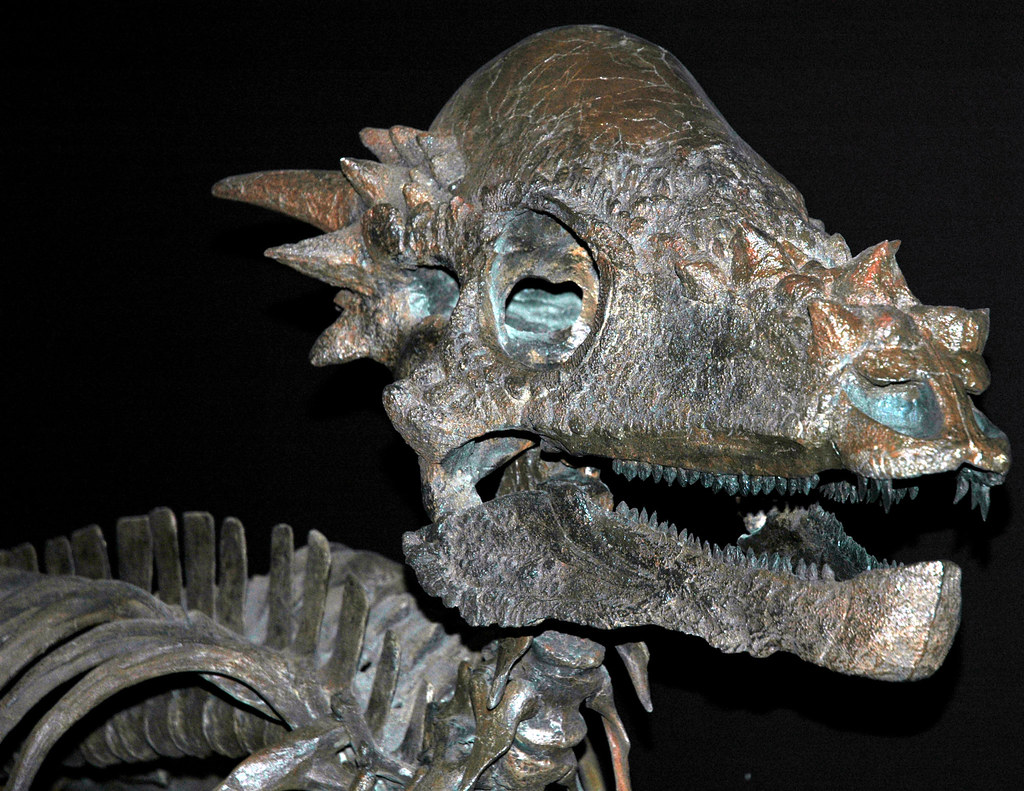
The name Pachycephalosaurus, derived from the Greek words ‘pachys’ meaning ‘thick’, ‘kephale’ meaning ‘head’, and ‘sauros’ meaning ‘lizard’, perfectly encapsulates its most distinctive feature. This wasn’t just a creative naming decision by scientists – it was an accurate description of one of nature’s most extraordinary cranial adaptations.
Pachycephalosaurus is famous for having a large, bony dome on top of its skull, up to 25 cm (10 in) thick, which safely cushioned its brain. The skull was about 20 times thicker than most other dinosaur noggins, making it a true marvel of biological engineering.
The scientific community first gave this dinosaur its formal name in 1943, though fossil fragments had been discovered much earlier. The name Pachycephalosaurus was created in 1943 by Barnum Brown and Erich Maren Schlaikjer, after more fossils were discovered.
When Giants Walked the Earth
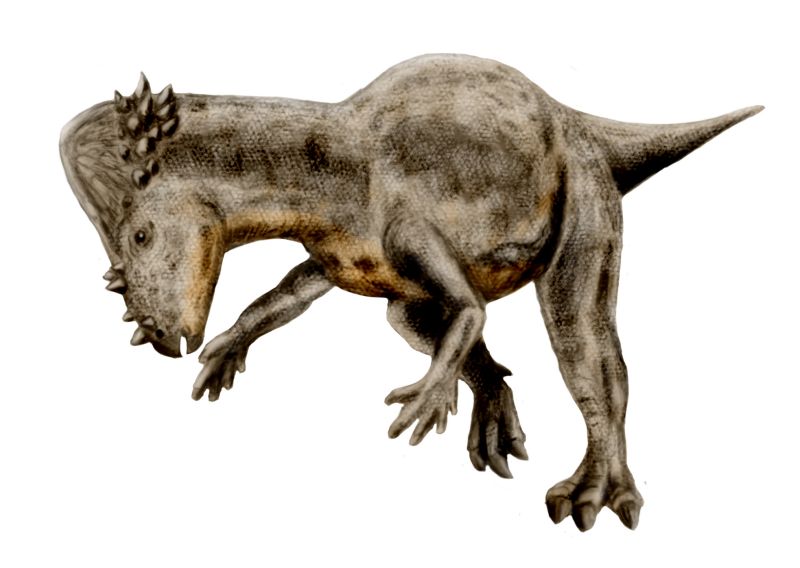
It lived during the Maastrichtian age of the Late Cretaceous period in what is now western North America. Remains have been excavated in Montana, South Dakota, Wyoming, and Alberta. This was a world vastly different from our own, where the environment was subtropical, with warm humid air and many flowering plants.
During this remarkable period in Earth’s history, Pachycephalosaurus shared its habitat with many other dinosaurs, including Tyrannosaurus, Triceratops and Ankylosaurus. Imagine the incredible scenes that must have unfolded as these massive creatures coexisted in the same ecosystem. The diversity of life during the Late Cretaceous was truly extraordinary.
Sometime before 108 million years ago, the earliest dome-headed dinosaurs split off from their common ancestor with horned dinosaurs, flourishing in prehistoric Asia before spreading into North America. This evolutionary journey would eventually produce the magnificent dome-headed giant we know today.
Built Like a Living Battering Ram
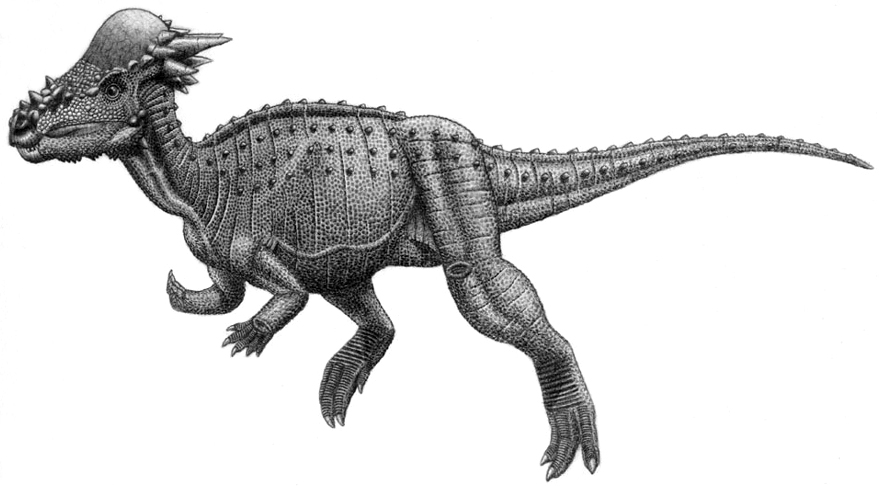
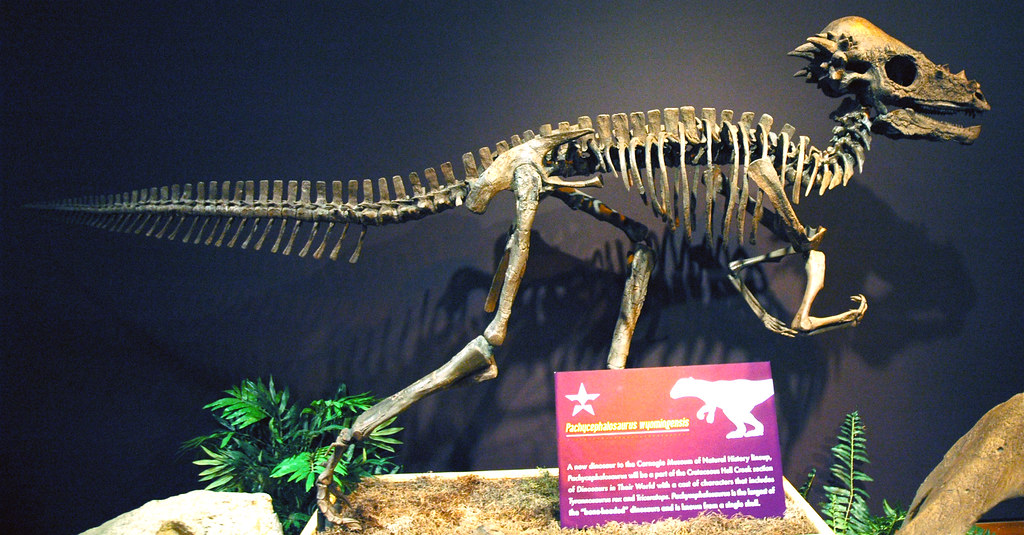
The physical characteristics of Pachycephalosaurus were truly remarkable. It has been estimated that Pachycephalosaurus was about 4.5 metres (14.8 ft) long and weighed about 370–450 kilograms (820–990 lb). Pachycephalosaurus was bipedal and possibly the largest of all pachycephalosaurids.
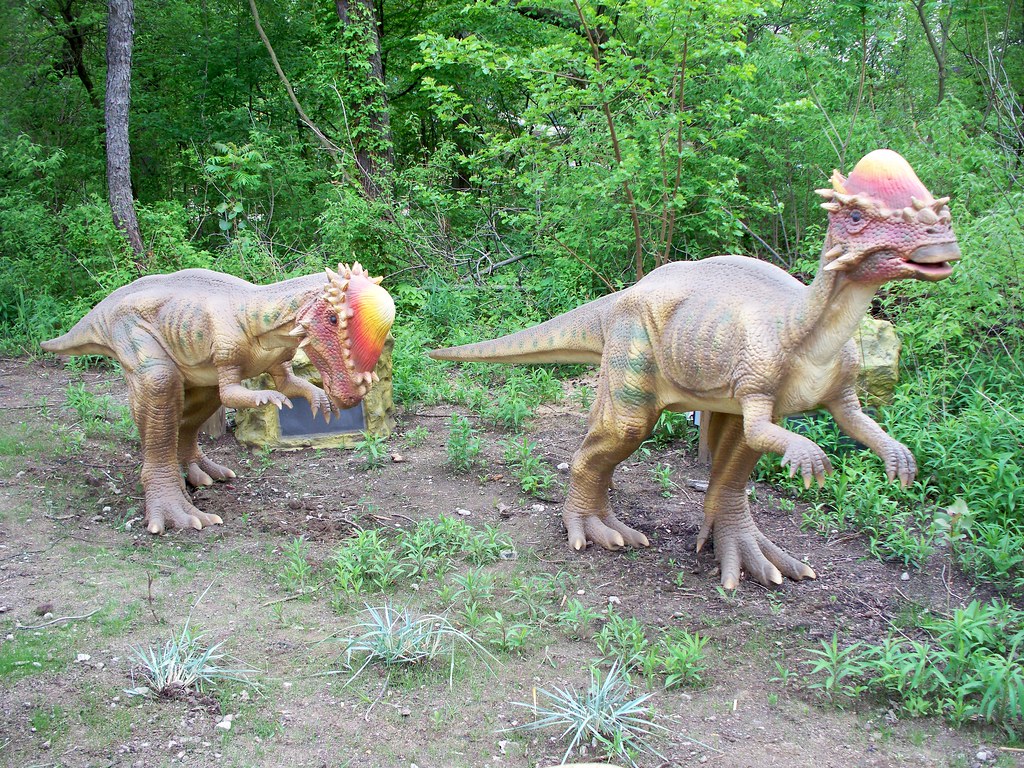
It stood on two legs, had a beak for cropping plants and had a large bony dome on its head surrounded by spikes and bumps. The dome’s rear aspect was edged with bony knobs and short bony spikes projected upwards from the snout. These weren’t sharp weapons, though – the spikes were probably blunted, not sharp.
The anatomy suggests a creature perfectly designed for its lifestyle. Based on other pachycephalosaurids, it probably had a fairly short, thick neck, short arms, a bulky body, long legs, and a heavy tail that was likely held rigid by ossified tendons.
Growing Up With a Changing Head
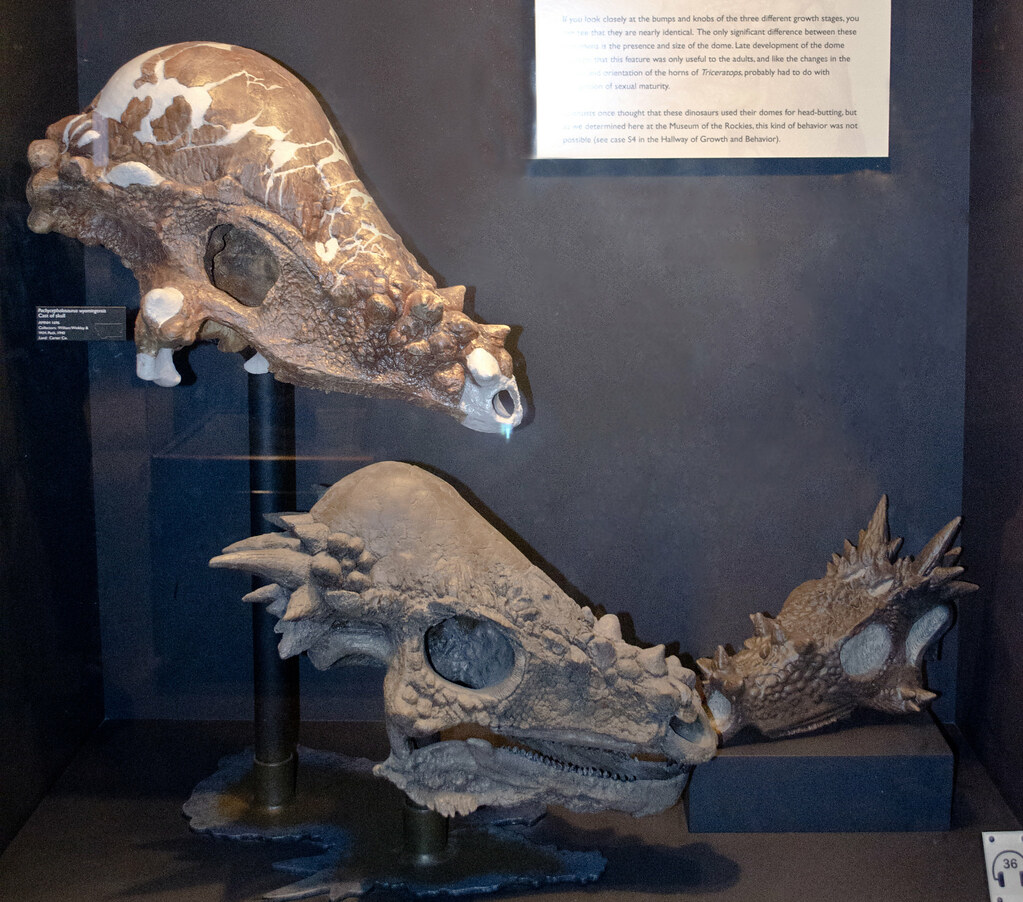
One of the most fascinating aspects of Pachycephalosaurus involved how dramatically its skull changed as it matured. The skull of Pachycephalosaurus underwent radical changes as it grew up. Young animals had a flat head with large spikes, but as Pachycephalosaurus matured the spikes reduced in size and it grew a large cranial dome.
Juveniles had flat skulls with horns. However, as the animal grew, the horns would shrink and become rounder to form a dome. This remarkable transformation meant that young and adult Pachycephalosaurus looked dramatically different from one another.
Recent discoveries have confirmed this pattern even in the earliest dome-headed dinosaurs. The dinosaur was immature and still growing when it died, meaning that the Zavacephale grew its domed head before reaching full adult body size. The pattern fits what paleontologists have found in other species: Dinosaurs went through their flashy punk phase in adolescence.
The Mystery Menu: What Did They Actually Eat?
Despite decades of study, scientists still debate exactly what Pachycephalosaurus ate. Scientists do not yet know what these dinosaurs ate. Having very small, ridged teeth, they could not have chewed tough, fibrous plants like flowering shrubs as effectively as other dinosaurs of the same period. It is assumed that pachycephalosaurs lived on a mixed diet of leaves, seeds, and fruits.
Experts think Pachycephalosaurus was herbivorous, living on a diet of leaves, fruit and seeds. However, some intriguing evidence suggests their diet might have been more complex than initially thought.
It has also been suspected to a degree that it may have included meat in its diet. The most complete fossil jaw shows that it had serrated blade-like front teeth, reminiscent of those of carnivorous theropods. These teeth present a fascinating puzzle for paleontologists studying the dietary habits of these ancient creatures.
The Great Head-Butting Debate
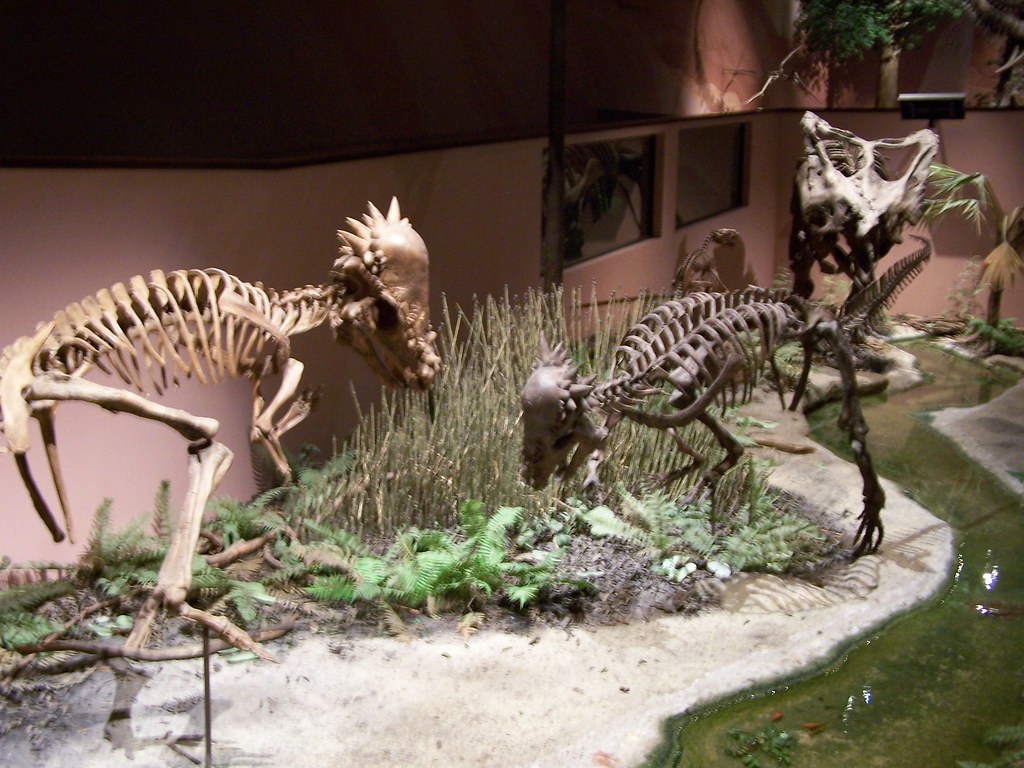
Perhaps no aspect of Pachycephalosaurus behavior has generated more scientific discussion than the famous head-butting hypothesis. Like today’s bighorn sheep, this animal is often shown butting heads with its rivals. But scientists now think that Pachycephalosaurus wouldn’t have survived head-to-head combat. Instead, they think that these dinosaurs might have used their domes to whack each other on their sides to compete for territory or mates.
The popular hypothesis among the general public that the skull was used in head-butting, as sort of a dinosaurian battering ram, was first proposed by Colbert (1955). In this hypothesis, pachycephalosaurs rammed each other head-on, as do modern-day bighorn sheep and musk oxen.
Recent research has provided compelling evidence for combat behavior. Here, we show that pachycephalosaurids are characterized by a remarkably high incidence of cranial injury, where 22% of specimens have lesions on the dome. This extraordinarily high rate of skull injuries strongly suggests these dinosaurs engaged in some form of aggressive behavior.
Evidence Written in Bone
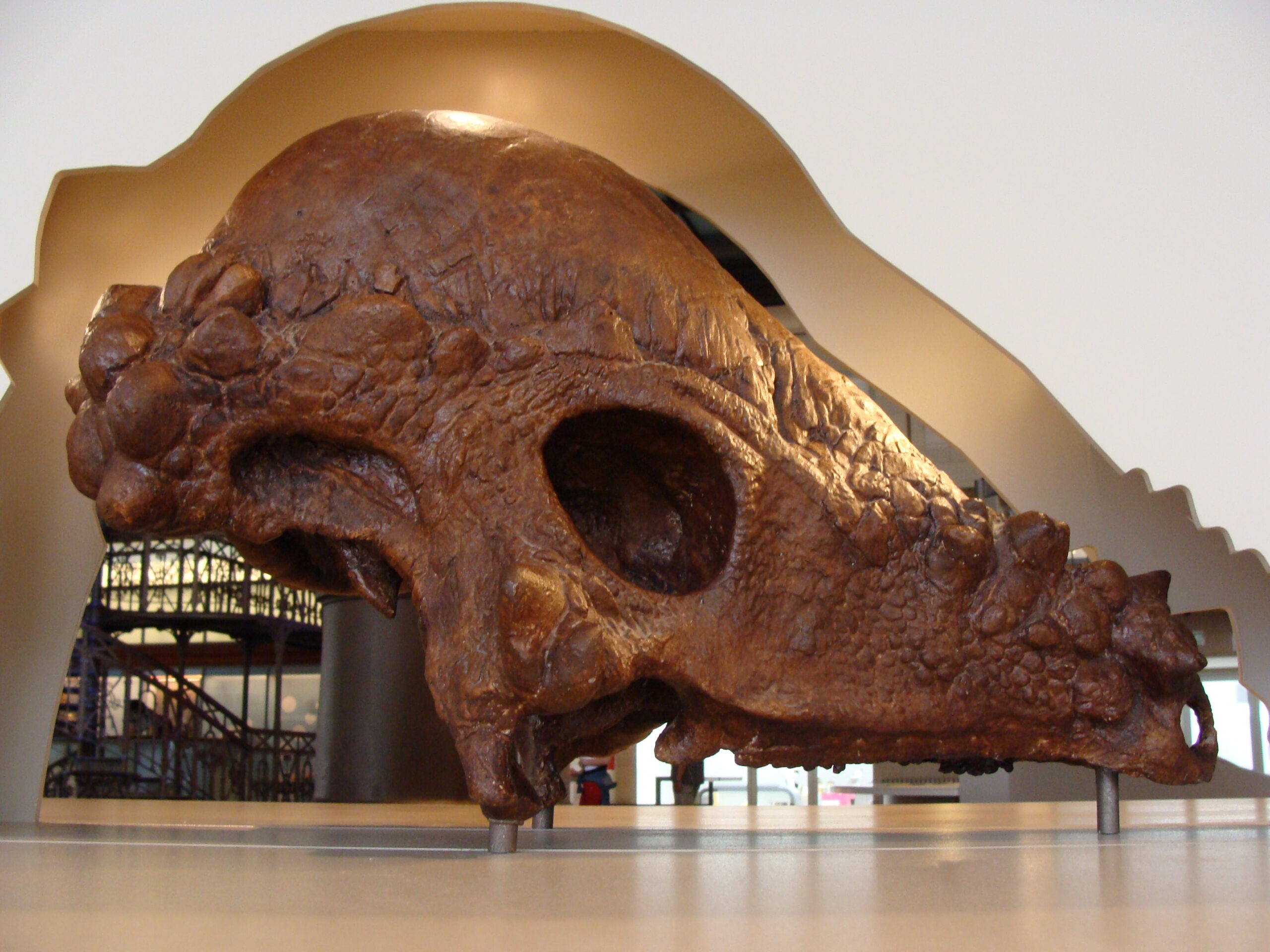
The fossil evidence for combat behavior in Pachycephalosaurus is remarkably strong. This high rate of pathology lends more support to the hypothesis that pachycephalosaurid domes were employed in intra-specific combat. Pachycephalosaurus wyomingensis specimen BMR P2001.4.5 was observed to have 23 lesions in its frontal bone and P. wyomingensis specimen DMNS 469 was observed to have 5 lesions.
What makes this evidence particularly compelling is where these injuries occurred. Instead, two-thirds of the injuries are on the frontal bone on the roof of the skull – the area that would suffer the most impacts during head-on collisions. This strongly suggests that the animals were indeed ramming each other.
Histological examination reveals that pachycephalosaurid domes are composed of a unique form of fibrolamellar bone that contains fibroblasts, which play a critical role in wound healing and are capable of rapidly depositing bone during remodeling. Peterson et al. (2013) concluded that, taken together, the frequency of lesion distribution and the bone structure of frontoparietal domes lends strong support to the hypothesis that pachycephalosaurids used their unique cranial structures for agonistic behavior.
Alternative Combat Strategies
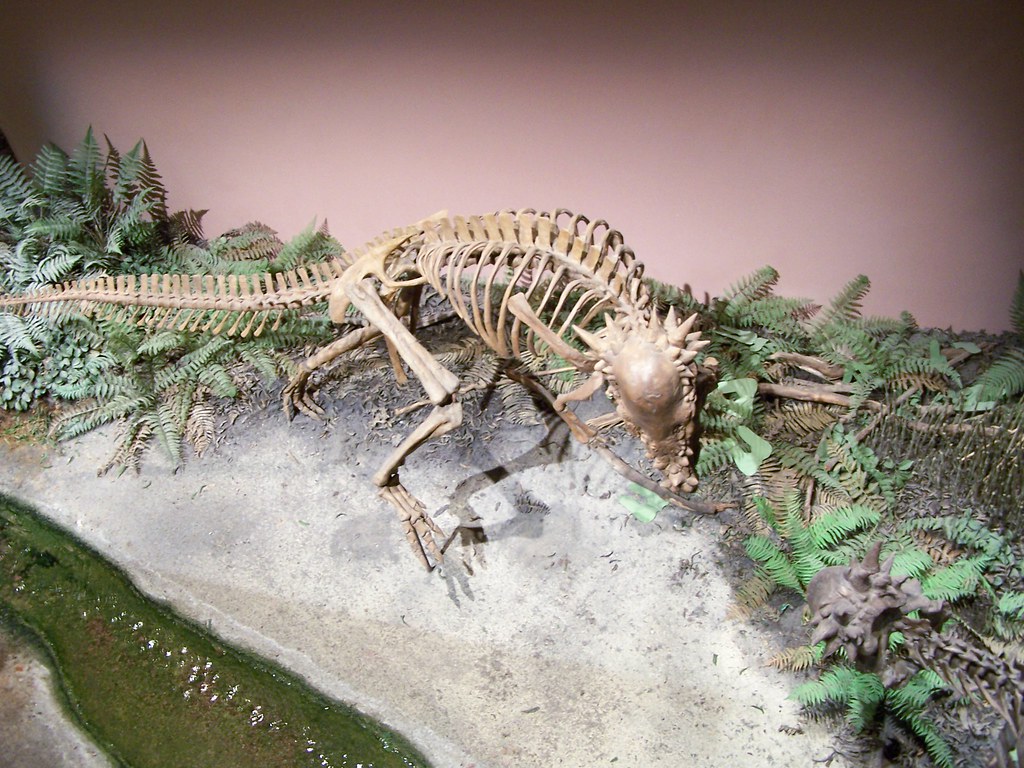
While head-on ramming remains a popular theory, some scientists propose different combat strategies. The hypothesis that pachycephalosaurid dinosaurs used their massive domed heads in agonistic head-to-head butting is reexamined. It is questionable whether such behavior was possible because of the small contact area of opposing heads. Instead, flank-butting is suggested based on analogy with extant African antelopes.
If intimidation failed, the Pachycephalosaurus would bend its head downward and to the side, striking the rival on its flank. This hypothesis is supported by the relatively broad torso of most pachycephalosaurs, which would have protected vital organs from trauma.
Type One is seen in Pachycephalosaurus, Prenocephale, and Stegoceras, all of which have tall, rounded frontoparietal domes. Such domes would maximize the mass of the head in flank-directed blows. Pain would be felt by the opponent without causing serious injury. This strategy would allow for competitive displays without the life-threatening risks associated with direct head-on collisions.
More Than Just a Weapon
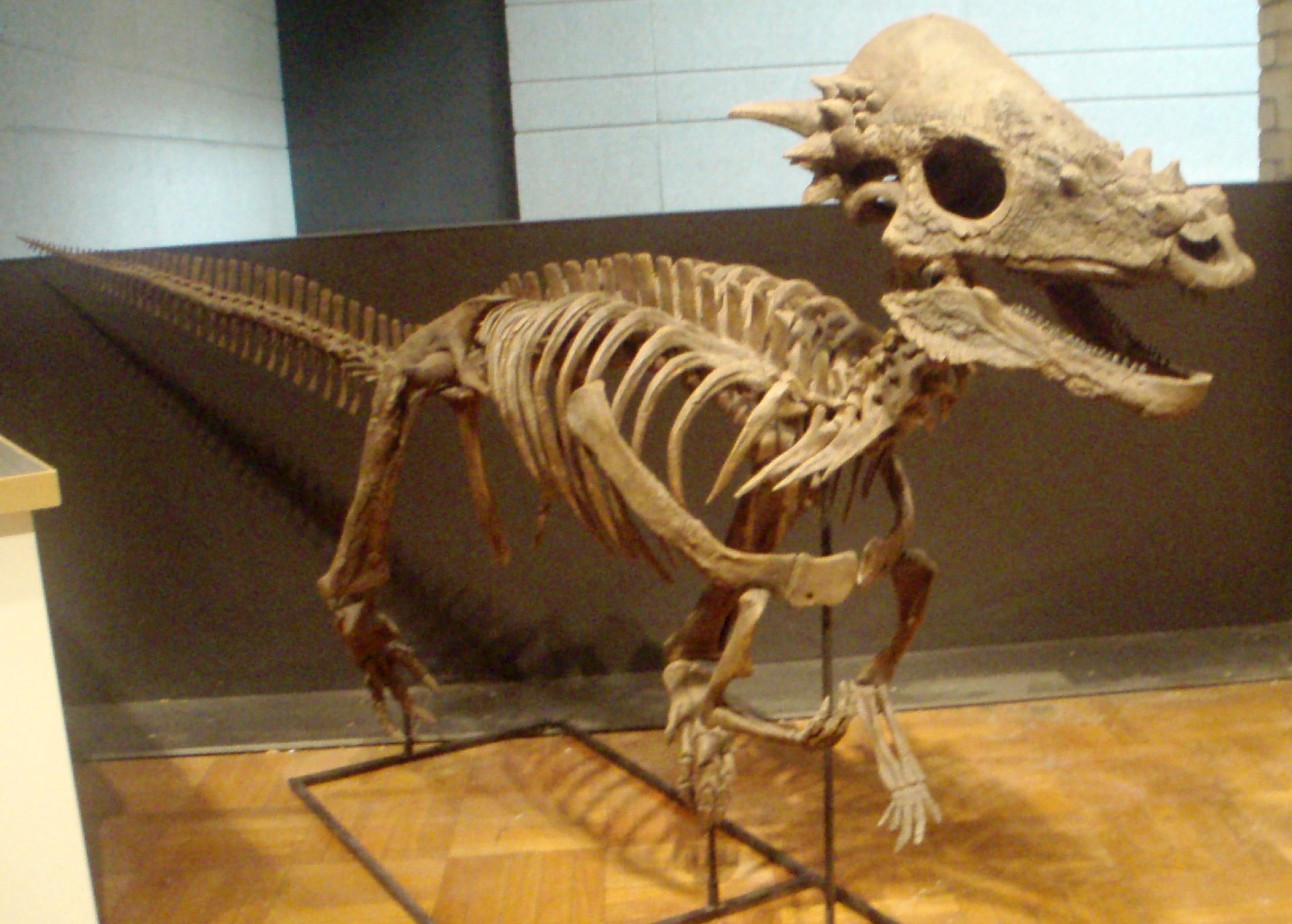
The dome likely served multiple functions beyond combat. However, most cranial structures in extant vertebrates are used for multiple functions. Given this, evidence for combat does not rule out a display function. Indeed, conspicuous weapons are inherently effective as displays.
Other experts think that the head dome may have been used for display. Perhaps it had many uses – like the antlers of modern deer, which are used both for fighting and for display. The cool craniums might have also impressed a potential mate.
Recent discoveries suggest the dome might have supported elaborate structures we can no longer see. Abundant neurovascular canals passing through the dome to the ectocranial surface indicate a keratinous structure of some kind, possibly with a vertical structural framework, was present on the dome. This could mean the already impressive dome was topped with even more spectacular displays made of keratin – similar to the material that forms our fingernails and bird beaks.
A Dinosaur Dynasty Ends
Pachycephalosaurus was among the last species of non-avian dinosaurs on Earth before the Cretaceous–Paleogene extinction event. Pachycephalosaurus walked alongside Triceratops, Ankylosaurus, and Tyrannosaurus rex in what’s now western North America during the Cretaceous period, but all of these animals went extinct when an asteroid hit Earth 66 million years ago.
The end of the Cretaceous marked the conclusion of an incredible evolutionary experiment. These dome-headed dinosaurs had successfully thrived for millions of years, developing increasingly sophisticated social behaviors and impressive cranial displays. Their extinction represents the loss of one of nature’s most remarkable adaptations.
Yet their legacy lives on in the fossil record, continuing to inspire new generations of scientists and dinosaur enthusiasts. Each new discovery adds another piece to the puzzle of how these fascinating creatures lived, fought, and interacted in their ancient world.
The story of Pachycephalosaurus reminds us that evolution can produce truly extraordinary solutions to the challenges of survival. From their massive dome heads to their complex social behaviors, these dinosaurs represented a unique experiment in prehistoric life that captivates our imagination to this day. What other secrets might these ancient dome-heads still be hiding in the rocks, waiting for future paleontologists to uncover?