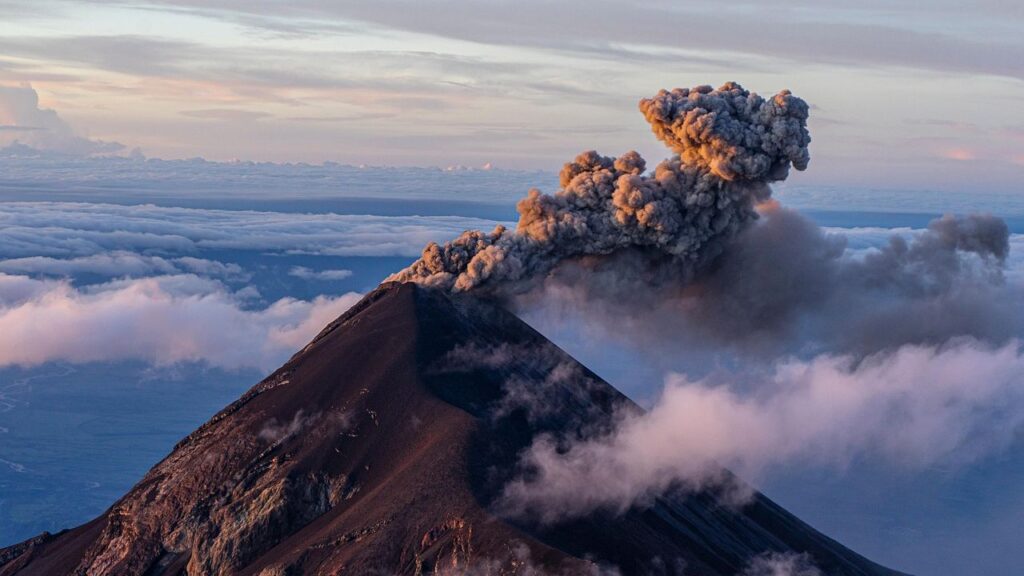
Have you ever gazed at a volcano and wondered about the raw power lurking beneath our feet? The truth is, those mountains of fire are not just dramatic backdrops to disaster movies. They are windows into our planet’s turbulent past. Roughly four and a half billion years ago, when our planet was little more than a sizzling ball of chaos, volcanoes weren’t occasional disturbances. They were the main event, the architects of everything we see around us.
You might think of Earth as solid and stable, but it started as something entirely different. Picture a hellish landscape where molten rock flowed freely, meteors pounded the surface relentlessly, and the air itself was toxic. In those earliest days, volcanic forces didn’t just shape the land. They created the oceans, sculpted the atmosphere, and even set the stage for life itself.
When Earth Was a Molten Inferno
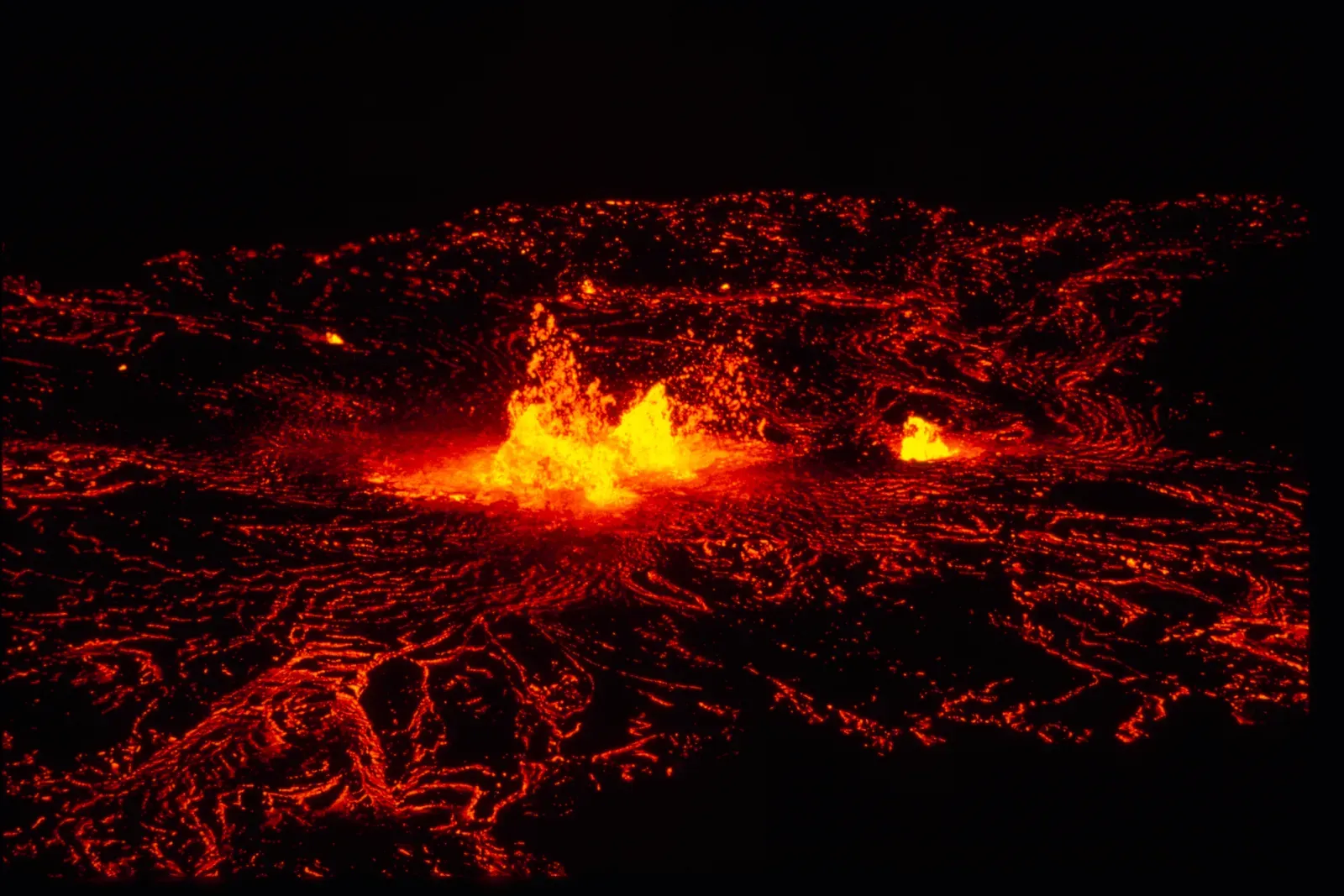
Earth formed around 4.54 billion years ago, approximately one third the age of the universe, by accretion from the solar nebula. Think about that for a moment. Our planet wasn’t handed to us fully formed. Instead, it came together bit by bit, particle by particle, like a cosmic snowball gathering mass.
Initially, Earth was molten due to extreme volcanism and frequent collisions with other bodies. Imagine being there, if you could somehow survive. The surface would have been an ocean of liquid rock, glowing red and orange. As the proto-planetary Earth cooled and formed a solid crust, widespread volcanic activity dominated its surface. There was no calm period, no time to rest. Honestly, early Earth would have made even the most extreme volcanic eruption today look tame by comparison.
During this hellish phase, impacts from space debris were relentless. Each collision released unimaginable amounts of energy, keeping the planet’s surface molten and churning. Eventually, the outer layer of the planet cooled to form a solid crust when water began accumulating in the atmosphere. It’s remarkable, really. From that seething chaos emerged the first stable ground, the foundation upon which everything else would be built.
The Iron Catastrophe and Earth’s Layered Structure
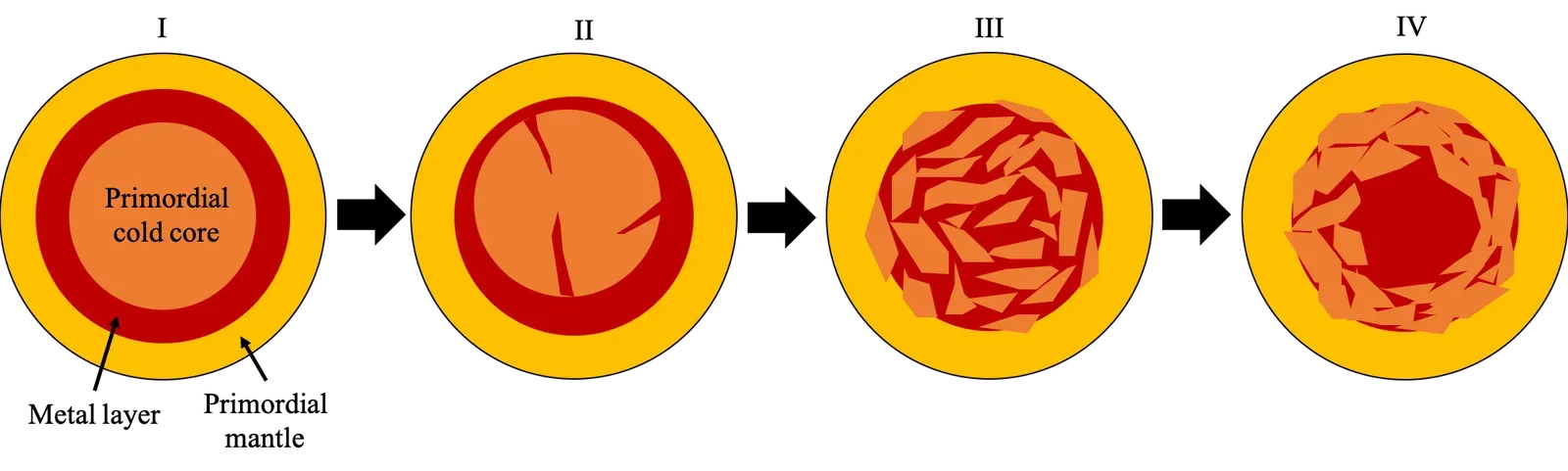
Here’s where things get truly fascinating. As the young Earth heated up due to various factors such as radioactive decay, gravitational compression, and meteorite impacts, materials within its interior melted and underwent separation, with the heavy iron and nickel sinking to form the core, while lighter silicates formed the mantle and crust. Scientists call this pivotal moment planetary differentiation.
Think of it like a giant cosmic sorting machine. With interior temperatures well above the melting point of most Earth materials, high-density metals sank to the Earth’s center of gravity, while lower-density, silicate-rich materials were displaced toward the surface, and it is believed that this process took place within the first 50 million years of Earth history, resulting in the present crust-mantle-core structure. Fifty million years sounds like forever, yet in geological terms, that’s practically instantaneous.
The birth and infancy of Earth was a time of profound differentiation involving massive internal reorganization into core, mantle and proto-crust, all within a few hundred million years of solar system formation. This wasn’t a gentle process. The early earth is believed to have been frequently in a molten state primarily because of repeated high-energy impacts by the planetesimals and meteorites, and the molten state might have persisted to different extents, including magma ocean stage until the formation of the core completed.
Volcanic Outgassing: Building the First Atmosphere
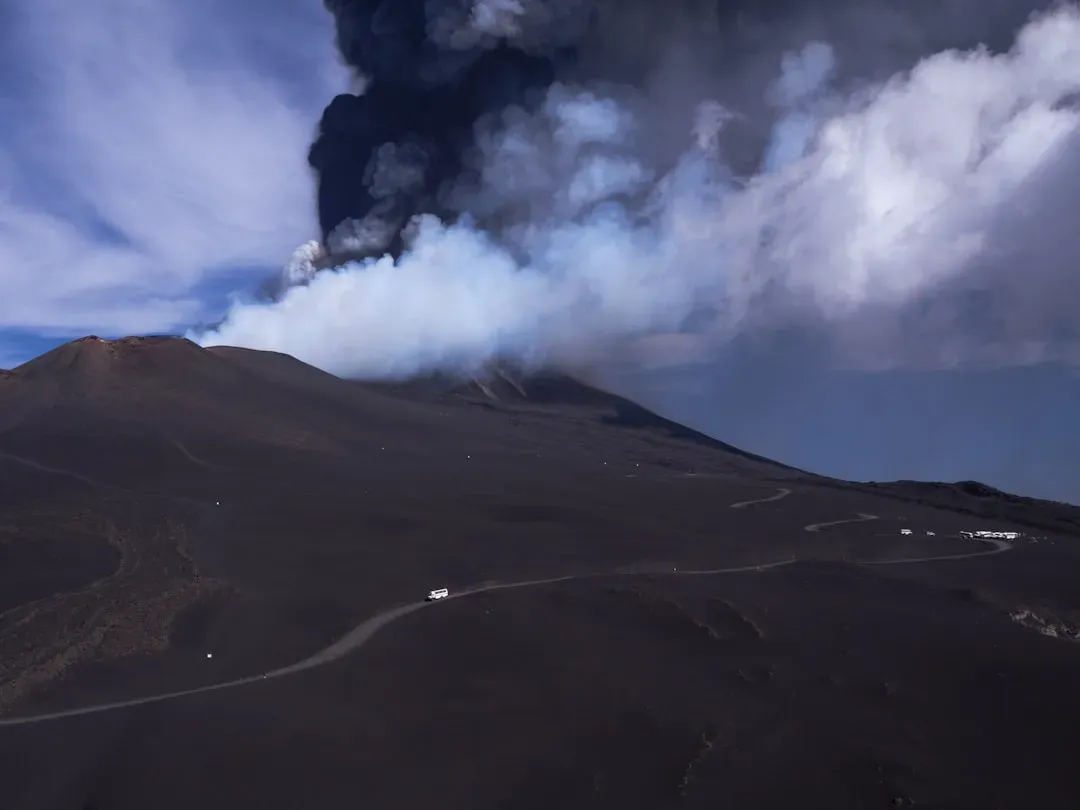
Let’s be real. Without volcanoes, you wouldn’t be reading this right now. Volcanic outgassing probably created the primordial atmosphere and then the ocean, but the early atmosphere contained almost no oxygen, and after the impact which created the Moon, the molten Earth released volatile gases with later more gases released by volcanoes, completing a second atmosphere rich in greenhouse gases but poor in oxygen.
Volcanic eruptions spewed gases from Earth’s interior to the atmosphere, a process called outgassing that continues today, and most of the gas was carbon dioxide and water vapor. Imagine the early Earth constantly belching out these gases. Assuming that the gases we presently observe were also released by early volcanoes the atmosphere would be made of water vapor, carbon monoxide, carbon dioxide, hydrochloric acid, methane, ammonia, nitrogen, and sulfur gases.
It wasn’t pretty. You definitely couldn’t breathe it. The initial atmosphere created by volcanic outgassing was likely very different from today’s, lacking oxygen and containing high amounts of greenhouse gases. Yet this noxious mixture was essential. Without volcanic outgassing, Earth would have remained a barren rock, utterly inhospitable to any form of life.
The Birth of the Oceans from Fiery Depths
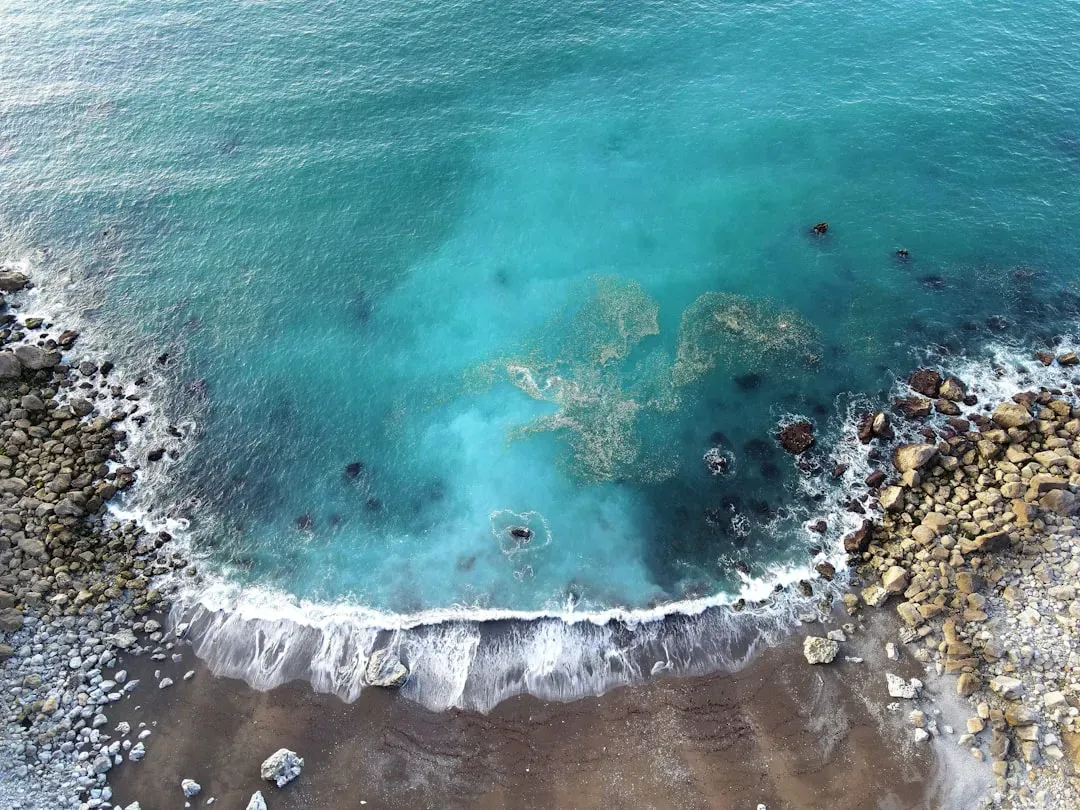
Water from volcanoes? It sounds contradictory, doesn’t it? Fire and water are opposites in our minds. The water vapor condensed to form part of Earth’s oceans as the surface cooled. As temperatures dropped, the steam that had been spewing from countless volcanic vents began to condense in the atmosphere.
As the Earth cooled over time, this water vapor condensed to form liquid water, which gradually accumulated to create Earth’s oceans. Picture it: torrential rains falling for thousands, maybe millions of years. As Earth cooled, clouds formed, and rain created the oceans. Recent evidence suggests the oceans may have begun forming as early as 4.4 billion years ago.
Continuous volcanic eruptions also contributed to the water that would later become the oceans. Gaseous emissions from volcanic vents over hundreds of millions of years formed the Earth’s earliest oceans and atmosphere, which supplied the ingredients vital to evolve and sustain life. Honestly, it’s mind-blowing to think that every drop of water you drink today has its origins in volcanic fury.
Continental Construction Through Volcanic Mountains
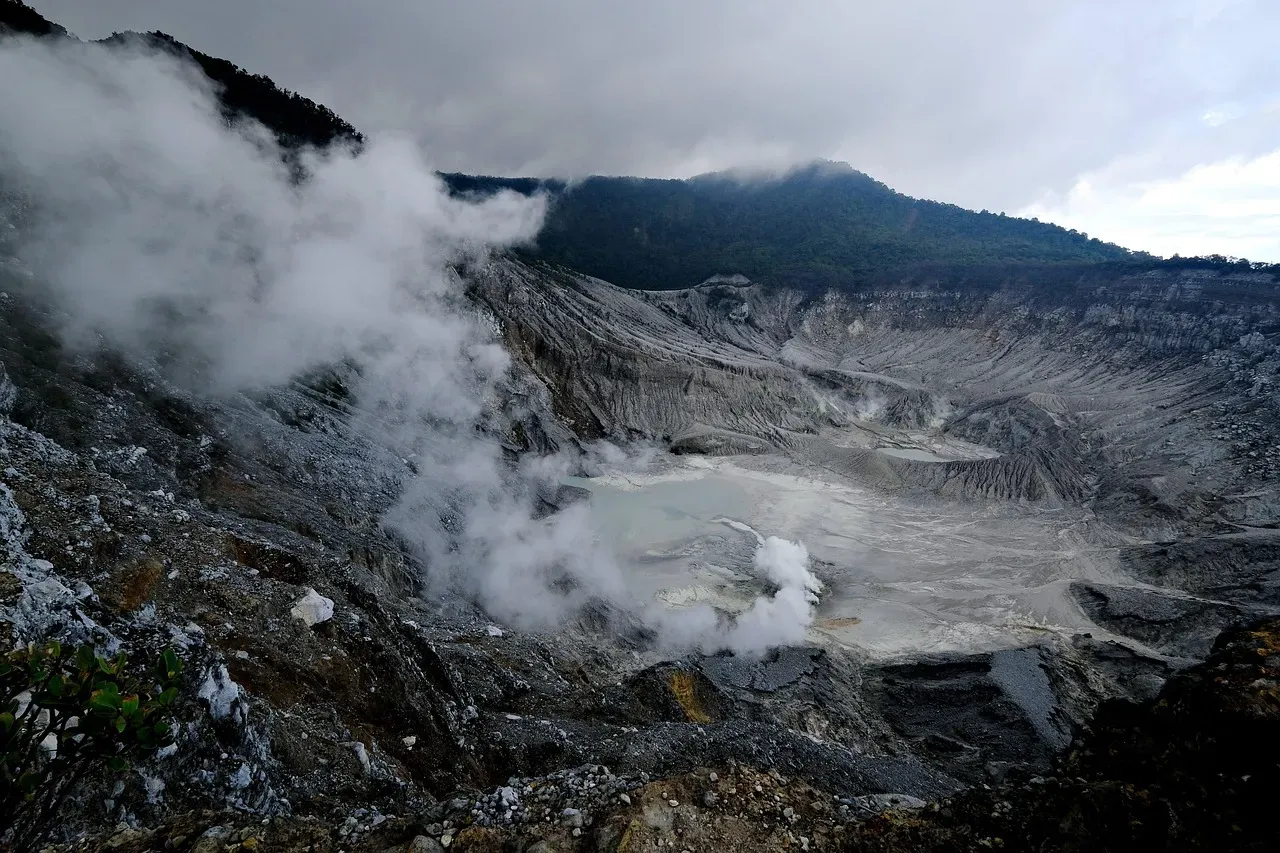
Scientists believe that during this 2-billion-year interval, massive volcanic structures gradually built up into continental masses. The continents didn’t just appear overnight. They were constructed slowly, layer by layer, through relentless volcanic activity. Each eruption added a bit more material, building upward and outward.
Explosive-style volcanic eruptions were common in what are today India, South Africa and Australia around 3.5 billion years ago, and these eruptions mostly occurred under oceans, though sometimes above them. These underwater volcanic mountains eventually grew tall enough to break through the ocean surface, forming the first islands and proto-continents.
More than 80 percent of the Earth’s surface, above and below sea level, is of volcanic origin. Let that sink in for a second. The vast majority of our planet’s surface owes its existence to volcanic processes. The planet Venus has a surface that is 90% basalt, indicating that volcanism played a major role in shaping its surface. Earth is not unique in this respect, though our ongoing volcanic activity has shaped us differently than our neighboring planets.
Plate Tectonics: The Volcanic Engine That Never Stops
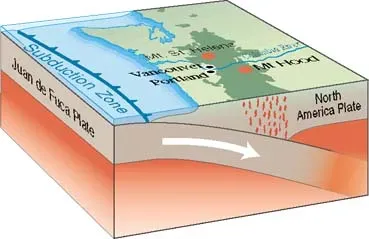
Plate tectonics, as it is known today, began about 2.5 billion years ago. This was a game changer. It may have taken that long for the Earth’s upper mantle to become sufficiently hot and fluid to create convection cells that could fracture the crust and spread these huge sections apart from one another.
The vast majority of the world’s active volcanoes occur along plate boundaries, with the Pacific plate’s Ring of Fire being the most active and widely known, though some volcanoes occur in the interiors of plates. Today, plate tectonics continues to drive volcanic activity around the globe. With some notable exceptions, nearly all the world’s earthquake and volcanic activity occur along or near boundaries between plates.
The system is elegant in its brutality. New crust forms at spreading ridges through volcanic activity. Old crust gets recycled at subduction zones, where it melts and feeds new volcanoes. Earth’s differentiation continues in the present, as parts of the lithosphere continually break down and rebuild, with ongoing tectonic activity continuing to drive differentiation today. It’s a cycle that has been running for billions of years and shows no signs of stopping.
Volcanoes and the Gift of Life
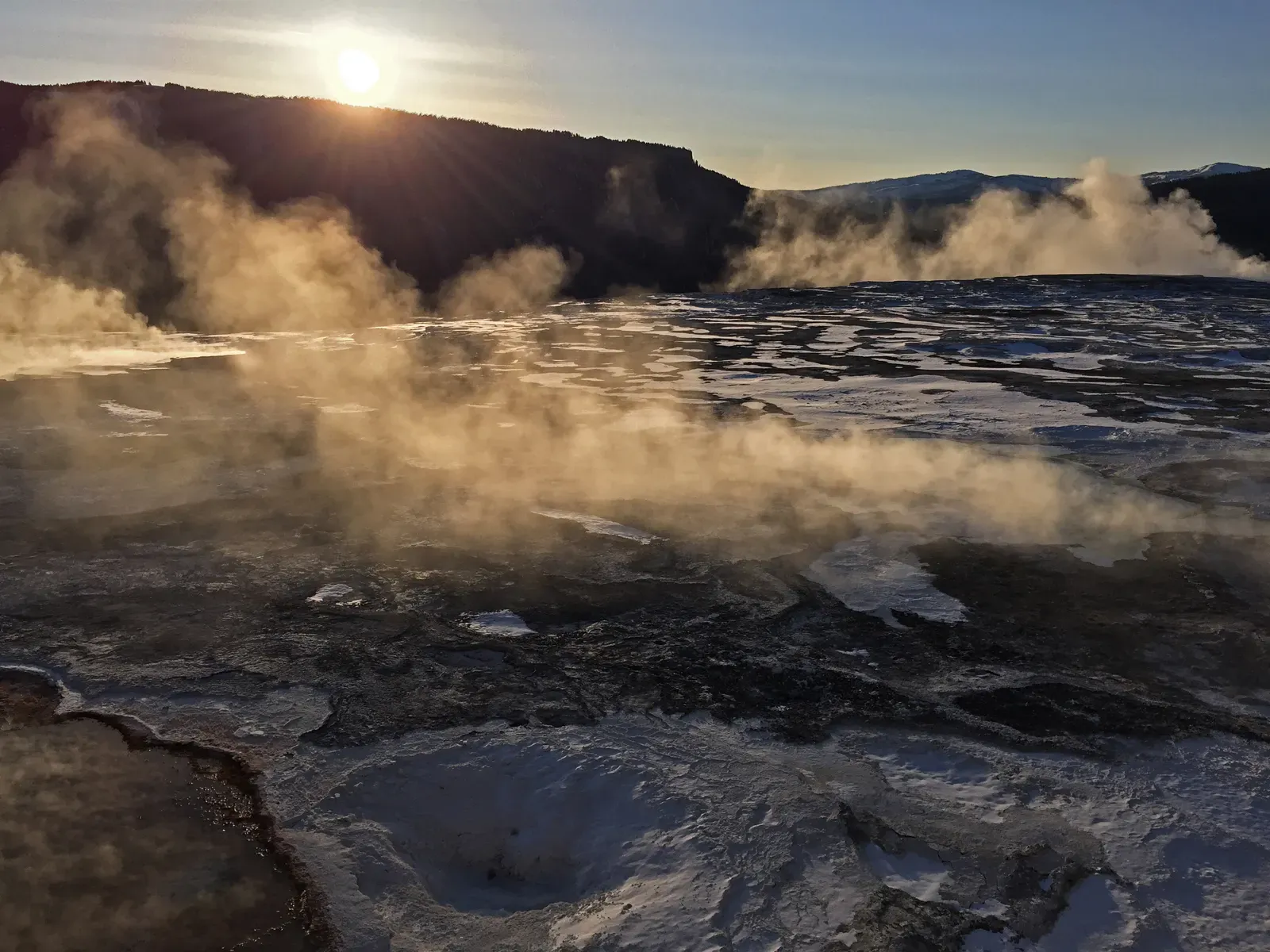
One theory suggests that life on Earth may have had its origin in volcanic hot springs that were rich in organic compounds. It’s hard to say for sure, yet there’s something poetic about it. Life emerging from the same volcanic forces that nearly destroyed everything.
Moreover, they released gases that helped form our oceans and our atmosphere billions of years ago, two features that enabled life to thrive here, and to this day, volcanoes help keep Earth warm, wet and habitable. Without the constant cycling of materials through volcanic processes, our planet would be a very different place. Probably a dead one.
Even today, volcanic gases play a role in maintaining Earth’s climate. They release carbon dioxide, which can warm the planet, though they also release sulfur dioxide, which can cool it. The carbon dioxide would have been produced by volcanoes and the methane by early microbes. The balance has shifted over billions of years, but the fundamental processes remain remarkably similar.
Conclusion: Earth’s Ongoing Volcanic Legacy
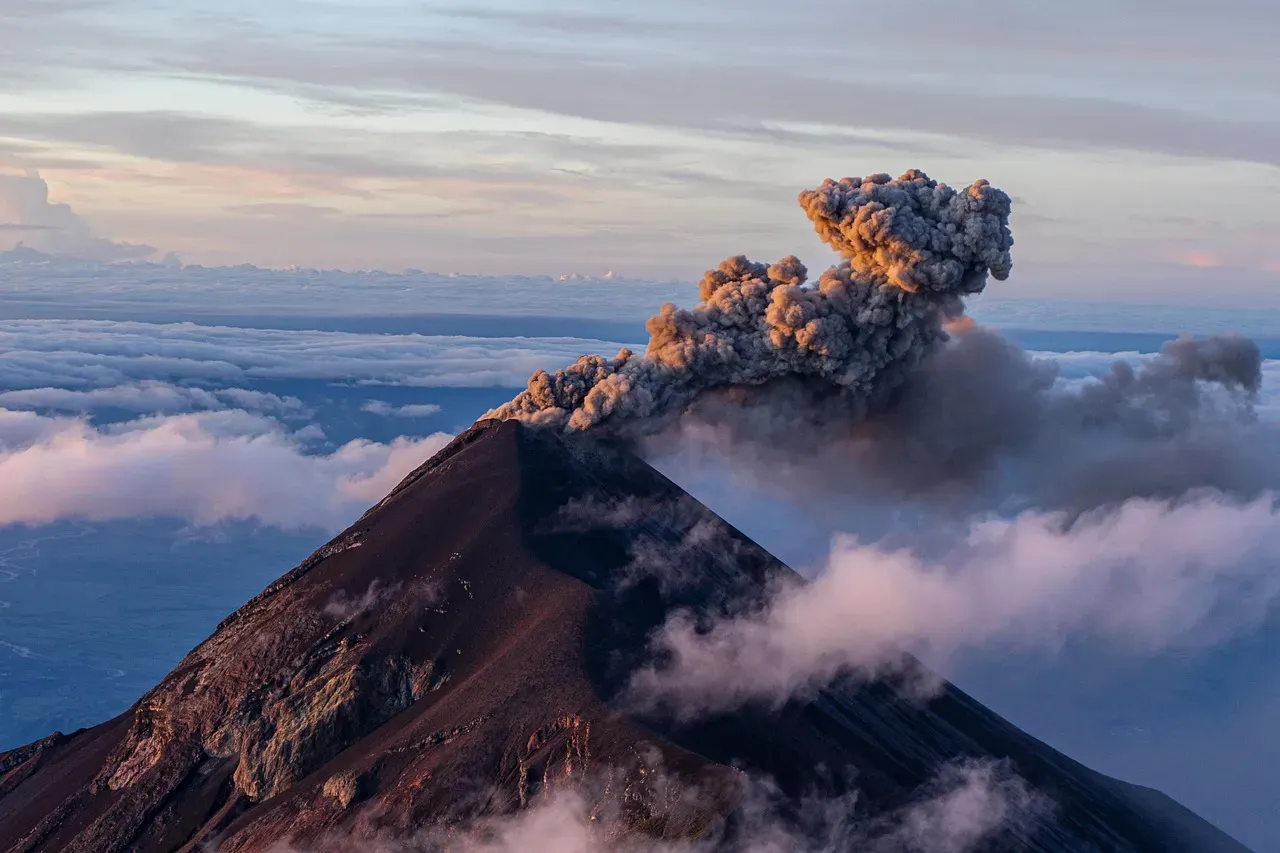
So here we are, standing on a planet forged in fire. Volcanic activity has played a major geological and environmental role in the evolution of the Earth since the planet’s formation. From the molten chaos of our earliest days to the complex, dynamic world we inhabit now, volcanoes have been the constant architects of change.
The next time you see a volcanic eruption on the news, remember that you’re witnessing the same process that created our oceans, built our atmosphere, and constructed the very ground beneath your feet. It’s violent, yes. Dangerous, absolutely. Yet it’s also the reason we exist at all. Our planet is not done evolving, and volcanic activity remains central to that ongoing transformation.
What do you think when you look at volcanic landscapes now? Do you see destruction, or do you see creation? Share your thoughts in the comments below.