Picture a world where shadows of giants stretched across the plains. Mammoths taller than most houses ambled through grasslands. Enormous cats with dagger teeth prowled the forests. Bears that towered over modern grizzlies hunted prey three times their size. This wasn’t some fantasy realm from an old legend, but North America just over ten thousand years ago.
Then, seemingly in the blink of a geological eye, they vanished. Scientists have argued for decades about what caused their disappearance, and the debate is far from settled. Was it human hunters? Climate chaos? Both? Something we haven’t even considered yet?
When Giants Walked Among Us
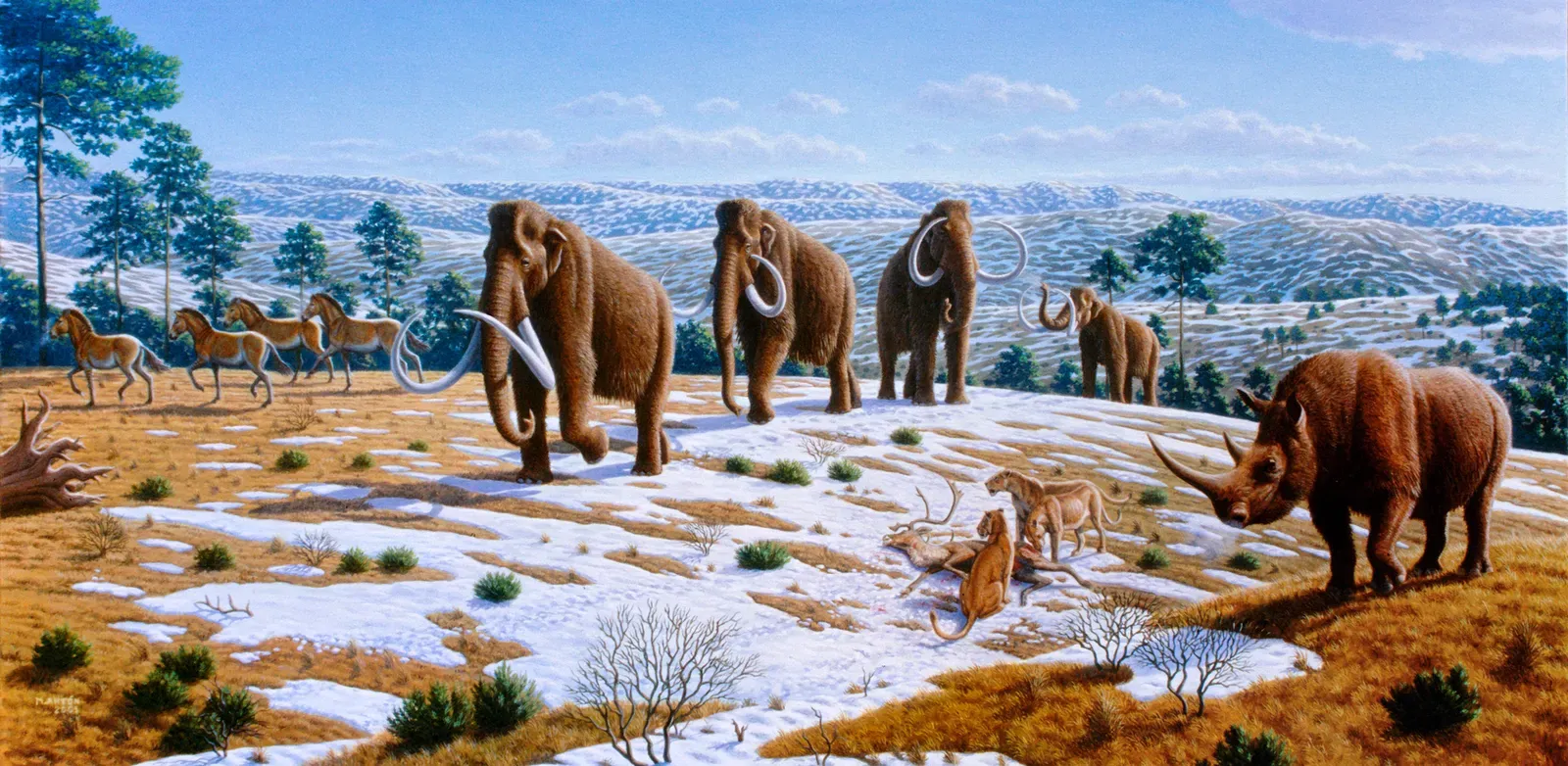
Twenty thousand years ago, when most of northern North America was covered by massive glaciers, much of Alaska was ice-free and home to a diverse assortment of large mammals. The landscape was unlike anything you’d recognize today. Think of it as a strange patchwork of environments stitched together by the extremes of the Ice Age.
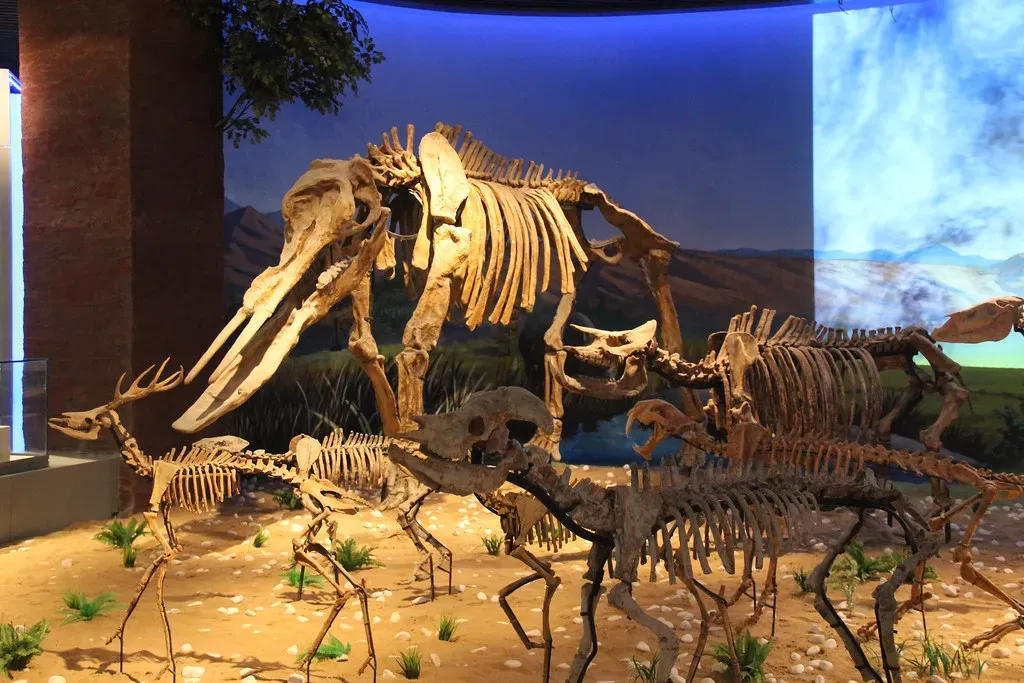
Mammoths and their cousins the mastodons, longhorned bison, sabre-toothed cats, giant ground sloths, and many other large mammals characterized Pleistocene habitats in North America, Asia, and Europe. These weren’t just slightly bigger versions of animals we know. They were genuinely massive. The scale alone would take your breath away.
North America back then was essentially a megafauna theme park. Camels wandered beside horses that looked nothing like their modern descendants. Giant armadillo-like creatures called glyptodons lumbered past ground sloths the size of elephants.
The Vanishing Act That Changed Everything
Roughly 32 genera of large mammals vanished during an interval of about 2,000 years, centered on 11,000 years before present, in North America. That timeframe is shockingly brief in geological terms. Entire lineages that had survived millions of years just disappeared.
The end of the Pleistocene in North America saw the extinction of 38 genera of mostly large mammals. It wasn’t a gradual decline. The fossil record shows populations that seemed healthy one moment, then gone the next. Honestly, it’s one of the most perplexing puzzles in paleontology.
What makes this extinction different from others is its bizarre selectivity. Small mammals, along with reptiles and amphibians, generally were not affected by the extinction process. Only the big animals fell. That detail alone tells researchers this wasn’t your typical mass extinction event.
The Human Connection Nobody Can Prove
The culture that has been connected with the wave of extinctions in North America is the paleo-American culture associated with the Clovis people, who were thought to use spear throwers to kill large animals. These early Americans arrived roughly around the same time the megafauna started disappearing. Suspicious timing, right?
The chief criticism of the prehistoric overkill hypothesis has been that the human population at the time was too small and not sufficiently widespread geographically to have been capable of such ecologically significant impacts. Think about it. A handful of hunters with stone-tipped spears wiping out entire species across an entire continent? Seems a bit far-fetched when you put it that way.
Between 75 and 90 percent of the northeastern megafauna were gone before humans ever came on the scene. This evidence from northeastern North America directly contradicts the idea that humans were the primary culprits everywhere. Still, the coincidence of human arrival and extinctions elsewhere is hard to ignore.
There’s another troubling detail. Neither megafaunal nor Paleoindian sites in the northeast contained animal bones that were butchered or otherwise modified. Where’s all the evidence of widespread hunting? The kill sites are frustratingly rare.
Climate’s Devastating Hand
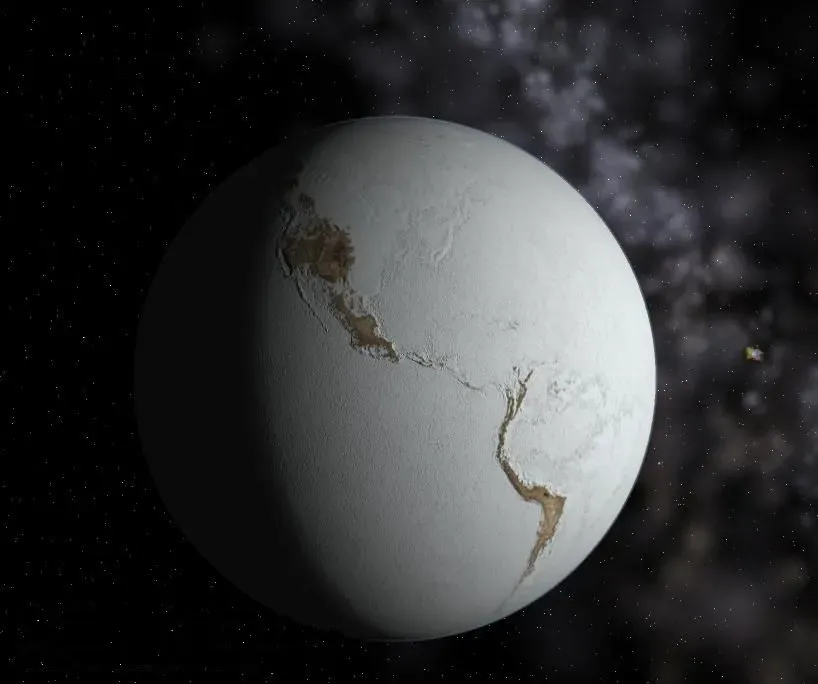
Between 15,000 and 12,000 years ago, there were two major climatic changes, with abrupt warming around 14,700 years ago, followed by a cold snap around 12,900 years ago during which the Northern Hemisphere returned to near-glacial conditions, and one or both of these important temperature swings have been implicated in the megafauna extinctions. These weren’t gentle shifts either. We’re talking dramatic environmental whiplash.
The climate argument actually makes a lot of sense when you look at the evidence. Climate shifts during the late Pleistocene and subsequent changes in weather and plants served as likely culprits, as an unusual patchwork aggregation of plant communities ceased to exist and there was a massive reorganization of biotic communities. Imagine your entire food supply suddenly vanishing or transforming into something unrecognizable.
Between 15,000 BP and 10,000 BP, a 6 degree Celsius increase in global mean annual temperatures occurred. That’s enormous. For creatures adapted to frigid conditions over hundreds of thousands of years, such a rapid shift would have been catastrophic. Their world literally melted away beneath them.
The Woolly Mammoth’s Last Stand
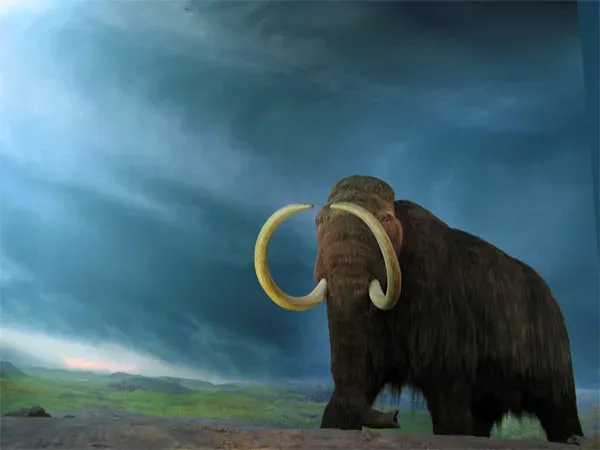
These iconic creatures symbolize the Ice Age like nothing else. Standing 12 feet tall at the shoulders and weighing six to eight tons, the woolly mammoth grazed the northern steppes of Ice Age North America using its colossal, 15-foot curved tusks to dig under the snow for food and defend itself against predators. Seriously, try to picture something that enormous wandering past you.
Woolly mammoths died out on remote Wrangel Island 6,000 years after their extinction on the mainland. This fascinating detail suggests that in places without humans, mammoths hung on much longer. The island became a refuge, a final sanctuary for these magnificent animals.
But isolation only delayed the inevitable. Eventually, even these remote populations succumbed. Whether it was genetic problems from inbreeding, environmental changes, or eventual human contact remains unclear.
Saber-Toothed Cats: Misunderstood Predators
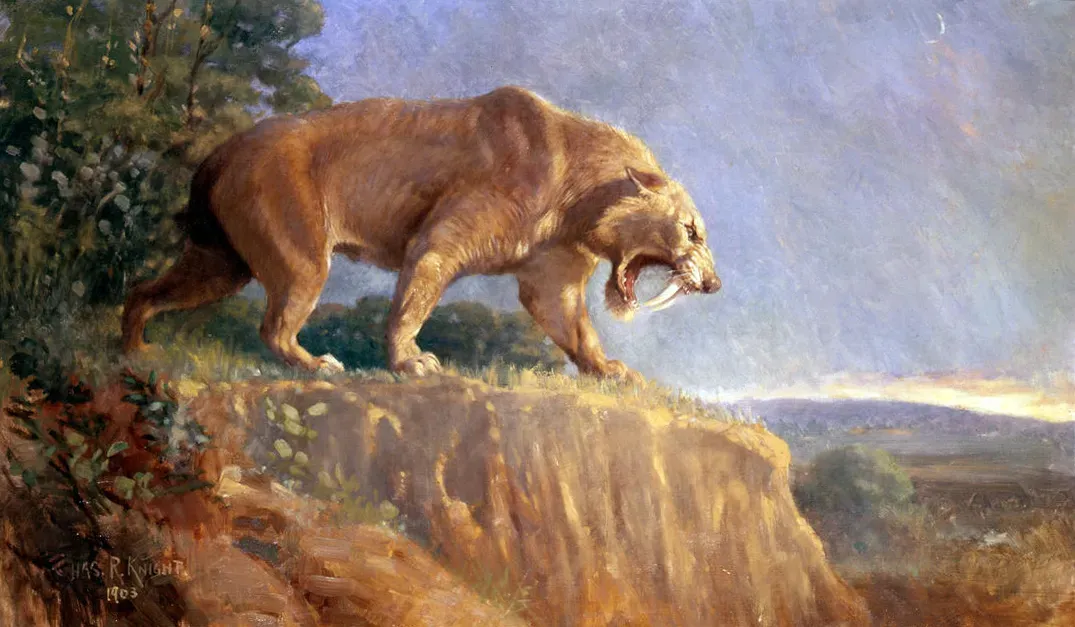
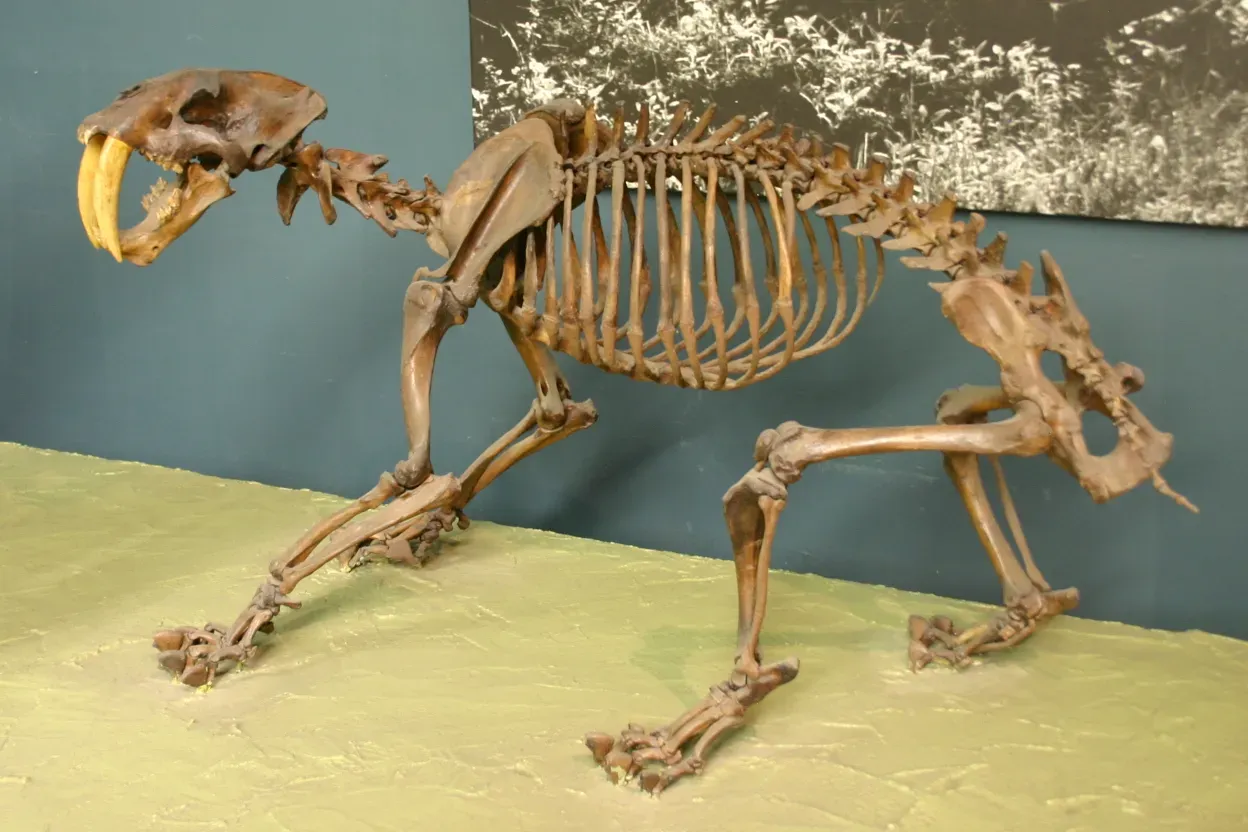
The saber-toothed tiger, one of the most iconic animals of Ice Age North America, had skeletons armed with upper canines averaging seven inches long and a jaw that could open an astonishing 130 degrees. Those teeth weren’t just for show. They were precision killing instruments.
Despite their fearsome reputation, these cats were more vulnerable than you’d think. Modern big cats have more pronounced zygomatic arches, while these were smaller in Smilodon, which restricted the thickness and power of the temporalis muscles and reduced bite force to only a third as strong as that of a lion. They couldn’t simply overpower prey with brute jaw strength.
Major predators dominated North America in an uneasy stability with a wide range of mammals, including mammoths, mastodons, ground sloths, camels, horses, and several species of bison, with large herbivores growing quickly but having their numbers reduced by significant carnivorous predators, not the least of which was lions, dire wolves, and two species of saber-toothed cats. The whole system was a delicate balance. Remove one piece and everything collapses.
Giant Ground Sloths: Nature’s Bizarre Experiment
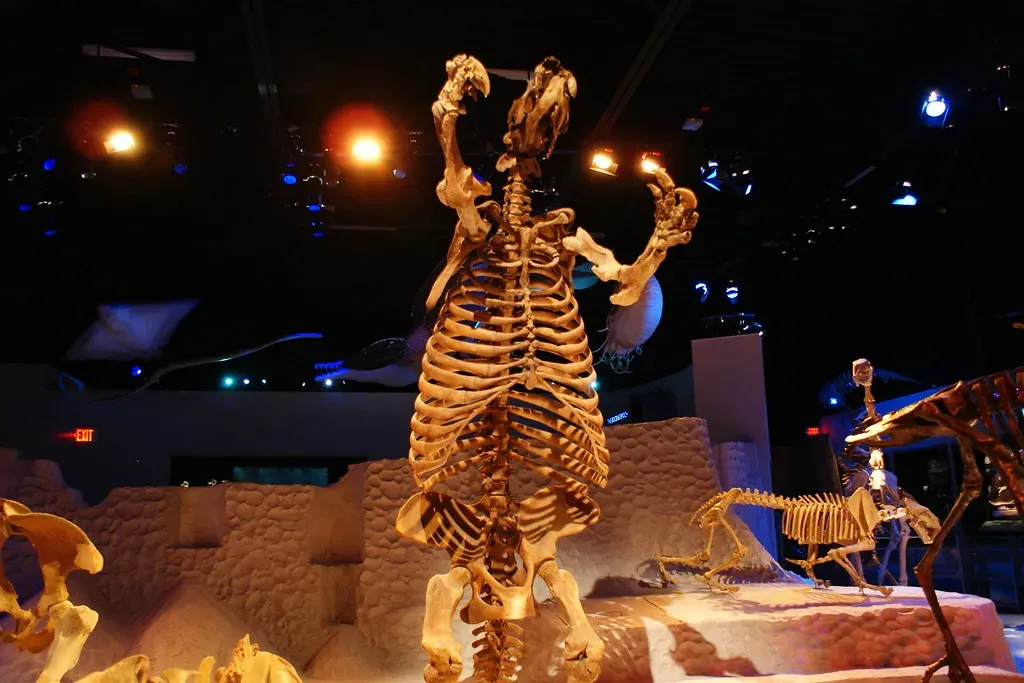
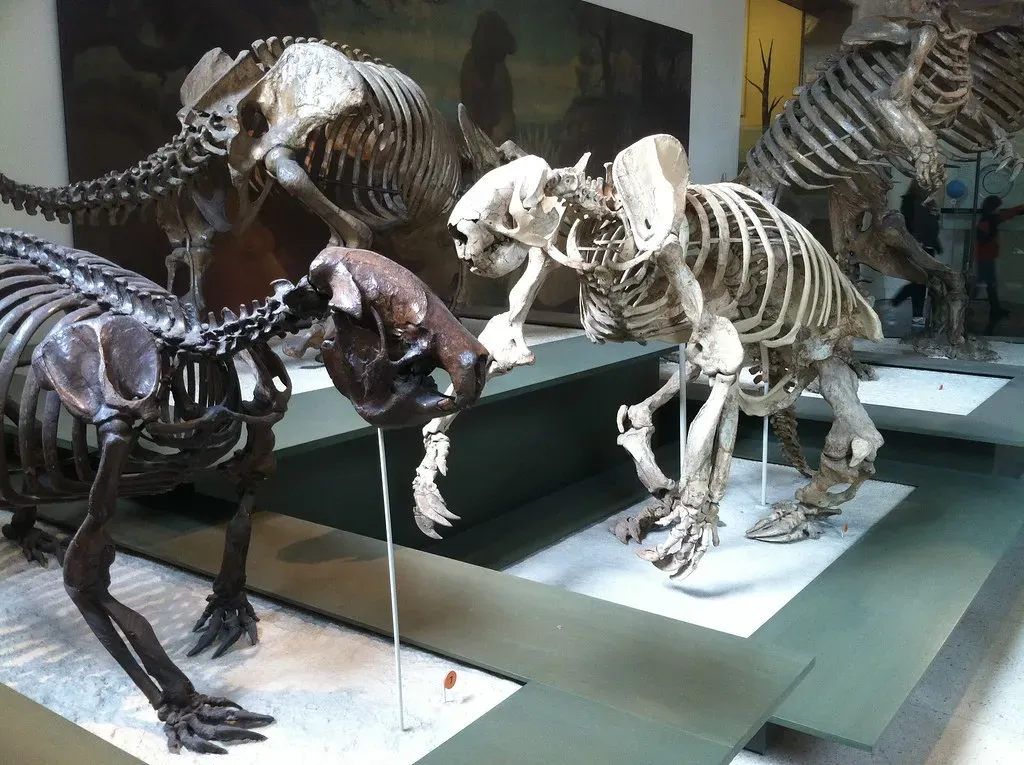
Forget everything you know about cute, slow-moving tree sloths. The giant ground sloths of the late Pleistocene were bear-sized herbivores that stood 12 feet on their hind legs and weighed up to 3,000 pounds. These were creatures that seemed cobbled together from spare parts of other animals.
One giant sloth species, the Jefferson ground sloth, was named for Thomas Jefferson, who initially believed that sloth fossils were a type of colossal cat that he dubbed the Megalonyx. Even one of America’s founding fathers was baffled by these strange beasts. That’s how weird they truly were.
These massive herbivores had huge curved claws that they’d use to strip leaves from trees or dig for roots. Despite their intimidating size and weaponry, they were gentle giants. Yet even their bulk couldn’t save them from extinction.
The Short-Faced Bear: North America’s Apex Nightmare
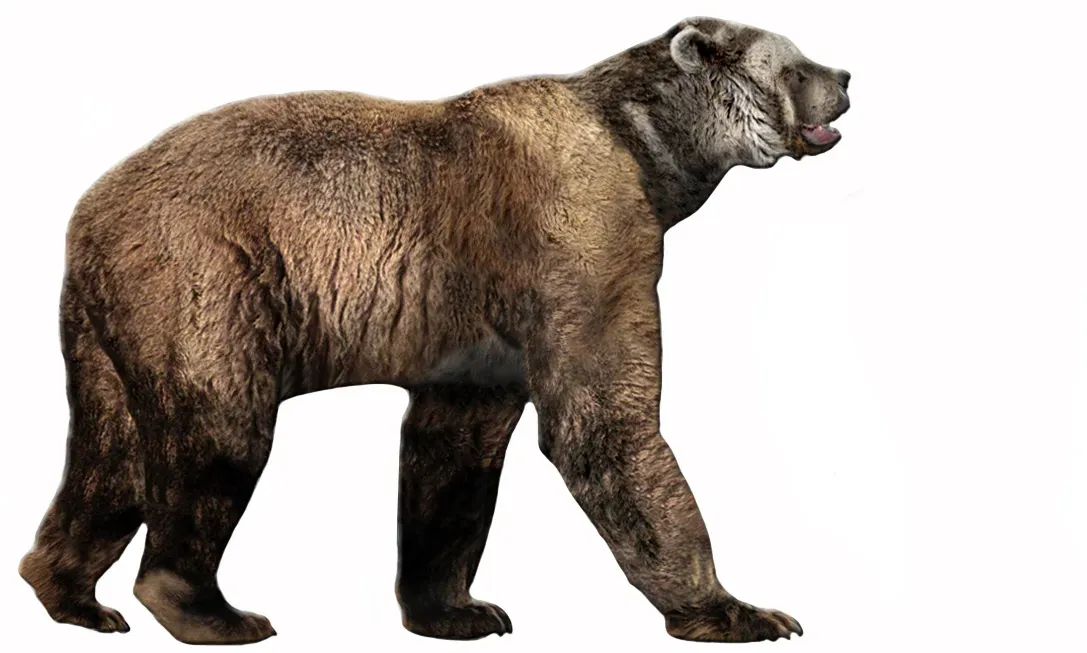
If you want to understand true prehistoric terror, consider the short-faced bear. In prehistoric North America, the short-faced bear ruled the land as one of the biggest and most powerful predators the world has seen, weighing an immense 900 kilograms and standing 2 metres at the shoulder. Modern grizzlies look downright cuddly by comparison.
They had slender limbs compared to the heavily-built bears we see today and stood tall, reaching 4 metres when reared up. Picture that for a moment. A predator taller than most basketball hoops. The stuff of nightmares, really.
These bears had another advantage: speed. With their long legs, they could cover ground far more quickly than modern bears. Whether they actively hunted or primarily scavenged remains debated, but either way, nothing wanted to meet one face to face.
The Complexity of Extinction
Species responded differently to environmental changes, and no one factor by itself explains the large variety of extinctions, with causes possibly involving the interplay of climate change, competition between species, unstable population dynamics, and hunting as well as competition by humans. That’s the frustrating truth researchers keep discovering.
Some form of a combination of both factors could be plausible, and overkill would be a lot easier to achieve large-scale extinction with an already stressed population due to climate change. It wasn’t an either-or scenario. The real answer likely involves multiple overlapping causes.
The severity of extinction is strongly tied to hominin palaeobiogeography, with at most a weak, Eurasia-specific link to climate change. Different regions show different patterns. What killed megafauna in one area might not explain extinctions elsewhere. The mystery deepens the more you examine it.
Why This Mystery Still Matters Today
Understanding these ancient extinctions isn’t just about satisfying curiosity. When humans reached North America 13,000 years ago, 78 species that weighed over a ton vanished in the terminal Pleistocene megafauna extinction, and after scrutinizing the fossil record, researchers concluded that these ancient humans and their forebears expanding over the globe obliterated big mammal species, much as human activity today is leading to extinctions. History might be repeating itself.
The parallels to our current biodiversity crisis are impossible to ignore. Large animals remain the most vulnerable to extinction. Habitat loss, climate change, and human activity continue threatening megafauna worldwide. We’re watching it happen in real time with elephants, rhinos, and great apes.
Our ancient ancestors contributed to the extinction of many of the world’s largest mammals during an event known as the Quaternary megafauna extinction. If our ancestors, with far simpler technology, could trigger such massive ecological devastation, what does that mean for our impact today? The question should keep us up at night.
What happened to North America’s giants remains one of paleontology’s greatest unsolved cases. Perhaps we’ll never know the complete truth. The evidence is fragmentary, the timeline murky, and new discoveries constantly challenge old assumptions. Yet that uncertainty makes the mystery all the more compelling. What do you think happened? Was it us, the climate, or something more complex?