Few questions in the history of science have gripped the human imagination quite like this one. Dinosaurs ruled the Earth for an almost incomprehensible stretch of time, roughly 160 million years, and then – with stunning abruptness – they were gone. The story of their disappearance has fascinated scientists, schoolchildren, and anyone who has ever looked up at the sky and wondered what unseen forces can alter the fate of an entire planet.
What is perhaps most surprising is that even in 2026, with all the extraordinary tools of modern science at our disposal, we still cannot say with complete certainty exactly what killed them. There are strong leading theories, compelling evidence, and fascinating new findings emerging each year. But the full picture remains beautifully, maddeningly complicated. Let’s dive in.
The Scale of the Catastrophe: What We Know for Certain
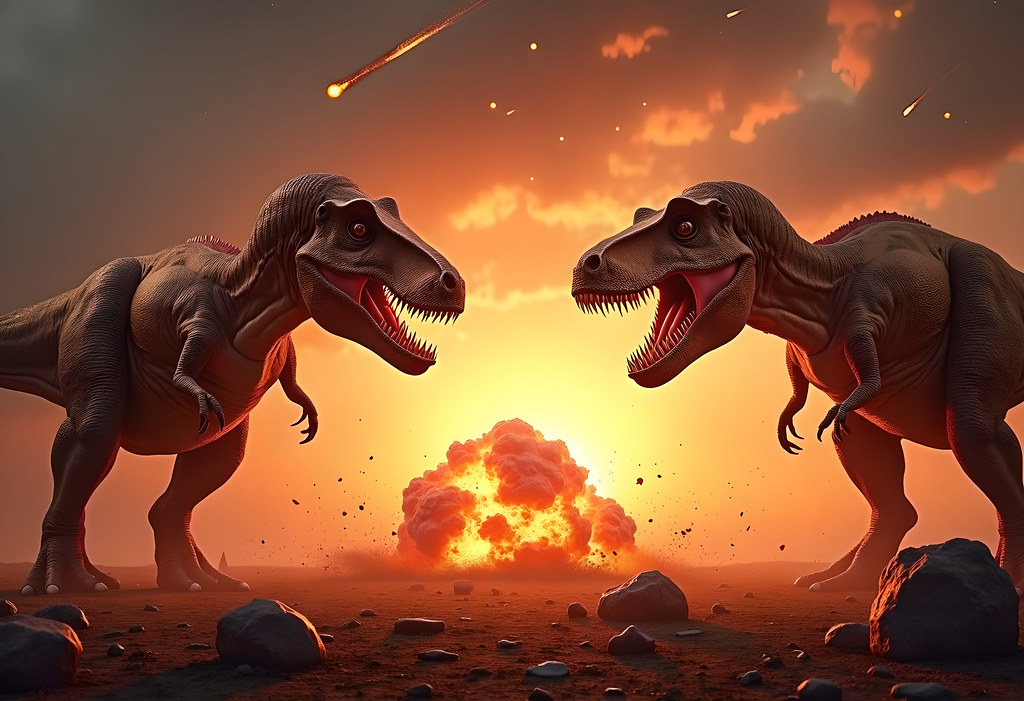
Before getting into the “whodunit,” it helps to understand just how enormous the catastrophe was. The Cretaceous–Paleogene extinction event was a major mass extinction of three-quarters of the plant and animal species on Earth, occurring approximately 66 million years ago. Think about that for a moment. Nearly three out of every four species on the planet, simply erased.
The event caused the extinction of all non-avian dinosaurs and most other tetrapods weighing more than 25 kg, with the exception of some ectothermic species such as sea turtles and crocodilians. The scale goes far beyond just the iconic T. rex and Triceratops. A wide range of terrestrial species perished, along with many mammals, birds, lizards, insects, plants, and all of the pterosaurs. The extinction also killed off plesiosaurs and mosasaurs and devastated teleost fish, sharks, mollusks, and many species of plankton in the oceans.
The Smoking Gun: The Chicxulub Asteroid Impact
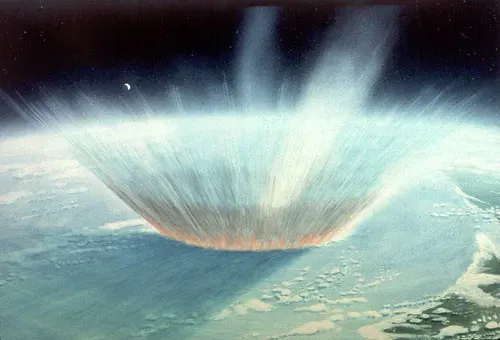
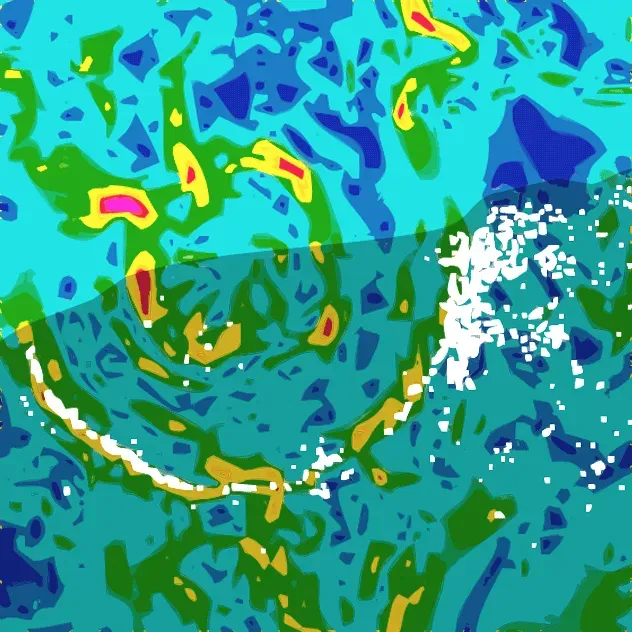
Here’s the thing – if you ask most scientists today what delivered the killing blow, the answer points firmly to a rock from space. The Chicxulub crater was formed slightly over 66 million years ago when an asteroid about ten kilometers in diameter struck Earth. The crater is estimated to be 200 kilometers in diameter and is buried to a depth of about one kilometer beneath younger sedimentary rocks. To put that in perspective, you could fit most of a small country inside the crater’s rim.
The asteroid hit at an estimated speed of 20 kilometers per second, more than 58 times the speed of sound, at a relatively steep angle of between 45 and 60 degrees to the Earth’s surface. The impact produced as much explosive energy as 100 teratons of TNT, 4.5 billion times the explosive power of the Hiroshima atomic bomb. That kind of energy is almost beyond human reckoning. It is now widely accepted that the devastation and climate disruption resulting from the impact was the primary cause of the Cretaceous–Paleogene extinction event.
The Evidence Trail: How Scientists Connected the Dots
The case against the asteroid wasn’t built overnight. The hypothesis that an asteroid or comet impact induced the mass extinction at the KT boundary was first proposed in 1980 by a team from the University of California at Berkeley led by Nobel Prize laureate physicist Luis Alvarez and his geologist son Walter. What they found was not the crater itself, but something almost more elegant – a chemical fingerprint left across the entire planet.
The researchers found a thin layer of the metal iridium in rocks around the world from 66 million years ago. Iridium is rare within the Earth’s crust but abundant in some asteroids and meteorites. It’s essentially a calling card from outer space, preserved in stone for tens of millions of years. In March 2010, an international panel of 41 scientists reviewed 20 years of scientific literature and endorsed the asteroid hypothesis, specifically the Chicxulub impact, as the cause of the extinction, ruling out other theories such as massive volcanism.
The Impact Winter: When Darkness Became a Mass Killer

I think this is actually the most haunting part of the whole story. The asteroid didn’t just destroy everything in its immediate path. It triggered a chain of events that turned the entire planet into a death trap. Dust from pulverized rock, amounting to around 2,000 gigatons, was propelled into the Earth’s atmosphere, overshadowing the sun and severely disrupting plant photosynthesis. These findings were made possible through advanced modeling techniques, which demonstrated that the atmospheric dust, equivalent to over 11 times the mass of Mount Everest, persisted for up to 15 years, triggering a global nuclear winter.
Models showed that soot particles were so good at absorbing sunlight that photosynthesis levels dropped to below one percent of normal for well over a year. One percent. Basically, the sun simply switched off. While oceans protected some creatures from blazes, the soot remained in the atmosphere to block most sunlight for nearly two years, darkening the skies and preventing photosynthesis. The calculations suggest that it took almost six years for sunlight levels at the surface to return to normal, hindering recovery and leading to mass marine extinctions.
The Volcanic Suspect: India’s Deccan Traps
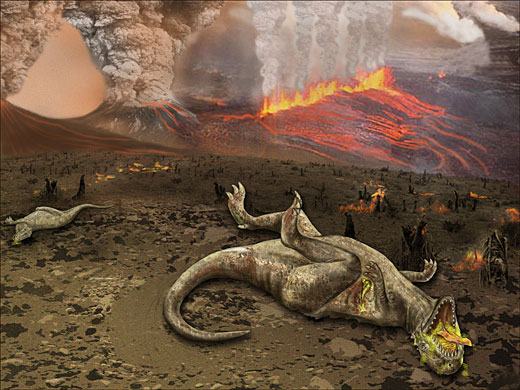
Honestly, the asteroid story would be simpler if the Deccan Traps weren’t sitting there in the background, complicating everything. According to research, the massive volcanoes, called the Deccan Traps, started erupting about 400,000 years before the Chicxulub impact and wrapped up about 600,000 years after. That’s a million years of continuous volcanic fury happening almost simultaneously with the asteroid strike. Quite the coincidence.
The Deccan Traps were incomprehensibly huge by modern standards, expelling some 135,000 cubic miles of lava over a million-year period. That’s enough lava to circle Earth with a rocky belt more than five miles wide and a mile tall. Scientists remain divided on how much damage this contributed. While some authors initially suggested the eruptions were a major cause of the mass extinction, this theory has been reconsidered in light of research into the Chicxulub impact. While some scholars continue to argue the eruptions may have contributed, it is now generally accepted that the Deccan eruptions played a minor role at most. Still, the “one-two punch” theory refuses to die completely.
Were Dinosaurs Already in Decline Before the End?
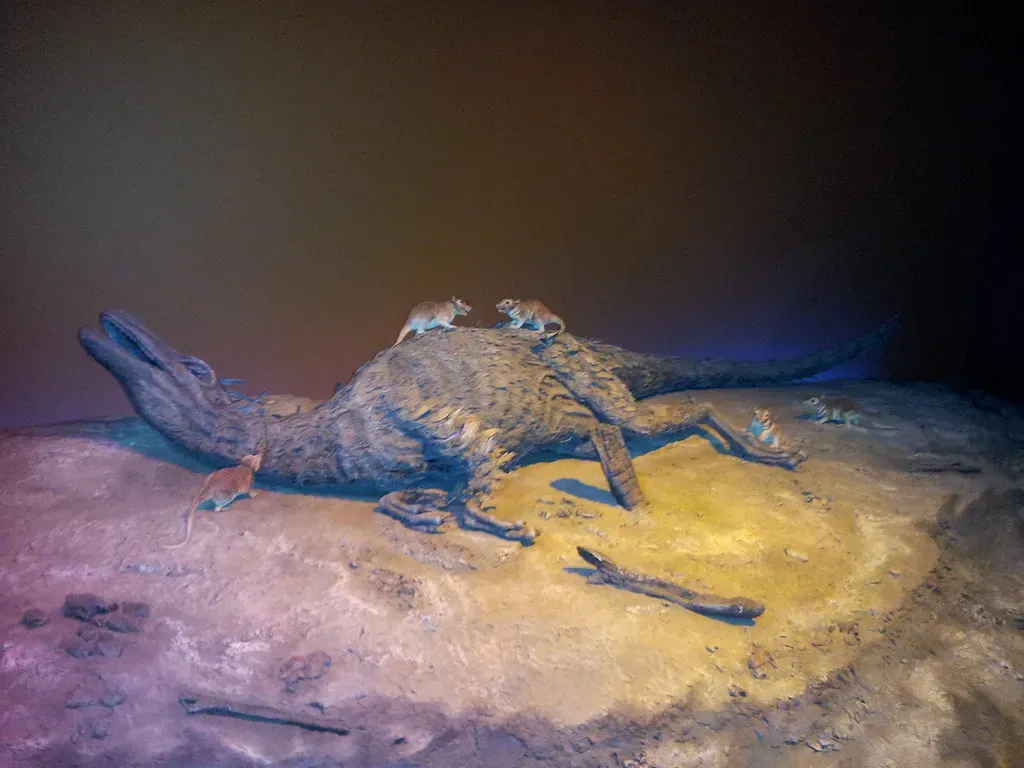
Here’s where things get genuinely surprising. You might assume dinosaurs were thriving right up until that fateful day 66 million years ago. The reality is messier. Dinosaurs are thought to have been driven extinct by an asteroid impact 66 million years ago, but six major dinosaur families were already in decline in the preceding 10 million years, possibly due to global cooling and competition among herbivores. So the asteroid may have delivered the final blow to creatures that were already struggling.
It’s hard to say for sure whether this tells us about the dinosaurs’ fate or simply about the limitations of the fossil record itself. The idea that dinosaurs were already in decline before an asteroid wiped most of them out 66 million years ago may be explained by a worsening fossil record from that time rather than a genuine dwindling of dinosaur species, suggests a new study led by UCL researchers. Analysis of North American fossils from the last 18 million years of the Cretaceous period shows that the likelihood of finding dinosaur fossils decreased due to fewer exposed rock locations, not necessarily a reduction in dinosaur diversity. In other words, absence of evidence may not be evidence of absence.
Conclusion: A Mystery with Layers
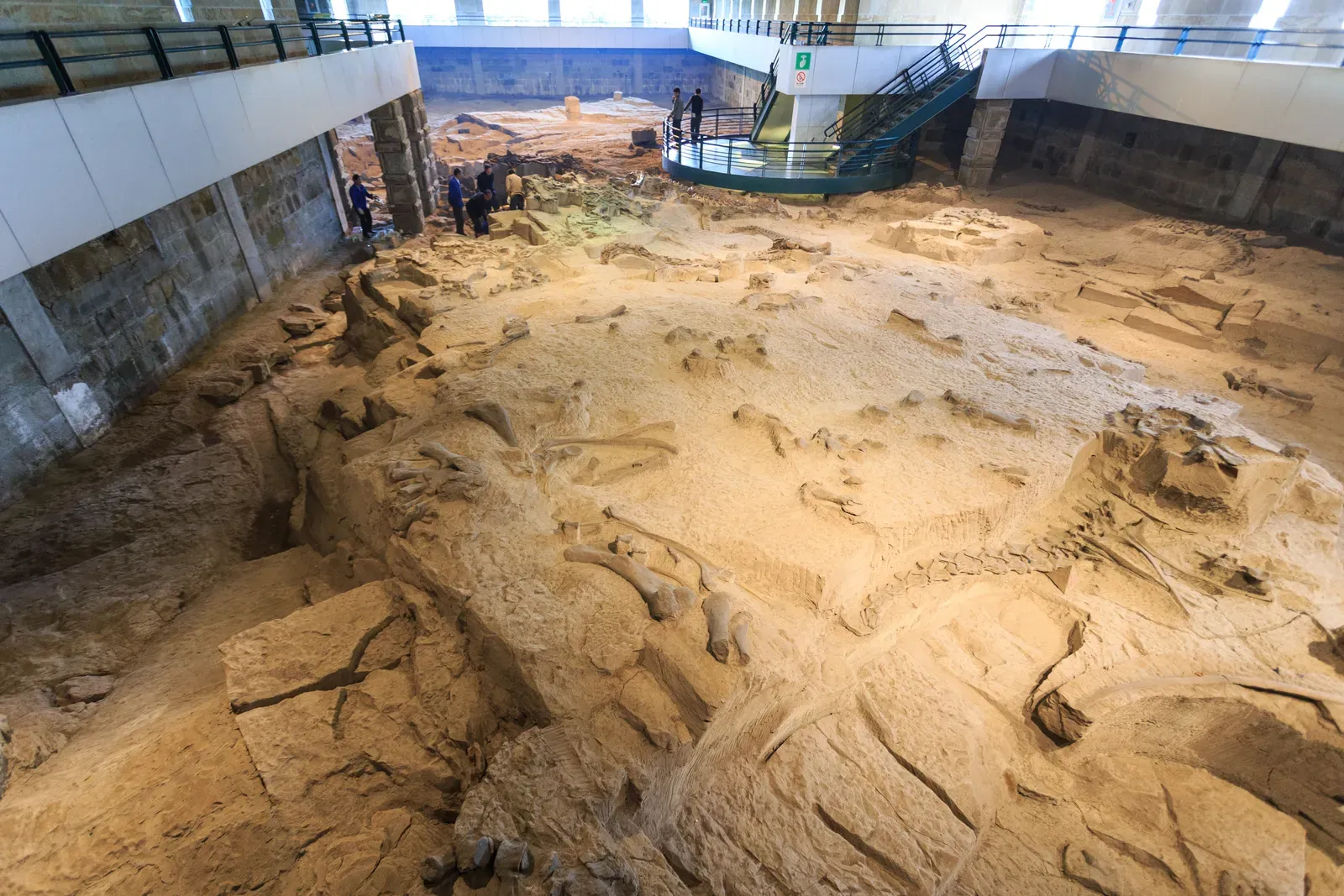
What’s remarkable about the dinosaur extinction story is not just the scale of the event itself, but how it continues to evolve with every new drill core, every new fossil site, and every new piece of climate modeling. The asteroid almost certainly delivered the killing blow. The impact winter that followed was catastrophic in ways that are almost impossible to visualize. Yet the Deccan Traps were already warming and stressing ecosystems, and dinosaur diversity was already shifting in complex ways long before the sky fell.
The truth, it seems, is not a single cause but a perfect storm of converging disasters. The theories have begun to converge, as fossil evidence suggests a one-two punch unlike anything in Earth’s history: the asteroid may have slammed into a planet already reeling from the massive, extremely violent eruptions of volcanoes in the Deccan Traps. What followed was not just extinction but an extraordinary reshuffling of life on Earth. Mammals in particular diversified in the following Paleogene Period, evolving new forms such as horses, whales, bats, and primates – including, eventually, us.
So in a strange and humbling way, every person alive today owes their existence to the catastrophe that erased the dinosaurs. The enduring mystery of their demise is also the origin story of our own. What do you think – does knowing the asteroid wasn’t acting alone change how you see this ancient catastrophe? Share your thoughts in the comments.