Feathers, those remarkable structures adorning modern birds, represent one of nature’s most extraordinary evolutionary innovations. Far from being simple decorative elements, feathers have a complex history spanning over 150 million years, originating not in birds as many might assume, but in dinosaurs. This fascinating journey from simple filamentous structures to the complex, aerodynamically perfect feathers we see on today’s sparrows offers a compelling window into evolutionary processes. The story of feather evolution illustrates how structures can evolve for one purpose and later be repurposed for entirely different functions—from insulation to display, and ultimately, flight. As we trace this remarkable transformation, we’ll discover how these seemingly delicate structures revolutionized vertebrate life and helped create one of our planet’s most successful animal groups.
The Dinosaurian Origins of Feathers

The conventional notion that feathers first appeared with birds has been thoroughly disproven by remarkable fossil discoveries over the past few decades. Paleontologists have unearthed numerous feathered dinosaur specimens, primarily from the Liaoning Province in China, dating back approximately 160-175 million years ago. These fossils reveal that feathers first evolved in theropod dinosaurs—the group that includes Tyrannosaurus rex and Velociraptor—long before the appearance of birds. Early feathered dinosaurs like Sinosauropteryx and Dilong paradoxus possessed simple, filament-like proto-feathers that resembled fur more than modern bird feathers. These discoveries conclusively demonstrate that feathers are not unique to birds but are instead a dinosaurian innovation that predates avian evolution by tens of millions of years. The evidence is now so overwhelming that many paleontologists view modern birds simply as a specialized lineage of feathered dinosaurs that survived the mass extinction event 66 million years ago.
Primitive Proto-Feathers: The First Step

The earliest feather-like structures weren’t true feathers as we know them today, but simple filamentous projections erupting from the skin. These proto-feathers, first identified in dinosaurs like Sinosauropteryx, consisted of single hollow tubes lacking the complex branching structure characteristic of modern bird feathers. Measuring just a few centimeters in length, these filaments formed a fuzzy coating across the dinosaur’s body, creating something akin to a downy covering. Scientists believe these primitive structures primarily served as insulation, helping these warm-blooded dinosaurs regulate their body temperature more efficiently. The discovery of melanosomes (pigment-containing organelles) preserved within these ancient filaments indicates they frequently displayed vibrant coloration, suggesting that even the earliest feather-like structures may have played some role in visual signaling or display. These simple proto-feathers represent the critical first evolutionary step that would eventually lead to the complex feathers enabling flight in modern birds.
The Feather Development Pathway
Modern research has identified a clear developmental progression in feather evolution that mirrors the stages observed in embryonic feather development in today’s birds. This pathway begins with simple cylindrical filaments (Stage I), which then develop branching structures at their tips (Stage II). The next advancement involves the filaments developing a central shaft with barbs branching from it (Stage III), creating a structure resembling a modern down feather. In Stage IV, these barbs become asymmetrically arranged along the shaft, while Stage V introduces the development of barbules—tiny hooks that connect adjacent barbs to create a continuous vane. The final stage (Stage VI) represents the fully developed flight feather with a rigid shaft and interlocking barbs forming aerodynamic surfaces. This developmental pathway provides critical insights for paleontologists attempting to classify fossilized feathers, as the progression appears consistent across both evolutionary and developmental timescales. The remarkable parallel between embryonic development and evolutionary history lends strong support to Ernst Haeckel’s famous, if somewhat oversimplified, claim that “ontogeny recapitulates phylogeny.”
Feathered Giants: Surprising Discoveries
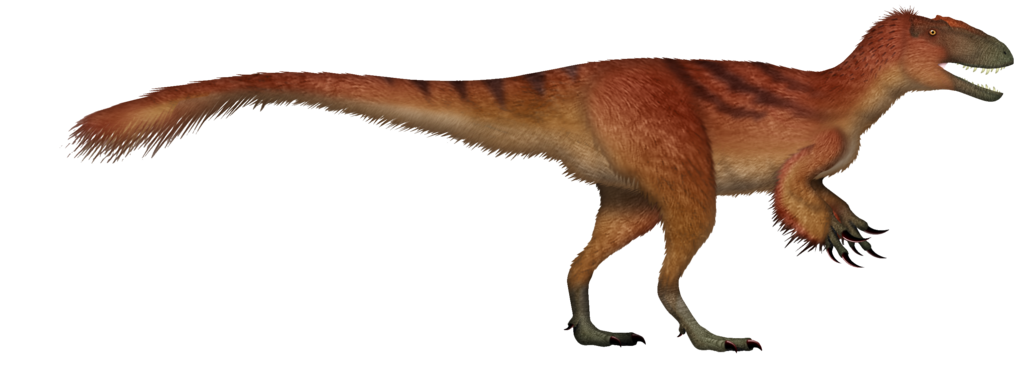
The revelation that even large theropod dinosaurs possessed feathers has dramatically altered our perception of these ancient creatures. In 2012, paleontologists described Yutyrannus huali, a 9-meter-long early relative of Tyrannosaurus rex covered in long, filamentous feathers. This discovery challenged the long-held assumption that only smaller dinosaurs would have benefited from feathery insulation. More recent evidence suggests that juvenile Tyrannosaurus rex may have sported feathers, potentially losing them as they matured and grew larger. Similar to how modern elephants have sparse hair due to their large body mass limiting heat loss, larger dinosaurs may have reduced their feather coverage as they grew. Some enormous dinosaurs appear to have retained feathers in specific areas, perhaps for display purposes, while losing them across their general body surface. These findings have forced artists and museums worldwide to revise their traditional depictions of dinosaurs, replacing the scaly, reptilian appearance with more accurate feathered representations that better reflect our current scientific understanding.
The Four-Winged Dinosaur Revolution
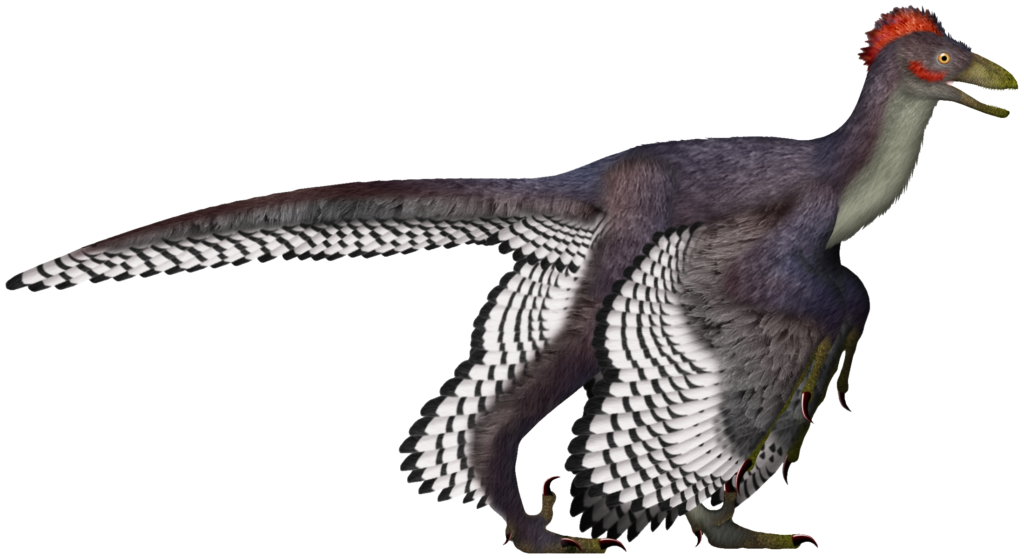
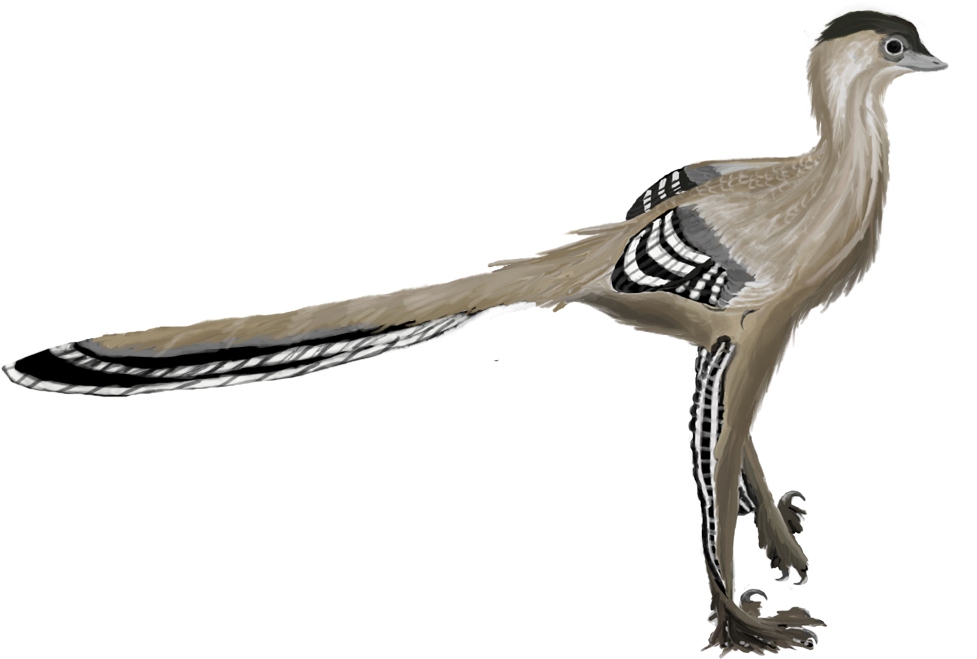
One of the most significant discoveries in the study of feather evolution came with the unearthing of four-winged dinosaurs like Microraptor gui and Anchiornis huxleyi. These remarkable creatures possessed not just feathered forelimbs but also long, pennaceous (vaned) feathers on their hind limbs, effectively creating four wing-like structures. Microraptor’s fossils reveal asymmetrical flight feathers on both its arms and legs, strongly suggesting some form of aerial capability, whether gliding or primitive powered flight. These four-winged dinosaurs have revolutionized our understanding of flight evolution, challenging the long-dominant “ground-up” theory that proposed birds evolved flight by running and jumping from the ground. Instead, these fossils provide compelling evidence for the alternative “trees-down” hypothesis, suggesting flight may have evolved through gliding from elevated positions. The four-winged condition was likely transitional in avian evolution, with birds eventually losing the hindlimb flight feathers as they evolved more specialized forewings and a unique flight style requiring unencumbered legs for landing and takeoff.
From Dinosaurs to Birds: The Transitional Fossils
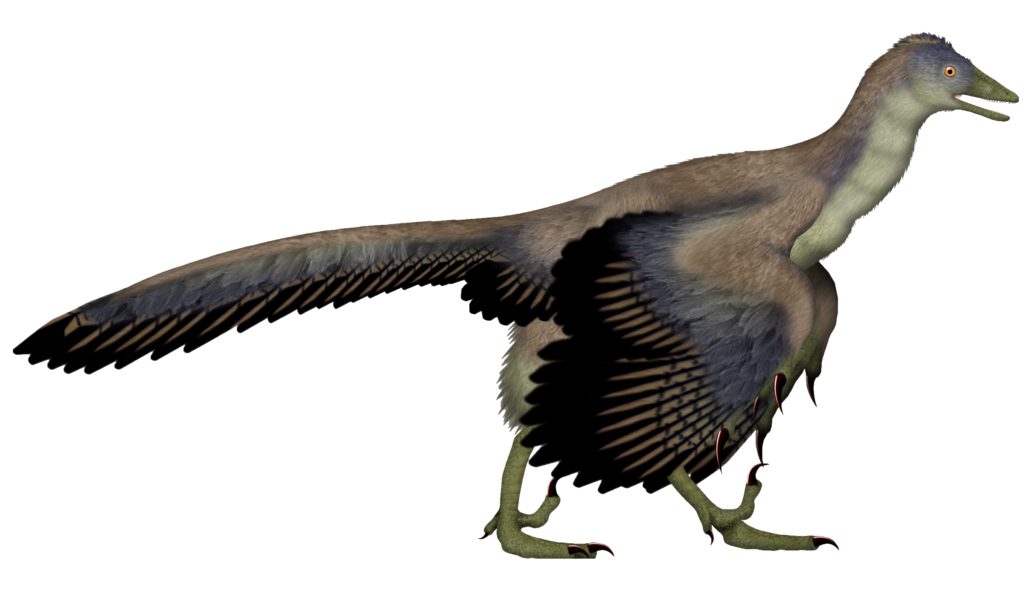
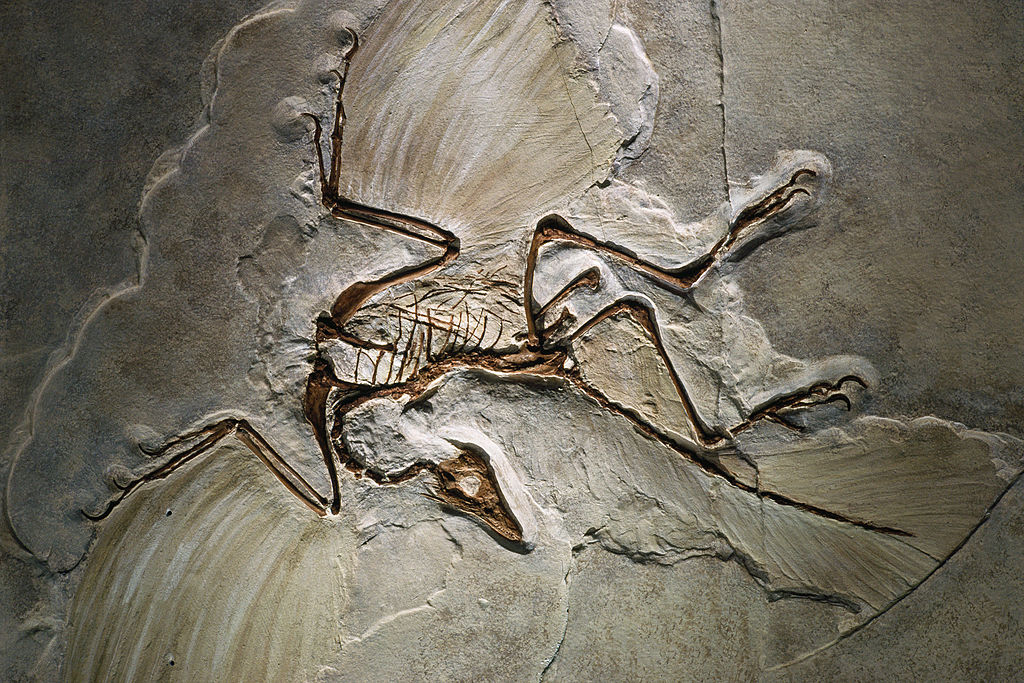
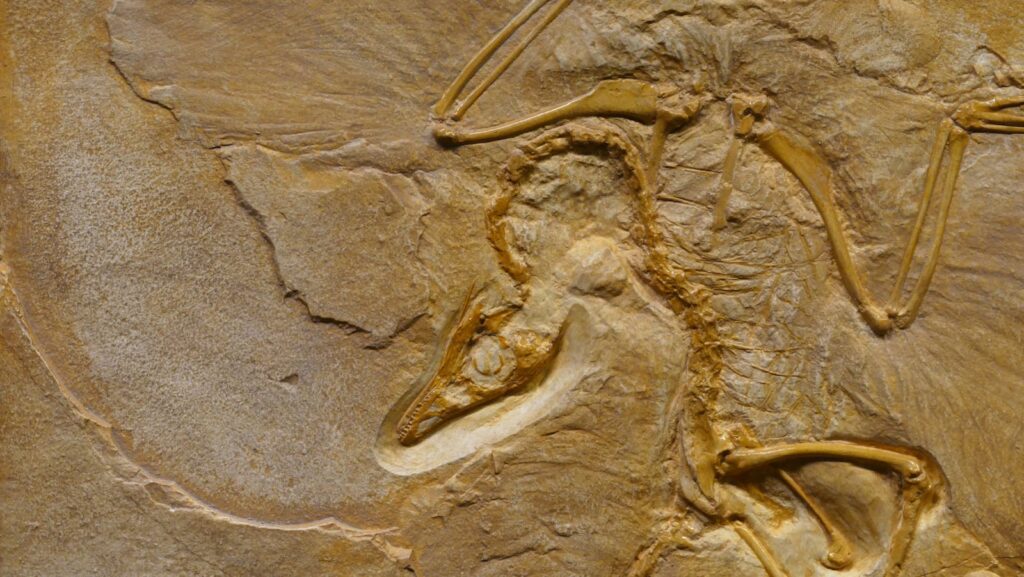
The evolutionary bridge between non-avian dinosaurs and modern birds is spectacularly documented through a series of transitional fossils that show the gradual acquisition of avian characteristics. Archaeopteryx, discovered in 1861 in Germany, represents one of the earliest known bird-like dinosaurs, possessing features of both groups—teeth, a long bony tail, and clawed fingers like its dinosaurian ancestors, but also well-developed flight feathers and wings like modern birds. More recent discoveries such as Confuciusornis, Ichthyornis, and Hesperornis further illuminate this transition, showing the progressive development of modern avian features, including toothless beaks, shortened tails with fused vertebrae forming a pygostyle, and increasingly specialized flight apparatus. Particularly important are fossils like Zhongjianornis and Jeholornis, which document the gradual reduction of the long bony tail and development of the specialized tail fan formed by retrices (tail feathers) that characterizes modern birds. The abundance of these transitional fossils provides one of the most complete evolutionary sequences in the fossil record, offering irrefutable evidence of the dinosaurian origin of birds and the gradual transformation of feathers into instruments of powered flight.
The Function Shift: From Warmth to Flight
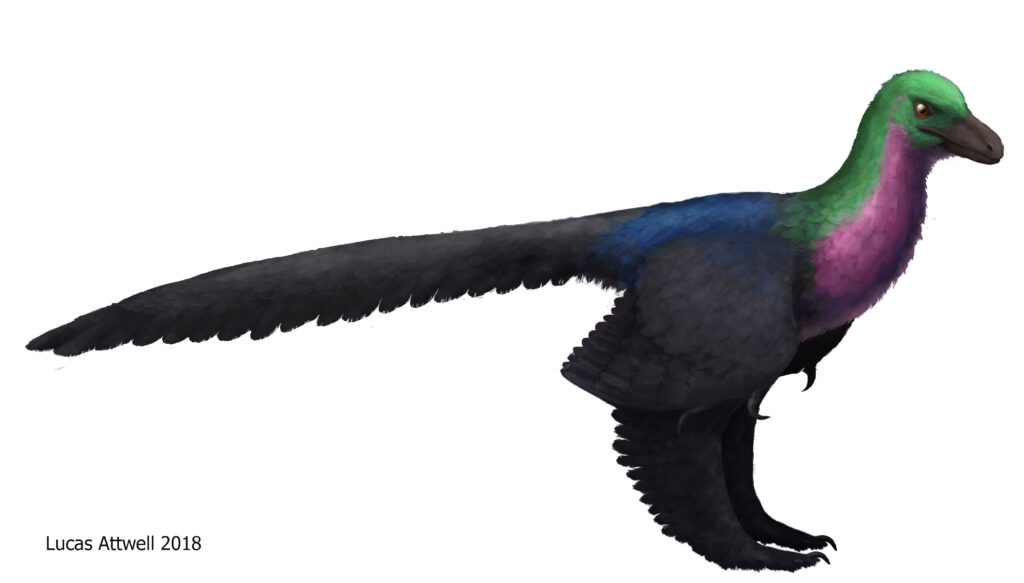
The evolution of feathers represents a classic example of exaptation—a process where structures evolved for one function are later repurposed for entirely different roles. The earliest proto-feathers likely evolved primarily for thermoregulation, helping dinosaurs maintain body heat like mammalian fur. As feathers became more complex, developing branching structures and flat vanes, they acquired new functions in visual display for territorial defense and mate attraction, as evidenced by preserved pigmentation patterns in fossils like Anchiornis and Caihong juji. Only later were these increasingly elaborate feathers co-opted for aerodynamic purposes, initially perhaps for stabilization during running or falling, then for gliding, and finally for powered flight. This functional transition required specific adaptations, including the development of asymmetrical vanes that generate lift during the downstroke of flapping flight. Modern birds still utilize feathers for all these original functions—insulation (down feathers), display (ornamental plumes and colorful patches), and flight (remiges and retrices)—demonstrating how structures can accumulate multiple functions throughout evolutionary history while fundamentally transforming an animal’s ecological niche and capabilities.
The Molecular Basis of Feather Development
Research into the genetic and developmental underpinnings of feathers has revealed fascinating insights into their evolutionary origins. Feathers develop from specialized structures called follicles through complex molecular signaling pathways that involve interactions between the epidermis and dermis layers of the skin. Key molecular players in this process include bone morphogenetic proteins (BMPs), sonic hedgehog (Shh), and members of the Wnt signaling pathway, which coordinate to regulate feather bud formation and growth. Remarkably, these same genetic pathways are involved in the development of scales in reptiles, supporting the hypothesis that feathers evolved through modifications to the basic scale development program. Recent experimental work has demonstrated that subtle alterations to these developmental pathways in alligator embryos can produce feather-like appendages, suggesting the genetic machinery for feather development existed in the common ancestor of dinosaurs and modern reptiles. The beta-keratin proteins that form the structural basis of feathers represent modified versions of those found in reptilian scales, with specific molecular changes that enable the lightweight, flexible, yet durable properties characteristic of feathers.
The Engineering Marvel of Modern Feathers
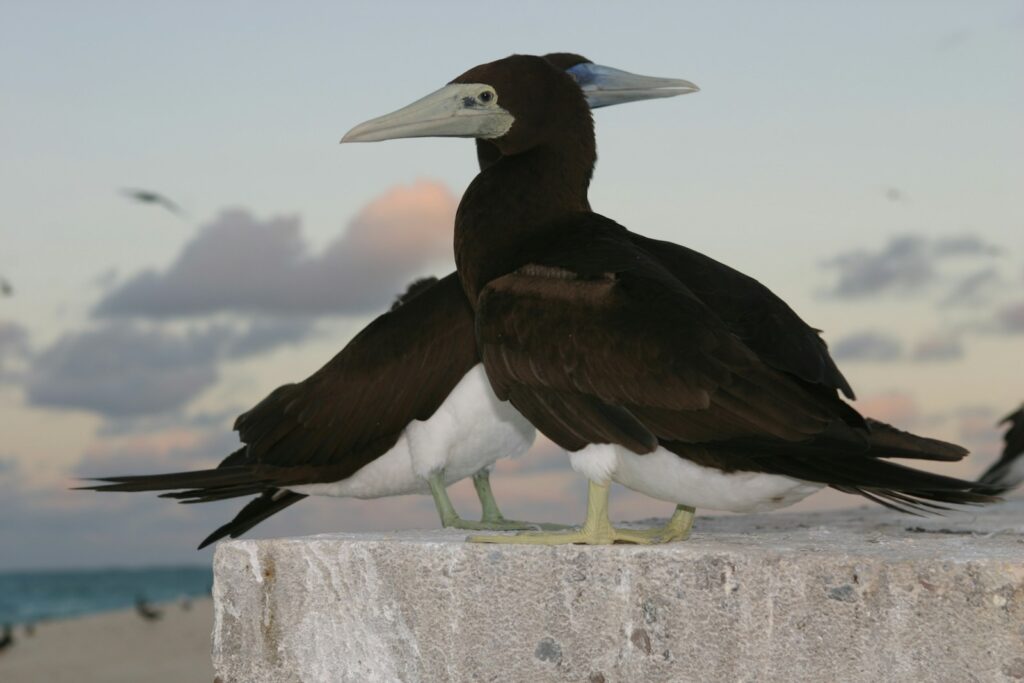
Modern bird feathers represent one of nature’s most sophisticated biomechanical designs, combining remarkable lightness with extraordinary strength and flexibility. The typical flight feather consists of a central shaft (rachis) from which extend barbs that branch into even finer barbules equipped with microscopic hooks called hamuli. These hooks interlock adjacent barbs, creating a continuous vane that can resist air pressure during flight yet be easily repaired when damaged through the bird’s preening behavior. The hollow, honeycomb-like internal structure of the rachis provides an exceptional strength-to-weight ratio, a design principle now emulated in human engineering applications from bicycle frames to aircraft components. Different feather types serve specialized functions—from the stiff primary flight feathers that generate thrust, to the contour feathers that create a streamlined body shape, to the insulating down feathers that trap air close to the body. The aerodynamic efficiency of flight feathers has been fine-tuned through millions of years of evolution, with subtle adaptations in different species optimizing performance for various flight styles from the soaring of eagles to the hovering of hummingbirds.
Feather Diversity Across Modern Birds

The approximately 10,000 living bird species exhibit an astonishing diversity of feather adaptations tailored to their specific ecological niches and behavioral requirements. The contour feathers of aquatic birds like penguins and ducks incorporate special water-repellent properties through microscopic structure and oil secretions that keep the birds dry even during prolonged submersion. Owls possess specialized serrated feather edges on their primary flight feathers that break up airflow and enable virtually silent flight—a crucial adaptation for nocturnal predators. The spectacular display feathers of birds of paradise and peacocks showcase elaborate modifications including expanded vanes, altered barbule structures, and specialized iridescent nanostructures that produce their dazzling coloration through structural light interference rather than pigments. Many desert-dwelling birds have developed specialized dust-producing feathers (powder down) that help condition their plumage in water-scarce environments. Ground-dwelling birds like ostriches and emus have transformed their feathers into non-flight structures specialized for insulation and display, demonstrating how even vestigial structures continue to evolve for new functions when flight is no longer selected for.
Feather Colors: Pigments and Structural Colors

The vibrant palette of bird feather coloration arises through two fundamentally different mechanisms: pigmentary colors and structural colors. Pigmentary colors result from molecules that selectively absorb certain wavelengths of light, with melanins producing blacks, grays, and browns, while carotenoids (typically obtained from the diet) create the bright yellows, oranges, and reds seen in many songbirds. More specialized pigments include the porphyrins responsible for the green blood and feathers of turacos and the unique psittacofulvins that produce the vivid reds and yellows exclusive to parrots. In contrast, structural colors arise from the physical interaction of light with nanoscale features of the feather, creating colors through interference, diffraction, and scattering effects rather than chemical absorption. The iridescent throat of hummingbirds, the vivid blue of bluebirds, and the shimmering quality of magpie plumage all result from these structural mechanisms. Recent paleontological research has identified preserved melanosomes in fossilized feathers, allowing scientists to reconstruct the coloration of extinct dinosaurs and early birds with surprising accuracy, revealing that many possessed striking patterns and vibrant hues that likely served important roles in communication and display.
Feathers Beyond Birds: Convergent Evolution
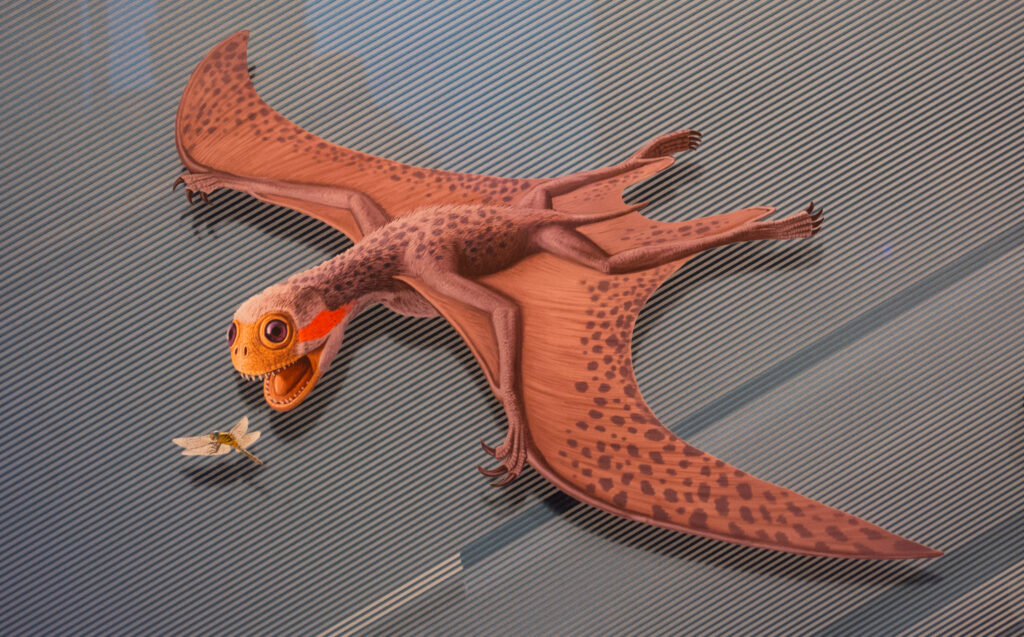
While true feathers are exclusive to the dinosaur lineage that includes birds, feather-like structures have evolved independently in various other animal groups through convergent evolution. Pterosaurs, the flying reptiles that lived alongside dinosaurs, developed a covering of hair-like filaments called pycnofibers that likely served similar insulating functions to early dinosaur proto-feathers. Some fossil evidence suggests these structures may have become more complex in later pterosaur species, potentially developing branch-like arrangements convergent with early feather evolution. In modern animals, mammalian hair represents an analogous insulating structure that evolved independently from feathers but serves similar thermoregulatory functions. Perhaps most remarkable are the scale derivatives found in some modern reptiles, such as the specialized branched scales of the New Zealand gecko Naultinus elegans, which bear a superficial resemblance to simple feathers and may serve similar purposes in visual signaling. These examples of convergent evolution highlight how similar selective pressures, particularly the need for insulation in warm-blooded animals, can drive the development of structurally similar solutions across distantly related evolutionary lineages.
The Future of Feather Research

Contemporary feather research continues to push into exciting new frontiers, utilizing cutting-edge technologies to unravel remaining mysteries. Advanced microscopy techniques are revealing previously unobservable nanostructures that determine feather properties, while genetic studies using CRISPR gene editing are identifying the precise molecular switches that control feather development and patterning. Biomechanical studies employing wind tunnels and high-speed cameras are documenting the aerodynamic properties of different feather arrangements with unprecedented precision, informing both evolutionary understanding and potential applications in aircraft design. Paleontologists continue searching for new fossils in promising locations worldwide, particularly targeting the critical Middle Jurassic period when feather evolution was accelerating, but fossil evidence remains relatively sparse. Perhaps most intriguingly, developmental biologists are experimenting with activating dormant genetic pathways in modern reptiles to induce feather-like development, potentially recreating evolutionary transitions in laboratory settings. These diverse research avenues promise not only to enhance our understanding of feather evolution but also to yield insights applicable to biomimetic engineering, material science, and the fundamental principles governing evolutionary processes.
Conclusion
The evolution of feathers represents one of nature’s most remarkable innovations—a journey from simple filaments to complex structures that ultimately enabled vertebrates to conquer the skies. Beginning as insulating fuzz on ground-dwelling dinosaurs, feathers underwent a series of transformations, acquiring complex structures and new functions while retaining their original purposes. This evolutionary story, pieced together through fossil evidence, developmental biology, and molecular studies, provides a compelling example of how natural selection can repurpose existing structures for entirely new functions. From the theropod dinosaurs of the Jurassic period to the diverse avian species that grace our planet today, feathers have played a central role in one of evolution’s most spectacular success stories. As research continues, our understanding of this remarkable evolutionary pathway deepens, offering insights not only into bird biology but also into the fundamental processes that drive innovation in the natural world.