Picture a dinosaur in your mind. Odds are you’re thinking about cold, scaly skin, crushing jaws, and thundering footsteps. Honestly, that image has been the default for most of human history – and it was almost entirely wrong. What actually roamed those ancient landscapes was far more surprising, far more colorful, and in many ways far more alive-looking than anything you’ve probably ever imagined.
The truth is that feathers didn’t begin with birds. They began with dinosaurs, long before any winged creature ever left the ground. Their emergence changed everything – how these animals regulated their temperature, how they attracted mates, how they hid from danger, and ultimately, how their descendants took to the skies. Let’s dive in.
From Scales to Fuzz: The First Feathers Were Nothing Like You’d Expect
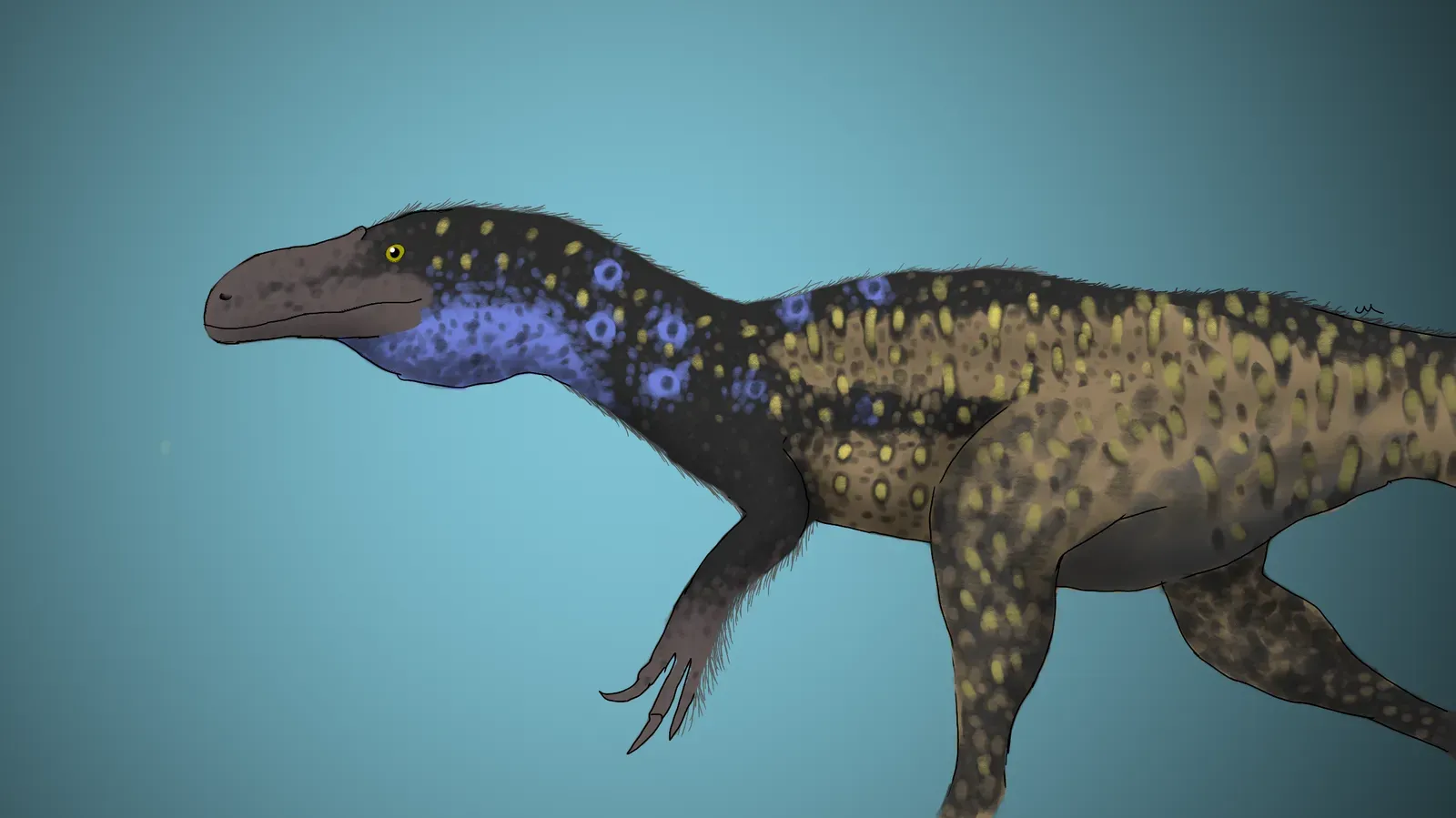
Here’s the thing – the very first “feathers” looked nothing like what you’d find on a sparrow or an eagle today. The earliest feathers were simply flexible hollow tubes, which then evolved into clusters of hollow tubes, or barbs. Think less “bird wing” and more “strange, fuzzy coat.” That’s the image you’d have seen walking through the Mesozoic world.
Dozens of theropod dinosaurs had simple stage one and stage two feathers. The scientific community has dubbed these feathers “dino fuzz,” and it is likely that some ferocious tyrannosaurs were covered in fuzz, perhaps as an insulating layer. Imagine a creature the size of a bus wearing what amounts to prehistoric down stuffing. Somehow that’s both terrifying and oddly adorable.
Discoveries of spectacular dinosaur and pterosaur fossils preserving feathers and feather-like integumentary appendages demonstrate trends of increasing complexity in gross morphology and microstructure, and some early feathers differed from modern feathers morphologically, ultrastructurally, biochemically, and developmentally. In other words, the feather did not spring into existence fully formed. It went through a long, slow, messy process of becoming what we know today.
The Fossil Record That Rewrote the Rulebook
Uploaded by FunkMonk, CC BY-SA 2.0)
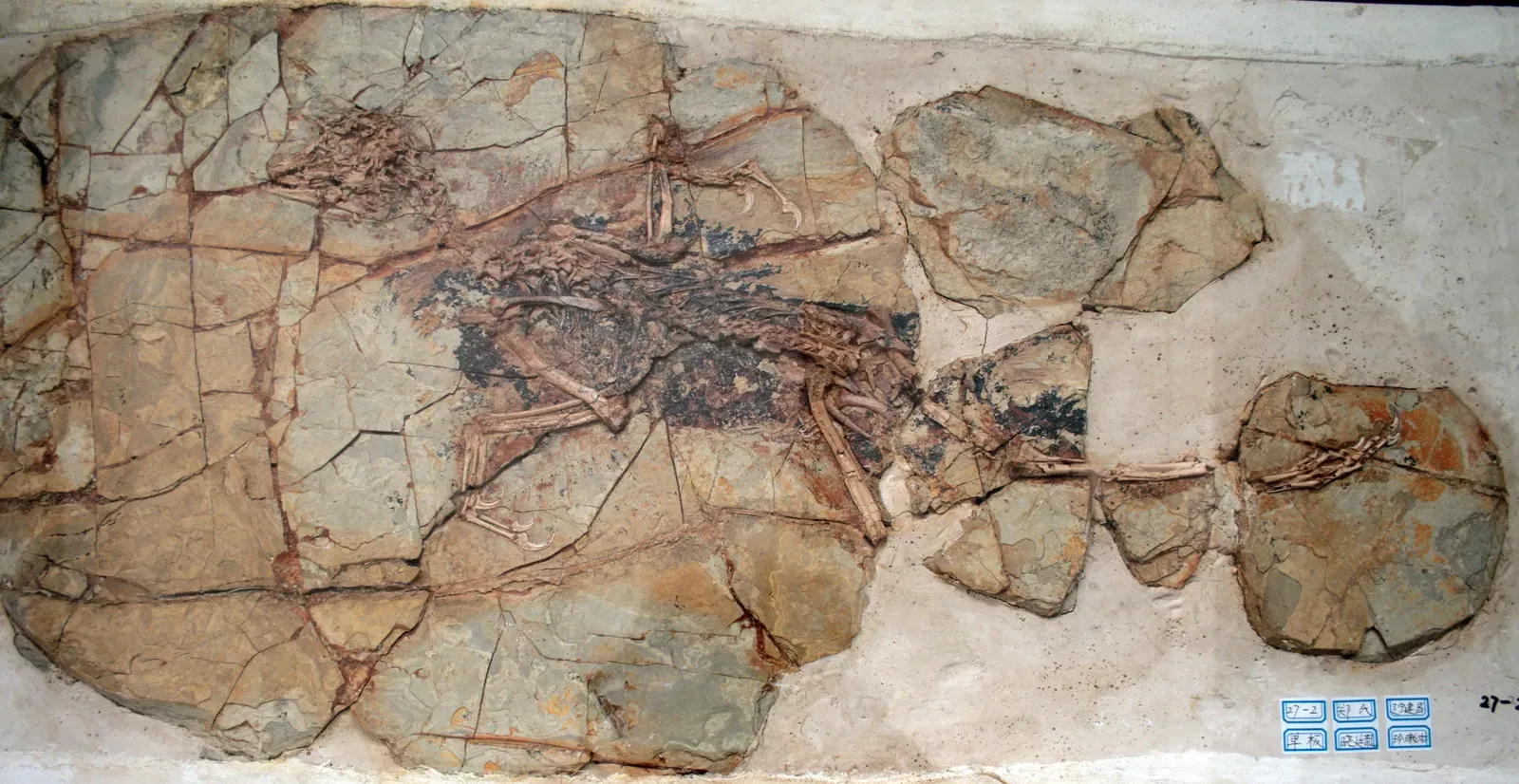
A series of spectacularly preserved fossil discoveries, primarily from the Early Cretaceous of China, revealed the presence of feathers and other feather-like structures in a variety of non-volant theropod dinosaurs, demonstrating conclusively that earlier models of bird evolution were wrong, as feathers clearly appeared prior to the origin of either birds or flight and must have had a deeper, dinosaurian ancestry. That’s not a minor footnote. That’s a complete reversal of what science once accepted as fact.
Since the first report of proto-feathers from the theropod dinosaur Sinosauropteryx, diverse types of feathers in dinosaurs, including theropods and ornithischians, have been reported mainly from the Early Cretaceous, about 120 million years ago, but also from Middle-Late Jurassic deposits, about 160 million years ago, in northeastern China. These discoveries piled up fast, and they kept scientists scrambling to keep up with the implications.
The most important discoveries at Liaoning have been a host of feathered dinosaur fossils, with a steady stream of new finds filling in the picture of the dinosaur-bird connection and adding more to theories of the evolutionary development of feathers and flight. If there’s one place on Earth that fundamentally shifted our understanding of ancient life, Liaoning Province is it. The sheer volume of evidence that emerged from that region is staggering.
Feathers Were Not About Flying, At Least Not at First
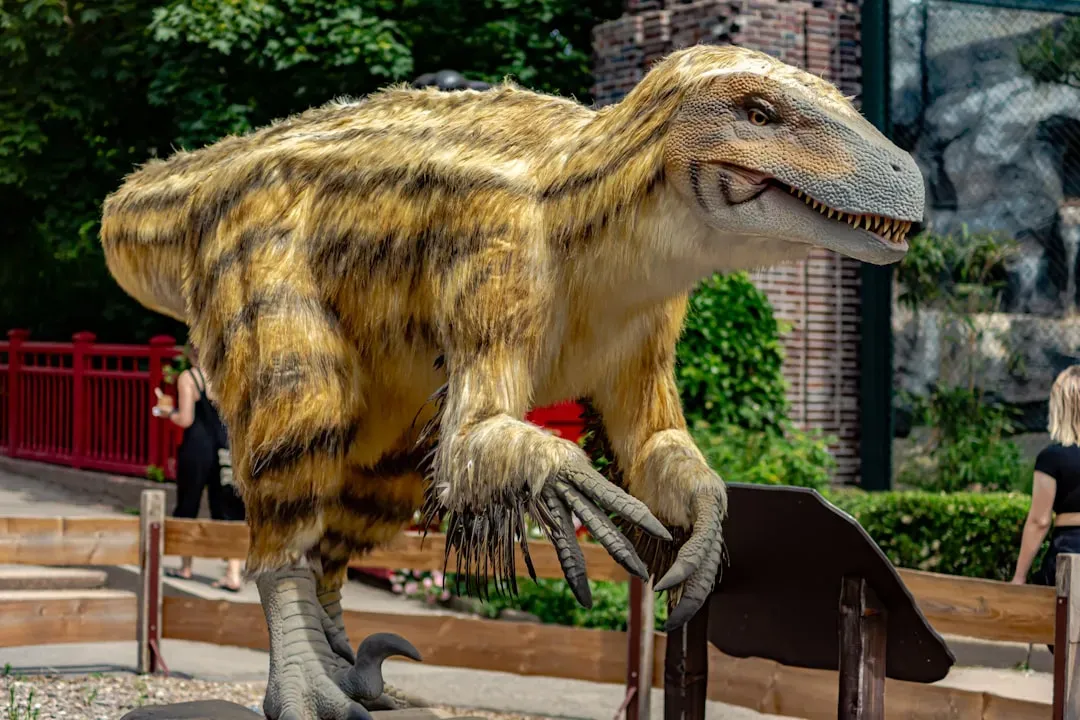
Many traditional views on the origin and early evolution of bird feathers have since been revolutionized. We now know that feathers are not restricted to birds, but are also found in some non-avian dinosaurs. They probably did not originally evolve for flight, but rather in some other functional context, such as insulation, display, or camouflage. This is honestly one of the most important lessons in evolutionary biology – traits rarely begin for the reason they end up being used.
It has been suggested that feathers had originally functioned as thermal insulation, as it remains their function in the down feathers of infant birds prior to their eventual modification into structures that support flight. If you’ve ever watched a baby chick huddled under its mother’s wing, you’re essentially looking at the original reason feathers exist. Staying warm. Surviving the cold. That was the point, at least to start with.
Recent studies indicate that feathers were not simply a step on the road to flight but a multifunctional toolkit in dinosaur evolution. In several fossil species, scientists have documented long tail plumes, crest-like arrangements, and fan-shaped feathers that seem poorly suited to flying. Nature, it turns out, was building a Swiss Army knife long before it built a wing.
Color, Display, and the Social Lives of Feathered Dinosaurs
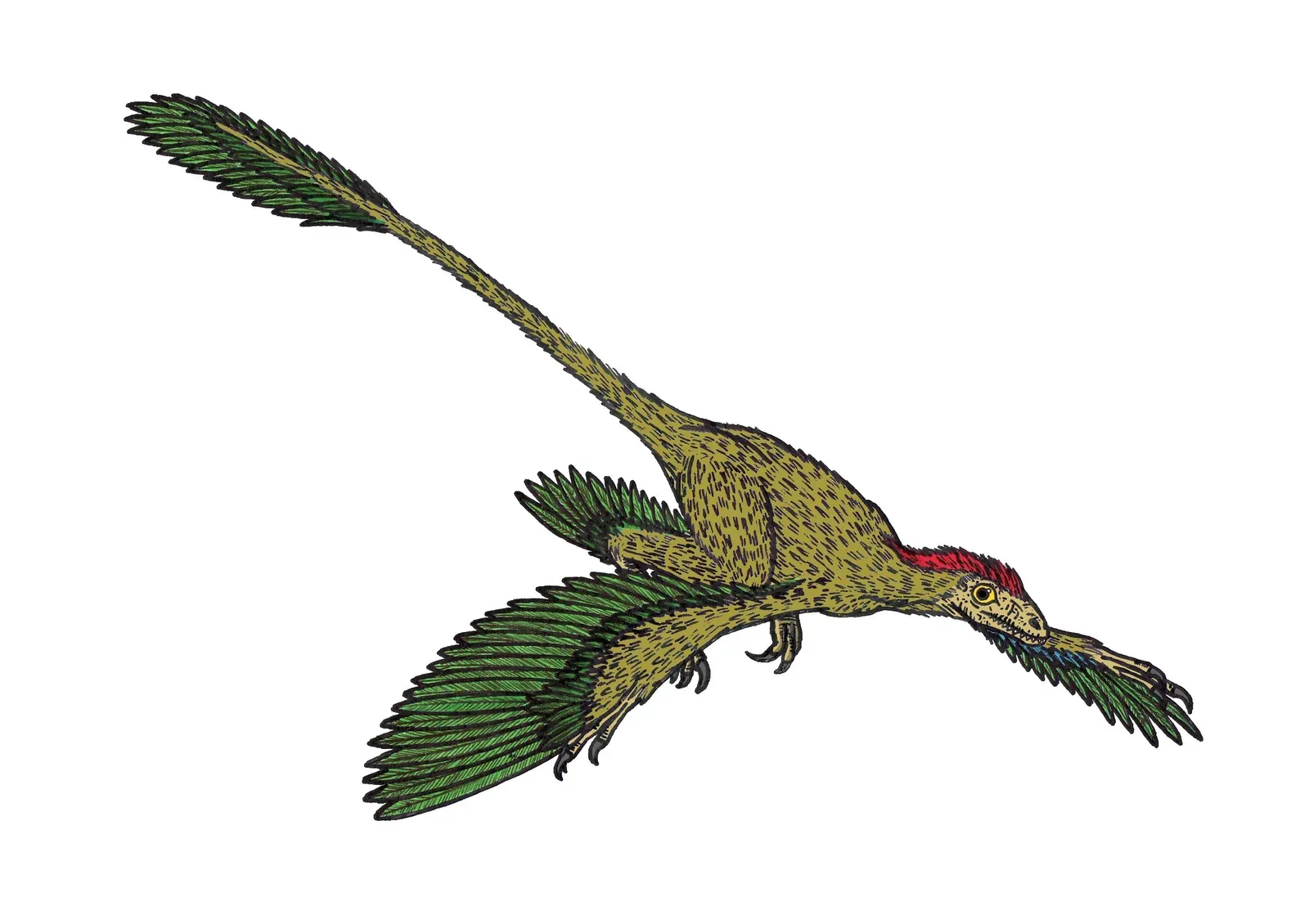
There is an increasing body of evidence that supports the display hypothesis, which states that early feathers were colored and increased reproductive success. Coloration could have provided the original adaptation of feathers, implying that all later functions of feathers, such as thermoregulation and flight, were co-opted. Think about that for a second. Feathers might have started as a fashion statement before they ever became a survival tool. Evolution, doing its weird and wonderful thing.
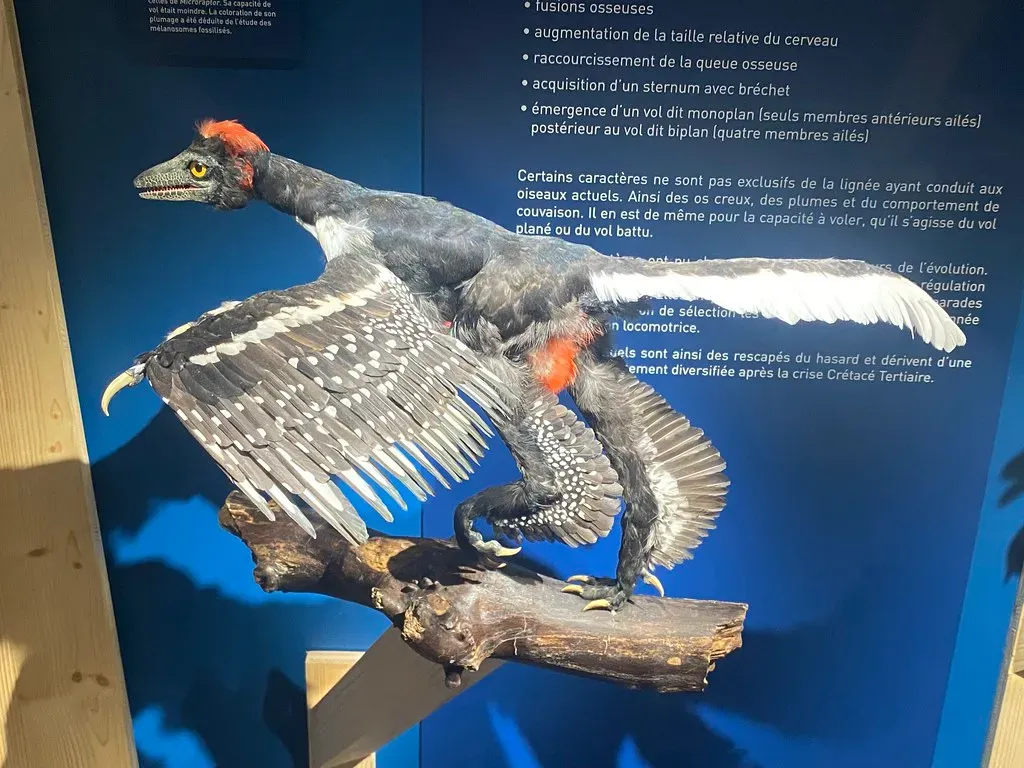
A team of American and Chinese researchers revealed the detailed feather pattern and color of Microraptor, a pigeon-sized, four-winged dinosaur that lived about 120 million years ago. A new specimen shows the dinosaur had a glossy iridescent sheen and that its tail was narrow and adorned with a pair of streamer feathers, suggesting the importance of display in the early evolution of feathers. The Microraptor, it seems, was essentially dressing to impress.
The 124-million-year-old Sinosauropteryx belonged to a group of small carnivores called compsognathids, and its feathers were more of a wispy fuzz. When paleontologists researched what color the feathers might be, they found that Sinosauropteryx was rust red with a red and white-striped tail, not unlike today’s red pandas. The overall color pattern would have helped the dinosaur blend into the undergrowth, paleontologists hypothesize, while the banded tail could have been a striking visual signal. A camouflage coat and a flashy tail. Exactly the kind of contradictory, brilliant compromise that evolution loves to pull off.
The Protein Revolution: What Feathers Are Actually Made Of
Uploaded by FunkMonk, CC BY-SA 2.0)
Molecular evidence from feathered dinosaur fossils reveals how the key proteins that make up feathers became lighter and more flexible over time, as flightless dinosaurs evolved into flying ones, and later, birds. This is where things get genuinely mind-bending. You’re not just looking at shape in the fossil record anymore. You’re looking at chemistry, locked in stone for tens of millions of years.
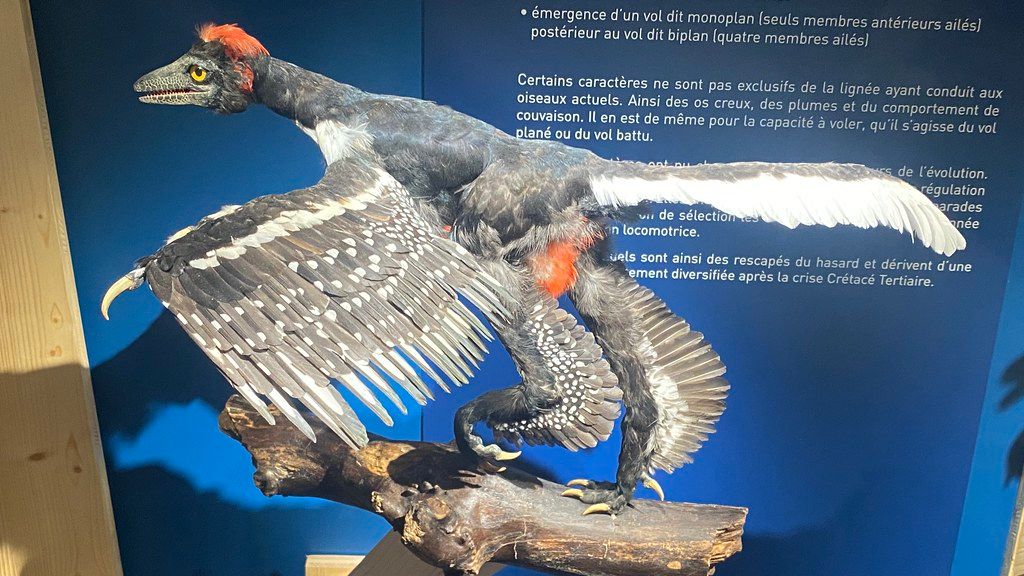
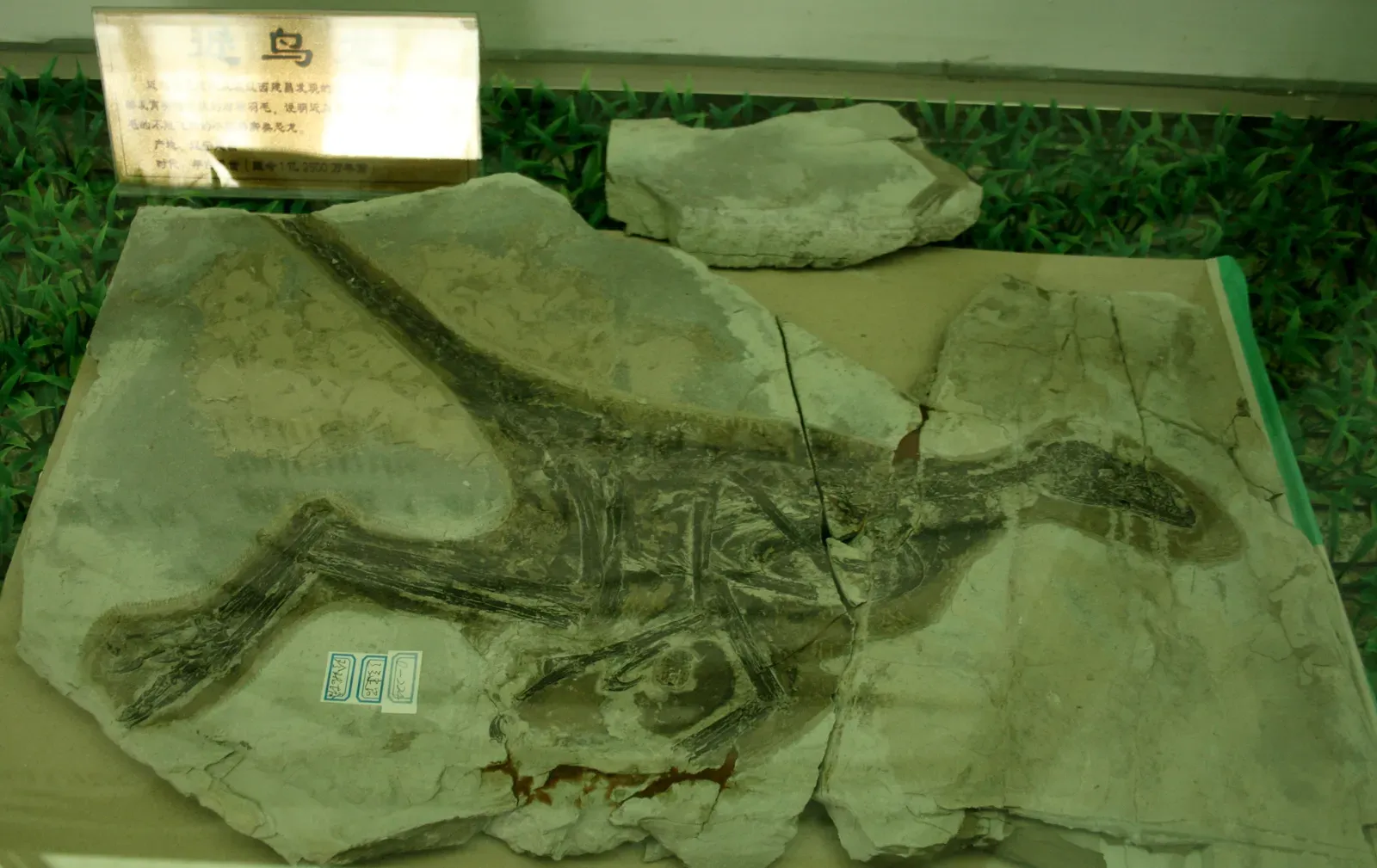
The feathers of Anchiornis, a crow-size feathered dinosaur that lived 160 million years ago, lit up to reveal flexible truncated beta-keratin found in modern birds. The dinosaurs, which predate the first recognized bird, Archaeopteryx, by 10 million years, had even more alpha-keratins, which are largely absent from bird feathers today. Given that, plus structural differences revealed by electron microscopy analysis, it is likely that Anchiornis feathers were not suitable for flight, but represent an intermediate stage in the evolution toward flight feathers.
Modern genetic evidence suggests that during the transition to flight, the beta-keratin gene was duplicated many times in the genomes of some dinosaurs. As the animals evolved, some of the extra copies then mutated into the truncated form that made flight possible. That not only allowed feathered dinosaurs such as Archaeopteryx to cruise the skies about 150 million years ago, but it also gave rise to all the crows, finches, starlings, and eagles we have with us today. The genetic architecture of every single bird alive in 2026 was built in the bodies of ancient dinosaurs. That is genuinely breathtaking.
Archaeopteryx and the Bridge Between Two Worlds
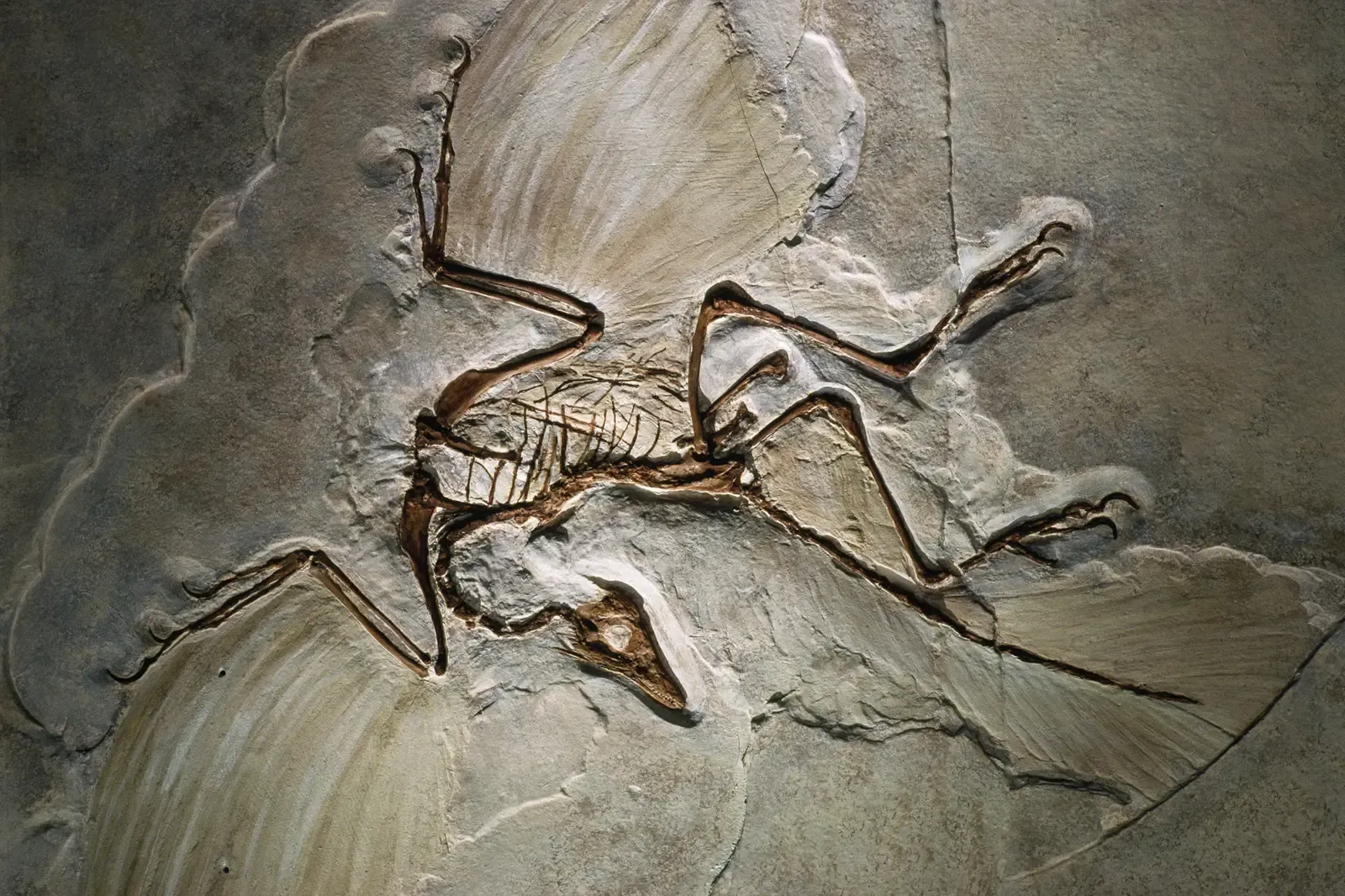
Rewind about 150 million years, and Archaeopteryx, widely recognized as the earliest known bird, cut a starkly contrasting image, boasting a snout filled with sharp teeth, wings with claws, and a long, bony tail. Archaeopteryx was a genus of small, bird-like dinosaurs from the late Jurassic Period that inhabited what is now Europe. Despite the extinct creatures’ differences from today’s birds, they share many similarities with modern avians: a small size, a wishbone, and asymmetric feathers.
Despite their small size, broad wings, and inferred ability to fly or glide, Archaeopteryx had more in common with other small Mesozoic dinosaurs than with modern birds. In particular, they shared features with the dromaeosaurids and troodontids: jaws with sharp teeth, three fingers with claws, a long bony tail, hyperextensible second toes, and feathers. These features make Archaeopteryx a clear candidate for a transitional fossil between non-avian dinosaurs and avian dinosaurs.
Thanks to an exceptionally preserved and prepared fossil named the Chicago Archaeopteryx, recently acquired by the Field Museum, researchers have revealed more crucial insight into the species, including that it likely could fly. In fact, I think this specimen might be one of the most important fossil acquisitions of our time. Every new detail it reveals feels like opening another chapter in the most epic story life on Earth has ever told.
Feathers Beyond Birds: The Unexpected Creatures Wearing Plumage
Paleontologists expected to find feathers and their forerunners around the skeletons of bird-like dinosaurs. What they did not anticipate is that feathery body coverings would be found among dinosaurs with no close relationship to birds at all. In 2002, experts announced that long, bristle-like structures had been found along the tail of an exceptional fossil of the small horned dinosaur Psittacosaurus. A horned dinosaur with bristles. Science had officially left the building on anything “normal.”
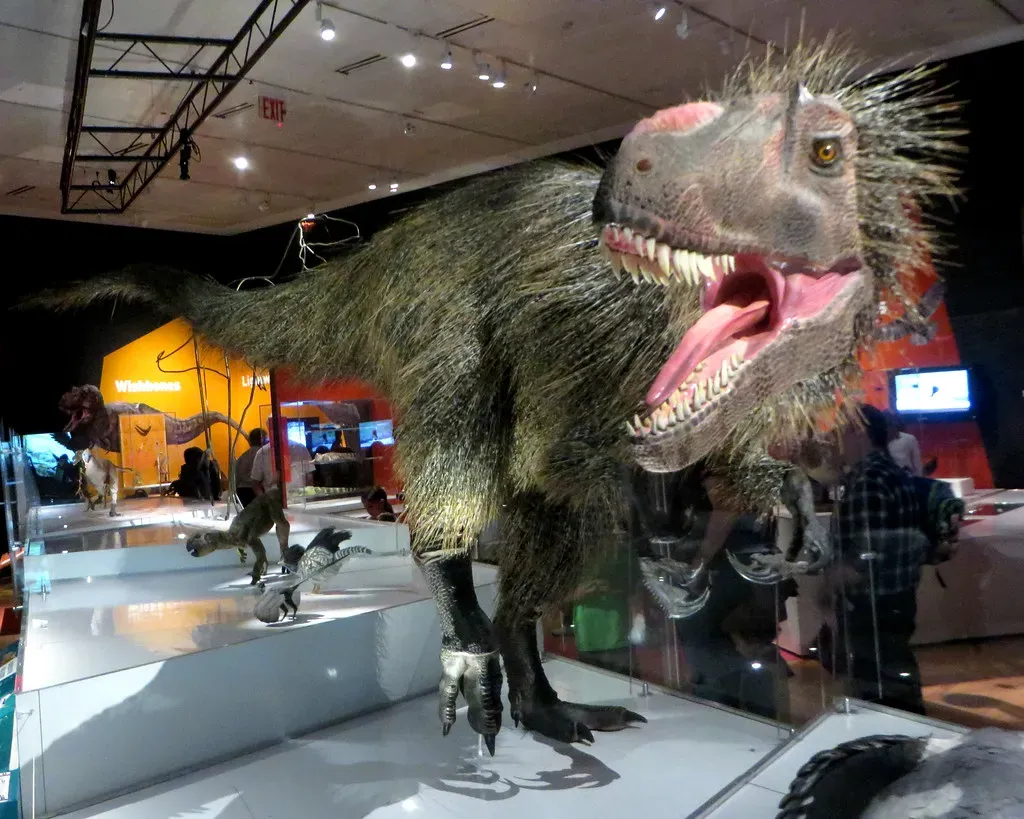
Evidence from three fossil skeletons of Yutyrannus recovered from Liaoning deposits suggests that, at a minimum, this Early Cretaceous tyrannosaur possessed tufts of filamentous feathers up to 16 to 20 centimeters long on its body, and these structures may have covered the whole animal. Yutyrannus, whose adult weight was estimated at 1,400 kilograms, is the largest known feathered animal in Earth’s history. Let that settle in – the largest feathered creature to ever walk the planet was not a bird. It was a tyrannosaur.
Paleontologists at University College Cork in Ireland discovered that some feathered dinosaurs had scaly skin like reptiles today, shedding new light on the evolutionary transition from scales to feathers. The researchers studied a new specimen of the feathered dinosaur Psittacosaurus from the early Cretaceous, and the study shows, for the first time, that Psittacosaurus had reptile-like skin in areas where it did not have feathers. So the transition was not clean or uniform. Different parts of the same animal were living in different evolutionary moments simultaneously – like a patchwork creature bridging two worlds at once.
Conclusion: A Revolution Written in Stone and Flight
Together, these advances have produced an extremely detailed and revolutionary picture: feathers originated and diversified in carnivorous, bipedal theropod dinosaurs before the origin of birds or the origin of flight. That single sentence upends everything most people think they know about the natural world. It’s not just about dinosaurs. It’s about how life reinvents itself, repurposing old tools in ways no one could predict.
Every time you watch a bird land on a branch or spread its wings against a morning sky, you are watching the end product of hundreds of millions of years of evolutionary tinkering. Current evidence presents dinosaur feathers as multifaceted, spanning insulation, display, communication, and eventually flight. Many species seem to have used feathers as visual signals, turning their bodies into dynamic displays that broadcast fitness, identity, and intent. That’s not primitive behavior. That’s sophisticated, complex, and deeply familiar.
What strikes me most about this entire story is how wrong we were for so long, and how spectacularly the fossils proved it. The world those dinosaurs lived in was warmer, weirder, and far more vibrant than any movie has ever dared to show. The evolution of feathers didn’t just change the creatures that wore them – it changed the entire trajectory of life on Earth. Every bird you’ve ever seen is living proof of that. What do you think about it? Tell us in the comments.