You look up at a sparrow darting between branches and probably see a small, harmless bird. You almost certainly don’t see a living dinosaur. Yet that’s precisely what it is. The notion that birds are modern-day dinosaurs is no longer a fringe paleontological theory – it is the settled scientific consensus, and honestly, once you start seeing it, you can never unsee it.
The story of how birds got their wings is not a simple, straight line. It’s a sprawling, winding saga spanning roughly 160 million years, packed with unexpected dead ends, breathtaking fossil discoveries, and creatures that defy every expectation you might hold about what a dinosaur looks like. From fearsome predators to feathered gliders, the path to flight is far stranger and more spectacular than most people realize. Let’s dive in.
The Surprising Truth: Birds Are Still Dinosaurs
Let’s be real – when most people picture dinosaurs, they imagine the towering, terrifying creatures from the Mesozoic era. The idea that the little house sparrow outside your window carries that same ancient lineage feels almost absurd. Yet the science is clear and overwhelming.
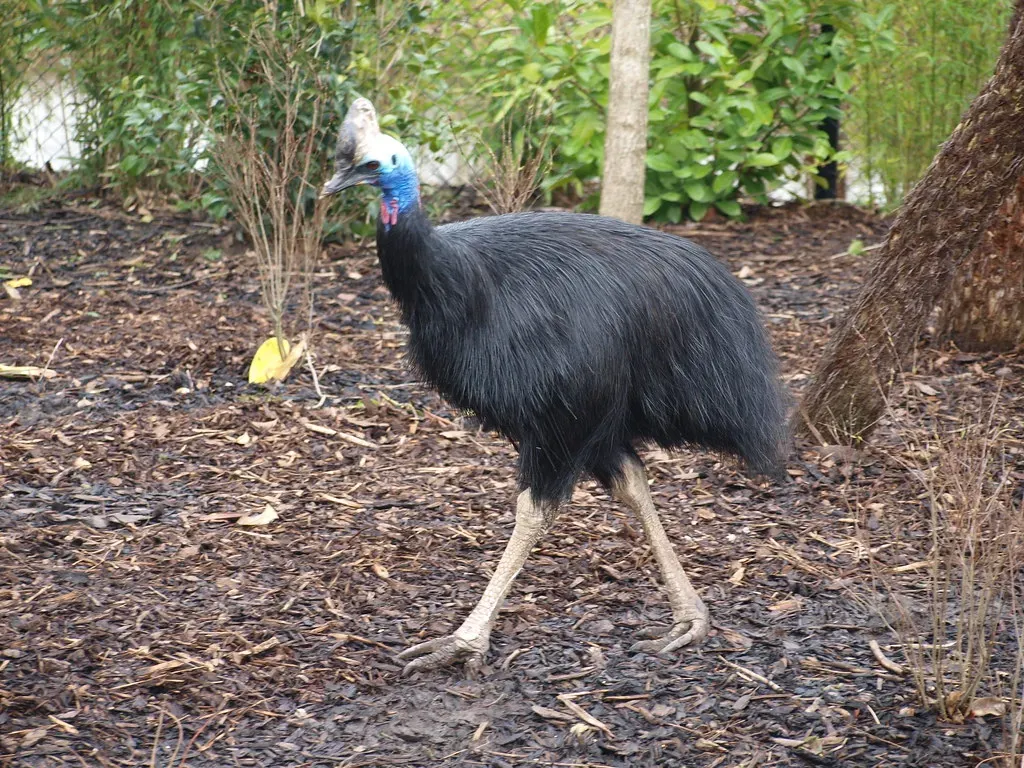
Among the most revolutionary insights emerging from 200 years of research on dinosaurs is that the clade Dinosauria is represented by approximately 11,000 living species of birds. That’s not a poetic metaphor – it’s a taxonomic fact. Every crow, hummingbird, and pelican alive today is, in a very real sense, a dinosaur.
Not all dinosaurs evolved into birds, but all living birds are dinosaurs. Birds are members of the group of dinosaurs that survived when an asteroid hit the Earth 66 million years ago. Think of it this way: the mass extinction didn’t end the age of dinosaurs. It just dramatically thinned the roster.
The present scientific consensus is that birds are a group of maniraptoran theropod dinosaurs that originated during the Mesozoic era. The more fossils are unearthed, the more that consensus becomes ironclad.
Thomas Huxley and the Discovery That Changed Everything
The connection between birds and dinosaurs didn’t spring out of thin air. It has a remarkably clear historical origin point – and a passionate advocate behind it. Shortly after the 1859 publication of Charles Darwin’s On the Origin of Species, the British biologist Thomas Henry Huxley proposed that birds were descendants of dinosaurs.
Thomas Henry Huxley was the first person to make a connection between birds and dinosaurs. In 1870, he noted similarities between the hind legs of the theropod dinosaur Megalosaurus and those of the ostrich and concluded that they were closely related. It was a bold claim for its time, and many scientists pushed back hard.
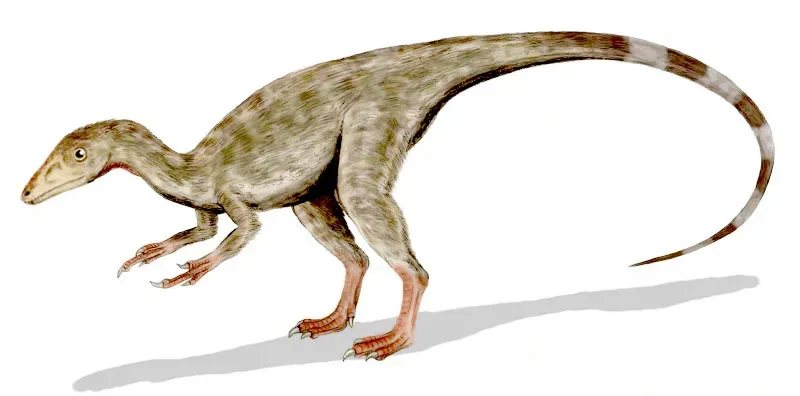
He compared the skeletal structure of Compsognathus, a small theropod dinosaur, and the “first bird” Archaeopteryx lithographica, both of which were found in the Upper Jurassic Bavarian limestone of Solnhofen. He showed that, apart from its hands and feathers, Archaeopteryx was quite similar to Compsognathus. It was an insight decades ahead of its time.
That view began to shift during the so-called dinosaur renaissance in scientific research in the late 1960s; by the mid-1990s, significant evidence had emerged that dinosaurs were much more closely related to birds, which descended directly from an earlier group of theropod dinosaurs. The revolution Huxley planted finally bore fruit a century after he sowed it.
Archaeopteryx: The Icon That Bridges Two Worlds
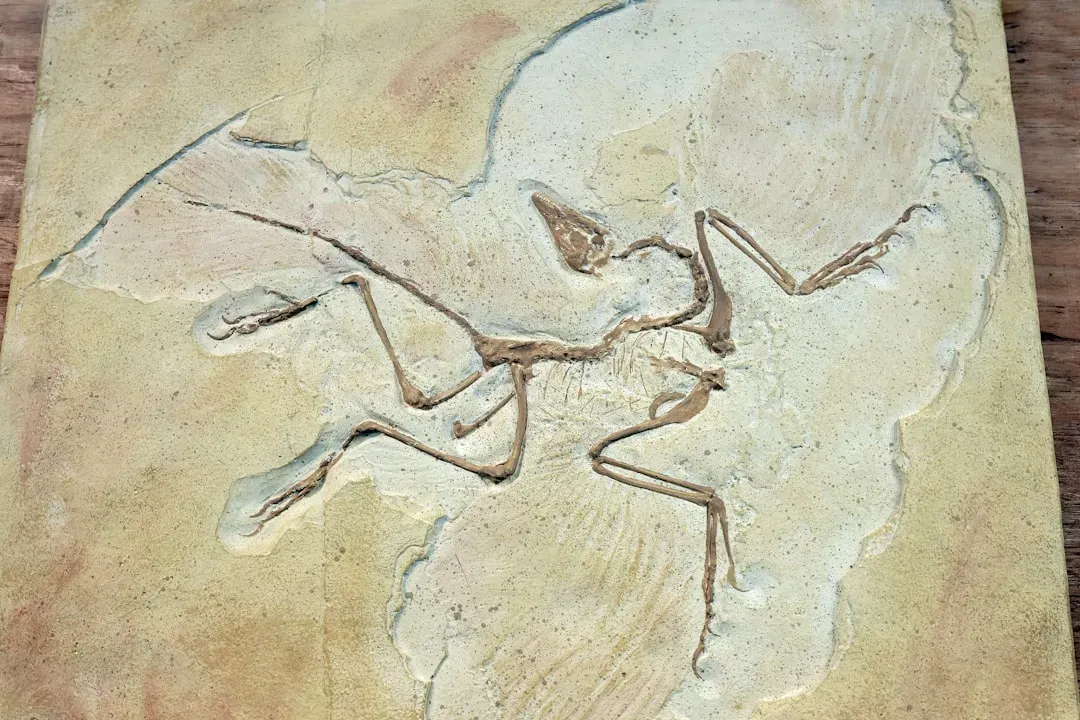
If there is one fossil that captures the exact moment of becoming, it is Archaeopteryx. Discovered in Germany’s Solnhofen limestone in 1861, this creature is arguably one of the most famous fossils ever found. Archaeopteryx, which lived about 150 million years ago, is often called the “first bird” because of its feathered wings. However, it retained several dinosaur-like features, including teeth and a long tail.
The newly analyzed Chicago Archaeopteryx fossil has revealed well-preserved wing, skull, and limb features that enhance our understanding of how flight first evolved in feathered dinosaurs. This specimen displays a unique set of tertial wing feathers that bridged the gap between body and wing, similar to modern birds, supporting its capacity for powered flight.
Archaeopteryx had feathers, hollow bones and wings. It was roughly the size of a raven and had a wishbone, or furcula, a hallmark feature of birds today. Honestly, that combination alone is enough to make a paleontologist’s heart race.
The presence of asymmetrical flight feathers suggested some ability to fly, or at least glide, though whether it flapped like a sparrow or glided like a flying squirrel is still debated. What matters is that Archaeopteryx is a transitional fossil. It preserves a moment of becoming, where evolution is caught in mid-step. It shows us that the boundary between bird and dinosaur is not a hard line, but a blurred continuum.
Feathers Before Flight: The Original Purpose of Plumage
Here is where things get genuinely surprising. You might assume feathers evolved because birds needed to fly. That assumption turns out to be completely wrong. From the fossil record, we know that birds evolved from dinosaurs, some of which had feathers. But those first feathers had nothing to do with flight – they probably helped dinosaurs show off, hide, or stay warm.
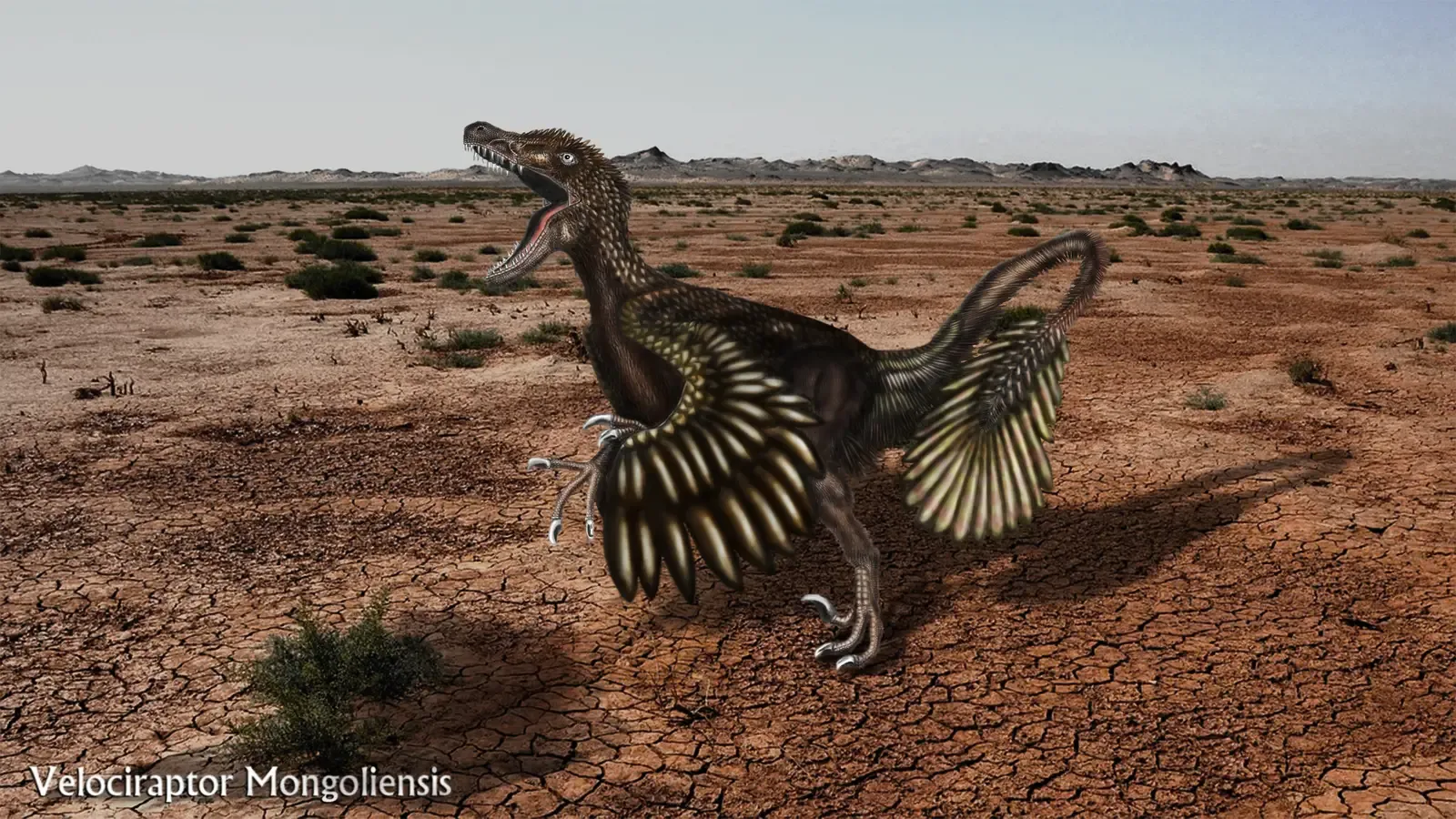
Long before the asteroid hit, some of the members of a group of dinosaurs called Penneraptorans began to evolve feathers and the ability to fly. Members of the Penneraptoran group began to develop feathers before they were able to fly; the original purpose of feathers might have been for insulation or to attract mates. For instance, Velociraptor had feathers, but it couldn’t fly. That’s right – your mental image of a scaly Velociraptor is scientifically inaccurate.
A series of spectacularly preserved fossil discoveries, primarily from the Early Cretaceous of China, revealed the presence of feathers and other feather-like structures in a variety of non-volant theropod dinosaurs, demonstrating conclusively that earlier models of bird evolution were wrong, as feathers clearly appeared prior to the origin of either birds or flight and must have had a deeper, dinosaurian ancestry.
Scientists recently worked out a hypothesis to explain how complex flight feathers could have evolved. They probably began as simple tufts, or so-called “dino fuzz,” and then gradually developed into interlocking structures capable of supporting flight. Evolution doesn’t plan ahead – it just tinkers with what’s already there.
The Theropod Connection: Meet Your Bird’s Ancient Relatives
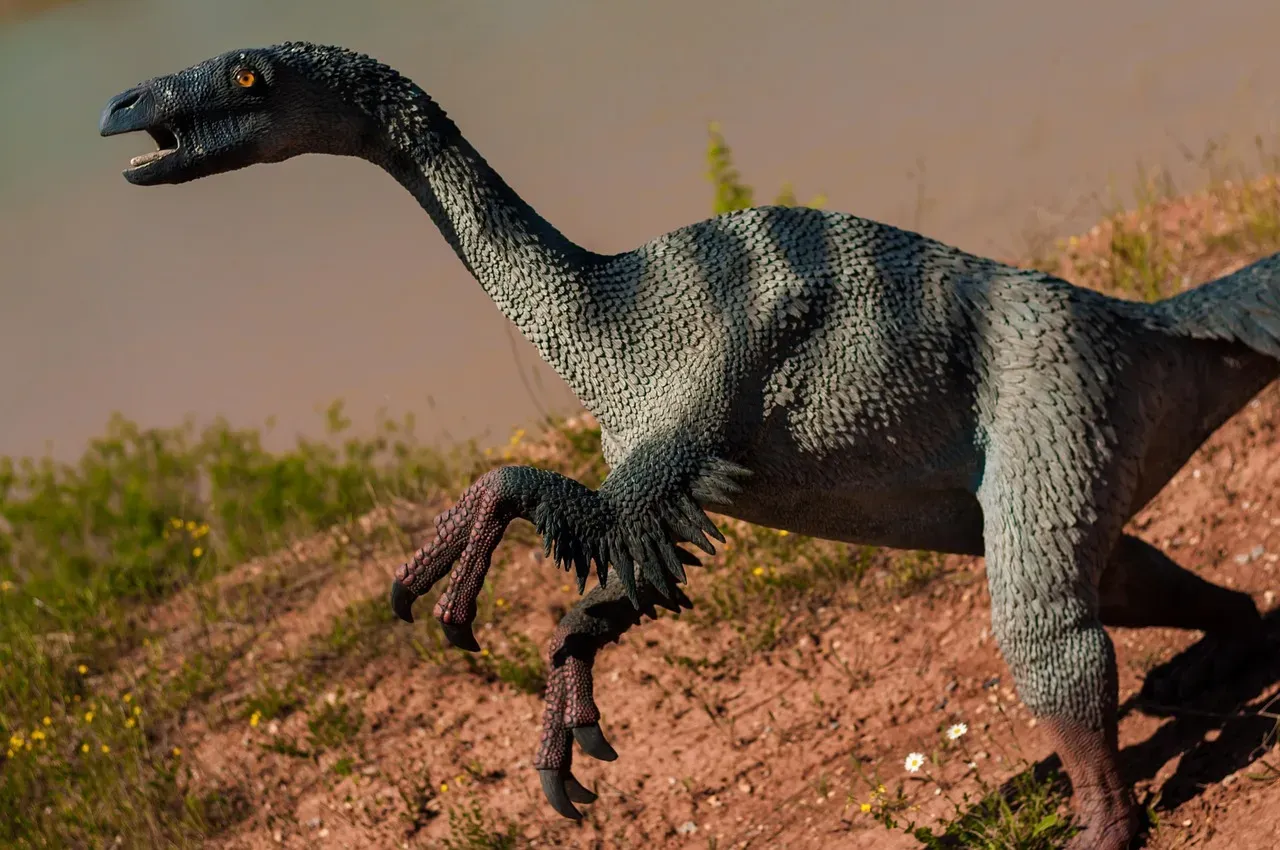
The specific dinosaur group that gave rise to birds is called theropods, and it’s a remarkably diverse family. Modern birds descended from a group of two-legged dinosaurs known as theropods, whose members include the towering Tyrannosaurus rex and the smaller velociraptors. I know it sounds wild, but yes – the T. rex and your backyard robin are distant cousins.
The evolution of theropod dinosaurs into birds included significant anatomical modifications, such as the enlargement of the brain, changes in the pelvis and its surrounding musculature, and a transformation of the dinosaur forelimbs. Each of these changes, taken on its own, seems modest. Together, they produced something entirely new.
Comparisons of bird and dinosaur skeletons, as well as cladistic analysis, strengthens the case for the link, particularly for a branch of theropods called Maniraptora. Skeletal similarities include the skull, tooth build, neck, uncinate processes on the ribs, an open hip socket, a retroverted long pubis, flexible wrist, long arms, and three-fingered hand.
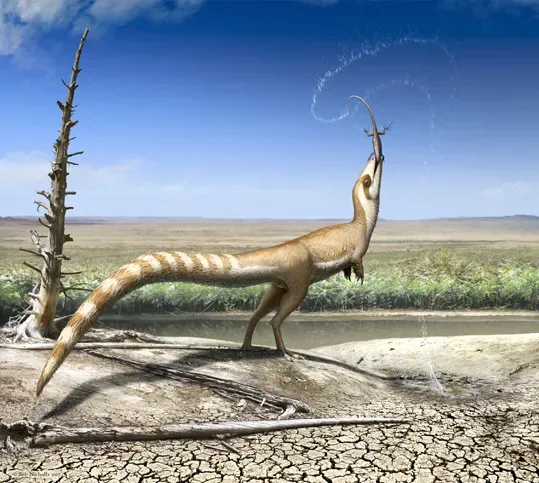
Sinosauropteryx fulfilled what paleontologists had been looking for – fossilized feathers along the neck, back and tail of the dinosaur left no doubt that birds had evolved from feathery dinosaur ancestors. But Sinosauropteryx was not a bird. The 124-million-year-old dinosaur belonged to a group of small carnivores called compsognathids, and its feathers were more of a wispy fuzz.
The Wrist Bone That Rewrote History
It’s hard to believe a single tiny bone could overturn decades of assumptions. Yet that’s precisely what happened. The evolutionary path from dinosaurs to birds included the development of a tiny wrist bone that ultimately proved crucial for stabilizing wings in flight. A new study suggests that the bone appeared in bird ancestors millions of years earlier than first thought.
The evolutionary path from dinosaurs to birds included the development of a tiny wrist bone that ultimately proved crucial for stabilizing wings in flight. A new study suggests that the bone appeared in bird ancestors millions of years earlier than first thought. Paleontologists at Yale and Stony Brook University led a research team that made the discovery after examining fossils from two species of bird-like dinosaurs found in the Gobi Desert in Mongolia.
One of the key changes in the forelimb transformation was the replacement of a particular dinosaur wrist bone – the ulnare – with a bone called the pisiform in birds. In the fossil record, pisiform bones appeared in very early theropods, then disappeared, only to return in birds. The reappearance of that bone millions of years later is one of evolution’s more unexpected twists.
The wrist bones underlying the first and second digits consolidated and took on a semicircular form that allowed the hand to rotate sideways against the forearm. This eventually allowed birds’ wing joints to move in a way that creates thrust for flight. A small rotation. A world-changing consequence.
Hollow Bones and the Wishbone: Engineering Marvels Inherited from Dinosaurs
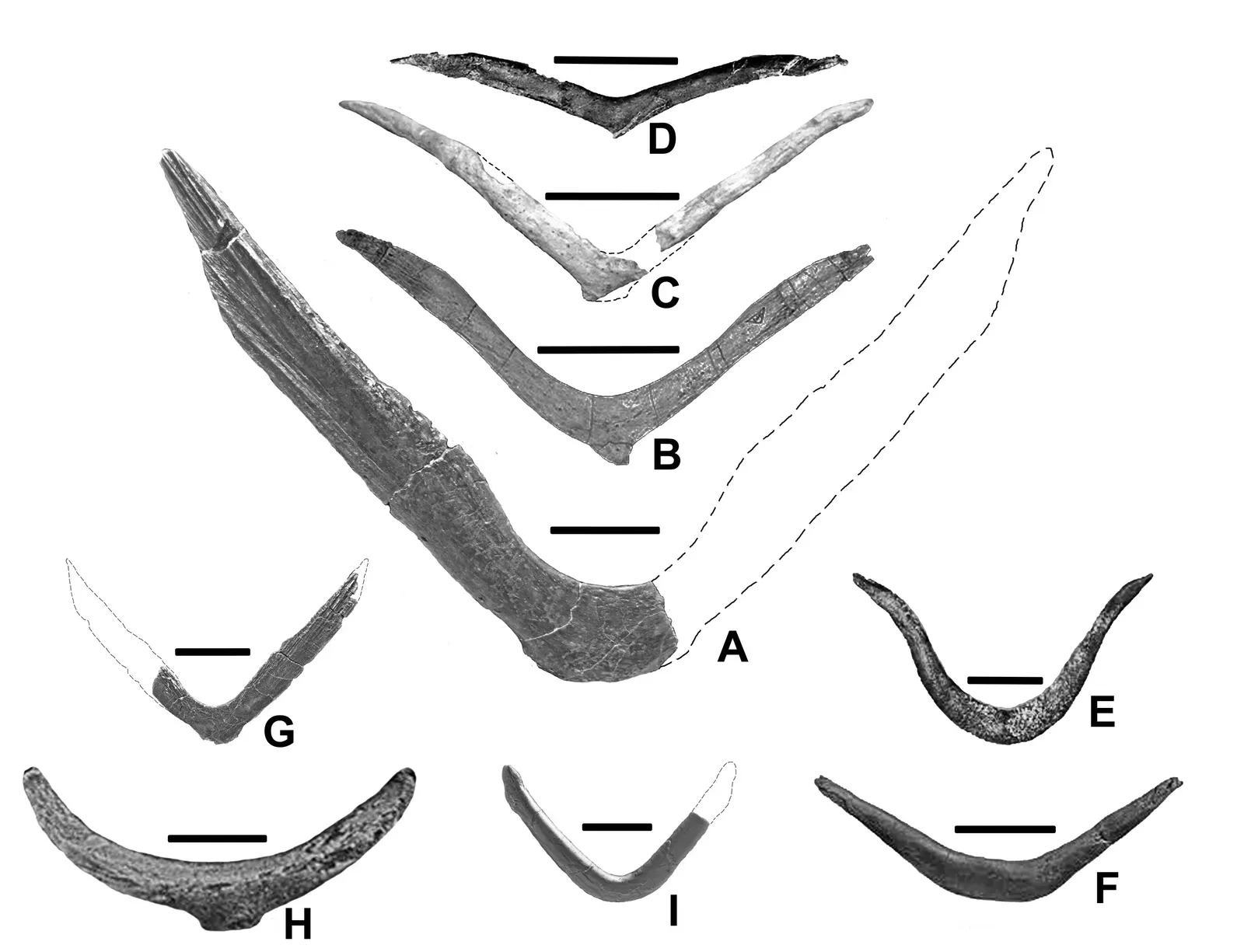
Every time you pull apart a turkey wishbone at the dinner table, you’re handling a piece of evolutionary history stretching back well over a hundred million years. The furcula, commonly known as the wishbone, has long been considered a distinctive feature of birds, but this Y-shaped bone is actually a dinosaurian innovation that predates the origin of flight. This specialized bone is formed by the fusion of the two clavicles and serves as an important structural element supporting the shoulders during the flight stroke in modern birds.
Paleontologists have discovered furculae in numerous theropod dinosaurs, including Allosaurus, Velociraptor, and Tyrannosaurus rex, demonstrating that this supposedly “bird-specific” feature evolved in dinosaurs long before the first birds took to the air. The wishbone’s presence across many theropod lineages provides compelling evidence of the evolutionary continuity between dinosaurs and birds.
Coelurosaur dinosaurs developed hollow long bones 160 million years ago, establishing the precursor to modern avian skeletal architecture. Modern birds expanded pneumatization beyond their dinosaur ancestors, with air sacs penetrating skull bones, vertebrae, and major limb bones. The result is a skeleton that is almost absurdly light without sacrificing structural strength.
Paleontologists have discovered evidence of similar respiratory systems in non-avian theropod dinosaurs through the presence of pneumatic foramina – small holes in the bones where air sacs once connected. These openings, found in the vertebrae and other bones of dinosaurs like Allosaurus and Tyrannosaurus, indicate that the avian respiratory system began evolving long before the first birds appeared.
Flight Was Not a Single Event: Multiple Pathways Into the Sky
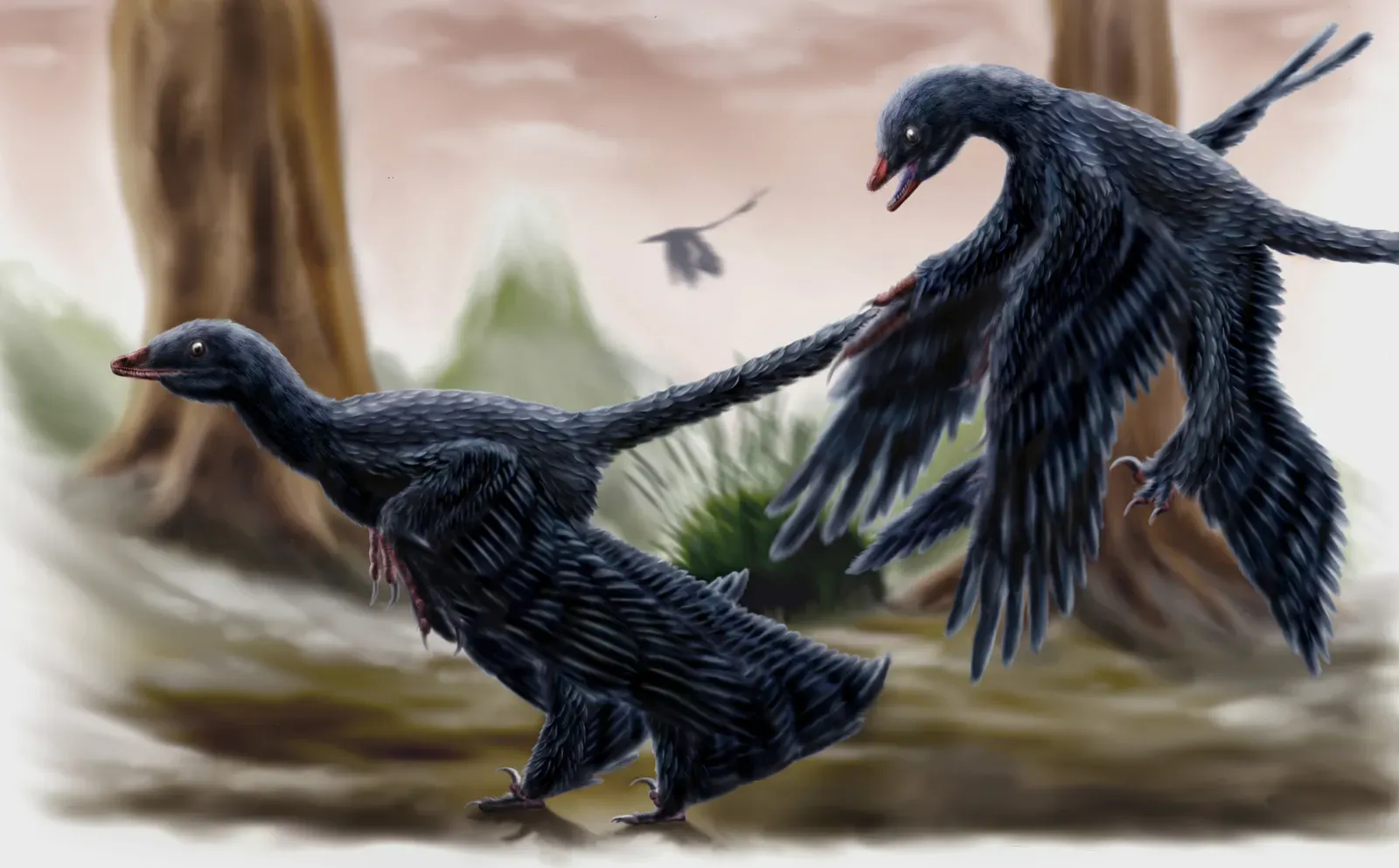
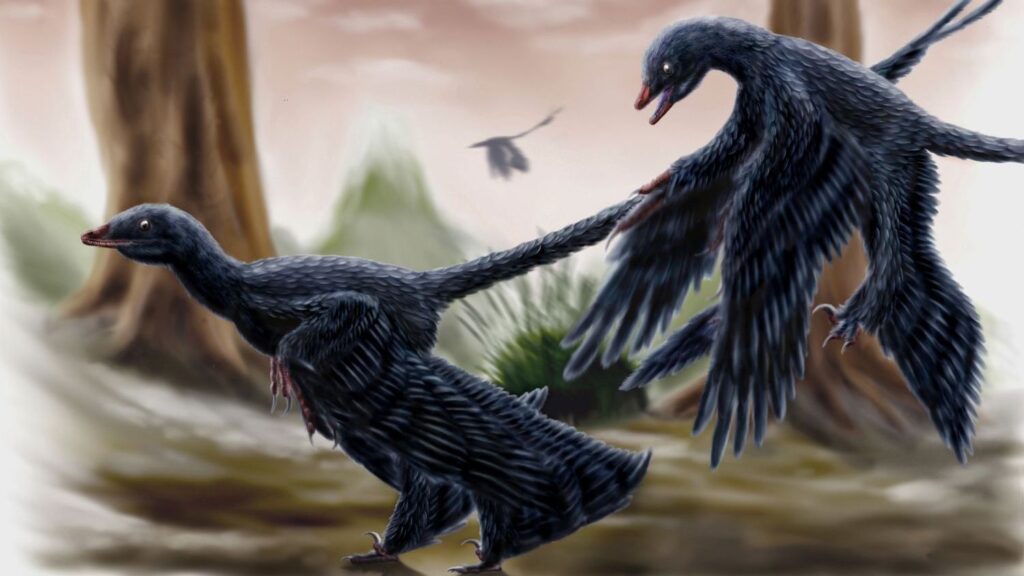
One of the most fascinating and often overlooked aspects of this story is that flight didn’t evolve just once. The pathway into the sky was tried in multiple ways, by multiple lineages, at different times. Microraptor is among the fossils that changed the story. After it was named in 2000, a stunning fossil of the feathery dinosaur described in 2003 revealed that Microraptor had long, specialized feathers growing from its hind legs as well as its arms. The reptile quickly became known as the “four-winged dinosaur,” and experts wondered what the arrangement might mean for the evolution of flight.
Microraptor lived about 125 million years ago, long after the origin of the earliest birds in the Jurassic. Nevertheless, the dinosaur’s anatomy is marked by a suite of aerodynamic traits. Exactly how Microraptor flew isn’t entirely clear, but the non-avian dinosaur represents a different pathway for getting into the air and indicates that more than one feathery dinosaur lineage evolved to become airborne.
This is an extremely rare finding that offers a glimpse into the functioning of creatures that lived 160 million years ago, and their impact on the evolution of flight in dinosaurs and birds. The more fossils scientists find, the more layered and intricate the picture becomes. It’s less a single highway to the sky and more a messy network of back roads, some of which led nowhere.
The presence of the unique tertial feathers in Archaeopteryx shows that it had a more advanced form of flight than its dinosaur relatives, further supporting the idea that flight developed multiple times in different lineages of dinosaurs. Flight, it turns out, was less of a single invention and more of a recurring evolutionary idea.
The Brain Behind the Wings: Neuroscience Meets Paleontology
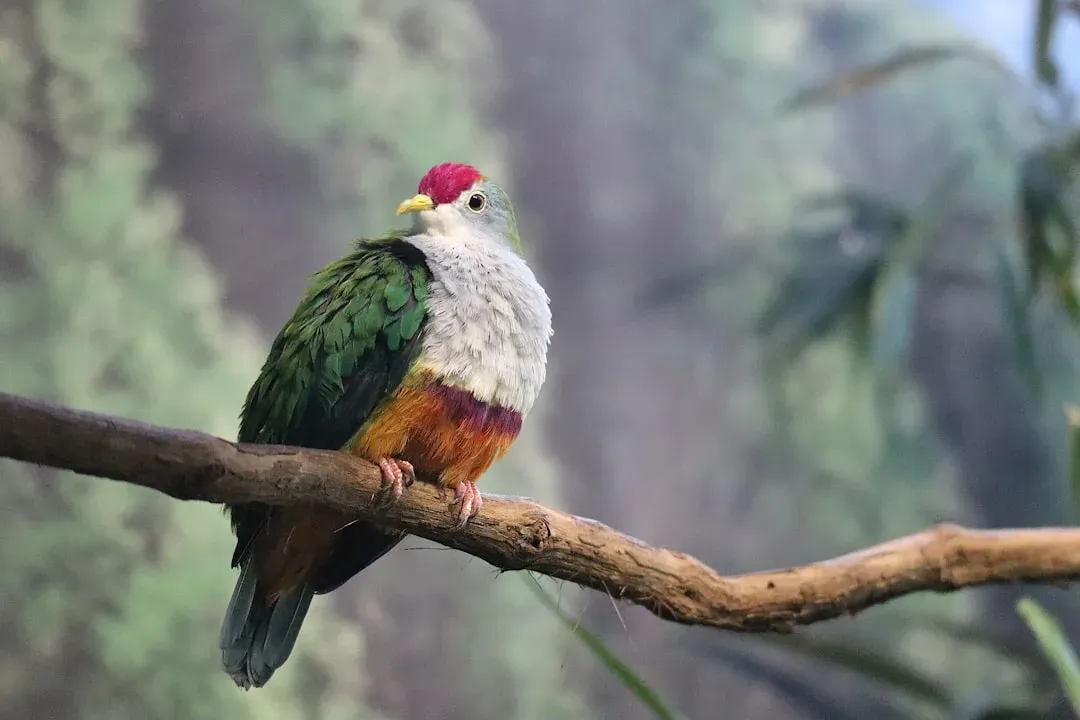
You might think that flight is all about wings and feathers. It’s hard to say for sure, but the neurological evidence strongly suggests that the brain played a surprisingly central role in the evolution of avian flight. Modern birds are believed to have acquired flight in a step-by-step, more gradual process, inheriting certain features, such as an enlarged cerebrum, cerebellum, and optic lobes from their prehistoric relatives, and later adapting them to enable flight.
Scientists have pieced together a detailed fossil record showing how birds’ brains adapted for flight. Birds inherited a brain already adapted from their non-flying dinosaur ancestors, while pterosaurs evolved their flight-ready brains at the same time they developed their wings. The bird lineage essentially arrived at the runway with the neurological equipment already installed.
To piece together this evolutionary story, the researchers used high-resolution 3D imaging techniques, including microCT scanning, to reconstruct brain shapes from more than three dozen species. These included pterosaurs, their close relatives, early dinosaurs and bird precursors, modern crocodiles and birds, and a wide range of Triassic archosaurs. The technology available to paleontologists today is genuinely astonishing.
Birds’ notably large brains likely came later and were tied more to increasing intelligence and complex behaviors rather than the act of flying itself. A key takeaway from research is that “it apparently doesn’t take a large brain to get into the air, and the later brain expansion in both birds and pterosaurs was likely more about enhancing cognition than about flying itself.”
Conclusion: The Sky Is Full of Living Fossils
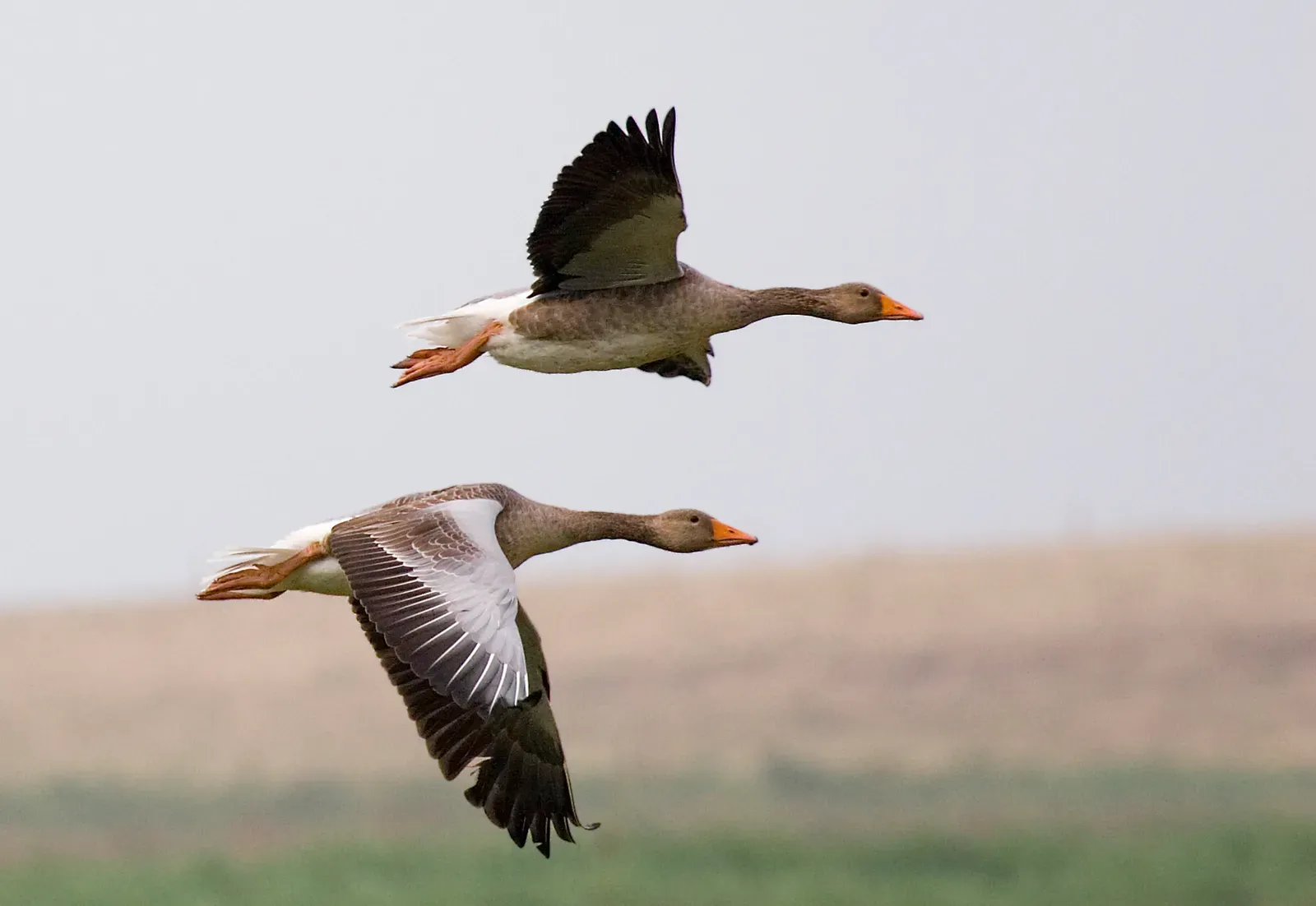
The story of how dinosaurs took to the skies is one of the most remarkable chapters in the entire history of life on Earth. What began as simple filaments of “dino fuzz” grew, across millions of years, into the asymmetric flight feathers that carry eagles above mountain peaks. What started as wrist bones suited for grasping prey became wings capable of crossing oceans.
As birds evolved from theropod dinosaurs, many of their features were modified. However, it’s important to remember that the animals were not “trying” to be birds in any sense. The more closely we look, the more obvious it is that the suite of features that characterize birds evolved through a complex series of steps and served different functions along the way. Evolution never had a plan. It just kept tinkering.
The study of this connection offers invaluable insights into the mechanisms of evolution, such as adaptations for flight, the development of feathers, and the survival of certain species through mass extinction events. In essence, the realization of the deep evolutionary links between birds and dinosaurs has transformed our understanding of natural history.
Next time a pigeon lands near you, take a second look. It carries within its hollow bones, its wishbone, its feathered wings, and its dinosaurian stare, the entire weight of that 160-million-year journey. The dinosaurs didn’t all die. Some of them just learned to fly. What other stories do you think are hiding in plain sight in nature? Tell us in the comments.