Imagine something the size of a giraffe launching itself into the sky and soaring effortlessly for thousands of kilometers. No runway. No engine. Just bone, membrane, and muscle working in near-perfect harmony. That’s exactly what pterosaurs managed to do, and honestly, the more you learn about how they pulled it off, the more astonishing it becomes.
Pterosaurs were the first vertebrate flyers and lived for over 160 million years. They weren’t dinosaurs, they weren’t birds, and they certainly weren’t some clunky evolutionary experiment. They were, in every measurable sense, nature’s most audacious aeronautical achievement. So let’s dive into how these prehistoric sky rulers actually worked, and why scientists are still piecing it together today.
The Origins: Rulers of the Sky Before Birds Ever Existed
![The Origins: Rulers of the Sky Before Birds Ever Existed ([3] archive copy at the Wayback Machine, CC BY-SA 3.0)](https://nvmwebsites-budwg5g9avh3epea.z03.azurefd.net/dinoworld/bd35e9d94e89860230073d9696c6946b.webp)
You might think birds have always been the dominant fliers on Earth. They haven’t. Pterosaurs were the first vertebrates to evolve powered flight, predating birds by a considerable margin. The first pterosaurs turn up in the fossil record around 215 million years ago, in the Late Triassic. That’s tens of millions of years before the earliest bird-like creatures ever spread their feathered wings.
Ranging from the size of a sparrow to the size of an airplane, the pterosaurs ruled the skies in the Jurassic and Cretaceous, and included the largest vertebrate ever known to fly: the late Cretaceous Quetzalcoatlus. What makes their story truly remarkable is that the appearance of flight in pterosaurs was separate from the evolution of flight in birds and bats. Pterosaurs are not closely related to either birds or bats, and thus provide a classic example of convergent evolution.
The Wing: A One-of-a-Kind Structural Masterpiece
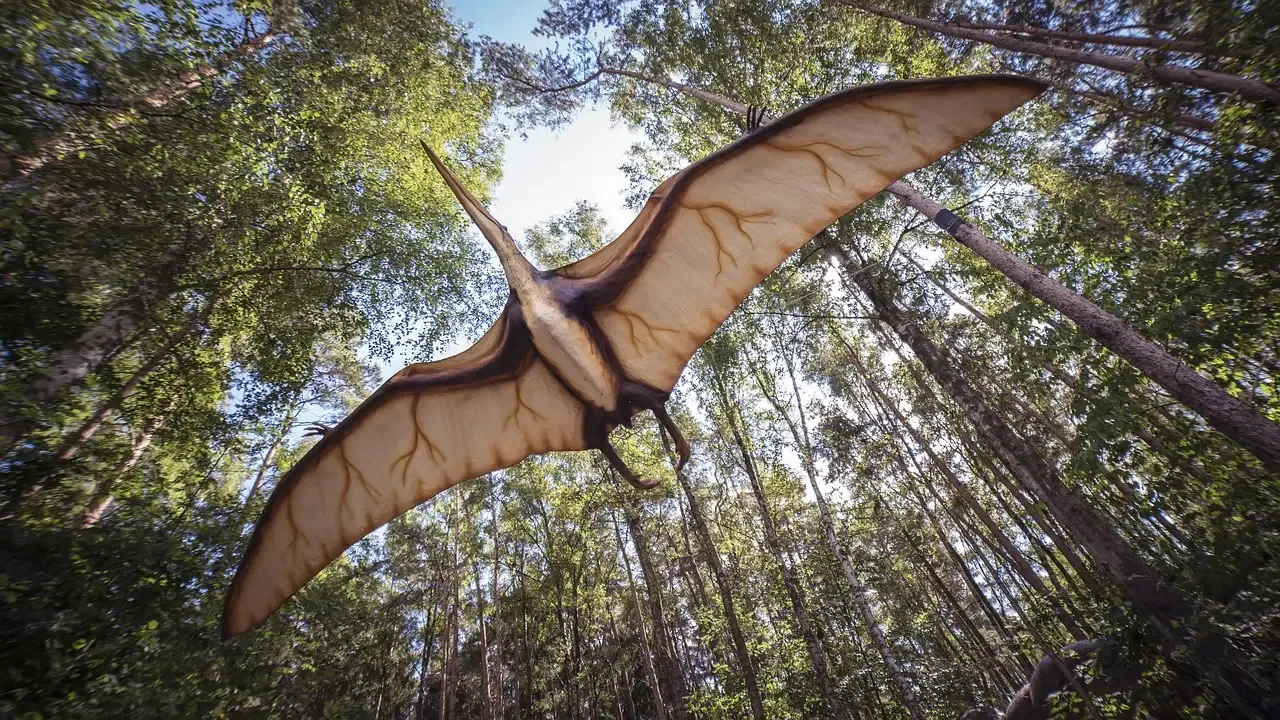
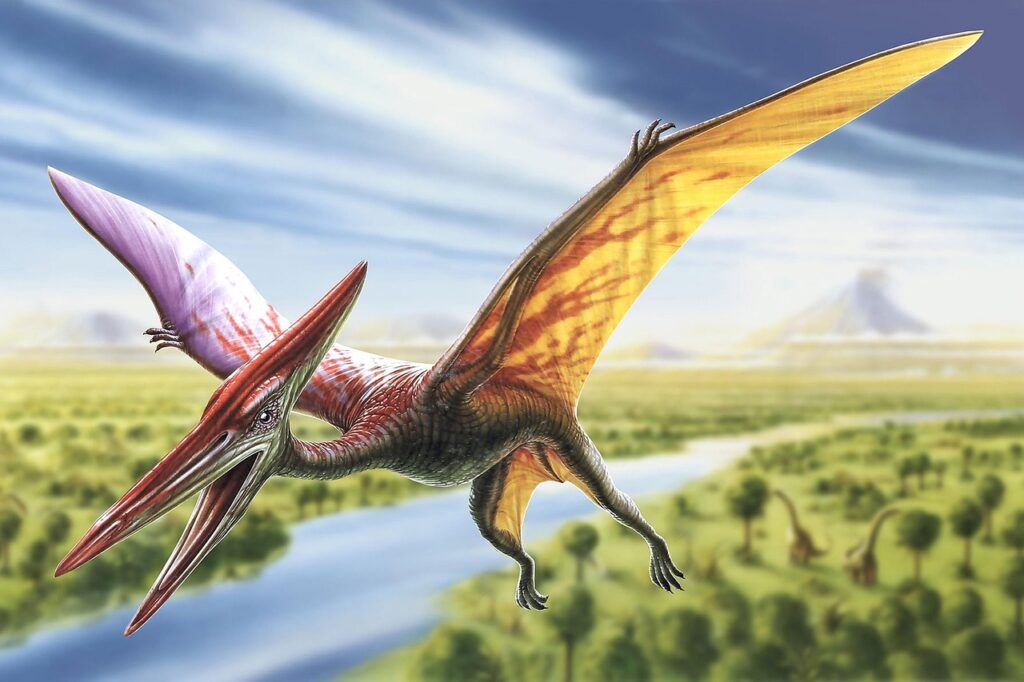
Here’s the thing that separates pterosaur wings from every other flying animal on Earth, past or present. Of the three groups of vertebrates to evolve flapping flight, the extinct pterosaurs were arguably the most unusual. Unlike living bats and birds, these archosaurian reptiles supported an elastic wing membrane with their arm bones and a single elongate fourth finger. Think about that for a second. One enormously elongated finger doing the work that dozens of wing bones do in a modern bird.
The pterosaur wing membrane is divided into three basic units. The first, called the propatagium, was the forward-most part of the wing and attached between the wrist and shoulder, creating the “leading edge” during flight. The brachiopatagium was the primary component of the wing, stretching from the highly elongated fourth finger of the hand to the hindlimbs. It was an architectural solution you won’t find anywhere else in nature, and it worked brilliantly.
Actinofibrils: The Hidden Engineering Inside the Wing Membrane
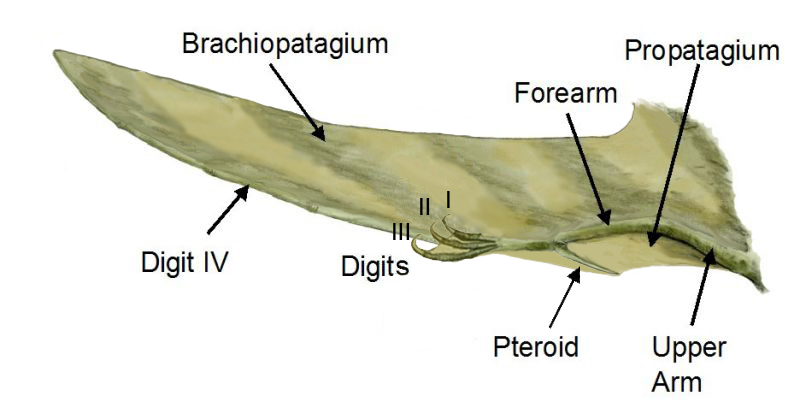
Most people picture a pterosaur wing as a flat sheet of tough leathery skin, like a stretched umbrella. That image couldn’t be more wrong. The wing membranes also contained a thin layer of muscle, fibrous tissue, and a unique, complex circulatory system of looping blood vessels. The combination of actinofibrils and muscle layers may have allowed the animal to adjust the wing slackness and camber. In plain English, pterosaurs could actively reshape their wings mid-flight, much like a jet adjusting its flaps.
The fibrils themselves are slightly elastic and can slide across each other where they are packed tightly together, which in tandem with the elastic nature of the muscle fibres makes the wing as a whole highly elastic. This means it can be quite compact when at rest and contracted, but can unfurl to a large size and remain quite rigid when necessary. It’s honestly a more sophisticated system than anything you’d find in a bat wing today.
Hollow Bones and the Genius of Lightweight Architecture
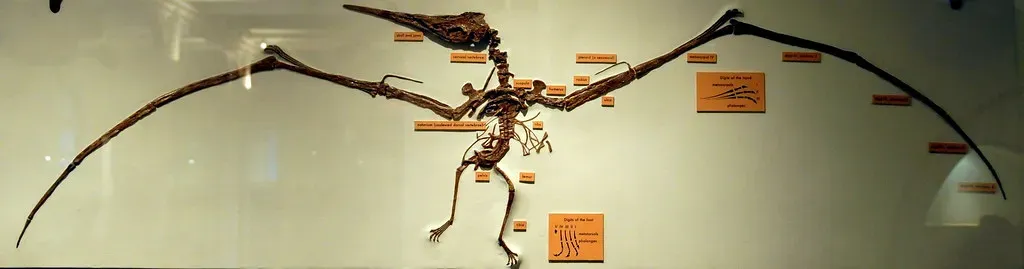
One of the most persistent questions in pterosaur research is simple enough to state but deeply complicated to answer: how could something so massive stay airborne? The answer lies, in large part, in their skeleton. The bones were light, air-filled and often had extremely thin walls. The Pterosauria comprises the first vertebrates to have evolved powered flight. In some species, the bone walls were just a few millimeters thick, yet strong enough to handle the mechanical stresses of powered flight.
The respiratory system had efficient unidirectional flow-through breathing using air sacs, which hollowed out their bones to an extreme extent. Pterosaur skeletons were porous, their bones full of air pockets. Paleontologists think blood vessels laced through the porous bone and oxygenated huge flight muscles. Air pockets may also have lightened the body, so that the huge animals could fly. It’s a design principle that modern aerospace engineers would recognize instantly as structural efficiency taken to its absolute limit.
The Muscular Wing Root Fairing: A Discovery That Changed Everything
One of the most surprising recent findings in pterosaur research didn’t come from digging in the ground. It came from shining a special laser on an old fossil. Using laser-stimulated fluorescence, scientists observed direct soft tissue evidence of a wing root fairing in a pterosaur, a feature that smooths out the wing–body junction, reducing associated drag, as in modern aircraft and flying animals. Unlike bats and birds, the pterosaur wing root fairing was unique in being primarily made of muscle rather than fur or feathers.
This is genuinely mind-blowing. As a muscular feature, pterosaurs appear to have used their fairing to access further flight performance benefits through sophisticated control of their wing root and contributions to wing elevation and/or anterior wing motion during the flight stroke. In other words, they weren’t just passively gliding. They had active, dynamic control over how air moved across their wings, something even modern engineers designing aircraft work hard to achieve.
The Pteroid Bone: A Tiny Piece With a Giant Purpose
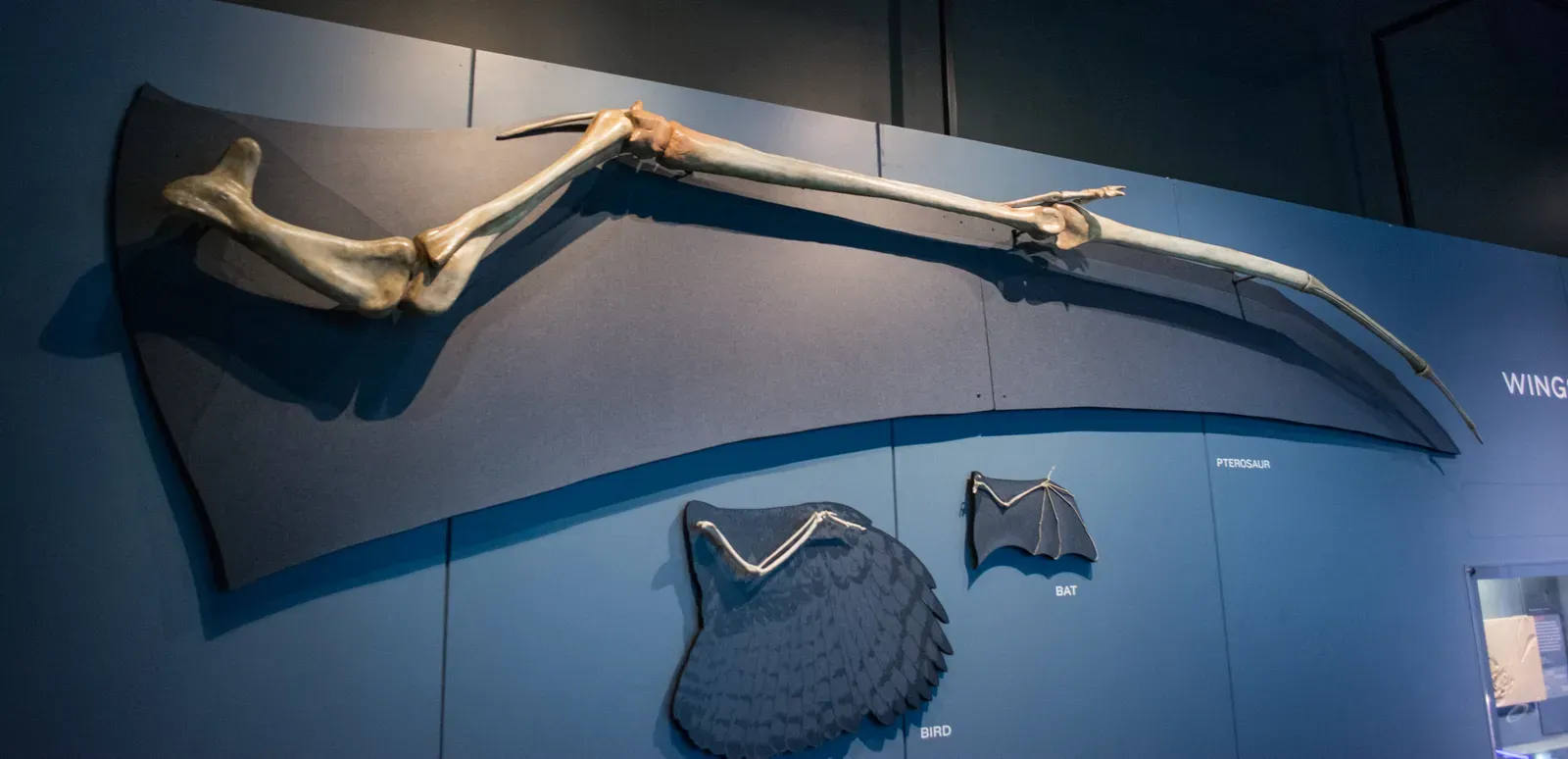
Associated with the wing, pterosaurs also possessed a unique wrist bone, the pteroid, that functioned to support the forward part of the membrane in front of the leading edge, the propatagium. Pteroid shape varies across pterosaurs and reconstructions of its orientation vary, implying differences in the way that pterosaurs controlled their wings. This little bone has sparked more scientific debate than almost any other piece of pterosaur anatomy, and I find it fascinating that something so small could be so important.
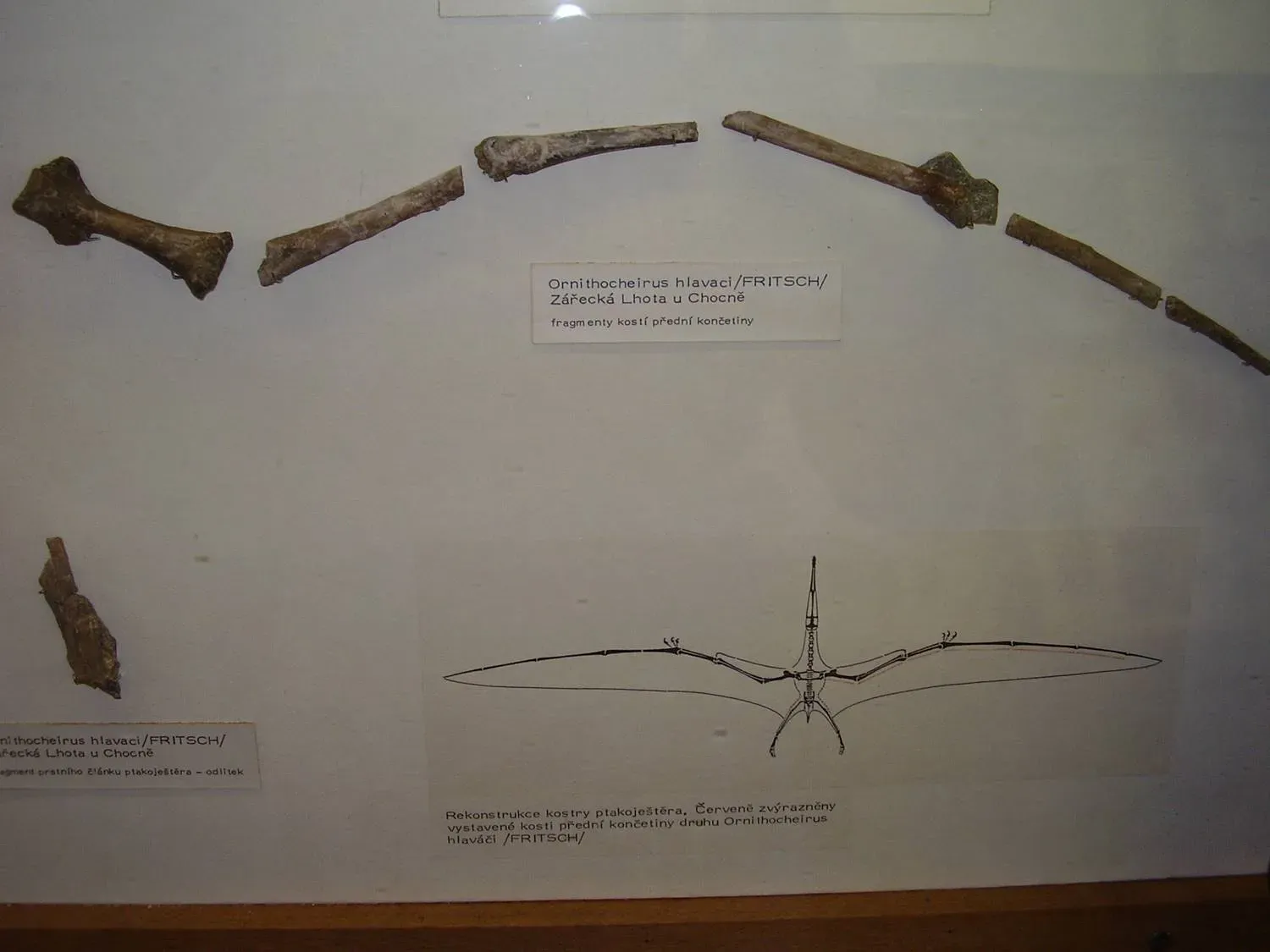
Using biomechanical analysis and considerations of aerodynamic efficiency of a representative ornithocheirid pterosaur, scientists have shown that an anteriorly orientated pteroid is highly unlikely. Unless these pterosaurs only flew steadily and had very low body masses, their pteroids would have been likely to break if orientated anteriorly; the degree of movement required for a forward orientation would have introduced extreme membrane strains and required impractical tensioning in the propatagium membrane. It’s a case where physics itself narrows down the mystery.
The Takeoff Problem: How Giants Got Airborne
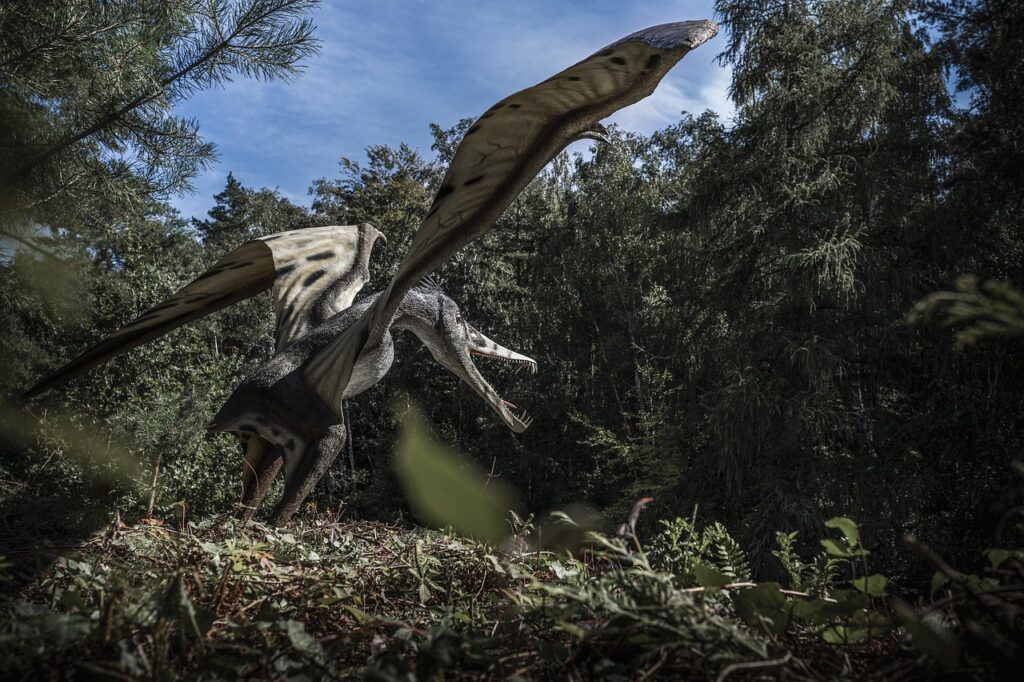
If you’ve ever watched a large bird like a swan struggle to get off the water, you’ll understand why pterosaur takeoff is such a fascinating puzzle. With a 10m wingspan and 250kg estimated body mass, giant pterosaurs were the largest vertebrates ever to fly. By contrast, the largest extant birds have wingspans of 3m and weigh around 20kg, with fossil birds reaching 6-7m wingspan and 70kg mass. Even giant extinct birds are dwarfed by the largest pterosaurs.
So how did they do it? The pterosaur likely used all four limbs to propel itself in the air, as seen in bats today, researchers have found. The findings provide new insights into how pterosaurs managed to take flight despite reaching sizes far larger than modern animals. The research sheds new light on the flight-initiating jumping ability of these animals, some of which had wingspans of over ten meters. The possibility of quadrupedal launch may have facilitated pterosaurs to become much larger than any avian fliers: using the more powerful and robust forelimbs for takeoff sets higher mass limits on launch capability and will facilitate the evolution of much larger flying animals.
Quetzalcoatlus: The Pinnacle of Pterosaur Engineering
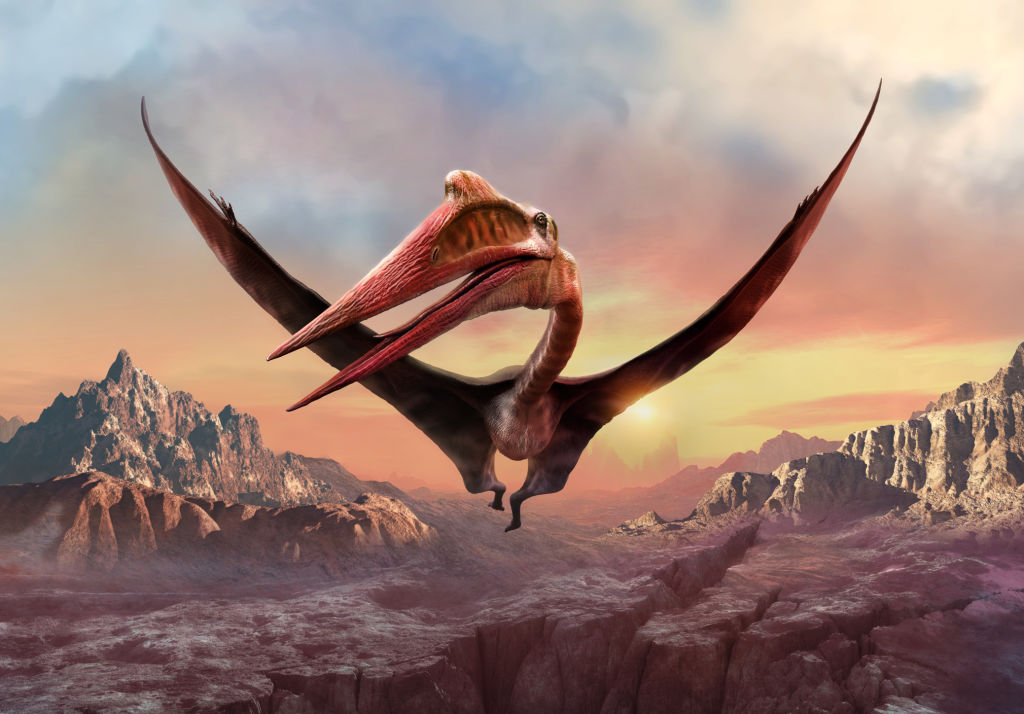
When you want to understand just how far pterosaur biomechanics could be pushed, you look at Quetzalcoatlus. With an 11 to 12-meter wingspan, Quetzalcoatlus is the largest flying organism ever known and one of the most familiar pterosaurs to the public. It walked on four legs, stood as tall as a giraffe, and could launch itself skyward despite weighing as much as a large motorcycle. Researchers have found that its 11-metre-long wings meant it would have had to jump up to 2.5 metres into the air, followed by powerful flaps to pull it into the sky.
Once in the air, Quetzalcoatlus would have soared like modern condors and vultures, with suggestions its large head may have helped it to complete turns. Pterosaurs have huge breastbones, which is where the flight muscles attach, and their upper arm bone, the humerus, has huge bony crests for anchoring the flight muscles, which are larger than those of birds and far larger than those of bats. For an animal whose very existence once seemed to challenge the laws of physics, the engineering behind it turned out to be absolutely impeccable.
Conclusion: A Blueprint Written 200 Million Years Before Human Flight
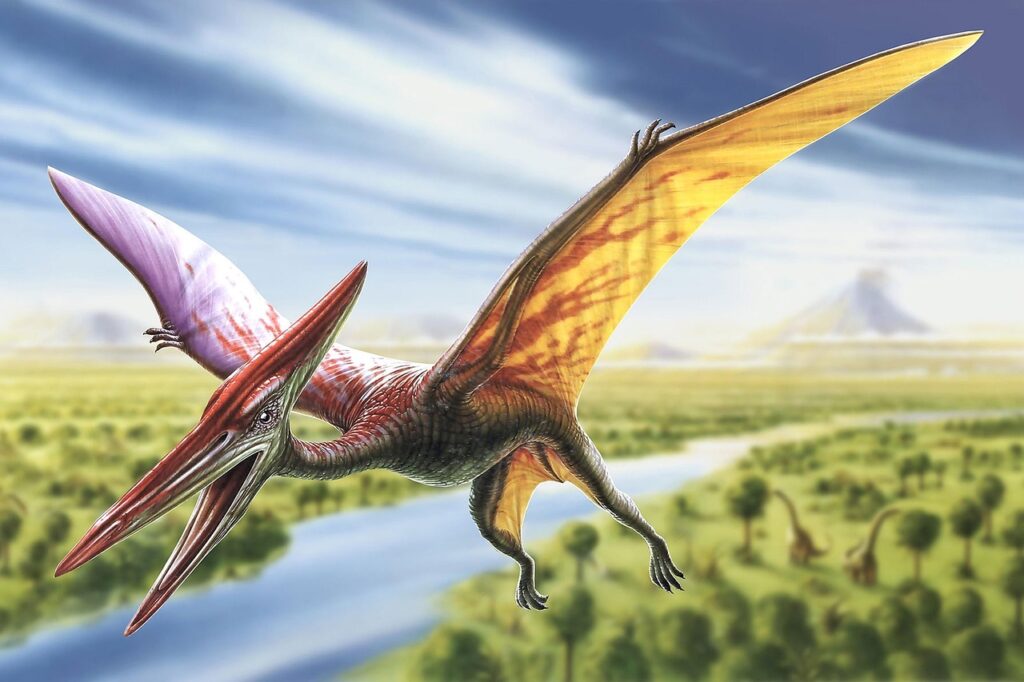
Pterosaurs weren’t just prehistoric curiosities. They were the most sophisticated flying machines nature has ever produced, and every new fossil or imaging technology reveals just how much more complex they were than anyone first imagined. From their active, muscle-controlled wing membranes to their pneumatized hollow bones, from the drag-reducing fairing at their wing roots to the extraordinary quadrupedal launch that got them airborne, every system was elegant, efficient, and purpose-built.
Despite their extinction, pterosaurs offer invaluable insights into evolutionary biology, biomechanics, and flight mechanics. Ongoing discoveries deepen our understanding of how flight evolved and what environmental pressures shaped the development of these remarkable creatures. The study of pterosaurs also contributes to broader scientific fields, helping researchers apply ancient lessons to modern questions, such as the physics of flight and the evolution of other flying animals, including birds and bats. Honestly, the more science learns about these animals, the more humbling it becomes. Nature solved the problem of giant flight millions of years before we even knew it was a problem worth solving. What do you think is the most surprising part of pterosaur flight engineering? Drop your thoughts in the comments below.