Picture a dinosaur in your mind. Chances are, you’re seeing something enormous, scaly, and terrifying. A T. rex tearing through a jungle, or maybe a long-necked giant casting a shadow over prehistoric treetops. That image has been drilled into us by decades of blockbuster movies, museum dioramas, and Saturday morning cartoons.
Here’s the thing, though. That picture is almost entirely wrong. The earliest dinosaurs that ever walked this planet were nothing like the cinematic monsters you grew up with. They were smaller, stranger, and far more surprising than you’d ever guess. If you passed one on the street today, you probably wouldn’t even recognize it. So buckle up, because what you’re about to read might completely rewire the way you think about the most famous animals in Earth’s history. Let’s dive in.
They Were Born From Catastrophe, Not Paradise
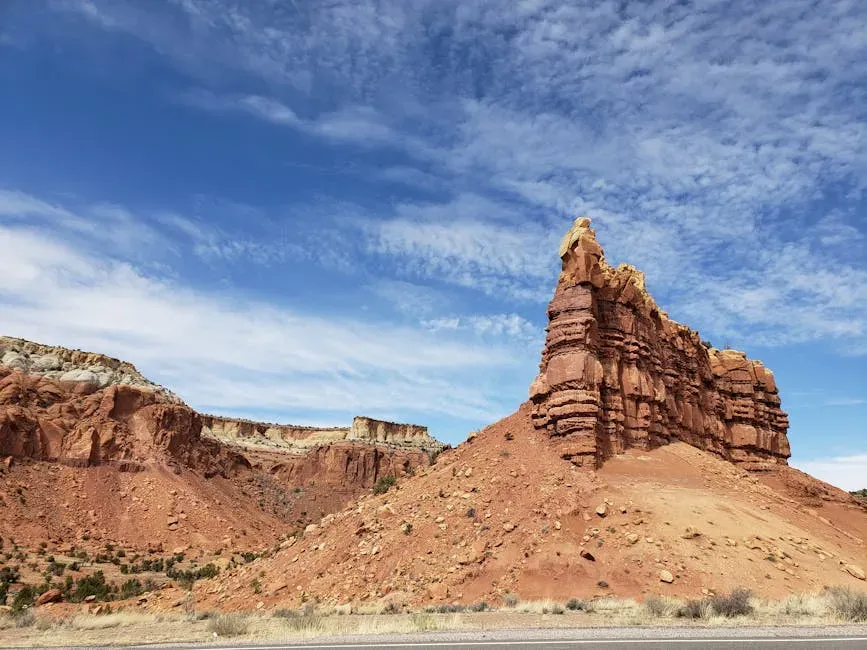
You might imagine the first dinosaurs strolling into existence through a lush, verdant paradise. Reality was far grimmer than that. The Triassic Period, which began around 252 million years ago, kicked off immediately after Earth’s worst-ever extinction event, the Permian-Triassic extinction, also known as the Great Dying. It was a world still gasping back to life.
The start of the Triassic was a desolate time in Earth’s history. Something, whether a bout of violent volcanic eruptions, climate change, or perhaps a fatal run-in with a comet or asteroid, had triggered the extinction of more than nearly all of Earth’s species. The slate had been wiped terrifyingly clean.
Life that survived the so-called Great Dying repopulated the planet, diversified into freshly exposed ecological niches, and gave rise to new creatures, including rodent-sized mammals and the first dinosaurs. Dinosaurs didn’t inherit a paradise. They were born into a rebuilding world, and that context shaped everything about them. Honestly, it makes them far more impressive, not less.
The World They Lived In Was Almost Unrecognizable
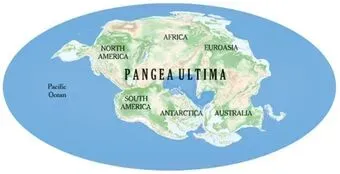
Forget the idea of separate continents. All continents during the Triassic Period were actually part of a single landmass called Pangaea, which meant that differences between animals or plants found in different areas were relatively minor. One world, one giant continent, stretching from pole to pole.
The global climate during the Triassic was mostly hot and dry, with deserts spanning much of Pangaea’s interior. There were no vast oceans separating land. No Amazon rainforest, no Arctic tundra as you know it today. Areas near the coast were pummeled by seasonal monsoons, but ocean-circulation patterns kept the isolated and vast interior warm and dry. Even the poles were ice-free. The world those first dinosaurs walked was alien by any modern measure.
The First Dinosaurs Were Shockingly Small
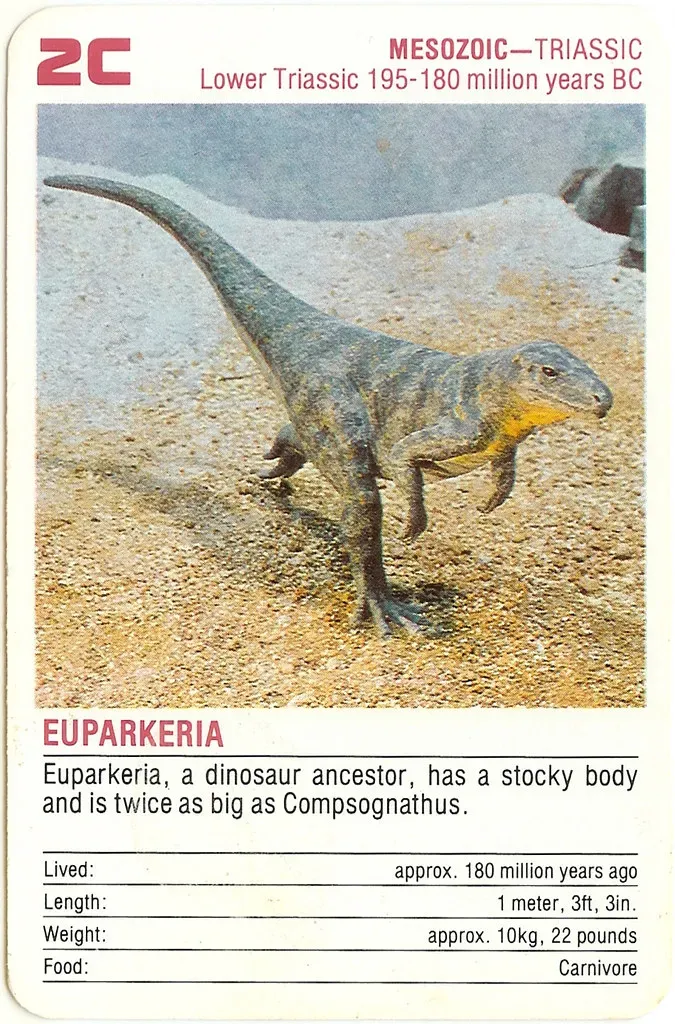
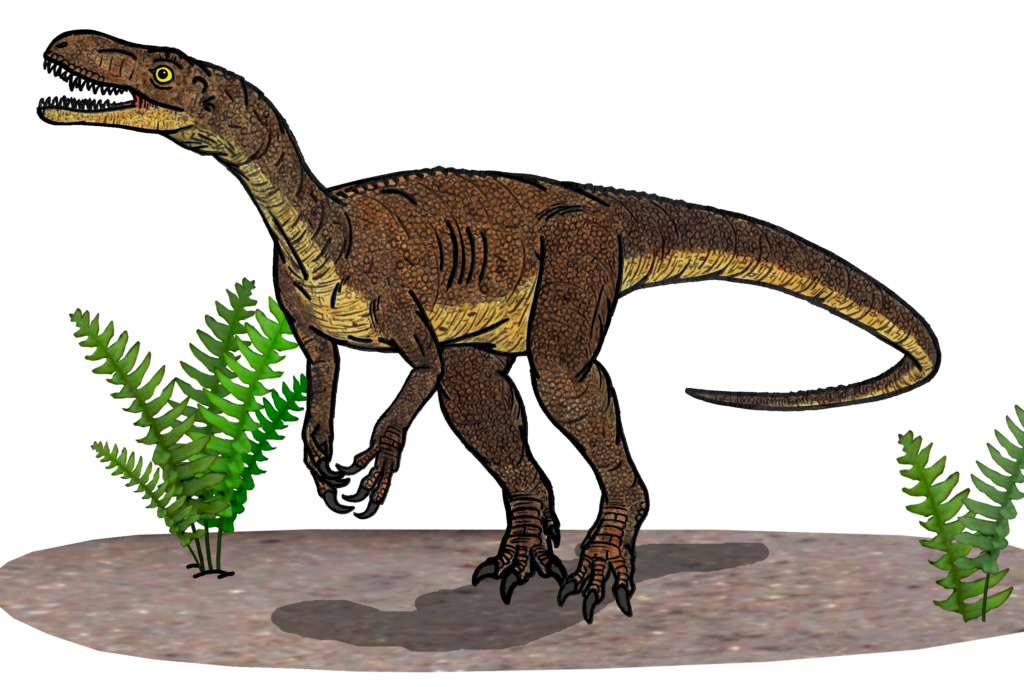
This is where most people’s jaws drop. The earliest dinosaurs were not towering giants. Not even close. Dinosaurs first evolved between 240 million and 230 million years ago during the Triassic, and the earliest dinosaurs were dog- and horse-sized creatures with a mostly upright posture. Think of a large dog, then add a long tail. That’s closer to the truth.
A creature about the size of a Labrador retriever with a long neck and lengthy tail may be the world’s earliest known dinosaur. Now named Nyasasaurus parringtoni, this dinosaur would have walked a very different Earth, living between 240 million and 245 million years ago when the planet’s continents were still stitched together to form Pangaea. Somehow, knowing the dinosaur dynasty started with something roughly the size of a family pet makes the whole story feel even wilder.
Nyasasaurus likely stood upright, measuring roughly seven to ten feet in total length, standing about three feet at the hip, and may have weighed somewhere between 45 and 135 pounds. That’s not exactly what the Jurassic Park franchise prepared you for, is it?
They Walked Upright, and That Was Revolutionary
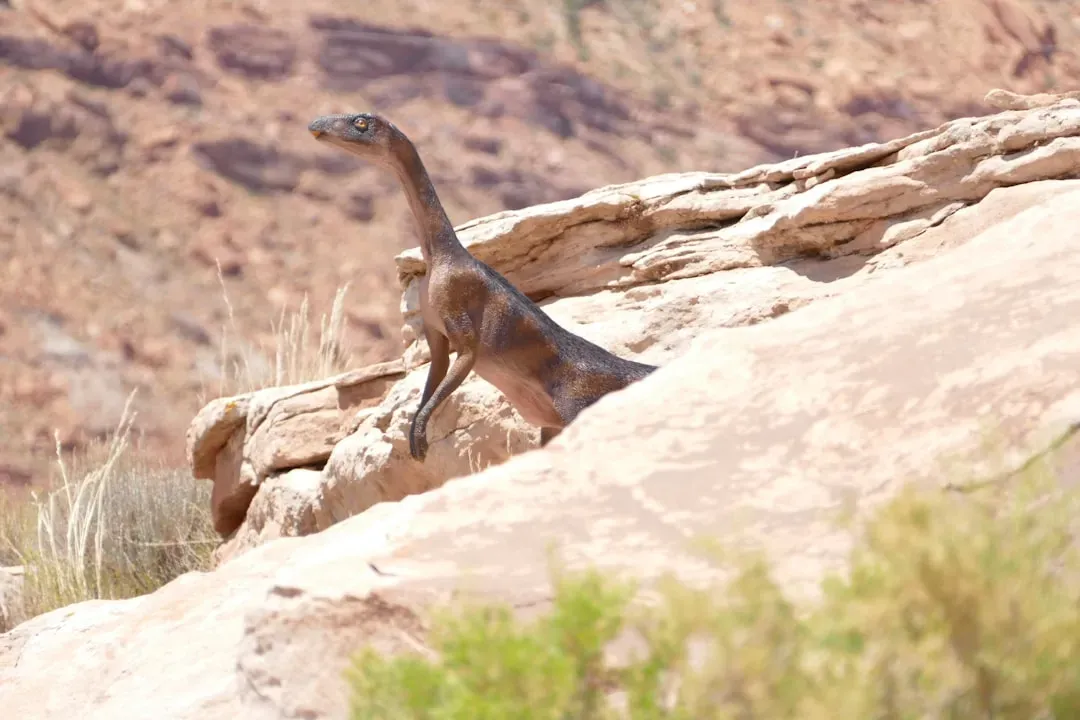
One thing the early dinosaurs did have going for them was their posture, and it was a genuine game-changer in the animal kingdom. Dinosaurs stood with their hind limbs erect in a manner similar to most modern mammals, but distinctly different from most other reptiles, whose limbs sprawl out to either side. This posture was due to the development of a laterally facing recess in the pelvis and a corresponding inwardly facing distinct head on the femur.
Their erect posture enabled early dinosaurs to breathe easily while moving, which likely permitted stamina and activity levels that surpassed those of sprawling reptiles. Erect limbs probably also helped support the evolution of large size by reducing bending stresses on limbs. Think of it like the difference between waddling sideways and sprinting straight ahead. The upright stance gave early dinosaurs an enormous competitive edge over everything else alive at the time. This gave them an evolutionary advantage because they were able to run faster and more efficiently, and this upright posture also left their front legs free to grasp tree branches and kill prey with their claws.
They Were Feathered, Not Scaly
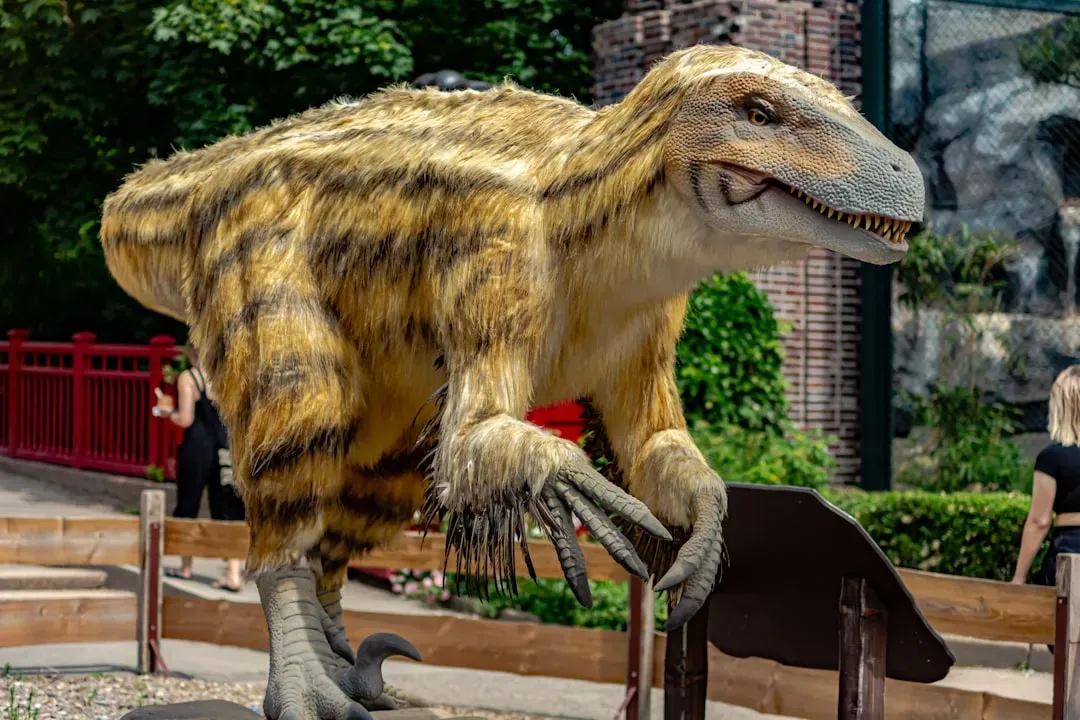
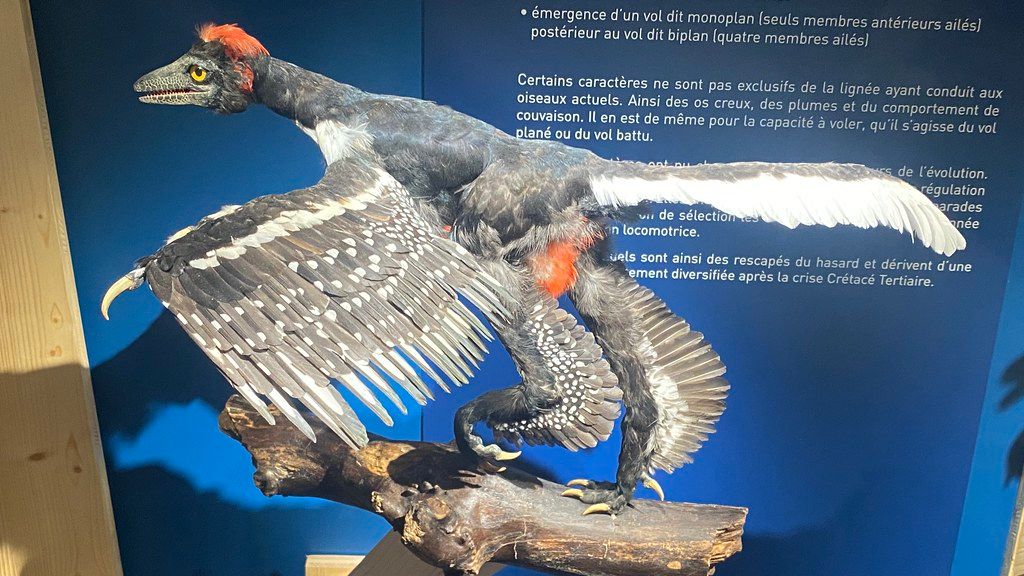
If there is one single fact in this article that should permanently change how you picture dinosaurs, this is it. A recently discovered fossil of a very early small dinosaur shows clearly that it had at least kiwi or emu-type feathers. The fossil dates from more than 200 million years ago, meaning it must resemble the ancestor of all dinosaurs. Its covering suggests that the earliest dinosaurs emerged from the Triassic with a warm feathery coat and did not look like lizards at all.
Dinosaurs are often thought of as heat-loving, well suited to the steamy greenhouse environment of the Triassic Period. The secret to their survival, however, may have been how well adapted they were to the cold, unlike other reptiles of the time. Their warm coats of feathers could have helped these creatures weather relatively brief but intense bouts of volcanic winter associated with massive eruptions. I know it sounds crazy, but the fearsome dinosaur you imagined might have looked more like an oversized kiwi bird than a reptilian monster. Thanks to those insulating feathers, dinosaurs were able to survive the lengthy winters that ensued during the end-Triassic mass extinction, and might then have been able to spread rapidly during the Jurassic, occupying niches left vacant by less hardy reptiles.
They Were Not the Dominant Animals of Their Time
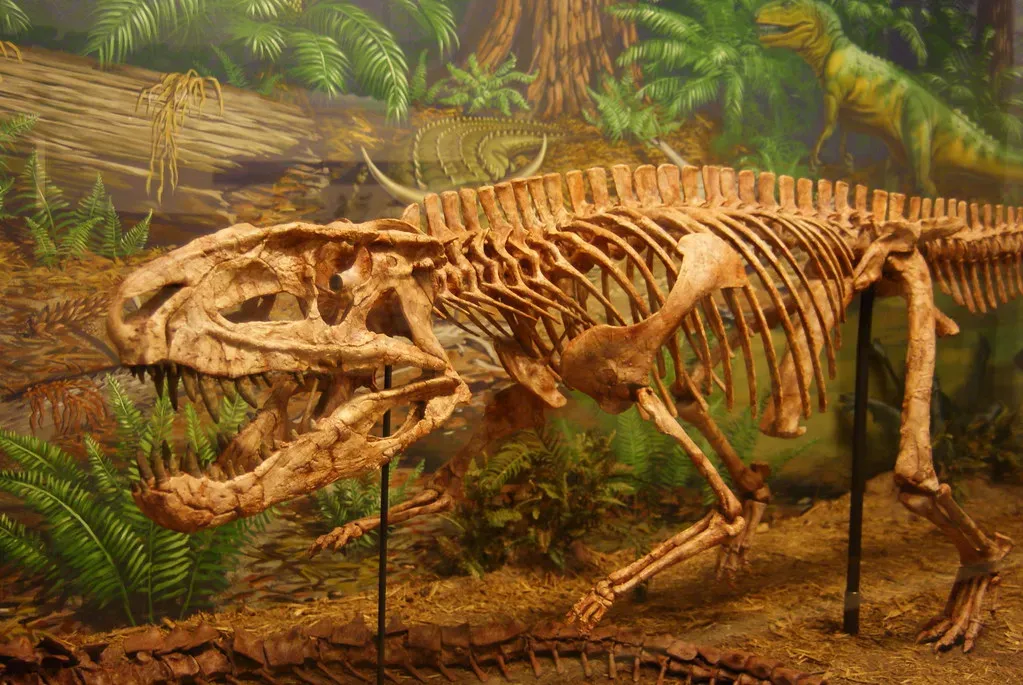
Here is another genuinely humbling fact about the first dinosaurs: when they first appeared, nobody was exactly trembling in their presence. When dinosaurs appeared, they were not the dominant terrestrial animals. The terrestrial habitats were occupied by various types of archosauromorphs and therapsids, and their main competitors were the pseudosuchians, such as aetosaurs, ornithosuchids and rauisuchians, which were actually more successful than the dinosaurs.
Dinosaurs were not a major part of Late Triassic faunas, which included a wide variety of amphibians, mammal cousins, and reptiles, most famously the crocodile-like phytosaurs and the armored aetosaurs. They were essentially supporting characters in someone else’s story. It would not be until the end-Triassic extinction event, which occurred 201 million years ago, that dinosaurs would finally get their chance. The mass extinction wiped out almost all the other competing archosaurs, meaning the environment was left wide open for the dinosaurs to fill. Their rise to dominance wasn’t planned. It was accidental, and it was spectacular.
Their Origins Are Still Shrouded in Mystery
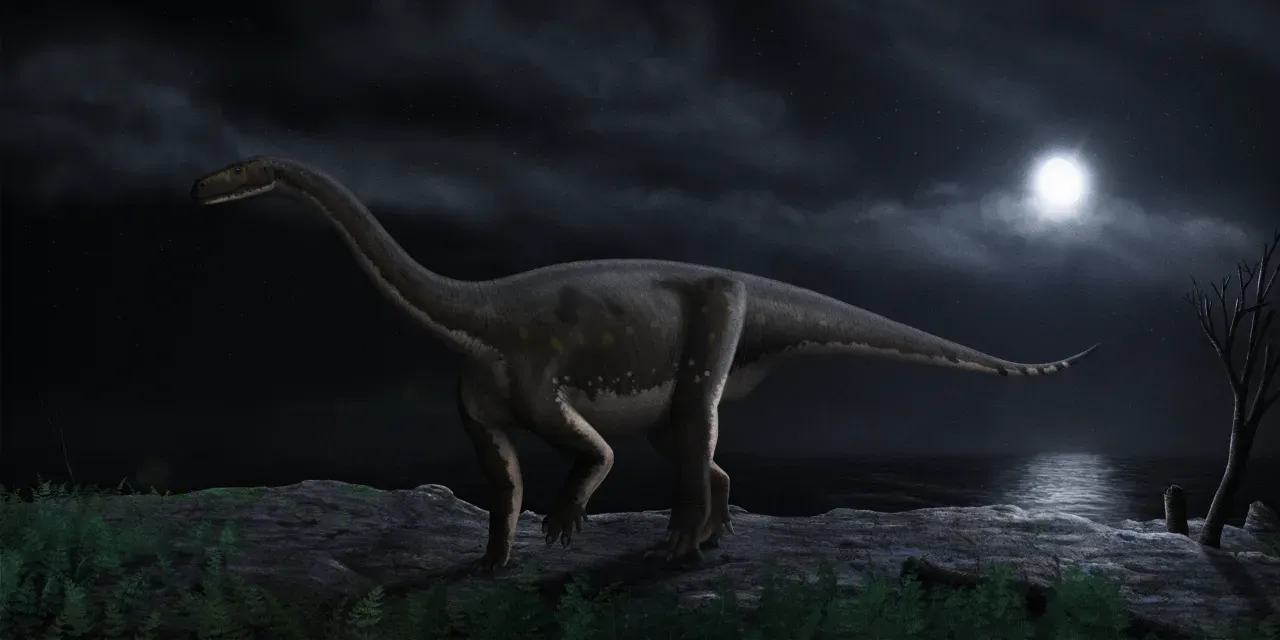
You might expect that by 2026, with all the technology and decades of fossil hunting, we’d have the full picture. The truth is, we’re still piecing it together. For over 170 million years dinosaurs dominated the land, from small creatures just a few feet long to some of the largest animals ever to have walked Earth. Yet despite their long evolutionary history, the origin of dinosaurs remains shrouded in mystery.
The earliest definitive dinosaur is not one animal but an entire ecosystem containing a few different species. There is no universally accepted dinosaur species that lived earlier in time. Dating to around 230 million years ago, in the Late Triassic Period, the Ischigualasto Formation in Argentina contains an array of animal remains. It’s a bit like finding a chapter in the middle of a book and having to guess at the beginning. By the time early dinosaurs such as Eoraptor and Eodromaeus show up in Argentina at least 10 million years after Nyasasaurus, they already represent diverse groups that must have been evolving for a long time. Fossils that old tend to be fragmentary, and researchers don’t always agree about their evolutionary pedigree. The mystery, honestly, is part of what makes this field so endlessly fascinating.
Conclusion: The Real First Dinosaurs Would Shock You
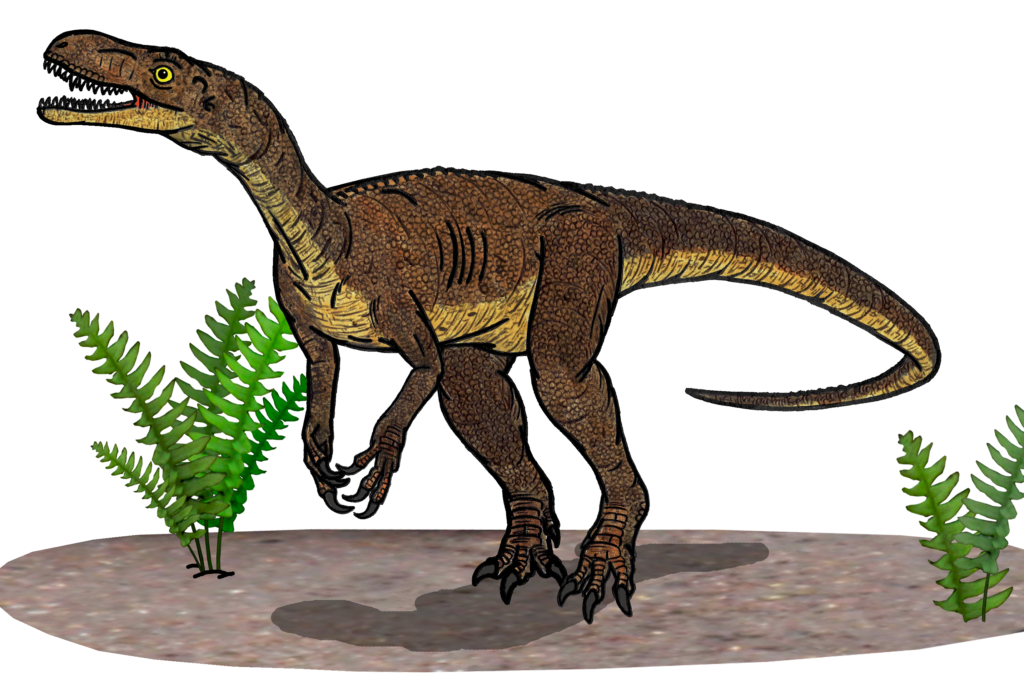
The dinosaurs of our collective imagination, those enormous, scaly, slow-witted monsters, are largely a product of fiction, outdated science, and a century of Hollywood influence. The actual first dinosaurs were small, agile, warm-blooded, and probably feathered. They were underdogs in a harsh, recovering world, clinging to survival alongside dozens of other competing creatures. They didn’t dominate. Not yet.
What makes them extraordinary is not the size they eventually reached, but where they started from. From dog-sized, feathered sprinters scrambling across the scorched flats of Pangaea, they eventually gave rise to the largest land animals Earth has ever known, and to the birds singing outside your window right now. That journey, spanning hundreds of millions of years, started with something far more humble and far more astonishing than you ever imagined.
So next time you see a sparrow hop across the pavement, remember: you’re looking at a dinosaur. Not a distant cousin. A real, living, breathing dinosaur. Does that change how you see the world? It probably should.