Picture this: you are crouched in a scorching desert, knees caked in ancient dust, coaxing a 75-million-year-old bone fragment from a slab of rock with nothing but a brush and stubborn patience. No audience, no applause. Just you, the silence, and a piece of Earth’s memory that no living human has ever touched. That is what it means to be a fossil hunter – and honestly, it is one of the most quietly extraordinary callings on the planet.
These are the people who connect us to deep time. They are not usually in the spotlight. They rarely get the headlines. Yet without their obsessive, painstaking work, we would know almost nothing about the creatures, climates, and catastrophes that shaped life as we know it today. So let’s pull back the curtain and explore the world of fossil hunters, from the legendary pioneers of the past to the thrilling discoveries being made right now in 2026. Let’s dive in.
Mary Anning: The Woman Who Rewrote Prehistory
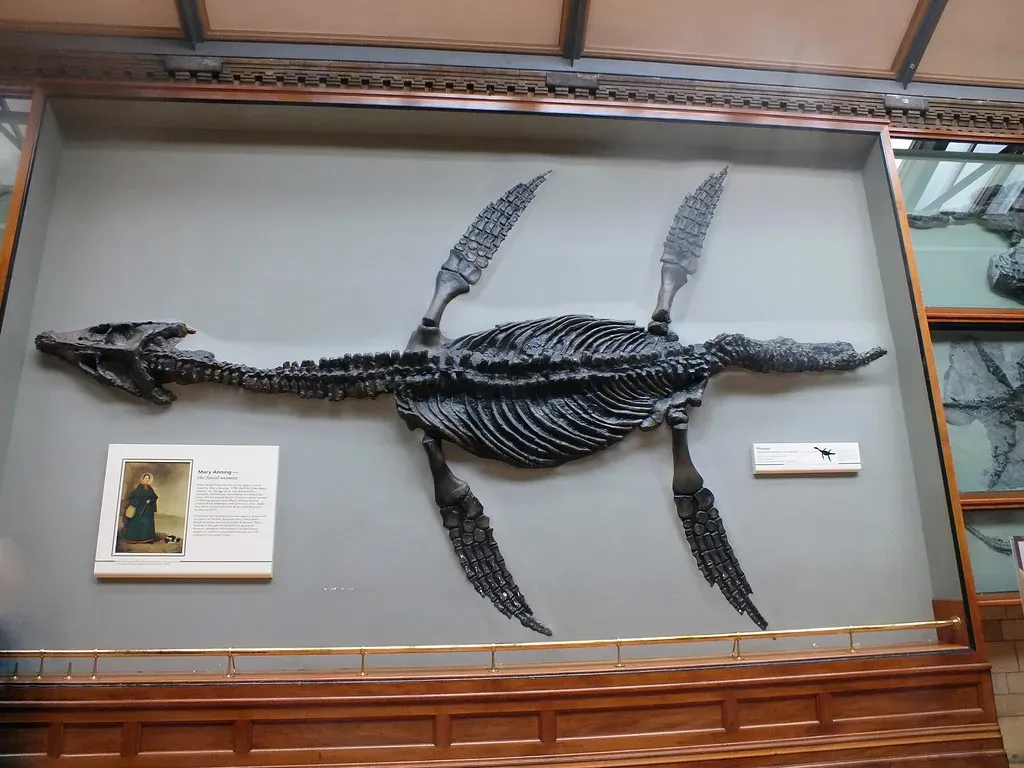
If you want to understand the soul of fossil hunting, you have to start with Mary Anning. Born on May 21, 1799, in Lyme Regis, Dorset, England, she was a prolific fossil hunter and amateur anatomist credited with the discovery of several specimens of large Mesozoic reptiles that assisted in the early development of paleontology. Think about that for a moment. A working-class woman, in the early 1800s, reshaping the very foundations of science.
Her discoveries included the first correctly identified ichthyosaur skeleton when she was twelve years old, the first two nearly complete plesiosaur skeletons, the first pterosaur skeleton located outside Germany, and significant fish fossils. These were not minor finds. The ichthyosaurs, plesiosaurs, and pterosaur she found showed that during previous eras the Earth was inhabited by creatures dramatically different from those living today.
Male scientists, who frequently bought the fossils Mary would uncover, clean, prepare and identify, often did not credit her discoveries in their scientific papers, even when writing about her groundbreaking ichthyosaur find. It is a staggering injustice, and one that history has slowly worked to correct. Some scientists note that fossils recovered by Anning may have also contributed, in part, to the theory of evolution put forth by English naturalist Charles Darwin. The woman literally helped build the scaffolding for modern biology, and for decades, almost nobody knew her name.
Mary’s legacy lives on along the rugged Jurassic Coast, now a UNESCO World Heritage Site, where scientists, amateurs and adventurous children alike gather year-round to hunt for the next big find. She deserves every bit of that recognition, and then some.
The Bone Wars: When Fossil Hunting Became a Blood Sport
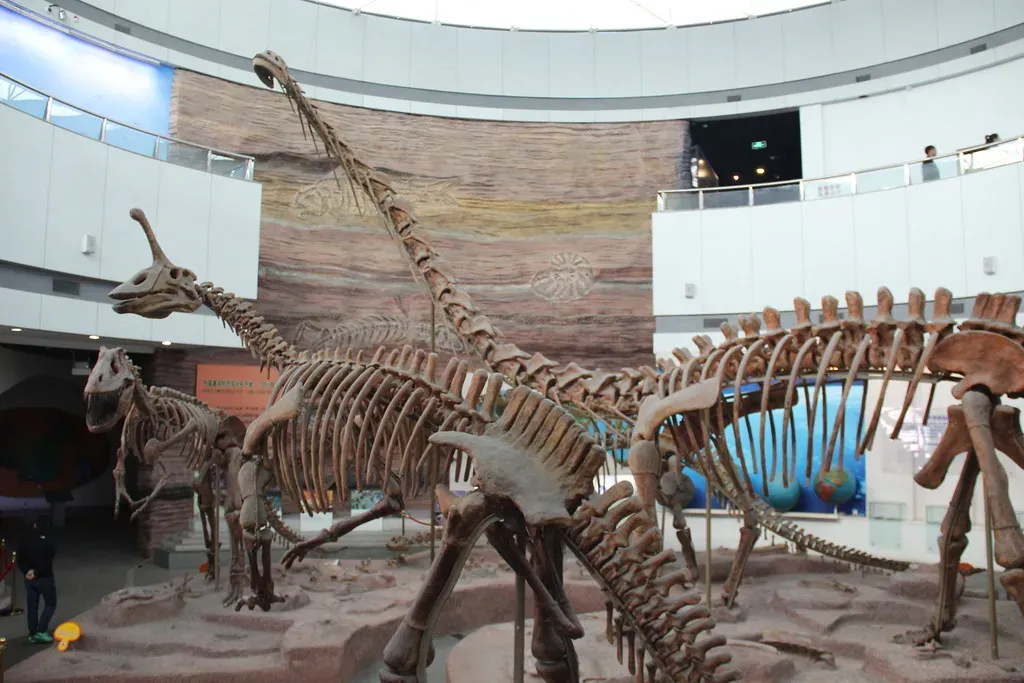
Here is the thing about paleontology – sometimes the competition to unearth history gets absolutely ferocious. The late 19th century gave us one of science’s most dramatic rivalries, known as the “Bone Wars.” Western European paleontologists may have led the way during the early 1800s, but in the latter part of the 19th century, two US fossil hunters dominated the headlines: Edward Drinker Cope and Othniel Charles Marsh made many astonishing discoveries, predominantly in the American West, but became equally famous for their bitter rivalry.
They sabotaged each other’s dig sites. They stole each other’s specimens. They hurled accusations through scientific journals. It sounds ridiculous – and it was. By the end of their lives, both men faced financial and social ruin because of their determination to outdo each other. Yet, the sensational headlines generated by the “Bone Wars” did bring dinosaur discoveries to the attention of the general public and sparked an interest in the subject which has continued to the present day. So perhaps, in the strangest way, their obsession was worth something after all.
The Amateur Factor: You Do Not Need a PhD to Make History
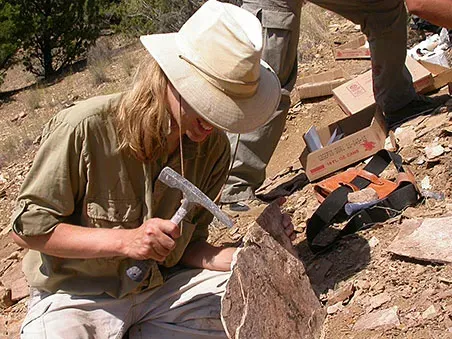
Let’s be real – one of the most surprising truths about paleontology is how much of it has been driven by ordinary people with extraordinary curiosity. Paleontology, the study of fossils, is one of the few fields where discoveries can come from experts and amateurs alike. That is genuinely rare in modern science, and it makes fossil hunting feel almost democratically thrilling.
Scientists have identified a new species of non-biting midge from 151-million-year-old specimens discovered by an amateur fossil hunter. Amateur fossil hunter Robert Beattie has been searching for remnants of the past ever since he was a child. Some of his specimens led to a scientific breakthrough, with researchers identifying a new species of insect that lived roughly 151 million years ago. Beattie, a retired teacher in his eighties, started with a simple shell in a rock as a boy on vacation. That is where the greatest discoveries sometimes begin.
It does not take a professional to find a fossil, even a very rare or old one. Amateur and even accidental fossil hunters around the world have made astonishingly significant paleontological discoveries. Consider little Lily Wilder, a four-year-old who, while walking her dog on a Welsh beach, noticed an unusual footprint embedded in a rock that turned out to be a trace fossil from a Triassic period dinosaur that lived 220 million years ago. Four years old. Let that sink in.
The Science of the Search: How Fossil Hunters Actually Find Their Treasure
You might imagine fossil hunters dramatically hacking at rock faces with pickaxes. The reality is far more methodical, and honestly, more fascinating. Most vertebrate paleontologists today find fossils the same way their predecessors did in the nineteenth century. They walk the landscape looking for big fossils, and sometimes they crawl on the surface looking for little ones. Figuring out which sites to visit is a matter of reading the scientific literature to see where good fossils have been found and reading the geology to discern where fossils might be buried.
The majority of time in the field is spent walking around looking for fossils, a type of collecting generally known as prospecting. Many of the fossils found can simply be picked up off the ground. Most of the others can be excavated by one or two people in a matter of minutes or hours, depending on the size and fragility of the specimen and the hardness of the encasing rock. Think of it less like a movie adventure and more like a meticulous treasure hunt where the clues are written in geology. Still breathtaking, just quieter.
Since 1972, Landsat satellites have observed our planet’s forests, deserts, cities, farms, and badlands. The few paleontologists who have been willing to take advantage of the technology have benefited because, even though Landsat cannot see fossils, it can see the kinds of rocks where they are likely to reside. Technology is changing the game, layer by layer.
From Field to Lab: The Painstaking Art of Fossil Preparation
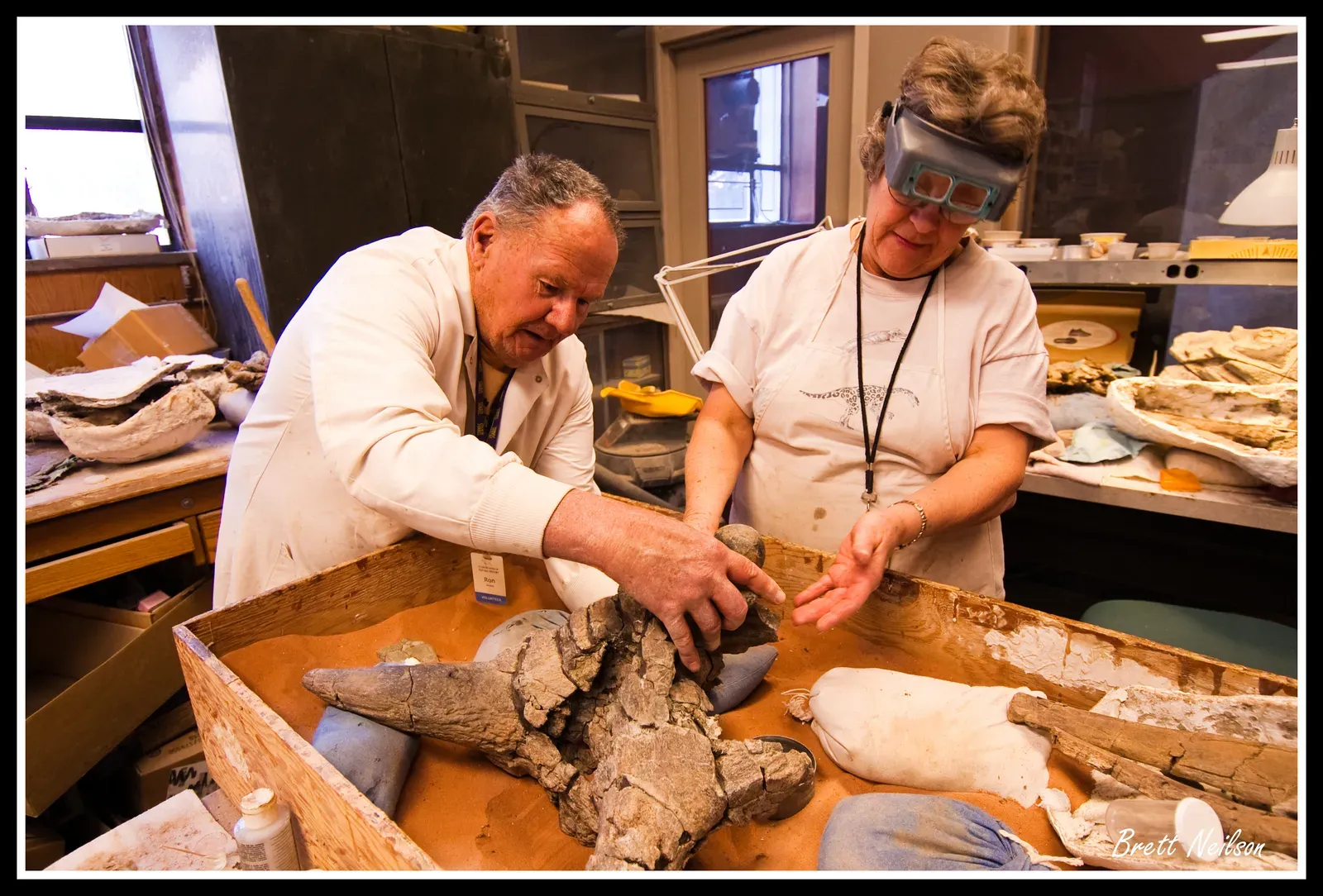
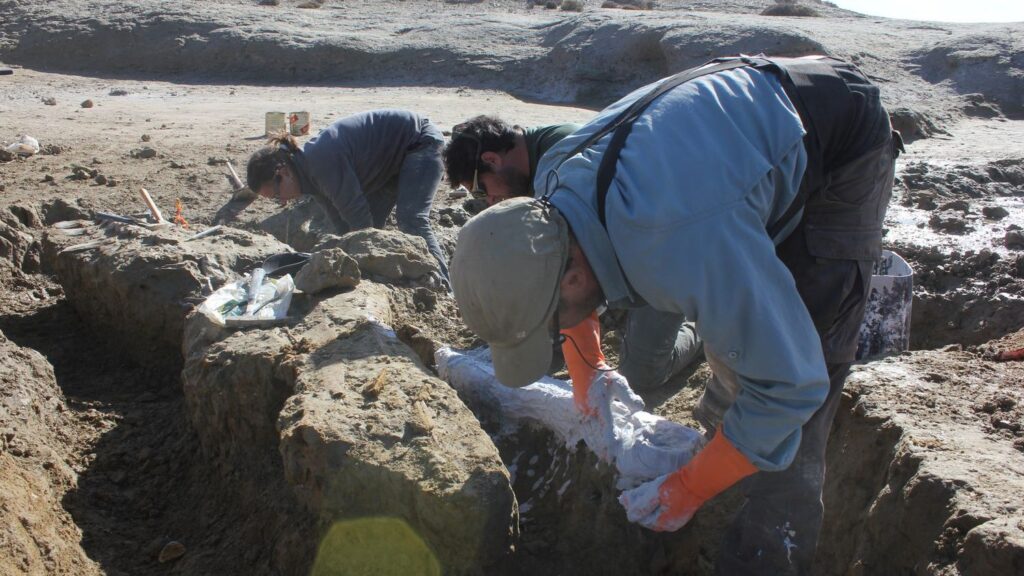
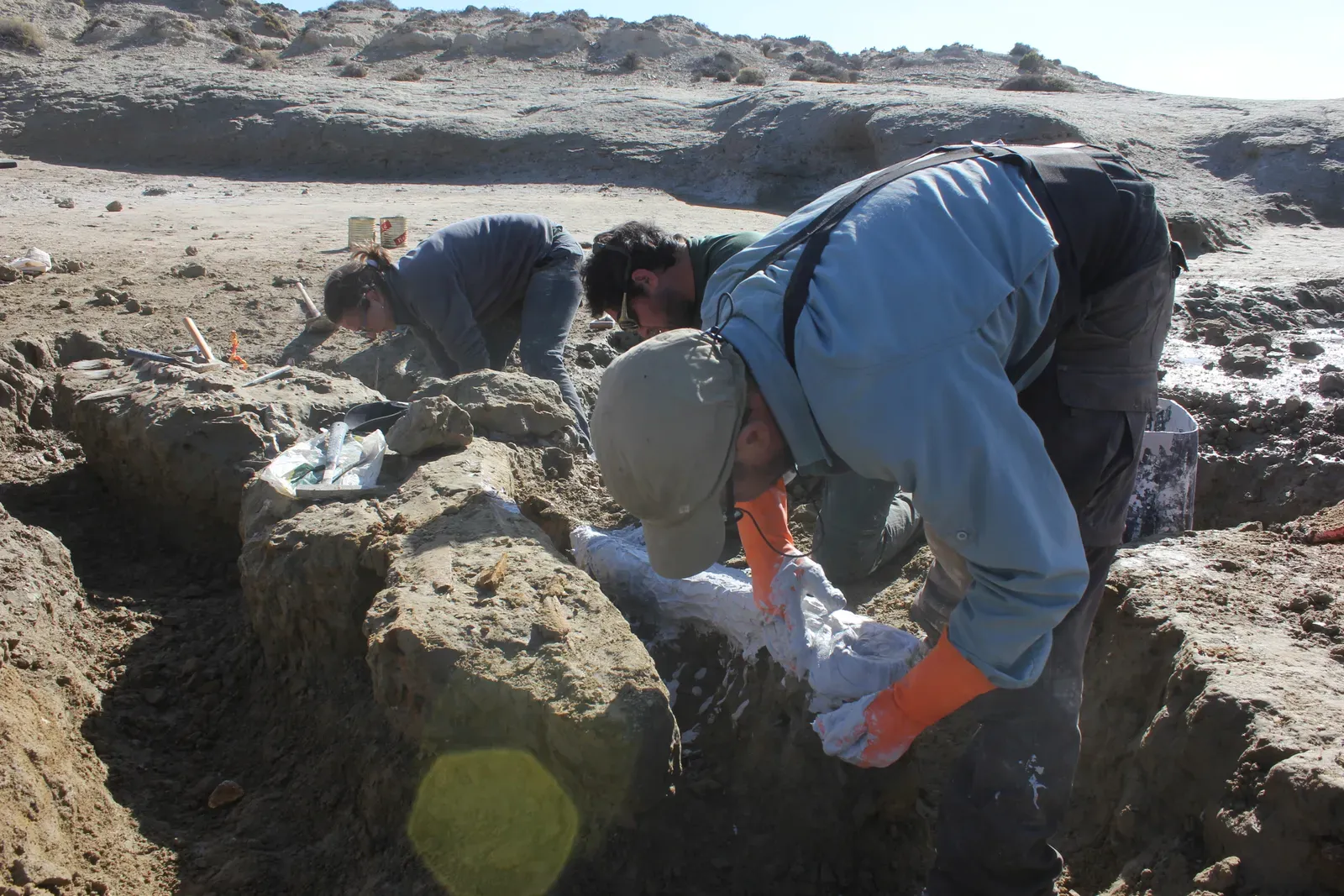
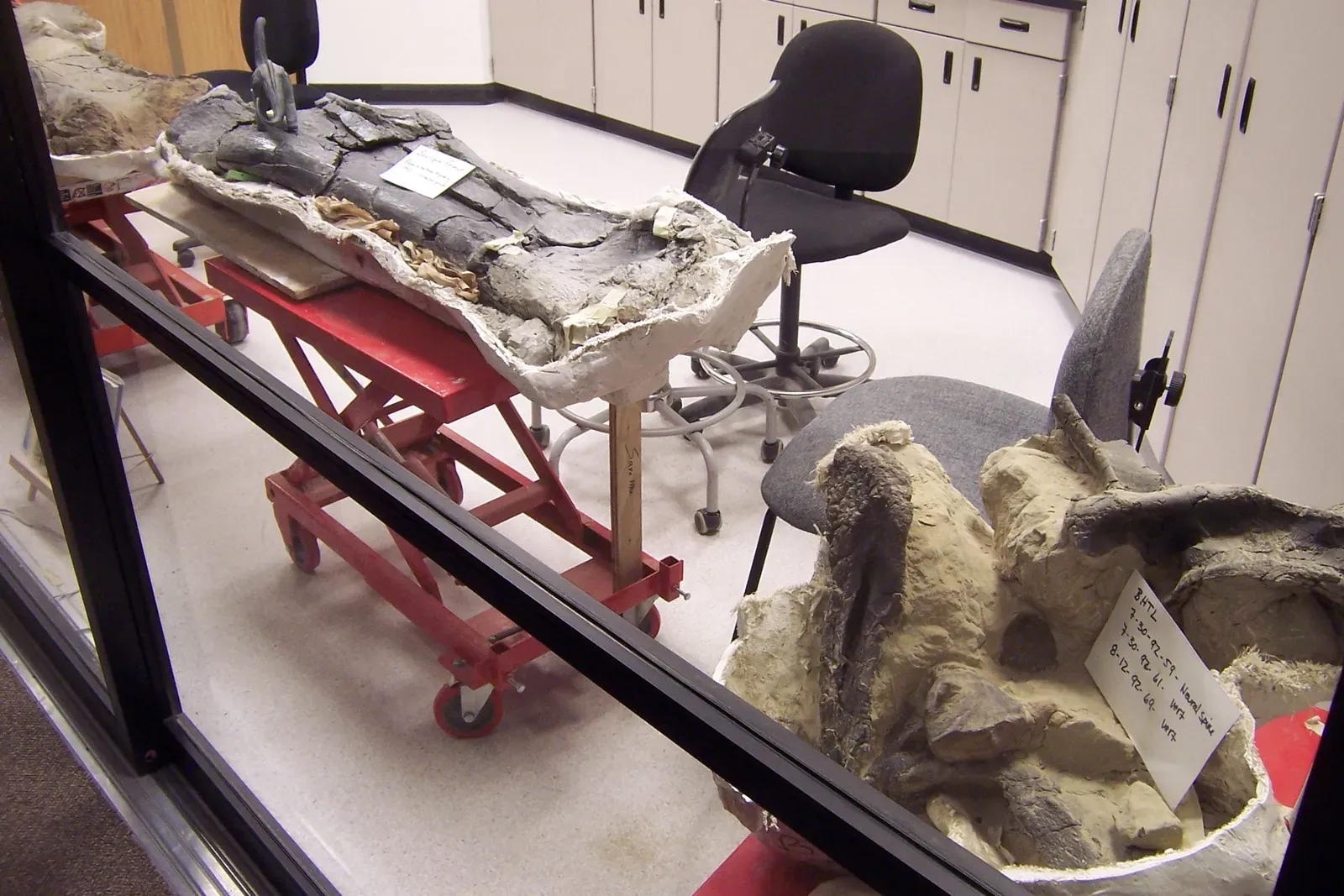
Finding a fossil is just the beginning. What happens next is where the real artistry kicks in. Most of this work is done by fossil preparators, experts in the tools and techniques needed to release specimens from the rock they have spent millions of years encased in. When paleontologists find a fossil in the field, it is often trapped in rock. Fossils can be quite fragile. To get them back to the lab without breaking them, fossil hunters will usually dig down around the fossil and extract the block of rock it is embedded in, supporting it all in a plaster jacket.
Tools used for preparation range from steel and carbide needles to mini-jackhammers and micro-sandblasters. While it is possible to use chemical and even some digital techniques to reveal the specimen, mechanical methods are the most commonly used. Alongside traditional mechanical extraction methods, fossil preparation presently comprises non-destructive digital techniques within the emerging field of virtual paleontology. Despite significant technological advances, traditional and digital preparation remain cumbersome and time-consuming. This is not a field for the impatient.
The Thrilling Discoveries That Keep Rewriting History
Every year, the fossil record hands us something that shatters what we thought we knew. Dinosaurs were not dying out before the asteroid hit – they were thriving in vibrant, diverse habitats across North America. Fossil evidence from New Mexico shows that distinct “bioprovinces” of dinosaurs existed until the very end. That is a massive revision to one of the biggest stories in Earth’s history, and it came straight from the ground.
The end-Permian mass extinction, the most devastating die-off in Earth’s history, struck about 252 million years ago and was followed by extreme global warming. In its aftermath, modern-style marine ecosystems began to take shape at the start of the Age of Dinosaurs. During this critical window, the earliest sea-going tetrapods, including amphibians and reptiles, emerged and quickly became dominant aquatic apex predators. Understanding how life recovered from near-total collapse has extraordinary relevance to our world today.
A sandstone slab found by two amateur paleontologists in Australia carries well-preserved footprints of long-toed feet with distinct claw impressions at the tips. They are by far the earliest clawed footprints ever discovered. A single slab, lifted by two non-professionals, and it upended the entire timeline of tetrapod evolution. I find that almost impossibly cool.
The Real Challenges: Why Fossil Hunting Is Not for the Faint-Hearted
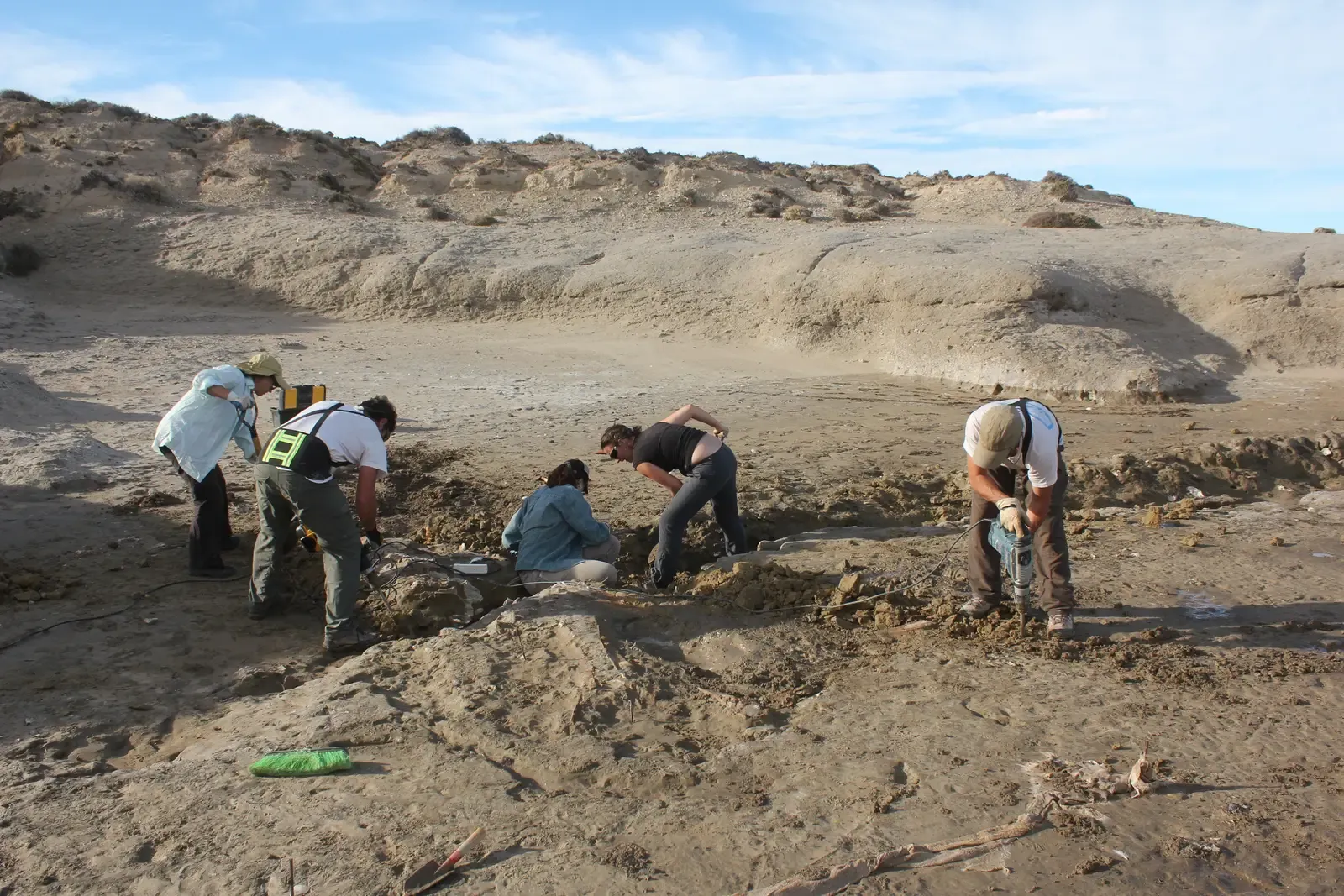
Romantic as it all sounds, the life of a fossil hunter is loaded with hardship. Working in remote locations often means dealing with harsh weather, rough terrain, and limited access to supplies. Not all organisms fossilize well, and finding well-preserved specimens can be a rare event. Fossils are often fragmented or deformed, making it difficult to reconstruct the original organism. Paleontological research can also be expensive, and securing funding is a constant challenge. It is a relentless grind behind every spectacular headline.
The work often involves intense periods of fieldwork, which can mean weeks or months away from home in remote locations, followed by extensive lab work, research, writing, and teaching. While fieldwork offers unique experiences, it can be physically demanding and disruptive to personal life. Expeditions and research are great fun, but you have to raise money. Running an expedition is very expensive. Think of fundraising as the unglamorous twin of the fieldwork. It is real, and it is relentless. Yet these scientists keep going back. That tells you everything about the pull of the ancient world.
Conclusion: The Ancient World Needs Its Hunters
Fossil hunters are, in the truest sense, the custodians of time itself. They go where few dare to tread, endure conditions that would break most people, and do it all in service of answering the deepest questions humanity has ever asked: Where did we come from? What lived here before us? How does life survive the unsurvivable?
From a poor girl on the cliffs of Lyme Regis to a retired teacher in the Australian outback, the story of fossil hunting is a story about human obsession in the best possible sense. Paleontology plays a vital role in helping us understand the history of life on Earth. By studying fossils, paleontologists can reconstruct ancient environments, track the evolution of species, and identify past climate changes. This knowledge is not just of academic interest – it has practical implications for understanding current environmental challenges and predicting future changes.
The past is never really buried. It is just waiting for someone patient enough, passionate enough, and stubborn enough to find it. The next world-changing fossil might already be eroding out of a cliff somewhere, waiting for the right pair of eyes. Will yours be the ones that spot it?