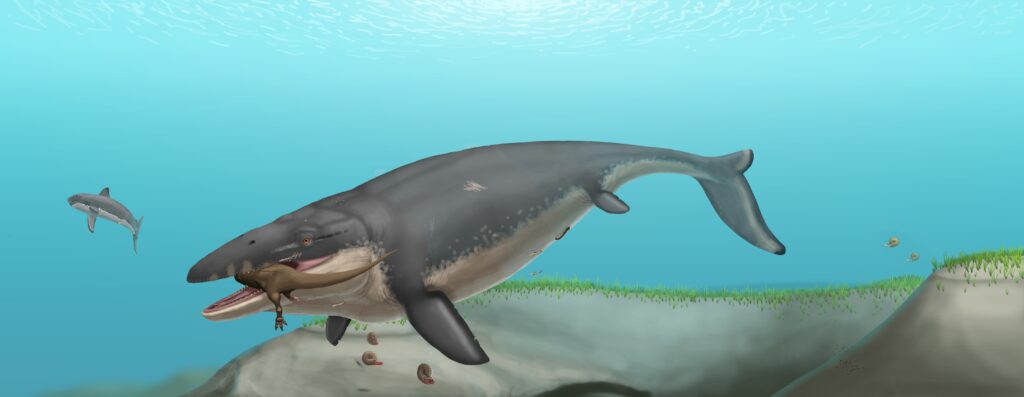
If you tried to sketch the scariest sea creature you could imagine, you’d probably draw teeth first. Huge jaws, claws, maybe a spiky tail. But one of the ocean’s most formidable ancient predators did things differently. It streamlined almost everything into one goal: pure, unapologetic speed. This was the mosasaur, a giant marine reptile so sleek and specialized that, from a distance, it looked less like a lizard and more like a flesh-and-bone torpedo tearing through the Cretaceous seas.
There’s something almost unsettling about a predator that refined its body into a missile. No bulky armor, no showy frills, just an elongated skull full of teeth, a muscular body, and a powerful tail ending in a crescent-like fin. When paleontologists describe it, they often end up reaching for modern comparisons: sharks, killer whales, even submarines. Yet mosasaurs were none of those things. They were reptiles that invaded the oceans late in the age of dinosaurs and rewrote the rules of what a sea monster could look like.
The Day Lizards Became Ocean Torpedoes
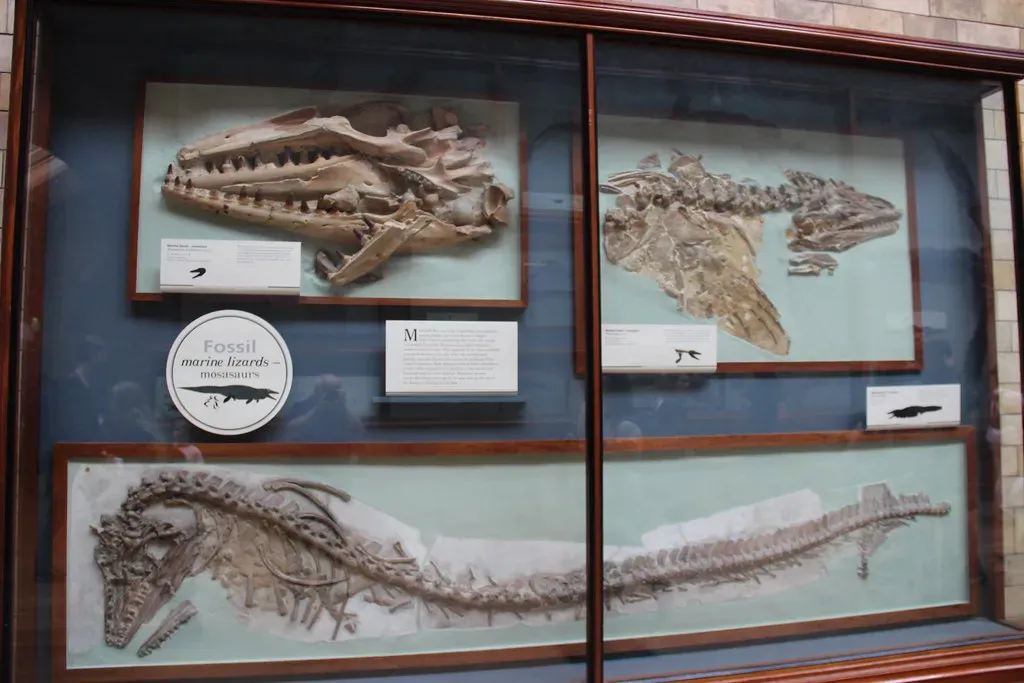
Here’s the wild part: mosasaurs started out as something much more familiar and far less terrifying. Their ancestors were land-dwelling lizards, probably loosely related to monitor lizards like the Komodo dragon. At some point in the Late Cretaceous, these lizards began spending more and more time in shallow coastal waters, hunting and scavenging. Step by evolutionary step, they traded legs for flippers, air-land balance for life almost entirely at sea, and ordinary lizard bodies for something far more hydrodynamic.
By roughly the last third of the Cretaceous period, mosasaurs had taken over the marine food chain in many parts of the world. Picture the global map back then: shallow seas flooding what’s now the middle of North America, warm epicontinental seas in Europe, broad continental shelves teeming with fish, squid, and other reptiles. In these seas, mosasaurs became apex predators, filling roles that giant pliosaurs and other marine reptiles had held earlier. They didn’t just adapt to the water; they turned their entire reptilian blueprint into a high-speed, long-bodied pursuit machine.
Built Like a Missile: Streamlined Bodies and Tail Fins
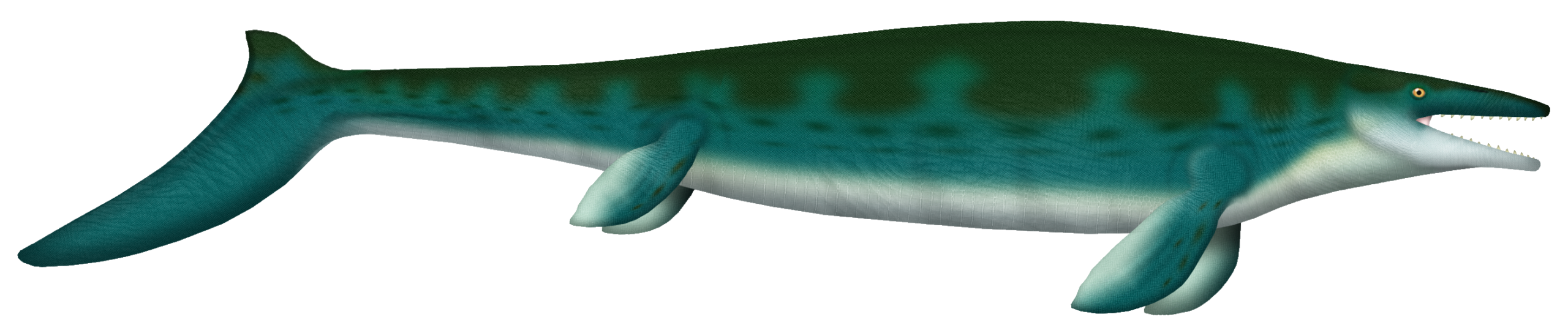
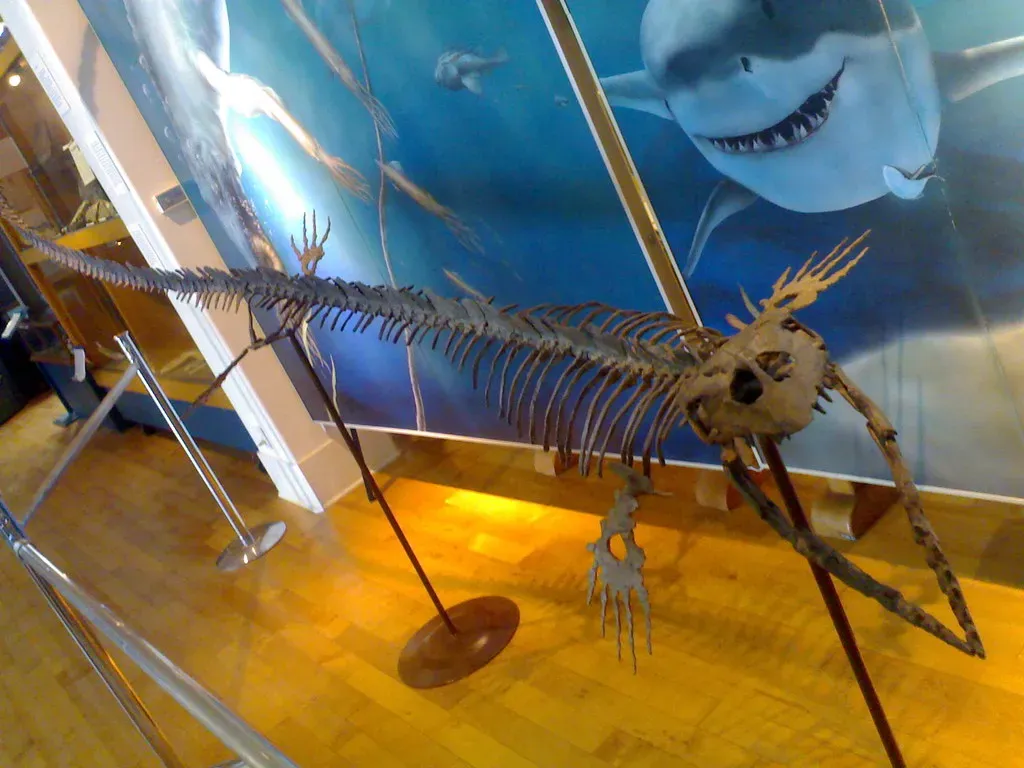
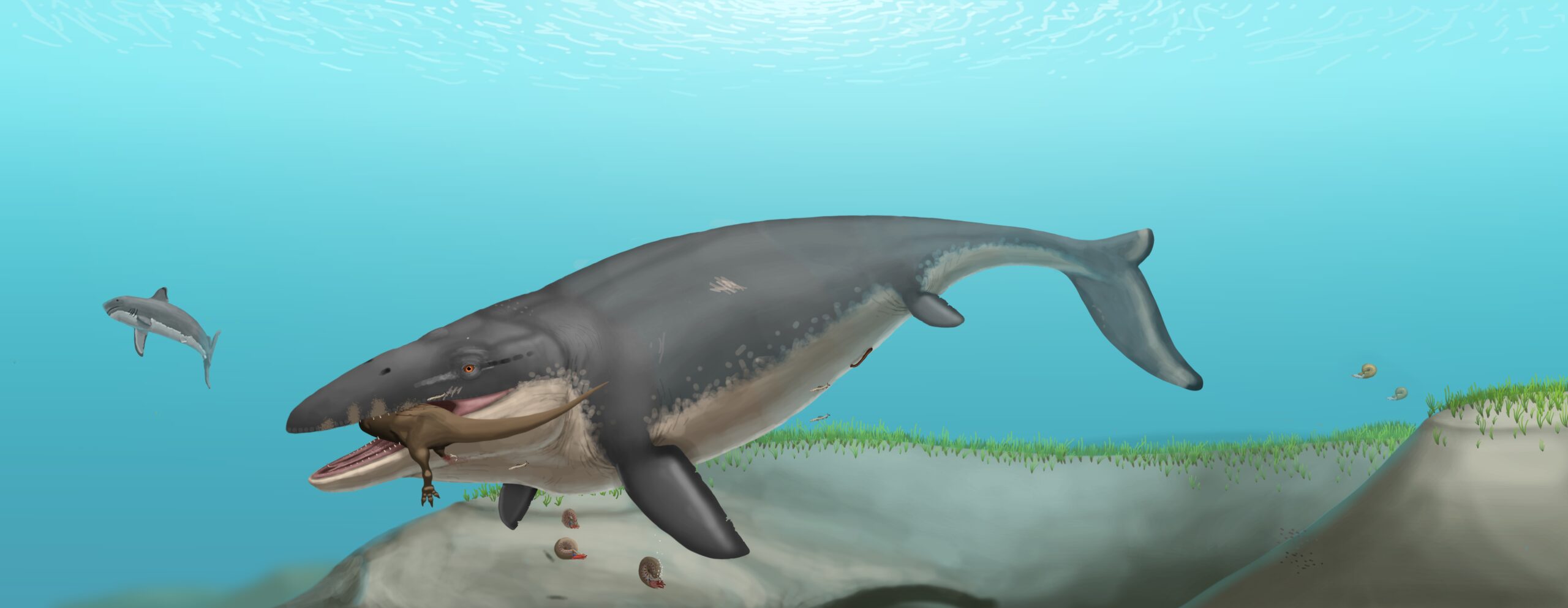
If you compare early artistic reconstructions of mosasaurs with modern ones, it’s like looking at two different animals. For a long time, they were drawn like oversized crocodiles with flippers, swimming with eel-like side-to-side wriggles. New fossil discoveries, including preserved soft tissue, changed that picture dramatically. Evidence of a crescent-shaped tail fin, similar in overall layout to that of a shark, revealed that mosasaurs weren’t just strong swimmers; they were built for fast, sustained cruising and sudden bursts of speed, like living torpedoes fired down an ancient sea lane.
The body itself told the same story. Instead of being barrel-shaped or bulky, mosasaurs had long, relatively sleek trunks and streamlined heads that reduced drag in the water. Their limbs were fully transformed into paddle-like flippers that acted more like stabilizers and steering fins while the tail did the heavy work of propulsion. It’s hard not to see the engineering logic here: a narrow front, powerful midsection, and tail fin function together almost the way a modern sub’s hull and propeller do. If nature had a “hydrodynamic design” award, mosasaurs would’ve been front-runners.
Teeth, Jaws, and a Bite You Could Not Escape
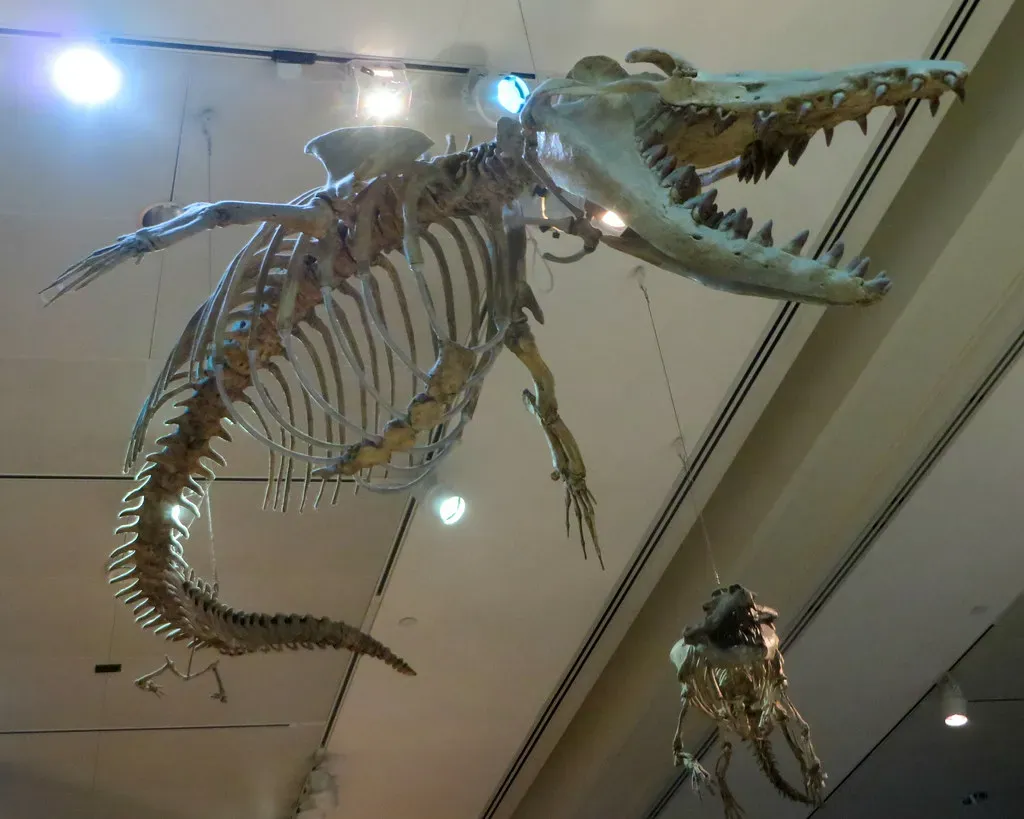
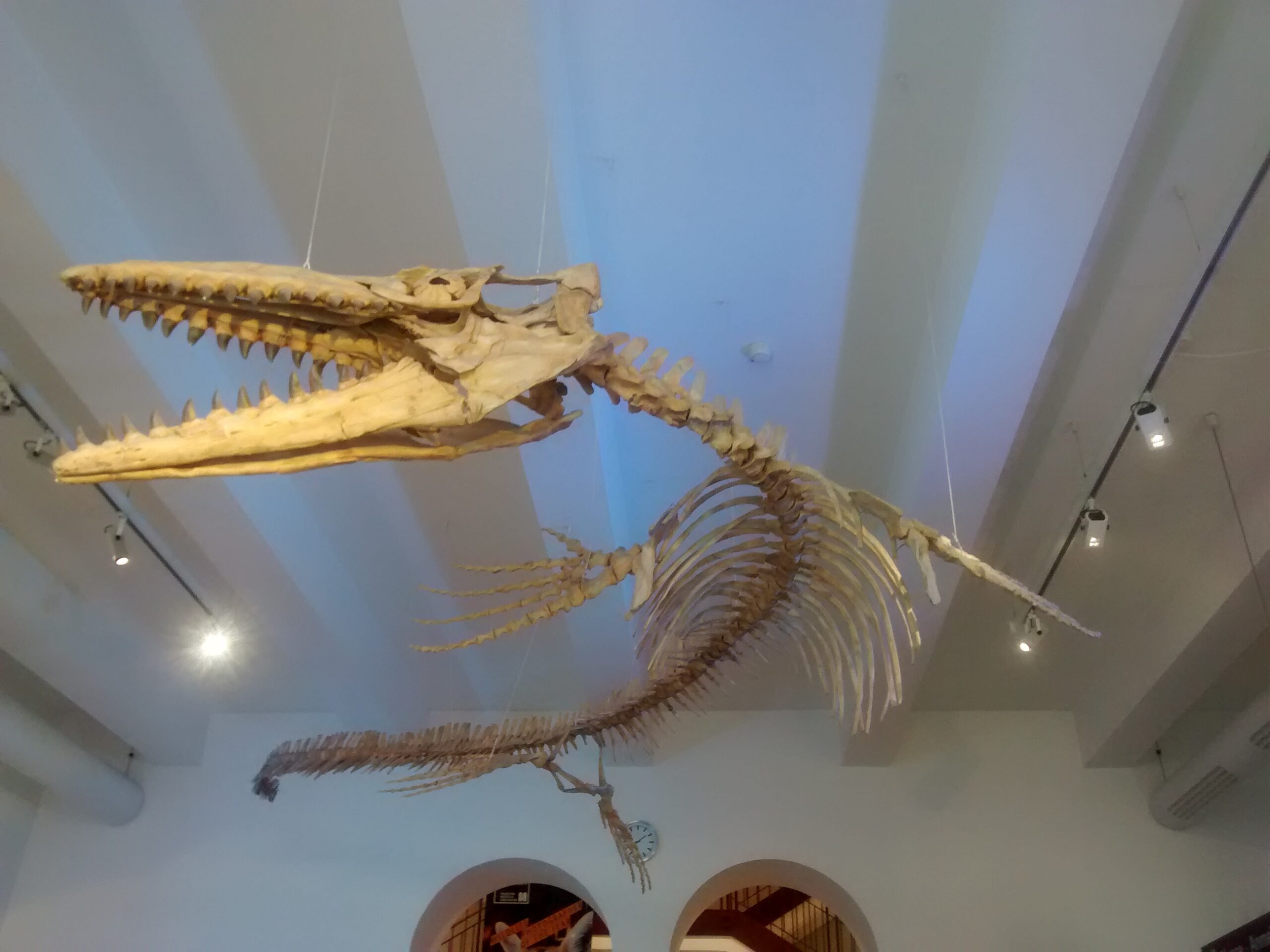
Speed alone doesn’t make a predator legendary; it needs weapons to match. Mosasaurs delivered on that front with jaws that looked like they were sketched by a horror artist who got carried away. The skull was long and armed with rows of conical, often slightly curved teeth that were perfect for grabbing and holding slippery prey. Some species also had robust, crushing teeth toward the back of the jaw, adapted for smashing shells and bones. Their upper and lower jaws could open wide, and their skull joints had a degree of flexibility that let them handle surprisingly large meals.
One of the most unnerving features was their second row of teeth set further back on the palate, inside the mouth. These additional teeth helped grip prey and drag it deeper into the throat, reducing any chance of escape once something was caught. Combined with a long, muscular neck and powerful bite, this meant that a mosasaur was not just a fast hunter; it was a nearly inescapable one. It is no exaggeration to say that if you were a fish, a turtle, or even another marine reptile in those seas, a mosasaur closing in behind you was the absolute worst-case scenario.
Eyes, Senses, and Hunting in a Three-Dimensional World
Living in open water meant mosasaurs had to navigate a three-dimensional hunting ground where prey could dart above, below, or to the side in an instant. Many species had forward-facing or slightly laterally placed eyes, giving them a wide field of view and, in some cases, decent depth perception. Their skull structures suggest they were visually oriented predators, relying heavily on sight to track movement in clear, sunlit waters, much like modern dolphins and many large fish do today.
There are also hints that they may have had a decent sense of smell and sensitivity to disturbances in the water, which would have helped in murkier conditions or deeper dives. When you think about a mosasaur hunting, it makes sense to imagine a combination of ambush and active pursuit: lurking in deeper water or near reefs, then shooting forward like a torpedo the moment a potential meal got too close. This blend of keen senses and extreme mobility turned the Late Cretaceous seas into a dangerous place where the water itself could suddenly come alive and rush at you.
Apex Predators Ruling Ancient Inland Seas
One of the most mind-bending details about mosasaurs is that many of them didn’t live in the open ocean as we picture it today, far offshore in deep blue water. A lot of iconic fossils come from what were once shallow inland seas and continental shelves. Imagine the middle of North America, now fields and cities, as a tropical seaway with warm, relatively shallow water. In those environments, mosasaurs shared space with giant fish, diving birds, plesiosaurs, and swarms of squid-like animals, and they often sat right at the top of this layered food web.
Gut contents and bite marks on bones give us snapshots of their diets: fish, turtles, birds, ammonites, and even other mosasaurs. The picture that emerges is not a gentle, balanced ecosystem but a constantly shifting battlefield of predators and prey, where even the apex hunters sometimes ended up as somebody else’s meal. To me, that makes the torpedo comparison feel even stronger. Mosasaurs were not just fast; they were tools of raw ecological pressure, driving evolution in everything around them simply by existing and being so incredibly good at what they did.
Extinction, Legacy, and What Makes Them Haunting Today
For all their dominance, mosasaurs were not immune to disaster. When the end-Cretaceous extinction event hit around sixty-six million years ago, it swept away the non-avian dinosaurs on land and most of the big marine reptiles at sea, mosasaurs included. Their highly specialized, fully marine lifestyle left them with no fallback strategy once food chains collapsed and environments shifted dramatically. In a way, their torpedo-like perfection was a double-edged sword: amazing in a stable world, unforgiving when everything suddenly changed.
Yet their legacy survives in a different way: in how we imagine monsters of the deep. Every time a movie shows a sleek, impossibly dangerous sea creature rocketing out of the darkness, there’s a little bit of mosasaur in that image. Personally, I think they’re one of the clearest reminders that evolution sometimes pushes a body plan to such an extreme that it stops feeling like an animal and starts feeling like a weapon. The fact that these living torpedoes were real, swam where dry land now sits, and vanished in a single planetary heartbeat should make us wonder: if the oceans could produce something like that once, what unexpected forms might be gliding through the depths right now that we still haven’t seen?