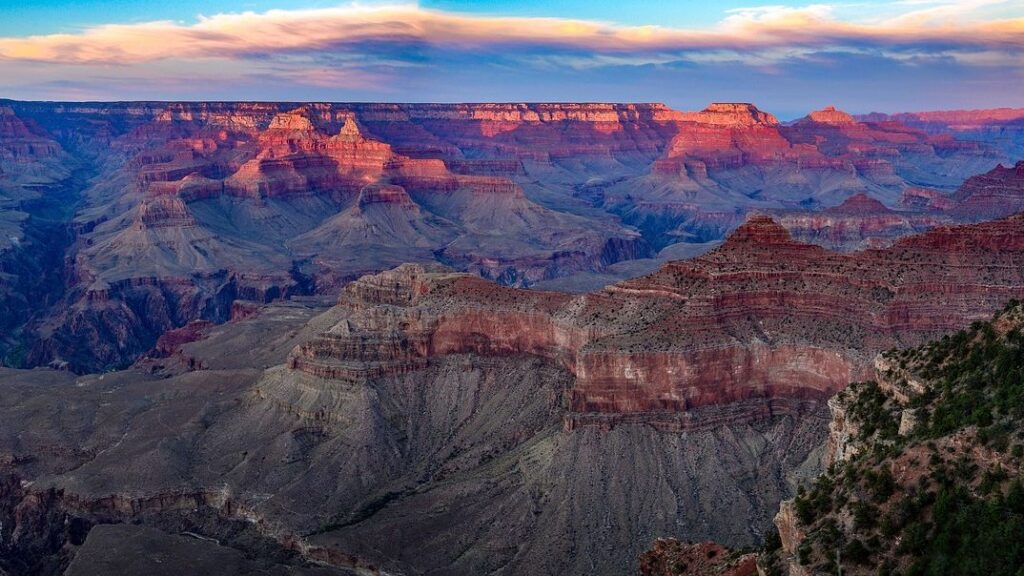
There are places on this planet that stop you cold. Not because of their beauty alone, but because of what they quietly reveal about time itself. The Grand Canyon is one of those places. Standing at its rim, you are not simply looking at a hole in the earth. You are staring into nearly two billion years of planetary history, stacked in vivid, color-drenched layers that seem almost too perfect to be real.
What makes the canyon so astonishing is not just its sheer size, impressive as that is. It is the geological story written into every wall, every ledge, every stripe of red and gray and tan rock. Each layer is a chapter. Each color shift is a plot twist. Honestly, no history book ever written comes close to this. Let’s dive in.
A Natural Library Written in Stone
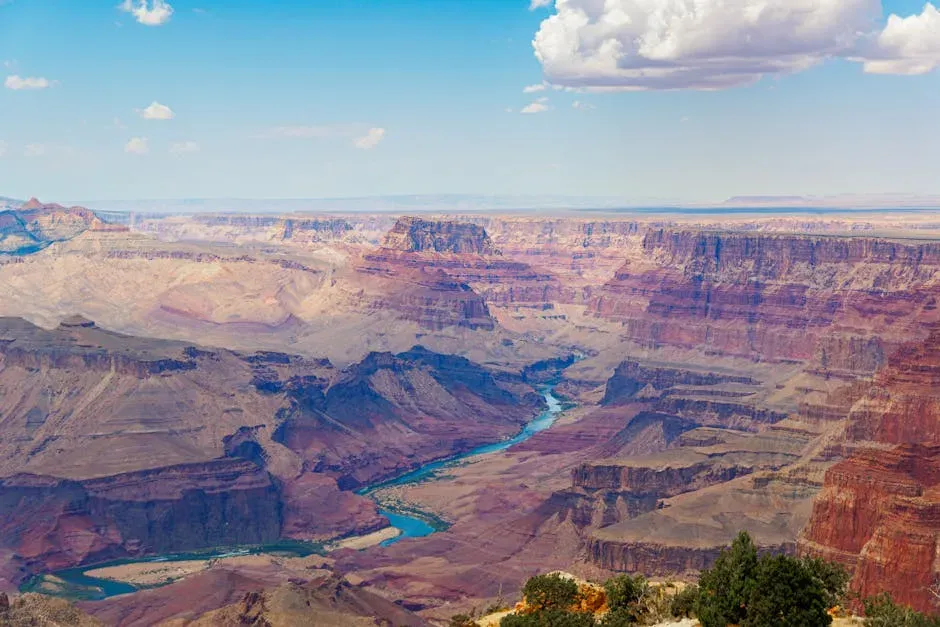
Think of the geologic record at the Grand Canyon as a book, where the beginning of the story starts at the very bottom of the canyon and moves forward in time as you get closer to the rim. You are not just looking at pretty rocks. You are reading one of the most complete natural archives in existence.
With one of the clearest exposures of the rock record and a long, diverse geologic history, the Grand Canyon is an ideal place to gain a sense of deep time. The rocks exposed in its walls record roughly one third of the planet’s entire history, from the Precambrian all the way to the Permian Period of the Paleozoic Era. That figure alone should make you pause. One third of Earth’s story, visible from a single viewpoint.
The Vishnu Schist: Earth’s Ancient Foundation
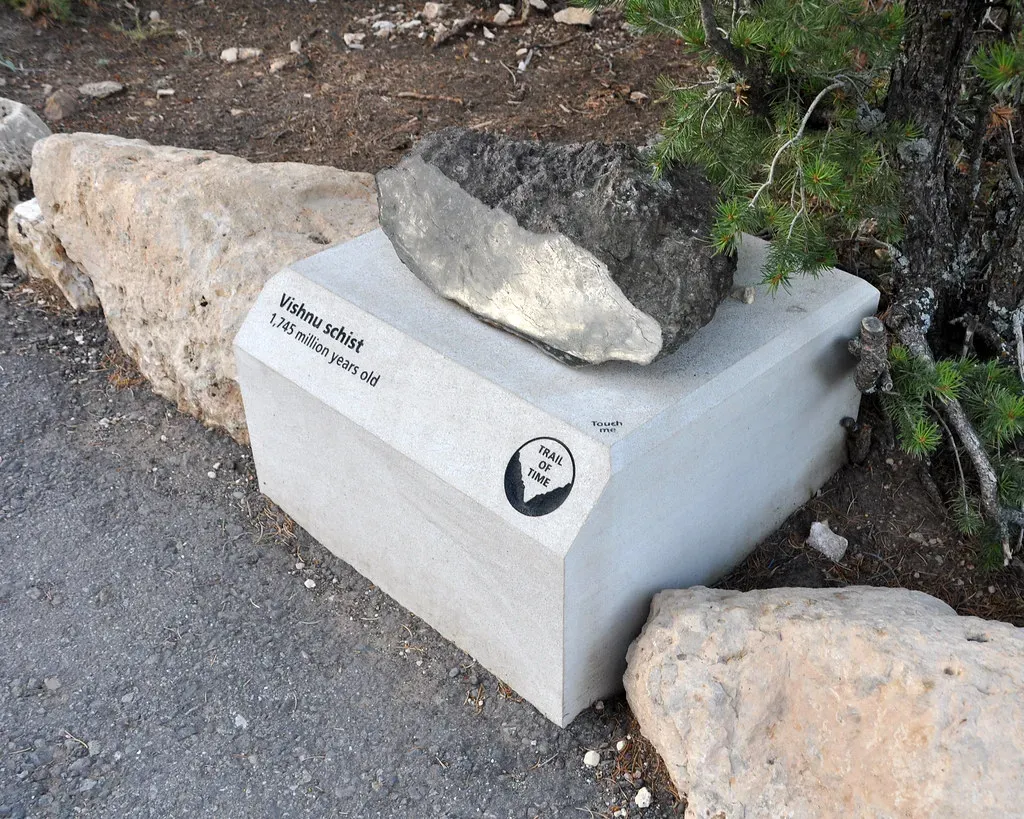
Down at the very bottom of the canyon, where the Colorado River churns through its deepest gorge, you encounter the oldest rocks in this entire geological saga. At the very bottom of the canyon lies the Vishnu Schist, a hard rock originally deposited mainly as sediments some two billion years ago. That layer was subsequently covered and, around 1.7 billion years ago, transformed into schist through intense heat and pressure deep underground.
The dark black rock down at river level is a massive leap back in time. The Vishnu Schist first appeared almost two billion years ago, as lava exposed to the heat and pressure of colliding volcanic islands with the North American landmass. Think about that. The rock you could reach down and touch formed before complex life had even figured out how to exist. It is almost impossible to hold that thought in your head for long.
The Grand Canyon Supergroup: A Middle Chapter Lost in Time
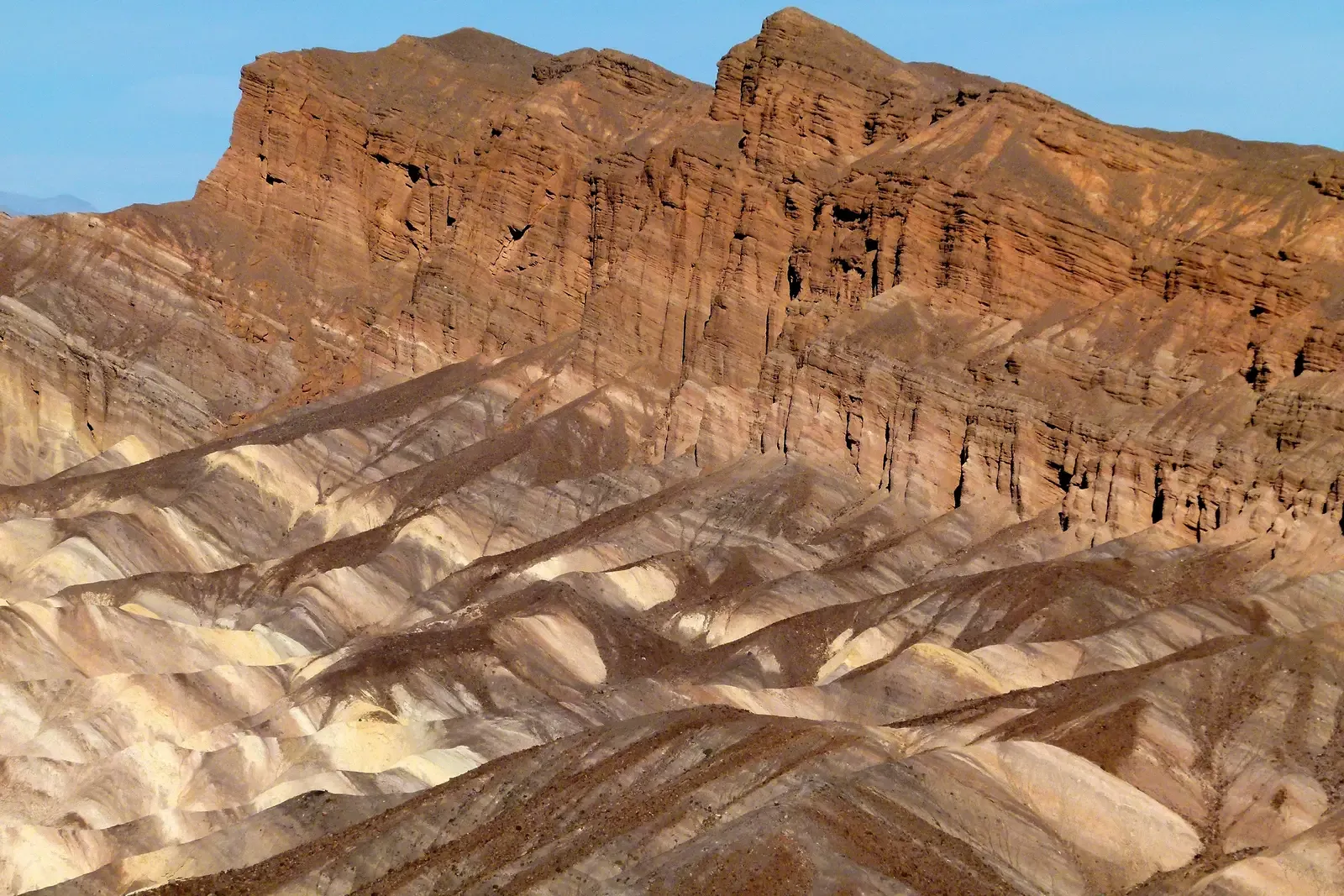
Between the ancient basement rocks below and the familiar colorful cliff walls above sits a group of formations that many visitors overlook entirely. The Grand Canyon Supergroup of sedimentary units is composed of nine varied geologic formations that were laid down between 1.2 billion and 740 million years ago in an ancient shallow sea. These tilted layers tell a dramatic story of tectonic upheaval.
The Grand Canyon Supergroup is primarily sandstone and mudstone with some areas of igneous rock. These formations are from the late Proterozoic, only slightly younger than the metamorphic basement rocks, and they do not contain many fossils because they formed before complex life on Earth was common. Here’s the thing though: the few fossils that do appear here are fascinating. The rare fossils that are present include stromatolites, which are columns of sediment formed by cyanobacteria, and their presence indicates this area was previously a very shallow sea.
The Great Unconformity: A Billion Years That Simply Vanished
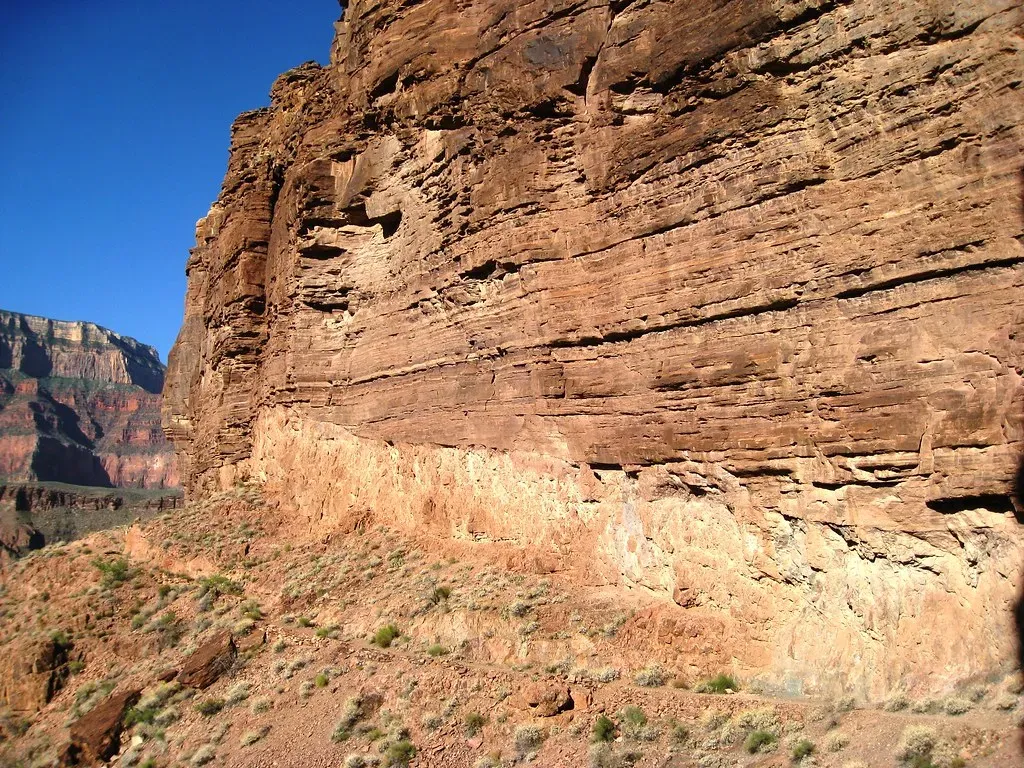
Here is where things get genuinely mind-bending. Somewhere in the canyon walls, there is a sharp, visible line. Above it, the rock is roughly 500 million years old. Below it, the rock is well over a billion years old. The time in between? Gone. Erased. Unconformities are gaps in the geologic record that occur when rocks or sediments are eroded away and time elapses before new deposition begins. New sediment eventually forms new rock layers on top of the eroded surface, but there is a period of geologic time not represented. You can think of unconformities as missing pages in the book of the geologic record.
This created a major unconformity that represents roughly 460 million years of lost geologic history in the area. That is not a typo. Nearly half a billion years of Earth’s history simply does not exist in this rock record. Missing layers may seem like a problem, but the very fact that this gap exists provides useful information to geologists, indicating changing ocean levels or changes in the Earth’s crust. Sometimes absence speaks louder than presence.
The Colorful Paleozoic Layers: Oceans, Deserts, and Ancient Life
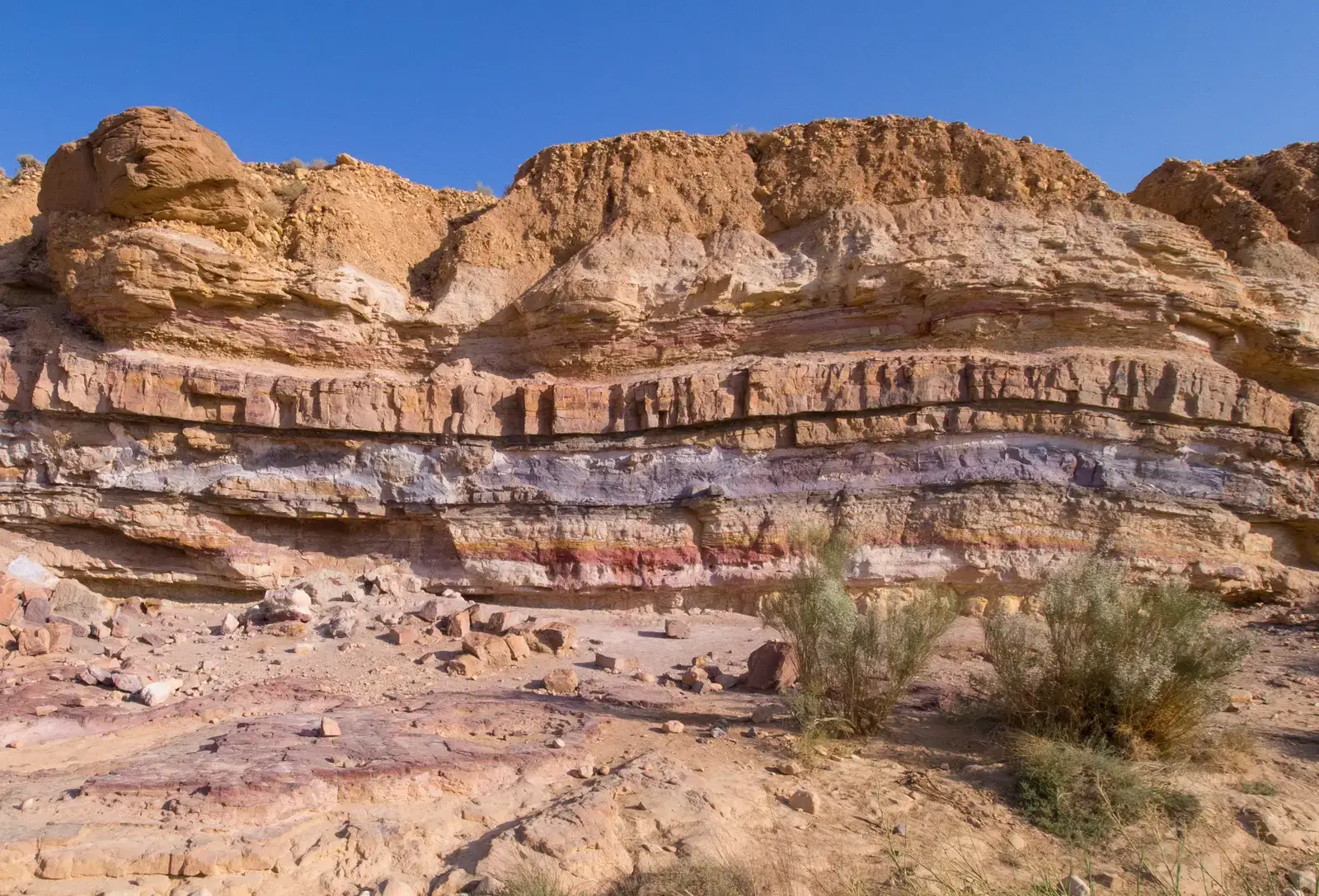
The middle sections of the canyon walls are what most people photograph. Those gorgeous bands of red, orange, cream, and gray stacked one upon the other like a painter’s palette. You can keep an eye out for the colorful contrasts: red sandstones, gray limestones, and greenish shales, each shaped by different environments such as ancient seas, deserts, and swamps.
During the Paleozoic era, the western part of what would become North America was near the equator and on a passive margin. The Cambrian Explosion of life took place over roughly 15 million years in this part of the world, when climate was warm and invertebrates such as trilobites were abundant. Layer by layer, you are watching evolution unfold in slow motion. Layers of sedimentary rock were deposited in Cambrian time when a shallow sea covered this region, and among the fossilized remains found within these layers are brachiopods, trilobites, seaweed, and sponges.
The Kaibab Limestone: The Ground You Stand On
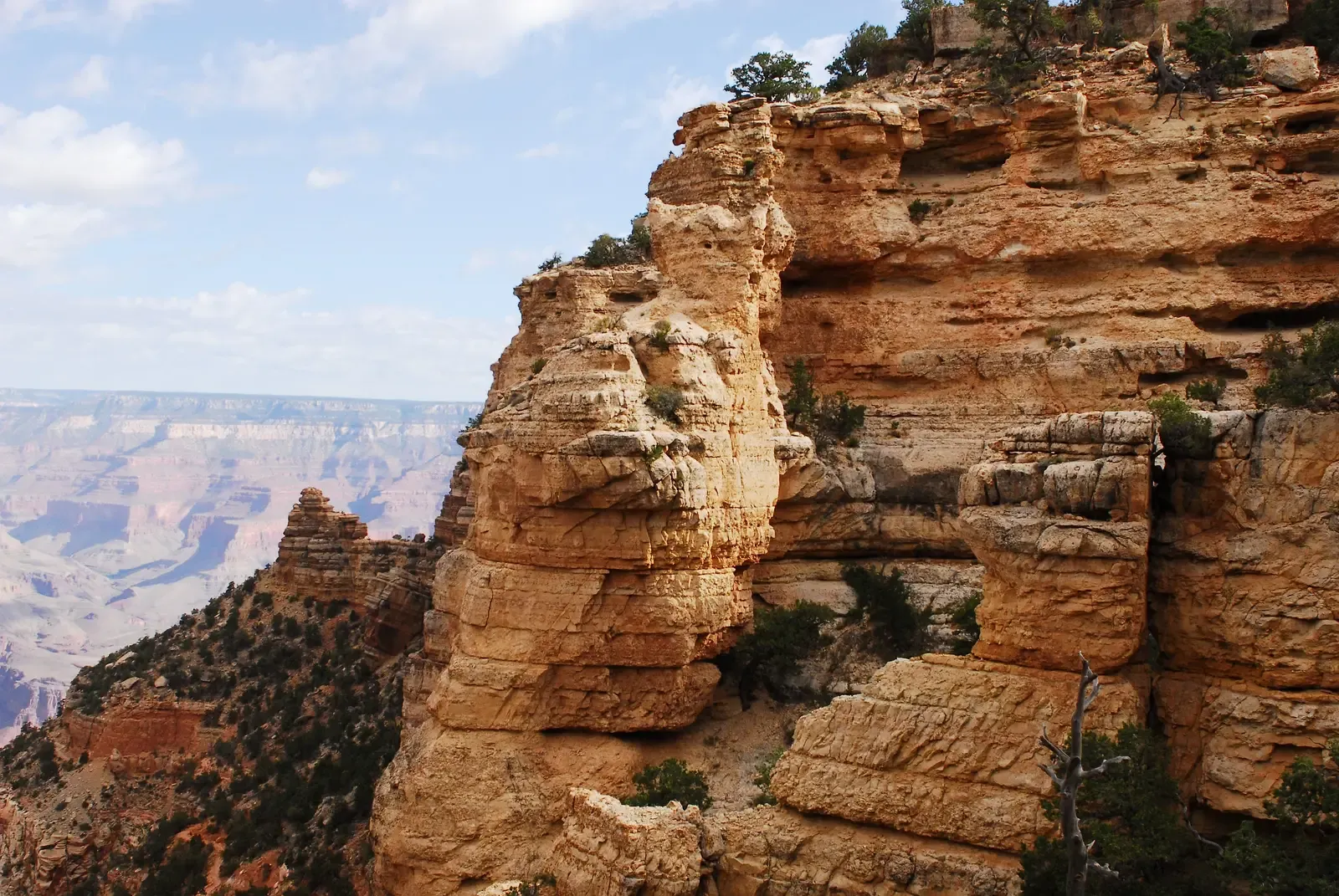
When you walk to the rim of the Grand Canyon and peer over the edge, you are quite literally standing on a seabed. Deposited 270 million years ago, during the Paleozoic Era, the Kaibab Formation is the topmost rock layer at the Grand Canyon. The very surface beneath your feet was once the floor of a warm, tropical ocean.
One of the highest and therefore youngest formations seen in the Grand Canyon area is the Kaibab Limestone. It was laid down about 270 million years ago by an advancing warm, shallow sea, forming ledgy cliffs that are 300 to 400 feet thick. Shark teeth have been found in this formation, as well as abundant fossils of marine invertebrates such as brachiopods, corals, mollusks, sea lilies, and worms. Sharks, above where you are standing. I know it sounds crazy, but the evidence is right there in the rock.
The Colorado River: The Canyon’s Master Sculptor
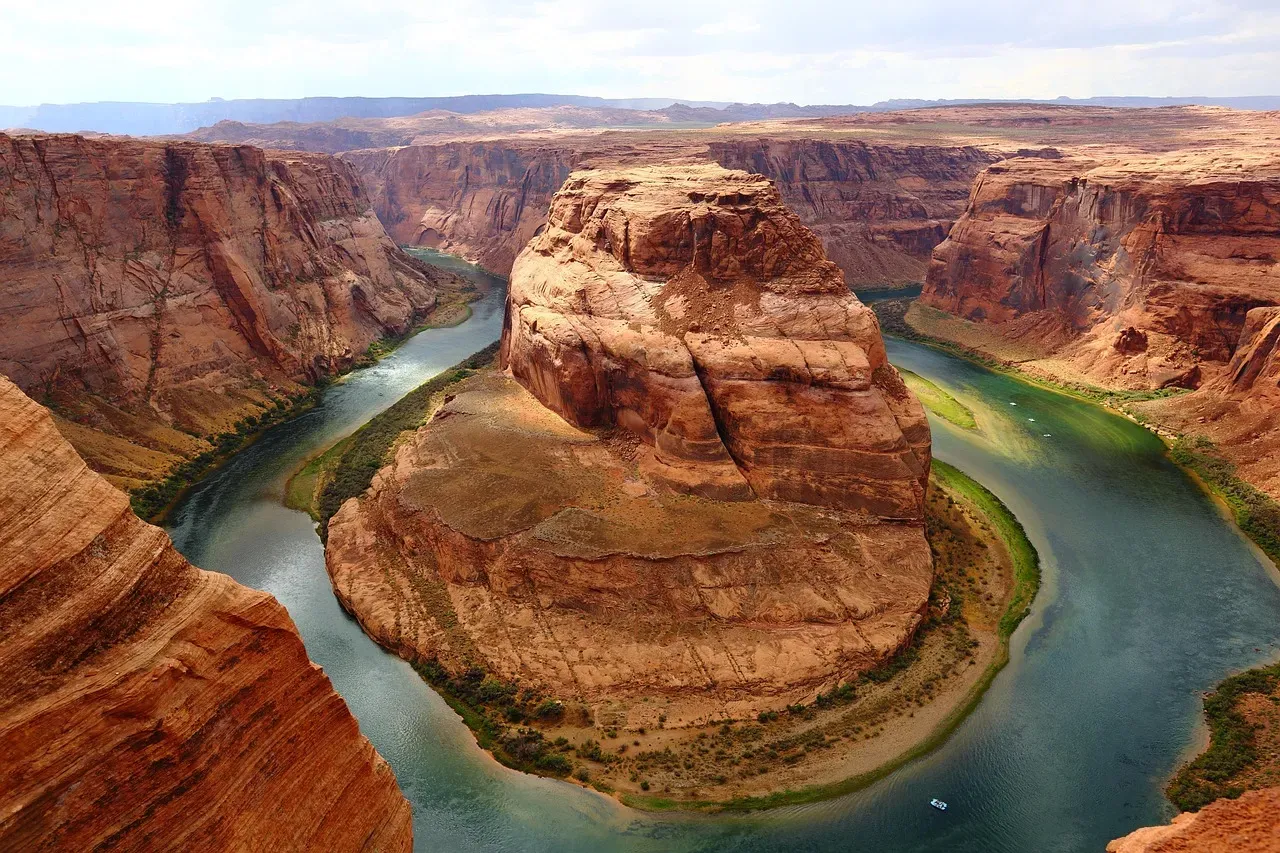
The rocks may be ancient, but the canyon itself is a relative newcomer. While the rock layers have been around for millions, even billions, of years, the canyon itself is young. The Colorado River started carving into the rocks of the Grand Canyon only 5 to 6 million years ago. In geological terms, that is practically yesterday.
Over roughly six million years, the powerful river carved deep into the Earth’s crust, carrying sand and gravel that acted like sandpaper, slowly eroding and exposing layers of rock that reveal nearly two billion years of geological history. Uplift, or the raising of the Earth’s surface, likely associated with earthquakes or mountain-building as plate tectonics shifted between 70 and 30 million years ago, set the stage. The Colorado River then began slowly cutting through this newly uplifted landscape in a process called downcutting. The river did not carve the canyon alone, but it was absolutely the lead sculptor.
How Scientists Read and Date These Ancient Rocks
You might be wondering how geologists know any of this with confidence. How does someone look at a chunk of rock and announce with certainty that it is 1.7 billion years old? The canyon’s scientific significance revived considerably when in the 1950s scientists began reliably dating rocks using radiometric dating techniques, which involve measuring the radioactive decay of radioisotopes in the rocks to calculate when they were formed.
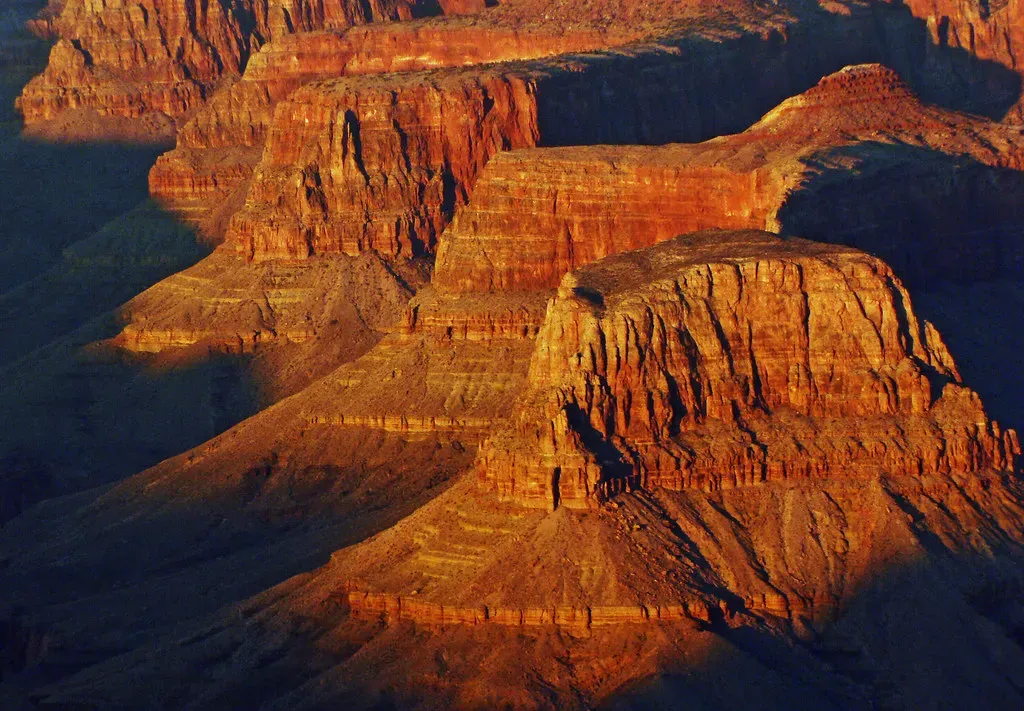
Stratigraphy is the study of rock layering, and it reveals a wealth of information about what Earth was like when each layer formed. In the Grand Canyon, there are clear horizontal layers of different rocks that provide information about where, when, and how they were deposited, long before the canyon was even carved. Research never stops here, either. The Grand Canyon is one of the supreme geologic laboratories on Earth and, after about 140 years of geologic investigation, scientists are still uncovering new secrets. The more researchers look, the more complex the story becomes.
Conclusion: A Living Textbook That Humbles Every Visitor
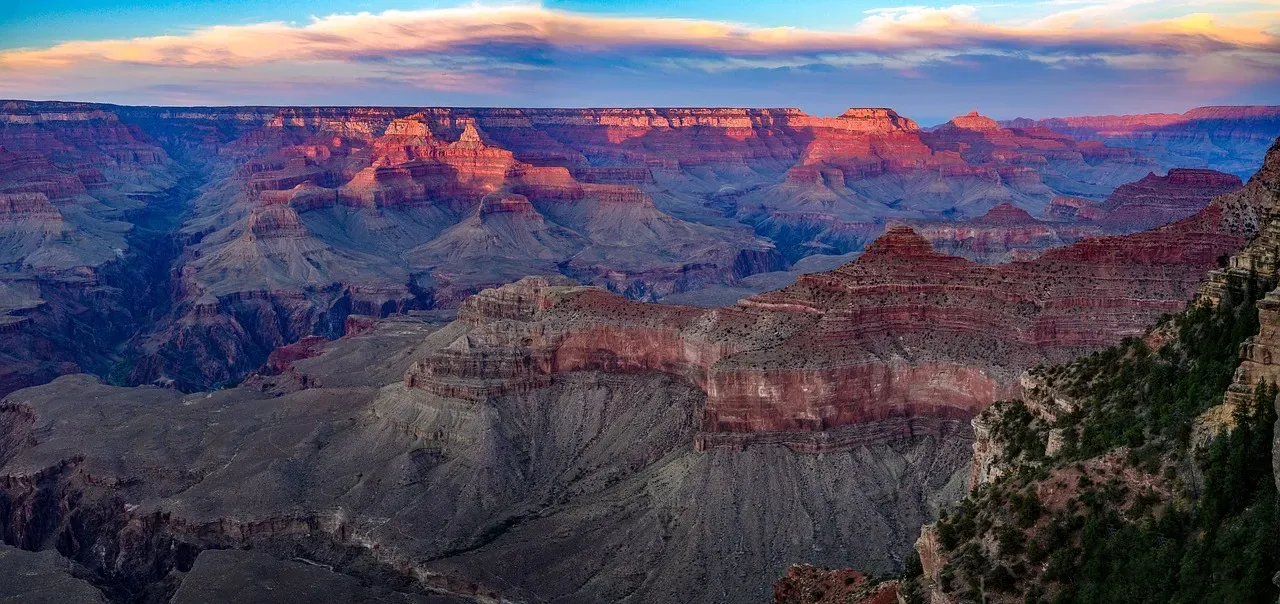
There is something profoundly humbling about the Grand Canyon that goes beyond its visual drama. The Grand Canyon’s uniqueness lies in its immense size, depth, and the sheer range of visible rock layers, some nearly two billion years old. It provides one of the most complete geological records on Earth, allowing scientists to study the planet’s ancient history layer by layer.
When you stand at the rim, you are not just a tourist admiring a view. You are a witness to deep time, to oceans that no longer exist, to mountains that crumbled to dust hundreds of millions of years before your species ever walked this earth. This intellectual encounter with deep time embedded the concept of geological history into the modern world and supported other revolutionary ideas, including Charles Darwin’s theory of evolution. The canyon did not just carve itself into the earth. It carved a new way of understanding our world into the human mind.
So next time someone asks you what the Grand Canyon really is, tell them it is the closest thing to a time machine that nature has ever built. What would you have guessed was down there before you knew the truth?