Imagine standing at the edge of a vast, silent abyss and realizing you are not just looking at scenery. You are staring at time itself. Layers of ancient rock, stacked like the pages of a book no human hand ever wrote, stretch downward for over a mile beneath your feet. Each stripe of color, each rocky shelf, each crack in the canyon wall holds a chapter of our planet’s extraordinary past.
Honestly, no museum, no documentary, no textbook comes close to what the Grand Canyon does naturally. It hands you nearly two billion years of Earth’s geological autobiography, completely free of charge. So let’s dive in, because what these rocks have to say will genuinely change the way you see the world around you.
A Window Into Deep Time: What the Canyon’s Walls Are Actually Showing You
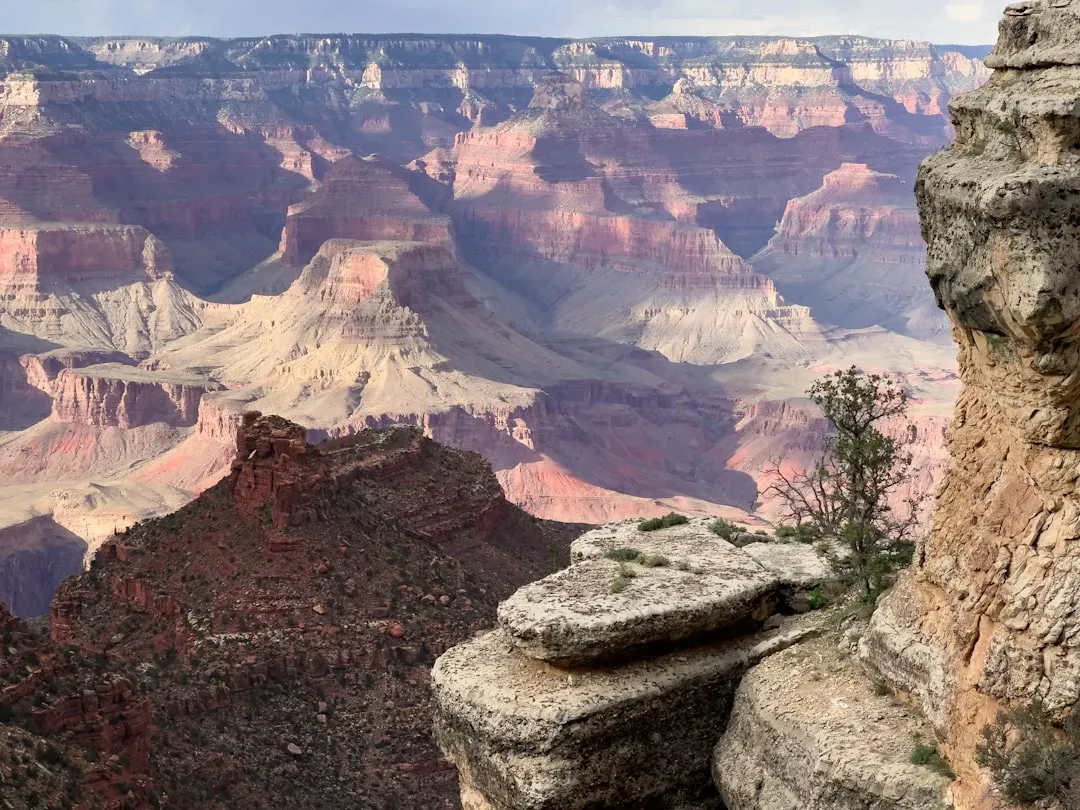
You might think of the Grand Canyon as just a very large hole in the ground. Let’s be real, that would be a spectacular understatement. Nearly two billion years of Earth’s geological history have been exposed as the Colorado River and its tributaries cut their channels through layer after layer of rock while the Colorado Plateau was uplifted. That is not a metaphor. That is a literal timeline carved into stone.
It exposes an exceptionally complete rock record of 1.84 billion years, which represents about 40% of Earth’s entire history. Think about that for a moment. Roughly two-fifths of everything this planet has ever experienced, compressed into a single canyon you can hike through on a long weekend. Stretching 277 miles long, up to 18 miles wide, and over a mile deep, the canyon reveals layer after layer of rock, each telling its own story of ancient seas, deserts, and tectonic shifts.
The Vishnu Basement Rocks: Earth’s Oldest Exposed Secret
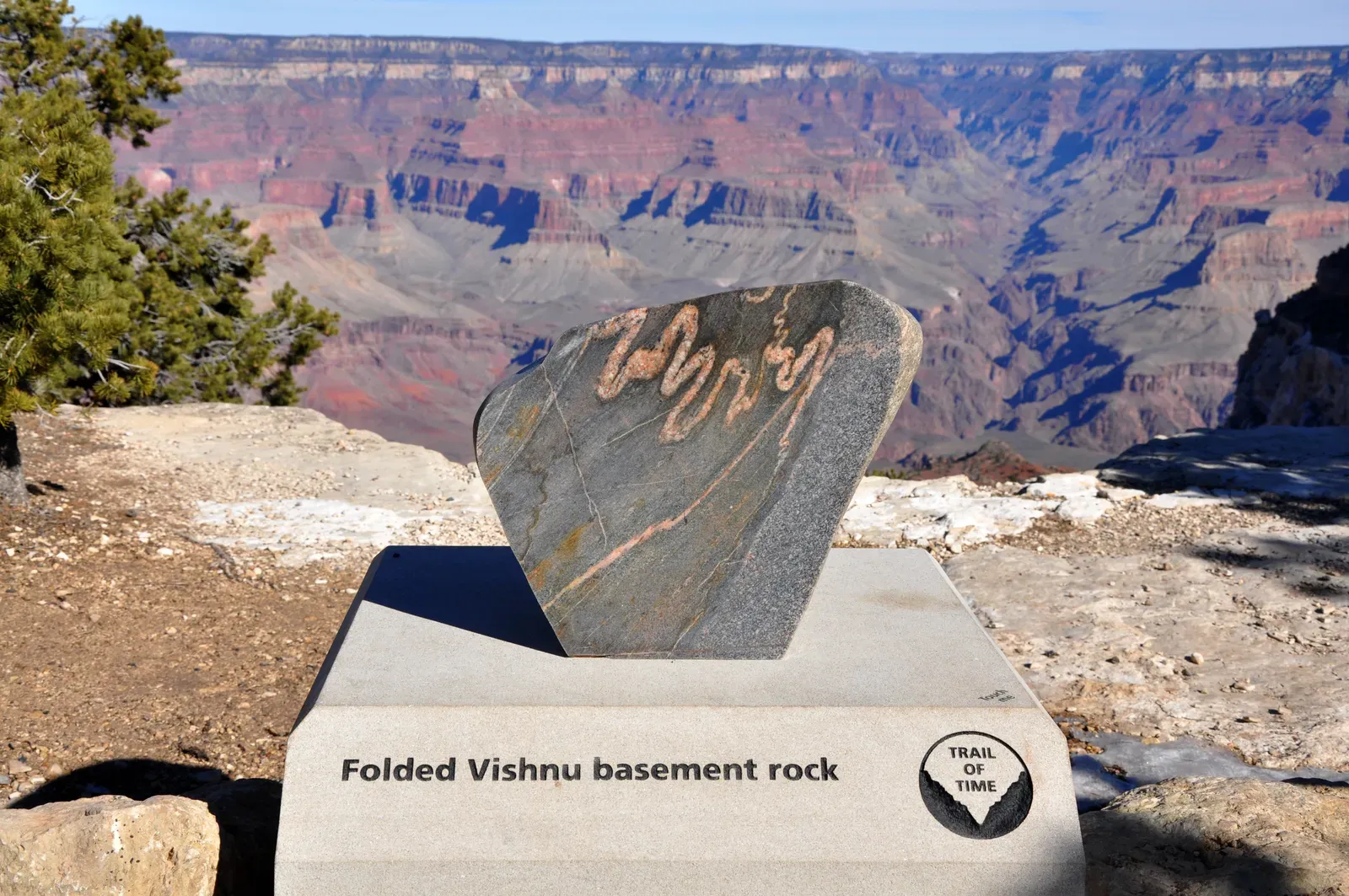
Down at the very bottom of the Grand Canyon, where the Colorado River still churns and roars, you encounter the oldest rocks on the entire continent. The oldest rocks in the Grand Canyon, found at the bottom of the canyon, are primarily metamorphic, with igneous intrusions. The intrusive igneous rocks here are called Zoroaster Granite. The name given to this rock set is the Vishnu Basement Rocks. Primarily schist with granite, these rocks have visible crystals and are about 1.7 billion years old, from an era early in Earth history known as the Proterozoic.
The schists and gneisses found at the base of the Grand Canyon are 1.9 to 1.7 billion years old and comprise metamorphosed volcanic and marine sedimentary rocks. These rocks are the product of plate tectonic activity from the collision and accretion of a volcanic island arc, the Yavapai terrane, with what was then a much smaller North American continent. It’s hard to say for sure just how alien the world looked back then, but one thing is certain: if you could stand on this same spot nearly two billion years ago, you would be standing at the violent collision point of entire landmasses. Extraordinary, right?
The Grand Canyon Supergroup: When Single-Celled Life Ruled the World
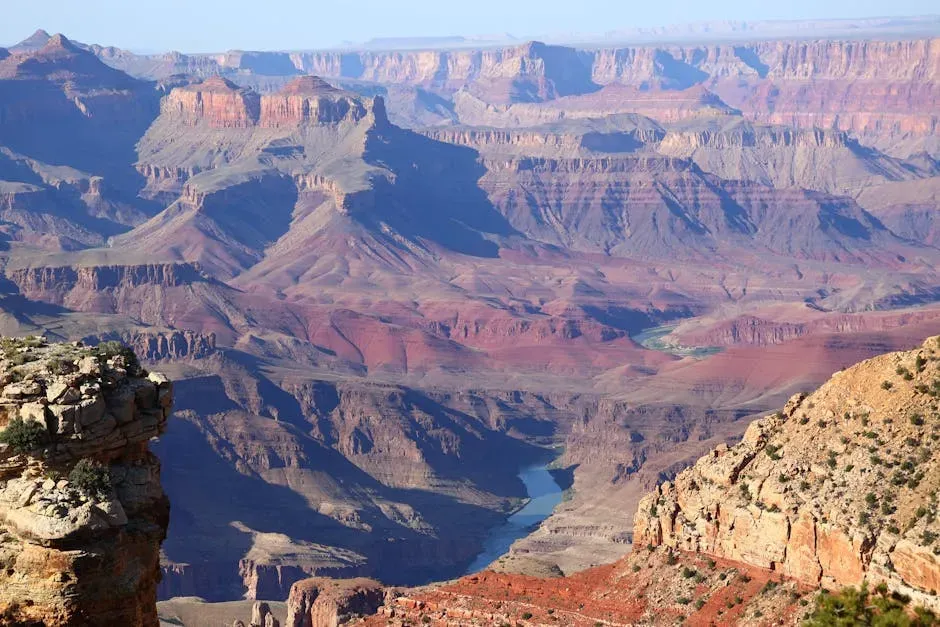
The Grand Canyon Supergroup records basins within the continent that responded to the assembly and breakup of an early supercontinent of Rodinia between 1,250 and 729 million years ago, a time dominated by single-celled life. This middle rock set sits above the ancient basement and tells an entirely different story. These ancient rocks are overlain by a thick sequence of mildly metamorphosed sedimentary layers known as the Grand Canyon Supergroup, a series of sandstones, shales, and limestones that constitutes one of the most complete middle-to-late Proterozoic geologic records in North America.
These rocks do not contain many fossils, because they formed before complex life on Earth was common. The few fossils that are present include stromatolites, columns of sediment formed by cyanobacteria. The composition and presence of stromatolites indicate that this area was previously a very shallow sea. Stromatolites are essentially the oldest life forms you will ever see with your own eyes. They look unremarkable, little more than layered stone mounds, yet they represent life’s first bold experiment on Earth.
The Great Unconformity: Where Billions of Years Simply Vanished
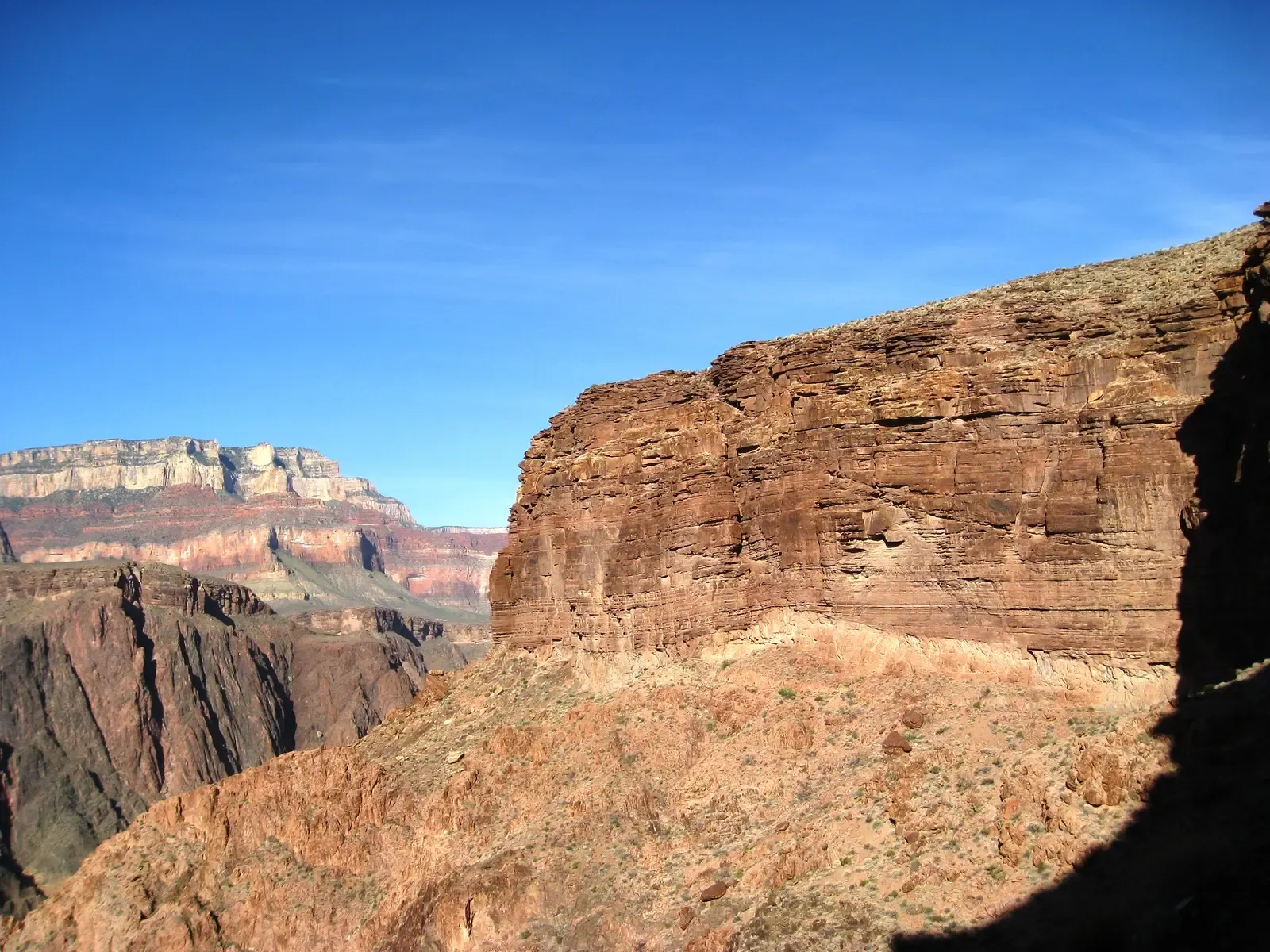
Here’s the thing that keeps geologists up at night. Between the tilted Supergroup rocks and the flat Paleozoic layers above them, there is a boundary so dramatic it has its own famous name. Overlying the uppermost layers of the Grand Canyon Supergroup is one of the most conspicuous features of the rocks in the Grand Canyon, an irregular level called “the Great Unconformity.” You can actually see it with your naked eye if you know where to look.
This feature preserves a gap in the geological record where stratified layers have been interrupted or destroyed due to erosion or deformation. The unconformity separates rocks of Precambrian age from those of the Paleozoic Era, and is part of a continent-wide feature that extends across the ancient core of North America. The length of time represented by the Great Unconformity varies along its length – in some parts of the Grand Canyon, a period of 175 million years is “missing” between the Cambrian Tonto Group sandstones and the Grand Canyon Supergroup. Mountains rose and fell entirely within that gap. You would never know it from looking at the canyon wall.
The Paleozoic Layers: When Seas Swept Over a Desert Continent
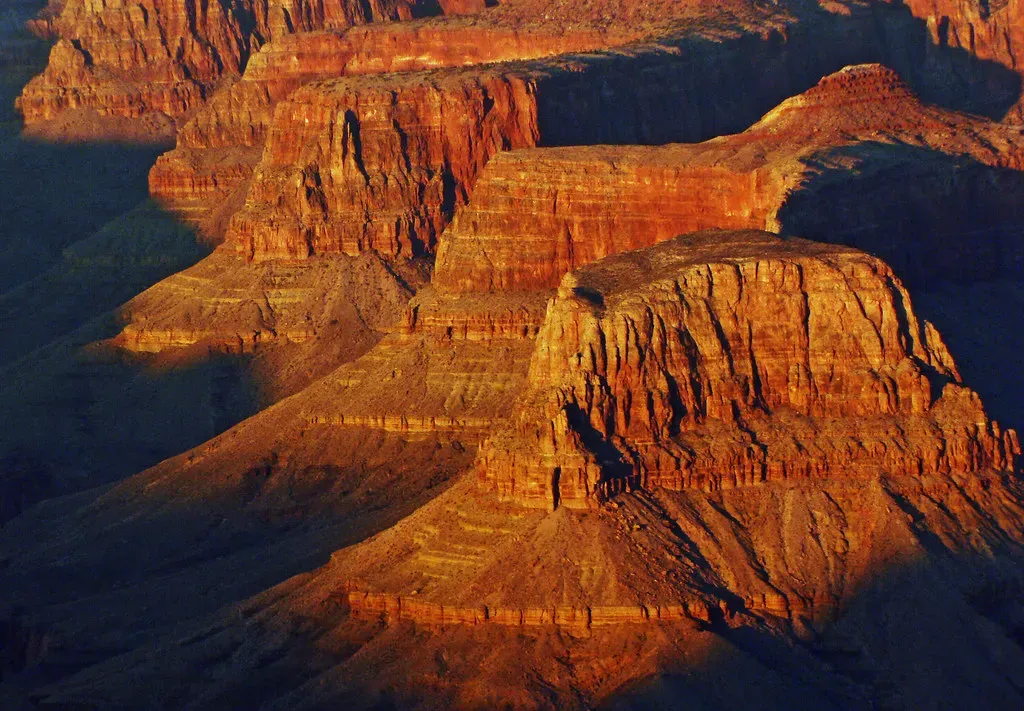
The flat-lying layered Paleozoic rocks encode stories, layer by layer, of dramatic environmental changes and the evolution of animal life between 530 and 270 million years ago. This is where the canyon’s walls become a true parade of ancient environments. Many of the formations were deposited in warm shallow seas, near-shore environments such as beaches, and swamps as the seashore repeatedly advanced and retreated over the edge of a proto-North America.
A shallow sea advanced and retreated several times during this period, leaving behind the layers named Kaibab Limestone, Toroweap Formation, and Hermit Shale. The Coconino Sandstone layer was deposited not by the sea, but by wind, which blew in sand across the region. Fossils found in these layers include fern-like leaves, tracks left by reptiles, and numerous forms of marine life. Think of it like flipping between completely different worlds, oceans one era, sweeping dunes the next, all stacked neatly on top of one another.
The Kaibab Formation: The Ground You Stand On Has a Wild History
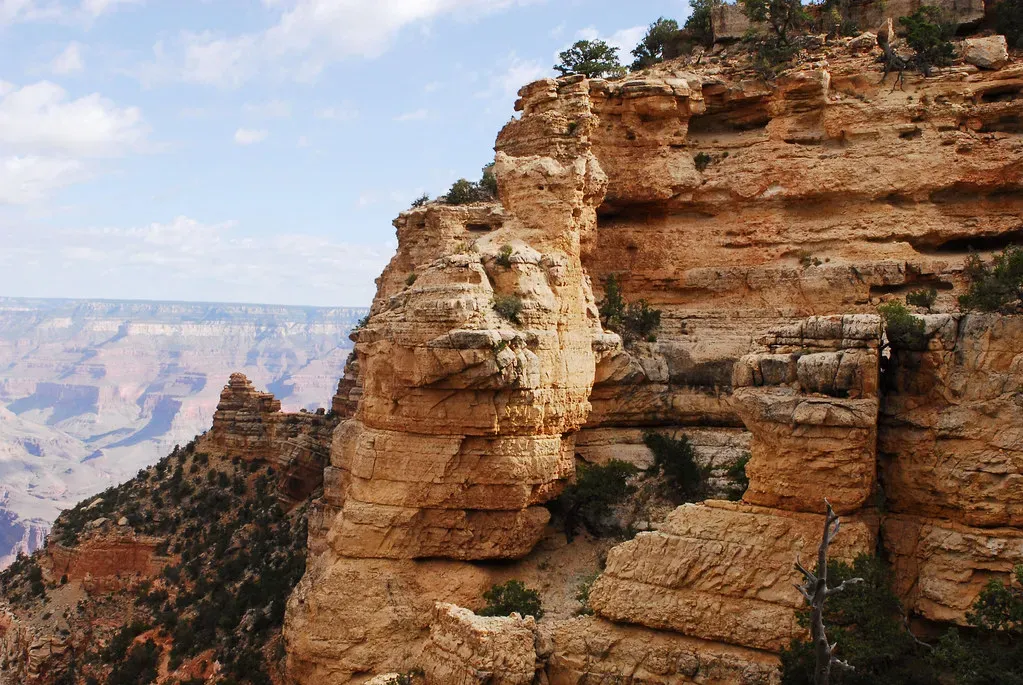
When you walk up to the rim of the Grand Canyon and peer over the edge, the rock beneath your feet is actually ancient seafloor. Deposited 270 million years ago, during the Paleozoic Era’s Early Middle Permian Period, the Kaibab Formation is the topmost rock layer at the Grand Canyon. The Kaibab Formation holds up both the North and South rims. The Kaibab is 270 million years old, and was deposited prior to the age of the dinosaurs.
It erodes into ledgy cliffs that are 300 to 400 feet thick and was laid down in latest early Permian time, about 270 million years ago, by an advancing warm, shallow sea. The formation is typically made of sandy limestone sitting on top of a layer of sandstone. This is the cream to grayish-white rock that park visitors stand on while viewing the canyon from both rims. Shark teeth have been found in this formation as well as abundant fossils of marine invertebrates such as brachiopods, corals, mollusks, sea lilies, and worms.
The Colorado River: The Relentless Sculptor That Made It All Visible
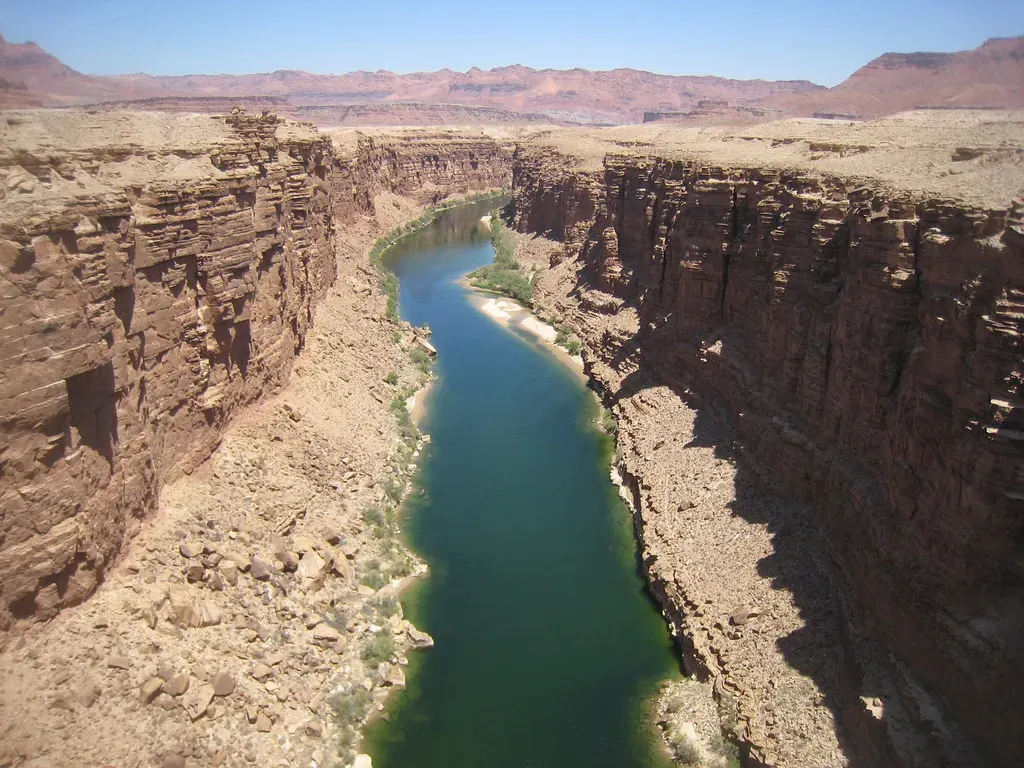
None of these rocks would mean anything to any of us if the Colorado River had not done its extraordinary work. This incredible formation was carved over millions of years by the Colorado River. The canyon itself has formed much more recently than the deposition of rock layers, only about five million years ago, as opposed to the rocks, the youngest of which are a little less than 300 million years old. The canyon has since been forming at varying rates, with periods of intense erosion carving the canyon.
As the river flowed, it carried sand, gravel, and rocks with it. These materials acted like sandpaper, slowly wearing away the rock beneath and deepening the canyon. Over time, the river cut deeper and deeper, exposing layers of rock that are now visible along the canyon walls. It is a stunning reminder that water, given enough time, is essentially unstoppable. The river did not rush this. It simply kept going, century after century, millennium after millennium.
Plate Tectonics and Uplift: The Force That Set the Stage
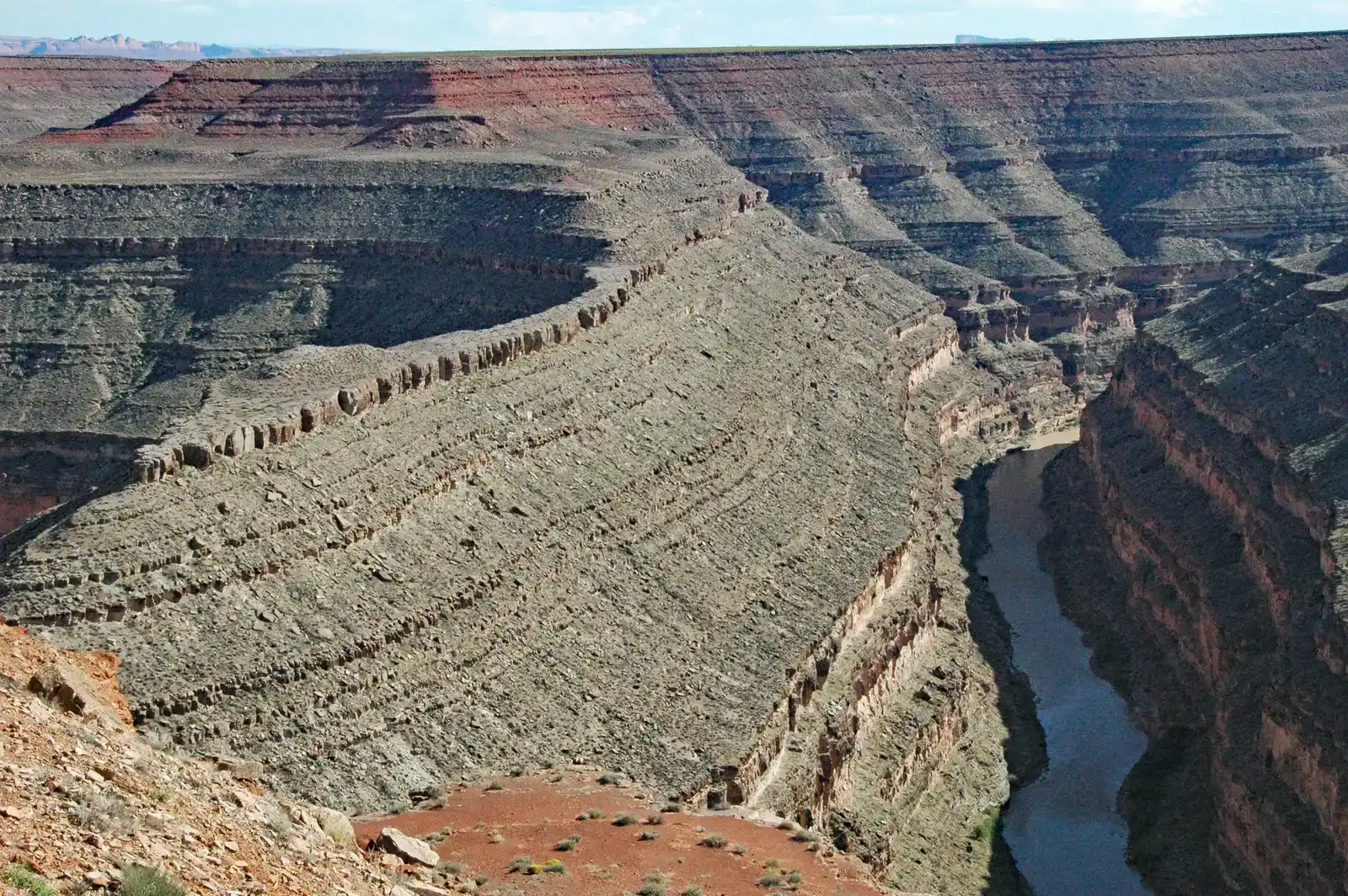
The Colorado River may have carved the canyon, but it needed a stage first. That stage was built by one of the most powerful forces on Earth: tectonic uplift. The great depth of the Grand Canyon and especially the height of its strata can be attributed to 5,000 to 10,000 feet of uplift of the Colorado Plateau, starting about 65 million years ago during the Laramide orogeny. Without that uplift, the river would have had nowhere dramatic to flow.
This uplift steepened the stream gradient of the Colorado River and its tributaries, which in turn increased their speed and thus their ability to cut through rock. At about 2.5 and 1.8 billion years ago in Precambrian time, sand, mud, silt, and ash were laid down in a marine basin. From 1.8 to 1.6 billion years ago at least two island arcs collided with the proto-North American continent. This process of plate tectonics compressed and grafted the marine sediments in the basin onto the mainland and uplifted them out of the sea. Later, these rocks were buried 12 miles under the surface and pressure-cooked into metamorphic rock.
What Science Has Learned, and What Remains a Mystery
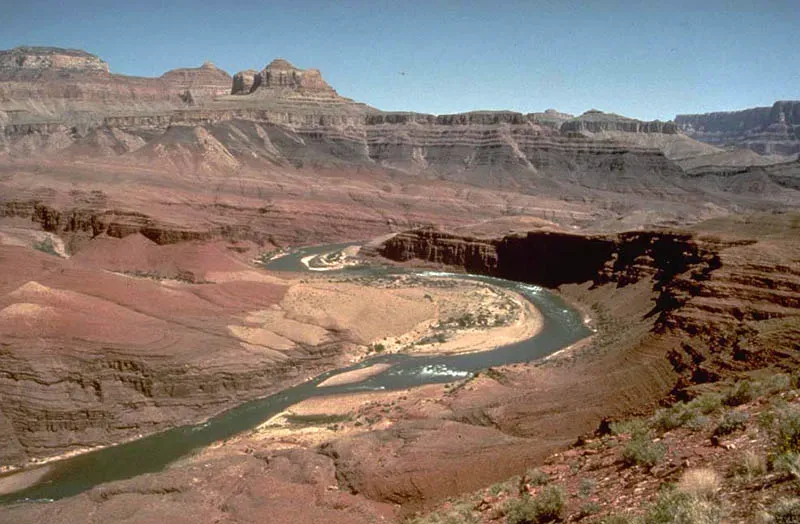
Even today, researchers are still actively debating and refining what the Grand Canyon’s rocks mean. Building on scientific research extending back to the 1850s, there is ongoing research on most rock units and many aspects of geomorphology. Hot topics include middle crustal processes, evolving Precambrian Earth systems, the Cambrian explosion, the age and integration of the Colorado River, rates and processes of canyon carving, and arid land hydrogeology.
This intellectual revolution embedded the concept of deep time into the modern world and supported other revolutionary ideas such as Charles Darwin’s theory of evolution. It’s remarkable to think that a canyon in Arizona helped reshape the entire way humanity understands its planet. The river continues to be an agent of change, reshaping the canyon over time. The canyon isn’t fully formed as long as there is water flowing. There is ongoing research about river flow, sediments, and geomorphology. In other words, the story is not over.
Conclusion: A Canyon That Keeps Humbling Us
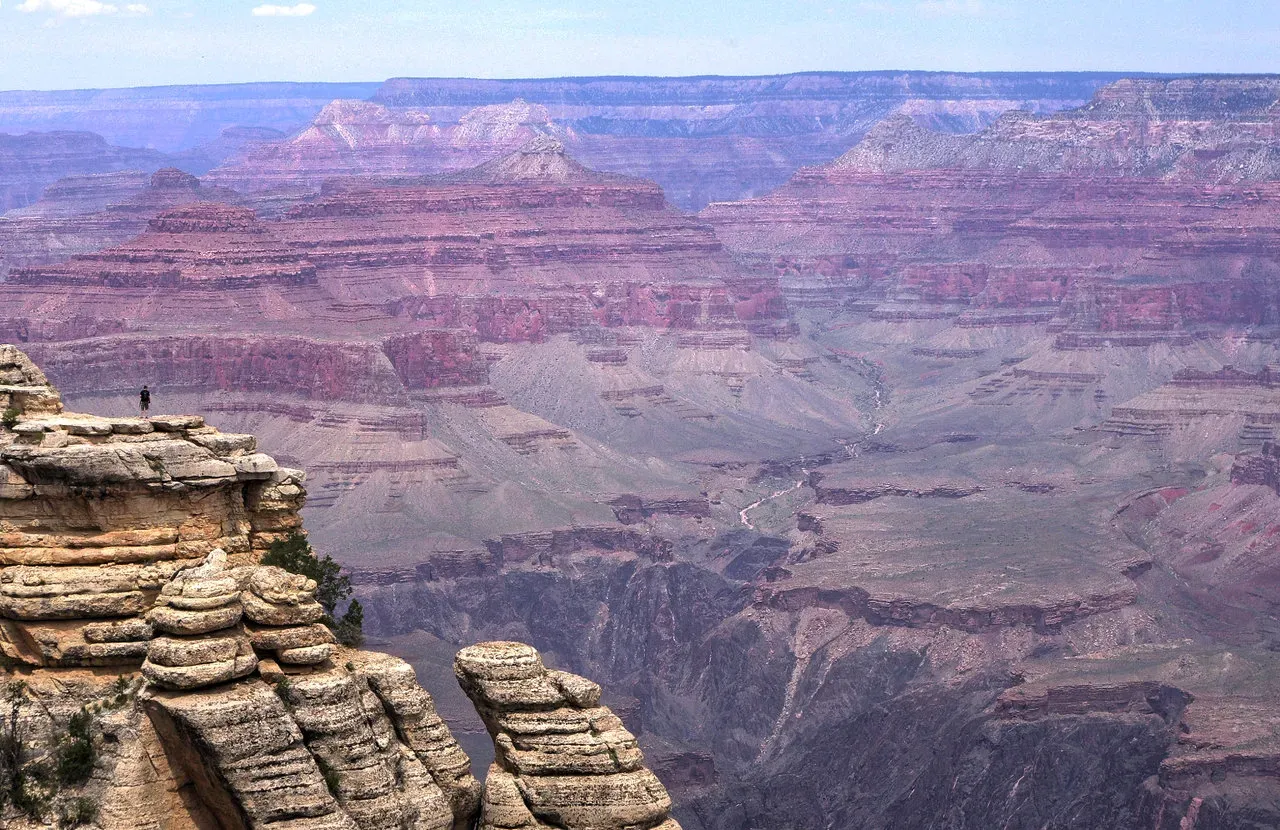
The Grand Canyon is not simply a geological marvel. It is, arguably, the greatest natural monument to time that exists anywhere on Earth. You can stand at its rim, look down, and trace the history of our planet from nearly two billion years ago to the present, all in a single glance. No other place on the surface of this world offers that kind of perspective so effortlessly.
What strikes me most, honestly, is not the age of the rocks or even the sheer scale of the place. It is the fact that this all happened without any audience. Mountains rose and collapsed. Seas came and went. Continents collided. And the rocks just quietly recorded all of it, layer by layer, waiting for a small creature called a human to eventually come along and start asking questions. The canyon has been patiently telling its story for nearly two billion years. The real question is: are you ready to truly listen?