There are five major mass extinctions written into Earth’s rocky autobiography, and most people have heard of the one that ended the dinosaurs. But that one? Honestly, it was a minor inconvenience compared to what happened roughly 252 million years earlier. We’re talking about an event so total, so absolute, it nearly deleted the entire concept of complex life from this planet.
The Permian-Triassic extinction event, often called the “Great Dying,” occurred approximately 251 million years ago and is considered the most severe extinction event in Earth’s history, resulting in the loss of around 90% of marine species and 70% of terrestrial vertebrate species. Whatever happened during the Permian-Triassic period spared no class of life from the devastation. Trees, plants, lizards, proto-mammals, insects, fish, mollusks, and microbes were all nearly wiped out. Seven leading theories attempt to explain how Earth came so terrifyingly close to silence. Let’s dive in.
The Siberian Traps: A Volcanic Apocalypse Unlike Anything Before or Since
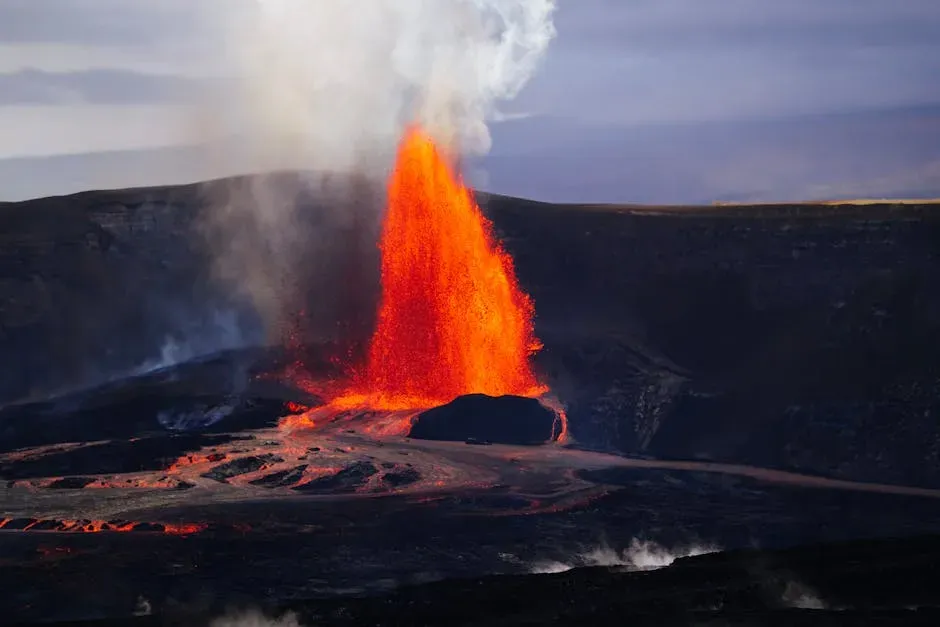
If you want to picture the Siberian Traps, imagine a volcanic system so enormous it covered an area roughly the size of modern-day Australia, belching fire and toxic gases for hundreds of thousands of years without pause. That’s not hyperbole. The trigger for the Permian-Triassic mass extinction event was the eruption of massive amounts of molten rock in modern-day Siberia, known as the Siberian Traps, which erupted through a sedimentary basin rich in organic matter.
Research has determined that the volcanism released more than 100,000 billion tonnes of carbon into the atmosphere, triggering the onset of the extinction. That is more than 40 times the amount of all carbon available in modern fossil fuel reserves, including carbon already burned since the industrial revolution. These eruptions sent lava flowing over millions of miles of land, emitting intense heat, sulfur dioxide, and carbon dioxide into the atmosphere. The ash and soot from the explosions also blocked sunlight, preventing plants from being able to grow. Imagine the food chain simply switching off, from the bottom up, like cutting the power to a building floor by floor.
Catastrophic Global Warming and the Oxygen-Starved Ocean
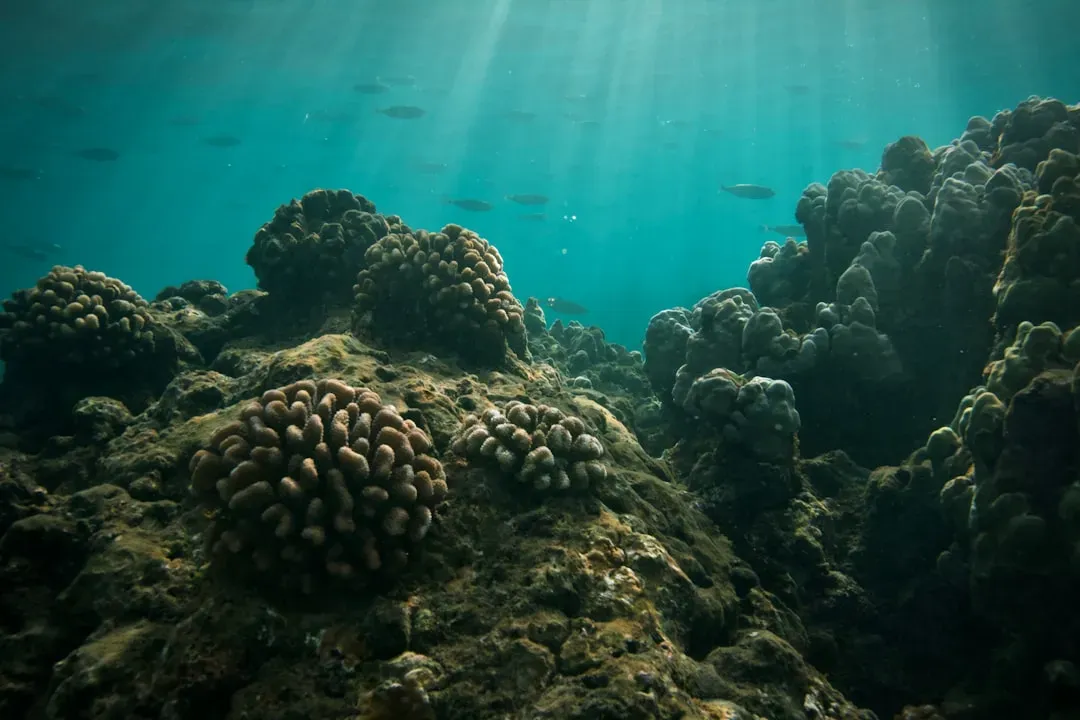
Here’s the thing about warming on a planetary scale. It doesn’t just make things hotter. It quietly rewrites the rules of survival in every ocean on Earth. Research from the University of Washington and Stanford University combined models of ocean conditions and animal metabolism with paleoceanographic records to show that the Permian mass extinction in the oceans was caused by global warming that left animals unable to breathe. As temperatures rose and the metabolism of marine animals sped up, the warmer waters could not hold enough oxygen for them to survive.
This rapid increase in carbon dioxide in Earth’s atmosphere and the resulting temperature increase is thought to be the primary kill mechanism for much of life at the time. On land, surface temperatures are estimated to have increased by as much as 6°C to 10°C, too rapid for many life forms to evolve and adapt. The extreme changes and multiple stressors, including high temperatures, acidification, oxygen loss, and sulfide poisoning, combined to wipe out a large variety of marine organisms, explaining the severity of the extinction. Think of it like slowly turning off the ventilation in a sealed building. You don’t realize the crisis until it’s already too late.
Ocean Anoxia and the Hydrogen Sulfide Catastrophe
Some of the most chilling theories about the Great Dying don’t involve fire from above. They involve something far quieter and far more toxic rising silently from below. Evidence for widespread ocean anoxia and euxinia, meaning the presence of hydrogen sulfide, is found from the Late Permian to the Early Triassic. Throughout most of the Tethys and Panthalassic Oceans, evidence for anoxia appears right at the extinction event, including fine laminations in sediments and biomarkers for green sulfur bacteria.
Possible causes supported by strong evidence appear to describe a sequence of catastrophes, each worse than the last. The Siberian Traps eruptions were devastating, but because they occurred near coal beds and the continental shelf, they also triggered very large releases of carbon dioxide and methane. The resultant global warming may have caused perhaps the most severe anoxic event in the oceans’ history, with the oceans becoming so anoxic that anaerobic sulfur-reducing organisms dominated ocean chemistry and caused massive emissions of toxic hydrogen sulfide. Atmospheric chemical modeling has shown that a massive release of hydrogen sulfide into the atmosphere would cause a significant decrease in ozone levels, resulting in enhanced UV radiation which could be linked to the terrestrial extinctions. It’s a doomsday cascade that reads almost like something from science fiction.
The Asteroid Impact Theory: Earth’s Deadliest Collision?
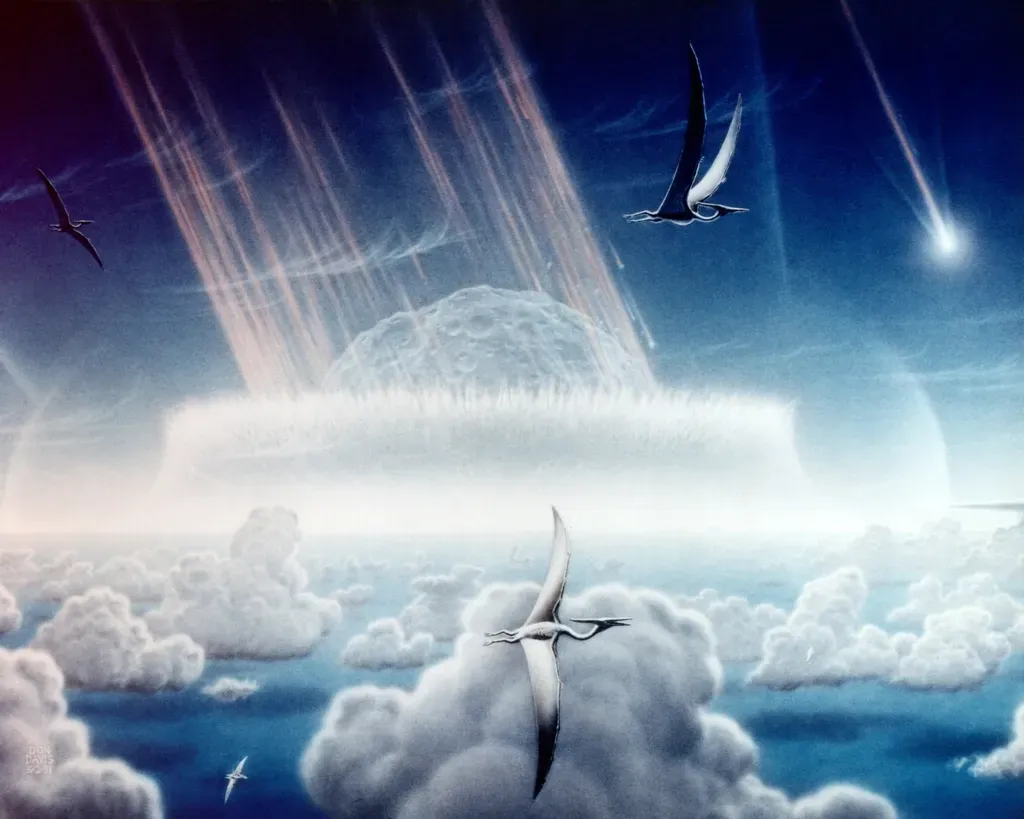
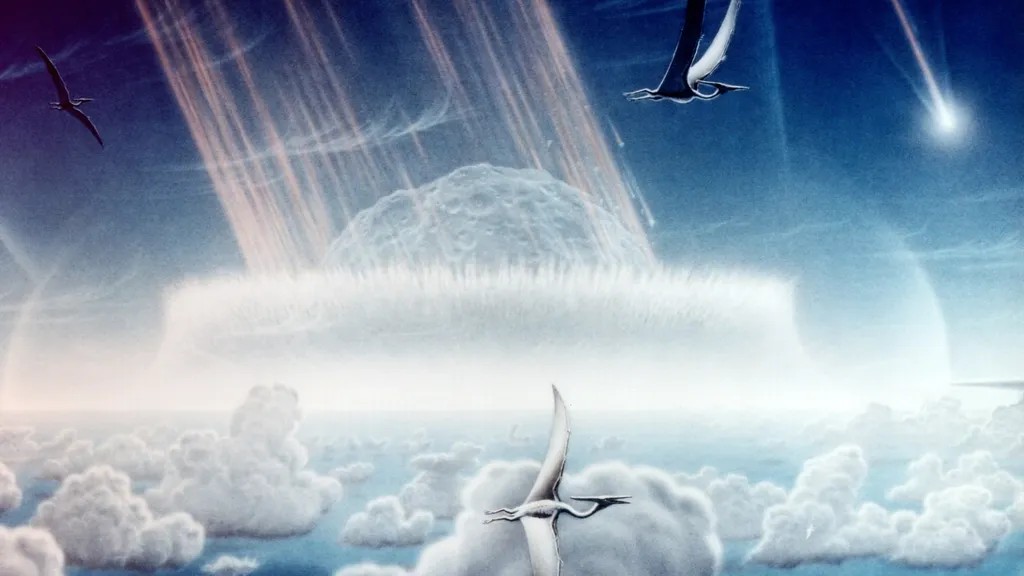
Most of us learned in school that an asteroid wiped out the dinosaurs. So it’s natural to ask whether something similar might have started the Great Dying. Most scientists agree a meteor impact called Chicxulub, in Mexico’s Yucatan Peninsula, accompanied the extinction of the dinosaurs 65 million years ago. Yet the time of the Great Dying 250 million years ago, when roughly nine in ten marine and eight in ten land life forms perished, had long lacked evidence and a location for a similar impact event.
Researcher Luann Becker and her team found extensive evidence of a crater roughly 125 miles wide, called Bedout, off the northwestern coast of Australia. They found clues that matched up with the Great Dying, the period known as the end-Permian. This was the time when the Earth was configured as one primary landmass called Pangea and a super ocean called Panthalassa. Deep inside Permian-Triassic rocks, Becker’s team found soccer ball-shaped molecules called fullerenes, or buckyballs, with traces of helium and argon gas trapped inside, a chemical fingerprint consistent with an extraterrestrial source. I think it’s hard to say for sure whether an impact played the starring role here, but the evidence is tantalizing enough to keep this theory very much alive.
The Methane Clathrate Bomb: A Frozen Time Capsule of Destruction
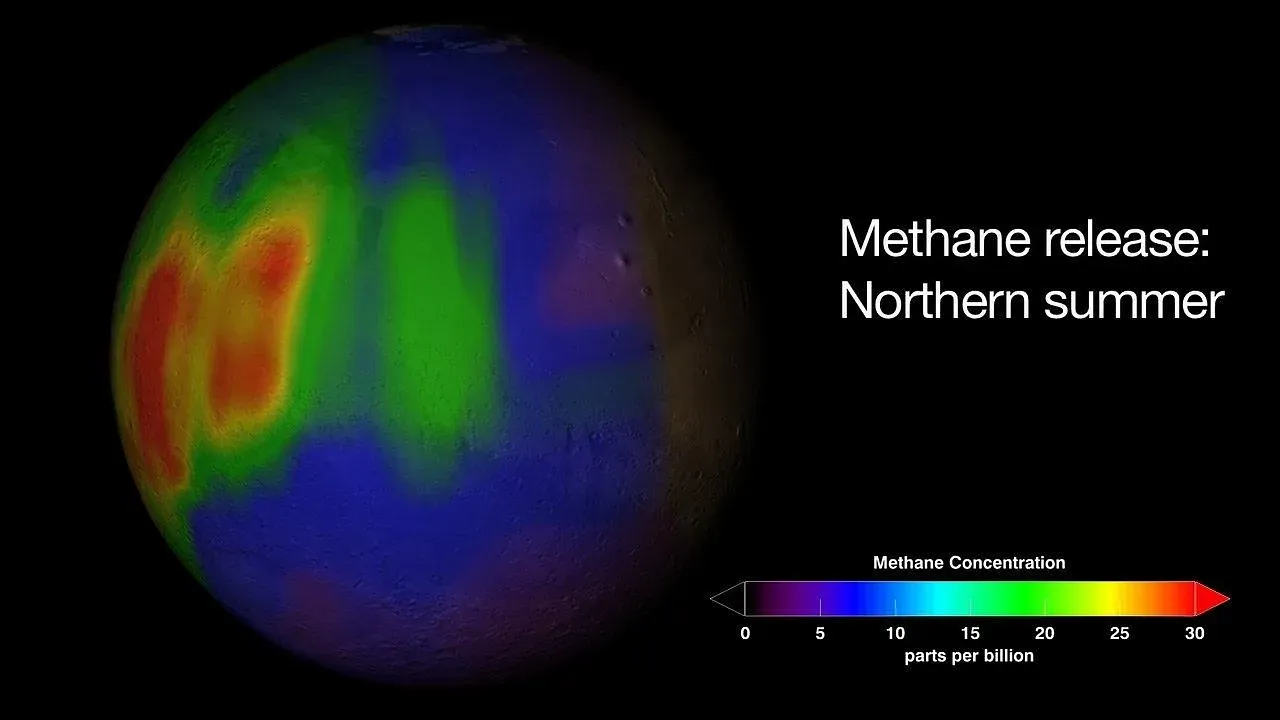
Picture methane molecules locked inside a cage of ice crystals, sitting quietly on the ocean floor in enormous quantities. Now imagine something warming that ocean fast enough to melt those cages all at once. That’s the methane clathrate hypothesis, and it’s as frightening as it sounds. Methane clathrates, also known as methane hydrates, consist of molecules of methane trapped in the crystal lattice of ice. This methane, produced by methanogen microbes, forms near the surface of permafrost and in large quantities on continental shelves and nearby seabed at water depths of at least 300 meters, buried in sediments far below the sea floor.
Massive release of methane from these clathrates may have contributed to the Permian-Triassic extinction, as scientists have found worldwide evidence of a swift decrease of about one percent in the carbon isotope ratio in carbonate rocks from the end-Permian. The seabed probably contained methane hydrate deposits, and lava from the Siberian Traps caused those deposits to dissociate, releasing vast quantities of methane. A vast release of methane would cause significant global warming since methane is a very powerful greenhouse gas. It is worth noting that the clathrate theory has its critics, and many scientists now believe volcanic carbon dioxide played the dominant role. Still, the idea of a methane time bomb detonating on the ocean floor is one of the more dramatic scenarios in all of paleontology.
Pangea and the Supercontinent Effect: When Land Masses Become a Death Sentence
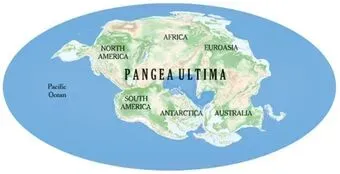
There’s something almost poetic and tragic about the idea that the very slow, steady drift of continents could conspire to kill almost everything alive. Long before the volcanism peaked, the world was already being quietly squeezed. The Permian was already a turbulent period for life because the ever-wandering continental plates had drifted into one another, forming the supercontinent of Pangaea. The formation of Pangaea had a number of effects on climate and environment, including the reduction of coastline and shallow marine habitats.
One theory asserts that, over time, the enormous Pangaea blocked the world’s oceans from flowing properly. The ocean waters became somewhat stationary and eventually anoxic, meaning absent of oxygen. The stagnation also allowed heavy amounts of carbon dioxide to dissolve in the waters. The oceans filled with sediment and became similar to a marsh or bog, and since fish survive by taking in oxygen from the water around them, the anoxic state of the oceans became poisonous to marine life. The world 252 million years ago was geographically a very different place, home to a huge supercontinent called Pangea and a massive ocean, which may have made it more sensitive to the carbon dioxide expelled by supervolcanoes. The supercontinent, in other words, may have been both a geography and a vulnerability.
Mega El Niño Events: When Weather Itself Becomes the Weapon
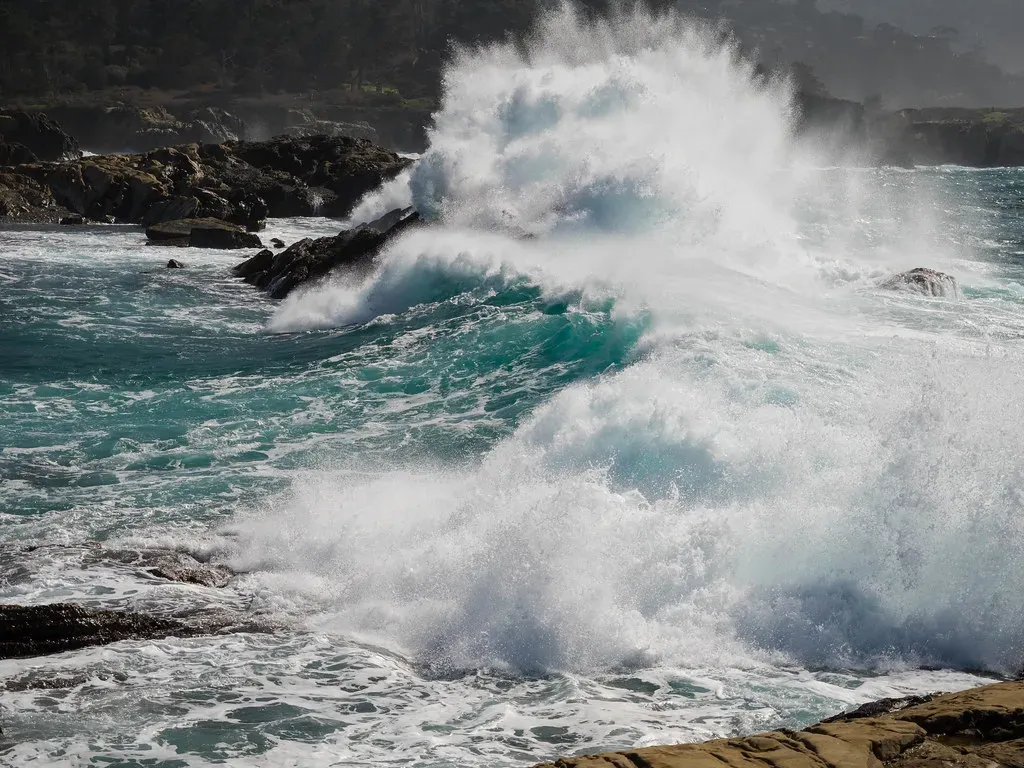
Let’s be real, most people think of El Niño as a weather disruption that messes with rainfall patterns for a year or two. Now try to imagine one that lasts for tens of thousands of years, intensified by the largest ocean that ever existed. The El Niño of 252 million years ago would have originated in the Panthalassic Ocean, a body of water much larger than today’s Pacific that could hold more heat, which in turn would have strengthened and sustained El Niño effects.
The most credible explanation put forward by many researchers is that carbon dioxide released by volcanic activity in the Siberian Traps caused a sudden warming of the planet. The emissions in the vast area that is now Russia resulted in higher temperatures, acid rain, and ocean acidification. A key reason the end-Permian extinction was so dire was because the mega El Niños created incredibly warm conditions in the tropics, which spread quickly to higher latitudes, resulting in the loss of most vegetation and its ability to remove carbon dioxide from the atmosphere. Scientists have been unable to pinpoint why super-greenhouse conditions persisted for around five million years afterward, but a team of international researchers now supports the theory that the demise of tropical forests and their slow recovery limited carbon sequestration, the process where carbon dioxide is removed from the atmosphere and held in plants, soils, or minerals. When the forests vanished, Earth lost its own thermostat, and the planet cooked for millions of years without relief.
Conclusion: The Most Important Mystery in the History of Life
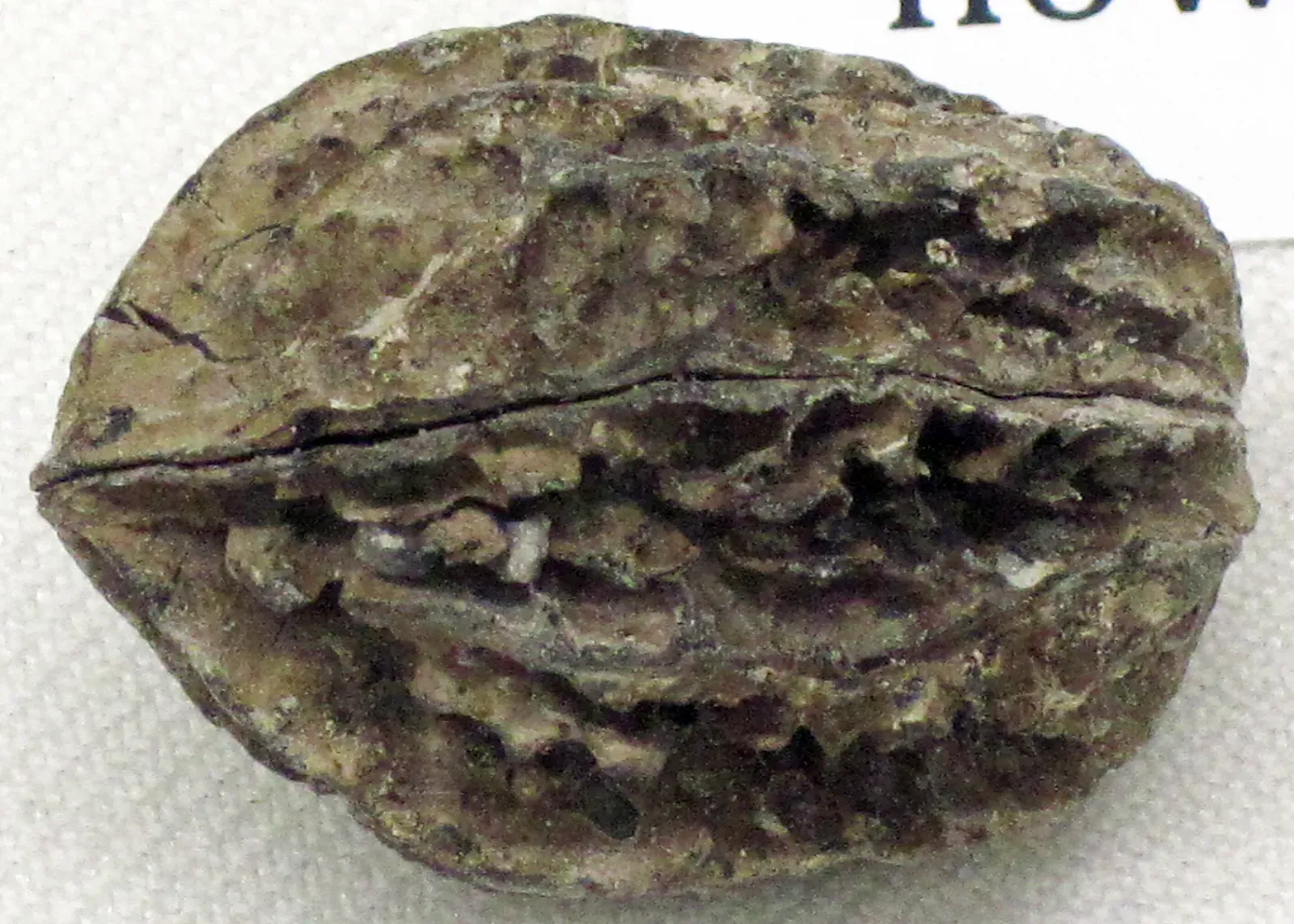
The Great Dying was not a single punch. It was a relentless combination of blows, each amplifying the damage of the last, in a chain reaction that the planet had never endured before and has never fully repeated since. The end-Permian mass extinction was the most devastating ecological event of all time, and ecosystems were destroyed worldwide, communities were restructured, and organisms were left struggling to recover. The Permian geologic period climaxed around 252 million years ago with a sweeping global mass extinction event in which roughly 90 to 95 percent of marine life became extinct, and it would take 30 million years for planetary biodiversity to recover.
What makes the Great Dying so compelling in 2026 is not just its scale. It is the warning it carries. The situation in the late Permian, with increasing greenhouse gases in the atmosphere creating warmer temperatures, is uncomfortably similar to today. Explaining an event from 250 million years ago is inherently difficult, with much of the evidence on land eroded or deeply buried. Yet scientists have gathered significant evidence for causes, and several mechanisms continue to be proposed and debated. The seven theories explored here are not mutually exclusive. Most researchers now believe it was a convergence of catastrophes working in terrifying unison. Perhaps the most sobering thought of all is this: if a planet as resilient as Earth came within a whisker of total biological annihilation once, what does that say about how fragile life truly is? What do you think? Share your thoughts in the comments below.