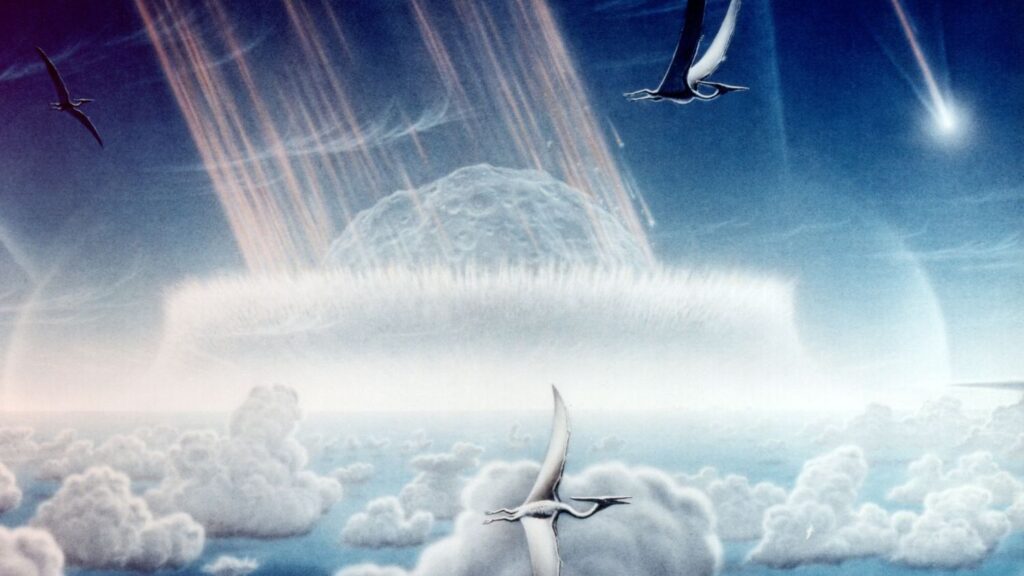
Imagine a world where the ground shakes beneath creatures the size of buildings, where the sky belongs to winged reptiles, and where human beings were millions of years away from existing. That was Earth for roughly 160 million years. Then, in what is essentially the blink of an eye in geological terms, nearly everything changed. One of the most dramatic events in the planet’s entire history erased an age of giants and reshuffled the deck of life completely.
The story of how the dinosaurs vanished has captivated scientists, students, and storytellers for centuries. You might think the basic facts are settled science, but the more you look, the more you realize just how layered and surprising the evidence truly is. New discoveries keep rewriting what we thought we knew. Buckle up, because the real story is far more complex and astonishing than the simple “a rock fell from space” version most of us grew up hearing.
A World Thriving Right Up Until the End
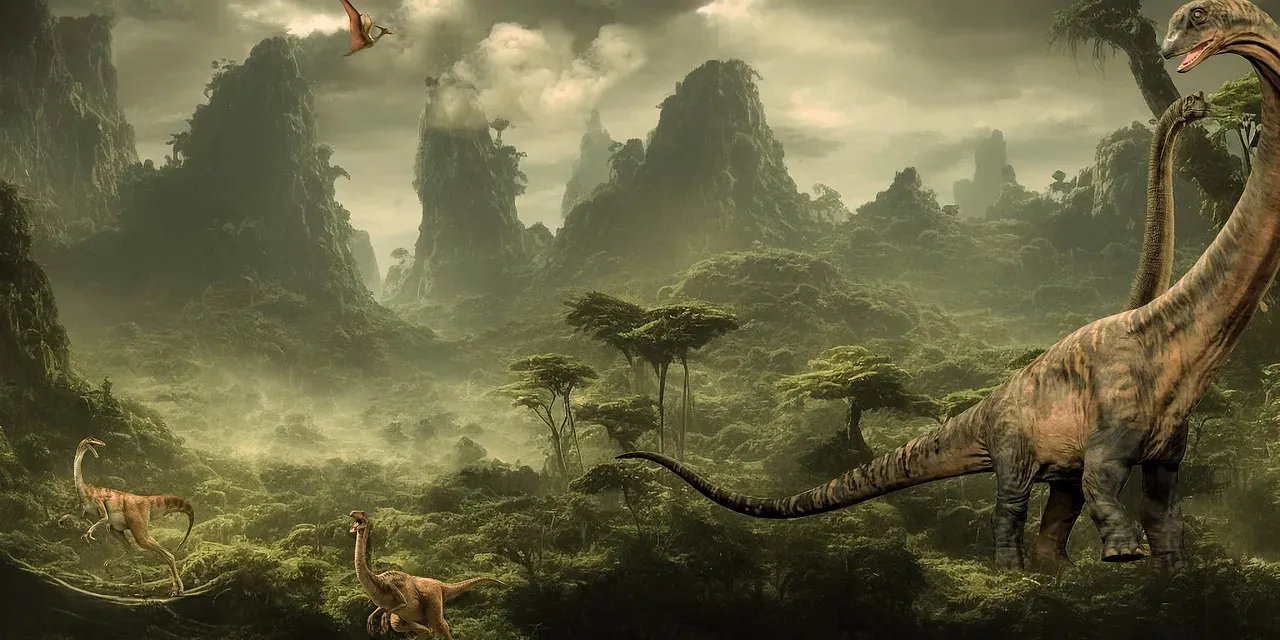
Here’s something that might genuinely shock you: the dinosaurs were not on their way out. For years, the popular assumption was that they had already been declining, slowly shuffling toward oblivion before any cosmic disaster arrived. Honestly, it felt like a convenient narrative. Recent research published in the journal Science in 2025 has turned that idea completely on its head.
For many years, scientists assumed dinosaurs were already declining in both numbers and diversity well before an asteroid impact ended their dominance 66 million years ago. New findings published in the journal Science by researchers from Baylor University, New Mexico State University, the Smithsonian Institution, and an international group now challenge that assumption. Rather than struggling to survive, dinosaurs were still thriving. The fossil evidence from New Mexico paints a vivid, almost heartbreaking picture of a vibrant world that vanished in an instant.
In the Naashoibito Member of the Kirtland Formation, scientists identified signs of active, healthy dinosaur ecosystems that persisted until shortly before the asteroid impact. Using high-precision dating methods, the team determined that these fossils are between 66.4 and 66 million years old, placing them right at the Cretaceous-Paleogene boundary. By refining the timeline of the dinosaurs’ last days, the study shows that their extinction was not a gradual decline but a sudden end to a world full of diversity, abruptly halted by a rare cosmic event. Think about that for a moment. One day there were thriving ecosystems. The next, geologically speaking, there were none.
The Cosmic Intruder: What Science Now Knows About the Asteroid
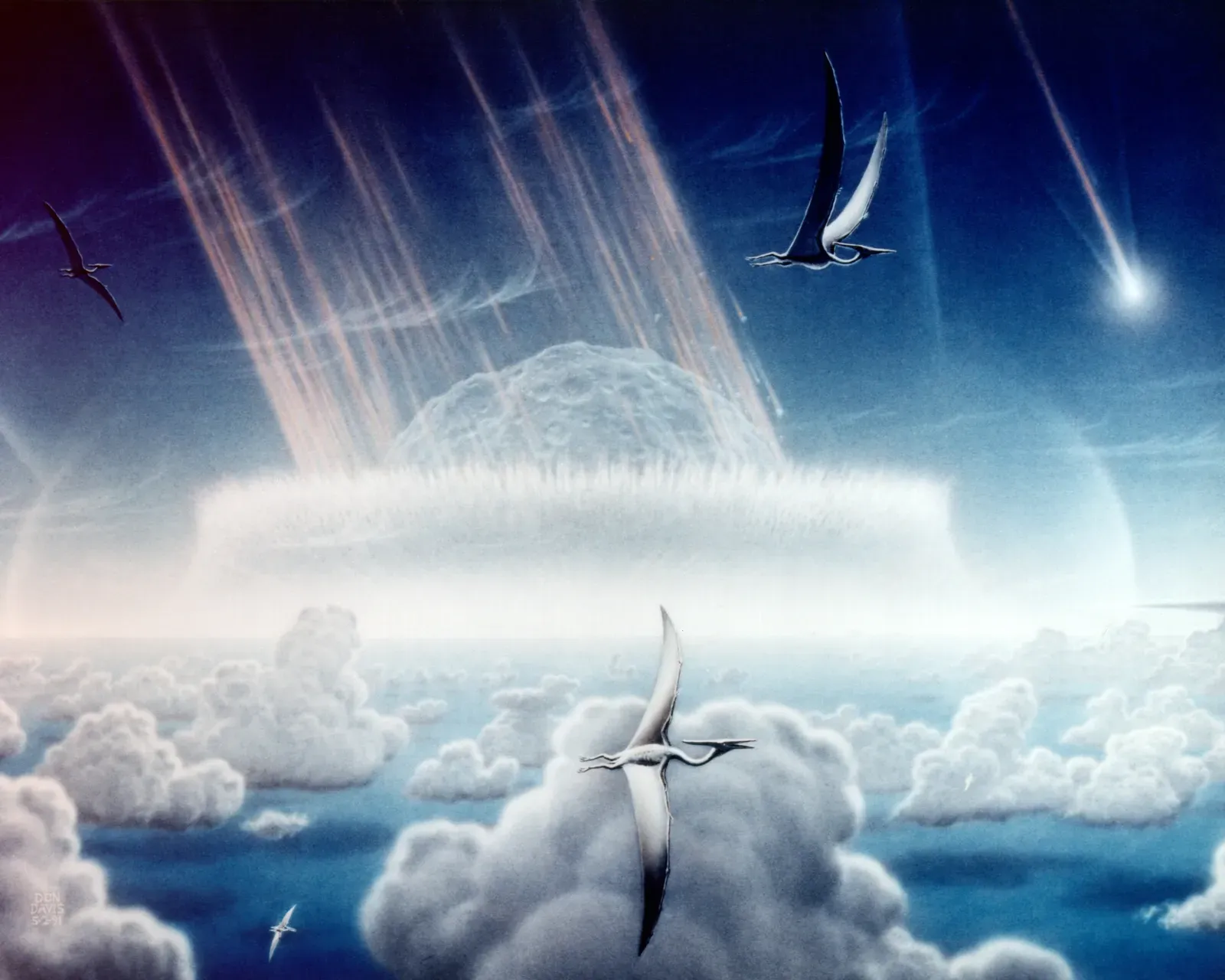
Let’s talk about the rock itself, because the details here are staggering. Approximately 66 million years ago, an asteroid nearly 10 kilometers across hit the Earth near what is now the Yucatan Peninsula, striking at an estimated speed of 20 kilometers per second, more than 58 times the speed of sound, at a relatively steep angle. The impact produced as much explosive energy as 100 teratons of TNT, nearly 4.5 billion times the explosive power of the Hiroshima atomic bomb. That comparison alone should make your jaw drop.
The asteroid that led to the extinction of the dinosaurs 66 million years ago probably came from the outer solar system. Geoscientists from the University of Cologne led an international study to determine the origin of the huge piece of rock that hit the Earth and permanently changed the climate. The results of the study published in Science indicate that the asteroid formed outside Jupiter’s orbit during the early development of our solar system. That means this particular rock traveled an almost incomprehensible journey across the solar system before slamming into our planet with world-altering consequences.
The asteroid that killed the dinosaurs was probably a carbonaceous chondrite, an ancient space rock that often contains water, clay, and organic compounds. While carbonaceous chondrites make up the majority of rocks in space, only about 5 percent of the meteorites that fall to Earth belong to this category. So not only was this a rare type of cosmic visitor, it was one originating from a distant corner of the solar system. The odds of it ever reaching Earth, hitting at that exact angle, at that exact location, were vanishingly small.
The Chicxulub Crater: Ground Zero of a Mass Extinction
The detective work that led scientists to the impact site is a genuinely thrilling story in itself. In the late 1970s, geologist Walter Alvarez and his father, Nobel Prize-winning scientist Luis Walter Alvarez, put forth their theory that the Cretaceous-Paleogene extinction was caused by an impact event. The main evidence was contained in a thin layer of clay at the K-Pg boundary in Gubbio, Italy. The Alvarezes reported that it contained an abnormally high concentration of iridium, a chemical element rare on Earth but common in asteroids.
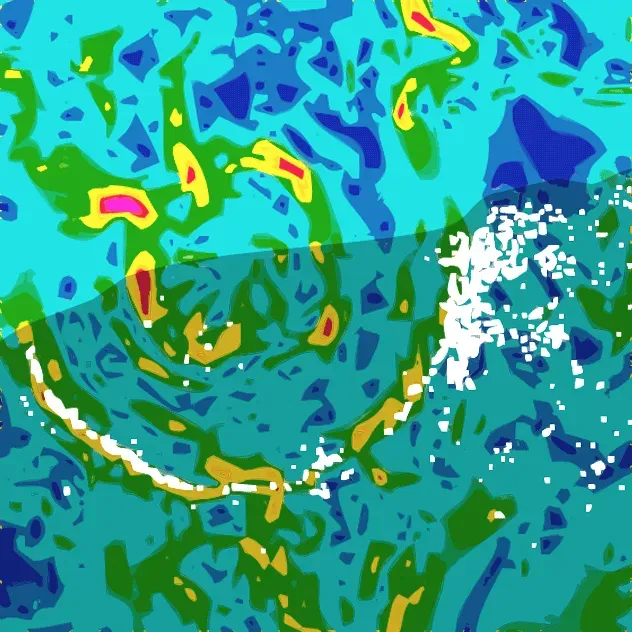
The Chicxulub crater is an impact crater buried underneath the Yucatan Peninsula in Mexico. Its center is offshore, but the crater is named after the onshore community of Chicxulub Pueblo. It was formed slightly over 66 million years ago when an asteroid about ten kilometers in diameter struck Earth. The crater is estimated to be 200 kilometers in diameter and is buried to a depth of about one kilometer beneath younger sedimentary rocks. To put it plainly, the scar left behind is so enormous it can be traced from space using gravity anomaly maps.
In the most recent study based on samples collected during a 2016 mission co-led by the University of Texas at Austin, researchers found a telltale sign of asteroid dust in the form of iridium, which is common in some types of asteroids yet rare in Earth’s crust. The researchers found the highest concentration of iridium-peppered rock, which also contains a mixture of ash from the impact and ocean sediment, within a sample taken from the crater’s peak ring. This sample likewise shows elevated levels of other elements commonly associated with asteroids, resulting in a chemical fingerprint that matches the geological location of the impact itself. The case, you could say, is about as closed as science gets.
Fire, Darkness, and Nuclear Winter: The Aftermath
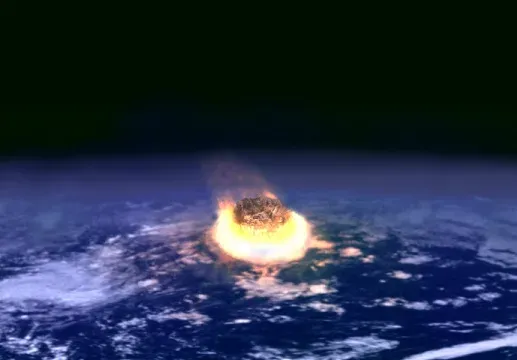
The immediate impact was catastrophic enough on its own. Superheated winds moving over 1,000 kilometers per hour would have radiated outward from the asteroid impact point, shredding vegetation and killing animals. Initially, the impact blasted a cavity 100 kilometers wide and 30 kilometers deep. The impact was accompanied by a massive plume of 25 trillion metric tons of molten material shooting up into the atmosphere, with the temperature of some of this molten material being several times hotter than the surface of the sun. It is almost impossible to fully picture that.
The remainder of this material would have rained down over North America, incinerating everything within a radius of more than 1,000 miles and causing wildfires in roughly 70 percent of the world’s forests. Think of it like turning the entire North American continent into a furnace. It is now generally thought that the K-Pg extinction resulted primarily through a lingering impact winter which halted photosynthesis in plants and plankton. The sky went dark. Plants died. The food chain collapsed from the bottom up. It was less like a sudden explosion and more like a slow, suffocating unraveling of all life’s support systems.
Enter the Volcanoes: The Deccan Traps Debate
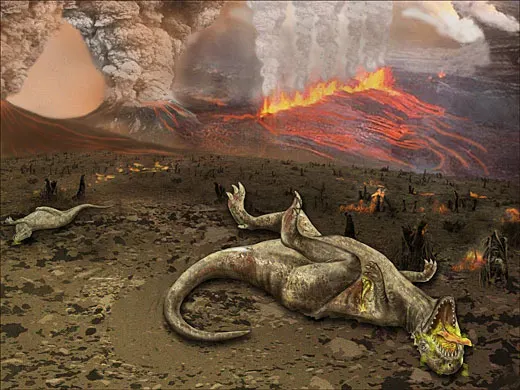
Here is where things get genuinely complicated, and where scientists still argue today. You might be surprised to learn there was another catastrophic geological event unfolding at roughly the same time. Western India is home to the Deccan Traps, a huge rugged plateau that formed when molten lava solidified and turned to rock. The Deccan Traps date back to around 66 million years ago, when magma from deep inside Earth erupted to the surface. In some parts of the Deccan Traps, the volcanic layers are more than two kilometers thick, making this the second-largest volcanic eruption ever on land.
According to research, the massive volcanoes called the Deccan Traps started erupting about 400,000 years before the Chicxulub impact and wrapped up about 600,000 years after. That is a staggering duration. The Deccan Traps had been erupting for roughly 300,000 years before the Chicxulub asteroid. During their nearly one million years of eruptions, the Traps are estimated to have pumped enormous amounts of carbon dioxide and sulfur into the atmosphere. The honest answer to whether volcanoes meaningfully contributed to the extinction is: scientists are still working that out. It’s hard to say for sure, but the current weight of evidence points to the asteroid as the decisive blow, with the volcanoes playing a supporting role at most.
Survivors, Mammals, and the World That Came After
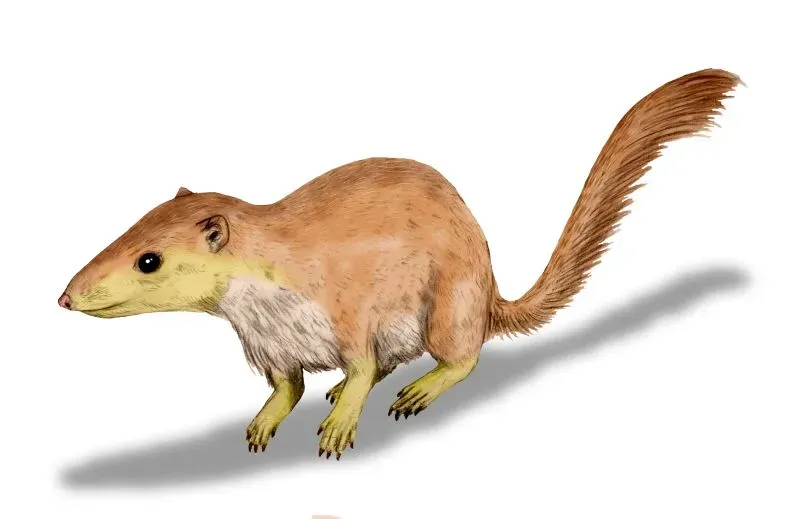
The event caused the extinction of all non-avian dinosaurs and most other tetrapods weighing more than 25 kilograms, with the exception of some ectothermic species such as sea turtles and crocodilians. Yet life, remarkably, refused to surrender entirely. The survivors were mostly small. The miles-wide asteroid wiped out nearly all the dinosaurs and roughly three-quarters of the planet’s plant and animal species. Some creatures survived, including certain rat-sized mammals that would later diversify into the more than 6,000 mammal species that exist today, including humans.
After the K-Pg extinction, mammals evolved to fill the niches left vacant by the dinosaurs. The speed of this recovery was astonishing. New species of plankton appeared fewer than 2,000 years after the world-altering event, according to research led by scientists at the University of Texas at Austin and published in Geology. That is a geological eyeblink. Within the mammalian genera, new species were approximately 9.1 percent larger after the K-Pg boundary. After about 700,000 years, some mammals had reached 50 kilos, a roughly 100-fold increase over the weight of those which survived the extinction. Nature, it turns out, does not stay empty for long.
Conclusion: A Story That Is Still Being Written
What makes the end-Cretaceous extinction so endlessly fascinating is that it is not just ancient history. It is a story about how quickly a thriving world can be unmade, and how just as surprisingly, life finds a way to rebuild. The very mammals whose descendants would eventually produce human beings, literature, science, and the question “what killed the dinosaurs?” all owe their existence to one rock from the outer solar system arriving at a very specific time and place.
By ending the reign of dinosaurs and many other prehistoric groups, the event cleared ecological niches and allowed mammals and birds to diversify and dominate the Cenozoic world. In a very real sense, if not for the K-Pg extinction, the age of modern mammals, and ultimately us, might never have occurred. Every new fossil, every drilled core sample, every isotope analysis adds another detail to a picture that is still not fully complete. The dinosaurs may be gone, but their story is very much alive, and science is still listening carefully to everything the ancient rocks have to say.
So here is the question worth sitting with: if such a thriving, dominant world could be erased in a geological instant by an unexpected visitor from the outer solar system, what does that tell us about the fragility, and the resilience, of life on Earth? What do you think? Share your thoughts in the comments.